

Spanish dialogue with translation · A2 · 16 lines
¿Quién es quién? Who's who?
Comic · 12 panels
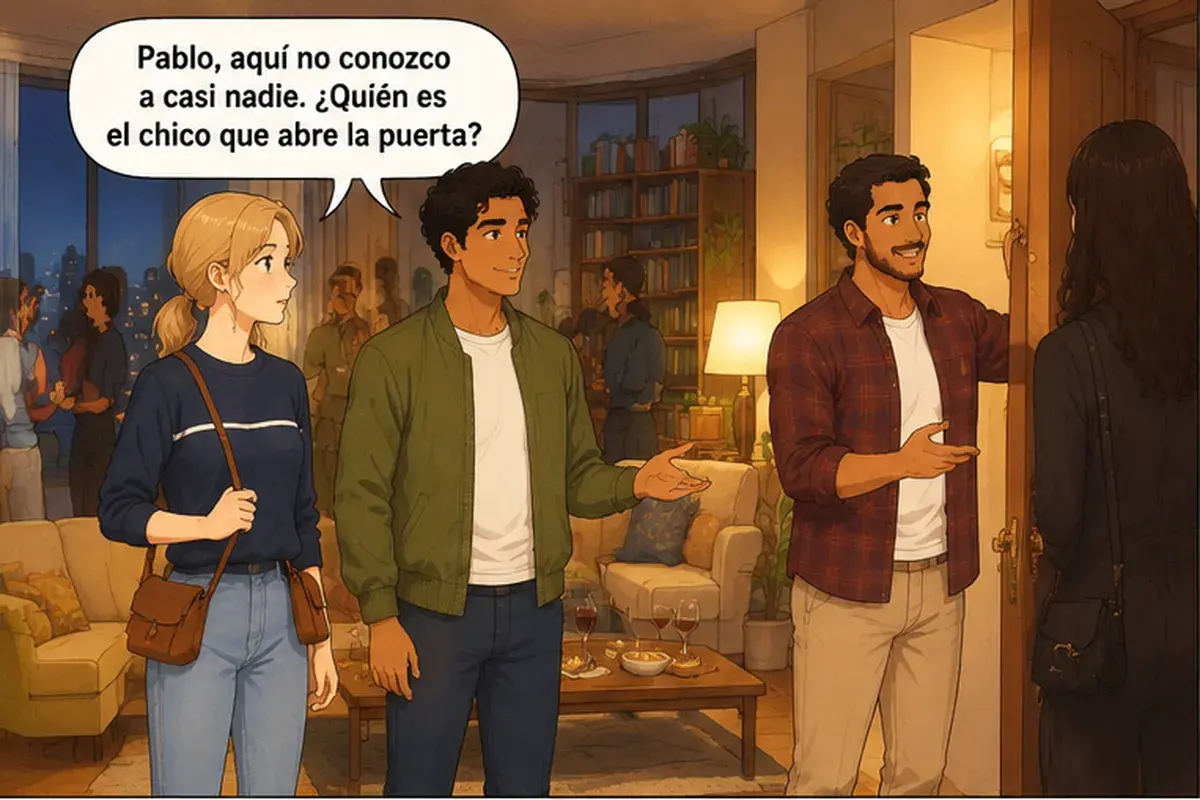
- Ana
Pablo, aquí no conozco a casi nadie. ¿Quién es el chico que abre la puerta?
Pablo, I hardly know anyone here. Who's the guy who's opening the door?
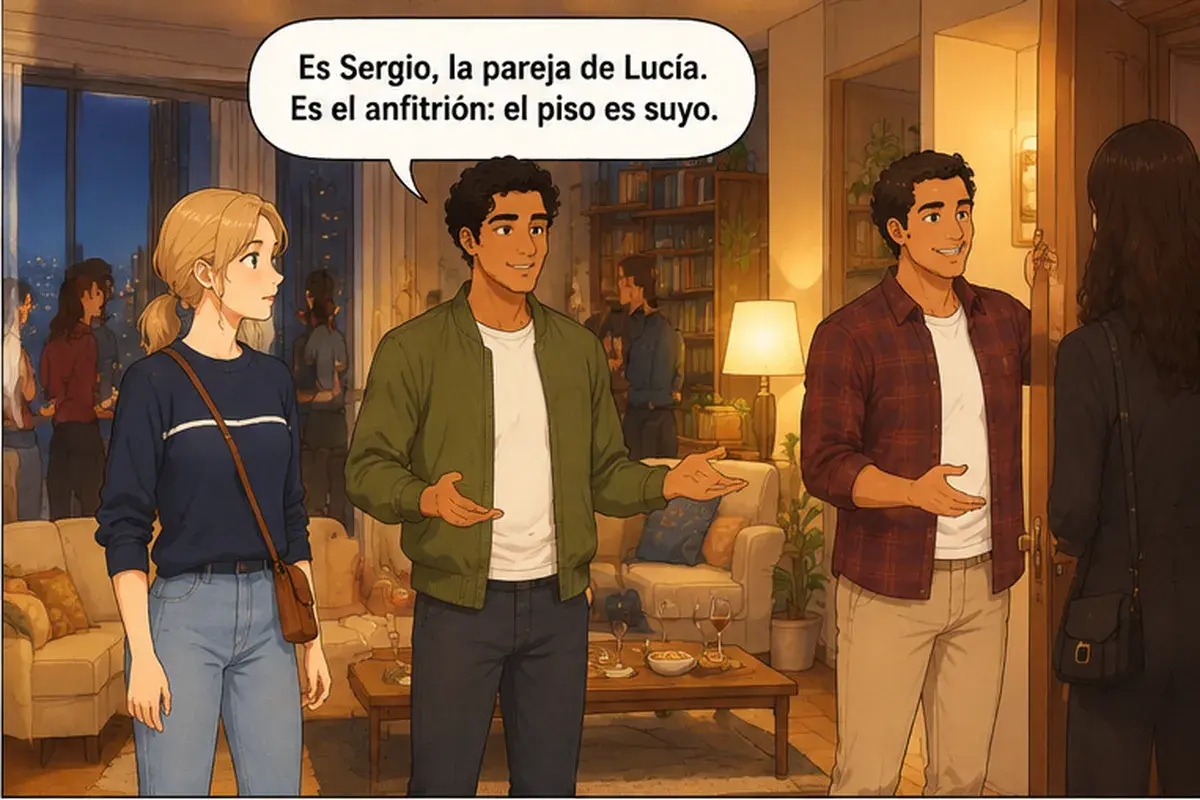
- Pablo
Es Sergio, la pareja de Lucía. Es el anfitrión: el piso es suyo.
That's Sergio, Lucía's partner. He's the host: the apartment is his.
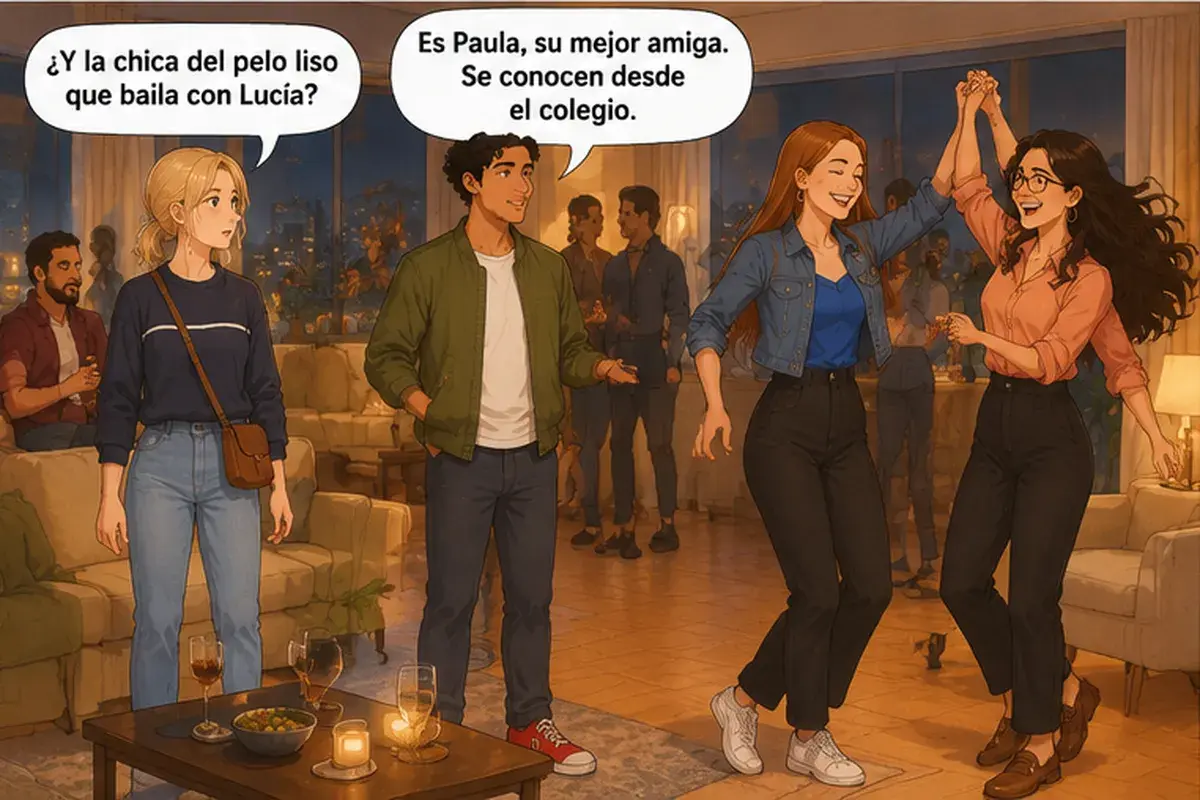
- Ana
¿Y la chica del pelo liso que baila con Lucía?
And the girl with straight hair who's dancing with Lucía?
- Pablo
Es Paula, su mejor amiga. Se conocen desde el colegio.
That's Paula, her best friend. They've known each other since school.
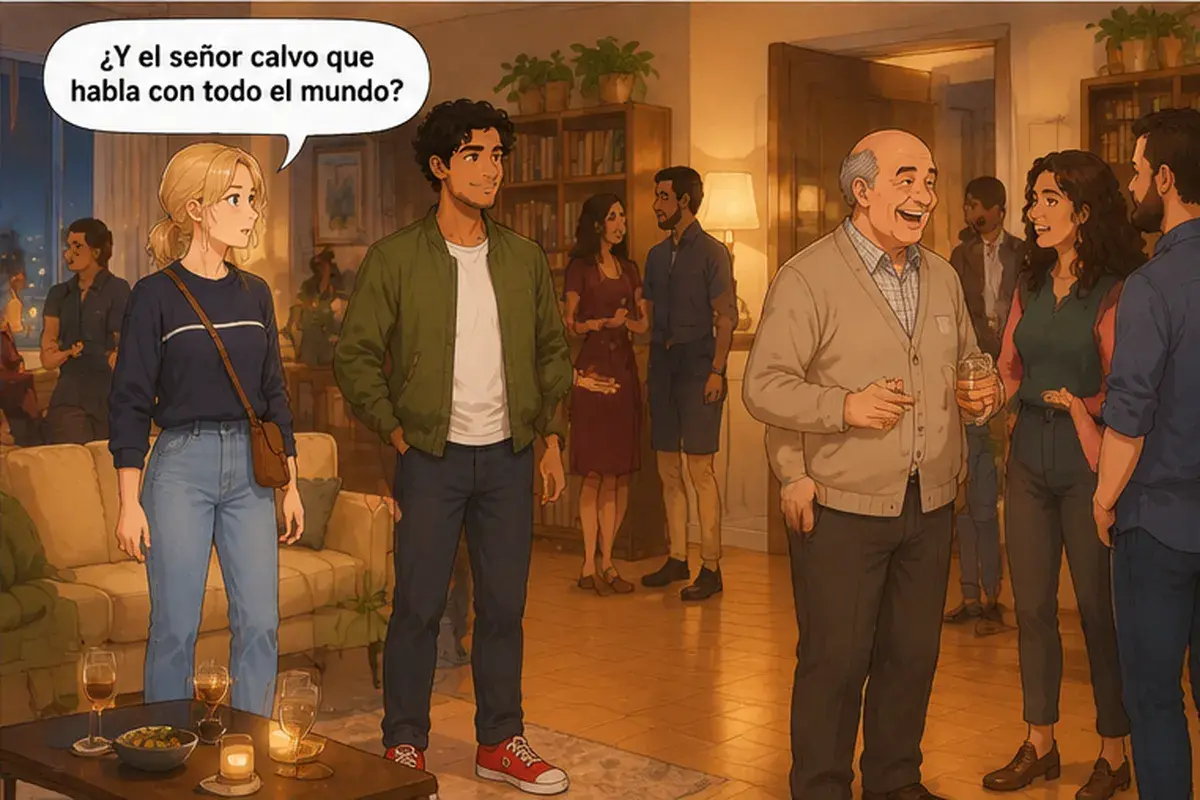
- Ana
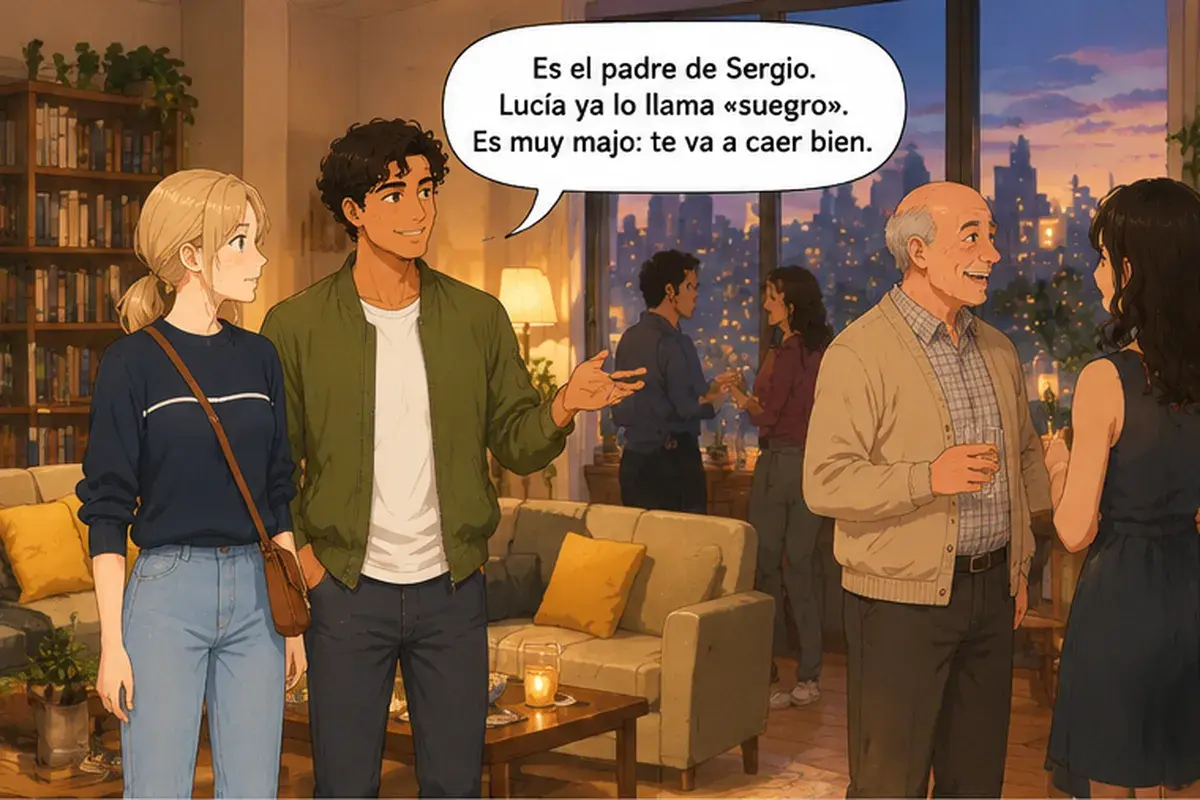
¿Y el señor calvo que habla con todo el mundo?
And the bald man who's talking to everyone?
- Pablo
Es el padre de Sergio. Lucía ya lo llama «suegro». Es muy majo: te va a caer bien.
That's Sergio's father. Lucía already calls him "father-in-law." He's really nice: you're going to like him.
- Ana
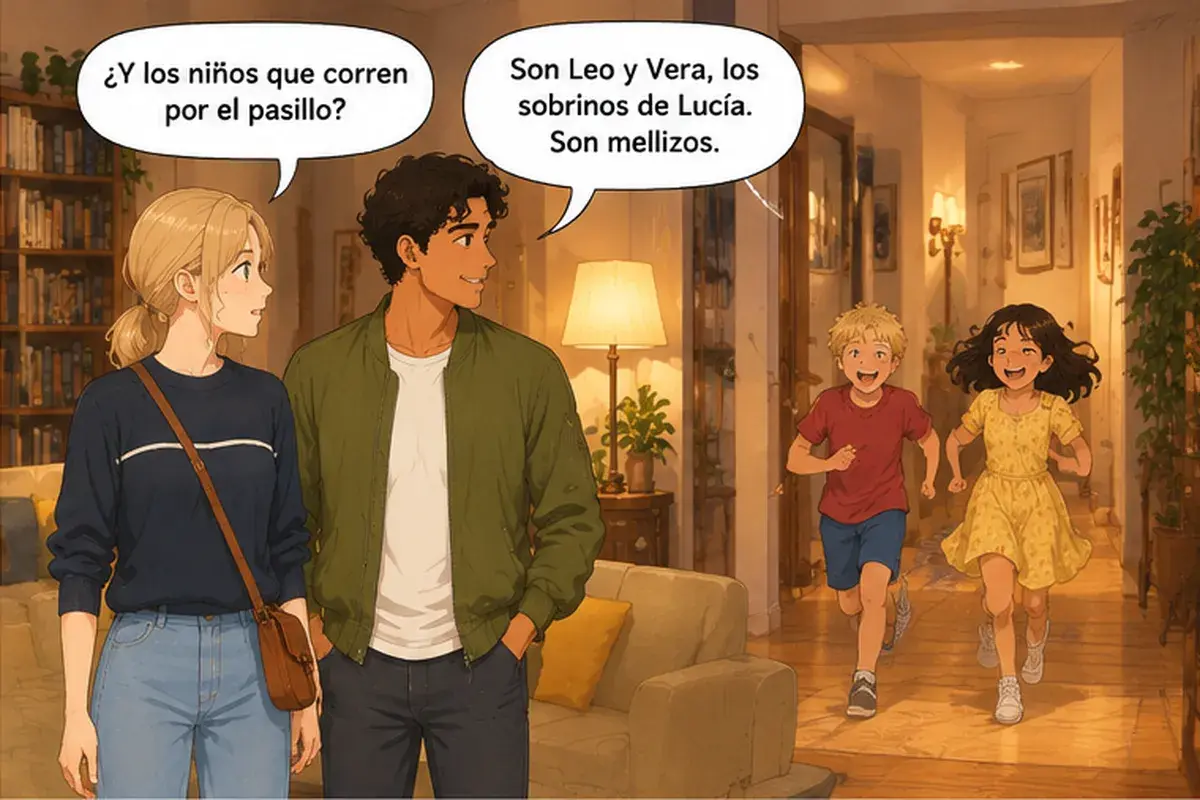
¿Y los niños que corren por el pasillo?
And the kids who are running down the hallway?
- Pablo
Son Leo y Vera, los sobrinos de Lucía. Son mellizos.
That's Leo and Vera, Lucía's niece and nephew. They're fraternal twins.
- Ana
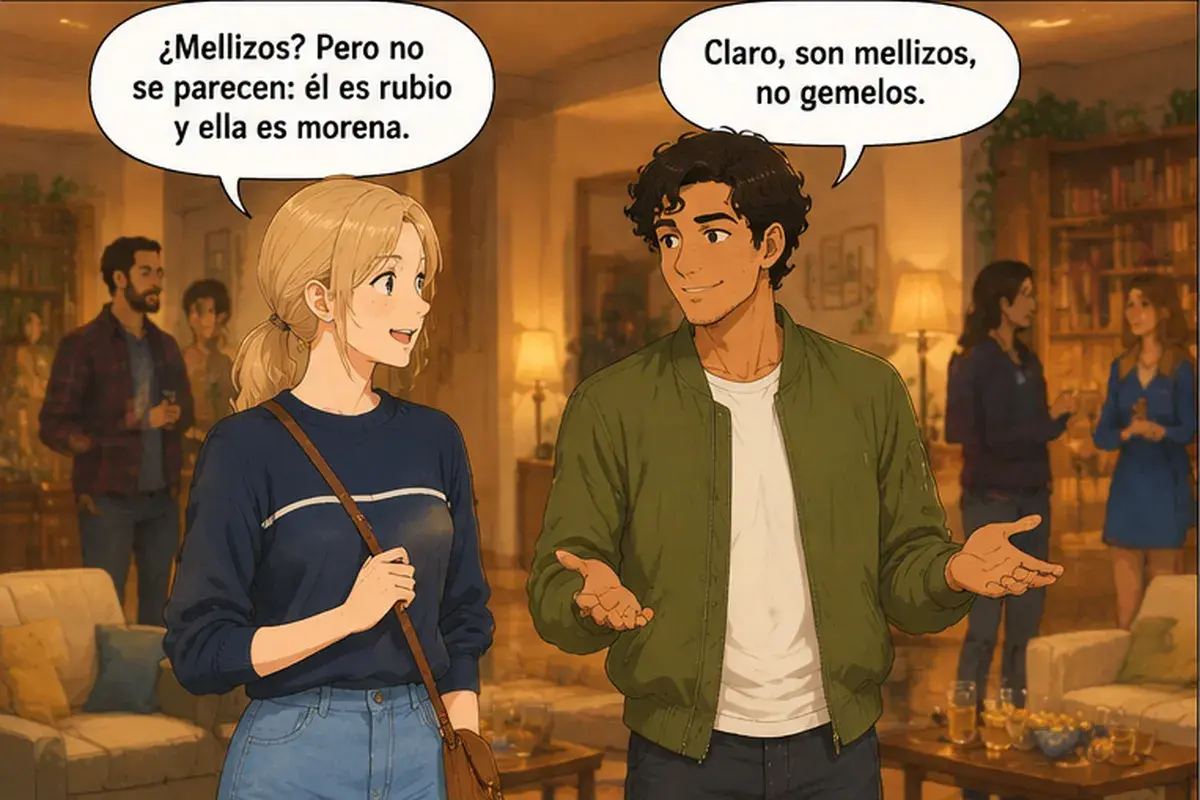
¿Mellizos? Pero no se parecen: él es rubio y ella es morena.
Fraternal twins? But they don't look alike: he's blond and she has dark hair.
- Pablo
Claro, son mellizos, no gemelos.
Of course: they're fraternal twins, not identical twins.
- Ana
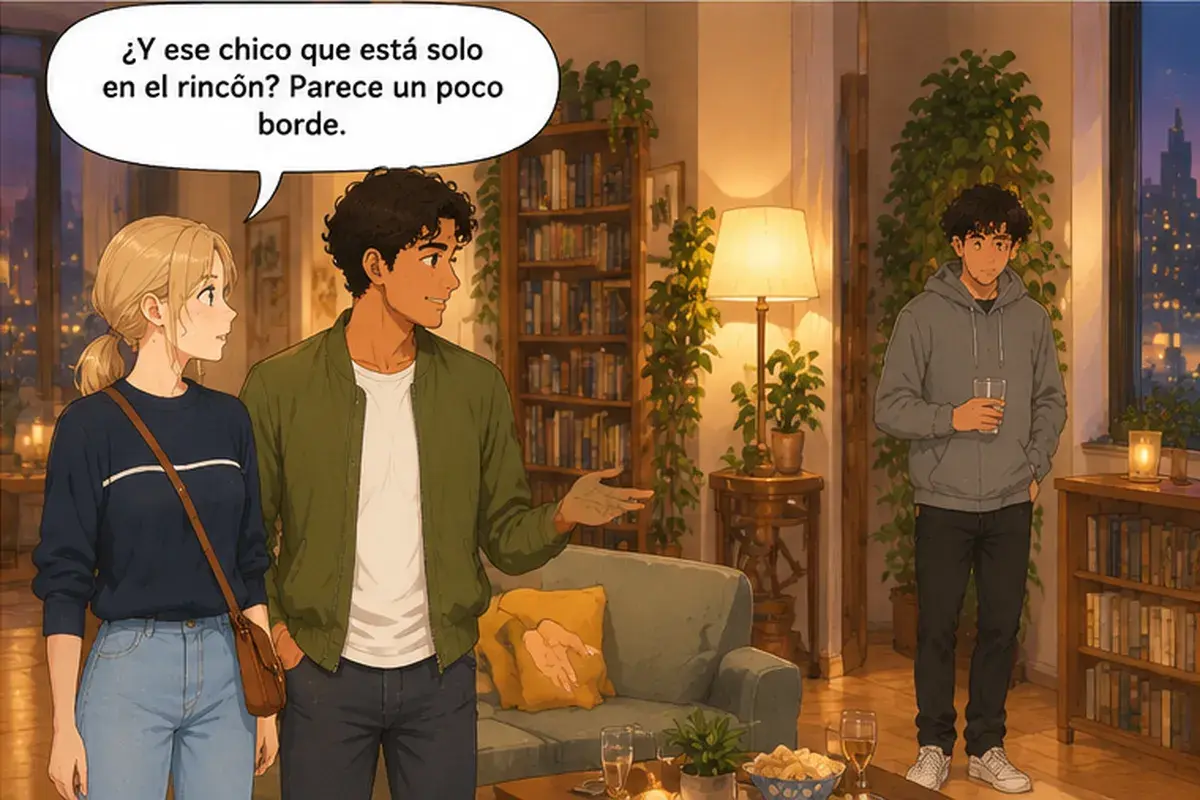
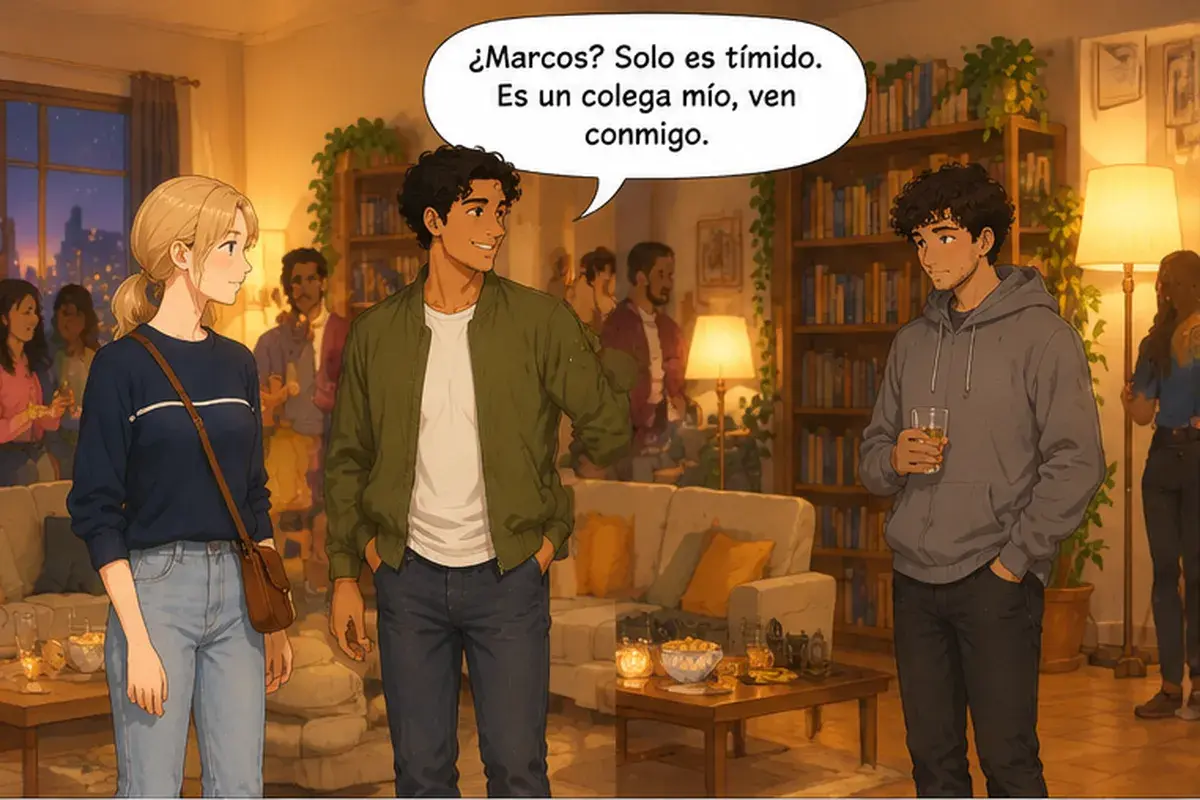
¿Y ese chico que está solo en el rincón? Parece un poco borde.
And that guy who's by himself in the corner? He seems a bit rude.
- Pablo
¿Marcos? Solo es tímido. Es un colega mío, ven conmigo.
Marcos? He's just shy. He's a buddy of mine, come with me.
- Pablo
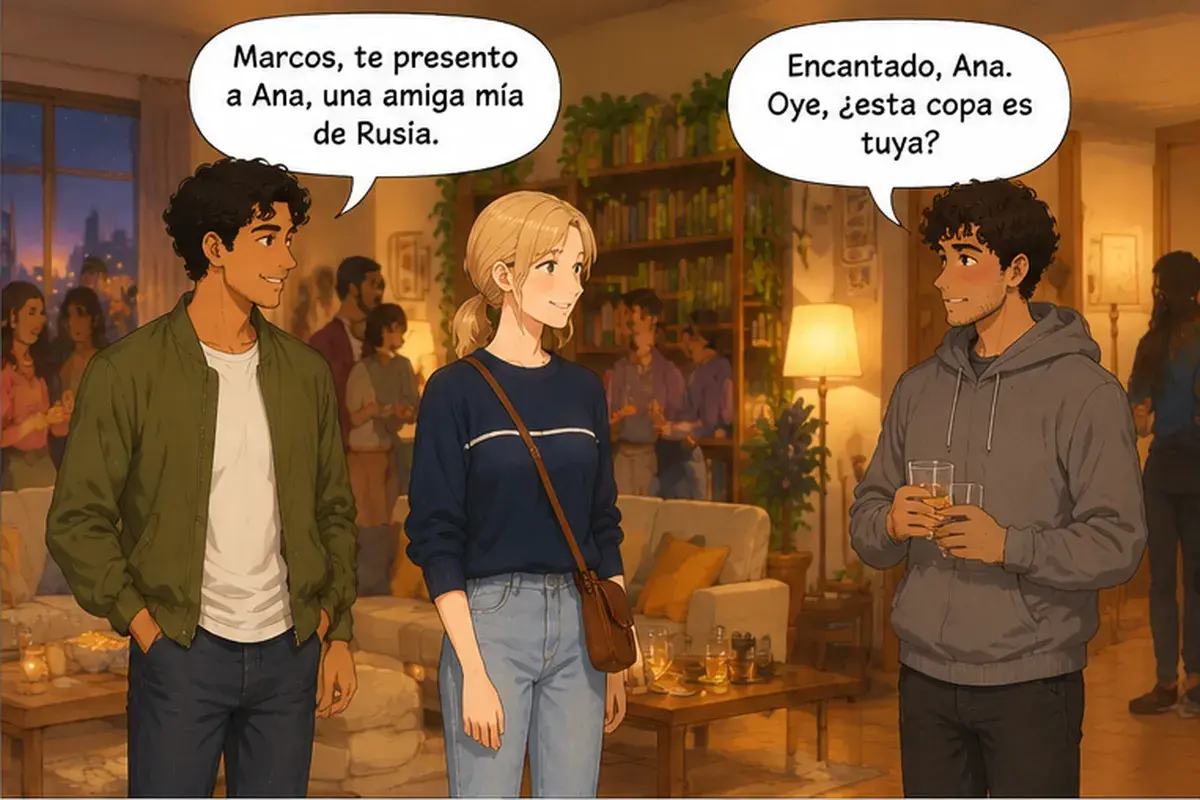
Marcos, te presento a Ana, una buena amiga mía.
Marcos, let me introduce you to Ana, a good friend of mine.
- Marcos
Encantado, Ana. Oye, ¿esta copa es tuya?
Nice to meet you, Ana. Hey, is this wine glass yours? (man speaking)
- Ana
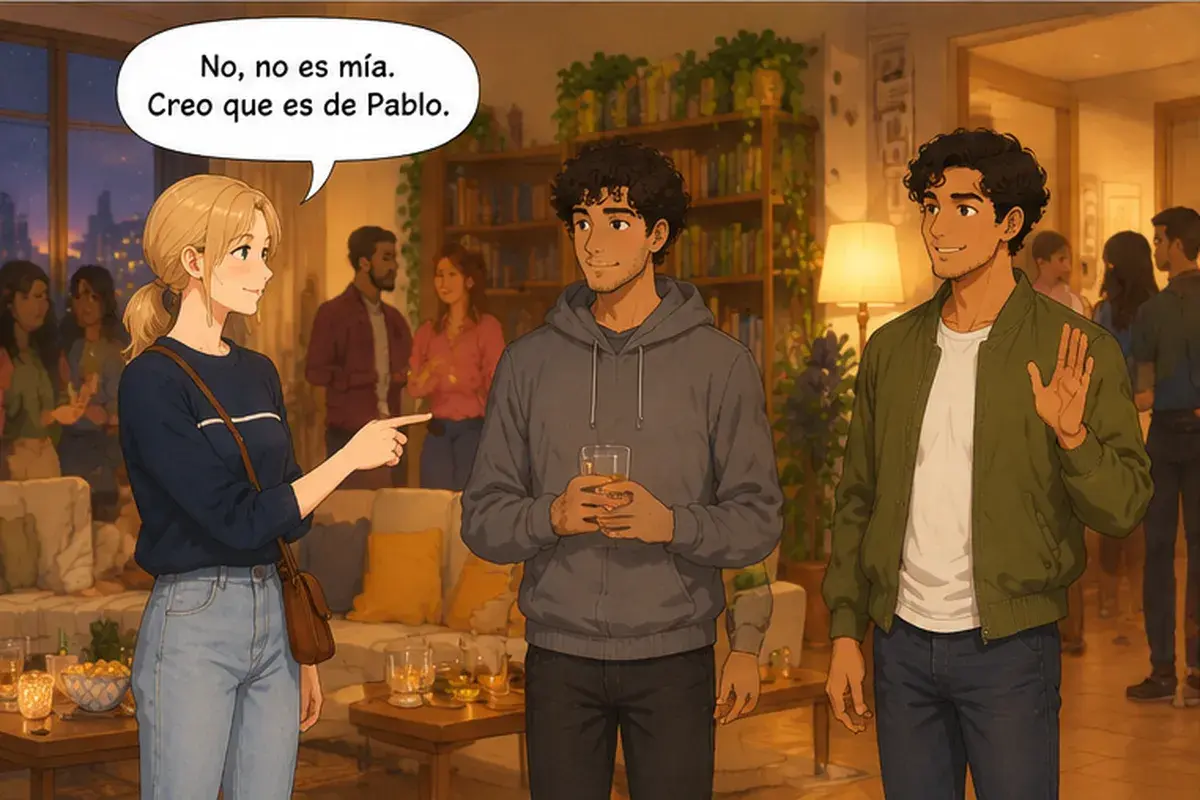
No, no es mía. Creo que es de Pablo.
No, it's not mine. I think it's Pablo's.
- Pablo
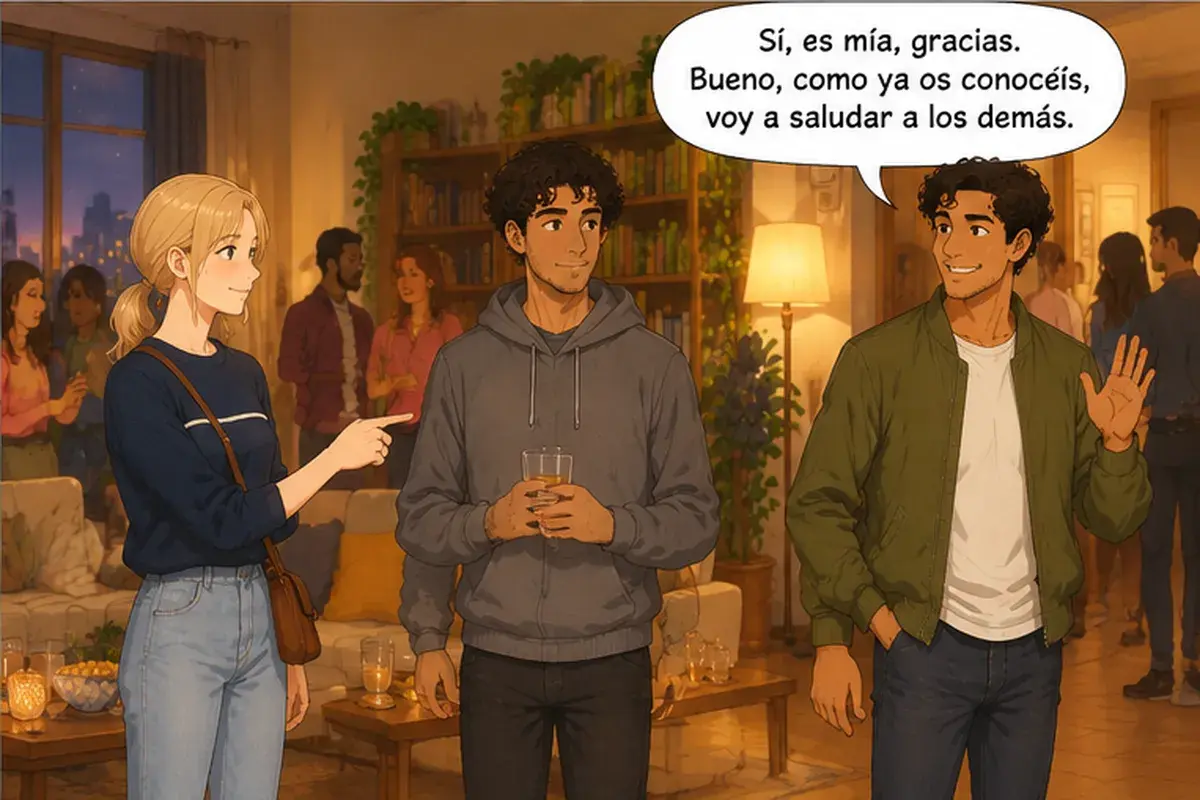
Sí, es mía, gracias. Bueno, como ya os conocéis, voy a saludar a los demás.
Yes, it's mine, thanks. Well, since you already know each other, I'm going to say hi to the others. (to several people)
Grammar for this text
Que — who. Ana points at people and asks who they are: el chico que abre la puerta — the guy who's opening the door; los niños que corren por el pasillo — the kids who are running down the hallway.
La chica del pelo liso — the girl with straight hair. To pick out a person by a feature, use de + article: word for word, "the girl of the straight hair".
Mío, tuyo, suyo. After ser — whose thing it is: ¿Esta copa es tuya? — No, no es mía. After a noun — "a … of mine": un colega mío (a buddy of mine), una buena amiga mía (a good friend of mine).
Como ya os conocéis — since you already know each other: como at the start of a sentence means "since".
Te va a caer bien — you're going to like him. Caer bien works like gustar, but only about people.
Lucía ya lo llama «suegro» — Lucía already calls him "father-in-law". Lucía and Sergio aren't married, but in Spain people often use suegro, suegra and cuñado casually for their partner's family too.
Words just for friends. Majo (nice), borde (rude) and colega in the sense of "buddy" are colloquial words from Spain. With friends they sound natural; with your boss or in writing, say amable, antipático, amigo instead.
Oye — hey, listen: that's how Marcos gets Ana's attention. It's the tú command of oír (to hear): a tú command is the same as the él / ella form (unit 6), and for oír it's oye (unit 16).
Words and grammar of the unit: Introduce your friends at a party.
Learn the words from the texts with flashcards
In the app, you can tap any word in a text to see its translation, forms and examples, and new words stick with flashcards. 15 minutes a day.
Start for freeEverything is open for free. No card needed to sign up.