

Spanish dialogue with translation · A2 · 16 lines
¿Qué vemos esta noche? What should we watch tonight?
Comic · 15 panels
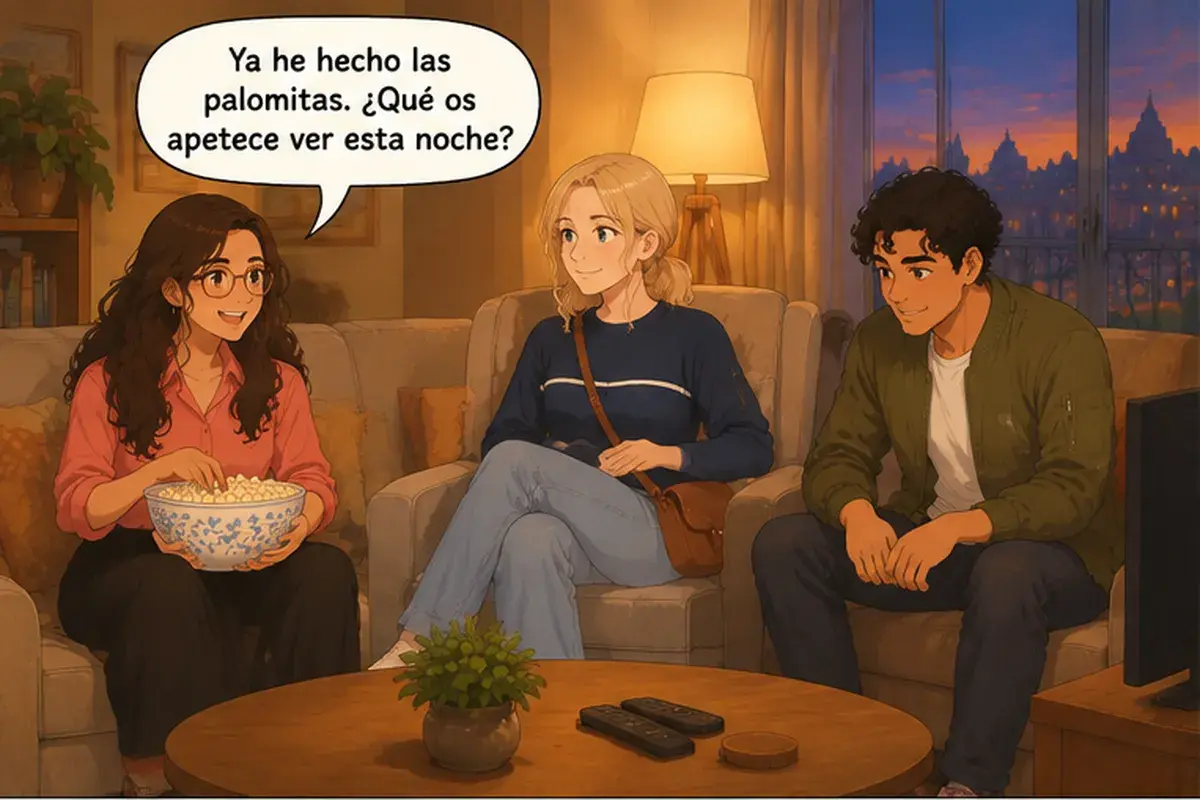
- Lucía
Ya he hecho las palomitas. ¿Qué os apetece ver esta noche?
I've already made the popcorn. What do you feel like watching tonight? (to several people)
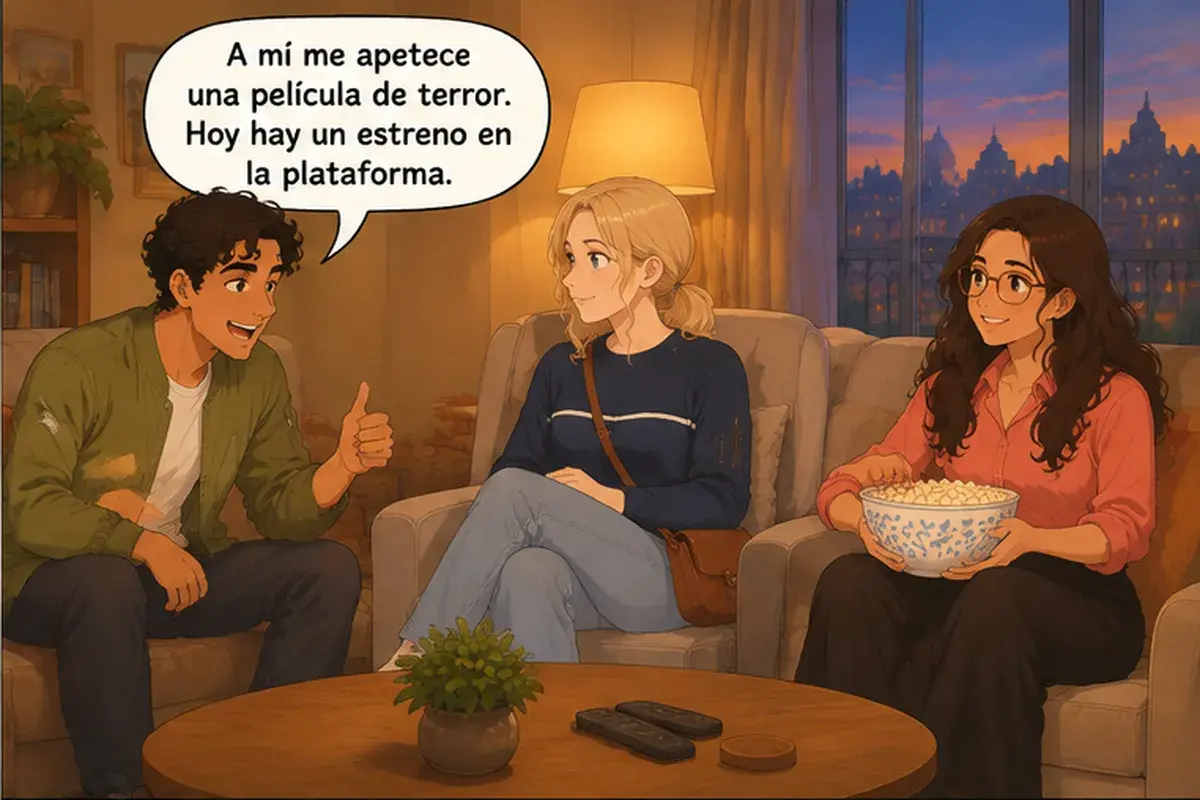
- Pablo
A mí me apetece una película de terror. Hoy hay un estreno en la plataforma.
I feel like a horror movie. There's a premiere on the streaming service today.
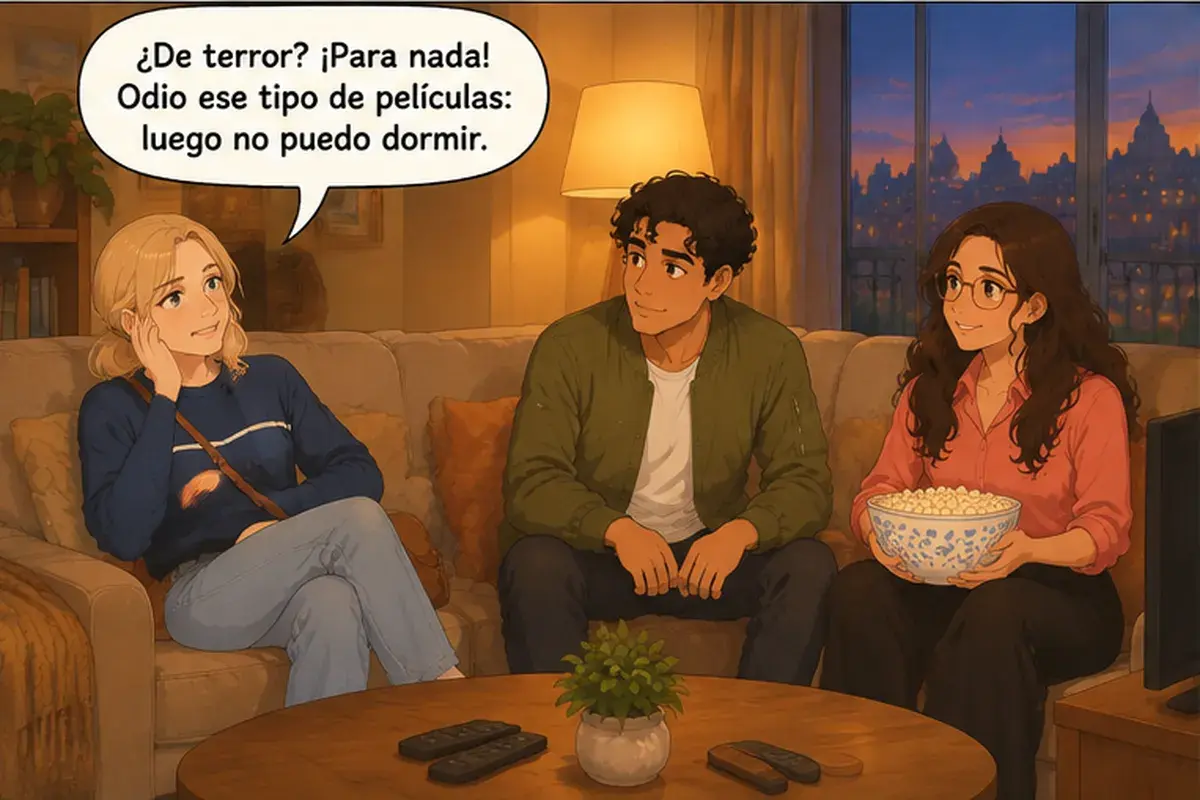
- Ana
¿De terror? ¡Para nada! Odio ese tipo de películas: luego no puedo dormir.
Horror? Not at all! I hate that kind of movie: afterward I can't sleep.
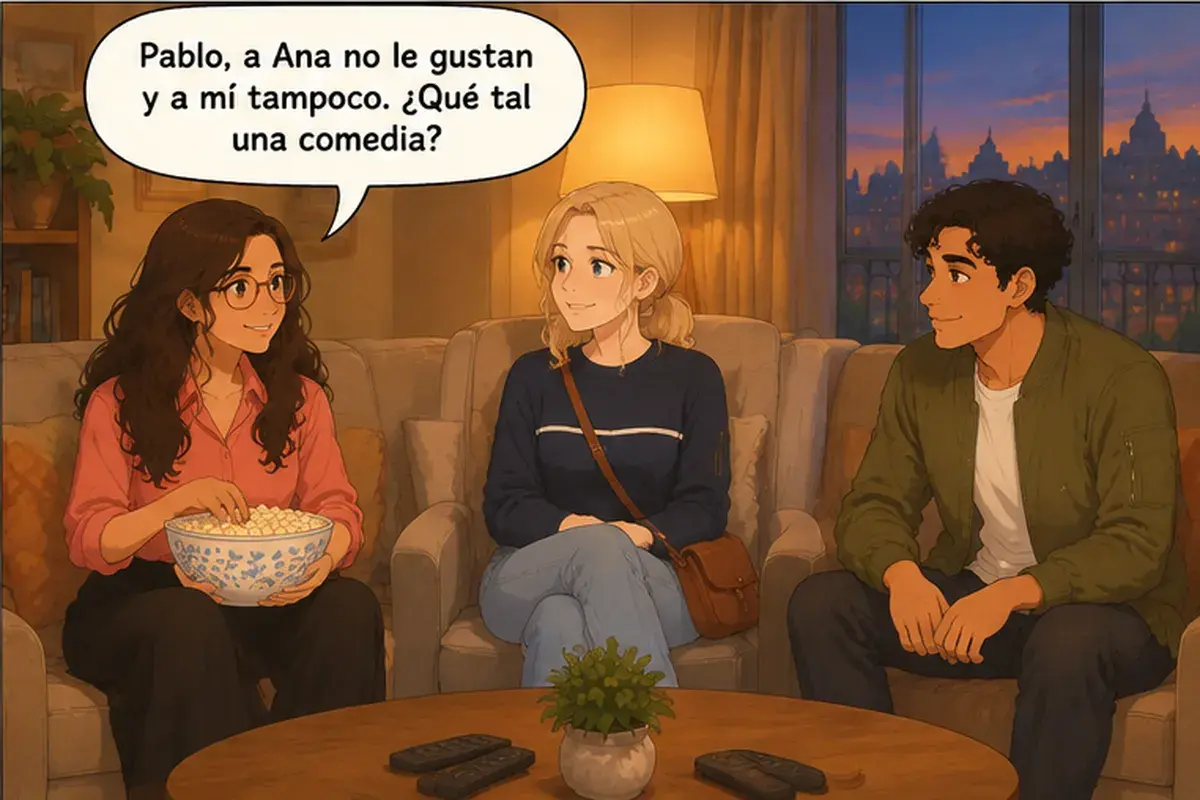
- Lucía
Pablo, a Ana no le gustan y a mí tampoco. ¿Qué tal una comedia?
Pablo, Ana doesn't like them, and neither do I. How about a comedy?
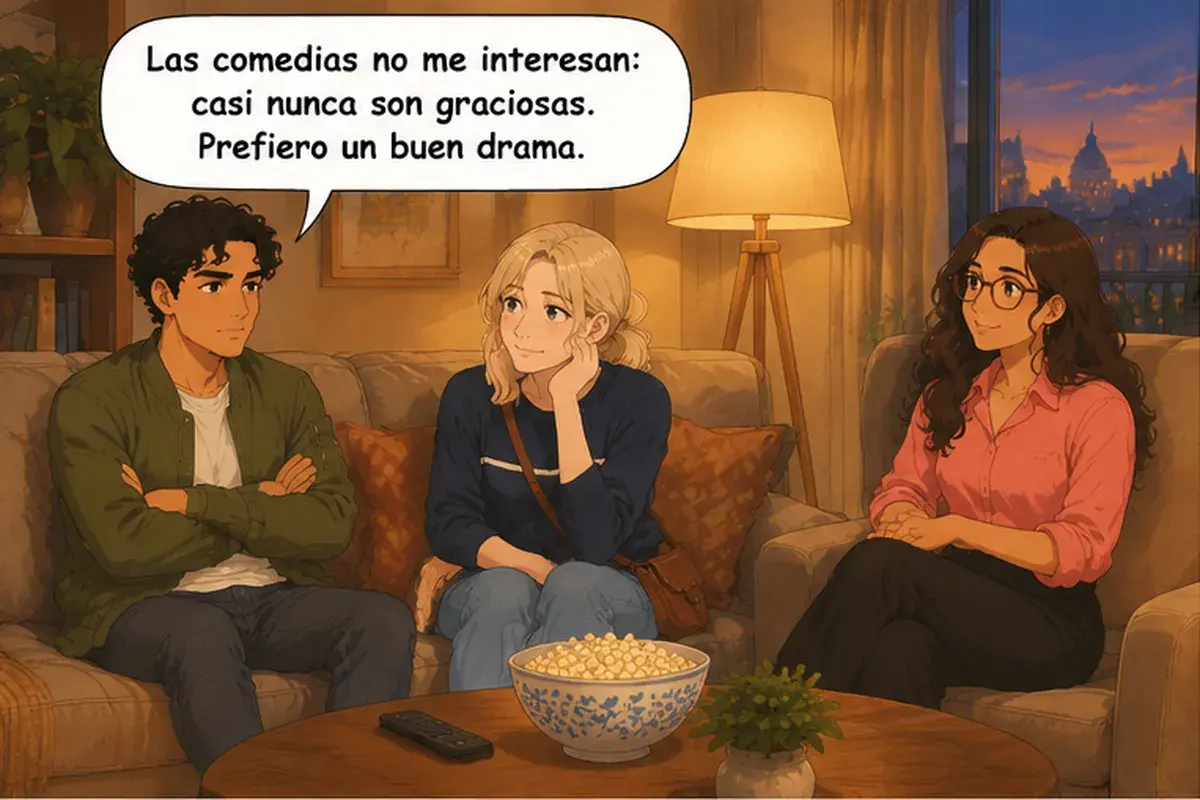
- Pablo
Las comedias no me interesan: casi nunca son graciosas. Prefiero un buen drama.
I'm not interested in comedies: they're almost never funny. I prefer a good drama.
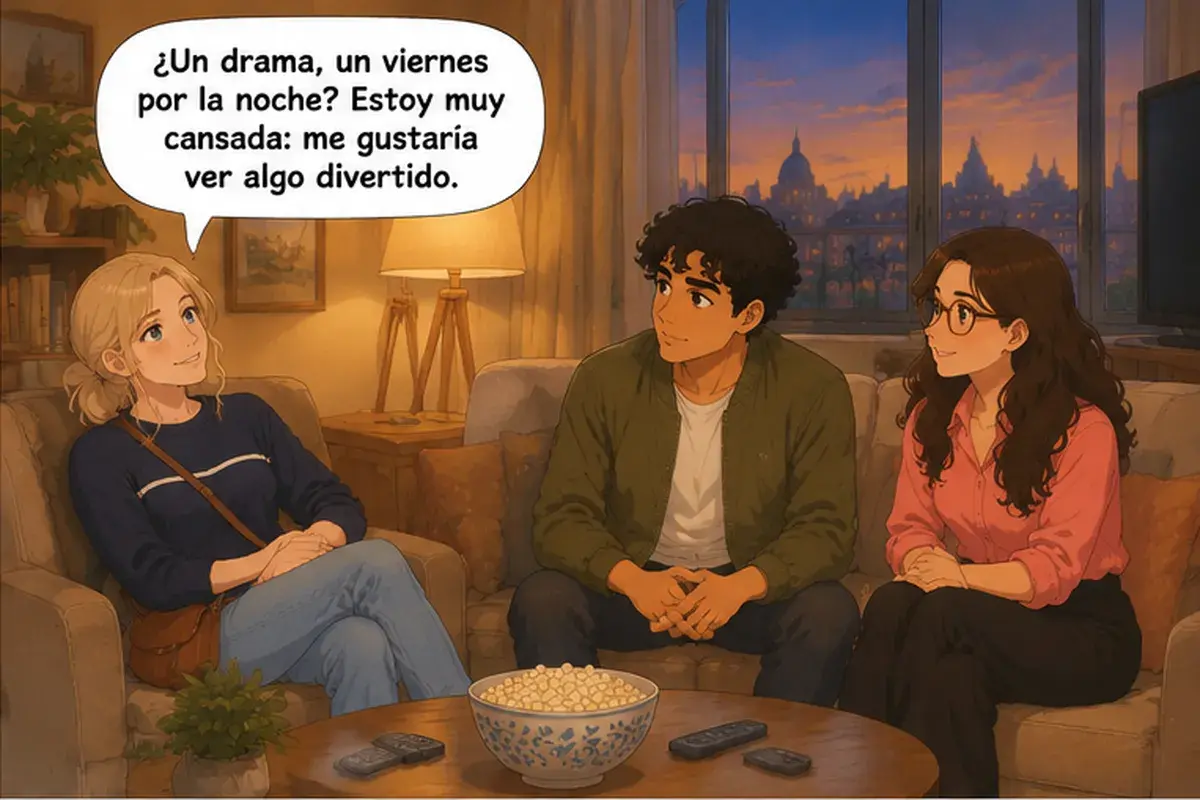
- Ana
¿Un drama, un viernes por la noche? Estoy muy cansada: me gustaría ver algo divertido.
A drama, on a Friday night? I'm very tired: I'd like to watch something fun (woman speaking).
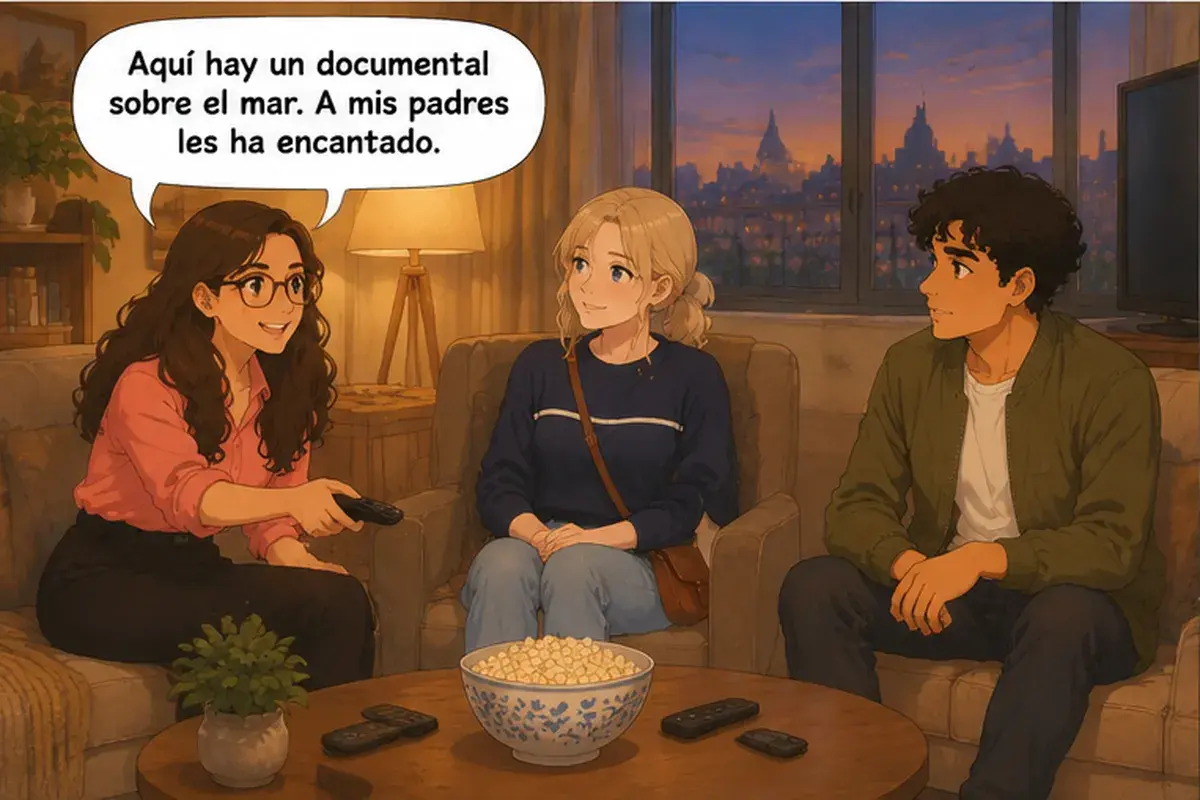
- Lucía
Aquí hay un documental sobre el mar. A mis padres les ha encantado.
Here's a documentary about the sea. My parents loved it.
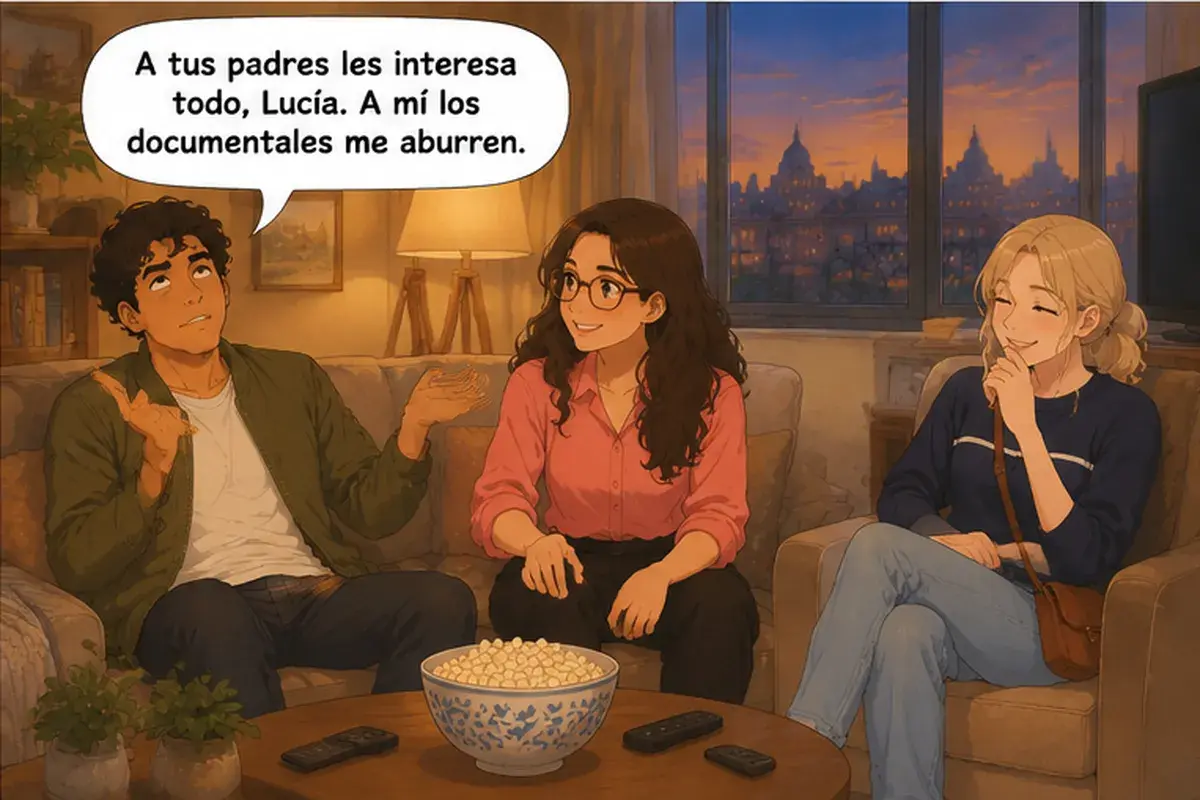
- Pablo
A tus padres les interesa todo, Lucía. A mí los documentales me aburren.
Your parents are interested in everything, Lucía. Documentaries bore me.
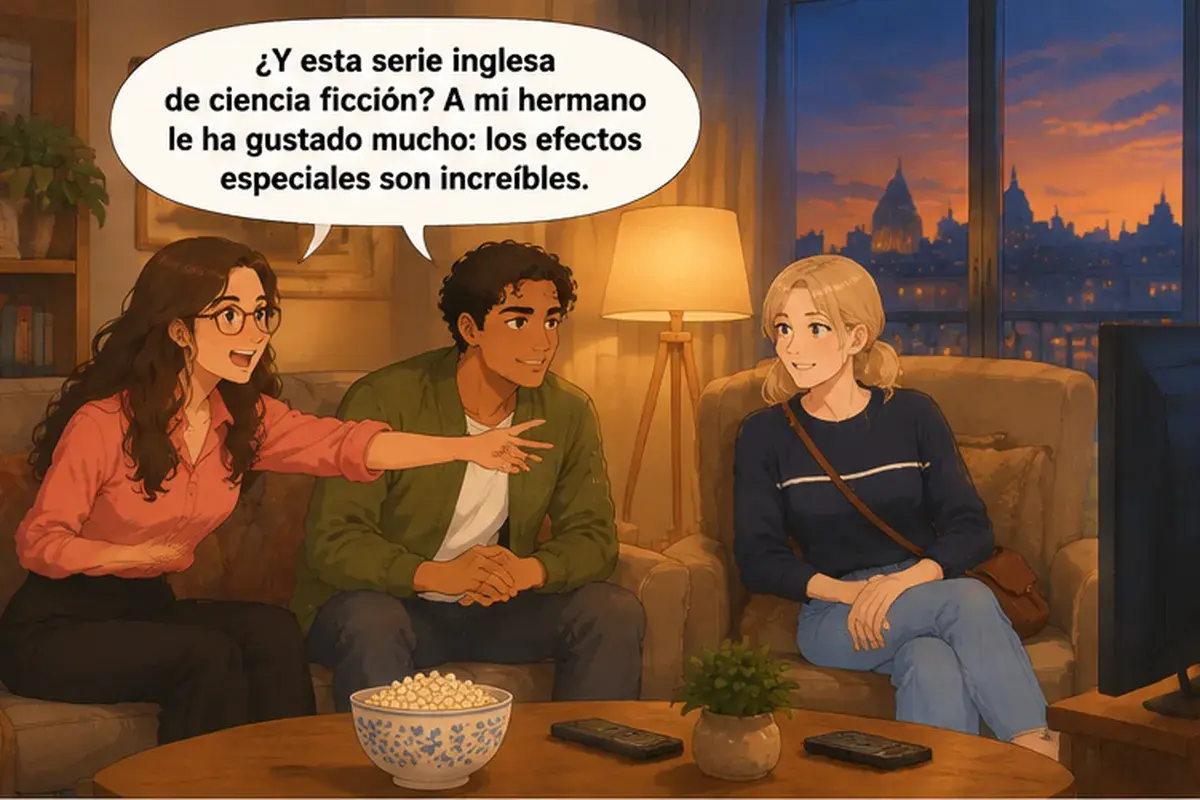
- Lucía
¿Y esta serie inglesa de ciencia ficción? A mi hermano le ha gustado mucho: los efectos especiales son increíbles.
And this English science fiction series? My brother really liked it: the special effects are incredible.
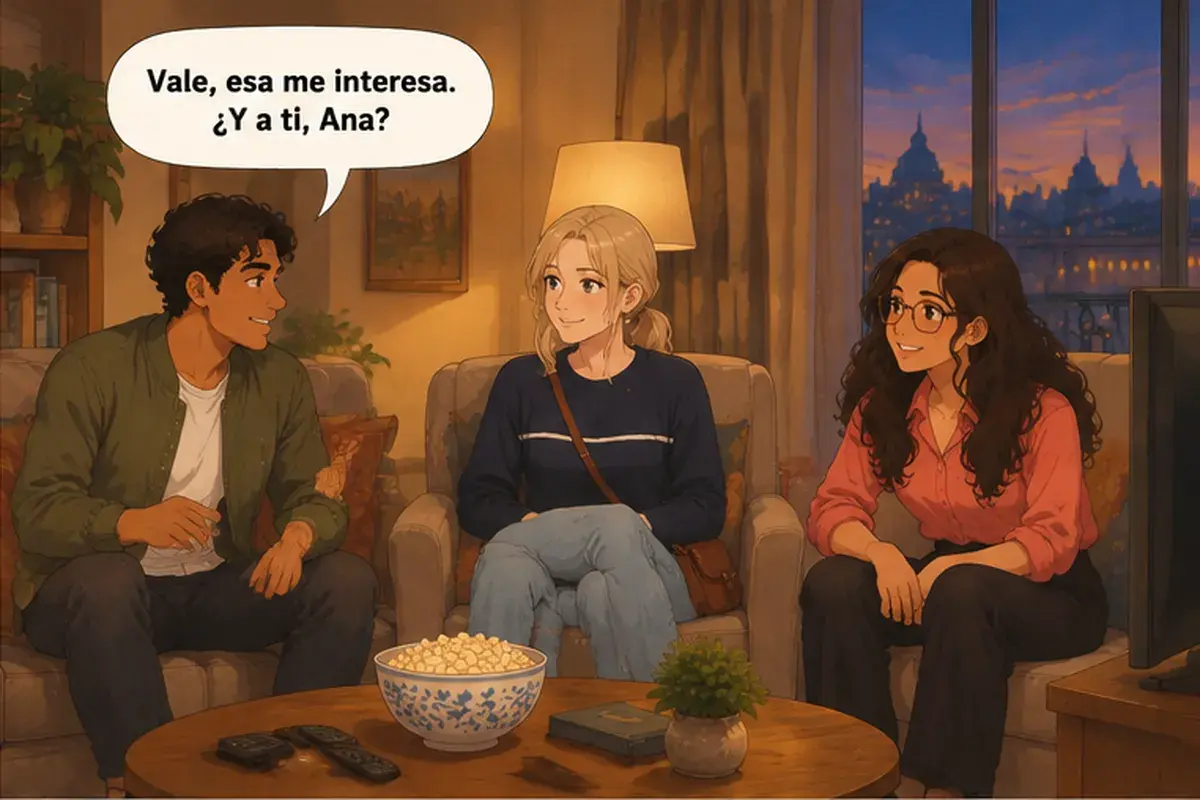
- Pablo
Vale, esa me interesa. ¿Y a ti, Ana?
OK, I'm interested in that one. What about you, Ana?
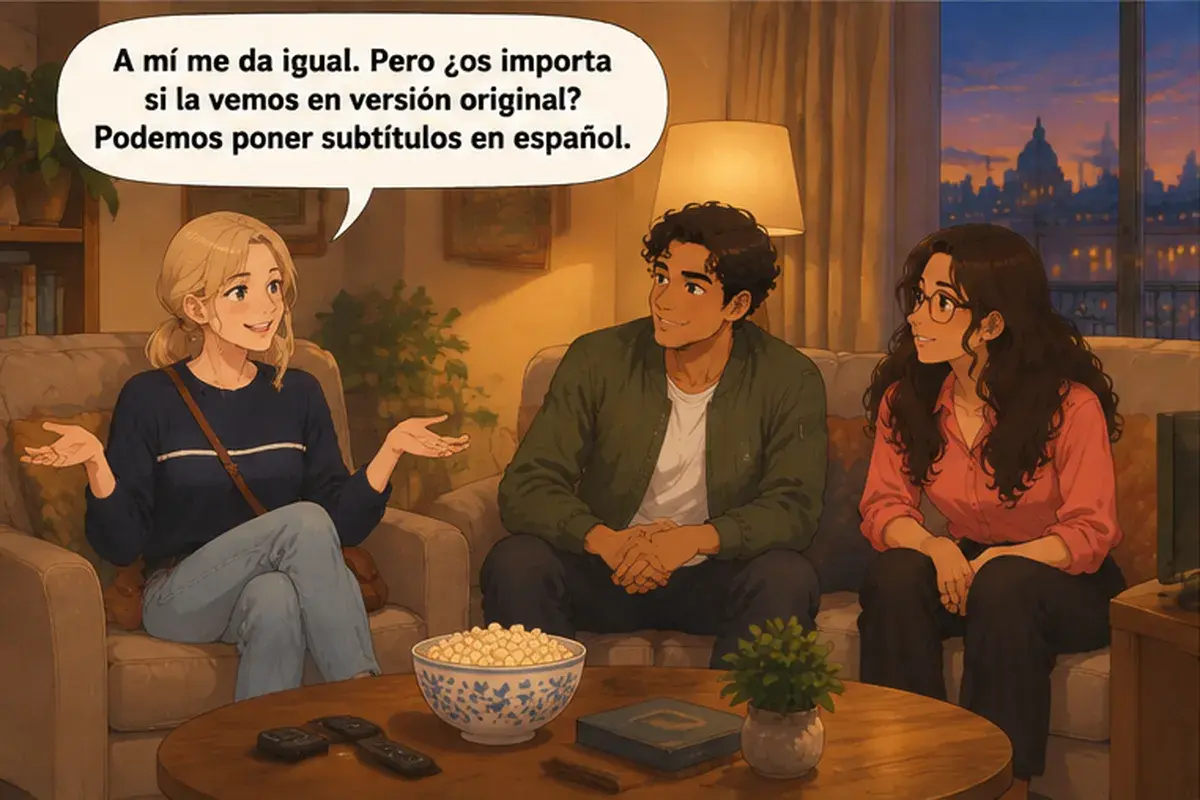
- Ana
A mí me da igual. Pero ¿os importa si la vemos en versión original? Podemos poner subtítulos en español.
It's all the same to me. But do you mind if we watch it in the original language? We can put on Spanish subtitles (to several people).
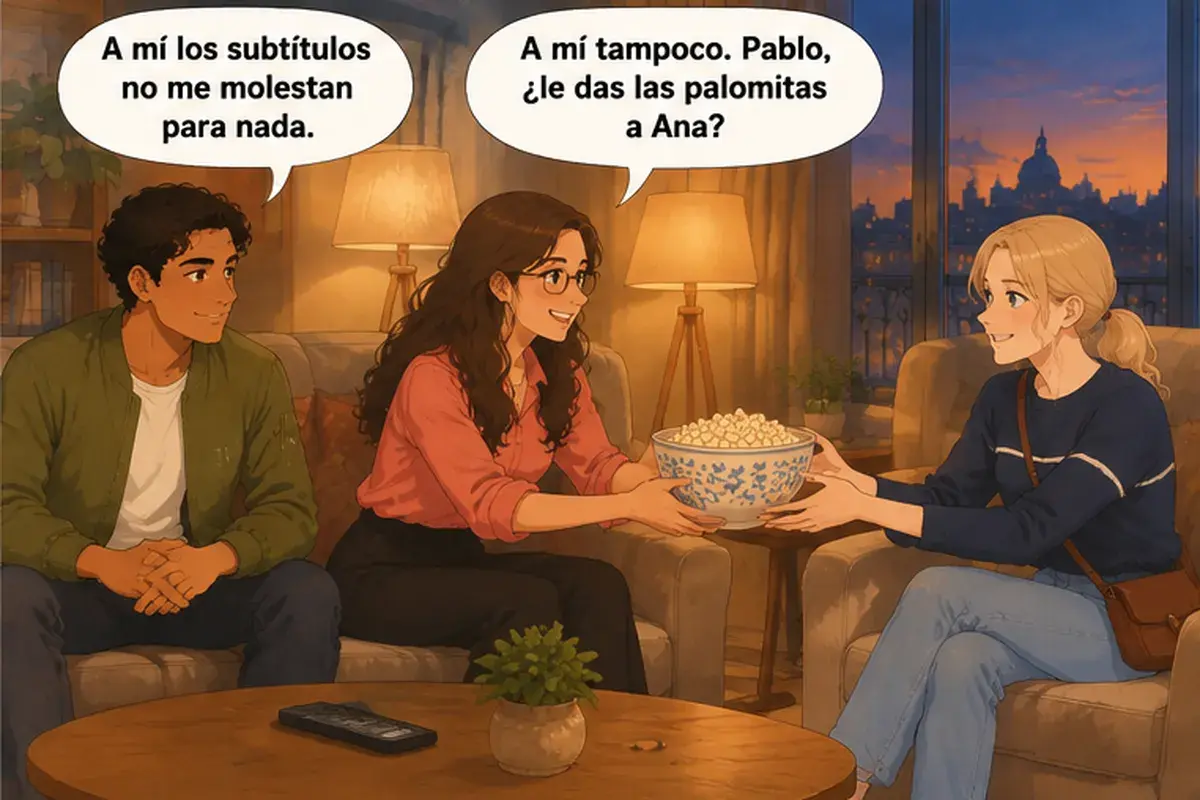
- Pablo
A mí los subtítulos no me molestan para nada.
Subtitles don't bother me at all.
- Lucía
A mí tampoco. Pablo, ¿le das las palomitas a Ana?
Me neither. Pablo, will you pass Ana the popcorn?
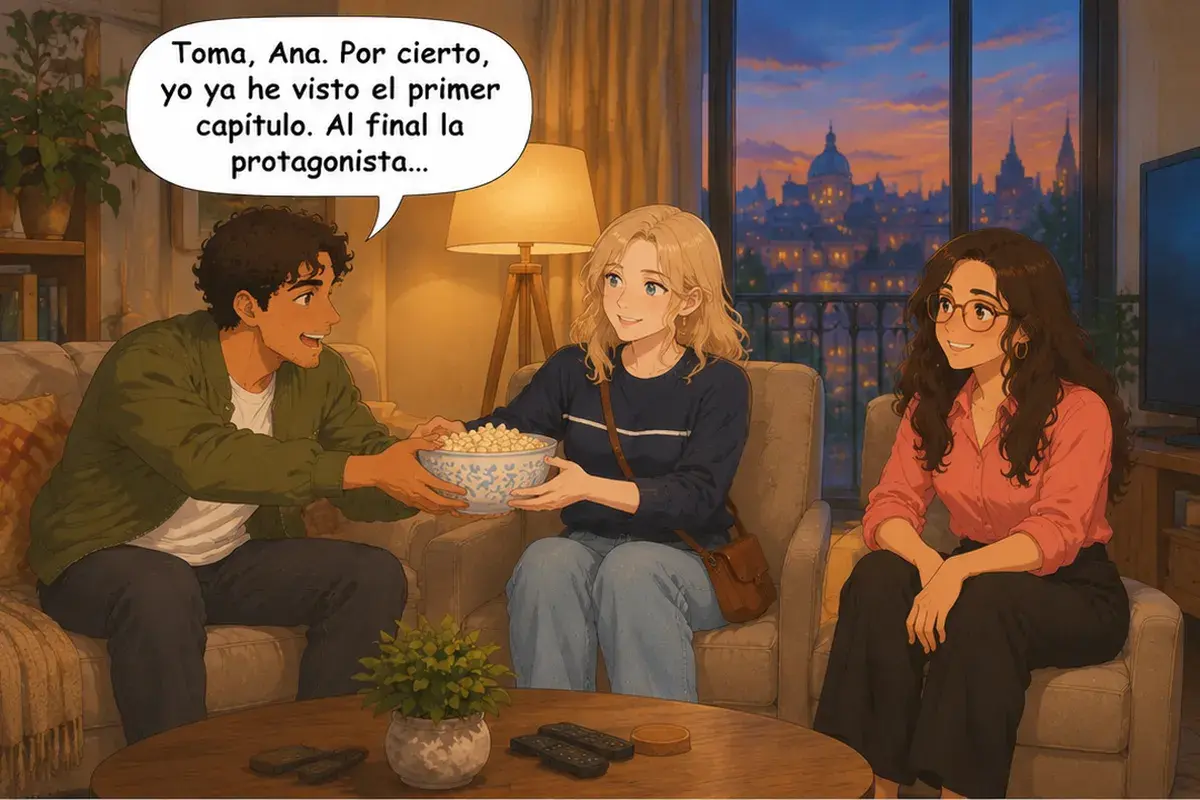
- Pablo
Toma, Ana. Por cierto, yo ya he visto el primer capítulo. Al final la protagonista…
Here, Ana. By the way, I've already seen the first episode. At the end, the main character…
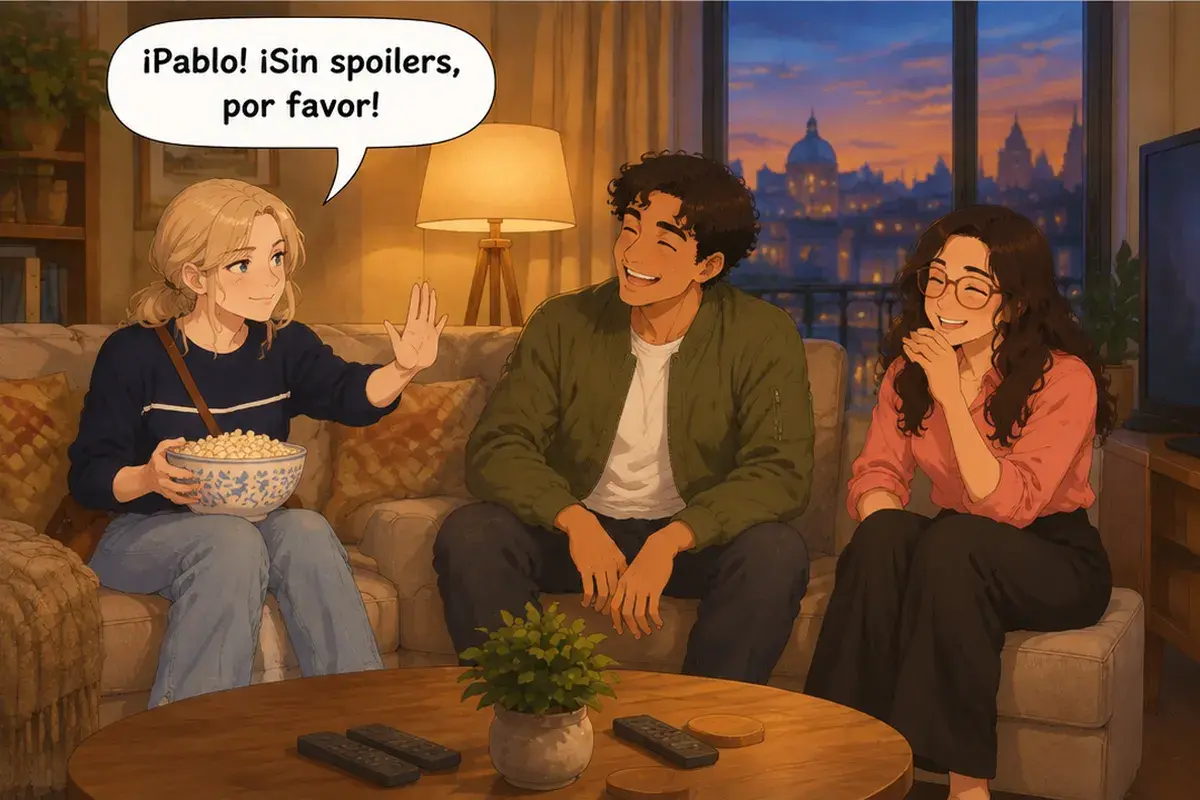
- Ana
¡Pablo! ¡Sin spoilers, por favor!
Pablo! No spoilers, please!
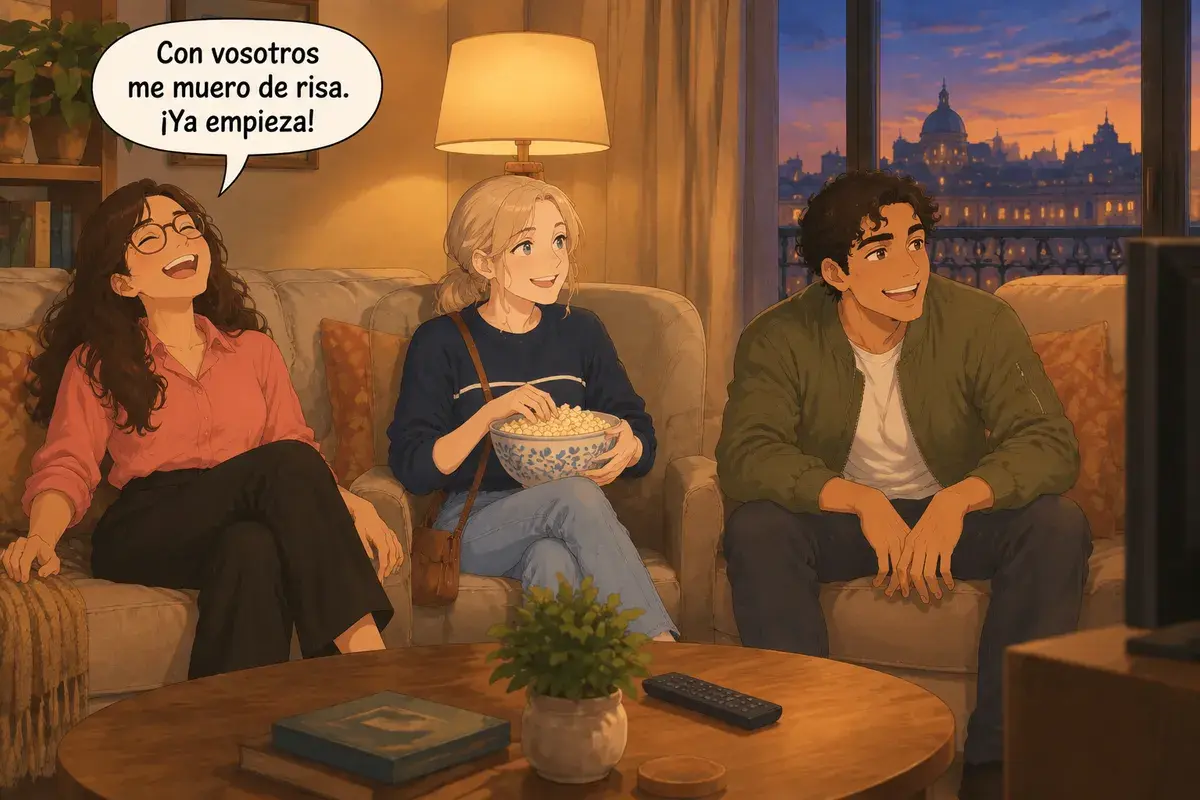
- Lucía
Con vosotros me muero de risa. ¡Ya empieza!
I die laughing with you. It's starting! (to several people)
Grammar for this text
Verbs like gustar. ¿Qué os apetece ver? (What do you feel like watching? said to several people); no me interesan (they don't interest me); me aburren (they bore me); no me molestan (they don't bother me). For one thing the verb ends in -a or -e, for several things in -an or -en.
Le and les: to him, to her, to them. A mi hermano le ha gustado (my brother liked it), a mis padres les ha encantado (my parents loved it). The person is named, and le is still there: ¿Le das las palomitas a Ana? (Will you pass Ana the popcorn?)
¿Os importa si…? is a polite request to several people: "Do you mind if…?"
Me gustaría means "I would like". It's a form of gustar, like me gusta (I like it), but the ending -ía works like English "would". You'll learn it properly at B1 (unit 4); for now, learn it as a set phrase.
Me muero de risa means "I'm dying of laughter", a casual exaggeration.
In Spain, movies and series are usually dubbed into Spanish. Versión original means with the original sound, in the language the movie was made in.
Words and grammar of the unit: Choose something to watch tonight.
Learn the words from the texts with flashcards
In the app, you can tap any word in a text to see its translation, forms and examples, and new words stick with flashcards. 15 minutes a day.
Start for freeEverything is open for free. No card needed to sign up.