

Spanish story with translation · A2 · 16 lines
El autobús equivocado The wrong bus
Comic · 10 panels

El sábado pasado decidí visitar el castillo de Sagunto.
Last Saturday I decided to visit the castle in Sagunto.
Llegué tarde a la estación de autobuses y corrí mucho.
I got to the bus station late and ran a lot.
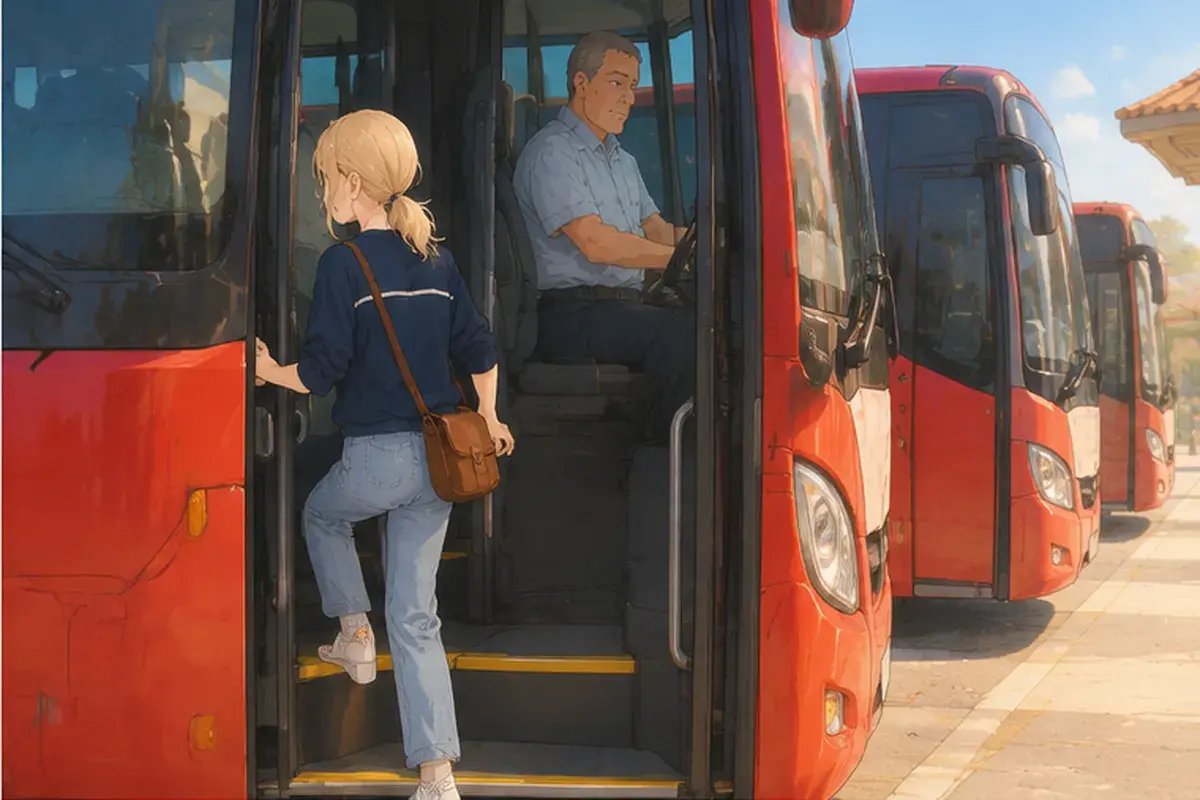
Allí, dos autobuses, uno al lado del otro. Cogí el primero sin leer el nombre.
There were two buses, one next to the other. I took the first one without reading the name.
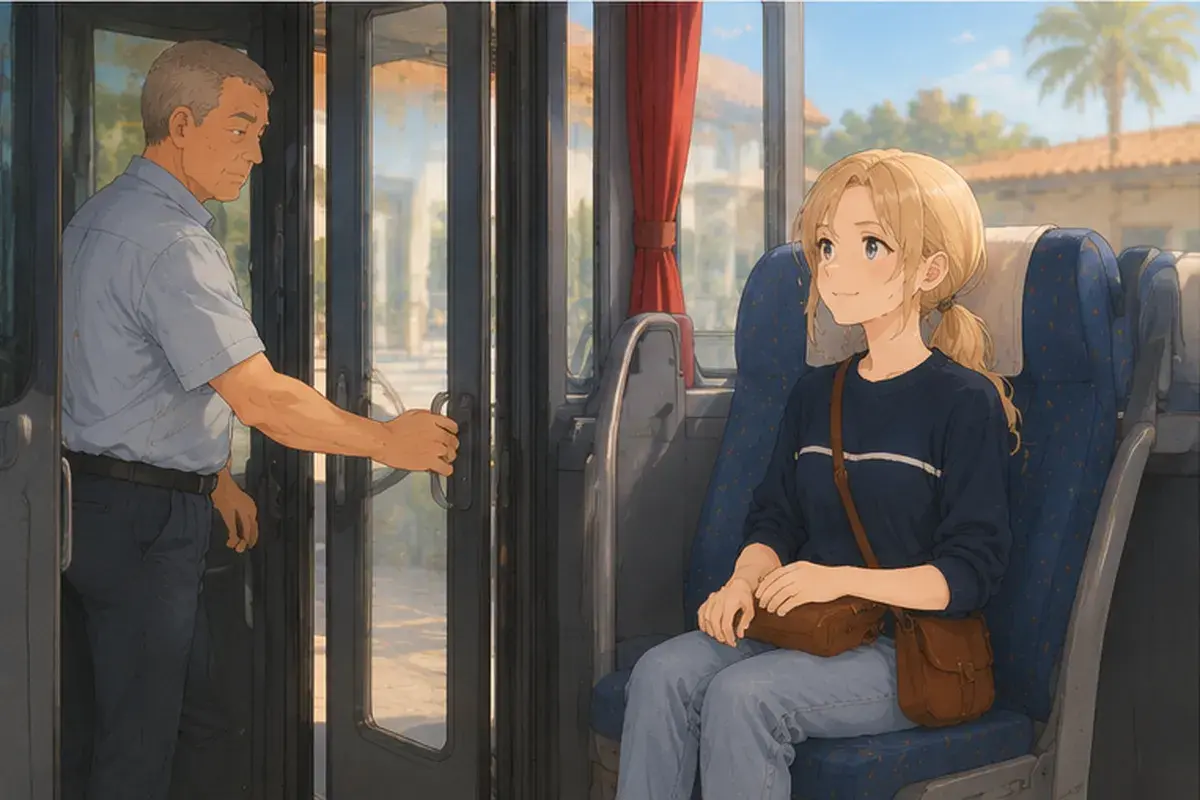
El conductor cerró la puerta y el autobús salió enseguida.
The driver closed the door, and the bus left right away.

Media hora después miré por la ventana y leí en una señal: «Sagunto».
Half an hour later I looked out the window and read on a sign: "Sagunto".

Pero el autobús no entró en la ciudad. Sagunto, atrás; nosotros, adelante.
But the bus didn't go into the city. Sagunto was behind us; we were going forward.

Pregunté al conductor: «Disculpe, ¿y Sagunto?».
I asked the driver: "Excuse me, what about Sagunto?" (formal)
«¿Sagunto? No, este autobús va a Segorbe».
"Sagunto? No, this bus goes to Segorbe."

¡Qué desastre! Me equivoqué de autobús.
What a disaster! I got on the wrong bus.
Bajé en Segorbe, perdida y un poco enfadada. ¿El autobús a Valencia? A las seis.
I got off in Segorbe, lost and a little annoyed. The bus to Valencia? At six (woman speaking).

Entonces decidí recorrer el casco antiguo.
So I decided to go around the old town.
Subí a la parte alta y descubrí una catedral y, detrás, una muralla muy antigua.
I went up to the upper part of town and discovered a cathedral and, behind it, a very old city wall.

Por suerte, encontré un bar abierto en la plaza y comí muy bien.
Luckily, I found an open bar in the square and had a really good lunch.
En una tienda pequeña compré un recuerdo para mi madre: una botella de aceite.
In a small store I bought a souvenir for my mother: a bottle of oil.
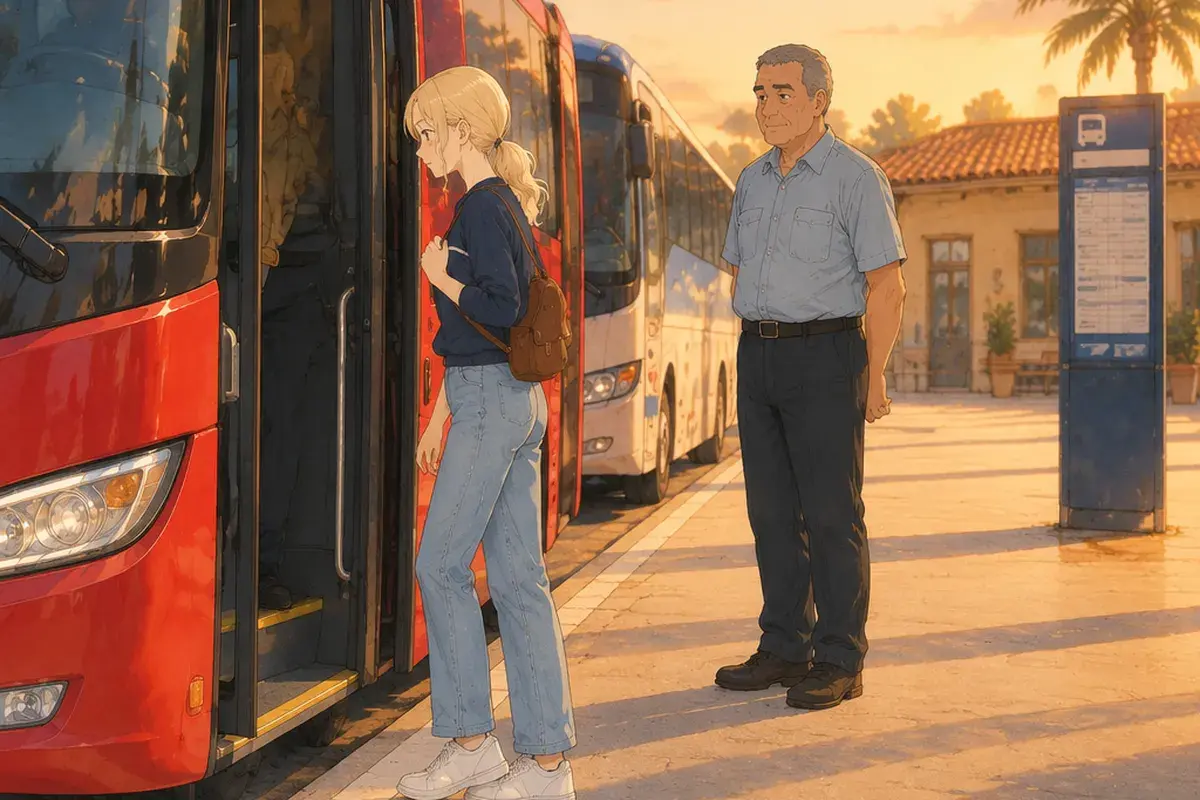
A las seis cogí el autobús a Valencia. ¡Esta vez leí el nombre dos veces!
At six I took the bus to Valencia. This time I read the name twice!
Todavía no conozco Sagunto. Pero ahora me doy cuenta: a veces el autobús equivocado te lleva al mejor sitio.
I still haven't seen Sagunto. But now I realize: sometimes the wrong bus takes you to the best place.
Grammar for this text
A story in order: a chain of preterites. One action ends, the next one starts: decidí → corrí → cogí → leí → subí → descubrí → comí. These are all -er and -ir verbs in the yo form, with the ending -í. The él form: el autobús salió.
Cogí el autobús a Valencia — I took the bus to Valencia: coger means "to take", and it's also the verb for buses and trains. Cogí el primero — I got on the first one: the word autobús isn't repeated.
Media hora después — half an hour later: después goes after the time, like English "later".
Equivocarse de + noun — to get the wrong one: me equivoqué de autobús — I got on the wrong bus. In the yo form it's spelled with qu to keep the k sound. And el autobús equivocado — the wrong bus.
Disculpe — excuse me: Ana is talking to a driver she doesn't know, so she uses usted. This is a command form, and for usted it's different from the tú form: in disculpar (an -ar verb) the -a becomes -e. With a friend it would be disculpa, like the commands in unit 6. The usted form is explained in unit 15; for now just learn disculpe as a set word.
Sin leer — sin + infinitive: "without reading". Spanish uses the infinitive here, not the -ing form.
Me doy cuenta — I realize: darse cuenta in the present tense.
Sagunto, atrás; nosotros, adelante — a sentence with no verb: "Sagunto behind, us forward".
Words and grammar of the unit: Talk about a trip.
Learn the words from the texts with flashcards
In the app, you can tap any word in a text to see its translation, forms and examples, and new words stick with flashcards. 15 minutes a day.
Start for freeEverything is open for free. No card needed to sign up.