

Spanish dialogue with translation · B1 · 13 lines
La llamada a Madrid The call to Madrid
Comic · 13 panels
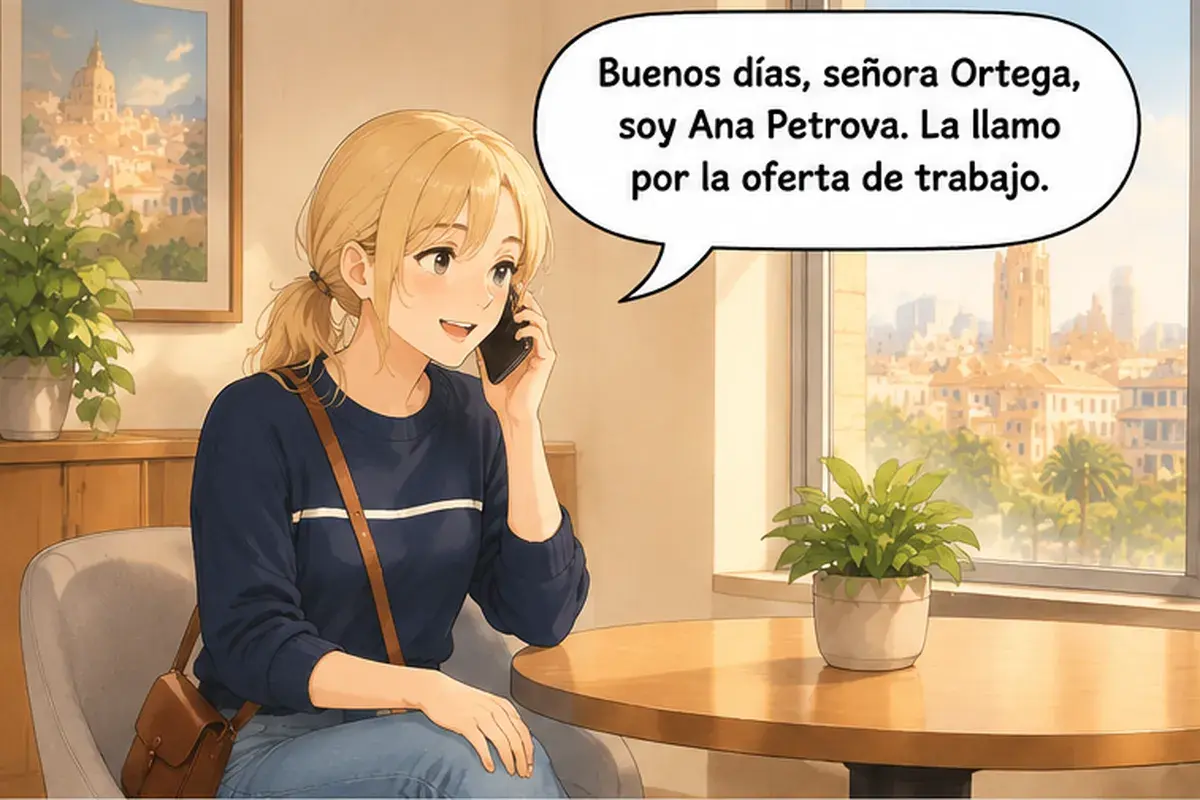
- Ana
Buenos días, señora Ortega, soy Ana. La llamo por la oferta de trabajo.
Good morning, Ms. Ortega, it's Ana. I'm calling you about the job offer (formal).
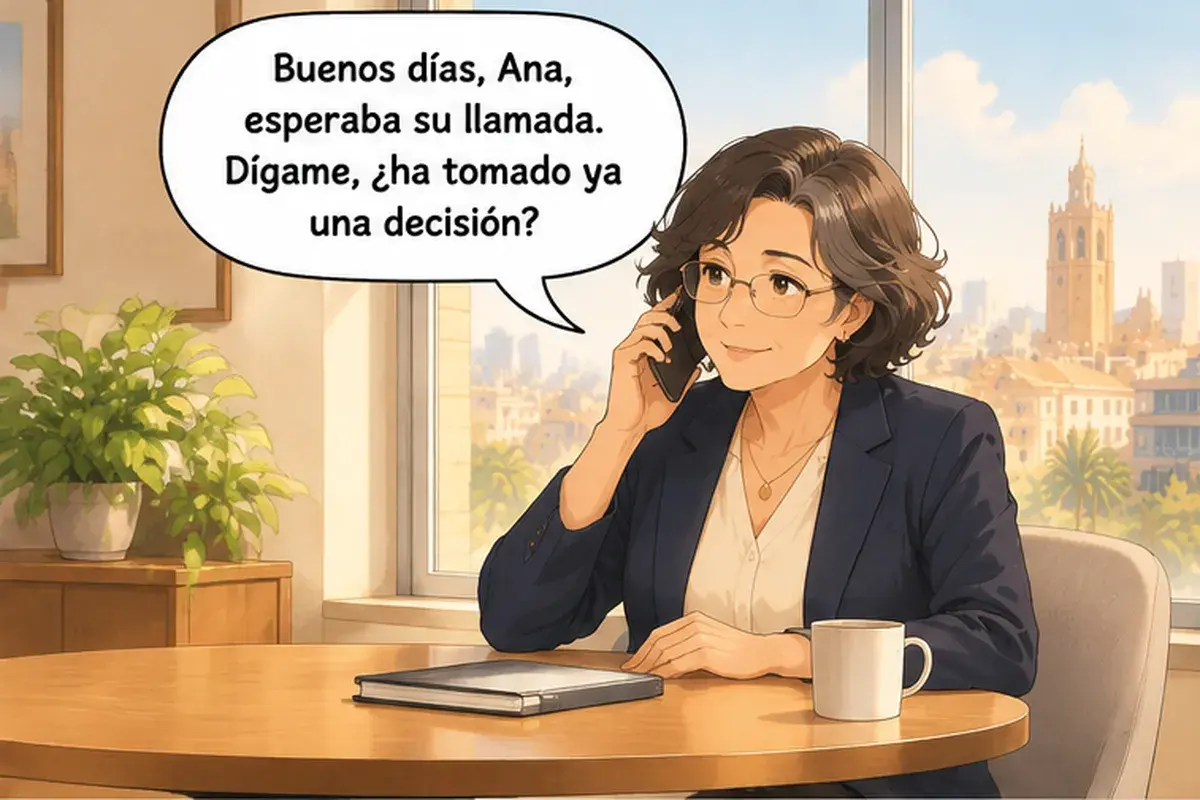
- Señora Ortega
Buenos días, Ana, esperaba su llamada. Dígame, ¿ha tomado ya una decisión?
Good morning, Ana, I was expecting your call. Tell me, have you made a decision yet? (formal)
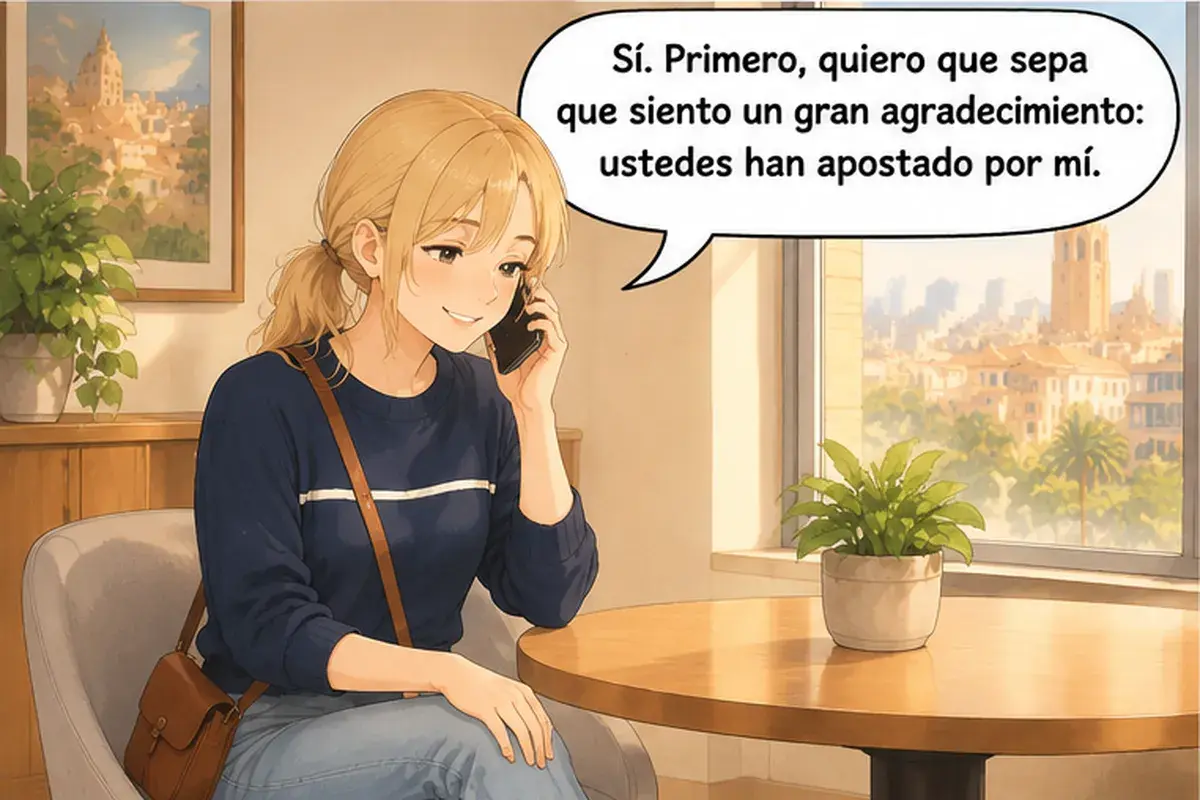
- Ana
Sí. Primero, quiero que sepa que siento un gran agradecimiento: ustedes han apostado por mí.
Yes. First, I want you to know that I feel great gratitude: you've all bet on me (formal).
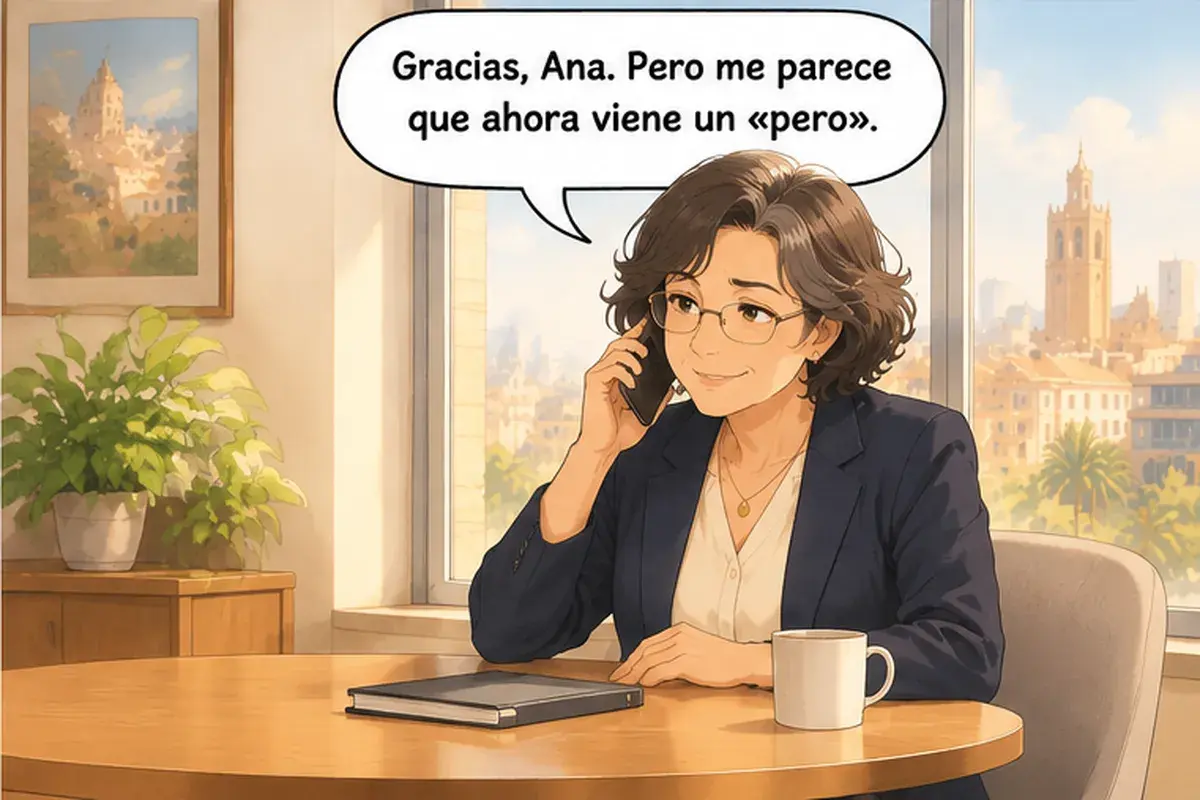
- Señora Ortega
Gracias, Ana. Pero me parece que ahora viene un «pero».
Thank you, Ana. But I think a "but" is coming now.
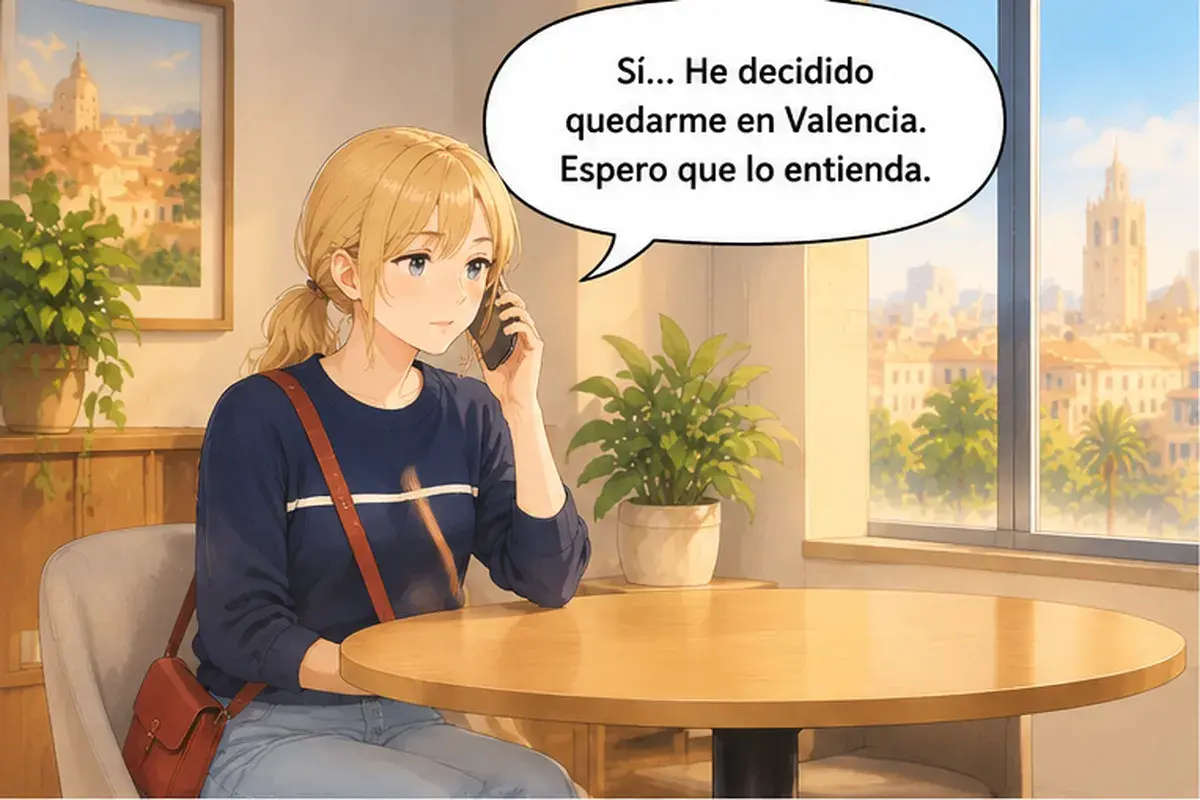
- Ana
Sí… He decidido quedarme en Valencia. Espero que lo entienda.
Yes… I've decided to stay in Valencia. I hope you understand (formal).
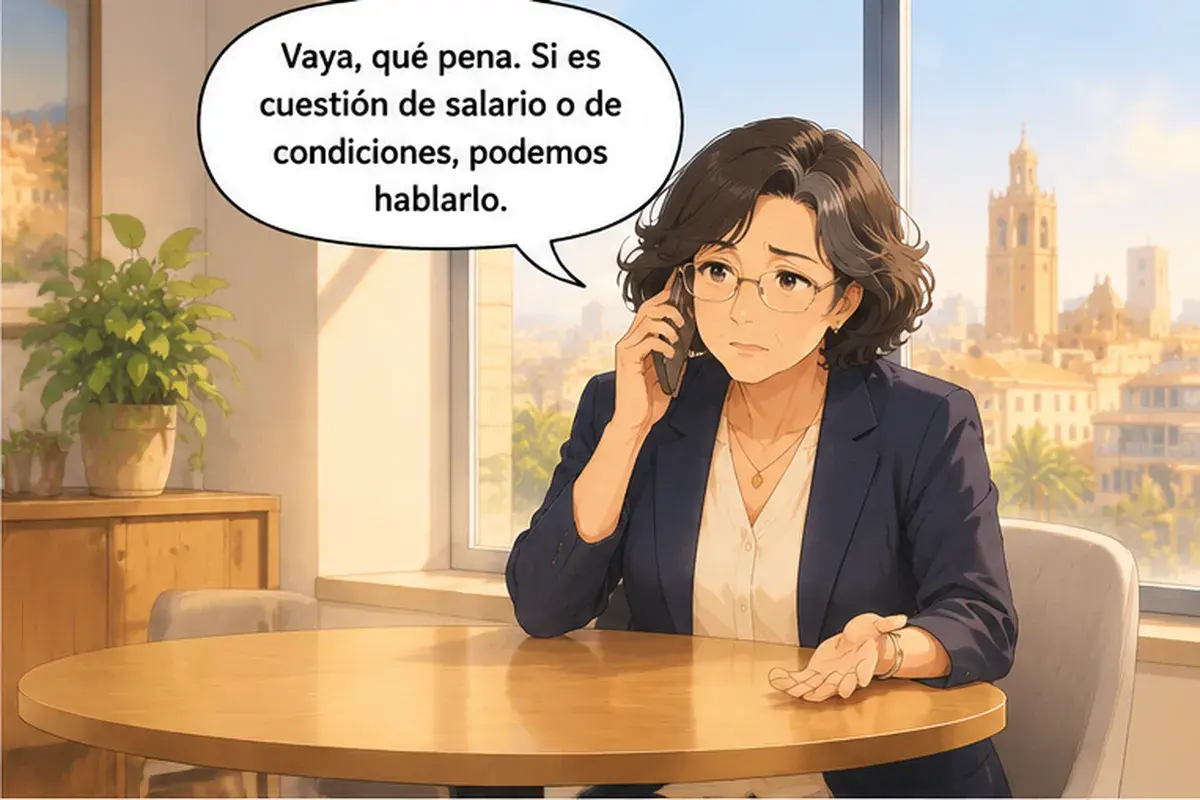
- Señora Ortega
Vaya, qué pena. Si es cuestión de salario o de condiciones, podemos hablarlo.
Oh, what a shame. If it's a question of salary or terms, we can talk about it.
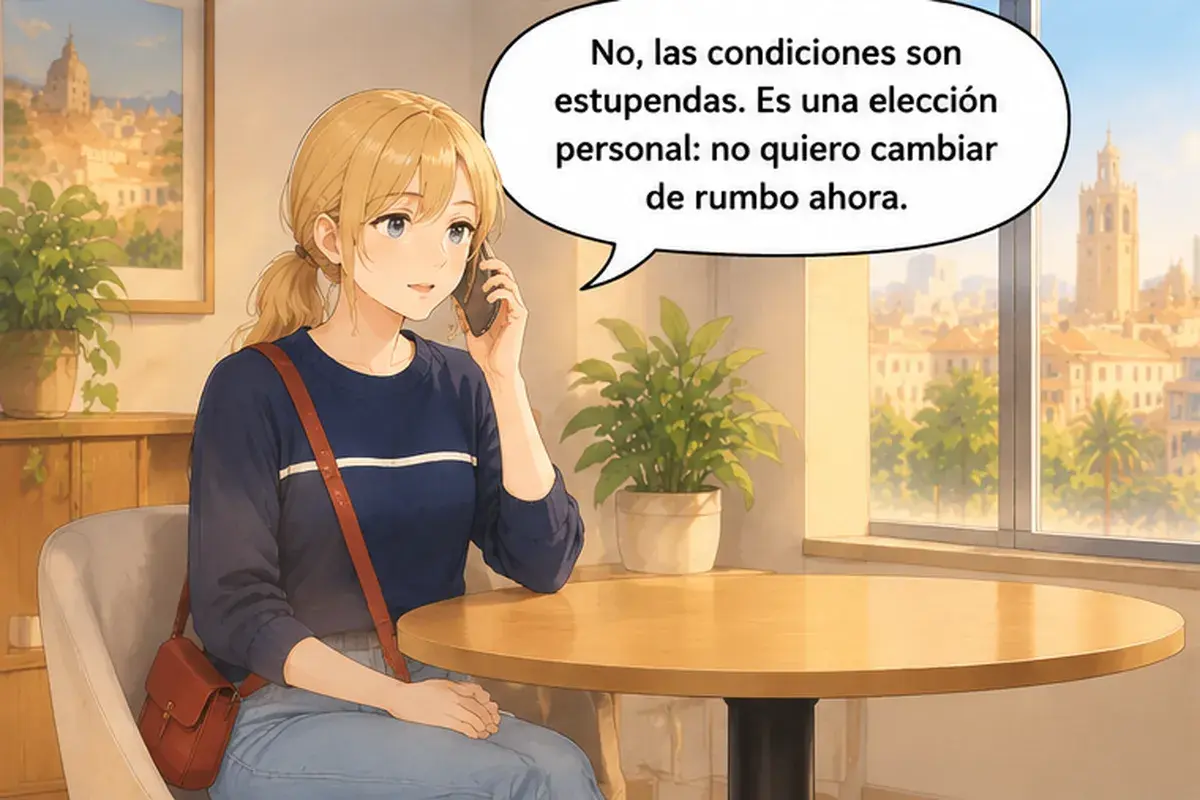
- Ana
No, las condiciones son estupendas. Es una elección personal: no quiero cambiar de rumbo ahora.
No, the terms are great. It's a personal choice: I don't want to change course now.
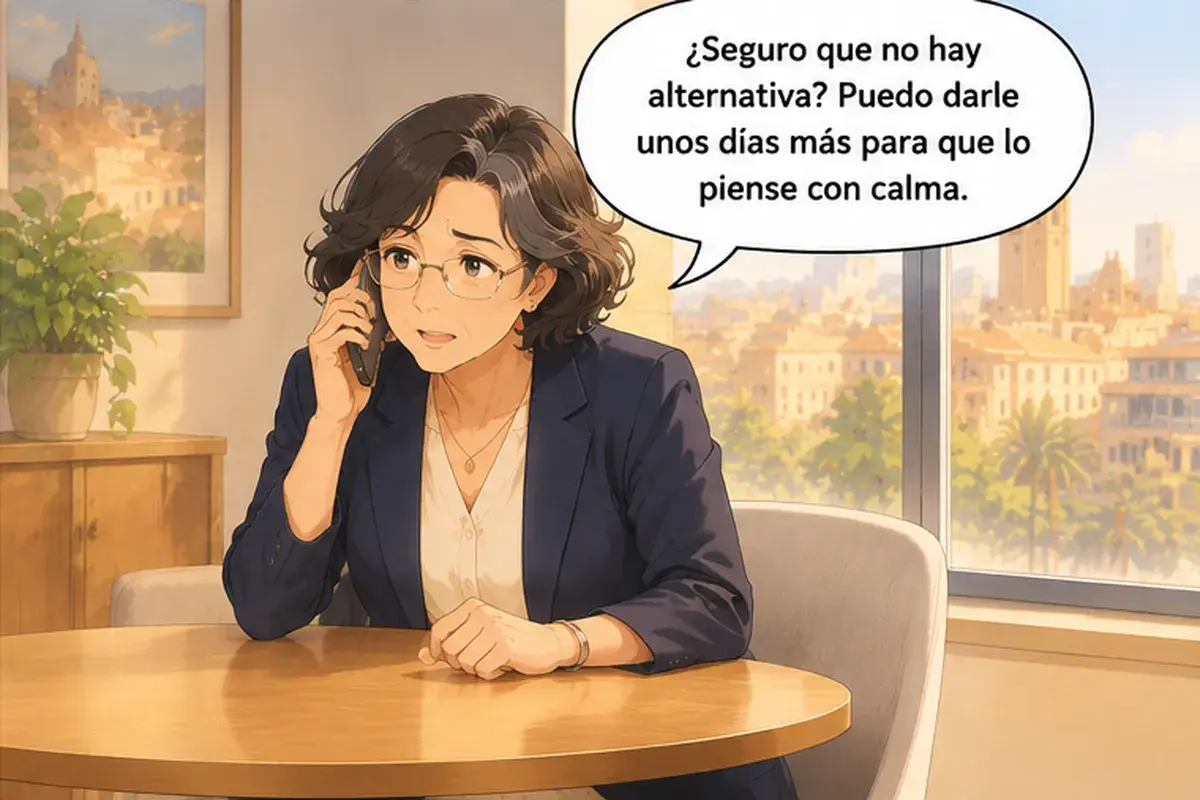
- Señora Ortega
¿Seguro que no hay alternativa? Puedo darle unos días más para que lo piense con calma.
Are you sure there's no alternative? I can give you a few more days so you can think it over calmly (formal).
- Ana
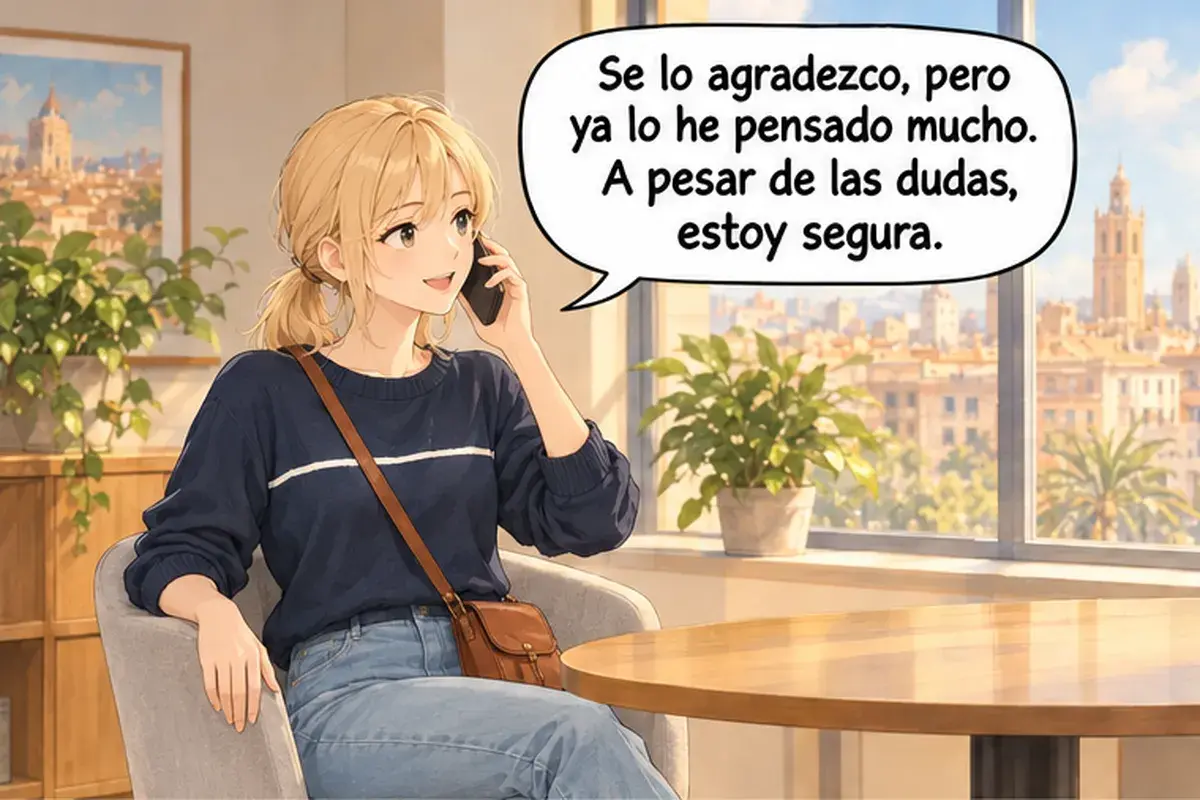
Se lo agradezco, pero ya lo he pensado mucho. A pesar de las dudas, estoy segura.
Thank you for that, but I've already thought about it a lot. Despite the doubts, I'm sure (woman speaking, formal).
- Señora Ortega
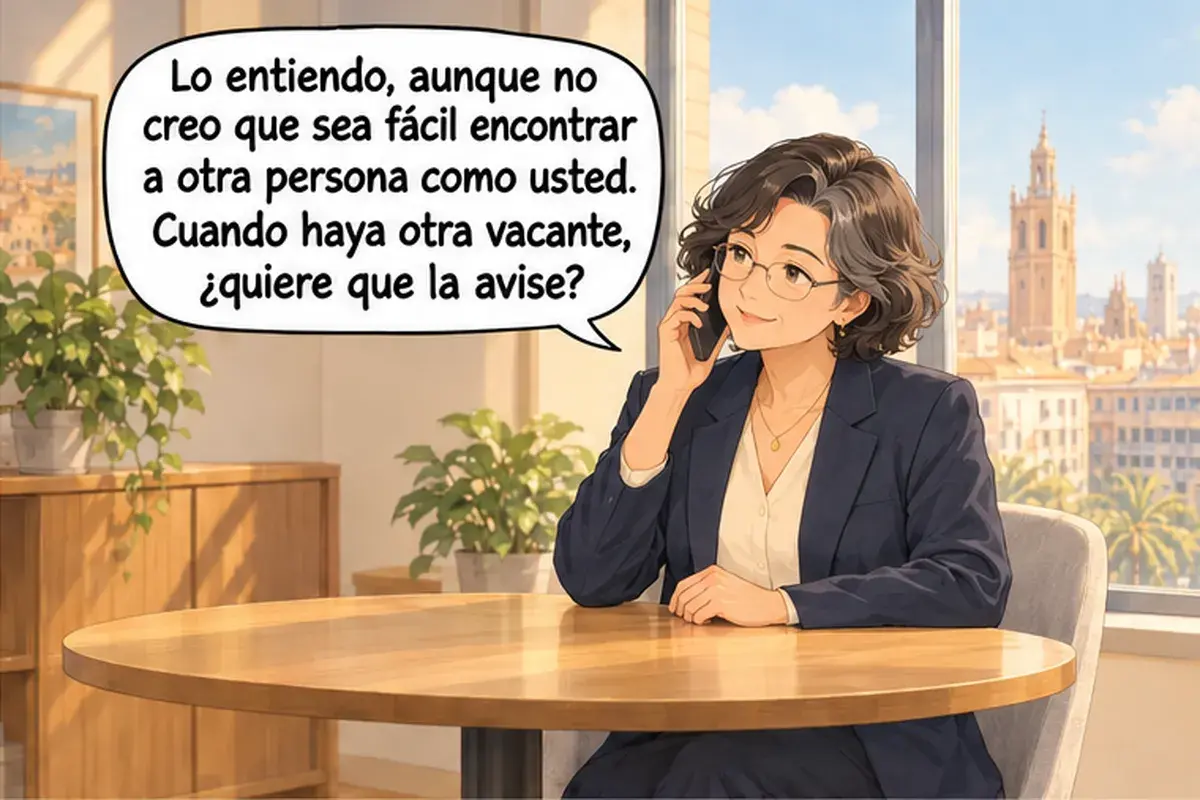
Lo entiendo, aunque no creo que sea fácil encontrar a otra persona como usted. Cuando haya otra vacante, ¿quiere que la avise?
I understand, although I don't think it'll be easy to find another person like you. When there's another opening, do you want me to let you know? (to a woman, formal)
- Ana
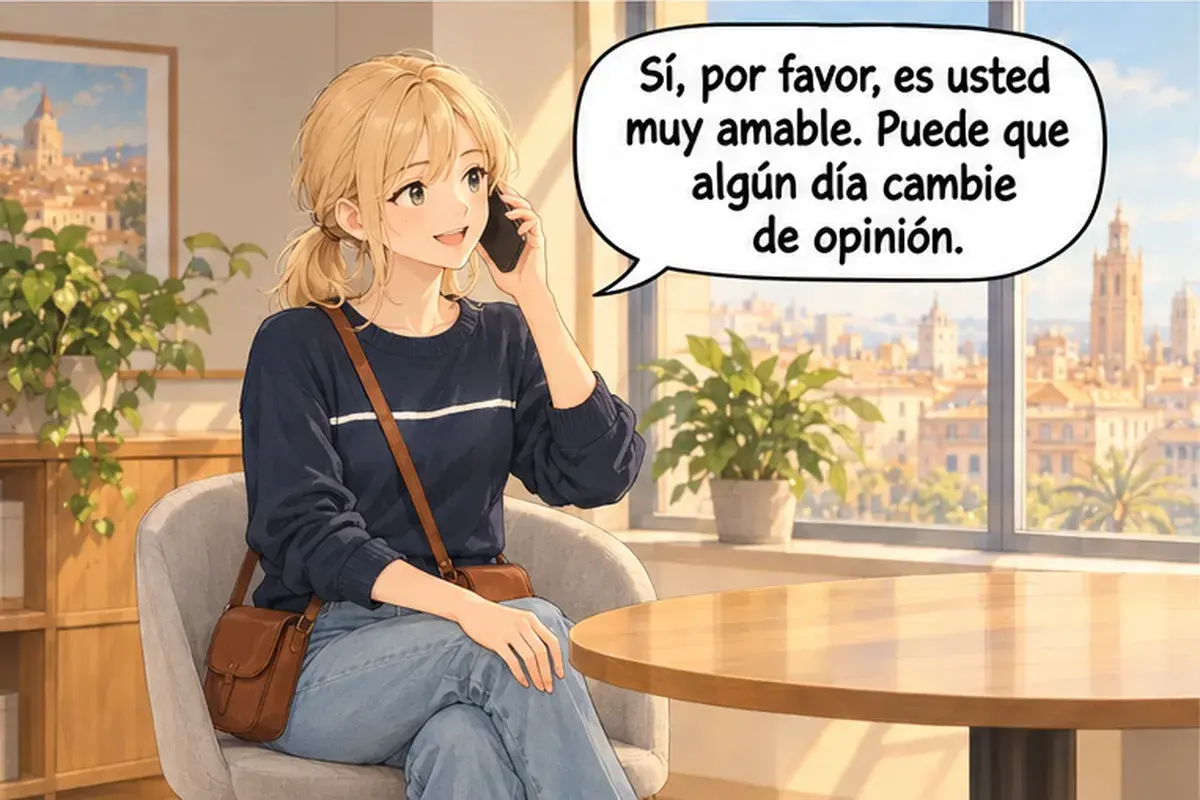
Sí, por favor, es usted muy amable. Puede que algún día cambie de opinión.
Yes, please, you're very kind. Maybe someday I'll change my mind (formal).
- Señora Ortega
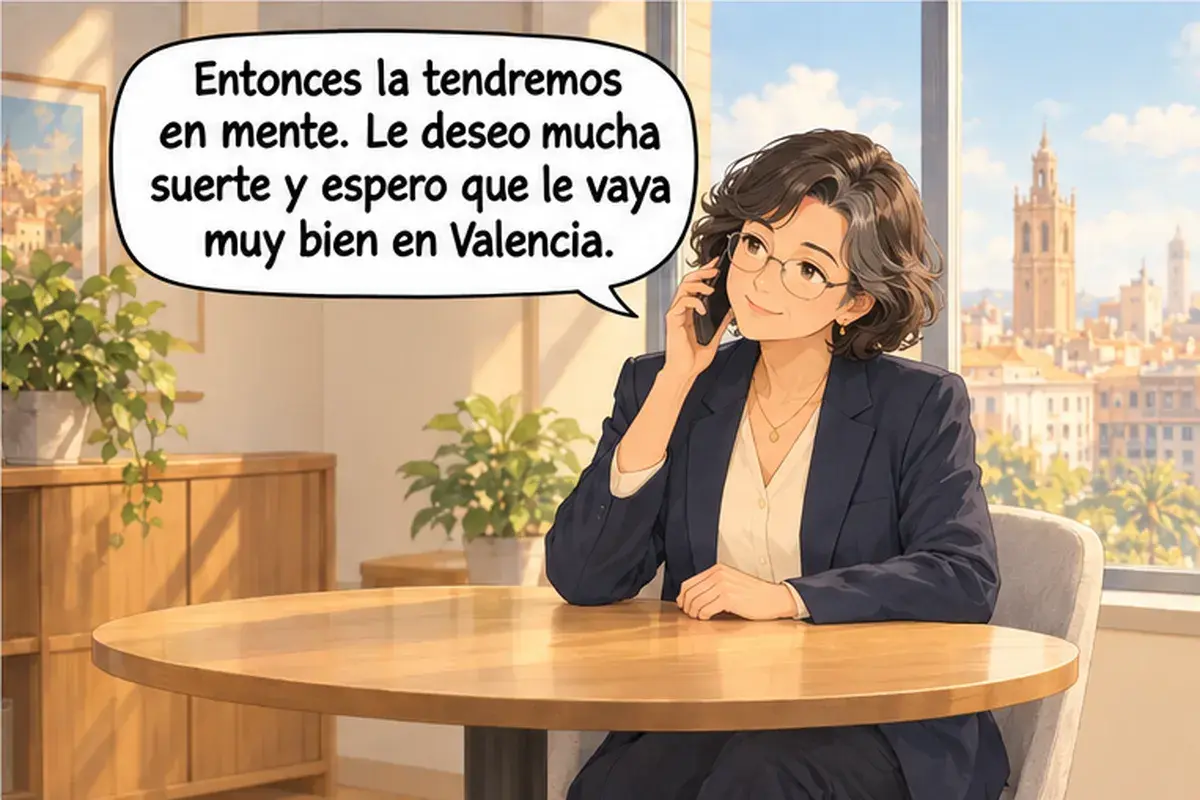
Entonces la tendremos en mente. Le deseo mucha suerte y espero que le vaya muy bien en Valencia.
Then we'll keep you in mind. I wish you lots of luck, and I hope everything goes very well for you in Valencia (to a woman, formal).
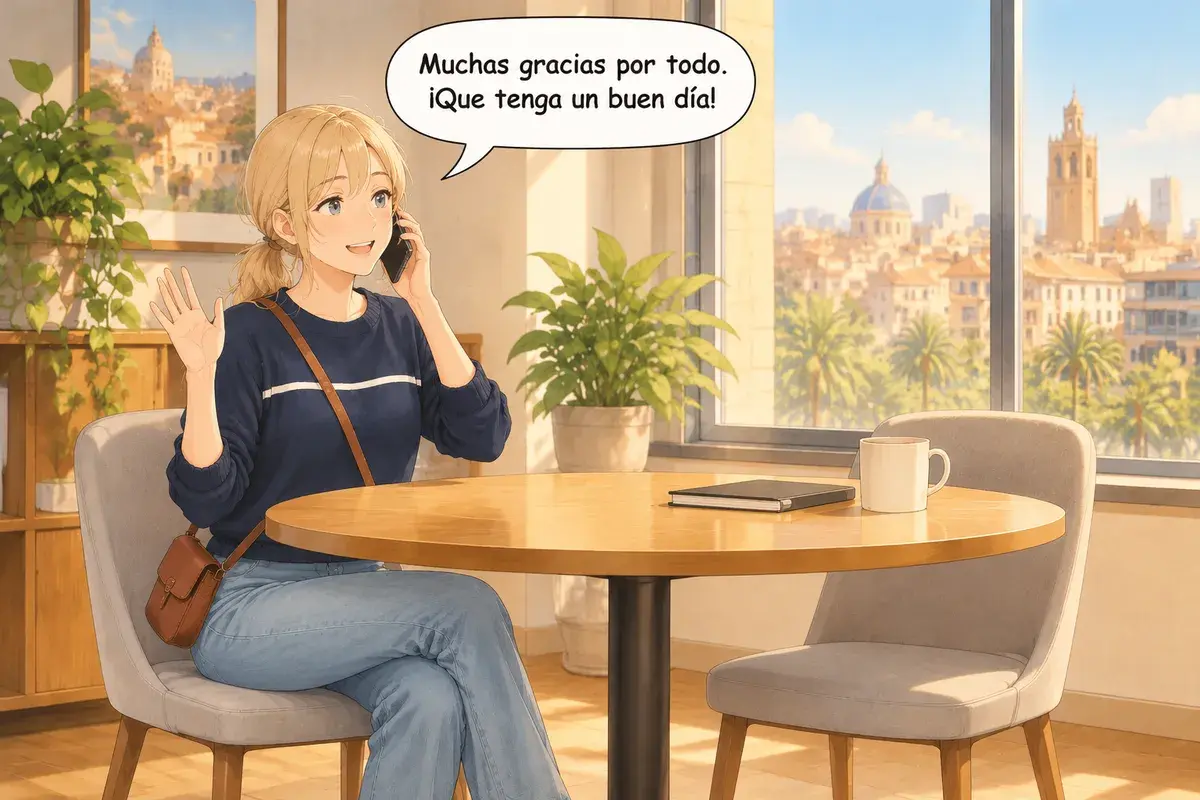
- Ana
Muchas gracias por todo. ¡Que tenga un buen día!
Thank you very much for everything. Have a nice day! (formal)
Grammar for this text
A polite no, in the usted form. Here the subjunctive is in the usted form (it looks the same as the yo form): quiero que sepa, espero que lo entienda, para que lo piense, que tenga un buen día. But in ¿quiere que la avise? ("do you want me to let you know?") the form looks the same, yet it's yo: Ms. Ortega is the one who will let Ana know.
- No creo que sea fácil: doubt. But me parece que ahora viene un «pero»: an opinion without no, so the normal form.
- Cuando haya otra vacante: haya is the subjunctive of hay, "when there's an opening".
- Puede que algún día cambie de opinión: after puede que ("maybe, it may be that") you always use the subjunctive.
- Se lo agradezco: "I'm grateful to you for it", two pronouns together (unit 10).
- Espero que le vaya muy bien: a set wish, "I hope everything goes well for you". Vaya comes from ir (subjunctive, usted form): literally "that it goes well for you". The same word at the start of a line is an exclamation: Vaya, qué pena ("oh, what a shame").
How to say no and keep a good relationship: first thanks (han apostado por mí), then the decision, then the reason, without details: es una elección personal.
Words and grammar of the unit: Explain a hard decision.
Learn the words from the texts with flashcards
In the app, you can tap any word in a text to see its translation, forms and examples, and new words stick with flashcards. 15 minutes a day.
Start for freeEverything is open for free. No card needed to sign up.