
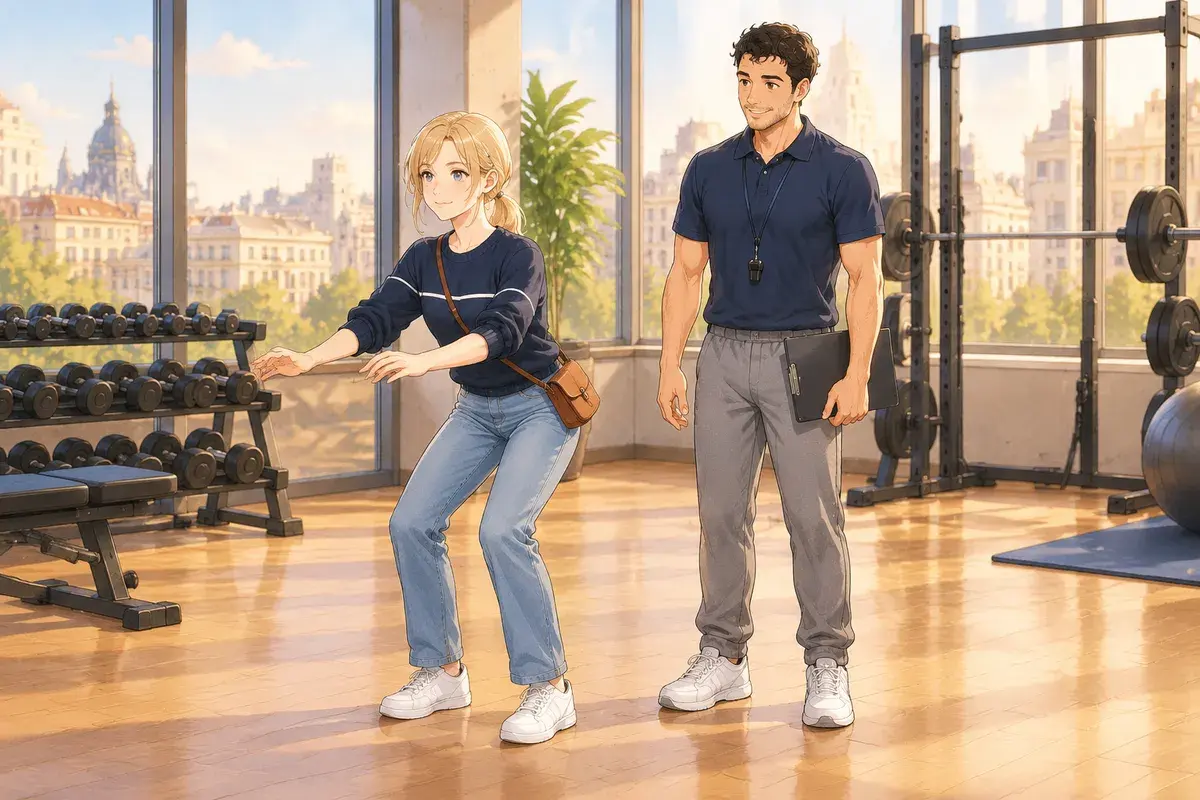
Spanish dialogue with translation · B1 · 18 lines
Mi primer día en el gimnasio My first day at the gym
Comic · 18 panels
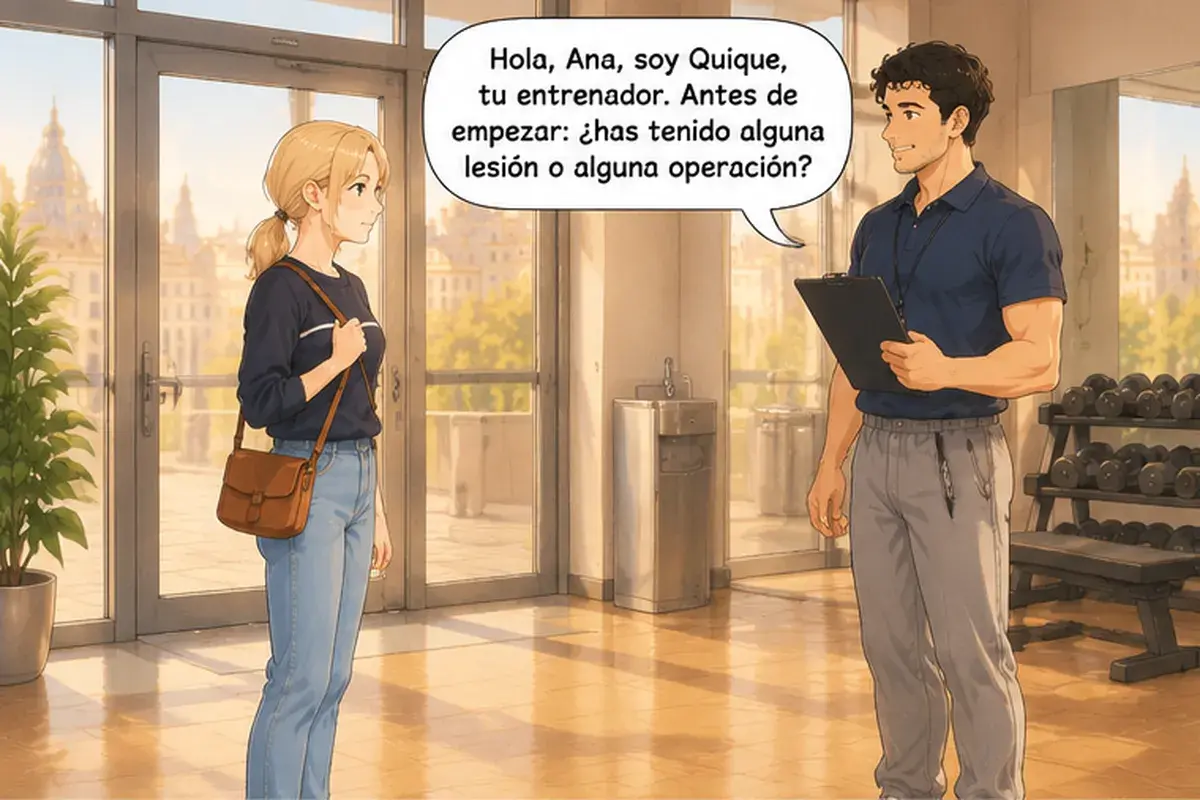
- Quique
Hola, Ana, soy Quique, tu entrenador. Antes de empezar: ¿has tenido alguna lesión o alguna operación?
Hi, Ana, I'm Quique, your trainer. Before we start: have you had any injury or operation?
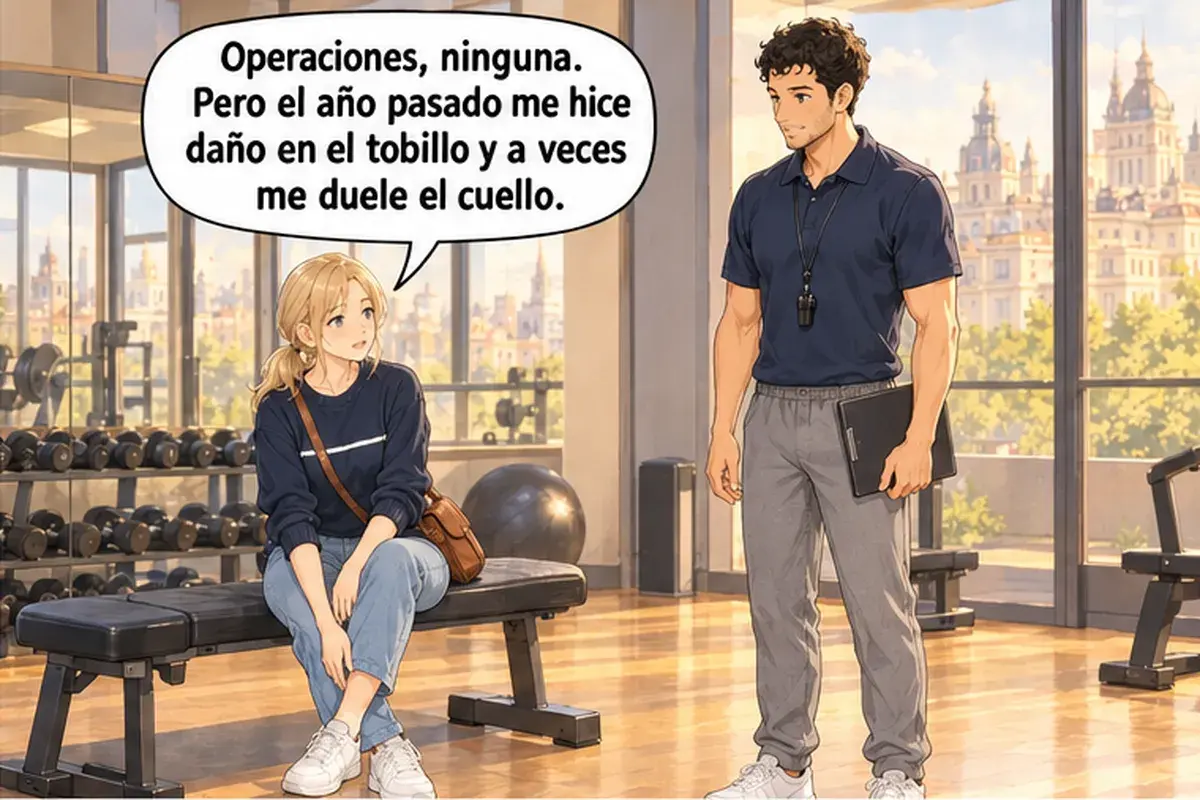
- Ana
Operaciones, ninguna. Pero el año pasado me hice daño en el tobillo y a veces me duele el cuello.
No operations. But last year I hurt my ankle, and sometimes my neck hurts.
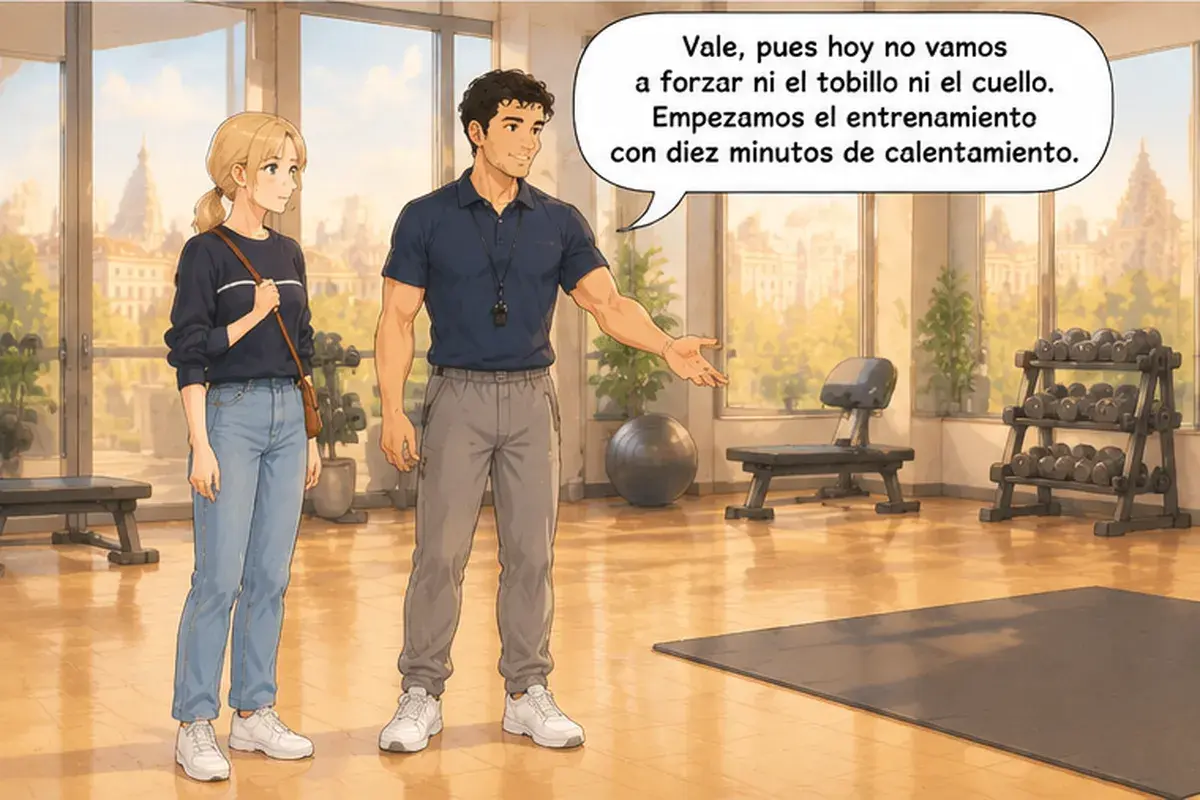
- Quique
Vale, pues hoy no vamos a forzar ni el tobillo ni el cuello. Empezamos el entrenamiento con diez minutos de calentamiento.
OK, so today we're not going to strain your ankle or your neck. We'll start the workout with ten minutes of warm-up.
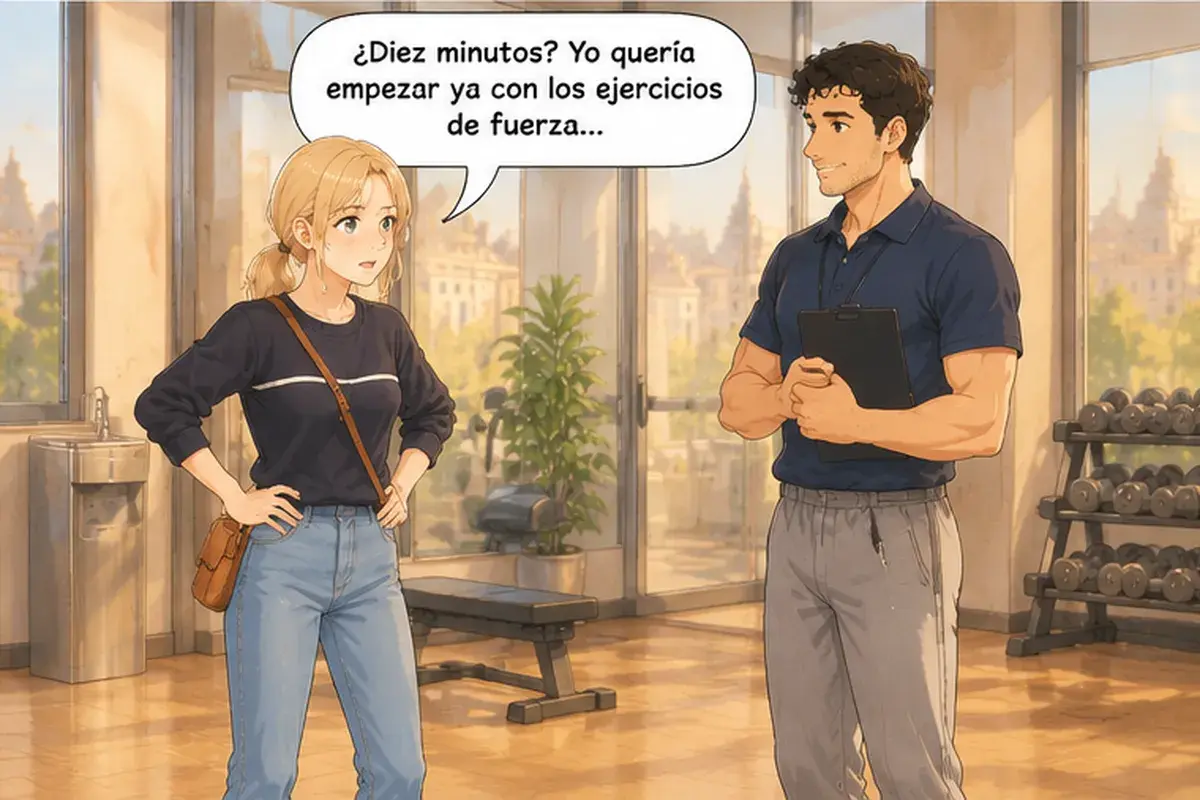
- Ana
¿Diez minutos? Yo quería empezar ya con los ejercicios de fuerza…
Ten minutes? I wanted to start right away with the strength exercises…
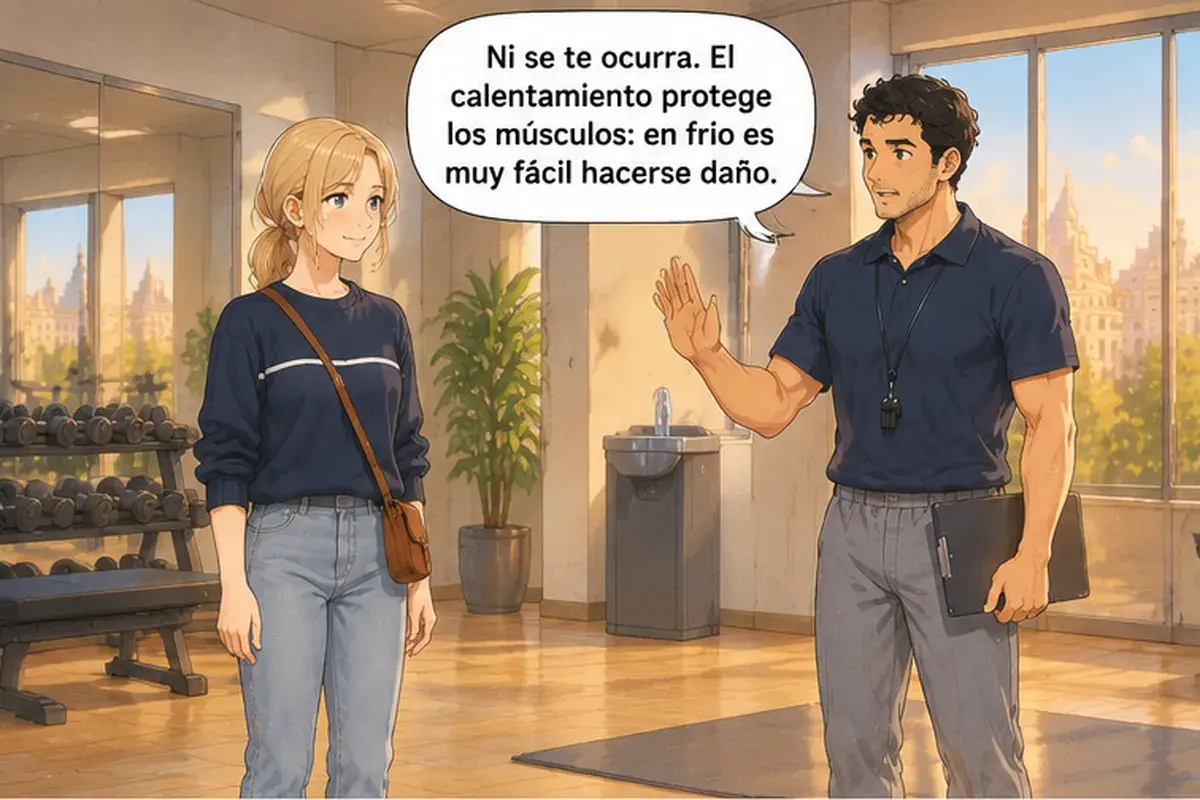
- Quique
Ni se te ocurra. El calentamiento protege los músculos: en frío es muy fácil hacerse daño.
Don't even think about it. The warm-up protects your muscles: when they're cold, it's very easy to hurt yourself.
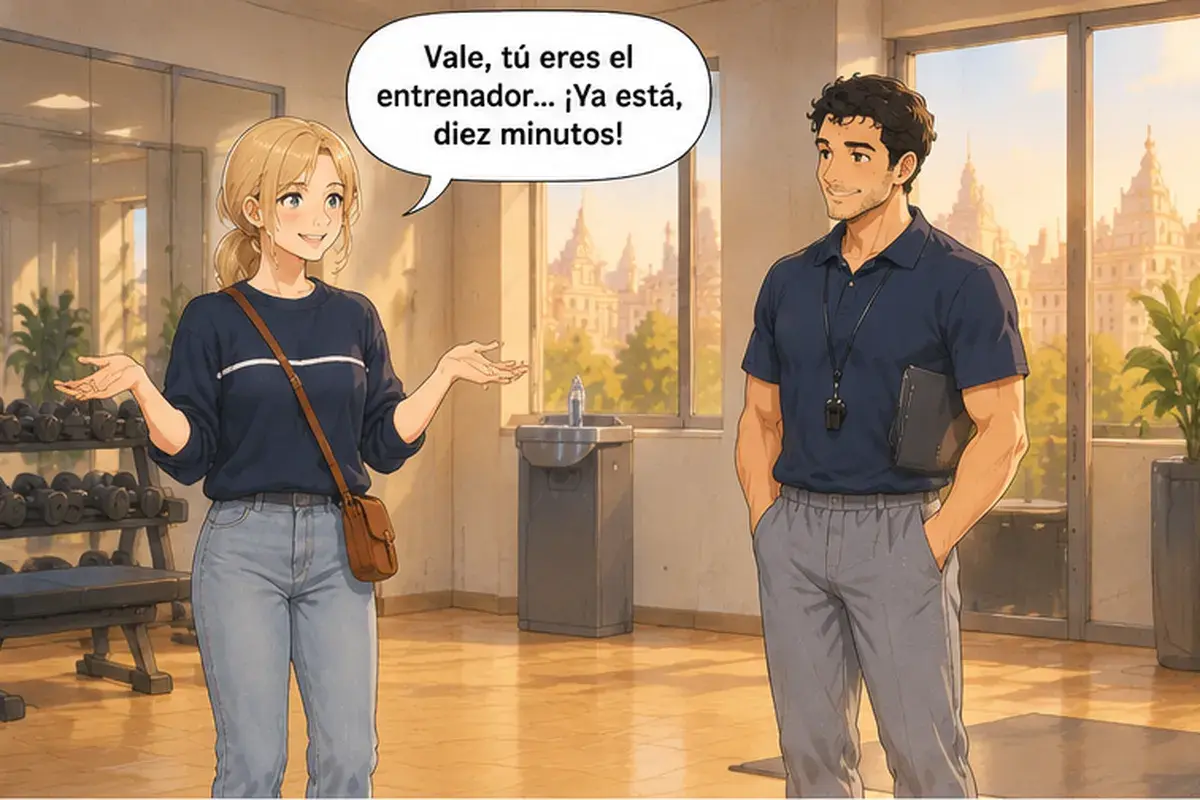
- Ana
Vale, tú eres el entrenador… ¡Ya está, diez minutos!
OK, you're the trainer… There, ten minutes!
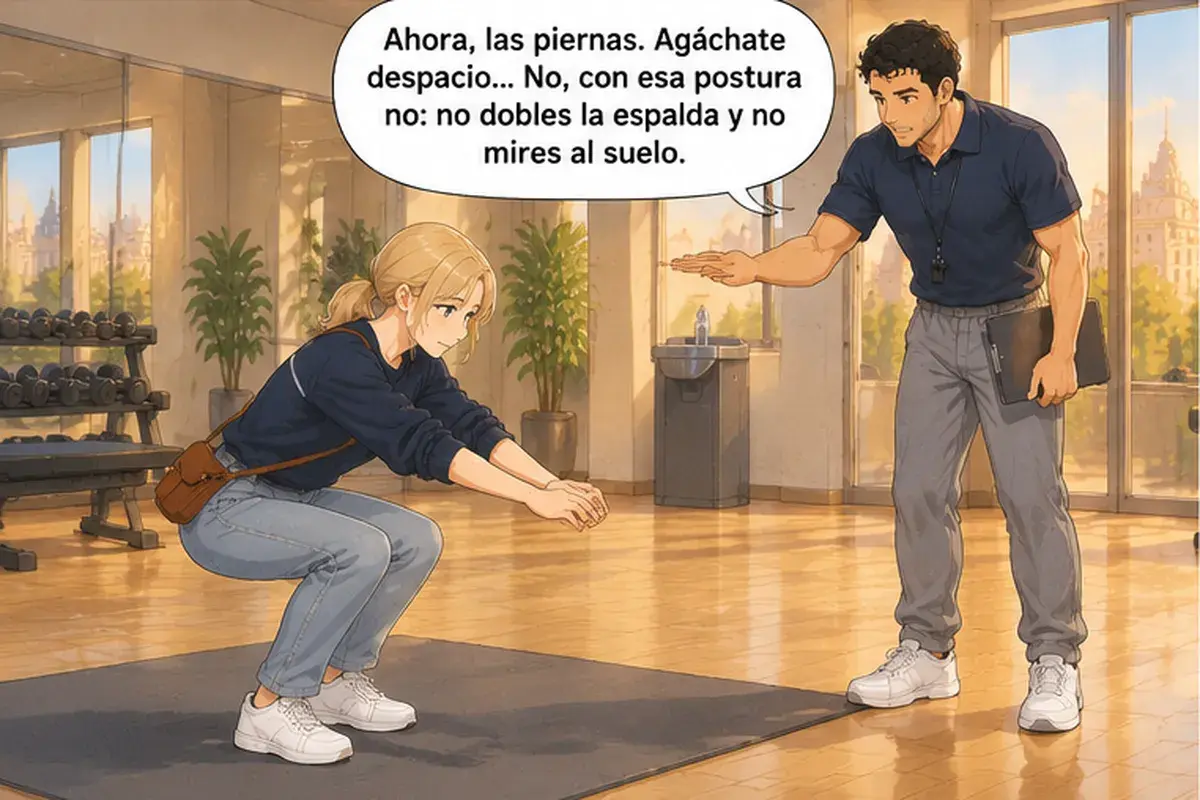
- Quique
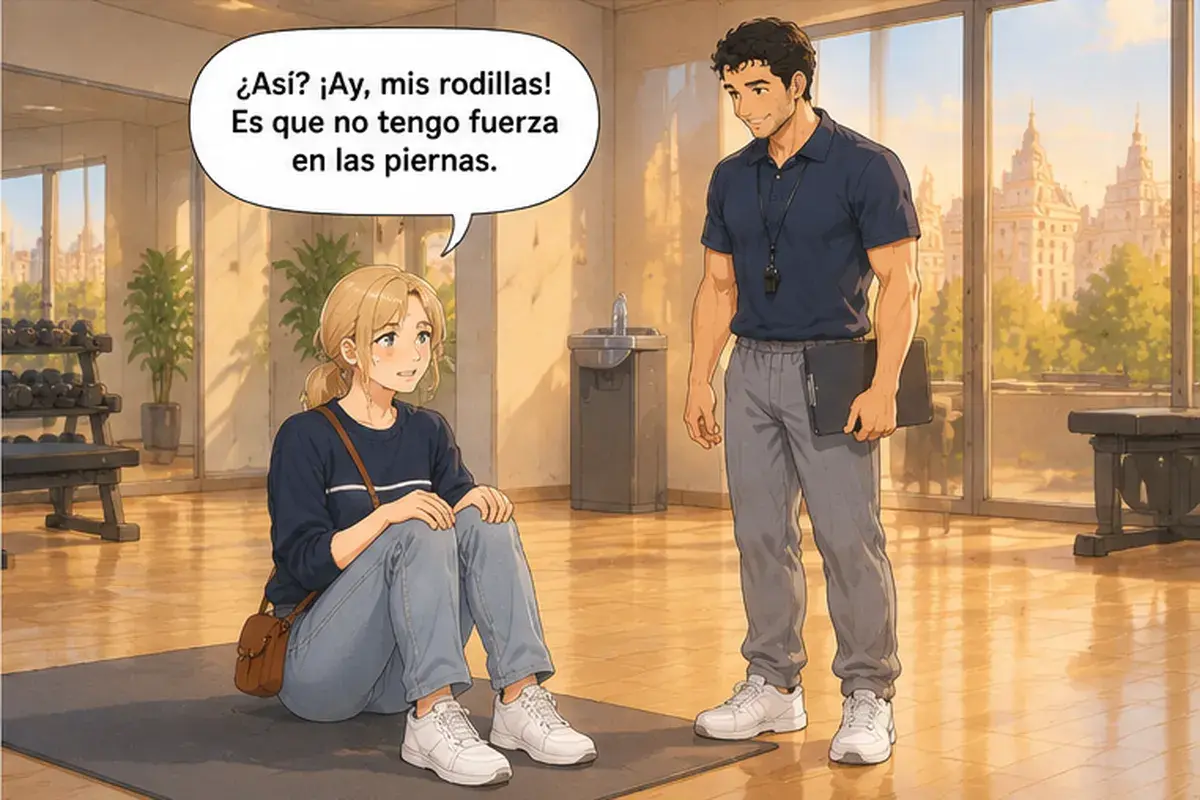
Ahora, las piernas. Agáchate despacio… No, con esa postura no: no dobles la espalda y no mires al suelo.
Now, your legs. Squat down slowly… No, not with that posture: don't bend your back and don't look at the floor.
- Ana
¿Así? ¡Ay, mis rodillas! Es que no tengo fuerza en las piernas.
Like this? Ow, my knees! It's just that I don't have any strength in my legs.
- Quique
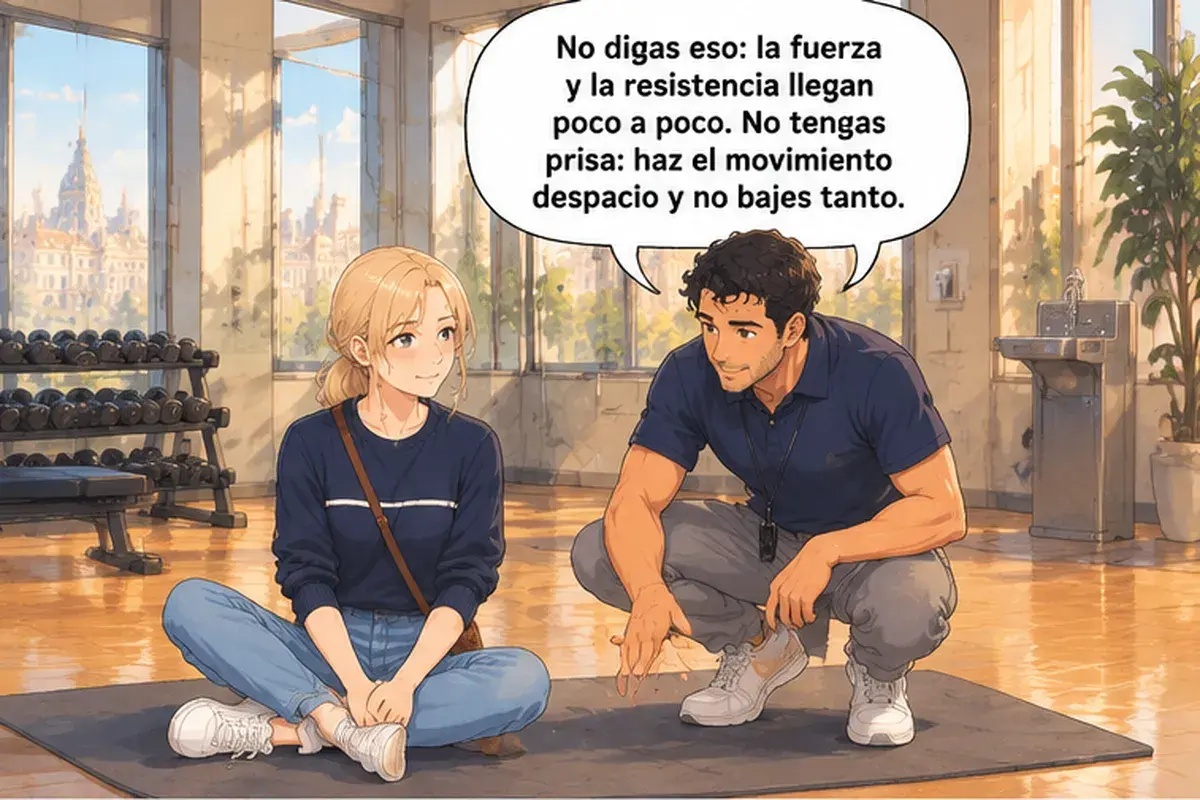
No digas eso: la fuerza y la resistencia llegan poco a poco. No tengas prisa: haz el movimiento despacio y no bajes tanto.
Don't say that: strength and endurance come little by little. Don't be in a hurry: do the movement slowly and don't go down so far.
- Ana
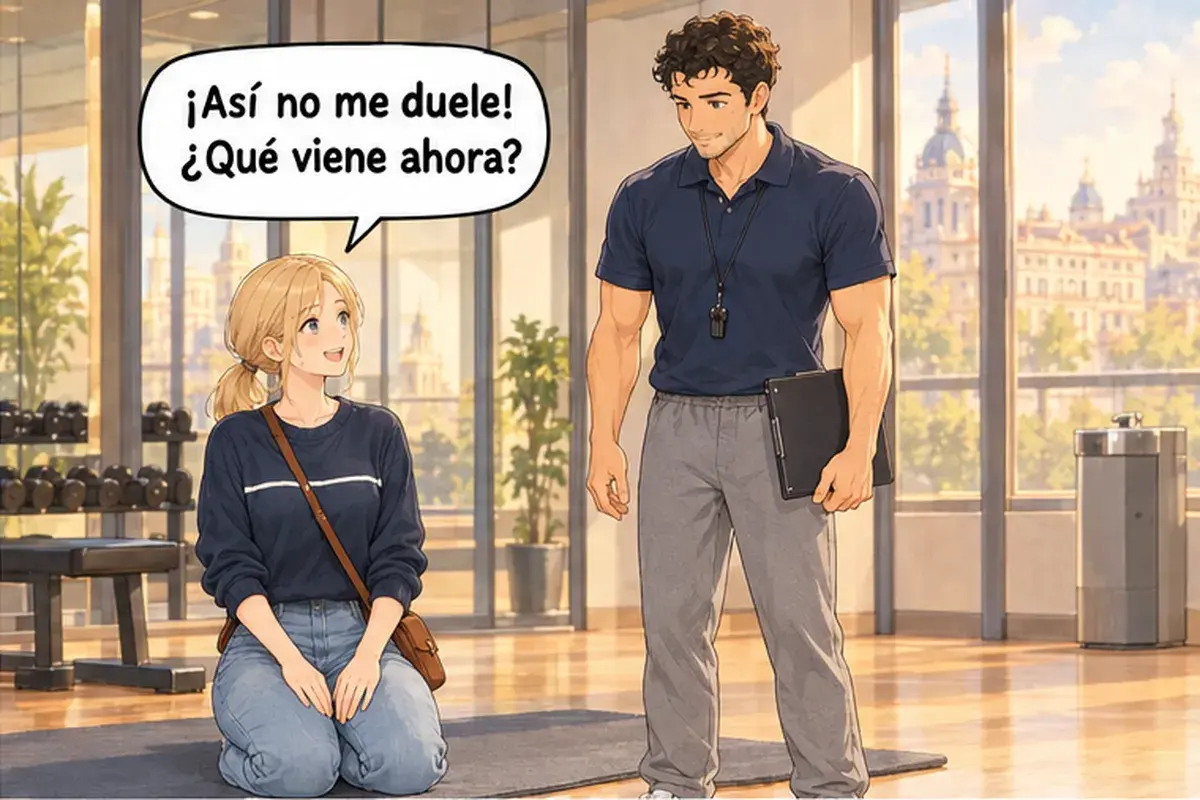
¡Así no me duele! ¿Qué viene ahora?
It doesn't hurt like this! What comes next?
- Quique
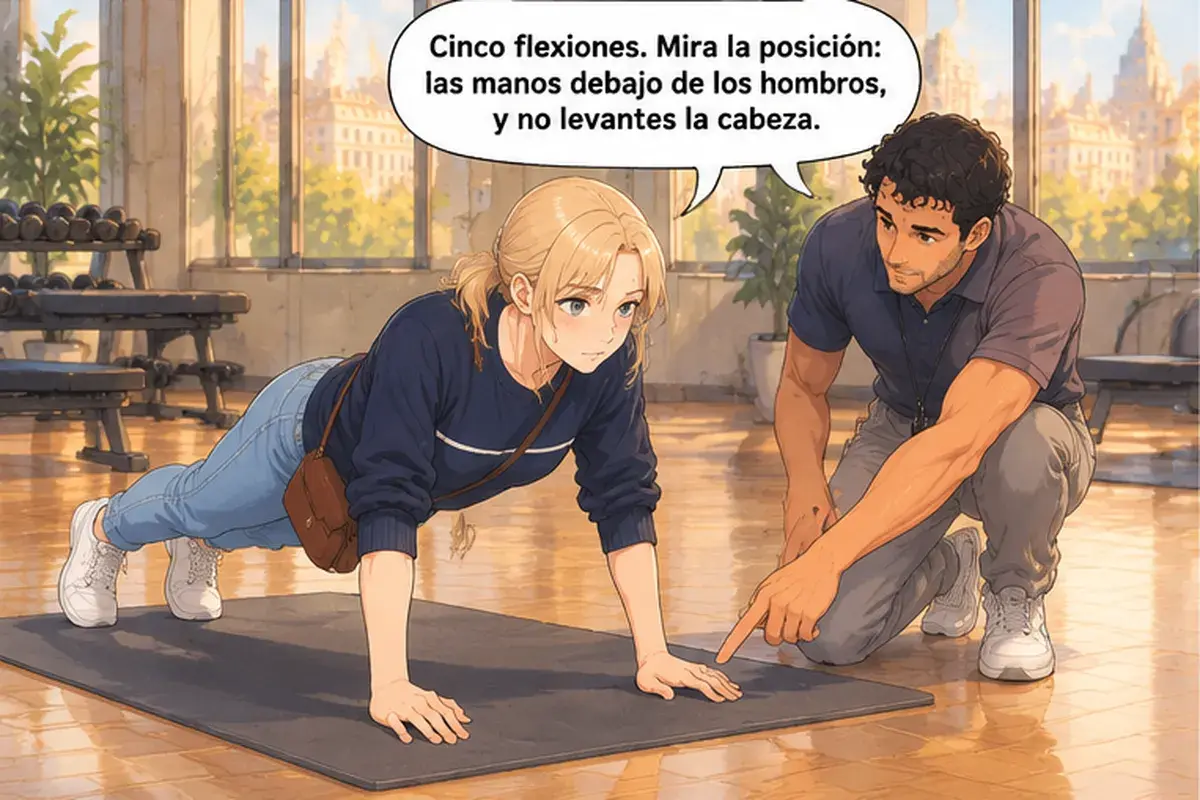
Cinco flexiones. Mira la posición: las manos debajo de los hombros, y no levantes la cabeza.
Five push-ups. Look at the position: your hands under your shoulders, and don't lift your head.
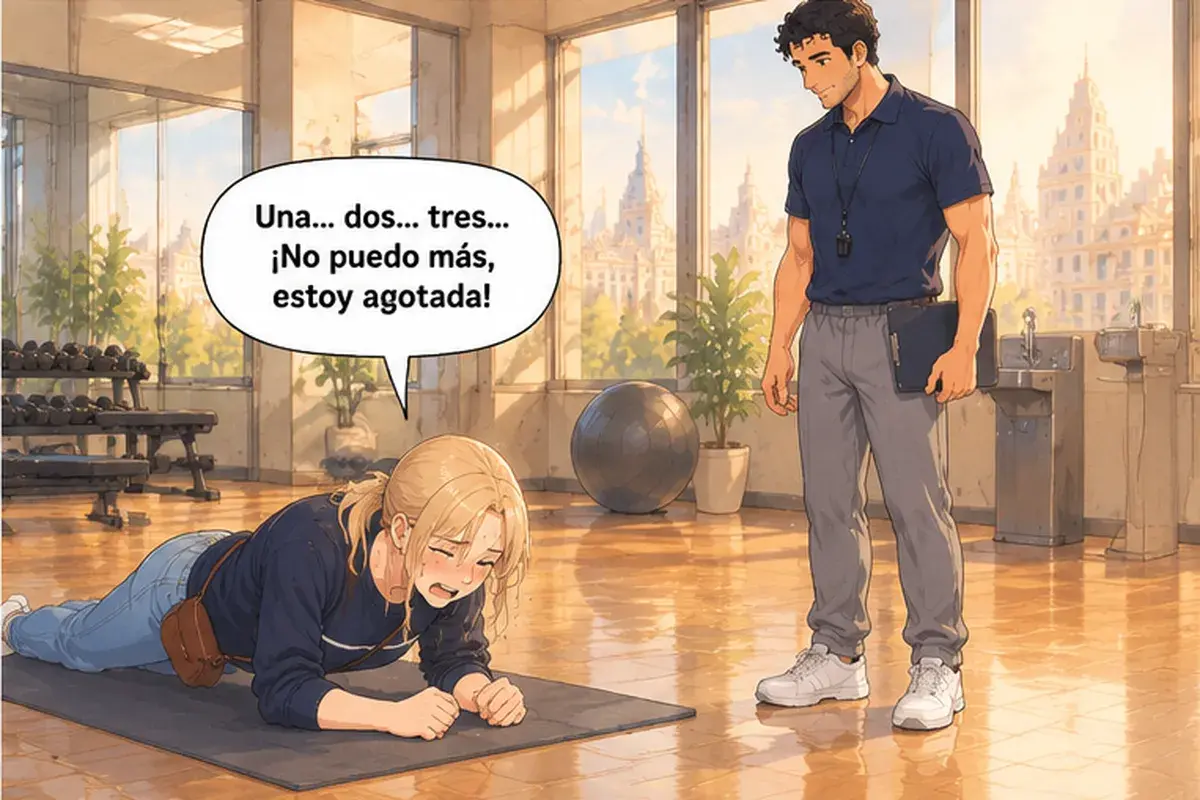
- Ana
Una… dos… tres… ¡No puedo más, estoy agotada!
One… two… three… I can't do any more, I'm exhausted! (woman speaking)
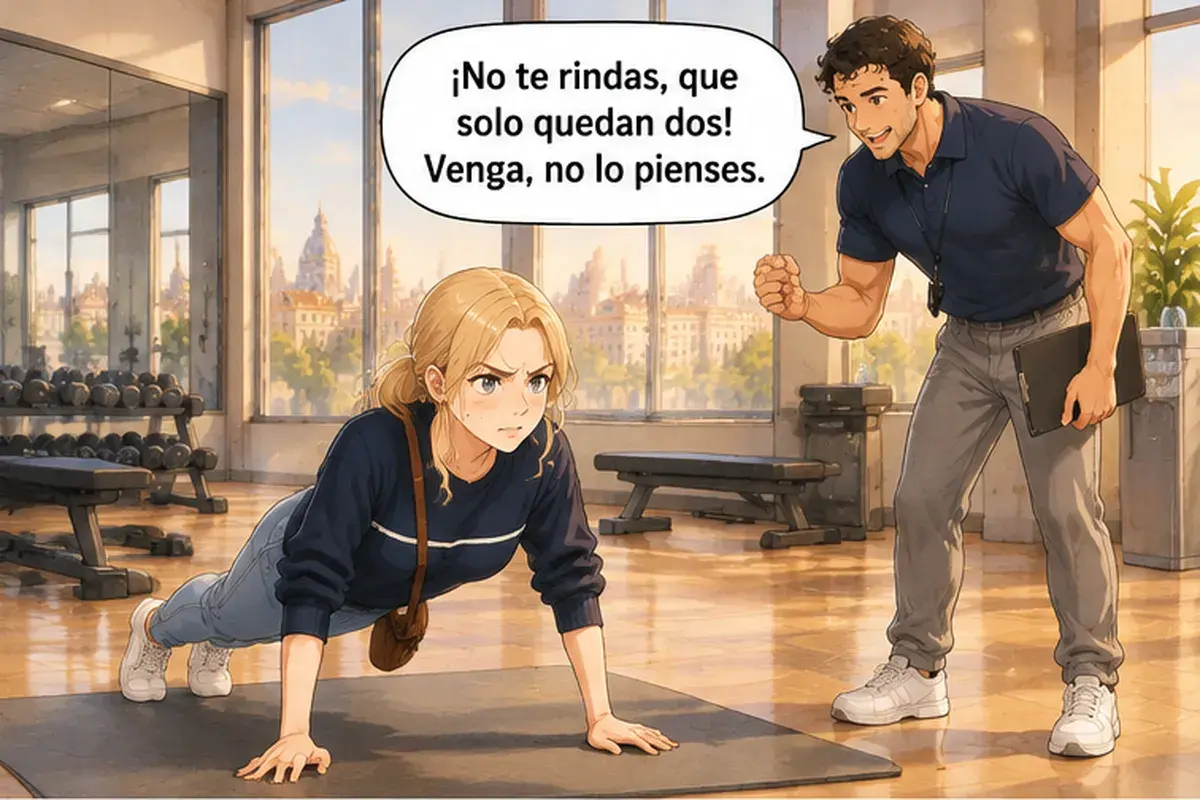
- Quique
¡No te rindas, que solo quedan dos! Venga, no lo pienses.
Don't give up, there are only two left! Come on, don't think about it.
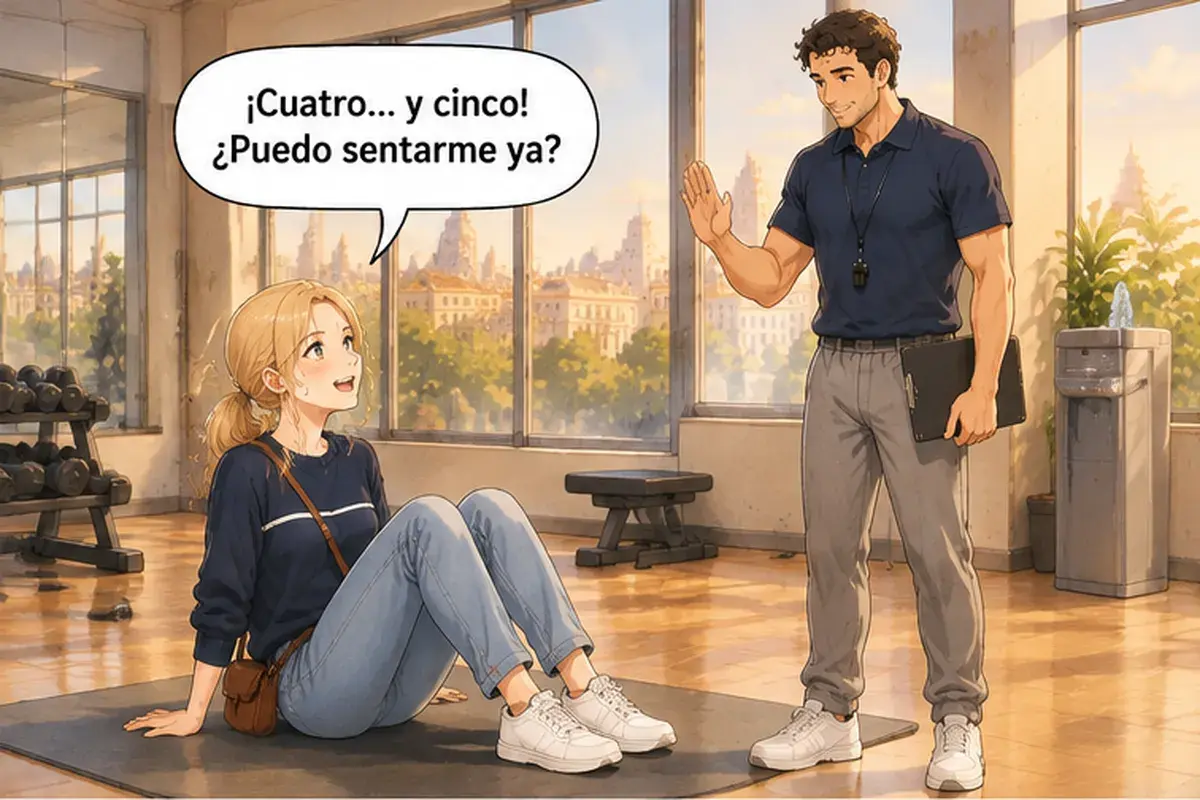
- Ana
¡Cuatro… y cinco! ¿Puedo sentarme ya?
Four… and five! Can I sit down now?
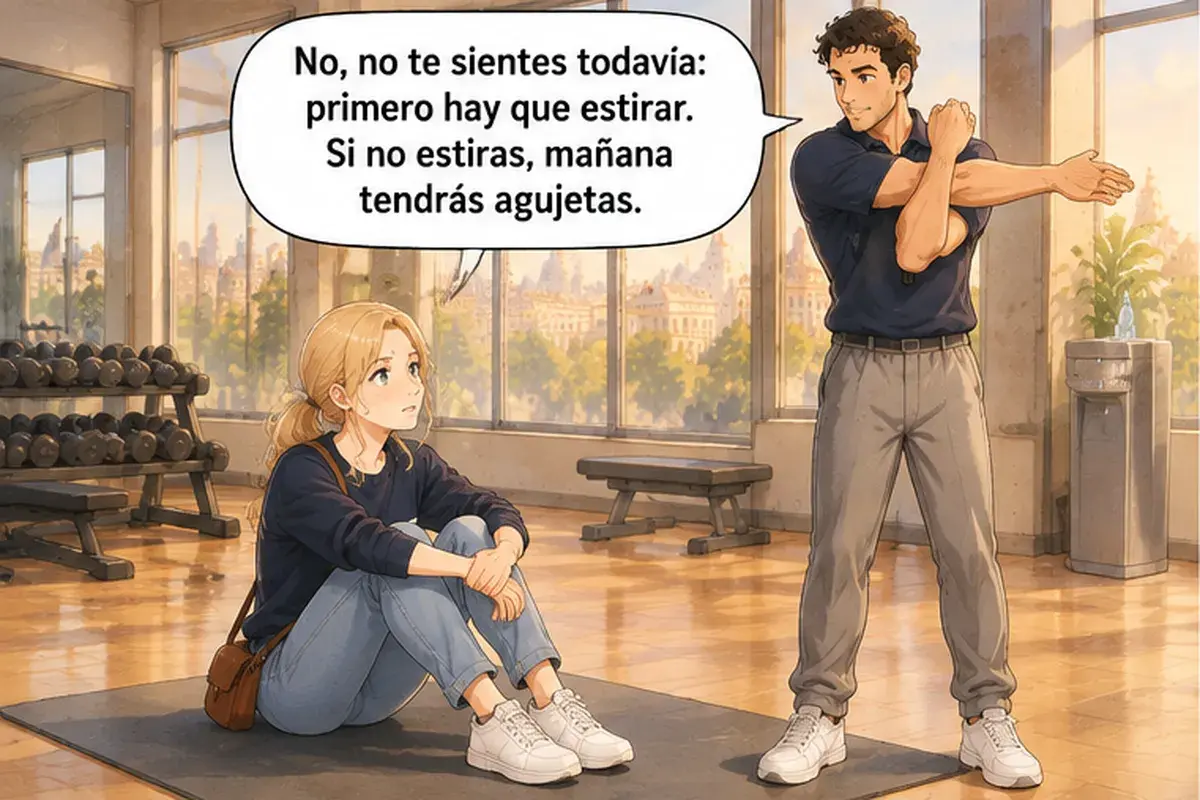
- Quique
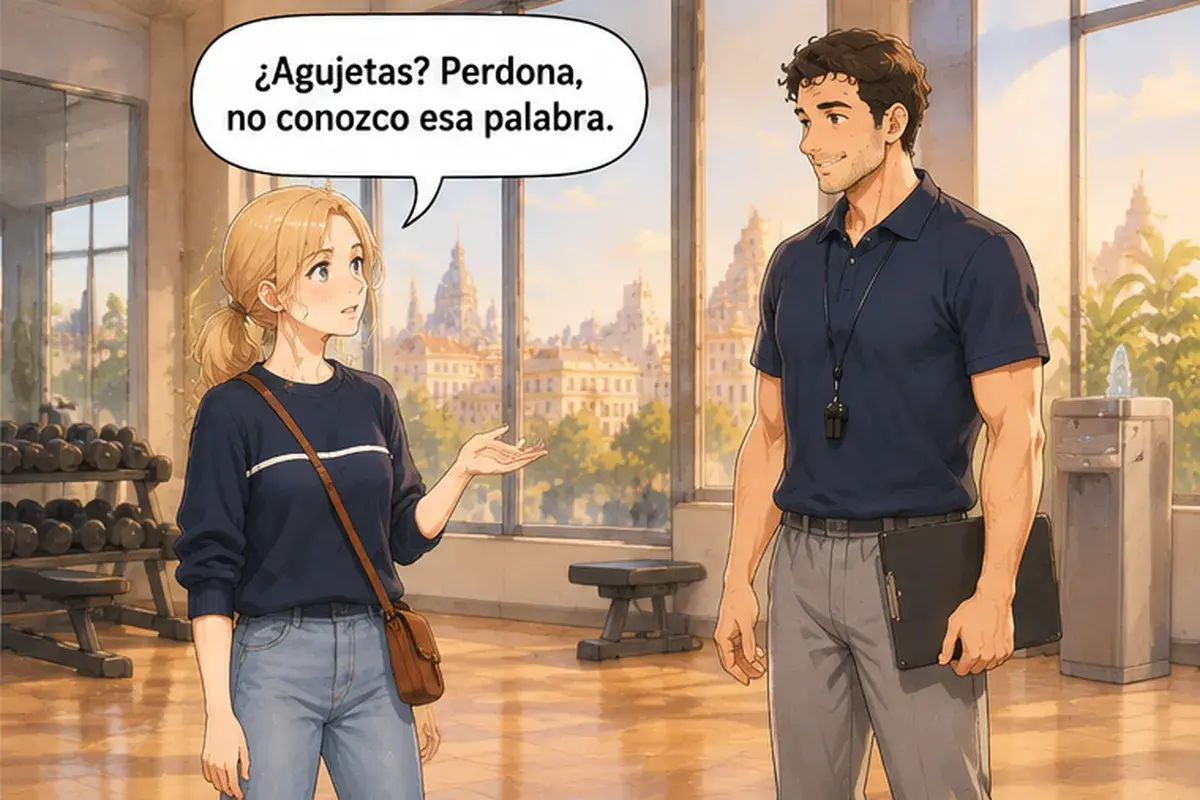
No, no te sientes todavía: primero hay que estirar. Si no estiras, mañana tendrás agujetas.
No, don't sit down yet: first we have to stretch. If you don't stretch, tomorrow you'll have "agujetas."
- Ana
¿Agujetas? Perdona, no conozco esa palabra.
"Agujetas"? Sorry, I don't know that word.
- Quique
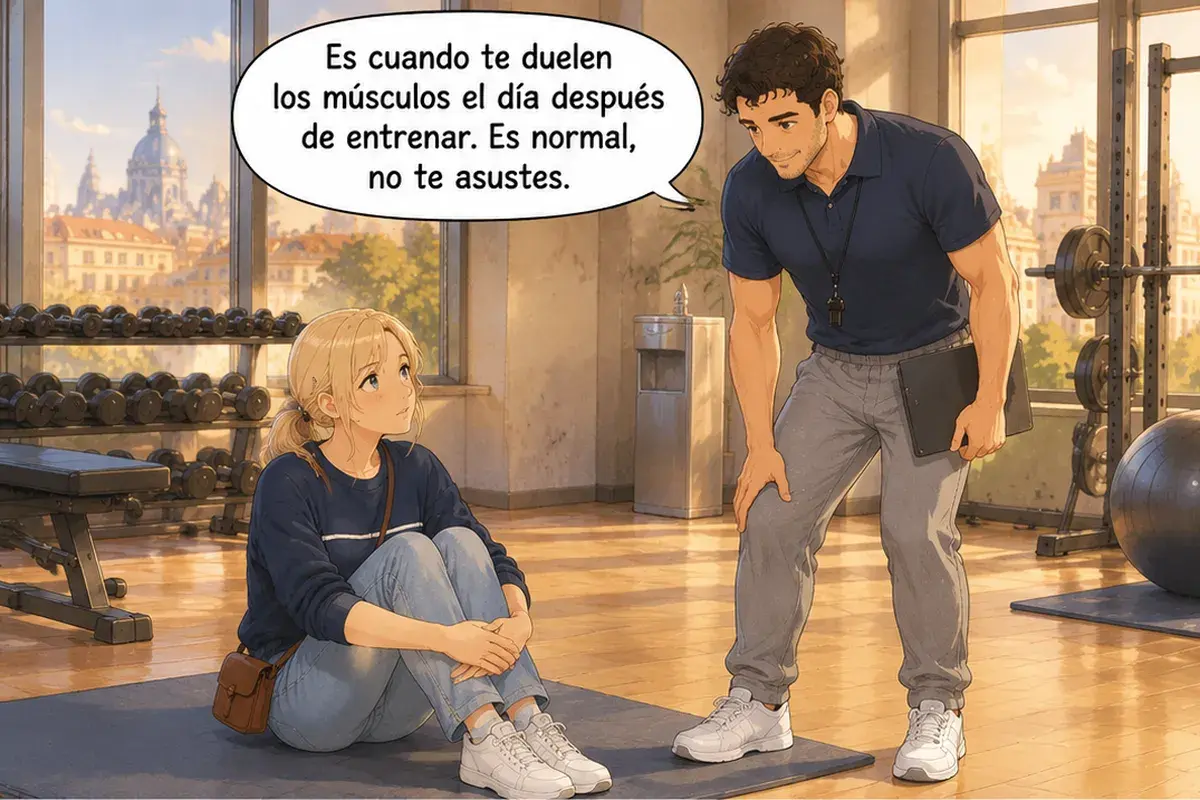
Es cuando te duelen los músculos el día después de entrenar. Es normal, no te asustes.
It's when your muscles hurt the day after training. It's normal, don't be scared.
- Ana
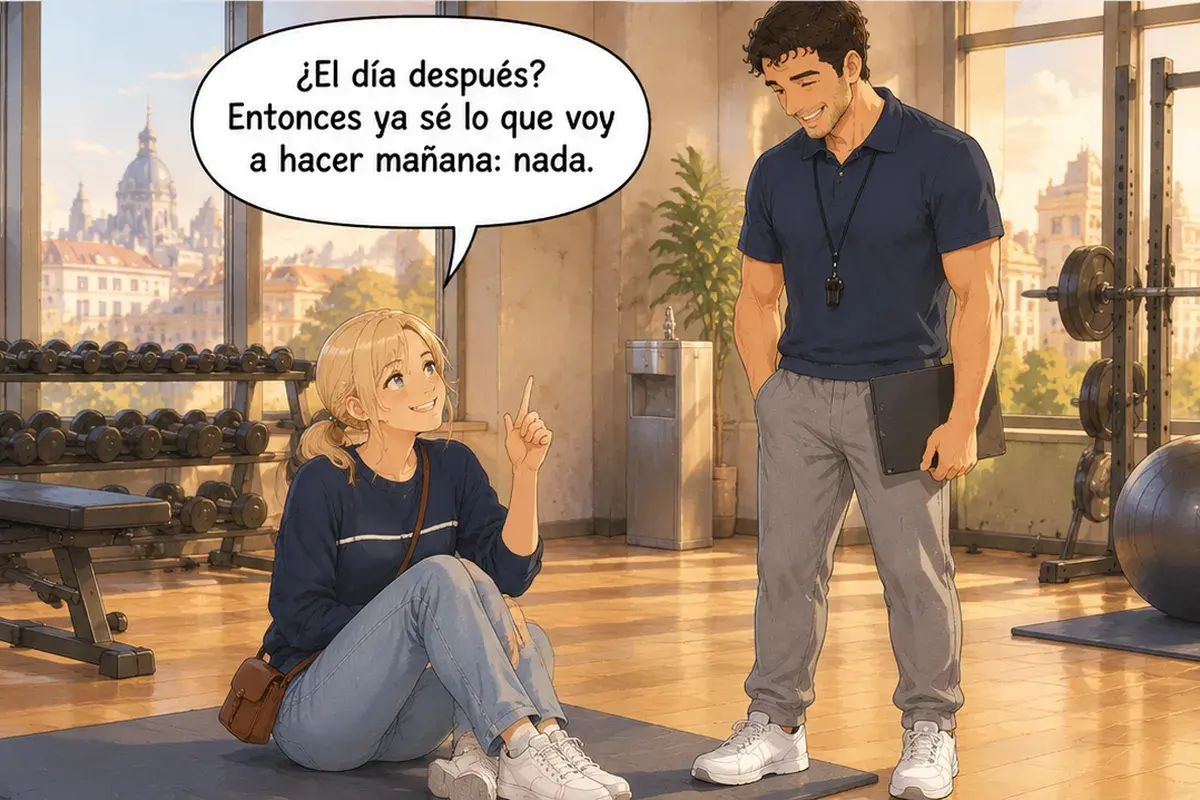
¿El día después? Entonces ya sé lo que voy a hacer mañana: nada.
The day after? Then I already know what I'm going to do tomorrow: nothing.
Grammar for this text
The trainer's don'ts. Quique uses tú with Ana and forbids something in almost every line: no dobles la espalda, no mires al suelo, no levantes la cabeza, no bajes tanto: these are -ar verbs, with the ending -es. No digas eso, no tengas prisa: the stem comes from the yo form (digo, tengo).
The pronoun goes before the verb: no te rindas, no te asustes, no lo pienses. Compare the affirmative command in the same text: in agáchate the pronoun te is attached at the end.
No te sientes — "don't sit down" (from sentarse). Te sientes looks exactly the same — "you feel" (from sentirse). It's just a coincidence; the meaning tells you which one it is.
Ni se te ocurra — "don't you dare," literally "don't let it even cross your mind." Ocurra comes from ocurrirse (to occur to someone). Verbs in -er and -ir end in -a here, as in the negative command no comas: ocurrir → ocurra. The subject is "it" (the idea itself), and te means "to you." It's a set phrase; unit 18 explains these forms in detail.
Que solo quedan dos. After a command, que means "because": "don't give up, there are only two left."
Venga — "come on": a frozen form of venir (the usted command) that people also say to friends to cheer them on.
Words and grammar of the unit: Tell someone what not to do.
Learn the words from the texts with flashcards
In the app, you can tap any word in a text to see its translation, forms and examples, and new words stick with flashcards. 15 minutes a day.
Start for freeEverything is open for free. No card needed to sign up.