
Spanish dialogue with translation · B1 · 14 lines
La llamada a la asistencia en carretera The call to roadside assistance
Comic · 14 panels
- Operadora
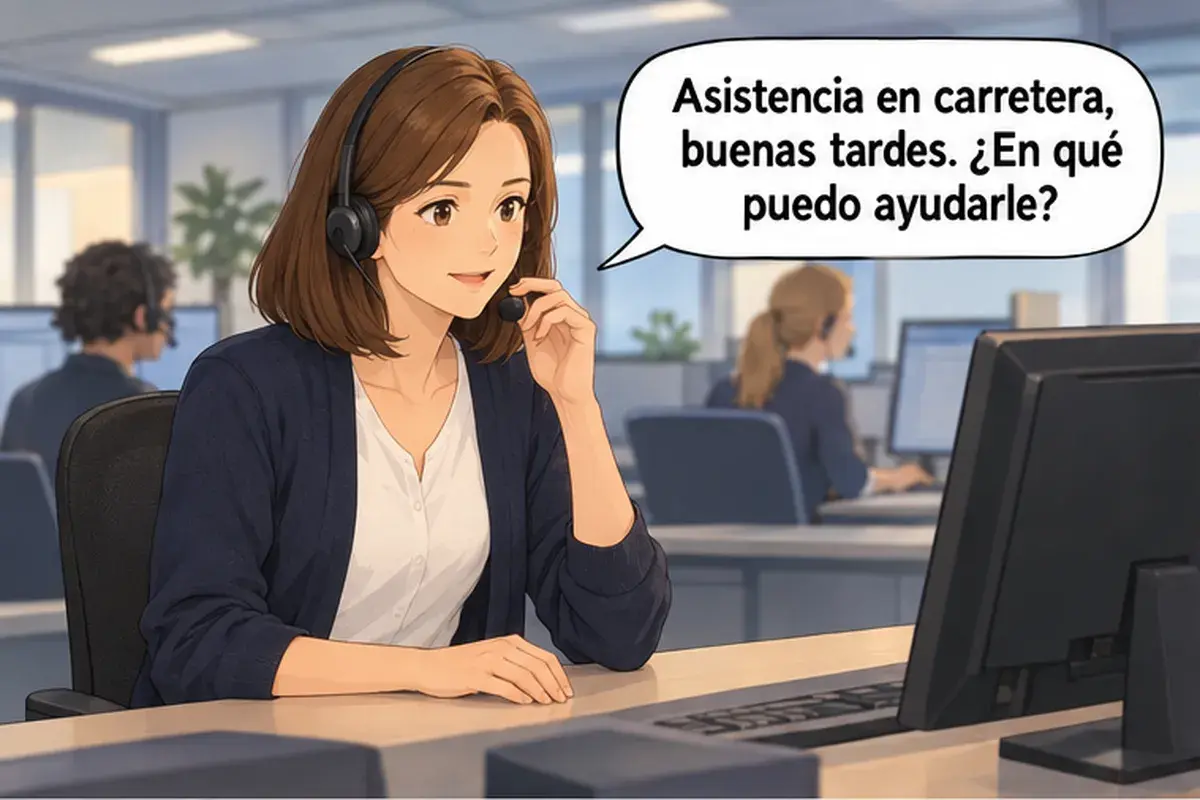
Asistencia en carretera, buenas tardes. ¿En qué puedo ayudarle?
Roadside assistance, good afternoon. How can I help you? (formal)
- Ana
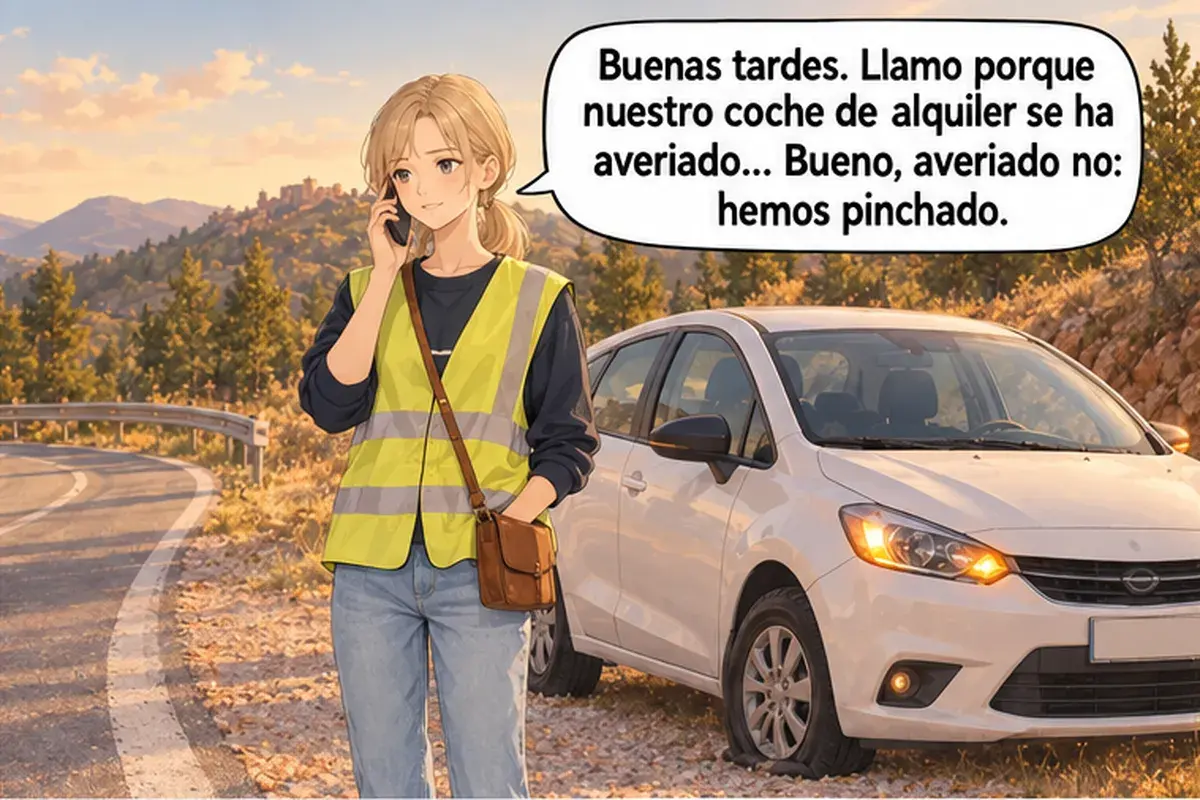
Buenas tardes. Llamo porque nuestro coche de alquiler se ha averiado… Bueno, averiado no: hemos pinchado.
Good afternoon. I'm calling because our rental car has broken down… Well, not broken down: we got a flat tire.
- Operadora
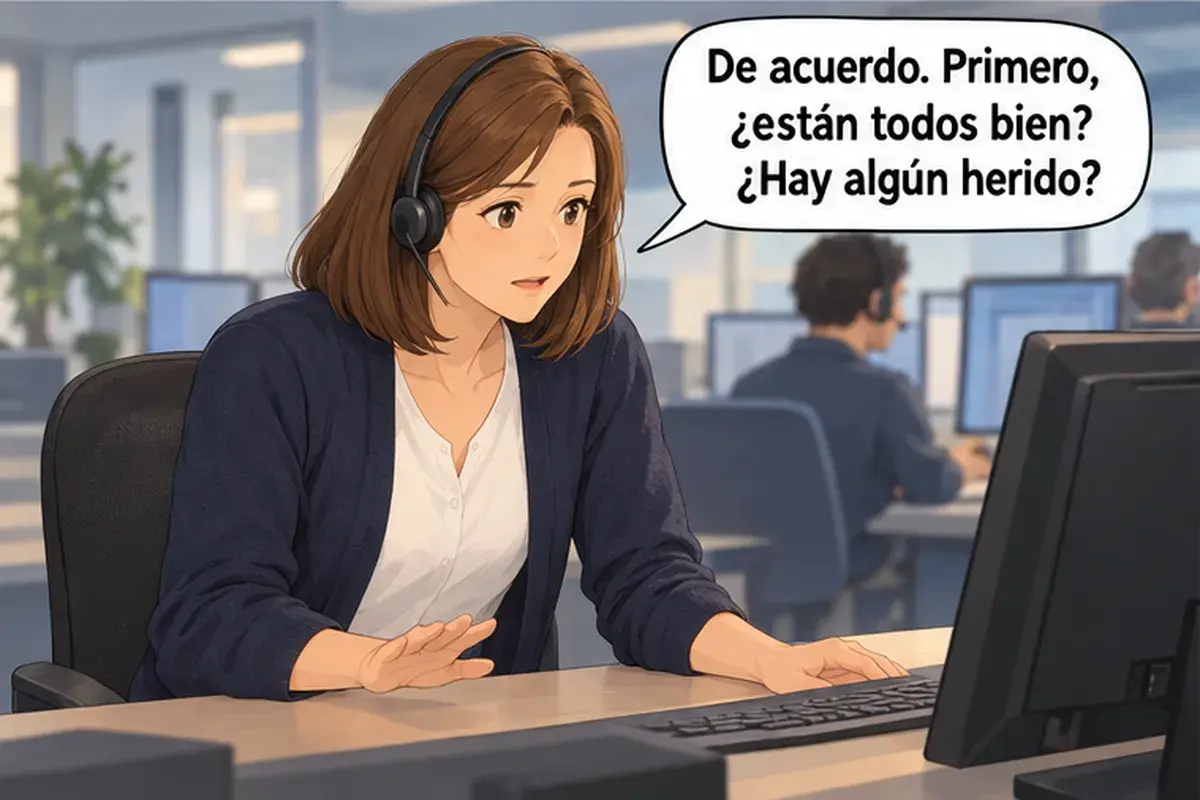
De acuerdo. Primero, ¿están todos bien? ¿Hay algún herido?
All right. First, is everyone OK? Is anyone injured? (to several people, formal)
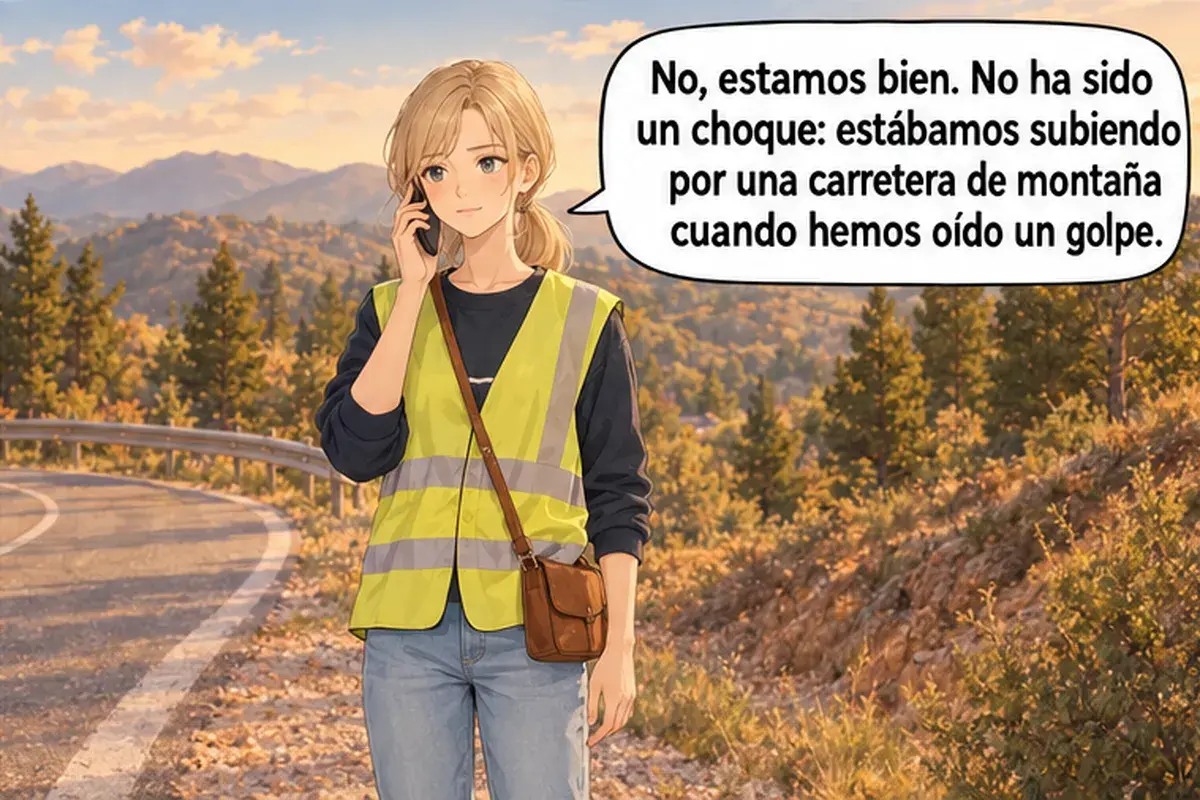
- Ana
No, estamos bien. No ha sido un choque: estábamos subiendo por una carretera de montaña cuando hemos oído un golpe.
No, we're fine. It wasn't a crash: we were going up a mountain road when we heard a bang.
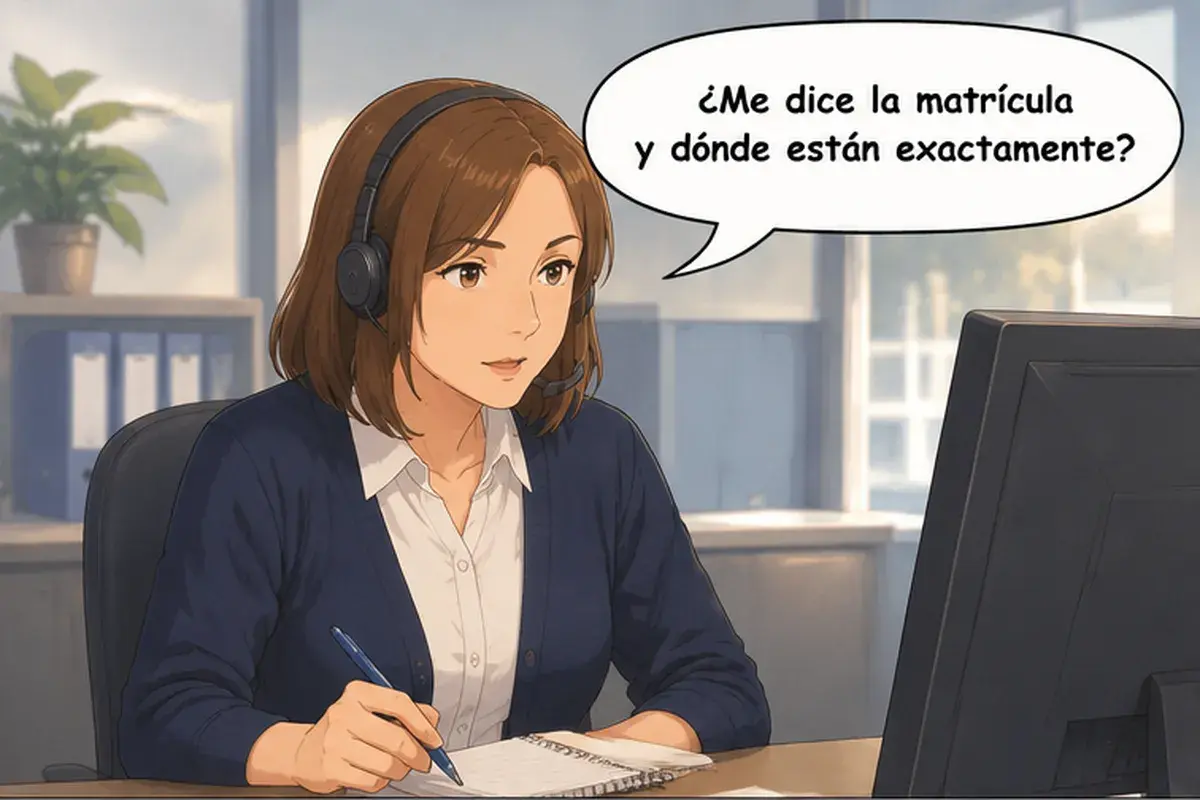
- Operadora
¿Me dice la matrícula y dónde están exactamente?
Can you tell me the license plate and where exactly you are? (formal)
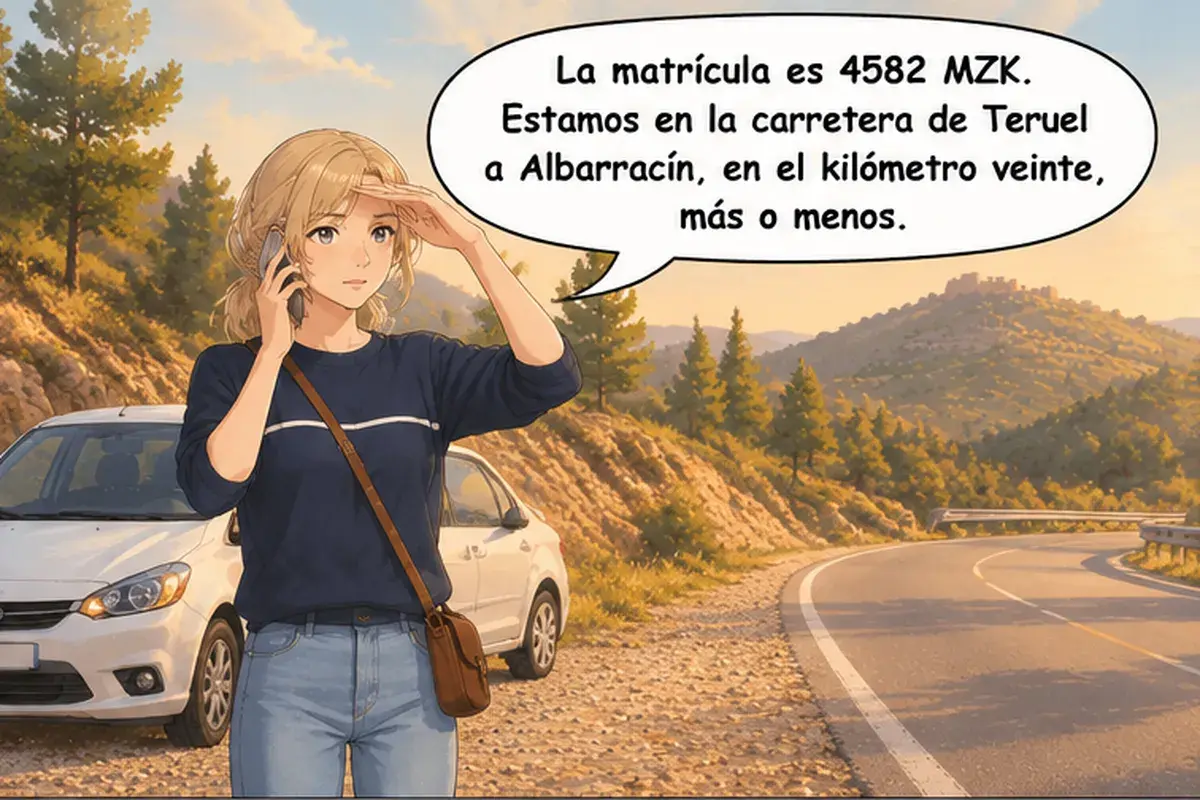
- Ana
La matrícula es 4582 MZK. Estamos en la carretera de Teruel a Albarracín, en el kilómetro veinte, más o menos.
The license plate is 4582 MZK. We're on the road from Teruel to Albarracín, at kilometer twenty, more or less.
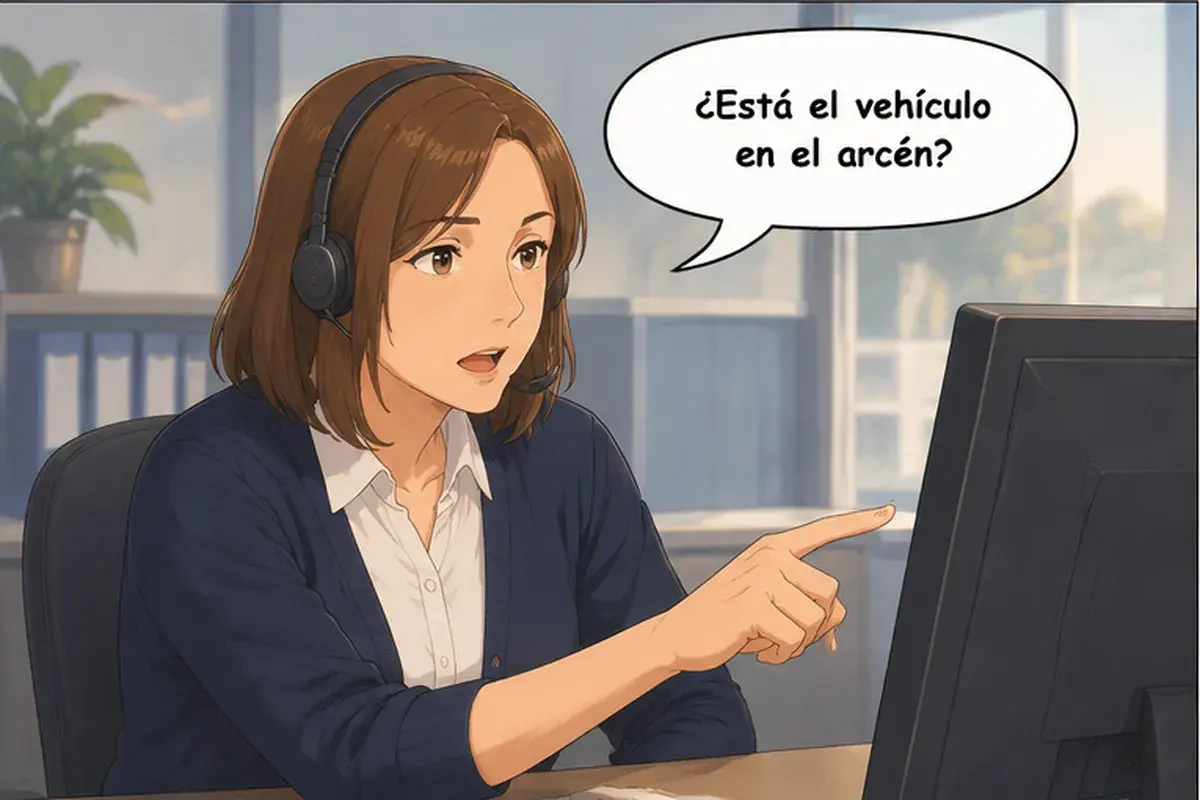
- Operadora
¿Está el vehículo en el arcén?
Is the vehicle on the shoulder?
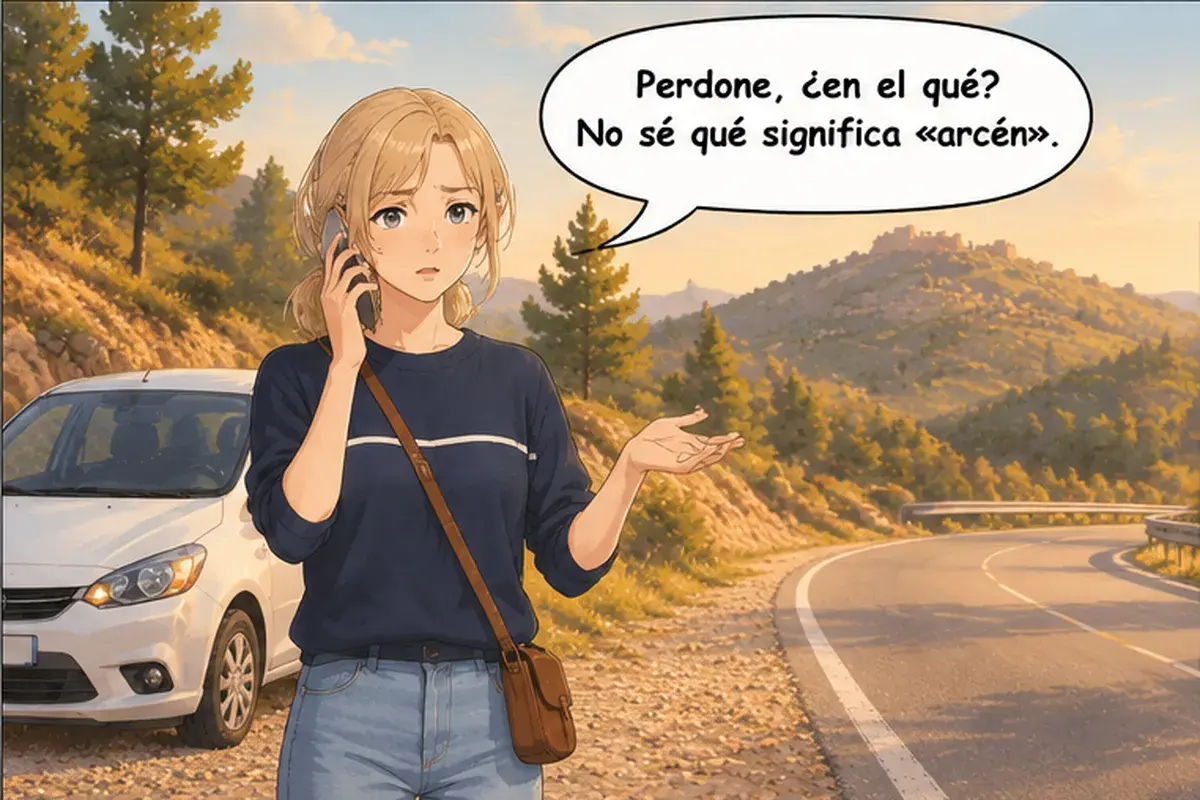
- Ana
Perdone, ¿en el qué? No sé qué significa «arcén».
Sorry, on the what? I don't know what "arcén" means. (formal)
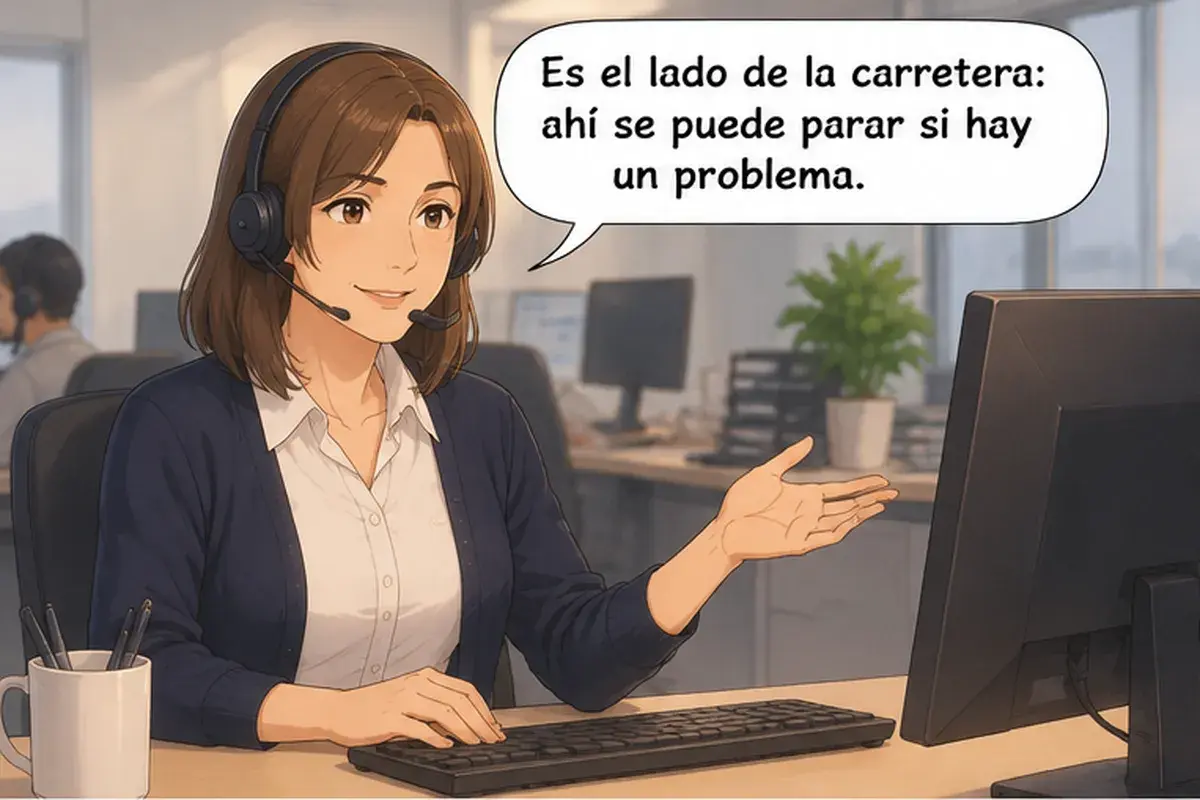
- Operadora
Es el lado de la carretera: ahí se puede parar si hay un problema.
It's the side of the road: you can stop there if there's a problem.
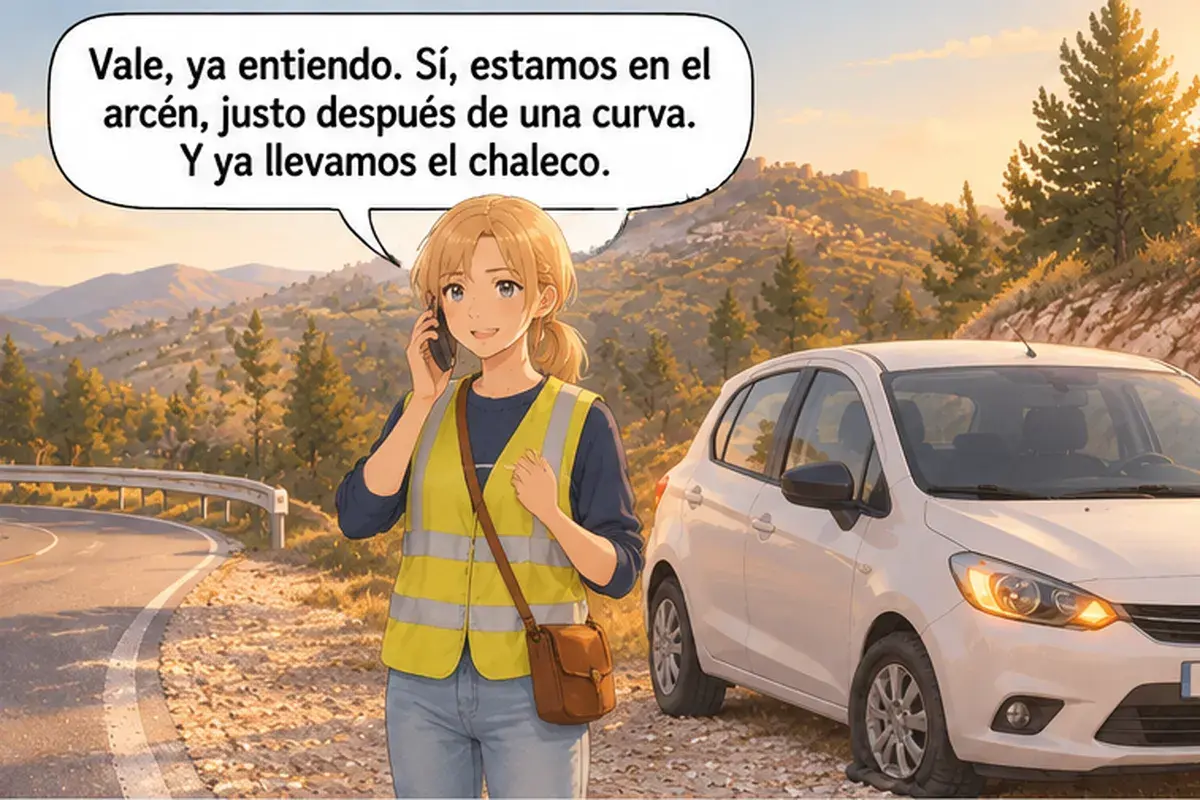
- Ana
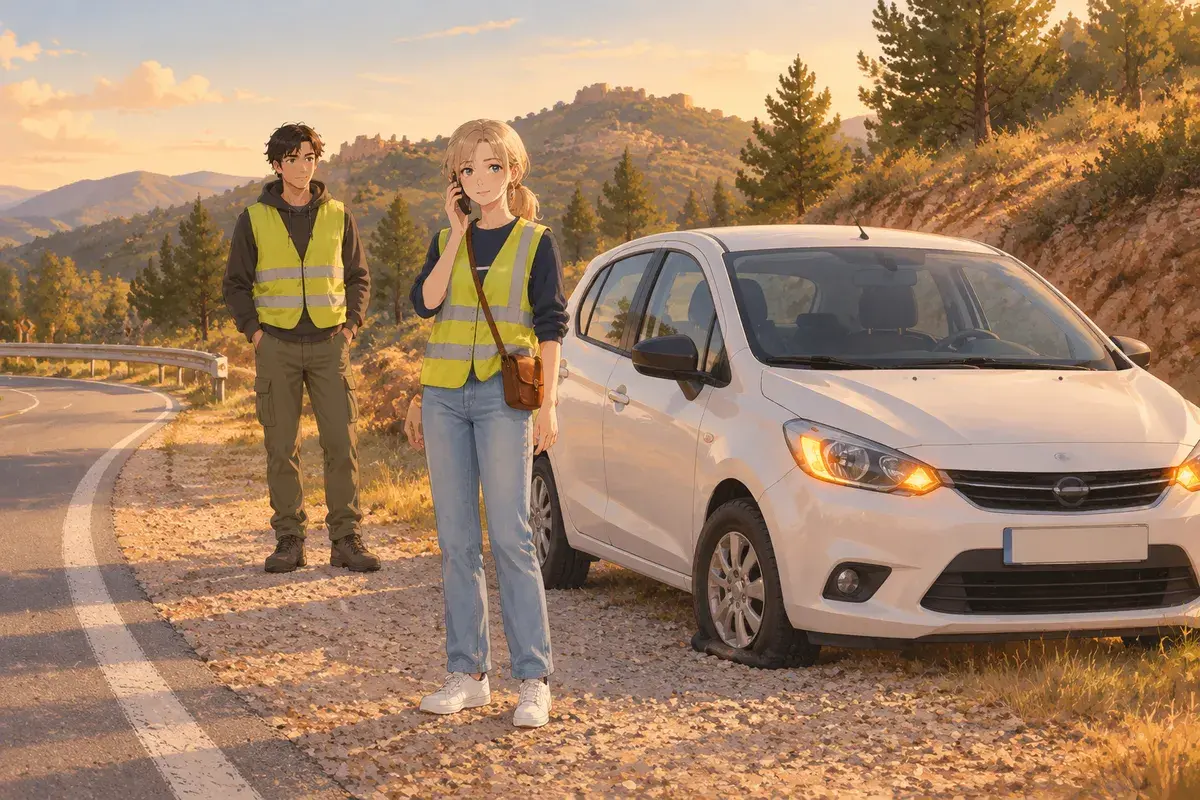
Vale, ya entiendo. Sí, estamos en el arcén, justo después de una curva. Y ya llevamos el chaleco.
OK, now I get it. Yes, we're on the shoulder, right after a curve. And we're already wearing our vests.
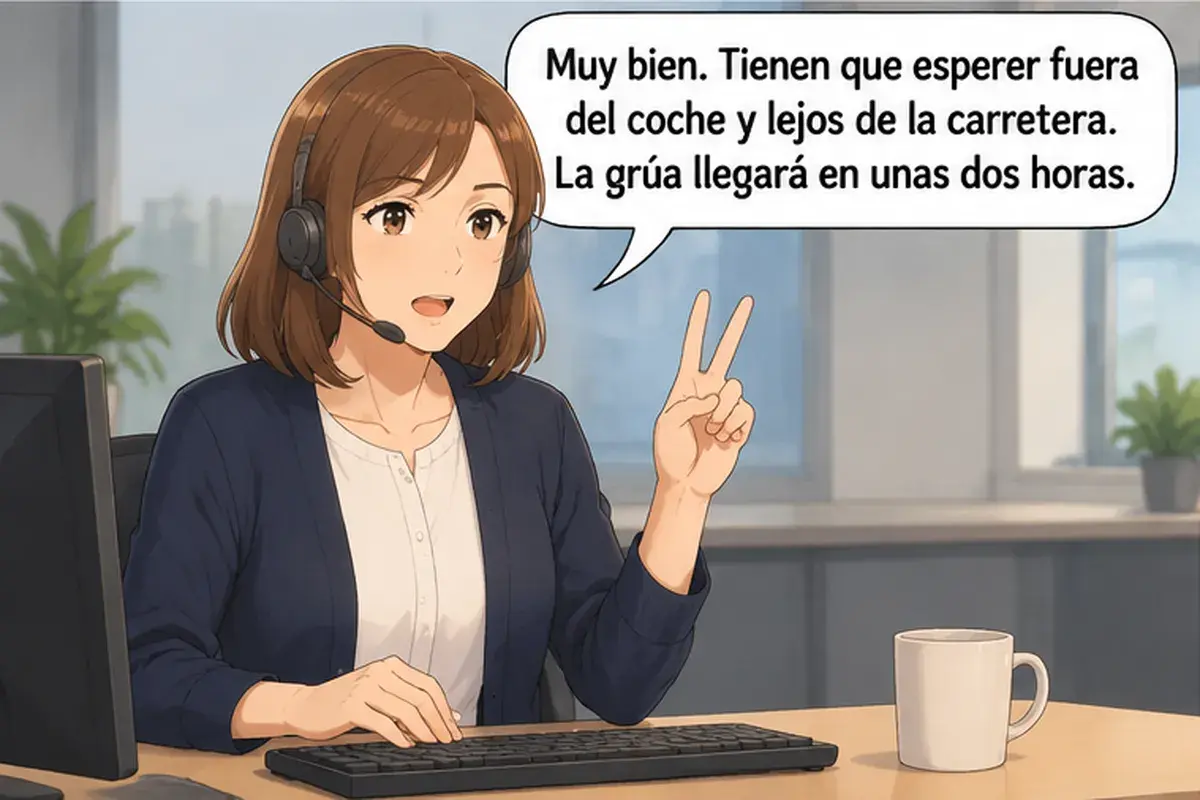
- Operadora
Muy bien. Tienen que esperar fuera del coche y lejos de la carretera. La grúa llegará en unas dos horas.
Very good. You have to wait outside the car and away from the road. The tow truck will be there in about two hours. (to several people, formal)
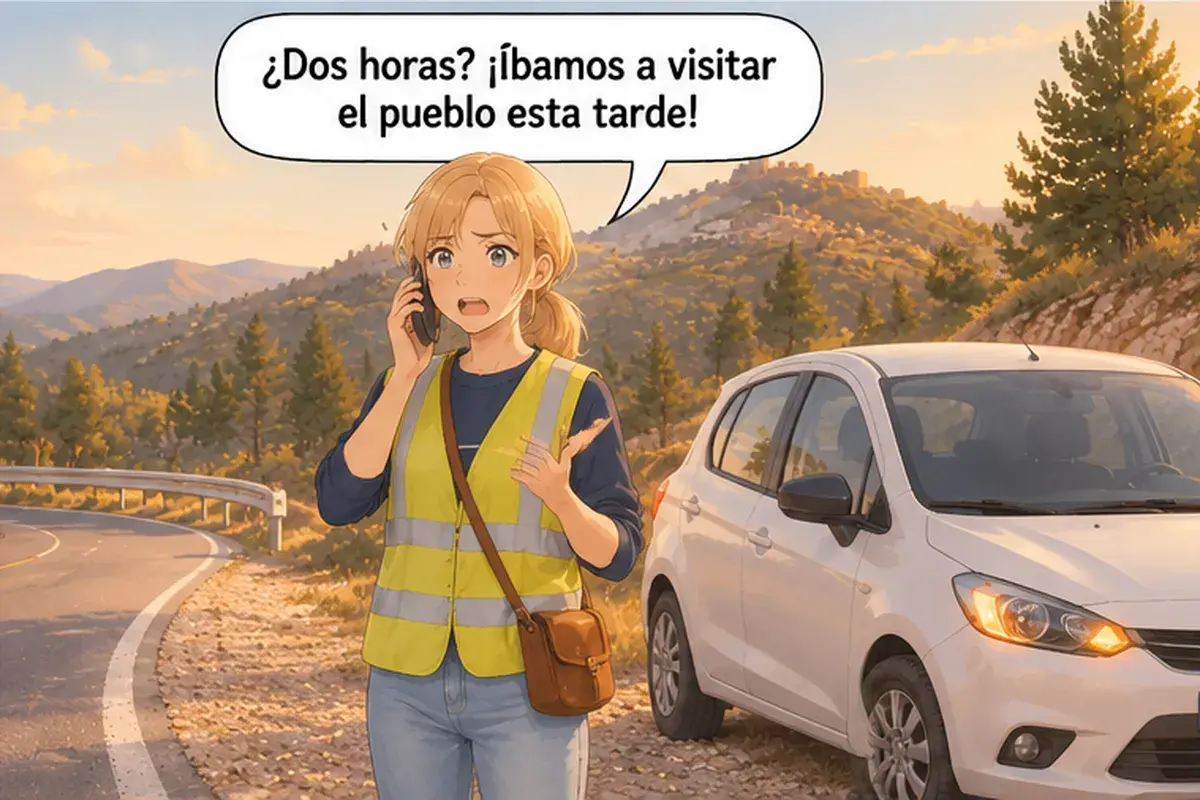
- Ana
¿Dos horas? ¡Íbamos a visitar el pueblo esta tarde!
Two hours? We were going to visit the town this afternoon!
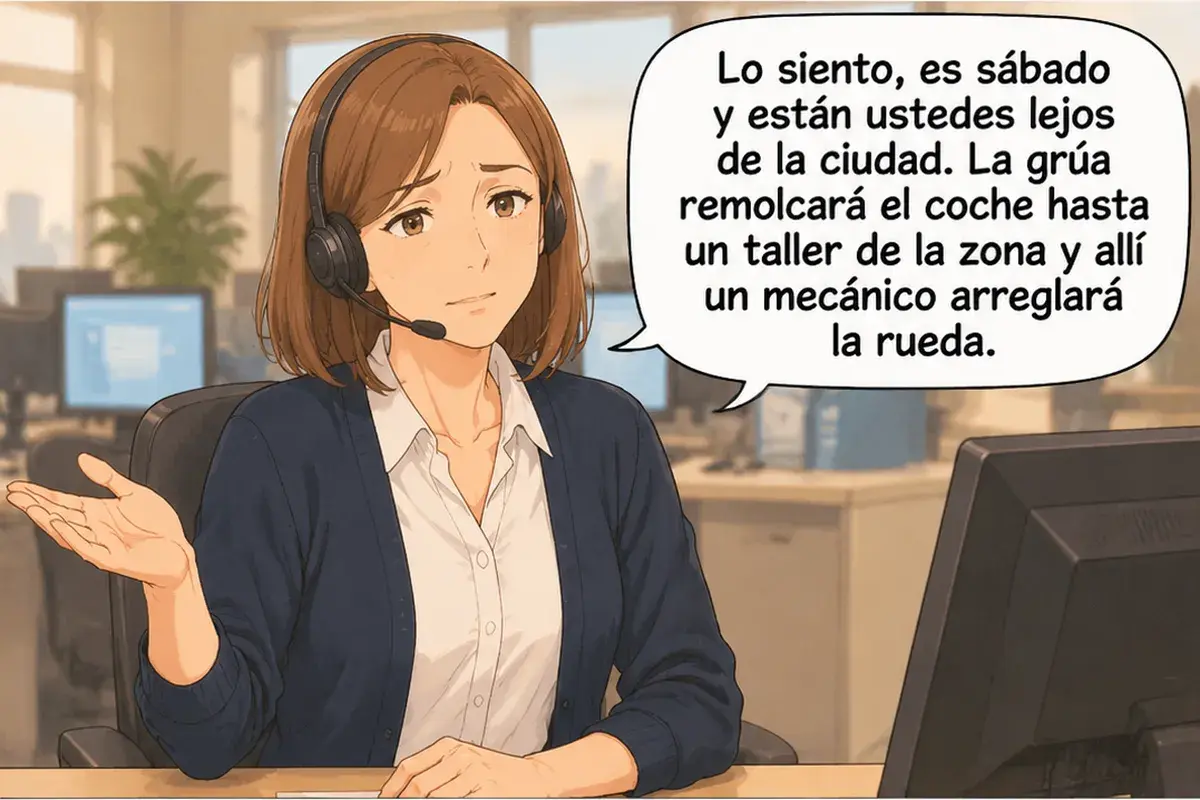
- Operadora
Lo siento, es sábado y están ustedes lejos de la ciudad. La grúa remolcará el coche hasta un taller de la zona y allí un mecánico arreglará la rueda.
I'm sorry, it's Saturday and you're far from the city. The tow truck will tow the car to a local repair shop, and a mechanic there will fix the tire. (to several people, formal)
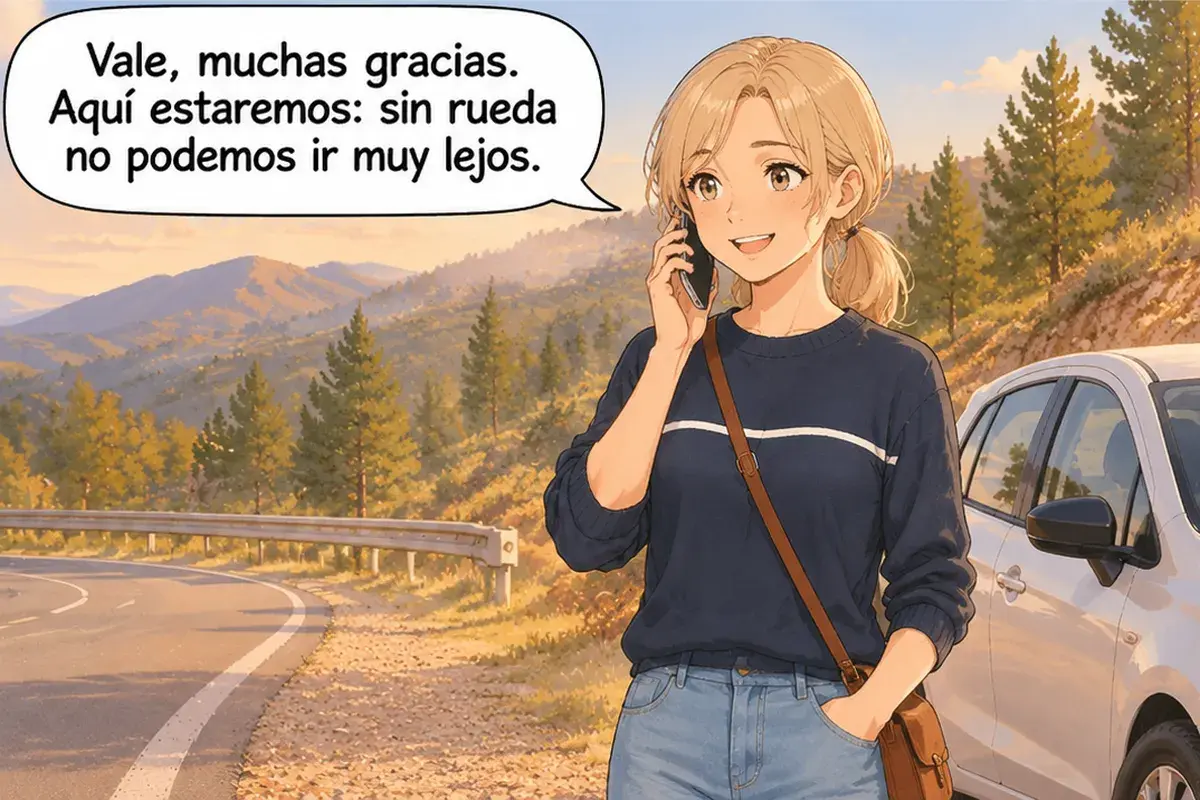
- Ana
Vale, muchas gracias. Aquí estaremos: sin rueda no podemos ir muy lejos.
OK, thank you very much. We'll be here: without a tire we can't go very far.
Grammar for this text
It just happened: present perfect (he hecho). Ana calls right after the flat tire, so: hemos pinchado, no ha sido un choque, estábamos subiendo… cuando hemos oído un golpe. The pattern is the same: what was going on is estaba + gerund, and what cut in, today, is in the present perfect.
Íbamos a visitar el pueblo (we were going to see the town): the plan fell through.
Averiarse and pinchar. Nuestro coche de alquiler se ha averiado (our rental car has broken down): something broke, like the engine or the electrical system. A flat tire isn't called a breakdown; it has its own verb: hemos pinchado (we've got a flat tire).
How to ask about a word you missed. Perdone, ¿en el qué? (sorry, on the what?): repeat the start of the sentence and put qué in place of the word you didn't understand. No sé qué significa… (I don't know what… means).
Local tip. In Spain, when you get out of your car on a highway, you put on a reflective vest (chaleco): it's required, and you can get a fine without it.
Words and grammar of the unit: Tell what went wrong on a road trip.
Learn the words from the texts with flashcards
In the app, you can tap any word in a text to see its translation, forms and examples, and new words stick with flashcards. 15 minutes a day.
Start for freeEverything is open for free. No card needed to sign up.