

Spanish dialogue with translation · B1 · 18 lines
No he entendido ni la mitad I didn't understand even half
Comic · 18 panels
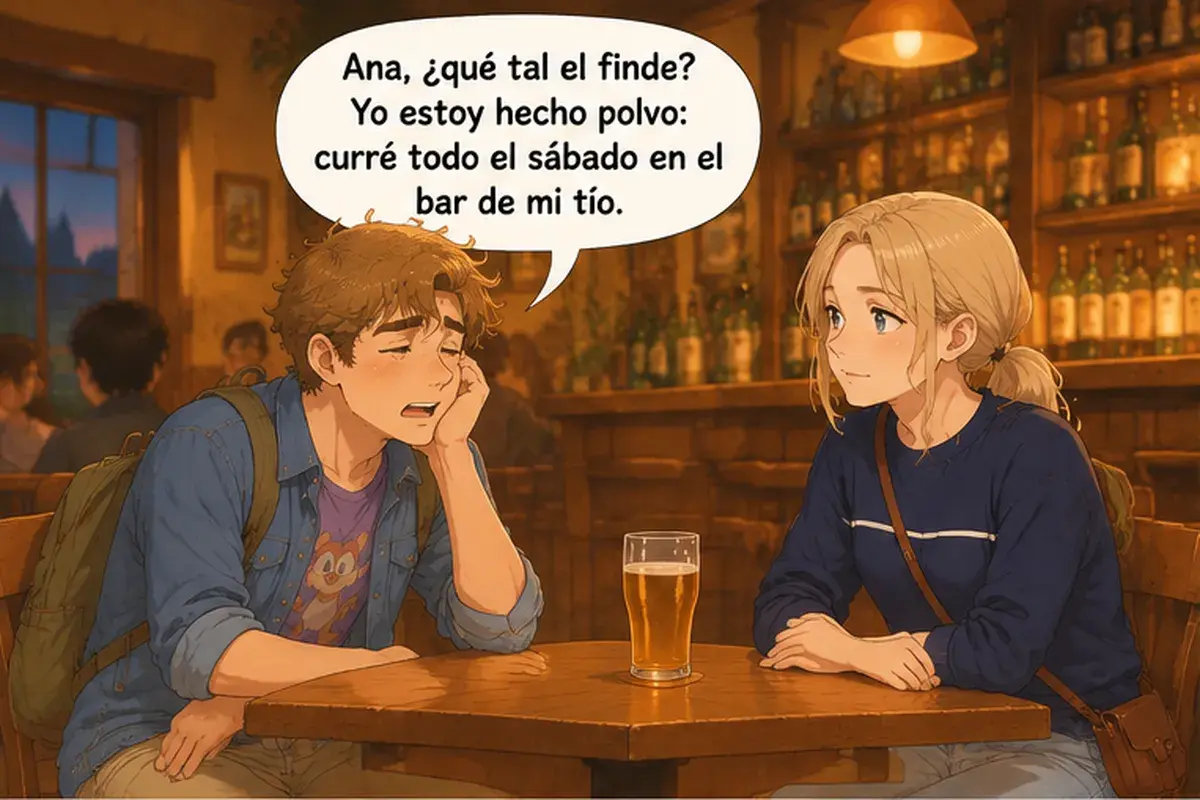
- Hugo
Ana, ¿qué tal el finde? Yo estoy hecho polvo: curré todo el sábado en el bar de mi tío.
Ana, how was your weekend? I'm wiped out: I worked all day Saturday at my uncle's bar (man speaking).
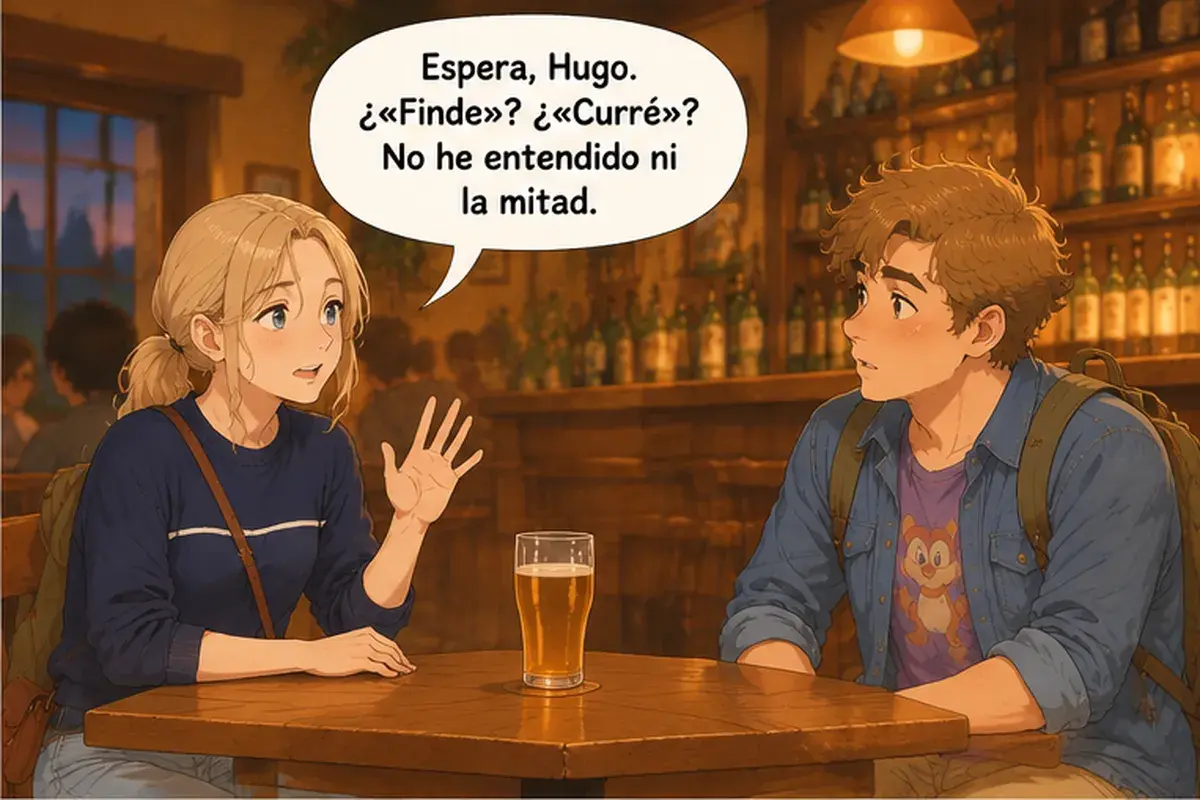
- Ana
Espera, Hugo. ¿«Finde»? ¿«Curré»? No he entendido ni la mitad.
Wait, Hugo. "Finde"? "Curré"? I didn't understand even half of that.
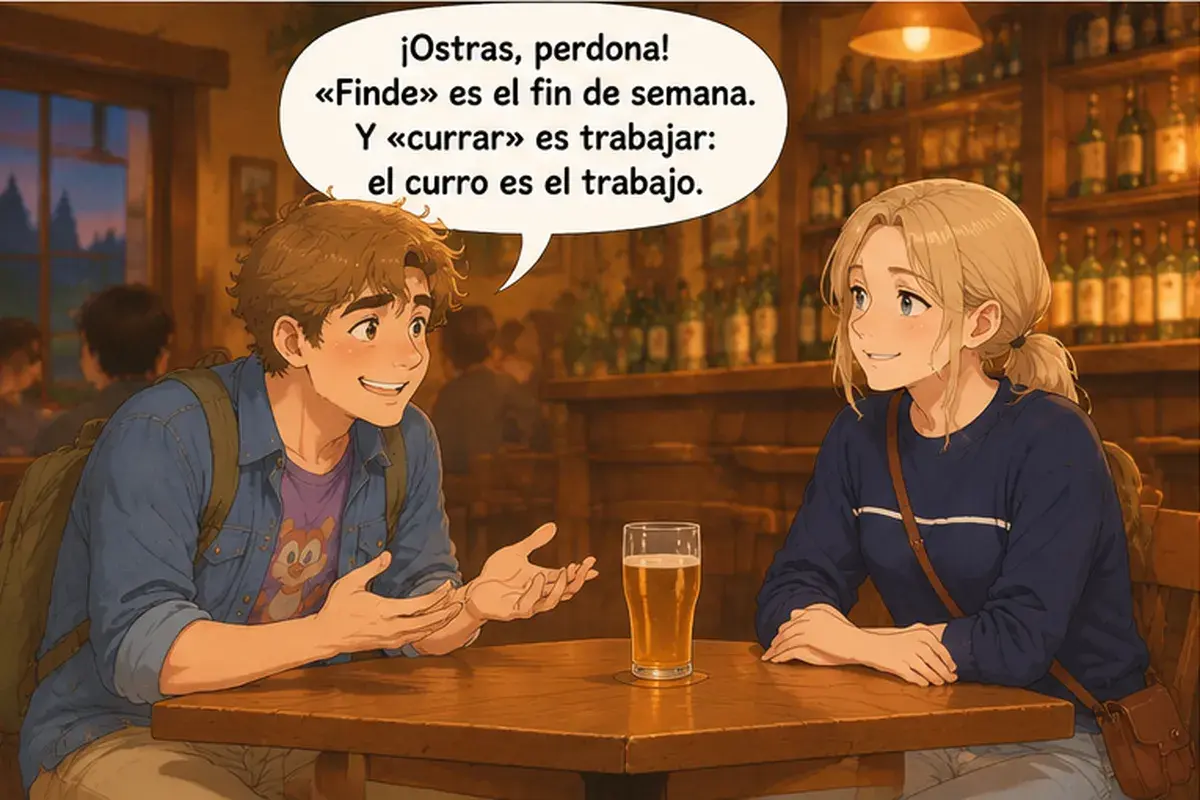
- Hugo
¡Ostras, perdona! «Finde» es el fin de semana. Y «currar» es trabajar: el curro es el trabajo.
Geez, sorry! "Finde" is the weekend. And "currar" means to work: "el curro" is work.

- Ana
Vale, ya entiendo. ¿Y puedo decirle a Nuria «tengo mucho curro»?
OK, I get it now. And can I say "tengo mucho curro" to Nuria?

- Hugo
Mejor no: con la jefa se dice «trabajo». «Curro» es coloquial: es para los amigos, no para una reunión formal.
Better not: with the boss you say "trabajo". "Curro" is colloquial: it's for friends, not for a formal meeting.

- Ana
Entendido. Otra duda: el viernes dijiste que el bar de la esquina era «cutre». ¿Eso es bueno o malo?
Got it. Another question: on Friday you said the bar on the corner was "cutre". Is that good or bad?
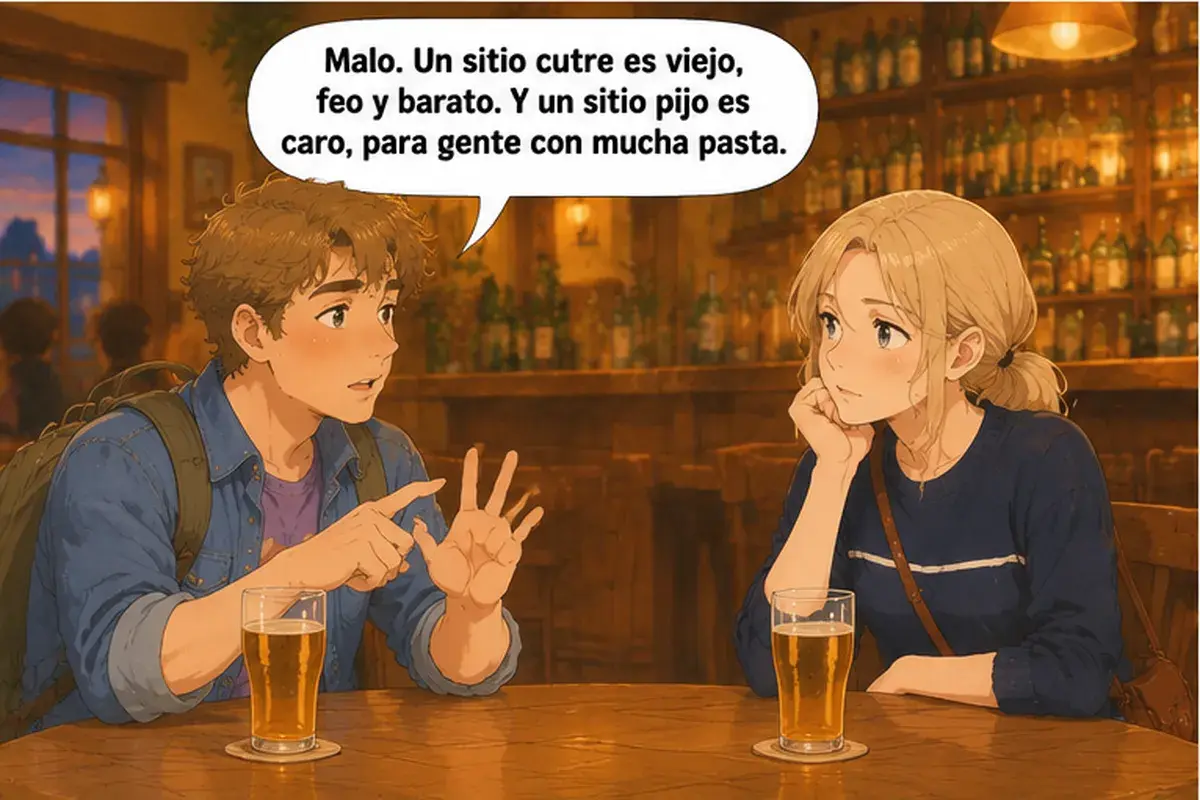
- Hugo
Malo. Un sitio cutre es viejo, feo y barato. Y un sitio pijo es caro, para gente con mucha pasta.
Bad. A "cutre" place is old, ugly and cheap. And a "pijo" place is expensive, for people with lots of "pasta".

- Ana
¿Con pasta? ¿Como la pasta con tomate?
With "pasta"? Like pasta with tomato sauce?

- Hugo
¡No, mujer! Pasta es dinero. Te pongo un ejemplo: «Este finde no salgo, no tengo pasta».
Oh no, of course not! "Pasta" is money. Let me give you an example: "I'm not going out this weekend, I don't have any cash."

- Ana
¡Me encanta! ¿Y hay una palabra coloquial para «mucho»?
I love it! And is there a colloquial word for "mucho"?

- Hugo
Claro: «mogollón». «Tengo mogollón de curro» o «esta serie me gusta mogollón».
Sure: "mogollón". "I've got a ton of work" or "I like this show a ton."

- Ana
Pues tu explicación me gusta mogollón. ¿Lo he dicho bien?
Well, I like your explanation a ton. Did I say that right?

- Hugo
¡Qué pasada! Eres una crack: aprendes con una facilidad increíble.
That's amazing! You're a star: you learn with incredible ease (to a woman).

- Ana
Una cosa más. Sonia siempre te llama «chaval». ¿Eso es una palabrota?
One more thing. Sonia always calls you "chaval". Is that a swear word?

- Hugo
¡Para nada! Un chaval es un chico joven. Las palabrotas no te las enseño, porque Nuria me mata.
Not at all! A "chaval" is a young guy. I'm not teaching you the swear words, because Nuria will kill me.
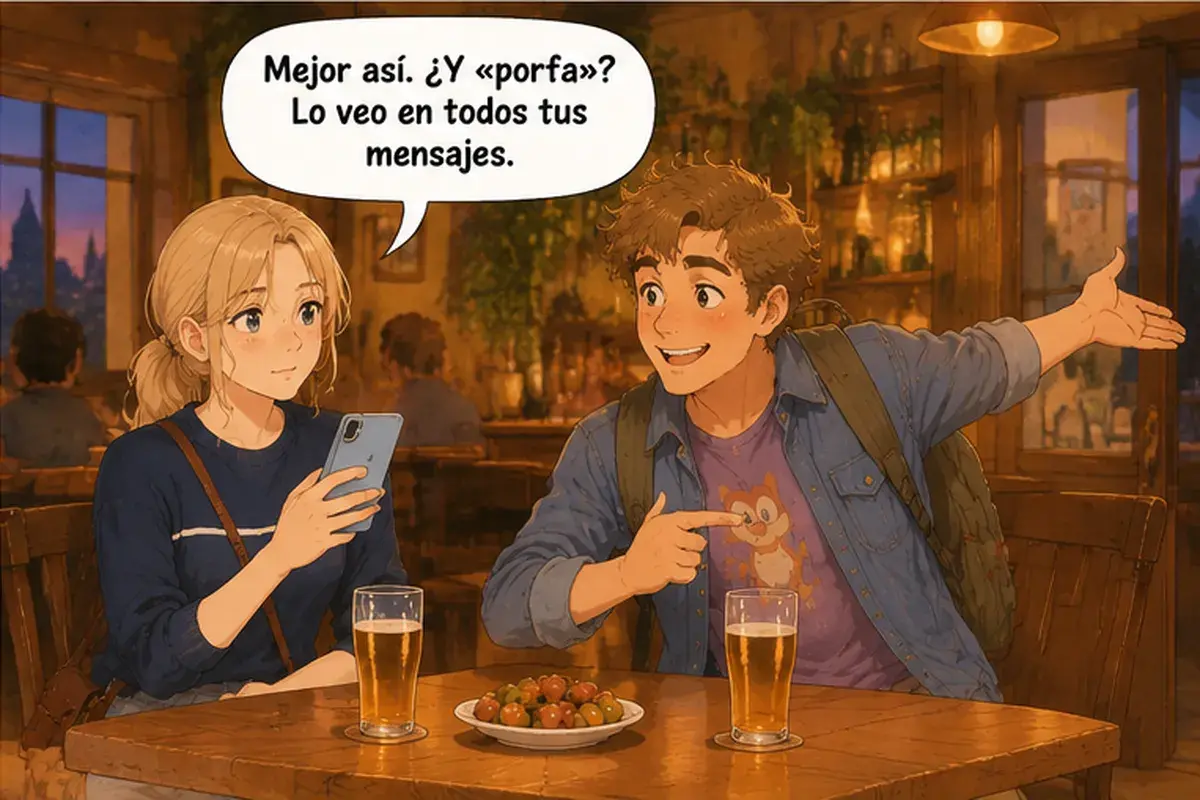
- Ana
Mejor así. ¿Y «porfa»? Lo veo en todos tus mensajes.
That's better. And "porfa"? I see it in all your messages.

- Hugo
Es «por favor», pero más corto. Oye, el jueves vamos a tomar unas birras después del curro: ven, porfa, vas a alucinar con las tapas.
It's "por favor", but shorter. Listen, on Thursday we're going for a few beers after work: come, please, you're going to be blown away by the tapas.

- Ana
¿Birras? Déjame adivinar… ¡cervezas! Me apunto, chaval.
"Birras"? Let me guess… beers! Count me in, kid.
Grammar for this text
Colloquial words in this dialogue. Finde = fin de semana, currar = trabajar, el curro = el trabajo, pasta = dinero, porfa = por favor, birras = cervezas. They're all for friends: Hugo himself says to use trabajo with the boss.
Mogollón works in two ways: mogollón de + noun (mogollón de curro — "a ton of work") and after a verb (me gusta mogollón — "I like it a lot").
Eres una crack — praise: "you're great at this, you're a pro". About a man: un crack.
Vas a alucinar con las tapas — "you're going to be blown away by the tapas": after alucinar, the thing that amazes you comes with con.
Dijiste que el bar de la esquina era "cutre" — reporting someone's words in the past (unit 14): es cutre → dijiste que era cutre.
No te las enseño — two pronouns together (unit 10): te — "to you", las — "them", that is, the swear words.
Se dice "trabajo" — "you say 'trabajo'": impersonal se (unit 7).
Words and grammar of the unit: Understand street Spanish.
Learn the words from the texts with flashcards
In the app, you can tap any word in a text to see its translation, forms and examples, and new words stick with flashcards. 15 minutes a day.
Start for freeEverything is open for free. No card needed to sign up.