
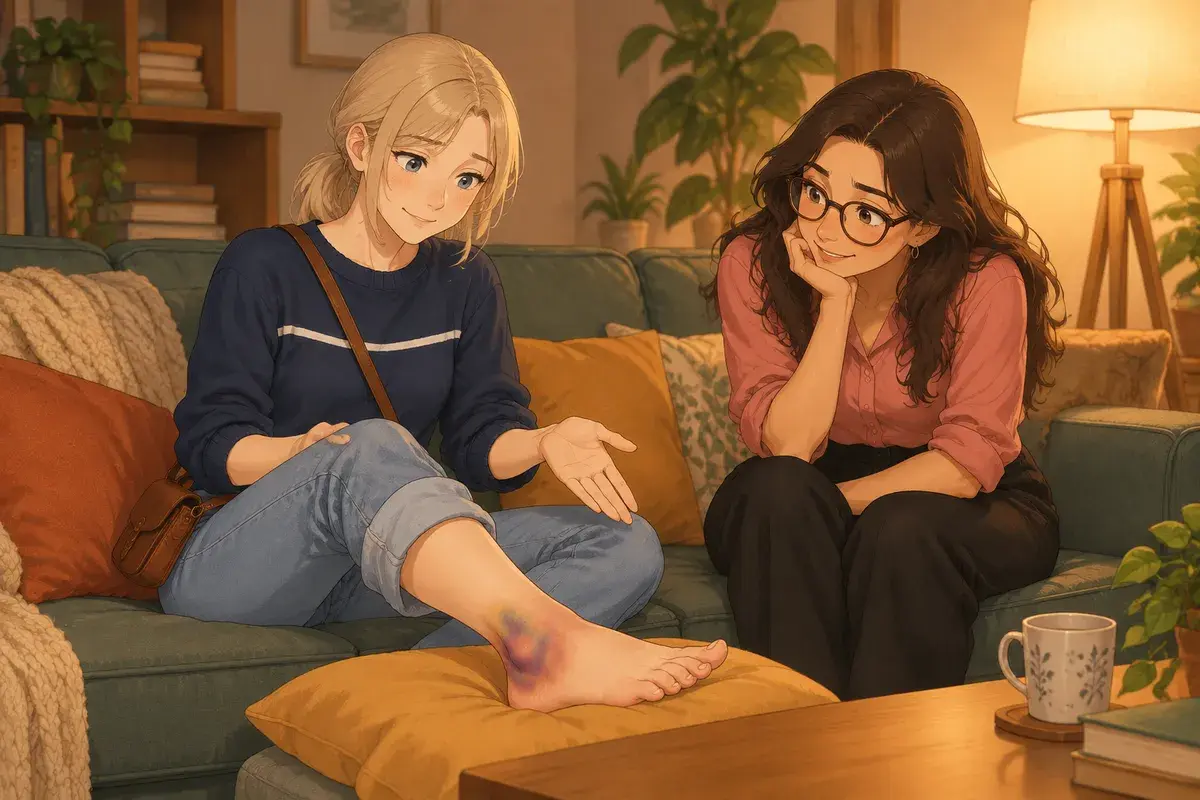
Spanish dialogue with translation · B2 · 14 lines
¿Qué te ha pasado en el pie? What happened to your foot?
Comic · 14 panels
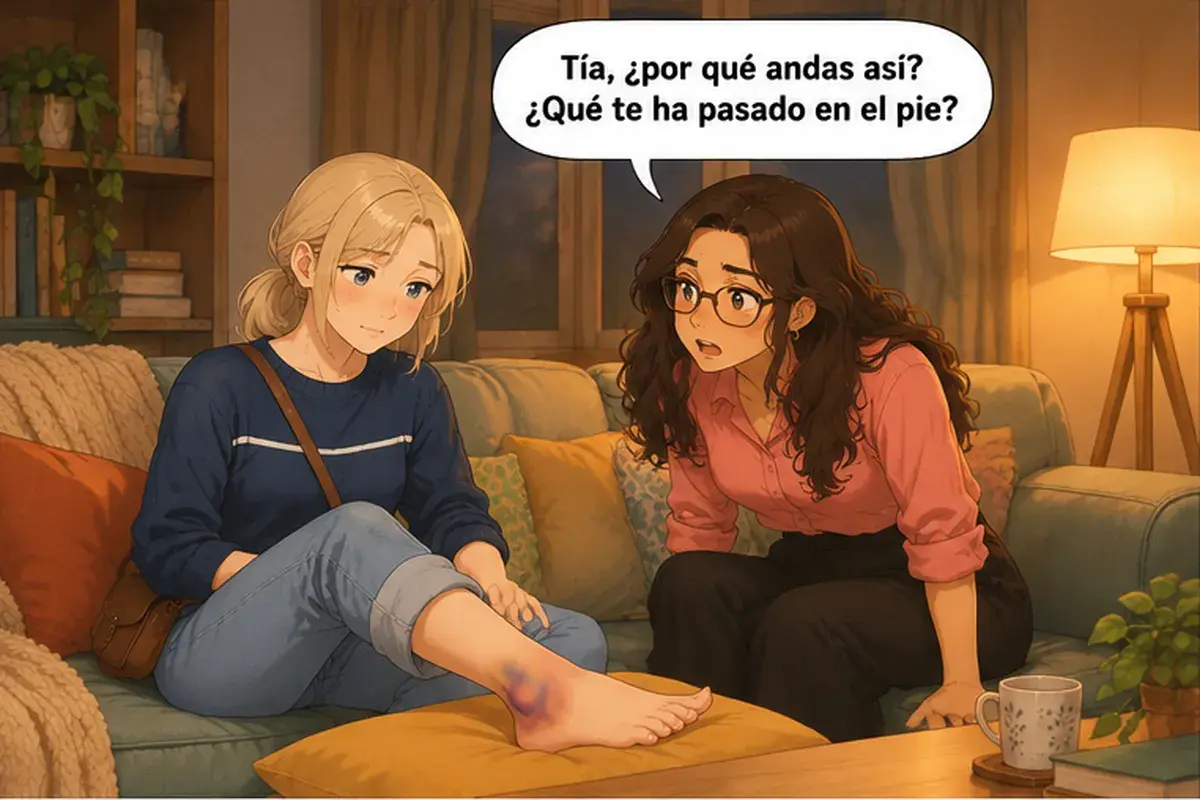
- Lucía
Tía, ¿por qué andas así? ¿Qué te ha pasado en el pie?
Girl, why are you walking like that? What happened to your foot?
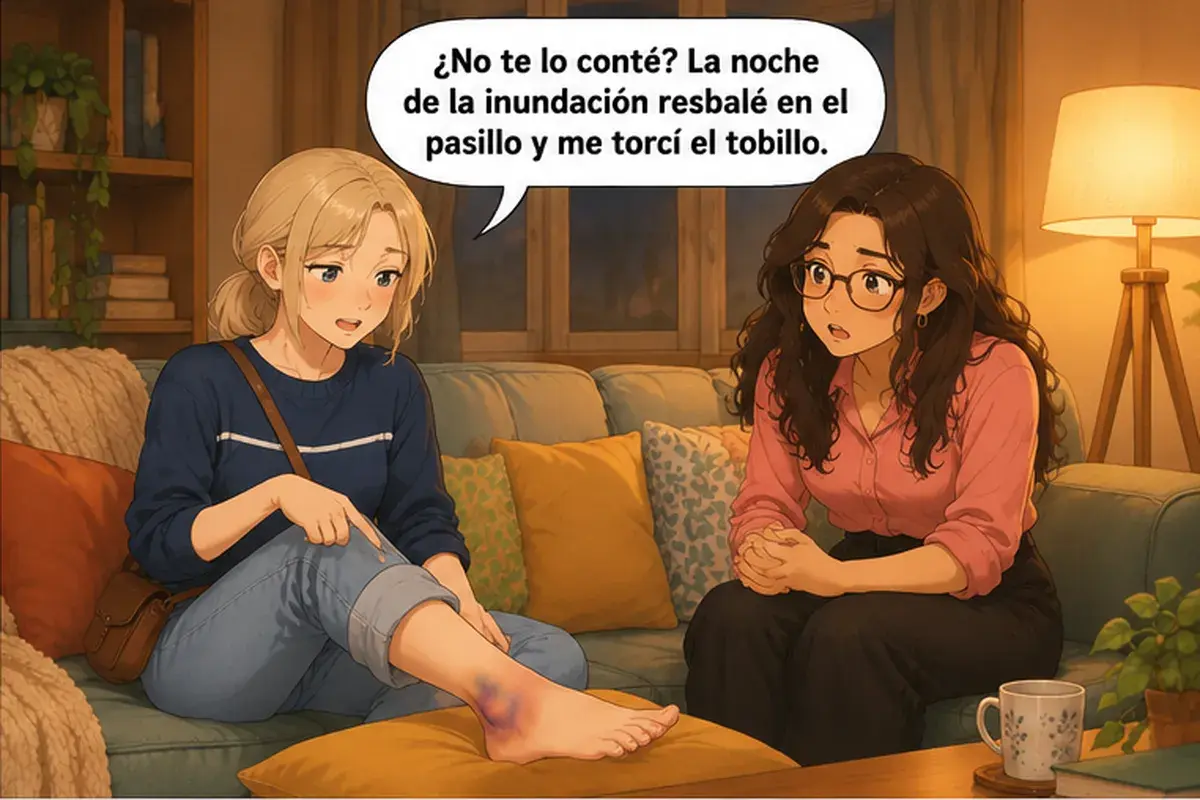
- Ana
¿No te lo conté? La noche de la inundación resbalé en el pasillo y me torcí el tobillo.
Didn't I tell you? The night of the flood, I slipped in the hallway and twisted my ankle.
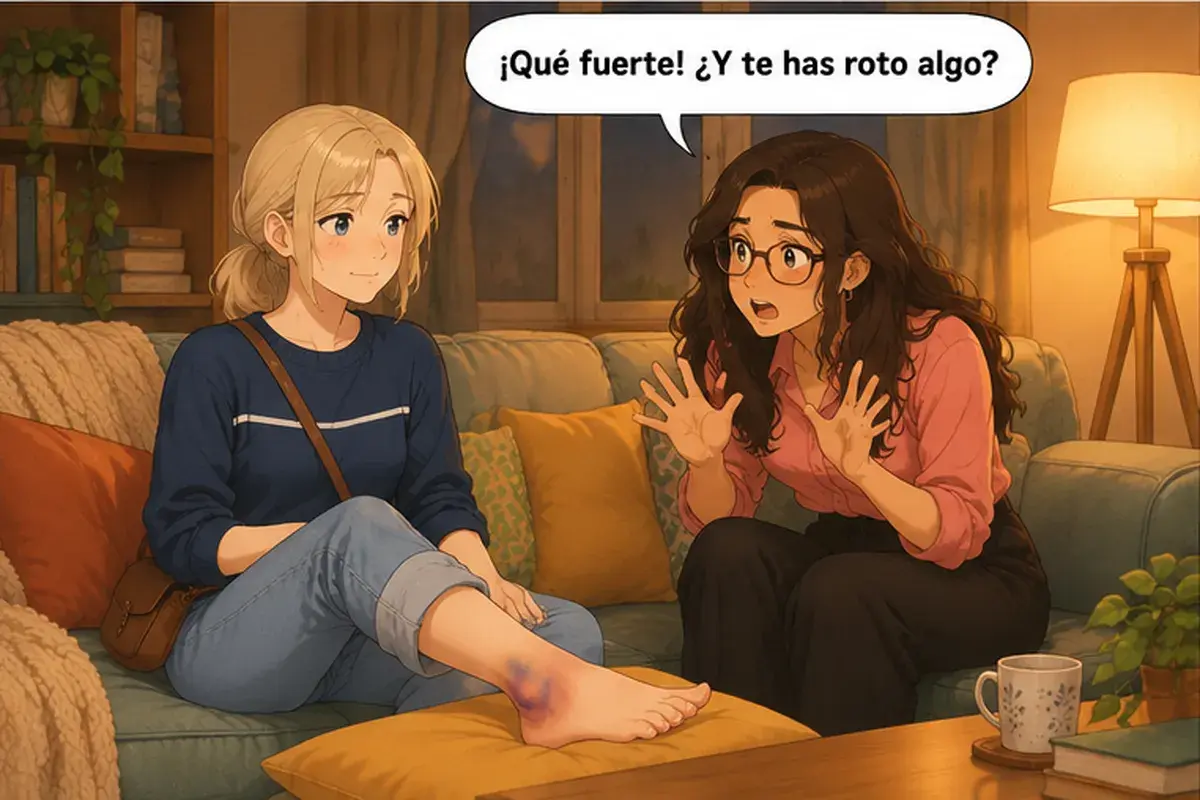
- Lucía
¡Qué fuerte! ¿Y te has roto algo?
No way! And did you break anything?
- Ana
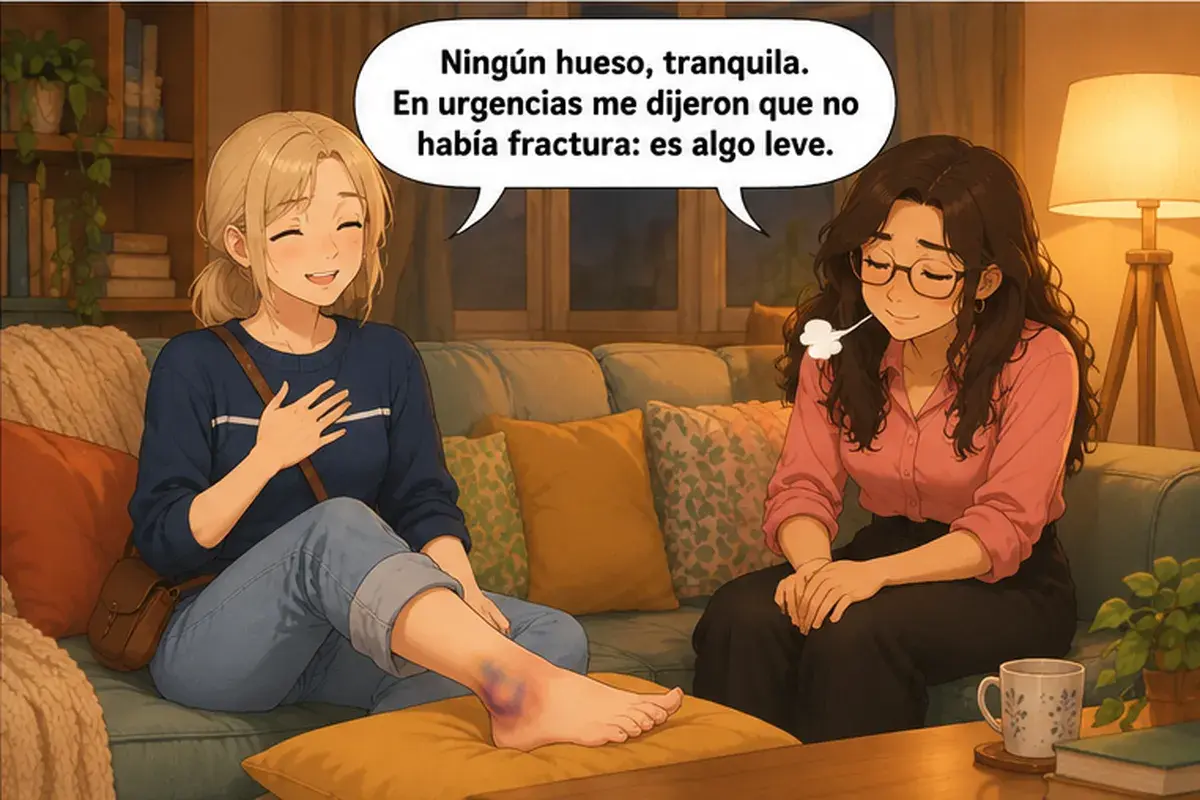
Ningún hueso, tranquila. En urgencias me dijeron que no había fractura: es algo leve.
Not a single bone, don't worry. At the ER they told me there was no fracture: it's something minor (to a woman).
- Lucía
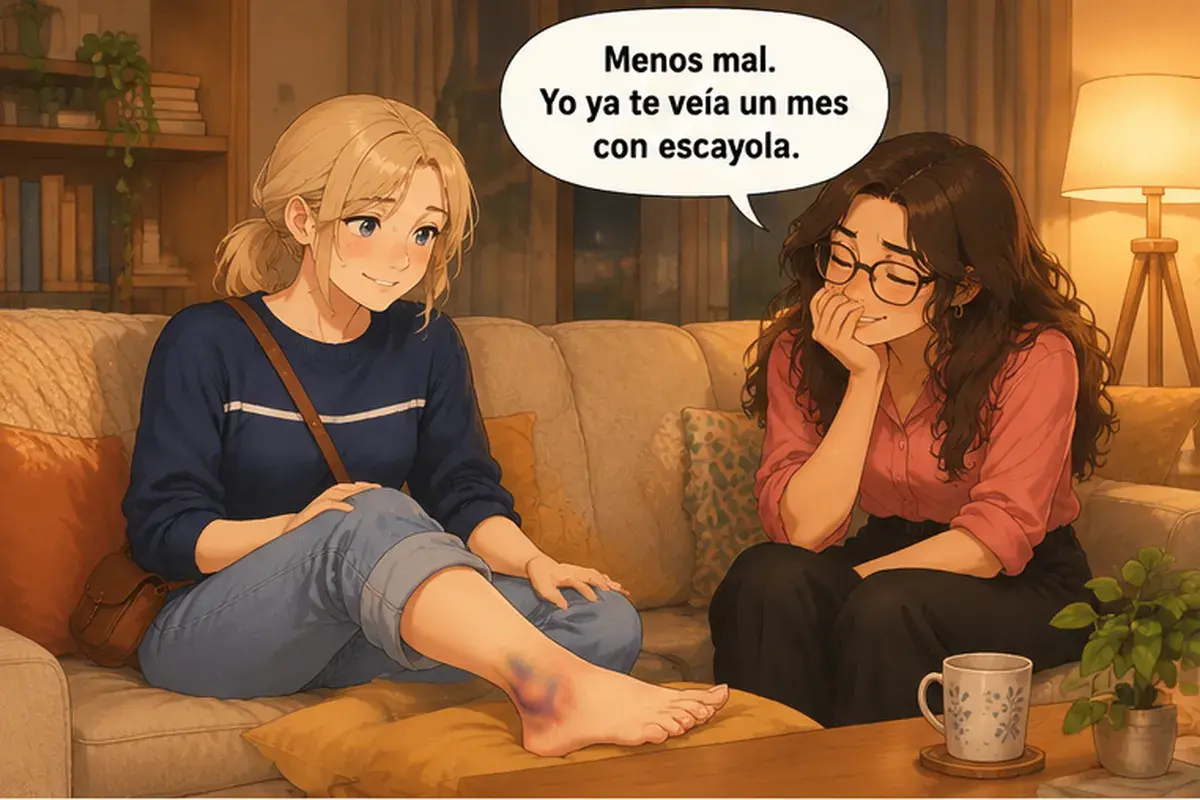
Menos mal. Yo ya te veía un mes con escayola.
Thank goodness. I could already picture you in a cast for a month.
- Ana
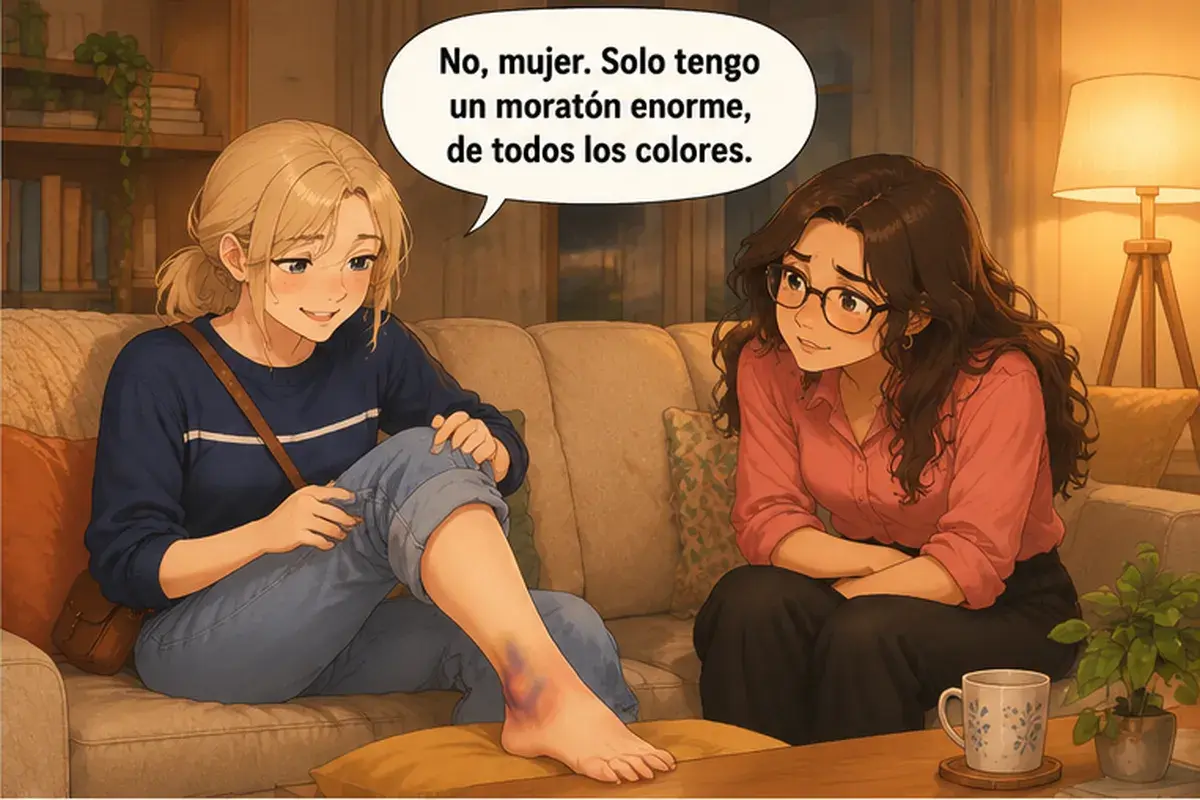
No, mujer. Solo tengo un moratón enorme, de todos los colores.
Oh no, of course not. I just have a huge bruise, in every color.
- Lucía
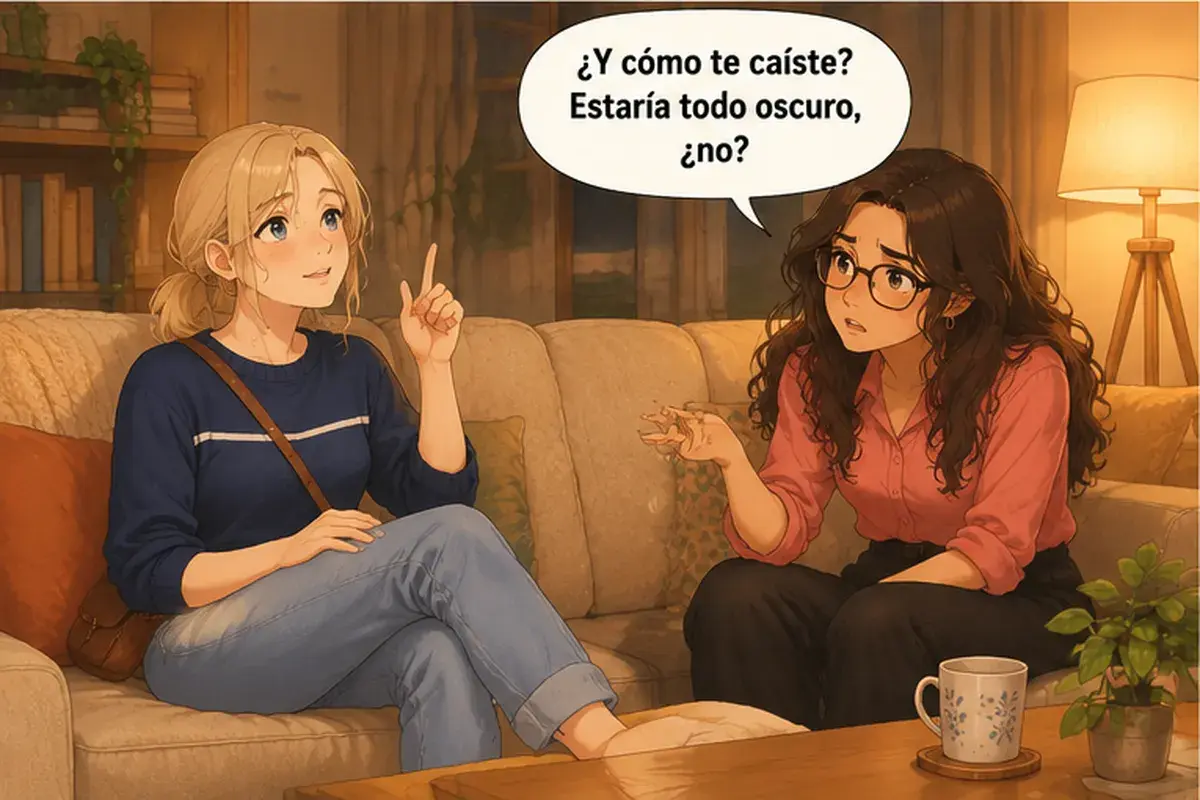
¿Y cómo te caíste? Estaría todo oscuro, ¿no?
And how did you fall? It was probably all dark, right?
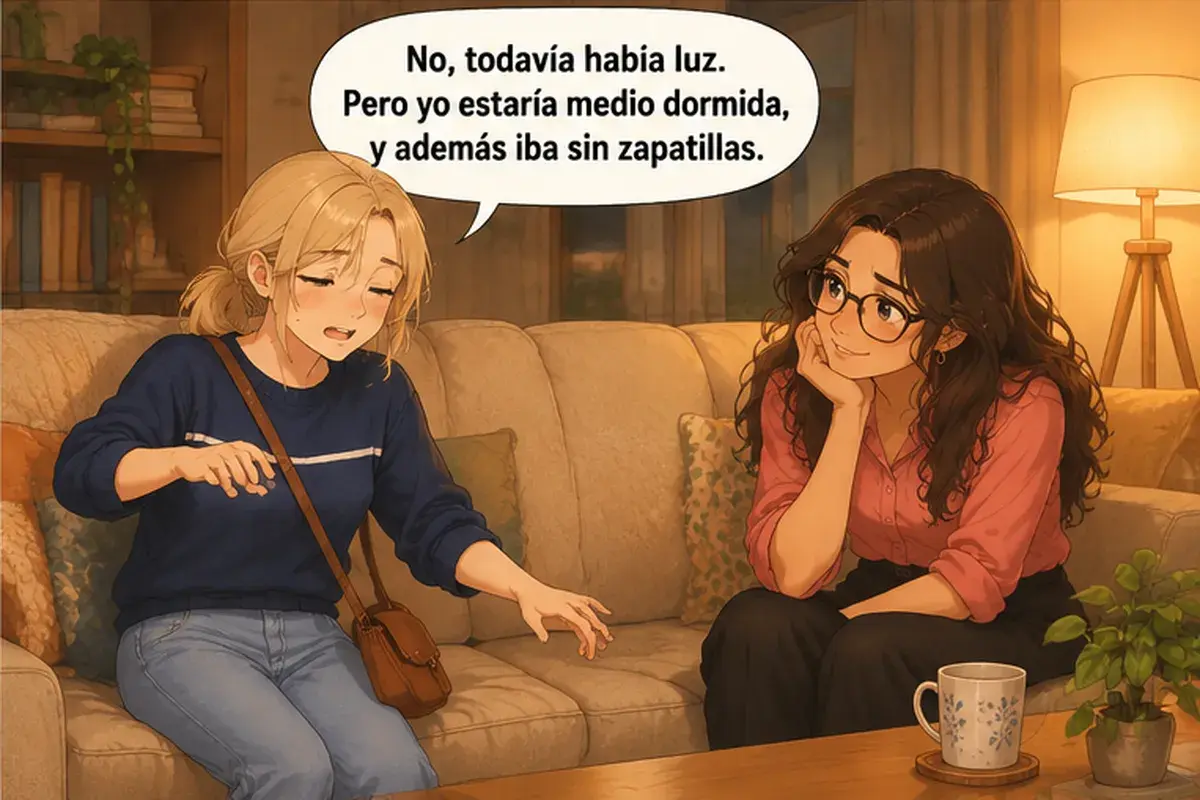
- Ana
No, todavía había luz. Pero yo estaría medio dormida, y además iba sin zapatillas.
No, the power was still on. But I was probably half asleep (woman speaking), and on top of that I wasn't wearing slippers.
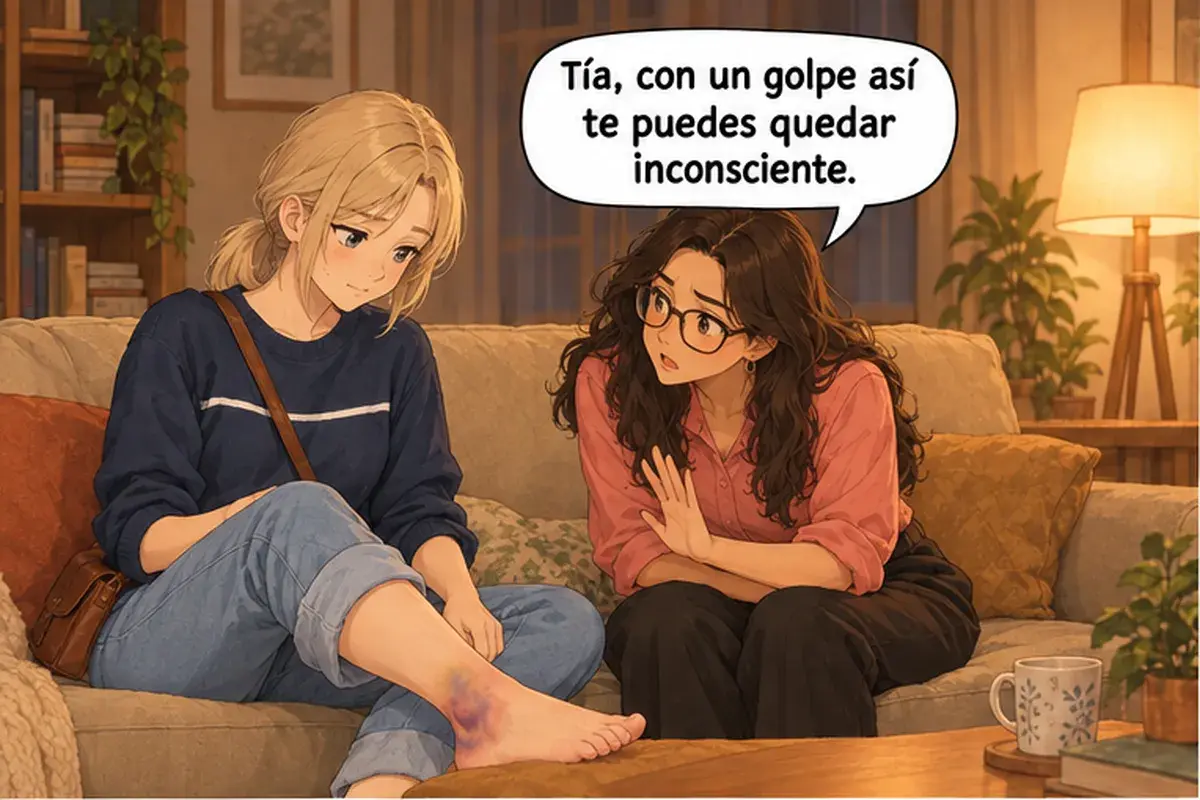
- Lucía
Tía, con un golpe así te puedes quedar inconsciente.
Girl, with a blow like that you can end up unconscious.
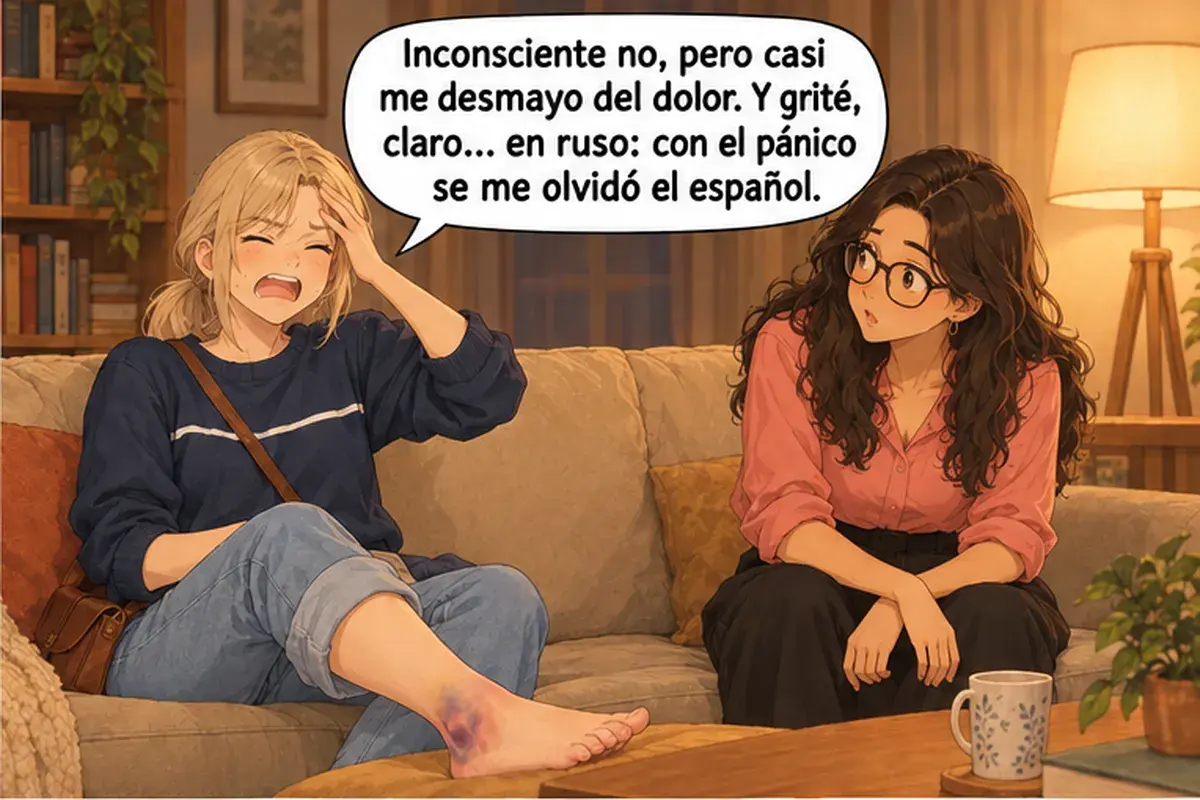
- Ana
Inconsciente no, pero casi me desmayo del dolor. Y grité, claro… en mi idioma: con el pánico se me olvidó el español.
Not unconscious, but I almost fainted from the pain. And I screamed, of course... in my own language: in my panic, I forgot my Spanish.
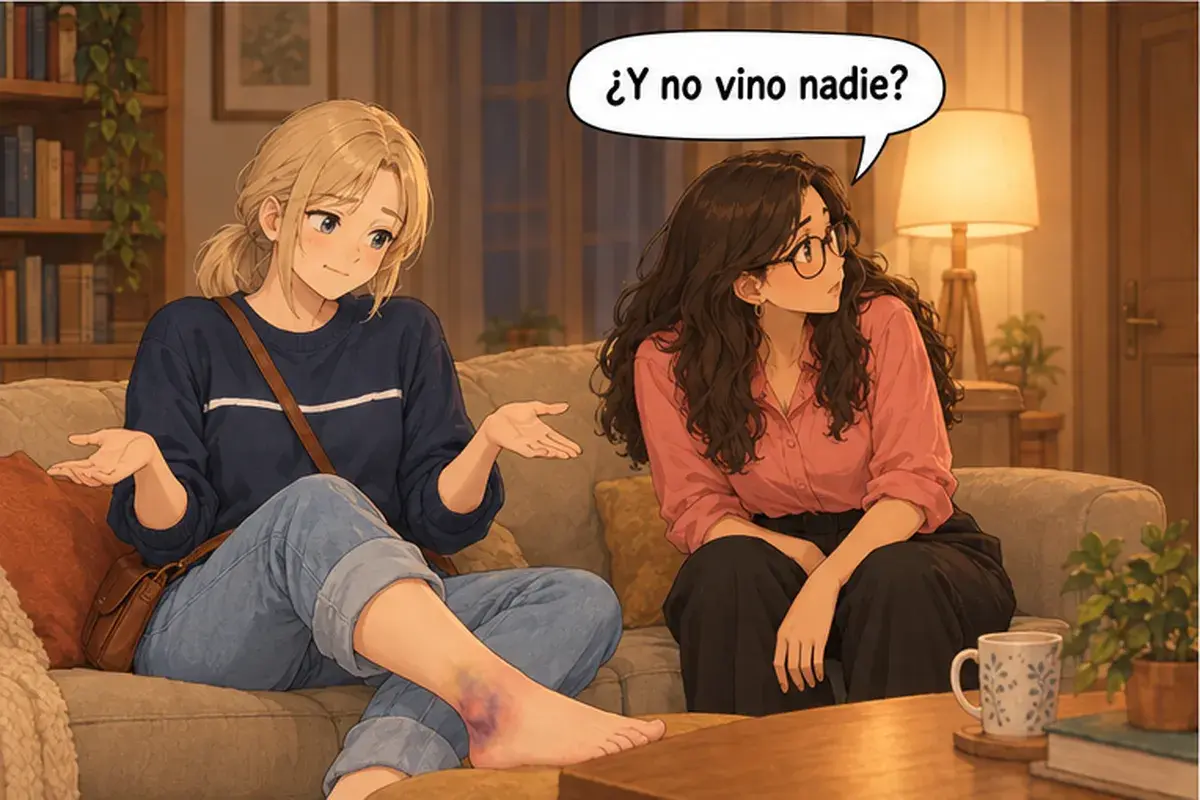
- Lucía
¿Y no vino nadie?
And nobody came?
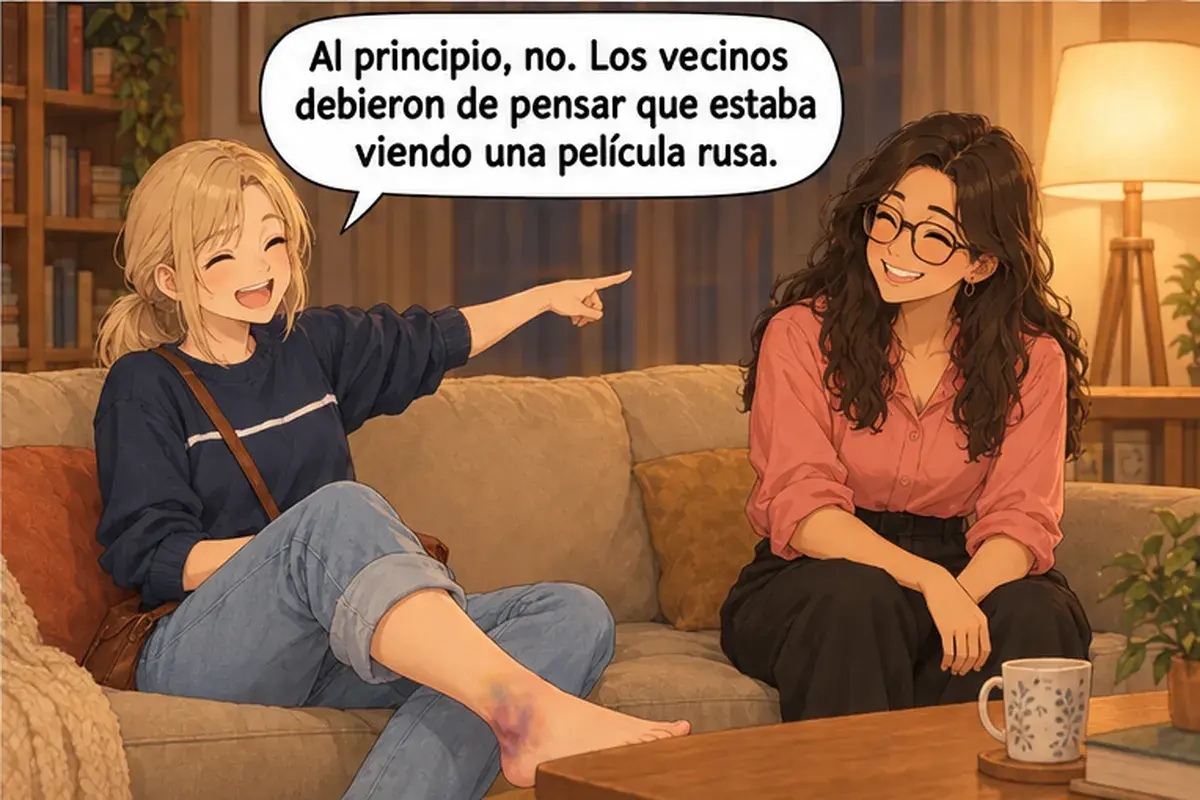
- Ana
Al principio, no. Los vecinos debieron de pensar que estaba viendo una película extranjera.
Not at first. The neighbors must have thought I was watching a foreign movie.
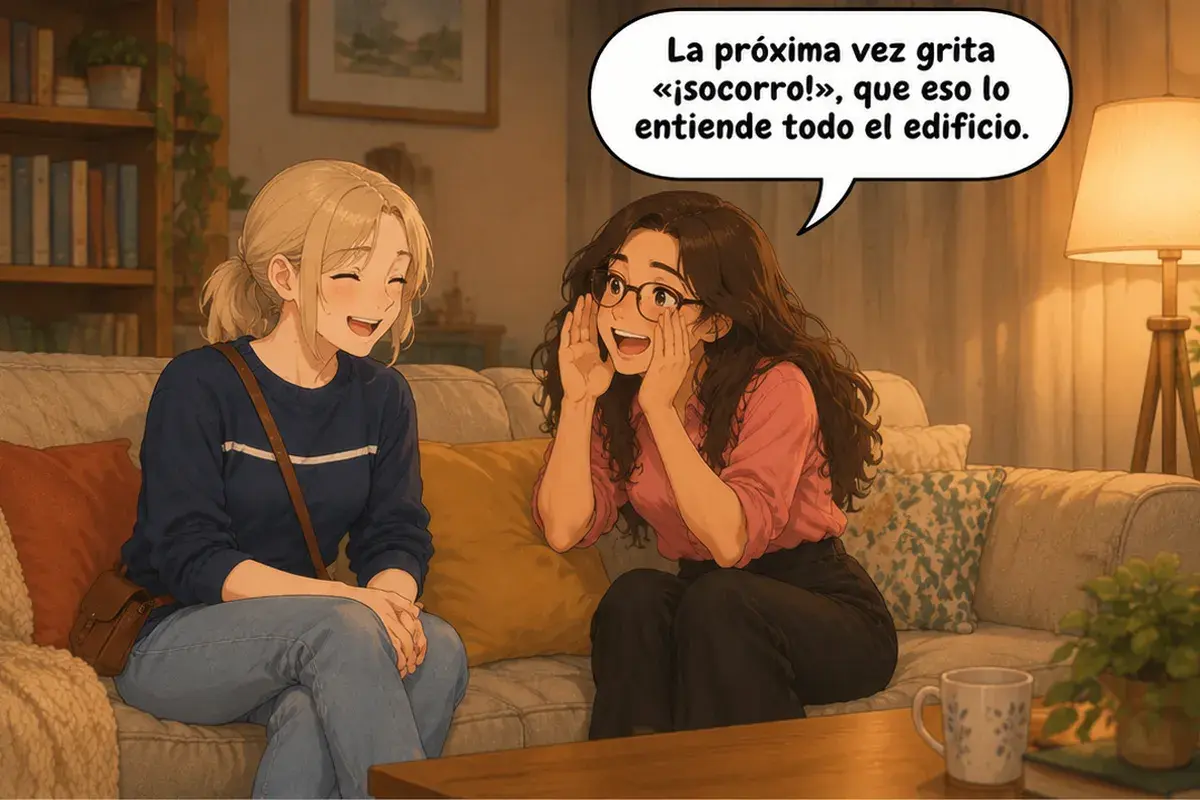
- Lucía
La próxima vez grita «¡socorro!», que eso lo entiende todo el edificio.
Next time, yell "¡socorro!", because the whole building understands that.
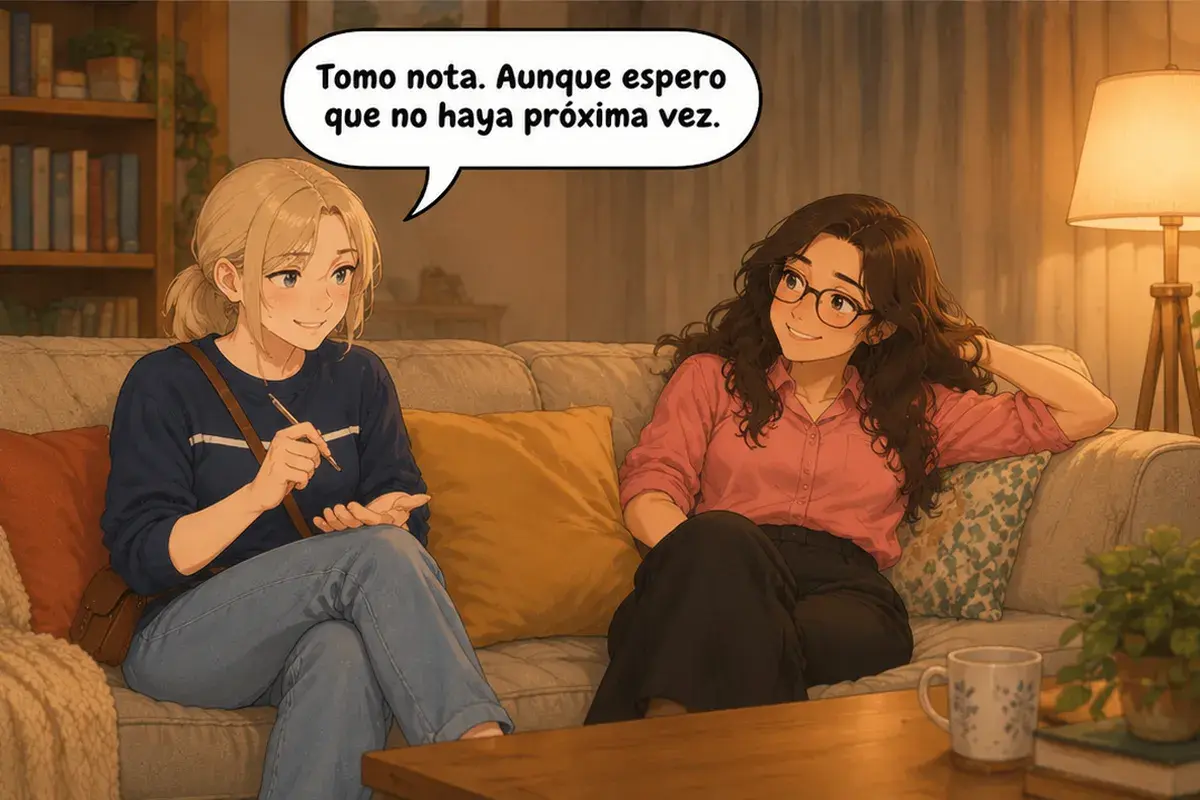
- Ana
Tomo nota. Aunque espero que no haya próxima vez.
I'll keep that in mind. Although I hope there won't be a next time.
Grammar for this text
Guesses in everyday speech. estaría todo oscuro, ¿no? — it was probably all dark, right?; yo estaría medio dormida — I was probably half asleep: you can use the conditional to guess even about yourself. Debieron de pensar que... — they must have thought that...: debieron is the ellos form, and an infinitive follows it.
Familiar from unit 1: casi me desmayo — I almost fainted (casi + the present tense, even though it's about the past); se me olvidó el español — I forgot my Spanish (it slipped my mind).
Two ways to say the same thing. A doctor writes fractura, but to a friend you say romperse un hueso; in conversation a bruise is a moratón. Leve — minor, about an injury. Quedarse inconsciente — to pass out, to lose consciousness.
Tía, qué fuerte, no, mujer — colloquial, only with people you're close to; in English, "girl", "no way!" and "oh no, of course not". Espero que no haya próxima vez — haya comes from hay: "I hope there won't be a next time".
Yo ya te veía un mes con escayola — "I could already picture you in a cast for a month": veía is the imperfect of ver; people say this when they imagine a picture in their head.
Words and grammar of the unit: Report an insurance claim.
Learn the words from the texts with flashcards
In the app, you can tap any word in a text to see its translation, forms and examples, and new words stick with flashcards. 15 minutes a day.
Start for freeEverything is open for free. No card needed to sign up.