
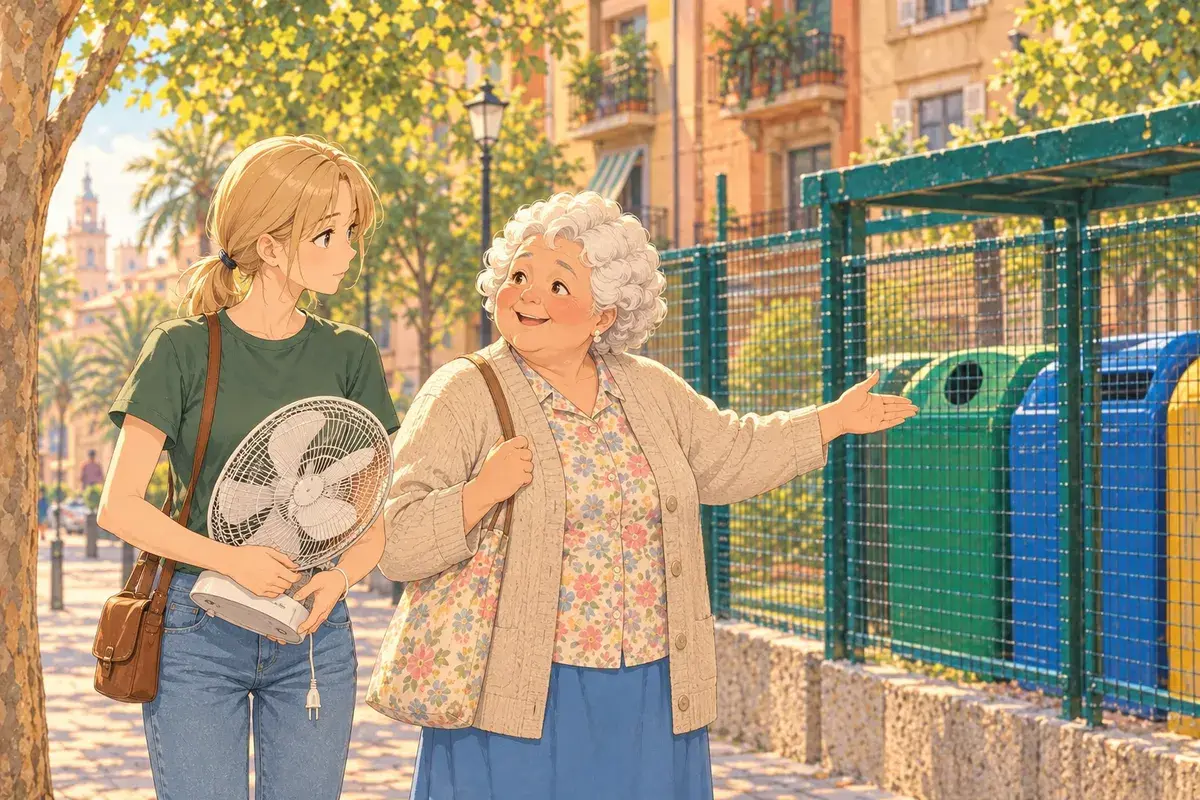
Spanish dialogue with translation · B2 · 14 lines
Eso va al punto limpio, no al contenedor That goes to the recycling center, not the dumpster
Comic · 14 panels
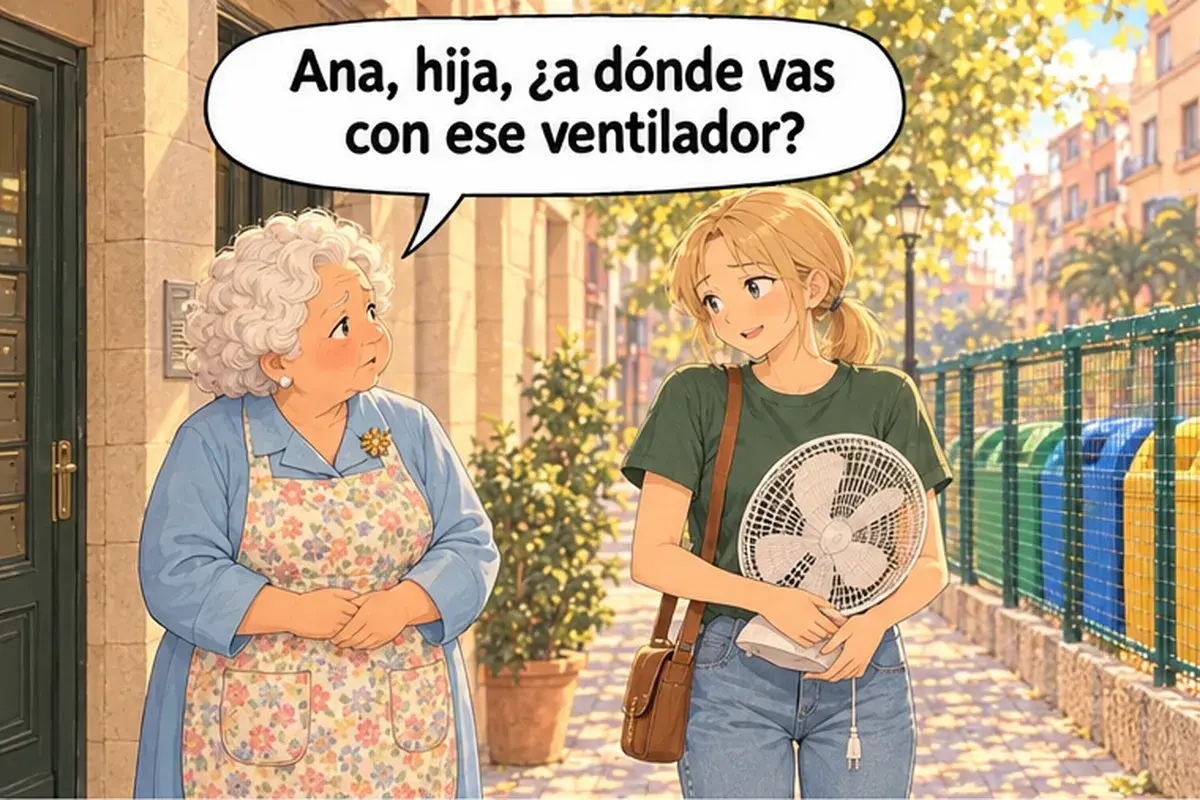
- Doña Concha
Ana, hija, ¿a dónde vas con ese ventilador?
Ana, dear, where are you going with that fan?
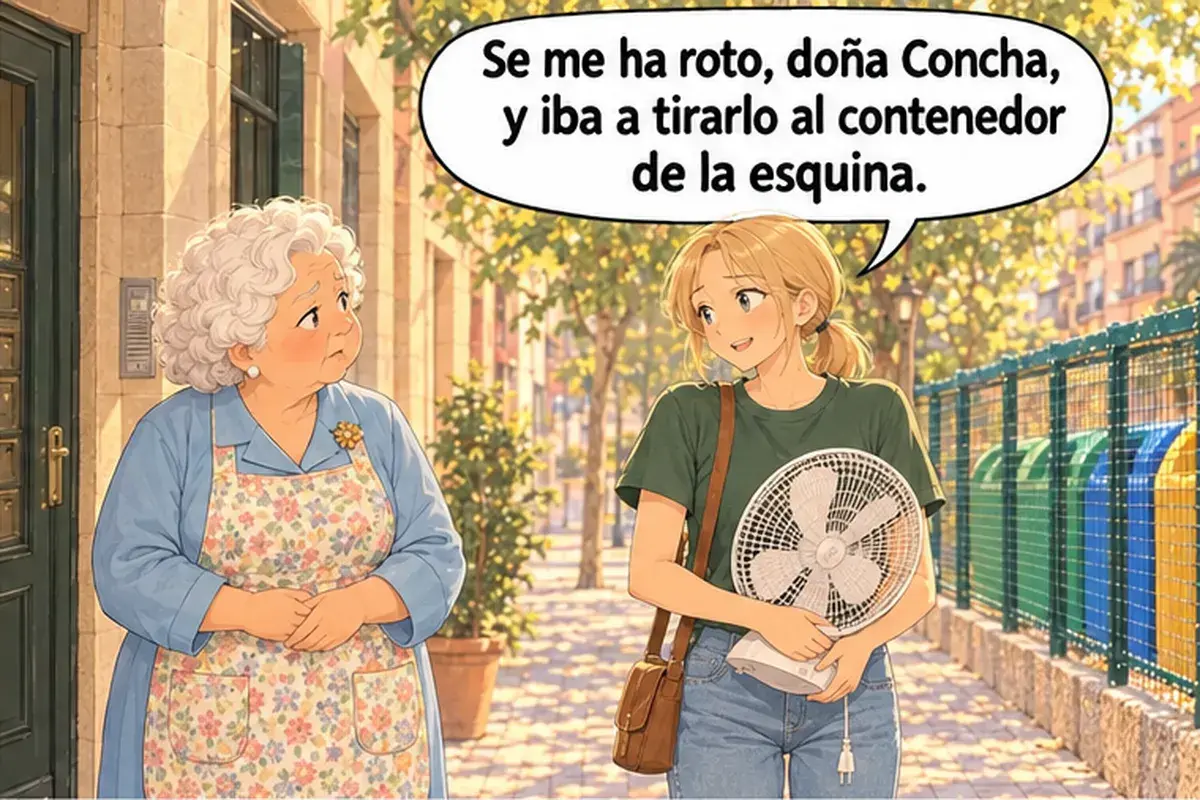
- Ana
Se me ha roto, doña Concha, y iba a tirarlo al contenedor de la esquina.
It broke on me, doña Concha, and I was going to throw it in the dumpster on the corner.
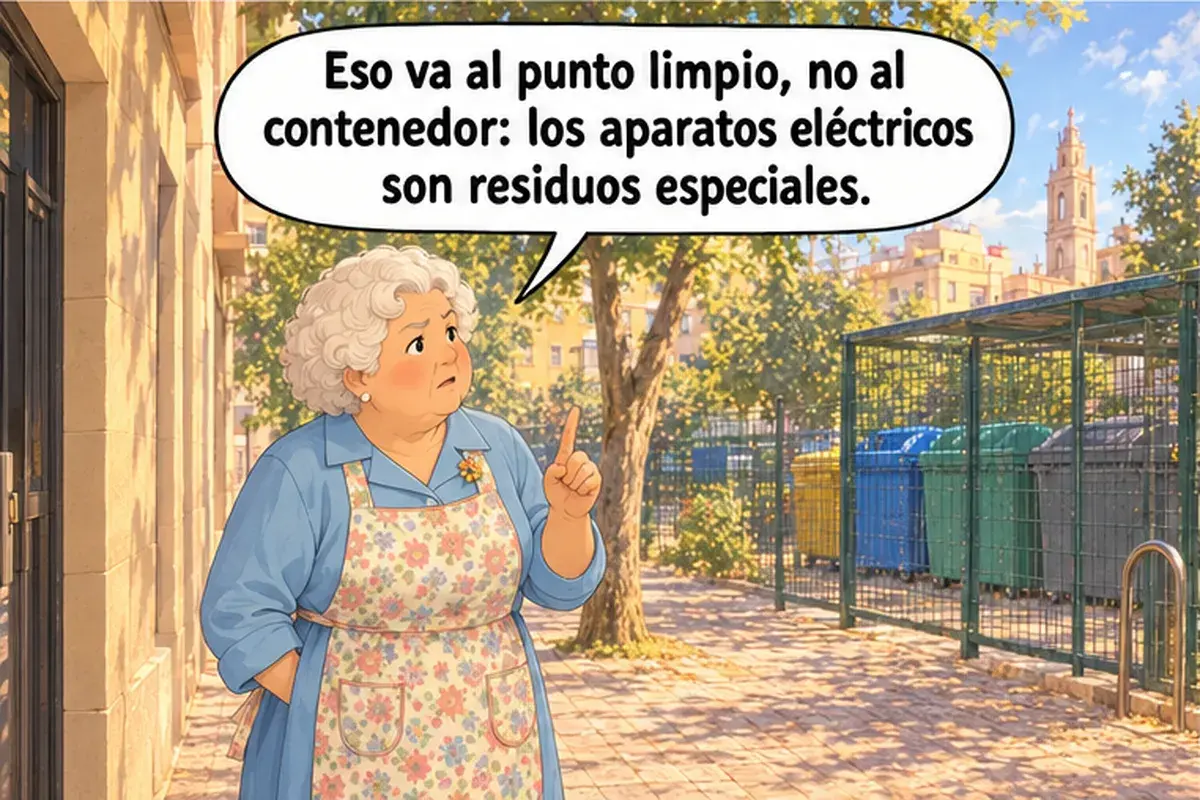
- Doña Concha
Eso va al punto limpio, no al contenedor: los aparatos eléctricos son residuos especiales.
That goes to the recycling center, not the dumpster: electrical appliances are special waste.
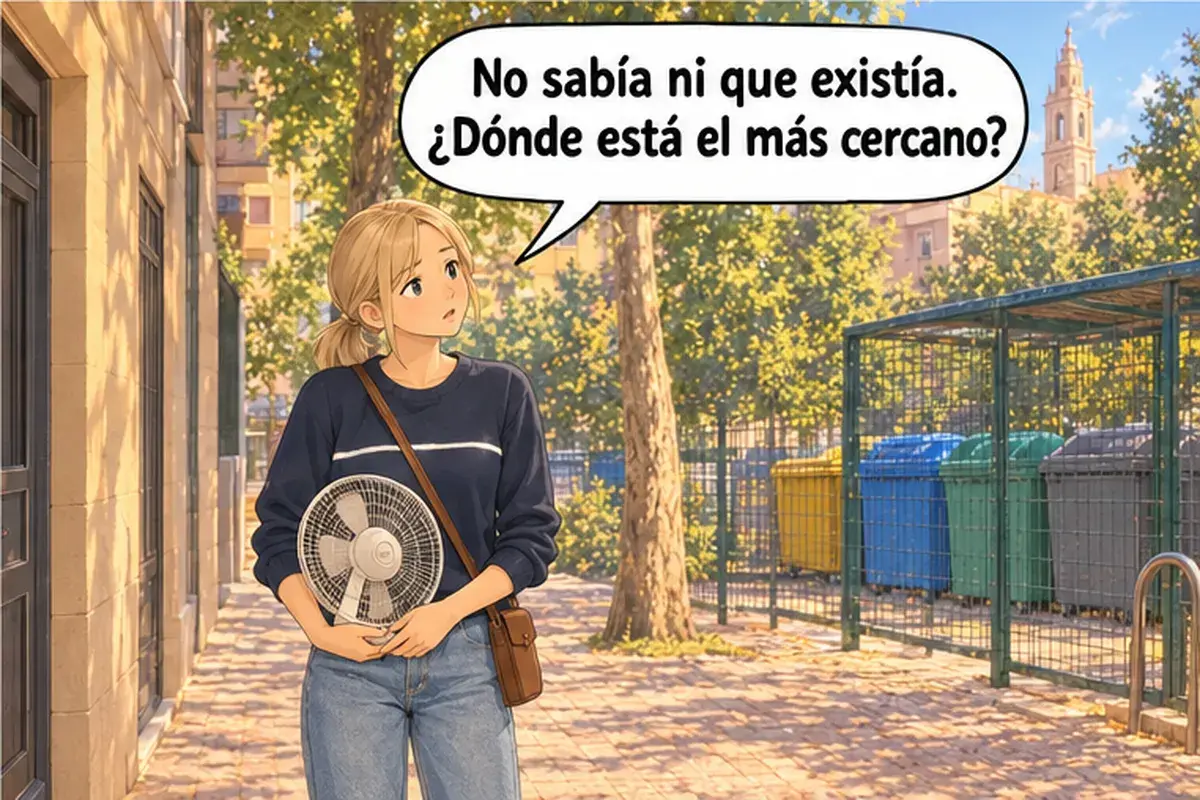
- Ana
No sabía ni que existía. ¿Dónde está el más cercano?
I didn't even know it existed. Where's the nearest one?
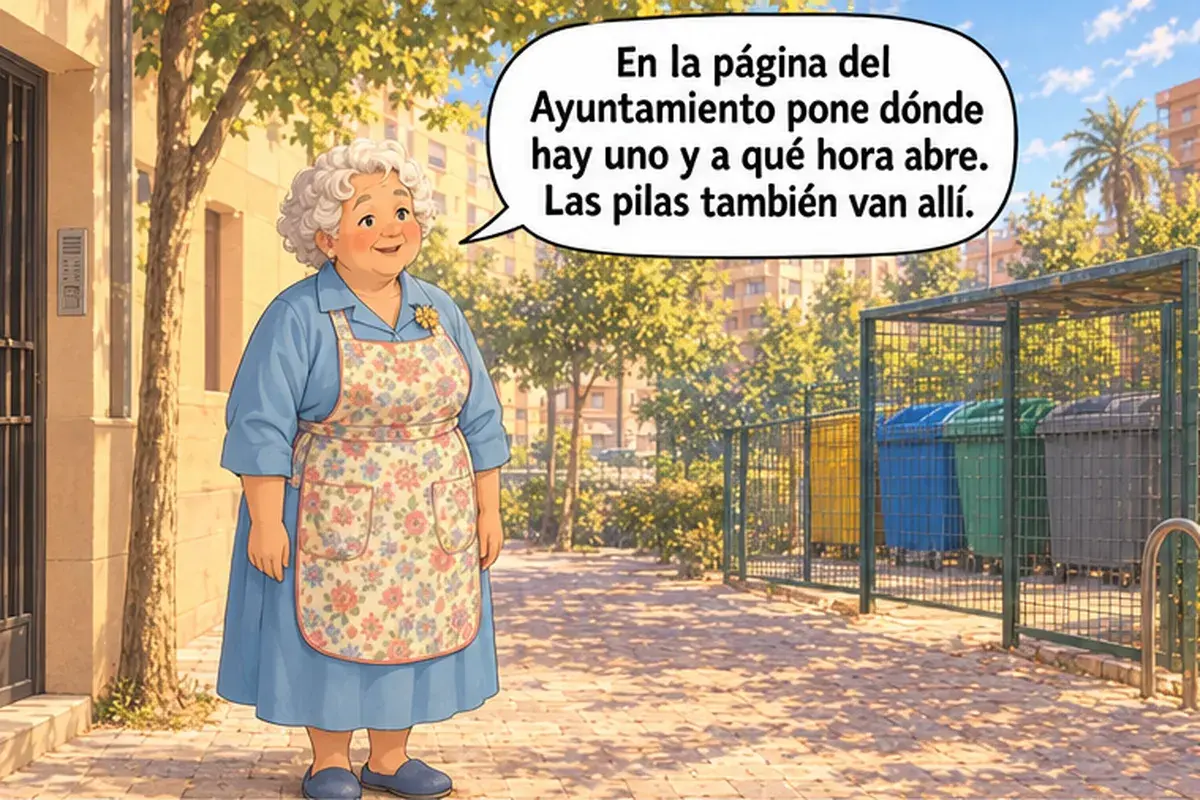
- Doña Concha
En la página del Ayuntamiento pone dónde hay uno y a qué hora abre. Las pilas también van allí.
The City Hall website says where there's one and what time it opens. Batteries go there too.
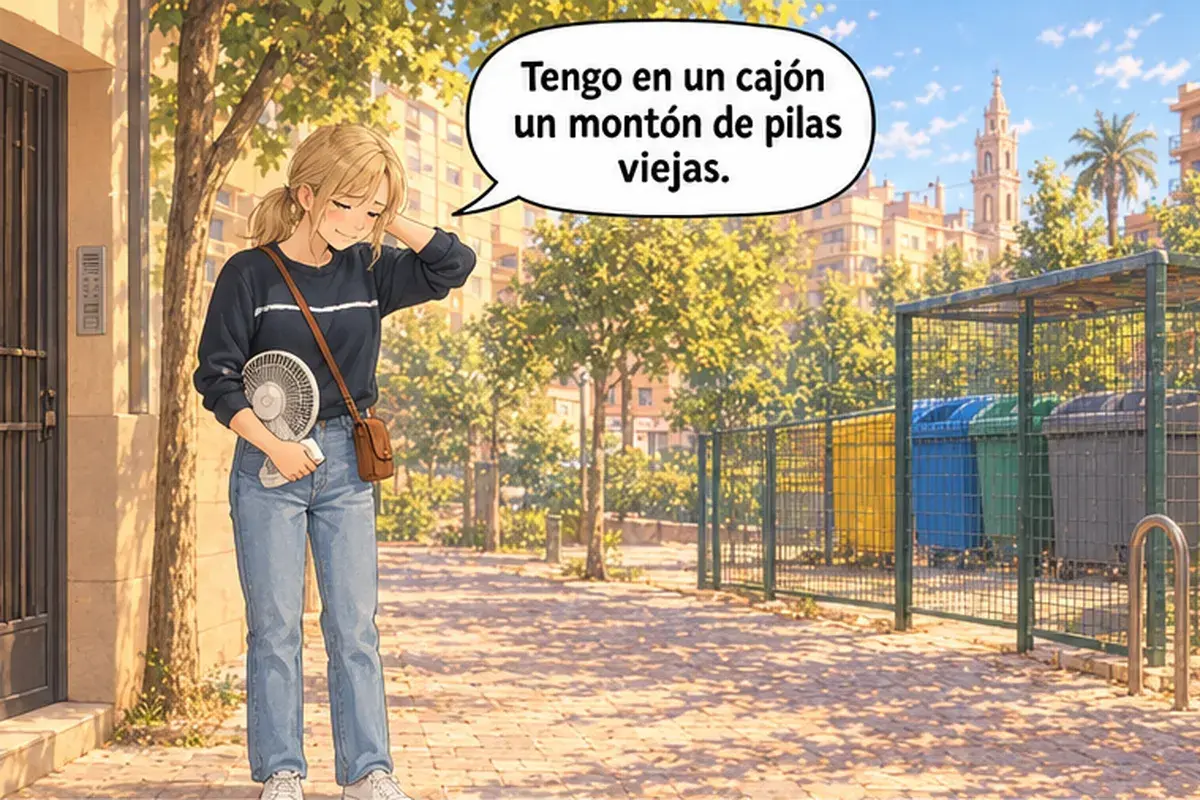
- Ana
Tengo en un cajón un montón de pilas viejas.
I have a ton of old batteries in a drawer.
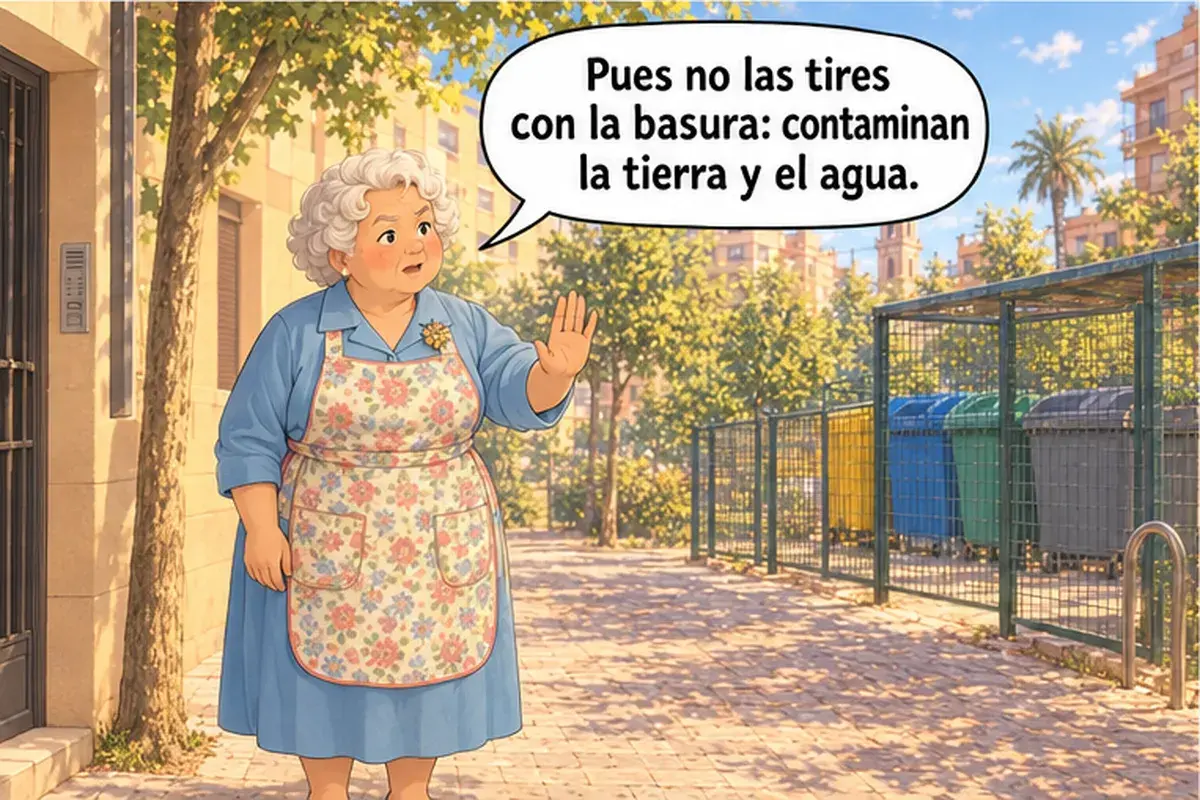
- Doña Concha
Pues no las tires con la basura: contaminan la tierra y el agua.
Then don't throw them out with the trash: they pollute the soil and the water.
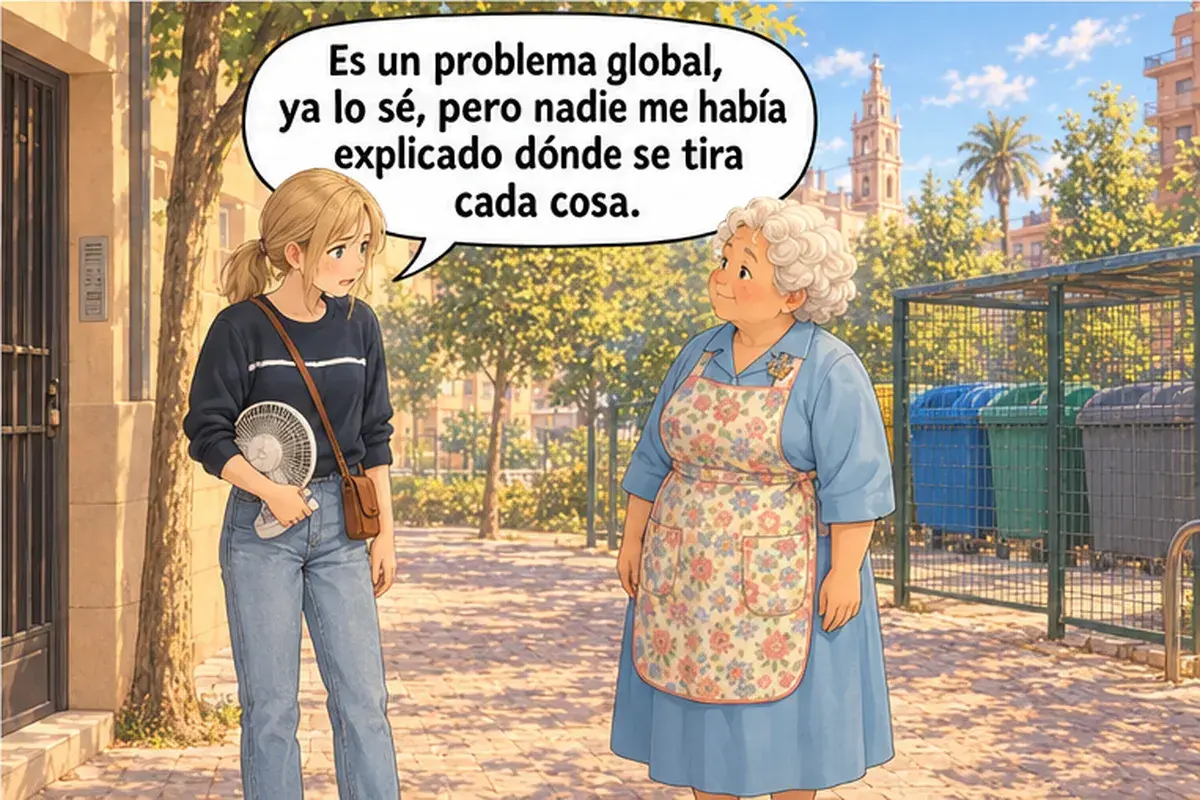
- Ana
Es un problema global, ya lo sé, pero nadie me había explicado dónde se tira cada cosa.
It's a global problem, I know, but nobody had explained to me where each thing gets thrown away.
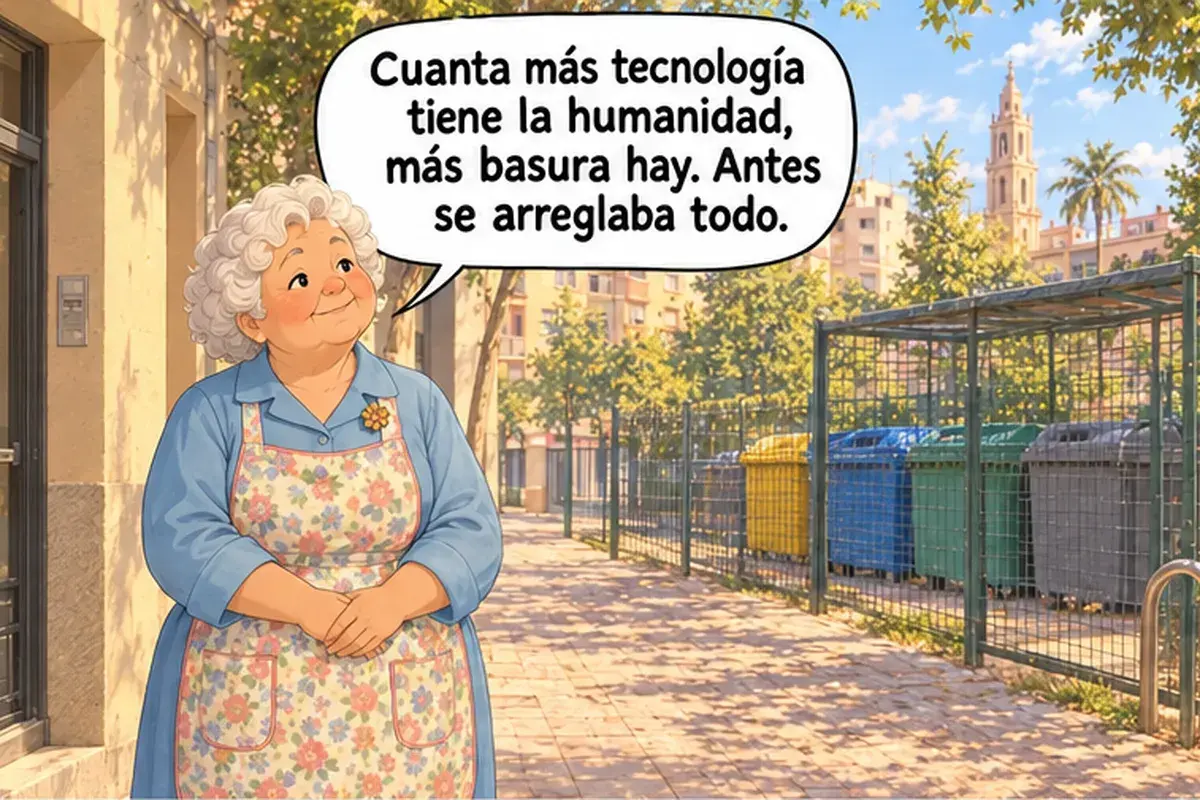
- Doña Concha
Cuanta más tecnología tiene la humanidad, más basura hay. Antes se arreglaba todo.
The more technology humanity has, the more trash there is. People used to fix everything.
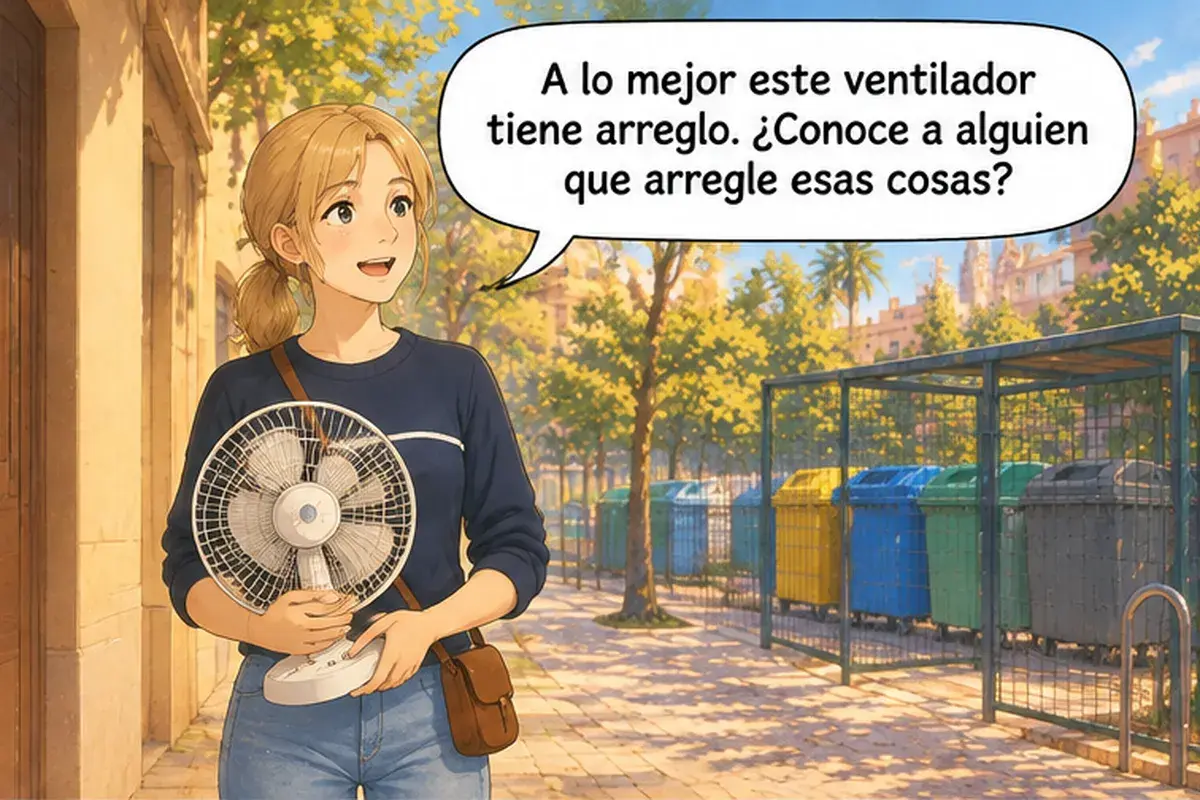
- Ana
A lo mejor este ventilador tiene arreglo. ¿Conoce a alguien que arregle esas cosas?
Maybe this fan can be fixed. Do you know anyone who fixes things like that? (formal)
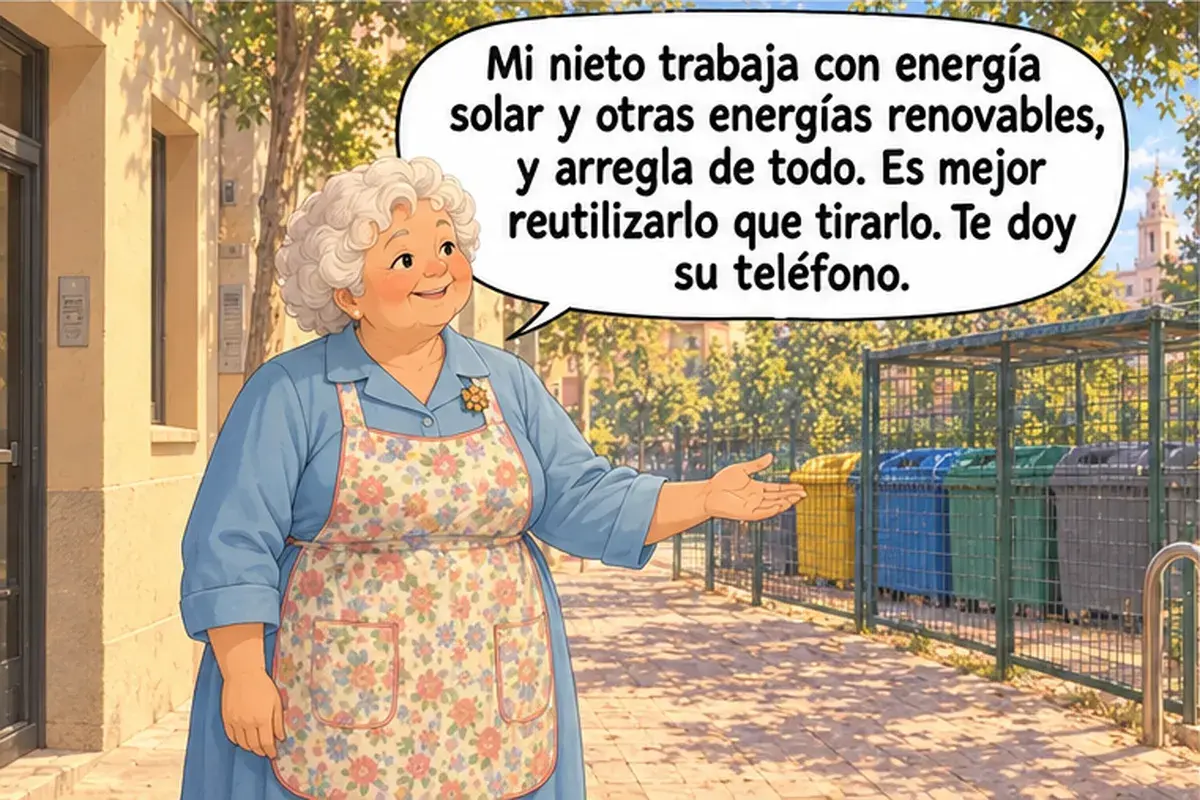
- Doña Concha
Mi nieto trabaja con energía solar y otras energías renovables, y arregla de todo. Es mejor reutilizarlo que tirarlo. Te doy su teléfono.
My grandson works with solar energy and other renewable energy, and he fixes all kinds of things. It's better to reuse it than to throw it away. I'll give you his number.
- Ana
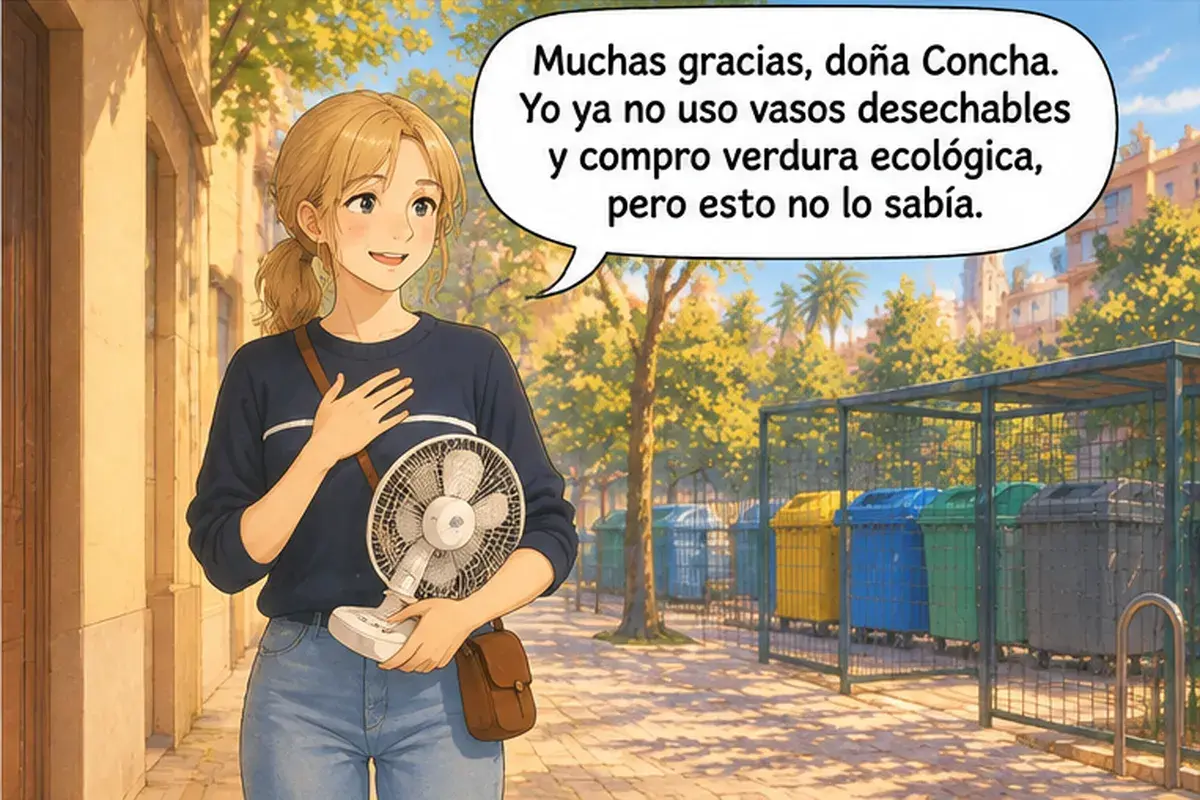
Muchas gracias, doña Concha. Yo ya no uso vasos desechables y compro verdura ecológica, pero esto no lo sabía.
Thank you so much, doña Concha. I don't use disposable cups anymore, and I buy organic vegetables, but I didn't know this.
- Doña Concha
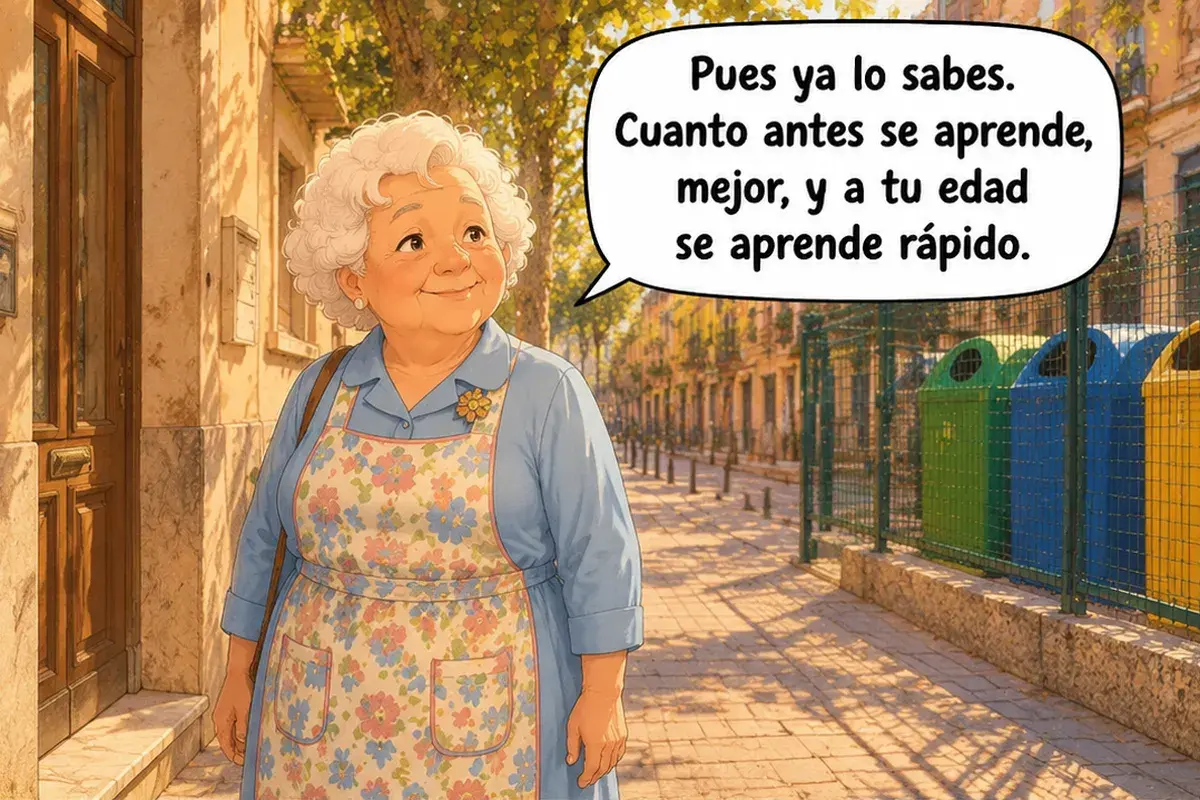
Pues ya lo sabes. Cuanto antes se aprende, mejor, y a tu edad se aprende rápido.
Well, now you know. The sooner you learn, the better, and at your age you learn fast.
- Ana
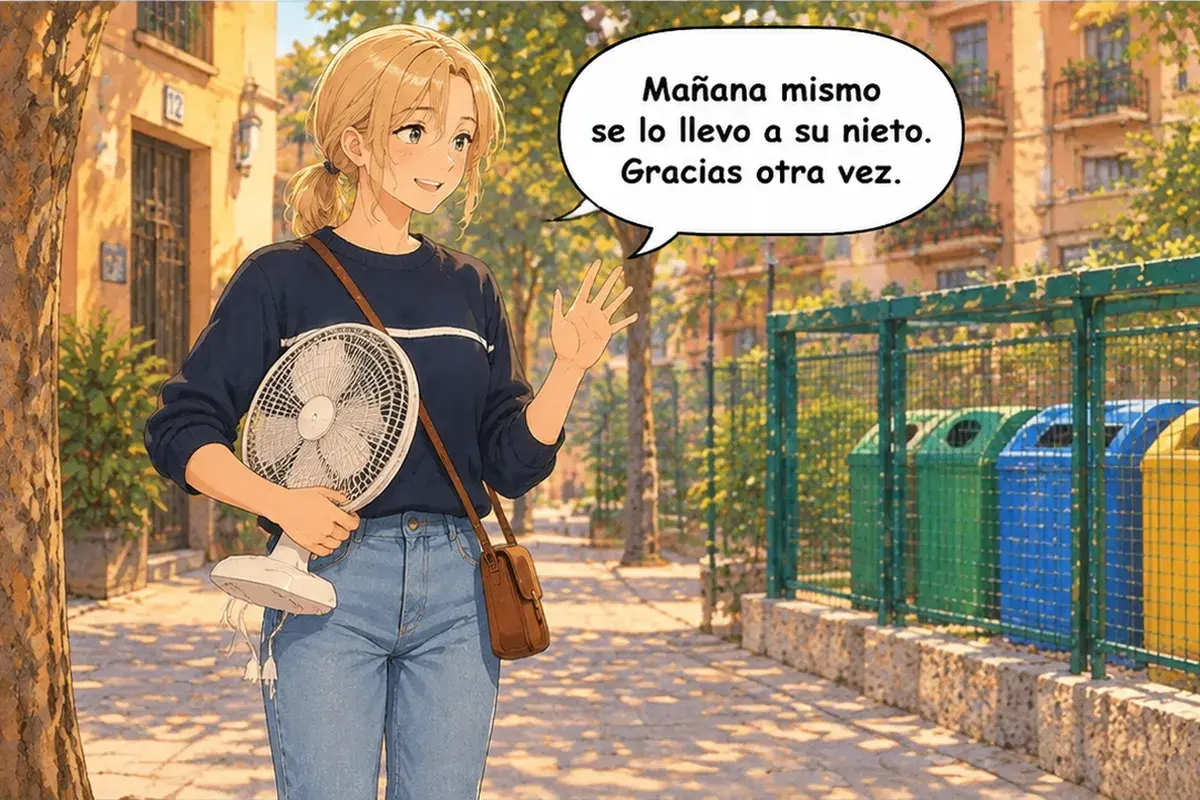
Mañana mismo se lo llevo a su nieto. Gracias otra vez.
I'll take it to your grandson first thing tomorrow. Thanks again (formal).
Grammar for this text
Outside the building, with a fan.
- Se me ha roto — "it broke (on me)". With se me the speaker doesn't take the blame: it broke by itself, not "I broke it".
- punto limpio — a city recycling center where you take, for free, things that don't go in the regular dumpsters: old appliances, batteries, furniture, paint. The name varies (in some cities it's ecoparque), so people look up the address and hours on the city hall website, just as doña Concha suggests.
- nadie me había explicado — "nobody had explained to me (before now)": había + past participle, for something before this conversation.
- Cuanta más tecnología tiene la humanidad, más basura hay — cuanta because tecnología is feminine. Cuanto antes se aprende, mejor — impersonal se: "the sooner you learn, the better".
- Antes se arreglaba todo — se + the imperfect arreglaba: "people used to fix everything", about what people usually did.
- tiene arreglo — "it can be fixed" (word for word "it has a fix"). ¿Conoce a alguien que arregle…? — after alguien que comes the subjunctive: we don't know if such a person exists.
- hija — word for word "daughter": an older neighbor's affectionate way to talk to a young woman ("dear"); they aren't related. doña Concha — doña + first name is a respectful title for an older woman. Ana uses usted with her (su nieto), and Concha uses tú with Ana.
Words and grammar of the unit: Save water in a drought and a heat wave.
Learn the words from the texts with flashcards
In the app, you can tap any word in a text to see its translation, forms and examples, and new words stick with flashcards. 15 minutes a day.
Start for freeEverything is open for free. No card needed to sign up.