
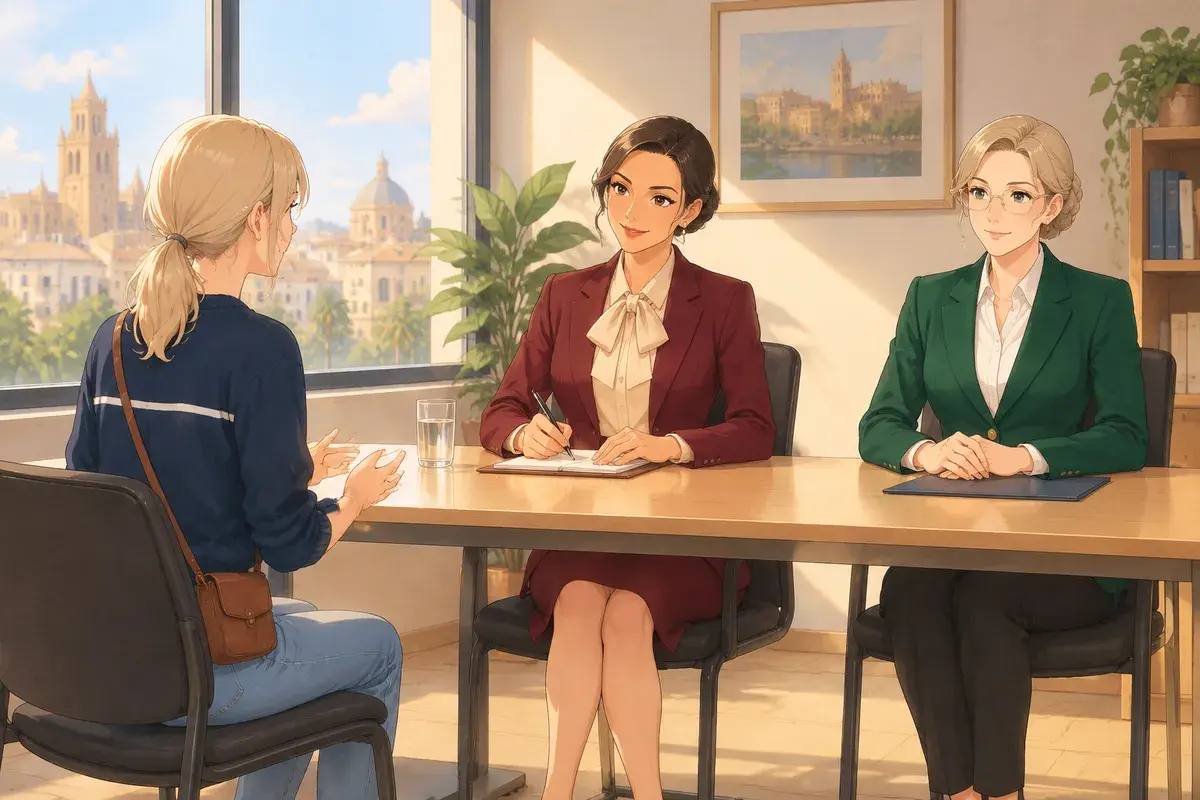
Spanish dialogue with translation · B2 · 18 lines
¿Por qué deberíamos ascenderla a usted? Why should we promote you? (to a woman, formal)
Comic · 18 panels
- Mercedes
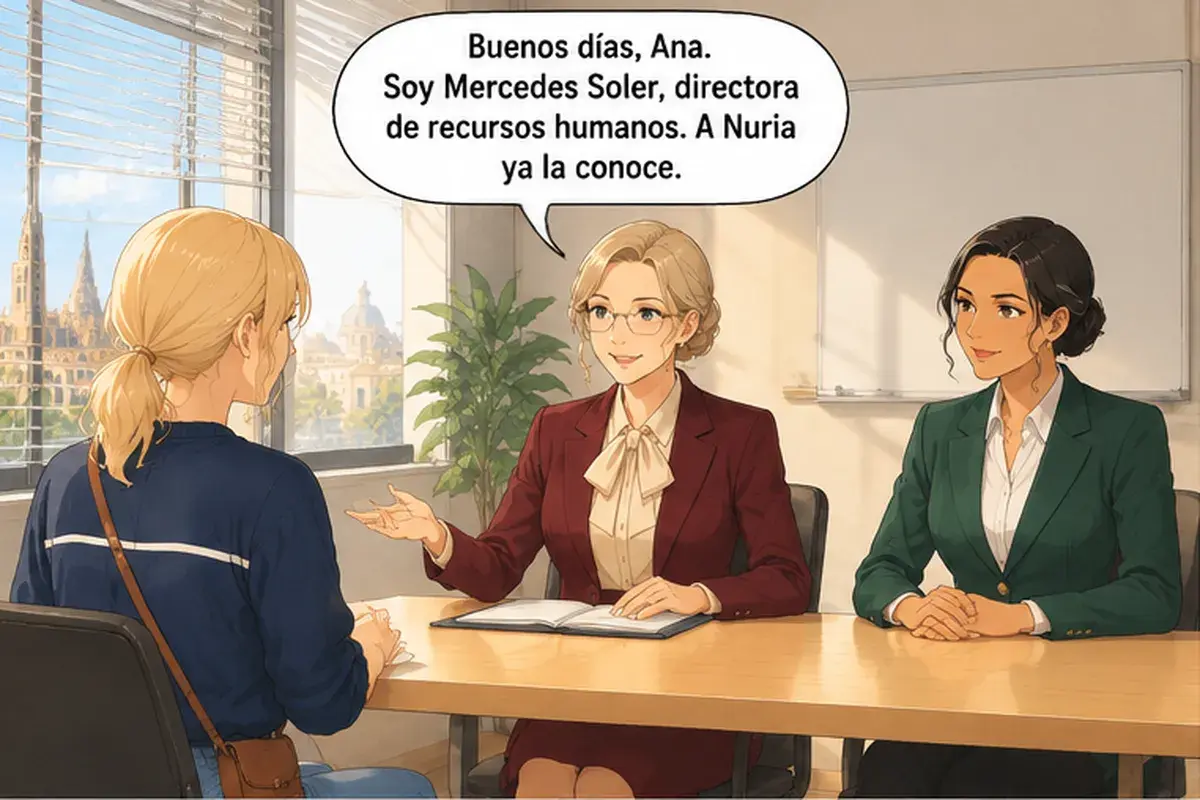
Buenos días, Ana. Soy Mercedes Soler, directora de recursos humanos. A Nuria ya la conoce.
Good morning, Ana. I'm Mercedes Soler, head of human resources. You already know Nuria (formal).
- Nuria
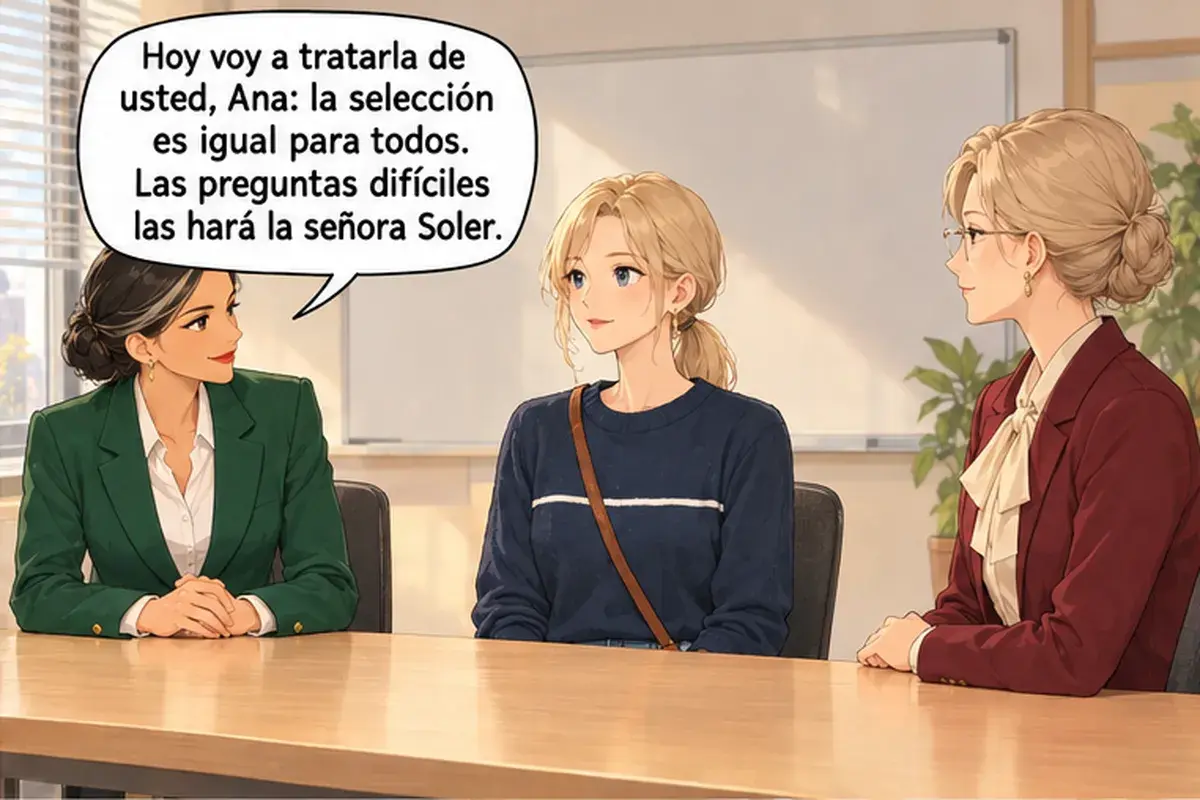
Hoy voy a tratarla de usted, Ana: la selección es igual para todos. Las preguntas difíciles las hará la señora Soler.
Today I'm going to address you formally, Ana: the selection process is the same for everyone. Ms. Soler will ask the hard questions.
- Ana
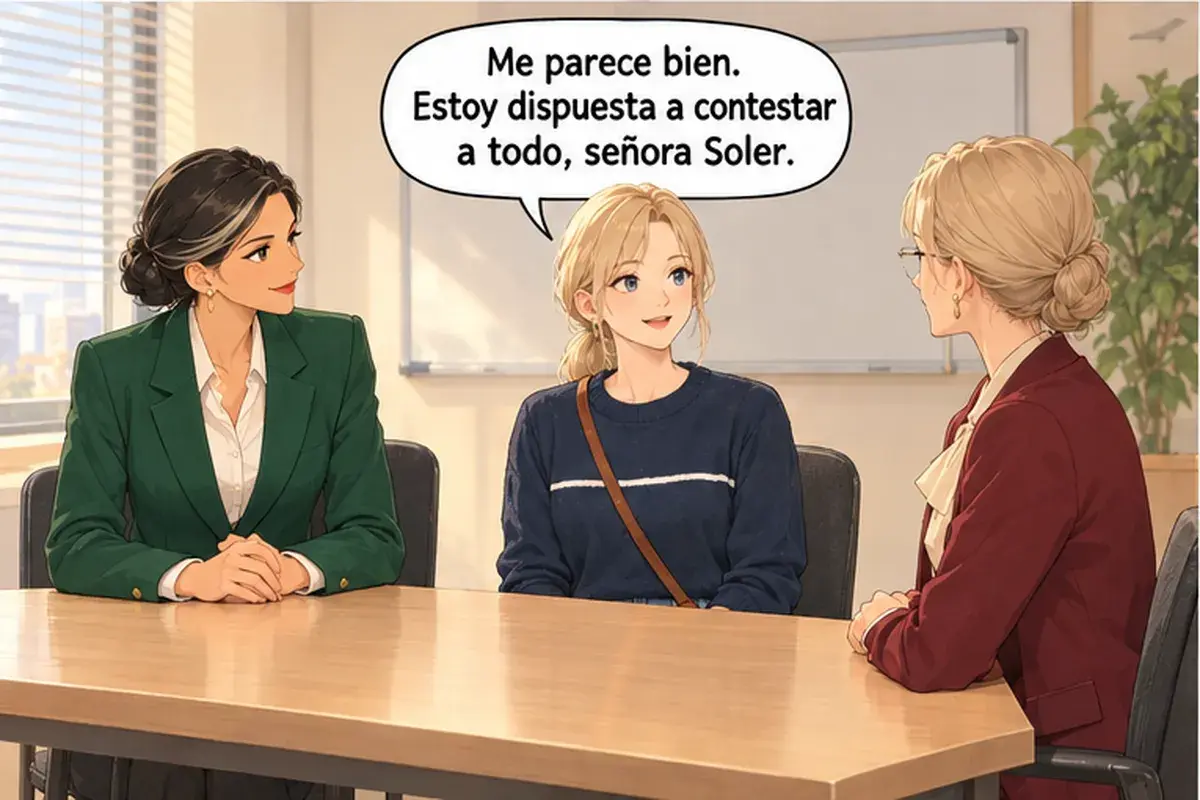
Me parece bien. Estoy dispuesta a contestar a todo, señora Soler.
That sounds right to me. I'm willing to answer anything, Ms. Soler (woman speaking).
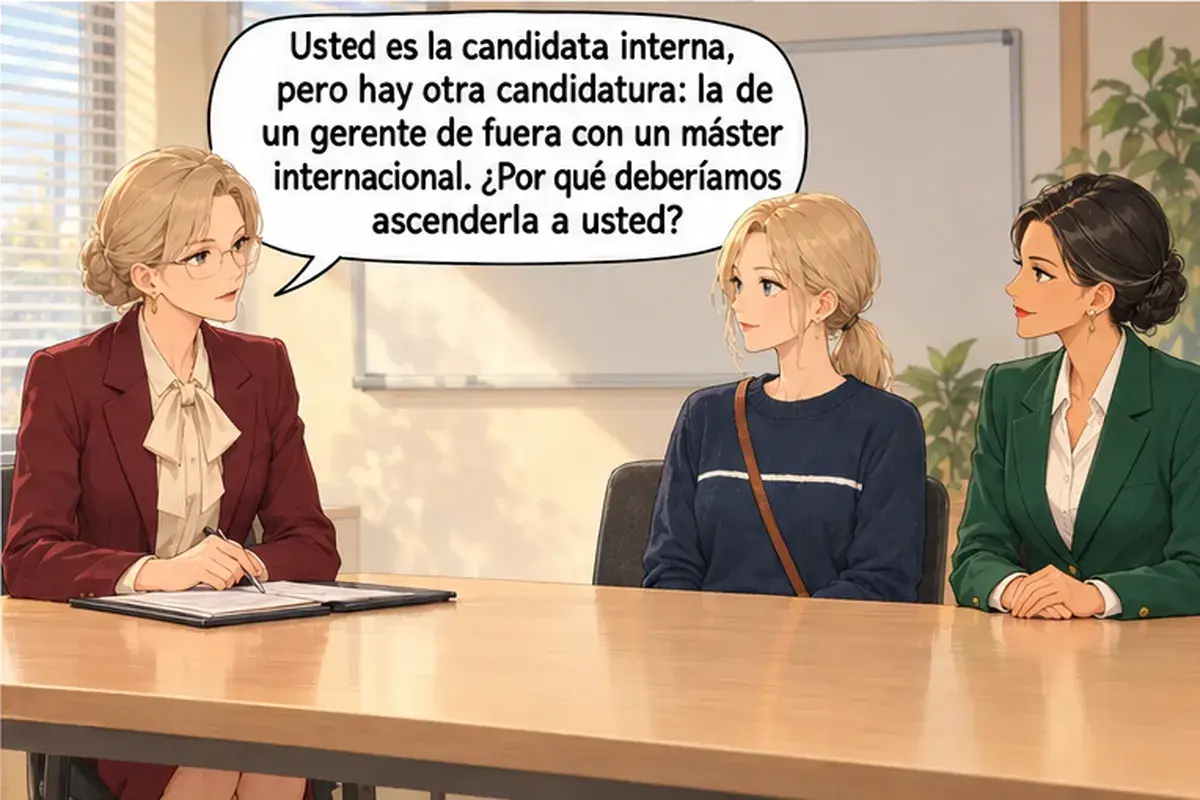
- Mercedes
Usted es la candidata interna, pero hay otra candidatura: la de un gerente de fuera con un máster internacional. ¿Por qué deberíamos ascenderla a usted?
You're the internal candidate, but there's another application: one from a manager from outside with an international master's. Why should we promote you? (to a woman, formal)
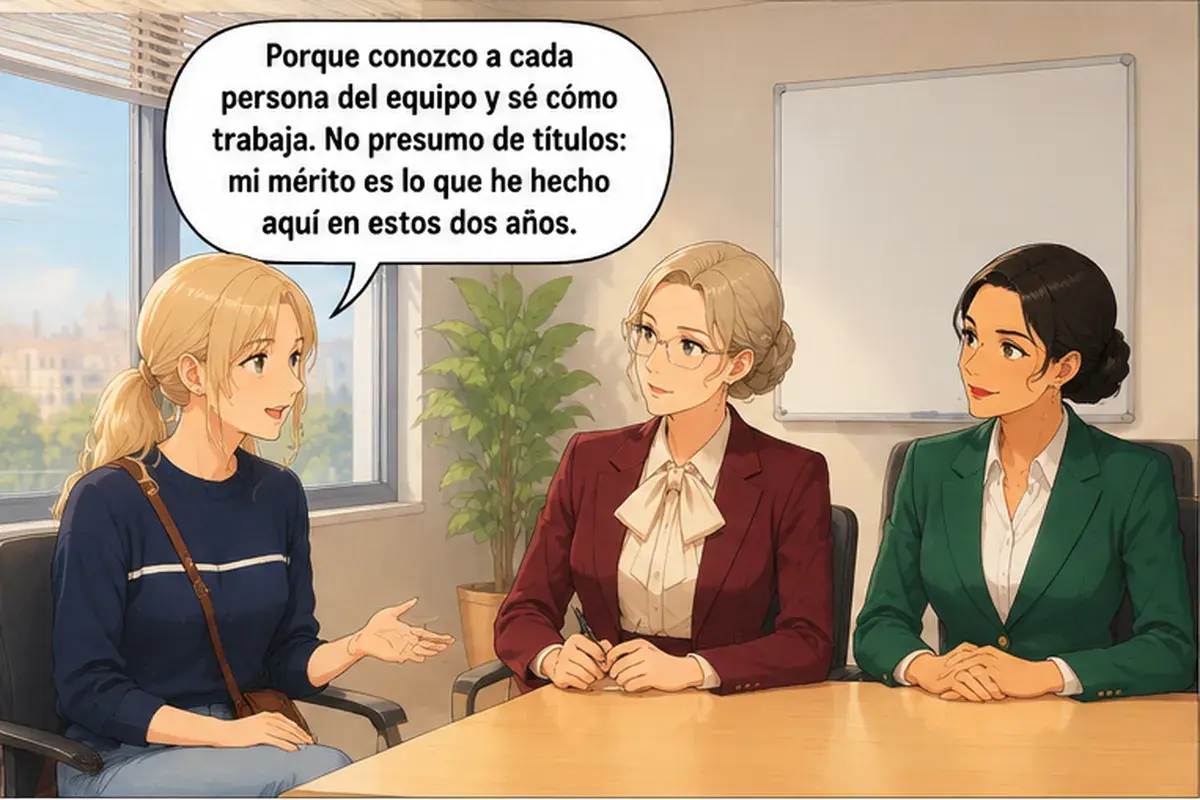
- Ana
Porque conozco a cada persona del equipo y sé cómo trabaja. No presumo de títulos: mi mérito es lo que he hecho aquí en estos dos años.
Because I know every person on the team and how they work. I don't brag about degrees: my merit is what I've done here these past two years.
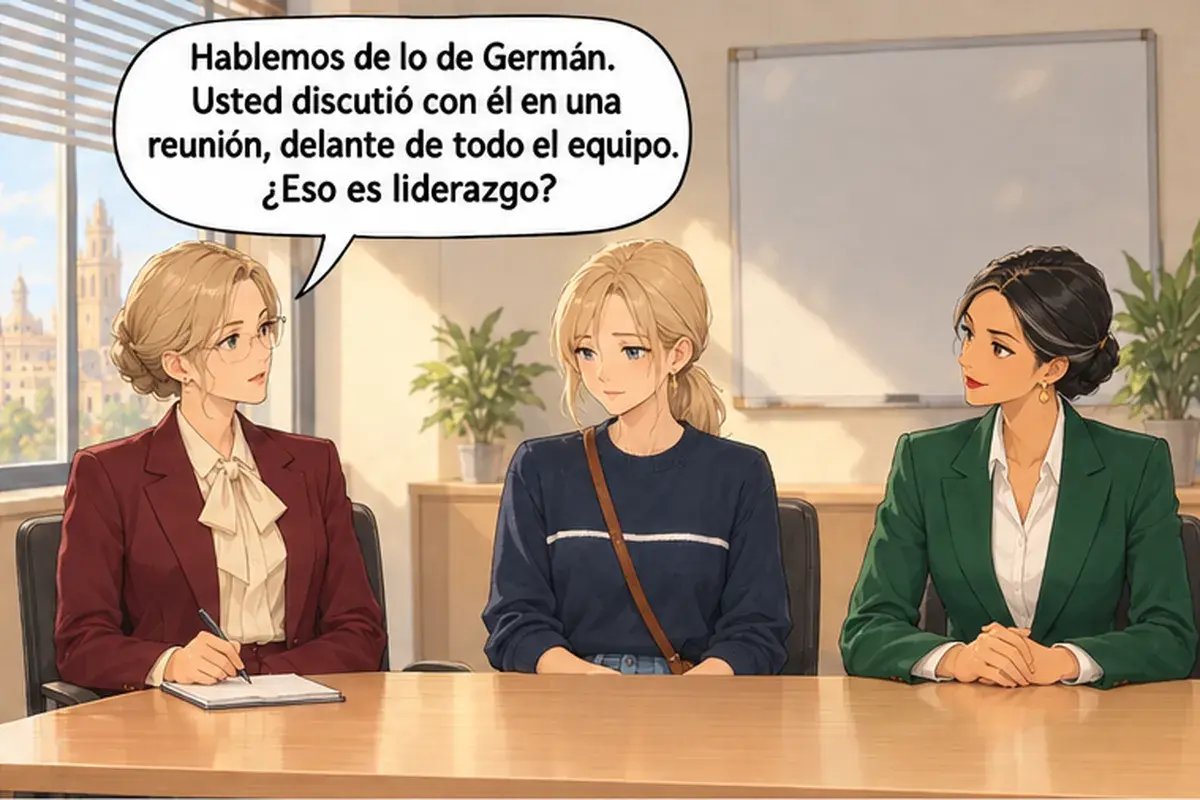
- Mercedes
Hablemos de lo de Germán. Usted discutió con él en una reunión, delante de todo el equipo. ¿Eso es liderazgo?
Let's talk about the thing with Germán. You argued with him at a meeting, in front of the whole team. Is that leadership? (formal)
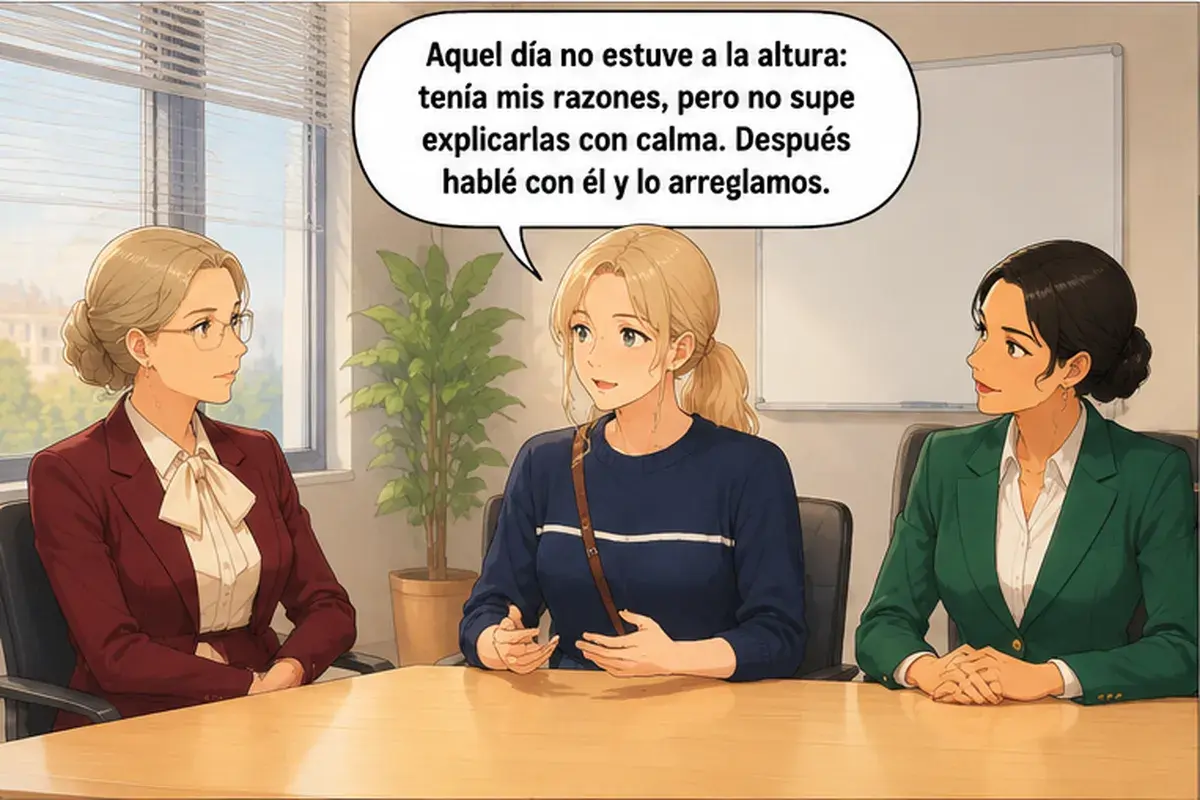
- Ana
Aquel día no estuve a la altura: tenía mis razones, pero no supe explicarlas con calma. Después hablé con él y lo arreglamos.
That day I wasn't up to it: I had my reasons, but I couldn't explain them calmly. Afterward I talked to him and we sorted it out.
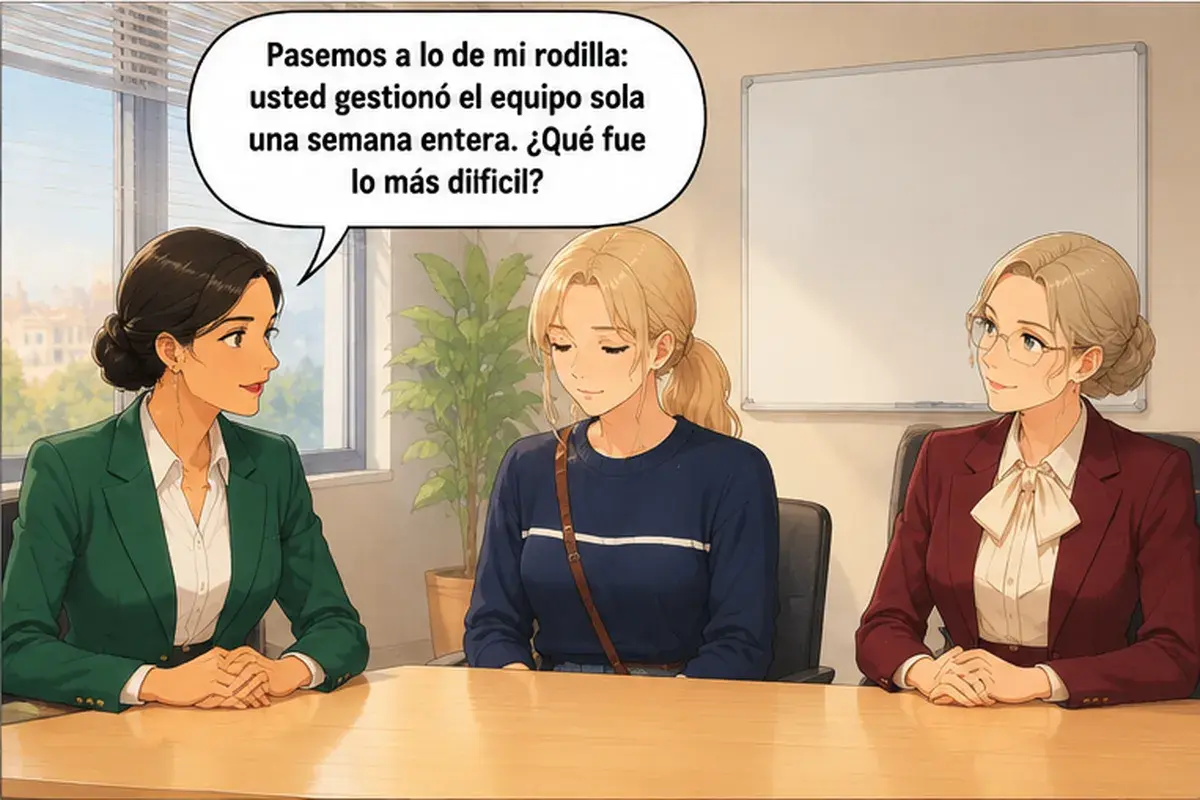
- Nuria
Pasemos a lo de mi rodilla: usted gestionó el equipo sola una semana entera. ¿Qué fue lo más difícil?
Let's move on to the thing with my knee: you managed the team on your own for a whole week. What was the hardest part? (to a woman, formal)
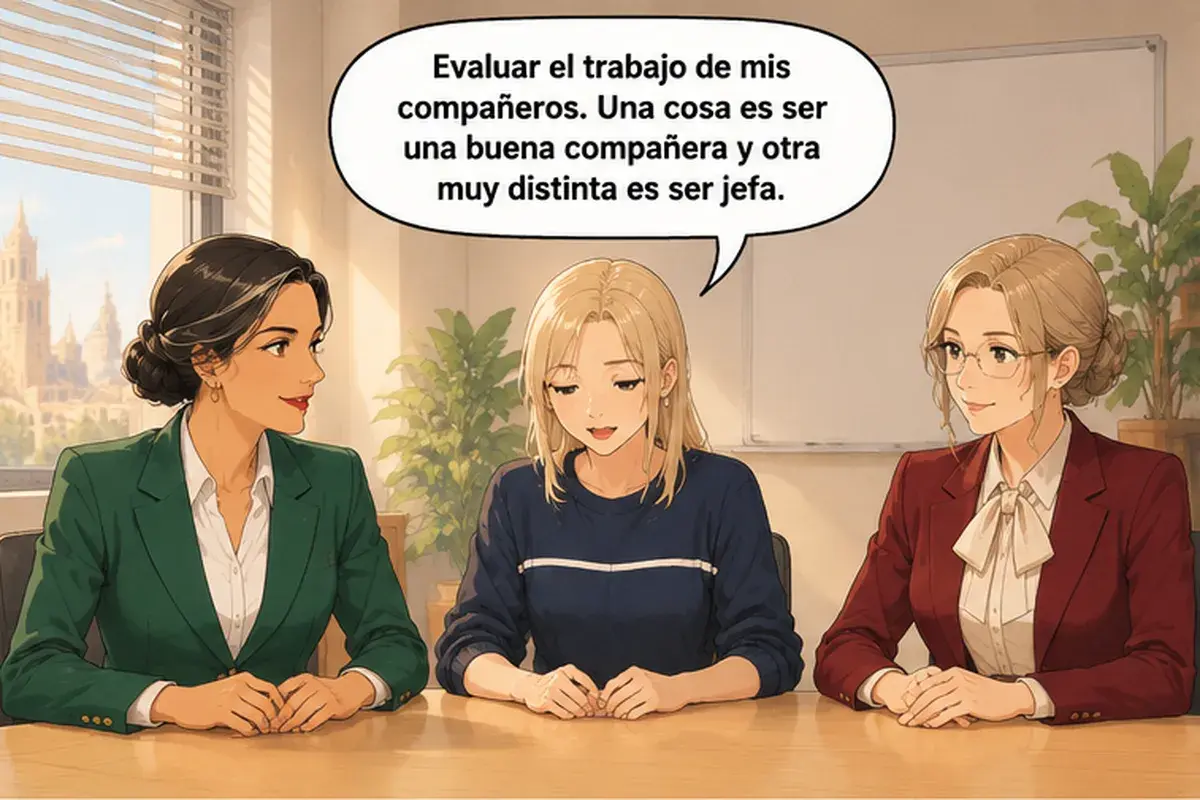
- Ana
Evaluar el trabajo de mis compañeros. Una cosa es ser una buena compañera y otra muy distinta es ser jefa.
Evaluating my coworkers' work. Being a good coworker is one thing, and being a boss is something else entirely (woman speaking).
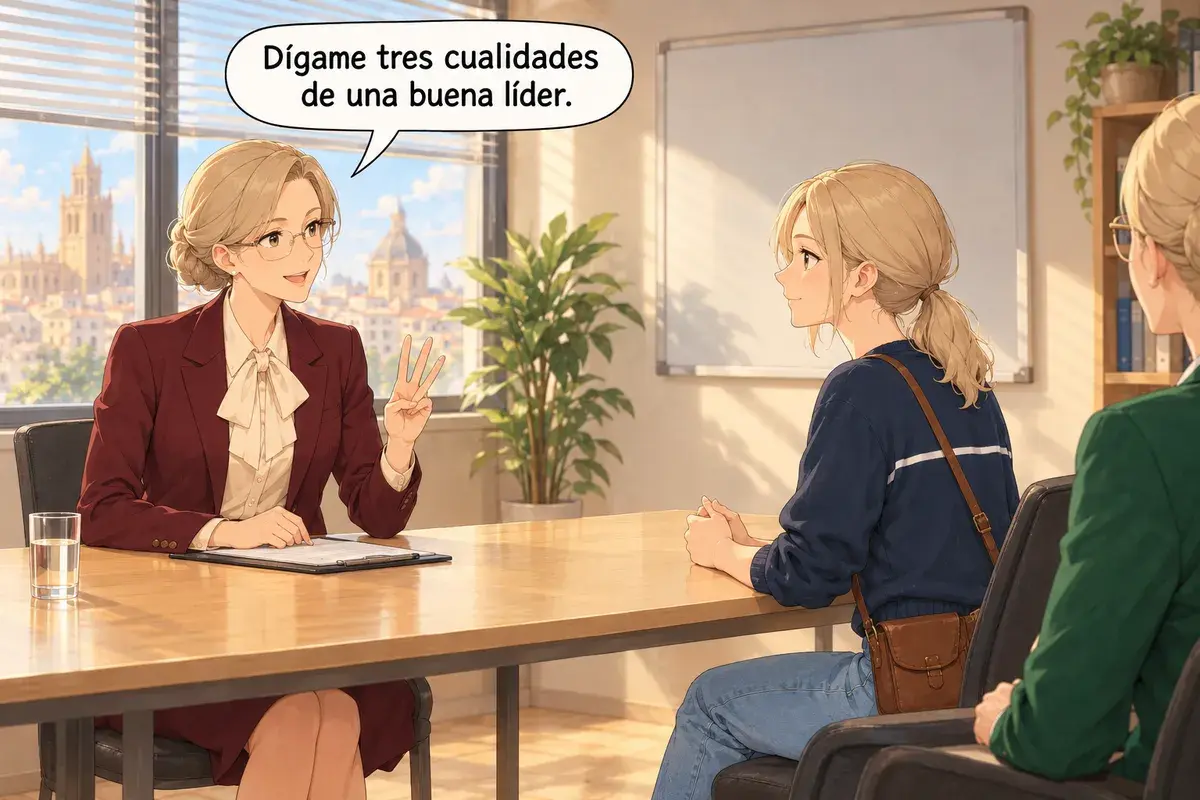
- Mercedes
Dígame tres cualidades de una buena líder.
Tell me three qualities of a good leader (formal).
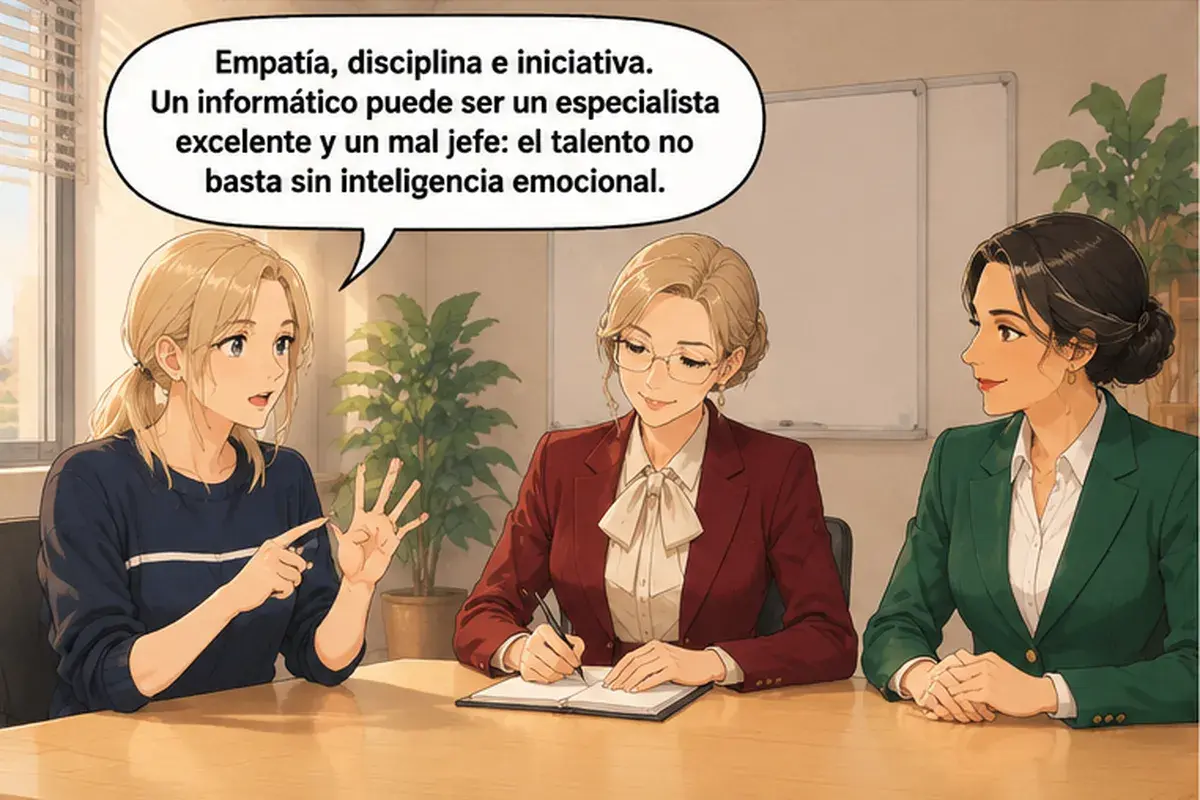
- Ana
Empatía, disciplina e iniciativa. Un informático puede ser un especialista excelente y un mal jefe: el talento no basta sin inteligencia emocional.
Empathy, discipline and initiative. An IT specialist can be an excellent specialist and a bad boss: talent isn't enough without emotional intelligence.
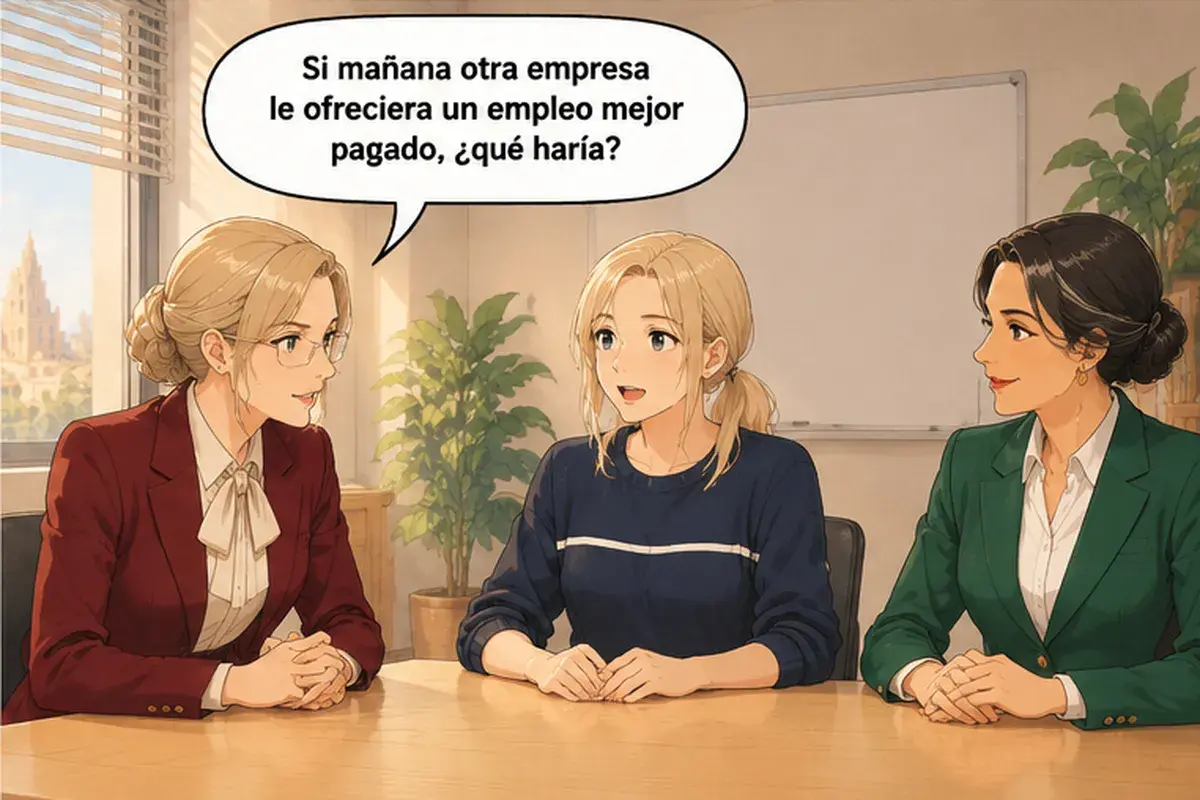
- Mercedes
Si mañana otra empresa le ofreciera un empleo mejor pagado, ¿qué haría?
If another company offered you a better-paid job tomorrow, what would you do? (formal)
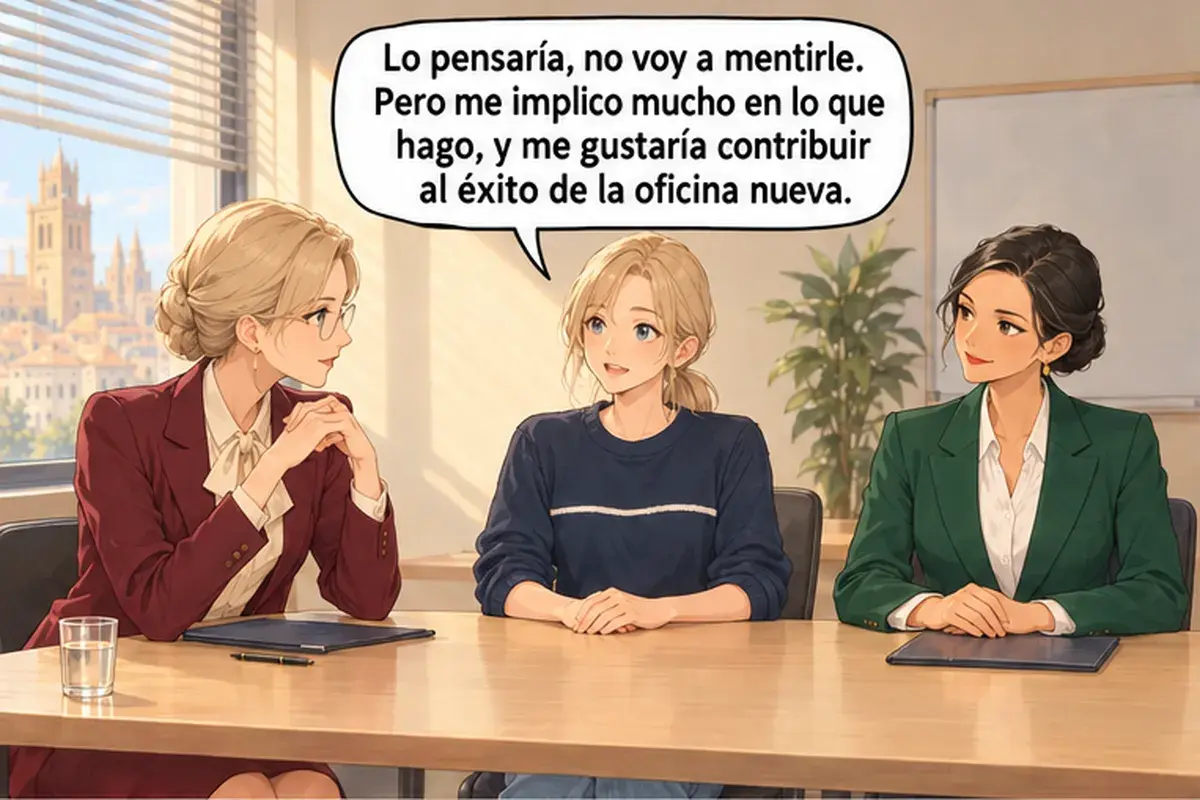
- Ana
Lo pensaría, no voy a mentirle. Pero me implico mucho en lo que hago, y me gustaría contribuir al éxito de la oficina nueva.
I'd think about it, I'm not going to lie to you. But I get very involved in what I do, and I'd like to contribute to the success of the new office (formal).
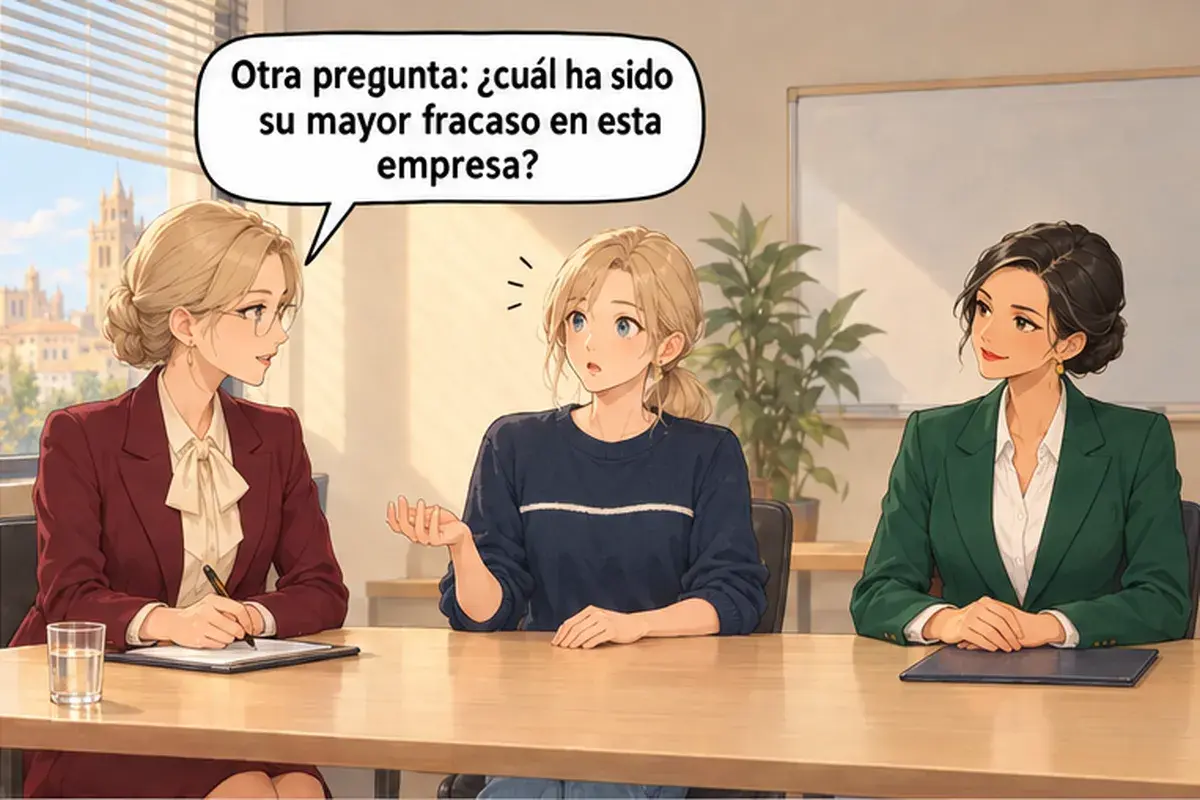
- Mercedes
Otra pregunta: ¿cuál ha sido su mayor fracaso en esta empresa?
Another question: what has been your biggest failure at this company? (formal)
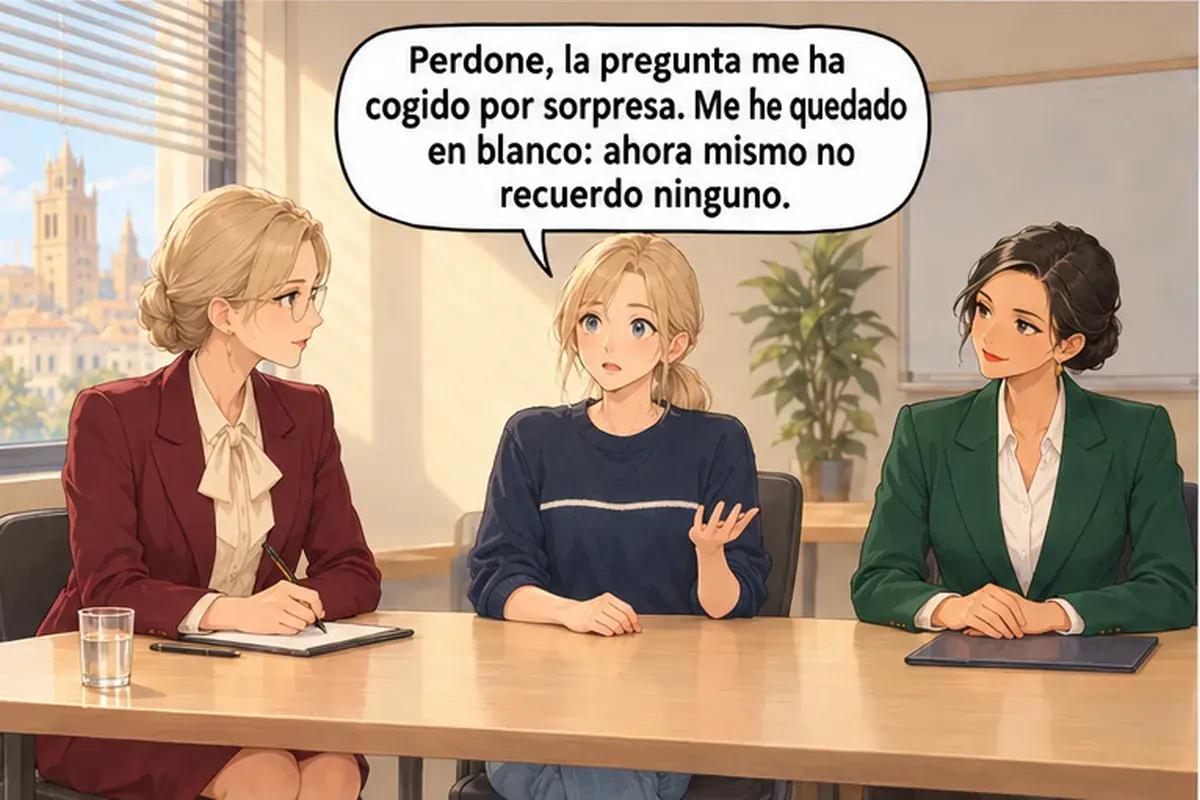
- Ana
Perdone, la pregunta me ha cogido por sorpresa. Me he quedado en blanco: ahora mismo no recuerdo ninguno.
Sorry, the question caught me by surprise. My mind has gone blank: right now I can't remember a single one (formal).
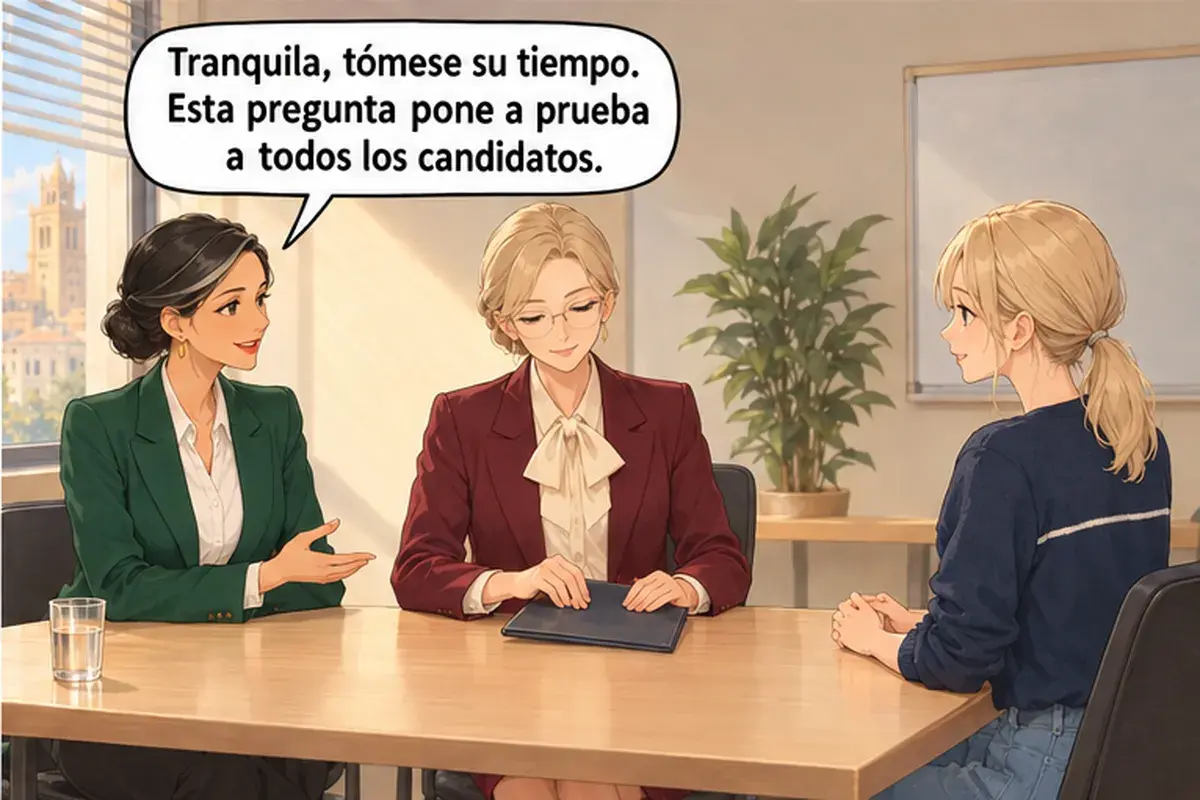
- Nuria
Tranquila, tómese su tiempo. Esta pregunta pone a prueba a todos los candidatos.
Relax, take your time. This question puts every candidate to the test (to a woman, formal).
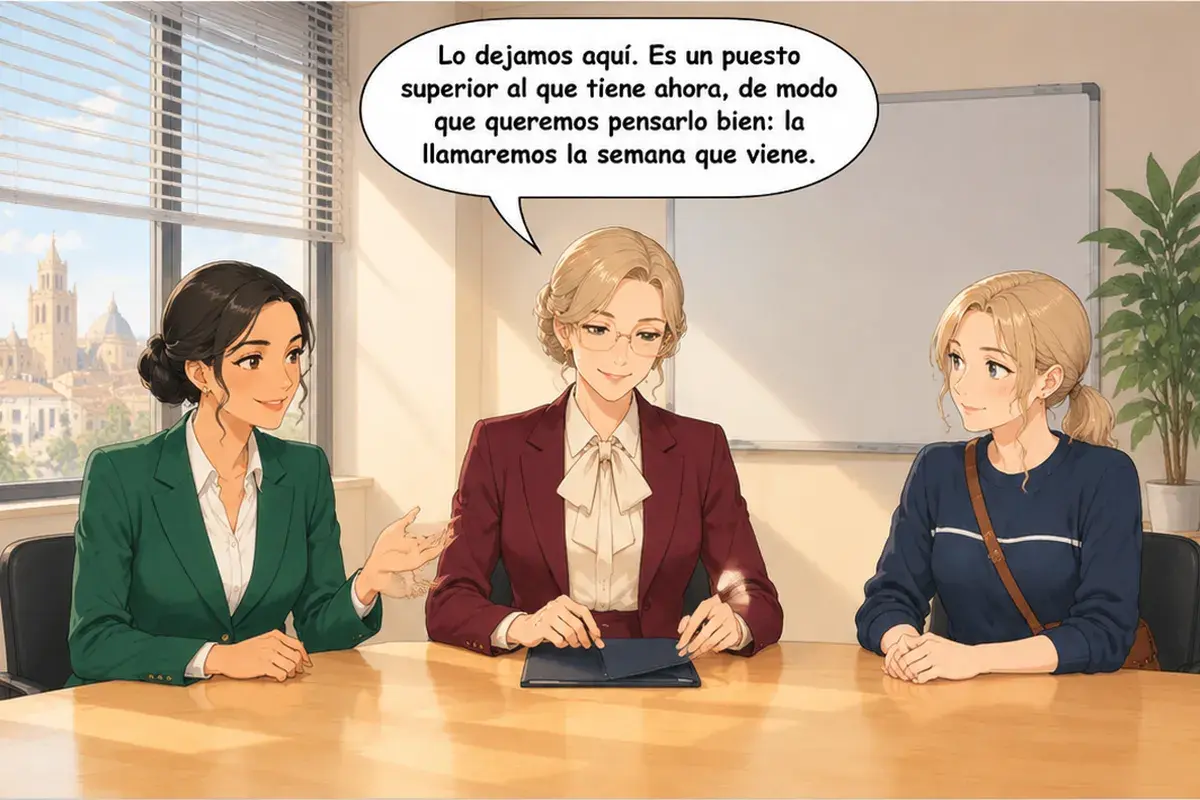
- Mercedes
Lo dejamos aquí. Es un puesto superior al que tiene ahora, de modo que queremos pensarlo bien: la llamaremos la semana que viene.
Let's stop here. It's a higher position than the one you have now, so we want to think it over carefully: we'll call you next week (to a woman, formal).
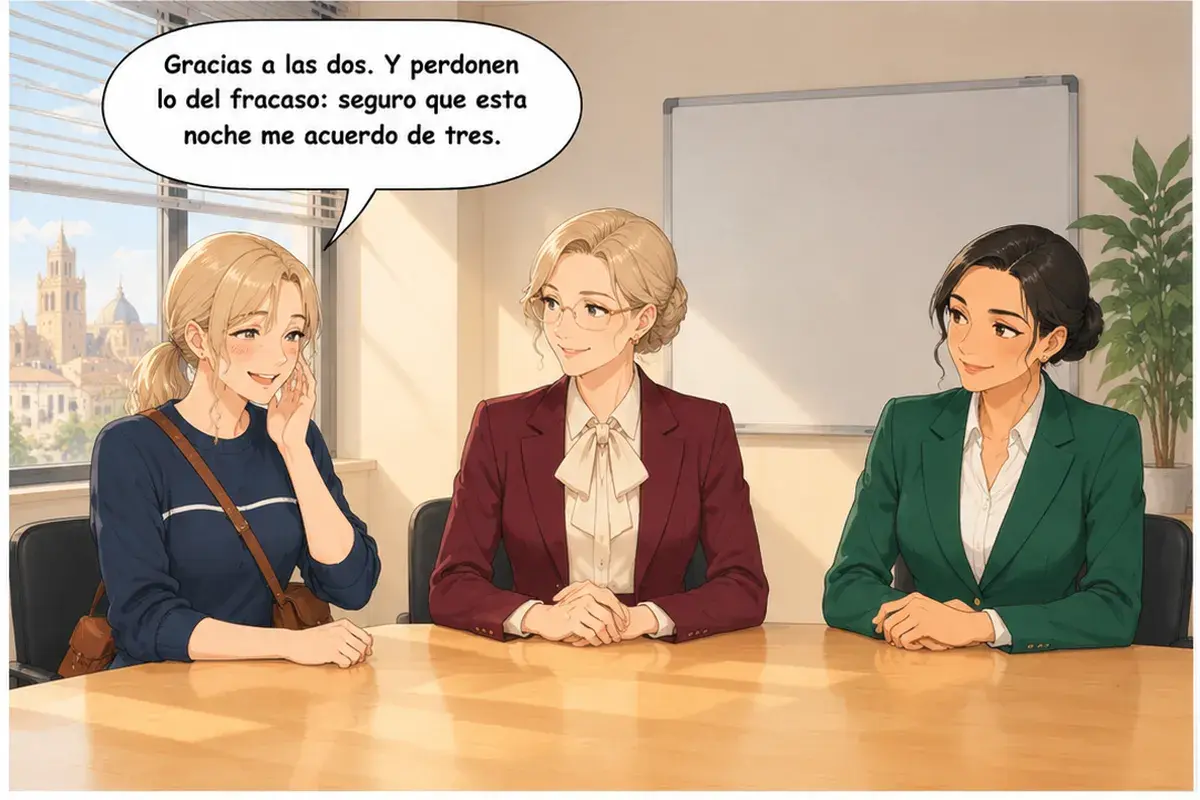
- Ana
Gracias a las dos. Y perdonen lo del fracaso: seguro que esta noche me acuerdo de tres.
Thank you both. And sorry about the failure thing: I'm sure I'll remember three of them tonight (to several women, formal).
Grammar for this text
The interview is formal, even with Nuria: tratar de usted — to address someone with the formal usted.
Lo de — "the thing with…": lo de Germán (the argument at the meeting), lo de mi rodilla (the week without Nuria), lo del fracaso. Everyone knows what it's about, so two words are enough.
La de — so you don't repeat the noun: otra candidatura: la de un gerente — "another application: a manager's".
Titles. Talking to her — señora Soler, no article. Talking about her — la señora Soler.
Judgment. Ser jefa — no article; una buena compañera, un especialista excelente, un mal jefe — with an article.
"Let's". Hablemos de lo de Germán, Pasemos a lo de mi rodilla — "let's talk about…", "let's move on to…": the nosotros form of the present subjunctive invites people to do something together, like English "let's".
Object first. A Nuria ya la conoce, Las preguntas difíciles las hará la señora Soler — when the "who" or "what" comes at the start of the sentence, Spanish repeats it before the verb with a short pronoun, la or las: literally "Nuria, you already know her".
Si mañana otra empresa le ofreciera…, ¿qué haría? — "if another company offered you…, what would you do?" (unit 17). Me ha cogido por sorpresa: in a formal conversation Ana uses coger; she'll save the casual pillar for her friend.
Y perdonen lo del fracaso — "and sorry about…": a command to two women Ana addresses formally (ustedes). From perdone (to one person) you get perdonen by adding -n.
Words and grammar of the unit: Interview for a management job.
Learn the words from the texts with flashcards
In the app, you can tap any word in a text to see its translation, forms and examples, and new words stick with flashcards. 15 minutes a day.
Start for freeEverything is open for free. No card needed to sign up.