

Spanish story with translation · B2 · 16 lines
Lo que me dijeron en tres ventanillas What they told me at three windows
Comic · 15 panels

Era mayo de mi tercer año en Valencia. Por aquel entonces yo no sabía nada de impuestos.
It was May of my third year in Valencia. Back then I didn't know anything about taxes.
Palabras como «contribuyente» o «retención» me sonaban a chino, y una gestoría me pedía sesenta euros por hacerme la declaración.
Words like "taxpayer" or "withholding" were all Greek to me, and a paperwork agency was asking me for sixty euros to do my tax return.

Pero la contable de mi empresa me dijo que en Hacienda me ayudarían gratis. Así que un lunes fui a la oficina, sin cita y sin miedo.
But the accountant at my company told me that at the tax office they would help me for free. So one Monday I went to the office, without an appointment and without fear.

En la primera ventanilla, una señora me preguntó qué quería. Le expliqué que venía a hacer mi primera declaración.
At the first window, a woman asked me what I wanted. I explained to her that I had come to do my first tax return.

Me señaló que allí solo daban información y me pidió que pasara a la ventanilla dos.
She pointed out that they only gave out information there and asked me to go to window two.

En la segunda, un hombre con gafas me preguntó si era autónoma. Precisó que los autónomos presentaban el IVA cada trimestre, y que eso se hacía en otra planta.
At the second one, a man with glasses asked me if I was self-employed. He specified that self-employed people filed VAT every quarter, and that this was done on another floor (woman speaking).

Le contesté que no, que trabajaba en una empresa. Él murmuró algo que no entendí y miró el reloj.
I answered that I wasn't, that I worked for a company. He muttered something I didn't understand and looked at the clock.
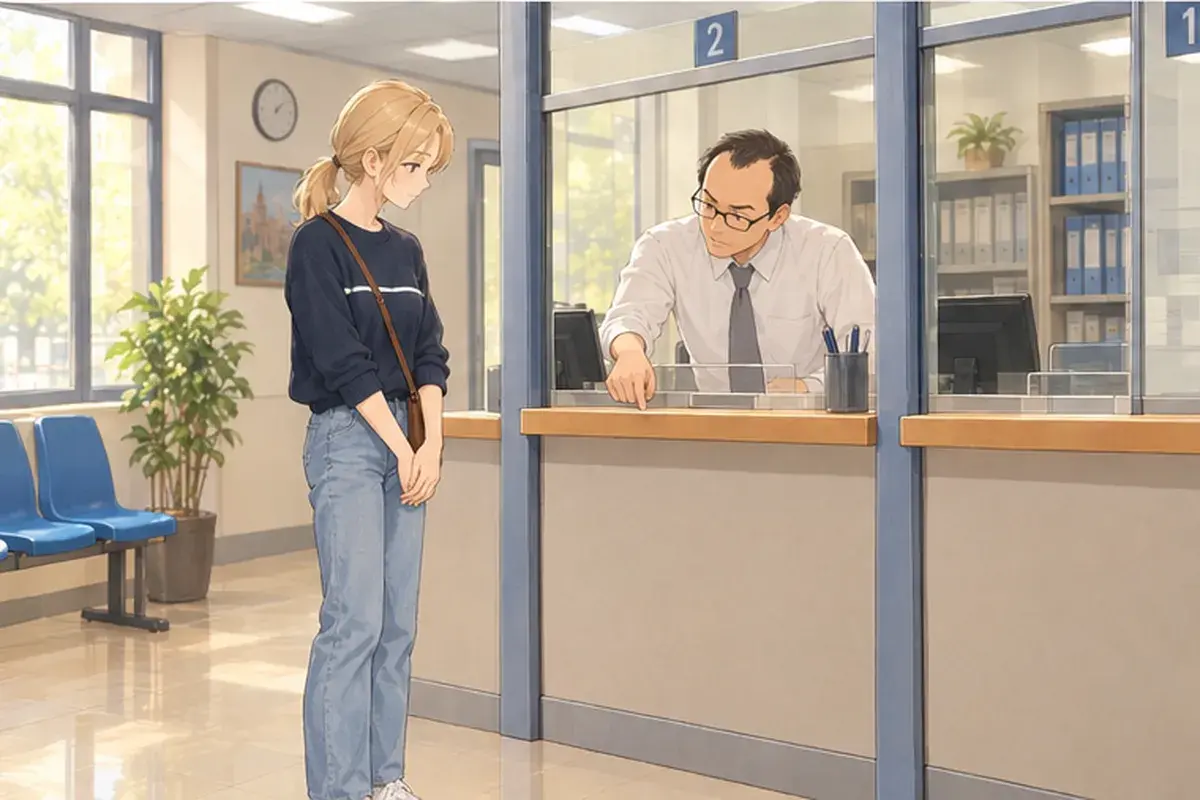
Por fin me dijo que volviera al día siguiente con todas mis nóminas, y subrayó que sin ellas no podrían hacer nada.
Finally he told me to come back the next day with all my pay slips, and he stressed that without them they wouldn't be able to do anything.

Aquella noche estuve buscando papeles hasta las dos.
That night I was looking for papers until two in the morning.

Al día siguiente volví con una carpeta enorme. En la tercera ventanilla había una chica joven.
The next day I went back with a huge folder. At the third window there was a young woman.

Miró la pantalla, miró mi carpeta y exclamó: «¡Pero si aquí lo tenemos todo!».
She looked at the screen, looked at my folder and exclaimed, "But we have everything right here!"

Me explicó que Hacienda ya conocía mis datos fiscales y que el día anterior me habían informado mal.
She explained that the tax office already knew my tax information and that the day before I had been given the wrong information.

Le pregunté qué tenía que hacer entonces. Me contestó que solo me faltaba pedir cita, y me la dio para el jueves.
I asked her what I had to do then. She answered that all I needed was to make an appointment, and she gave me one for Thursday.

Me prometió que un funcionario haría la declaración conmigo en veinte minutos. Y así fue.
She promised me that a clerk would do the tax return with me in twenty minutes. And that's what happened.

Tres ventanillas, tres respuestas distintas. ¿Y la carpeta? No la abrió nadie.
Three windows, three different answers. And the folder? Nobody opened it.

Desde entonces, cuando en una ventanilla me dicen que vuelva mañana, sonrío y pregunto en la de al lado.
Since then, when they tell me at a window to come back tomorrow, I smile and ask at the next one.
Grammar for this text
The story has three windows and all four kinds of retelling:
- informing: me señaló que allí solo daban información, me explicó que Hacienda ya conocía mis datos;
- asking: me preguntó qué quería, me preguntó si era autónoma — without que;
- telling someone to do something: me pidió que pasara, me dijo que volviera;
- promising: me dijo que en Hacienda me ayudarían gratis, me prometió que un funcionario haría la declaración.
The time and place words have shifted too: allí (at the window they said aquí), al día siguiente (they said mañana), el día anterior (they said ayer). The last line is in the present, me dicen que vuelva mañana, so nothing shifts there.
Señaló, precisó, subrayó, murmuró, exclamó are bookish replacements for dijo, and they fit well in a story.
In ¡Pero si aquí lo tenemos todo!, pero si at the start of an exclamation shows surprise ("but…", "why…"); it doesn't mean "if". La de al lado means "the one next to it", here the next window.
Words and grammar of the unit: Retell a conversation at the tax office.
Learn the words from the texts with flashcards
In the app, you can tap any word in a text to see its translation, forms and examples, and new words stick with flashcards. 15 minutes a day.
Start for freeEverything is open for free. No card needed to sign up.