

Spanish dialogue with translation · B2 · 18 lines
¿Me corriges el correo? Can you correct the email for me?
Comic · 18 panels
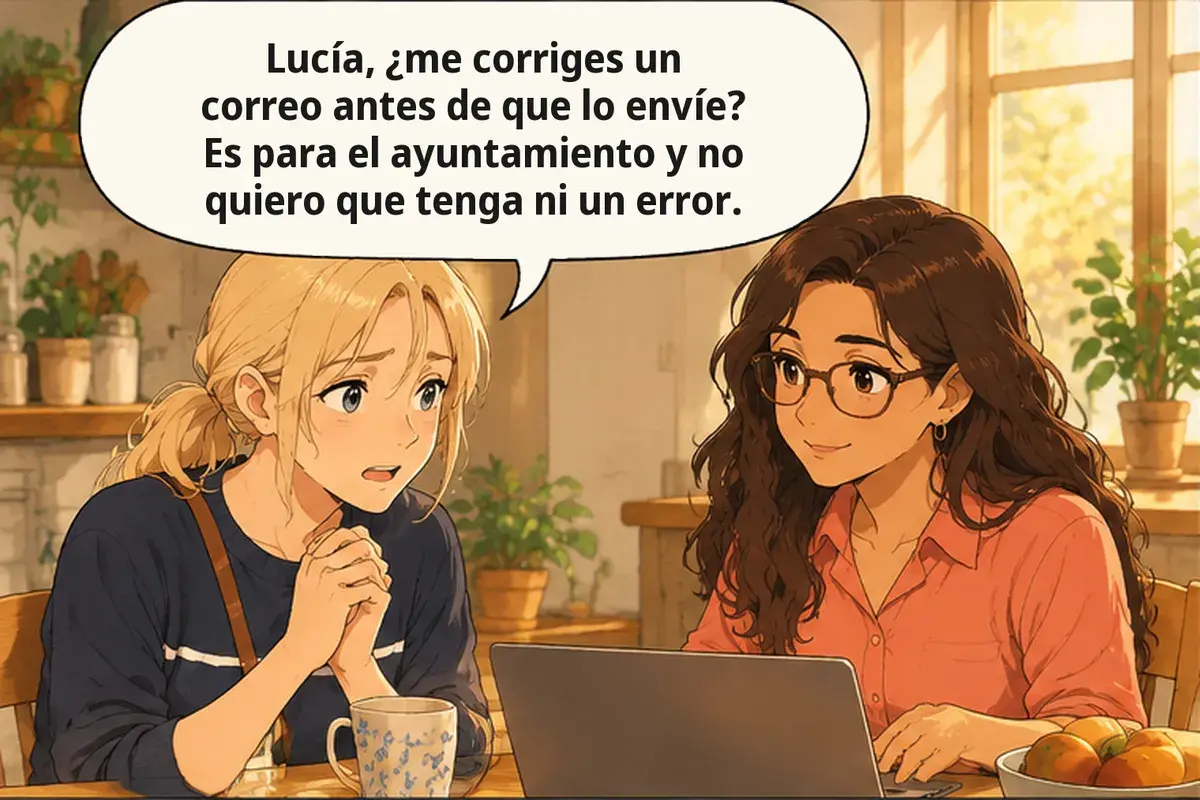
- Ana
Lucía, ¿me corriges un correo antes de que lo envíe? Es para el ayuntamiento y no quiero que tenga ni un error.
Lucía, can you correct an email for me before I send it? It's for city hall, and I don't want it to have a single mistake.
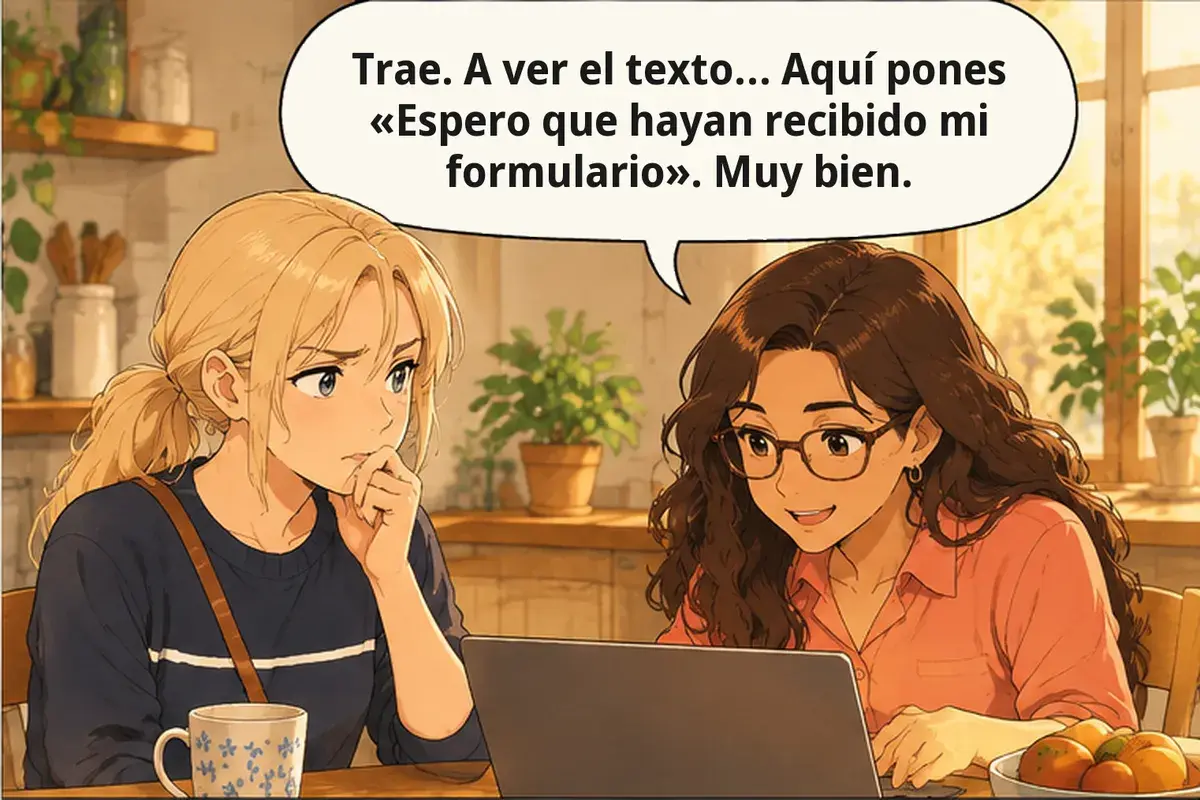
- Lucía
Trae. A ver el texto… Aquí pones «Espero que hayan recibido mi formulario». Muy bien.
Give it here. Let's see the text… Here you write, "I hope you have received my form." Very good.
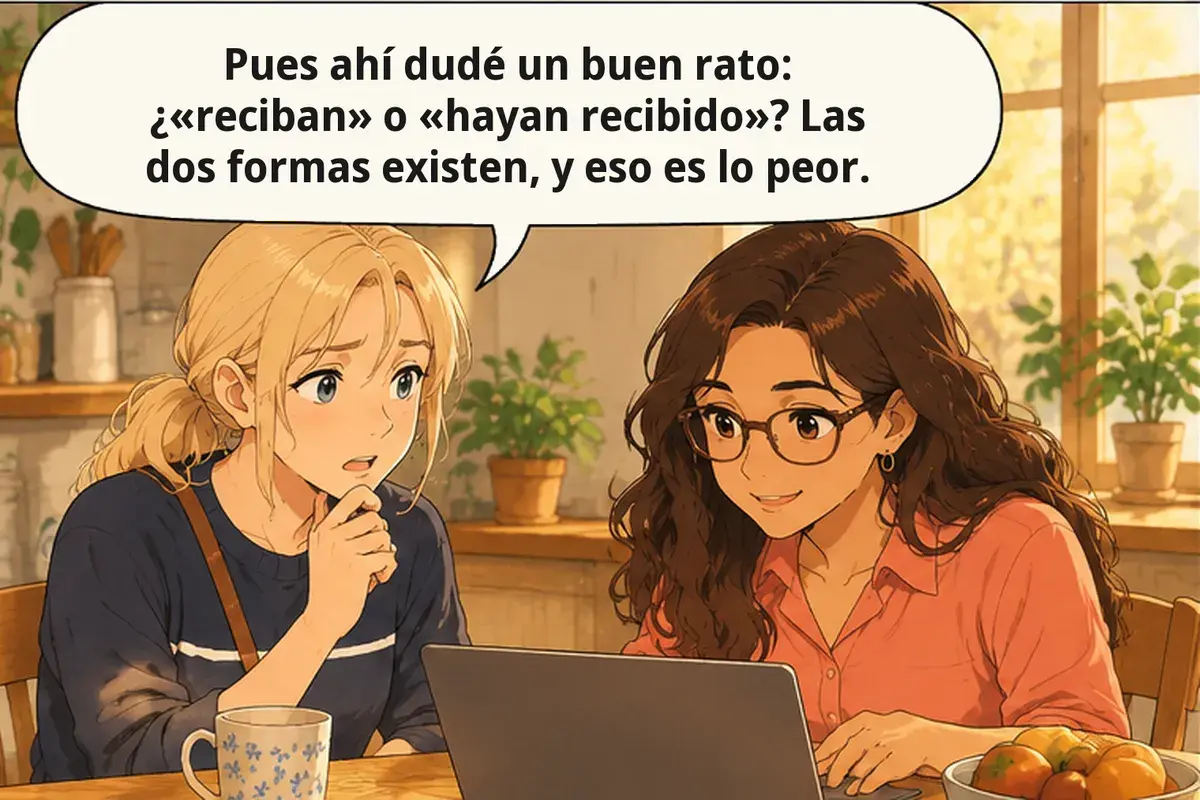
- Ana
Pues ahí dudé un buen rato: ¿«reciban» o «hayan recibido»? Las dos formas existen, y eso es lo peor.
Well, I hesitated there for a good while: "reciban" or "hayan recibido"? Both forms exist, and that's the worst part.
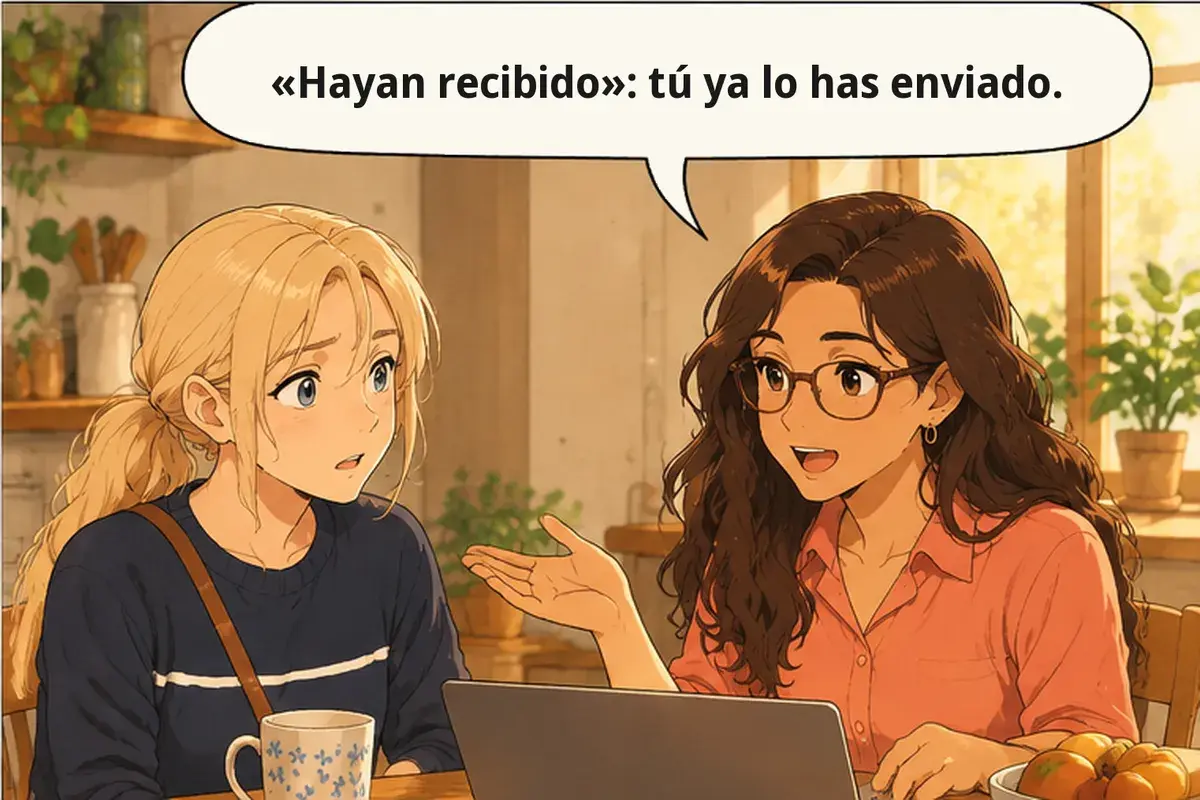
- Lucía
«Hayan recibido»: tú ya lo has enviado.
"Hayan recibido": you've already sent it.
- Ana
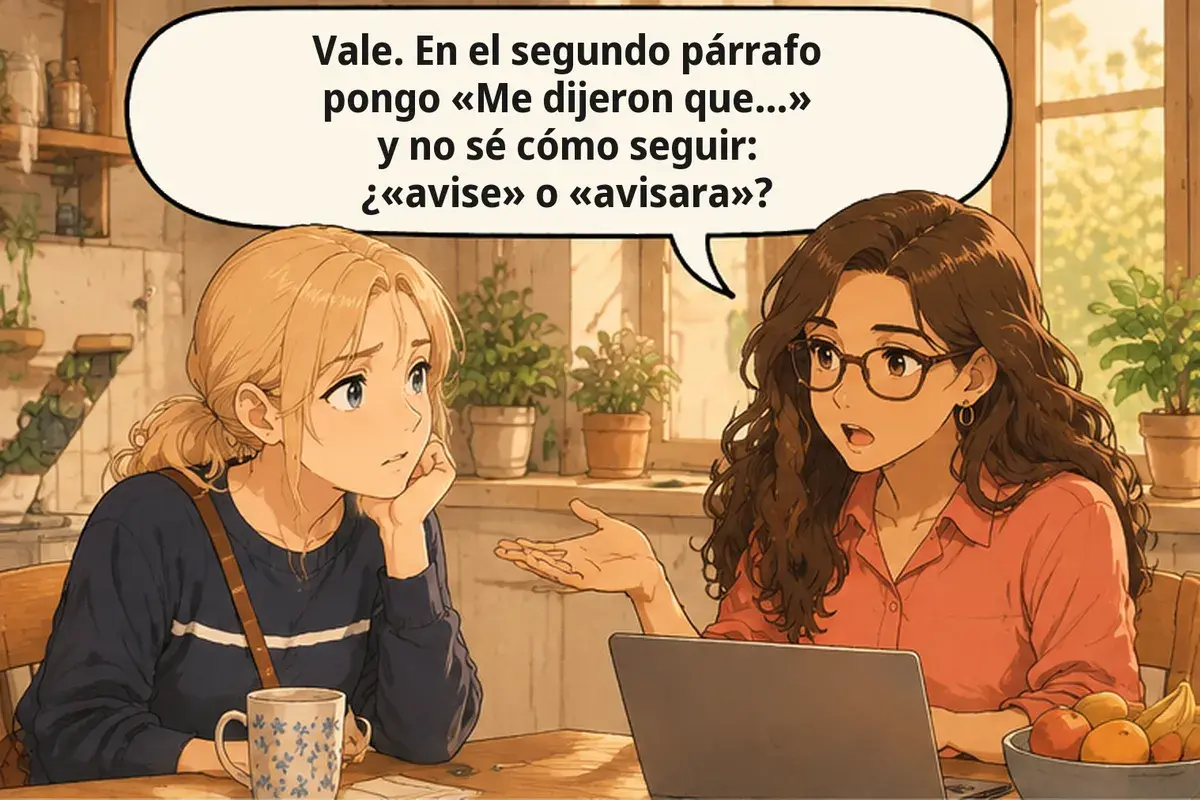
Vale. En el segundo párrafo pongo «Me dijeron que…» y no sé cómo seguir: ¿«avise» o «avisara»?
OK. In the second paragraph I write "They told me to…" and I don't know how to go on: "avise" or "avisara"?
- Lucía
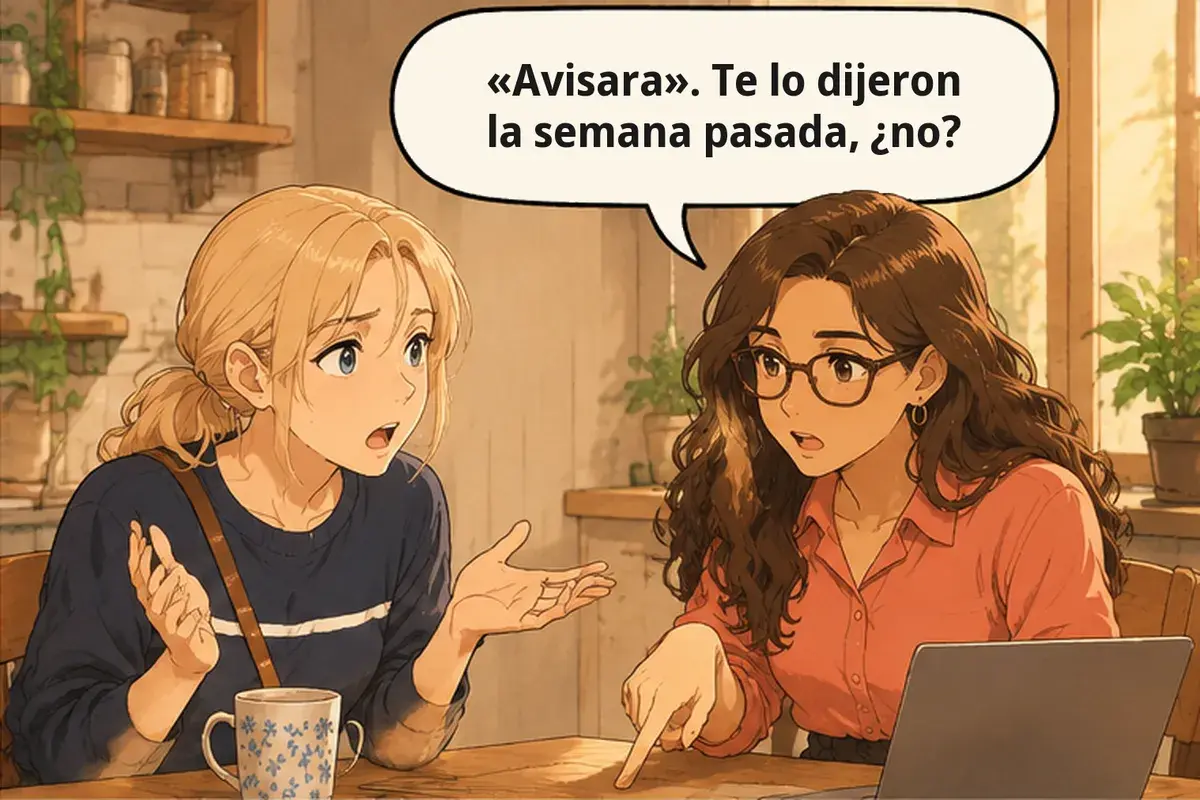
«Avisara». Te lo dijeron la semana pasada, ¿no?
"Avisara." They told you last week, right?
- Ana
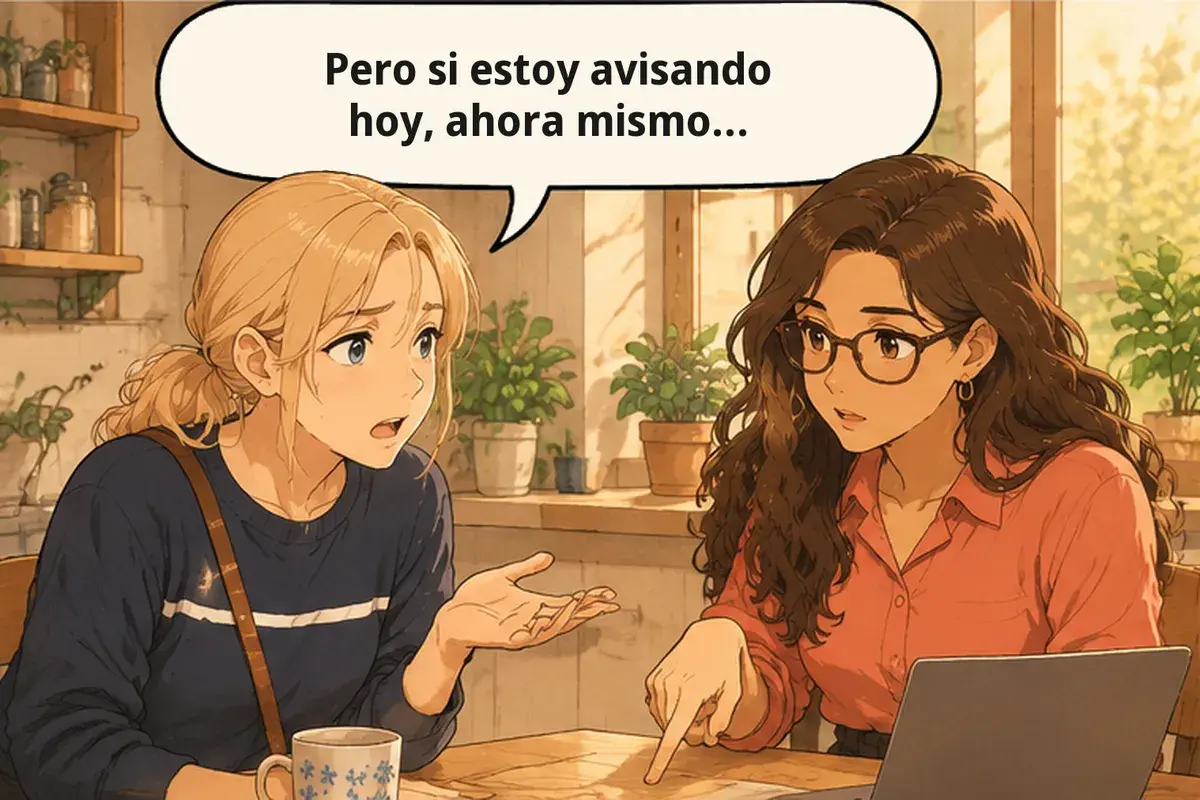
Pero si estoy avisando hoy, ahora mismo…
But I'm letting them know today, right now…
- Lucía
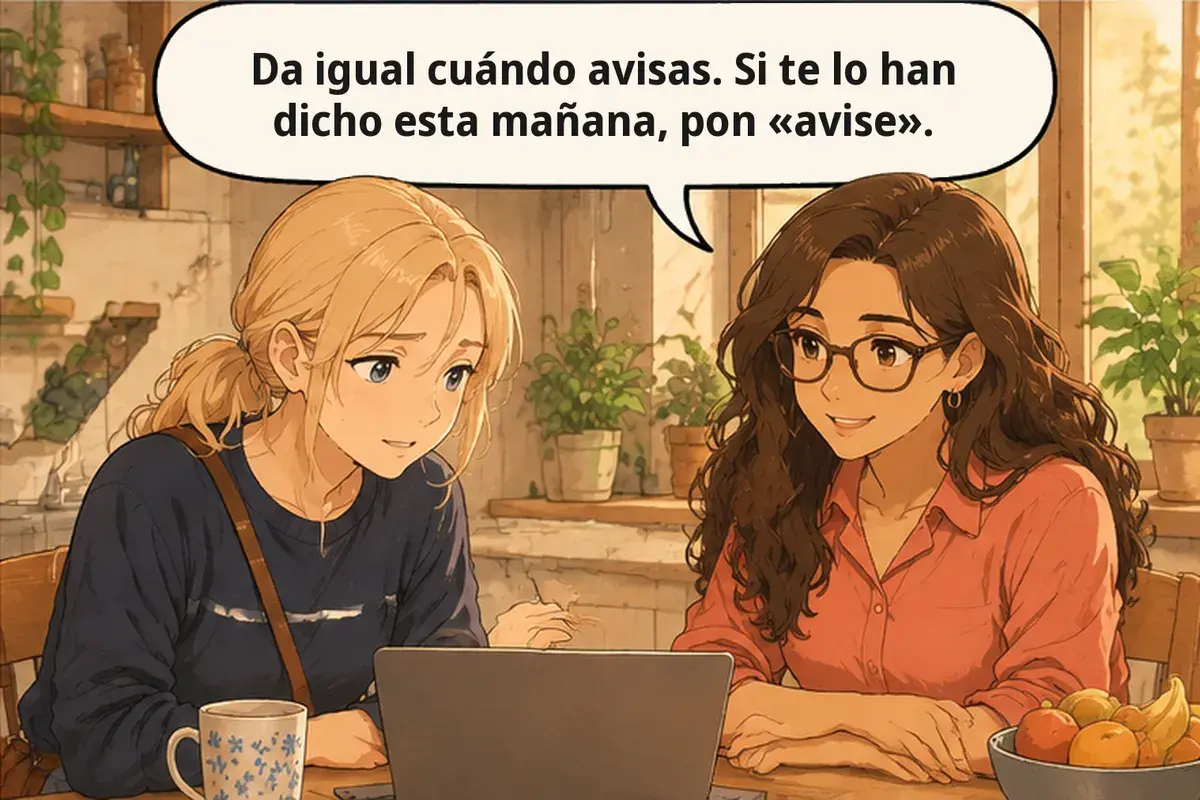
Da igual cuándo avisas. Si te lo han dicho esta mañana, pon «avise».
It doesn't matter when you let them know. If they told you this morning, write "avise."
- Ana
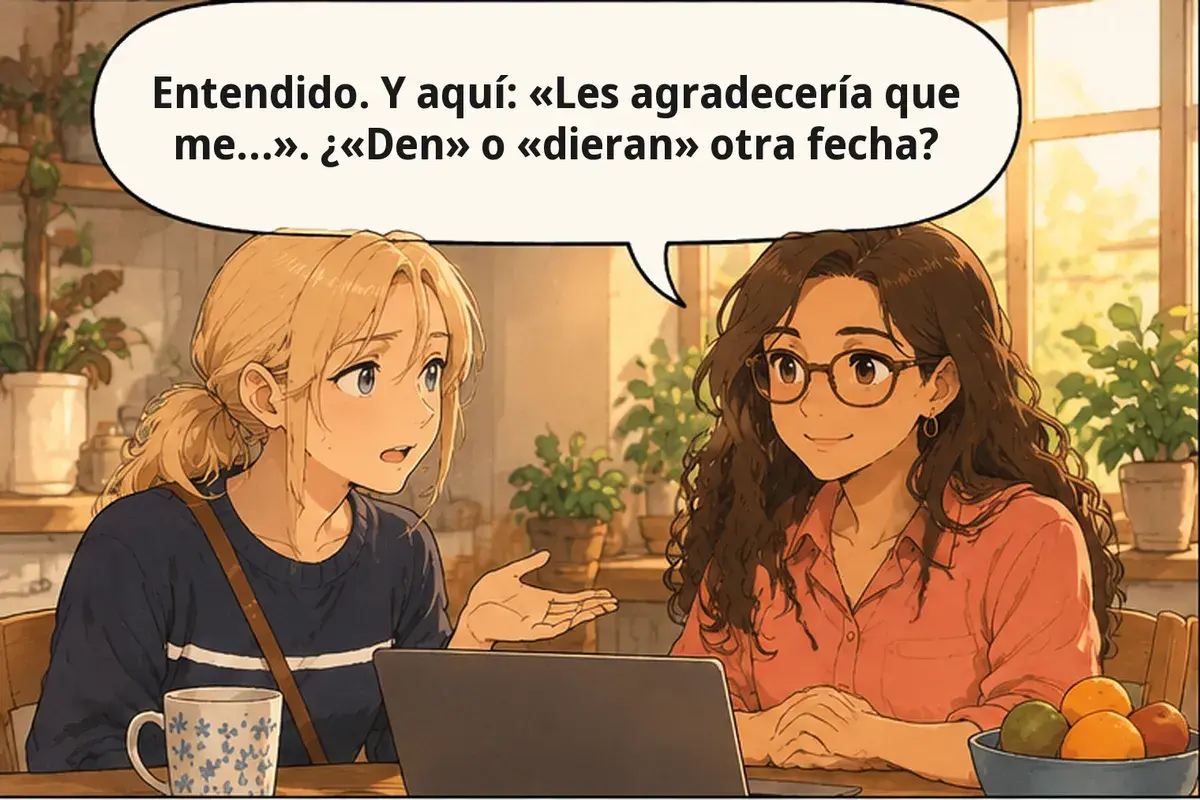
Entendido. Y aquí: «Les agradecería que me…». ¿«Den» o «dieran» otra fecha?
Got it. And here: "I would be grateful if you…" Is it "den" or "dieran" another date? (to several people, formal)
- Lucía
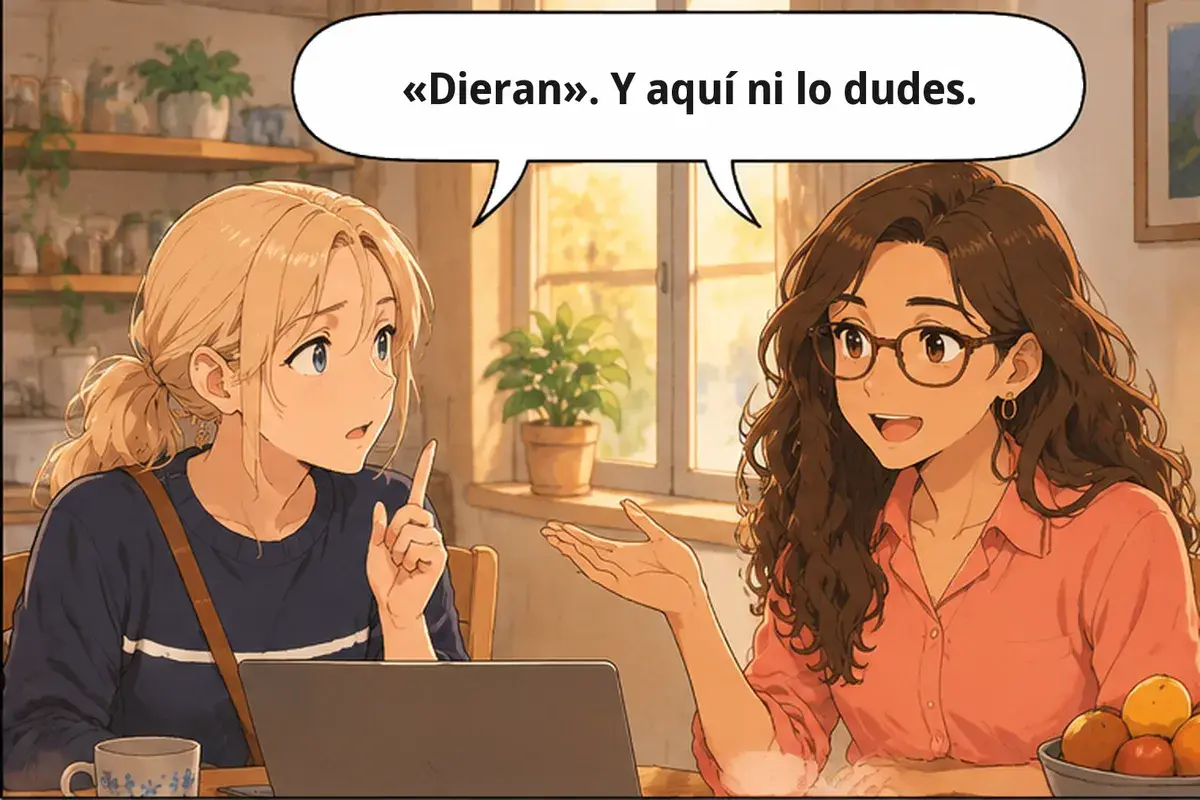
«Dieran». Y aquí ni lo dudes.
"Dieran." And here, don't even hesitate.
- Ana
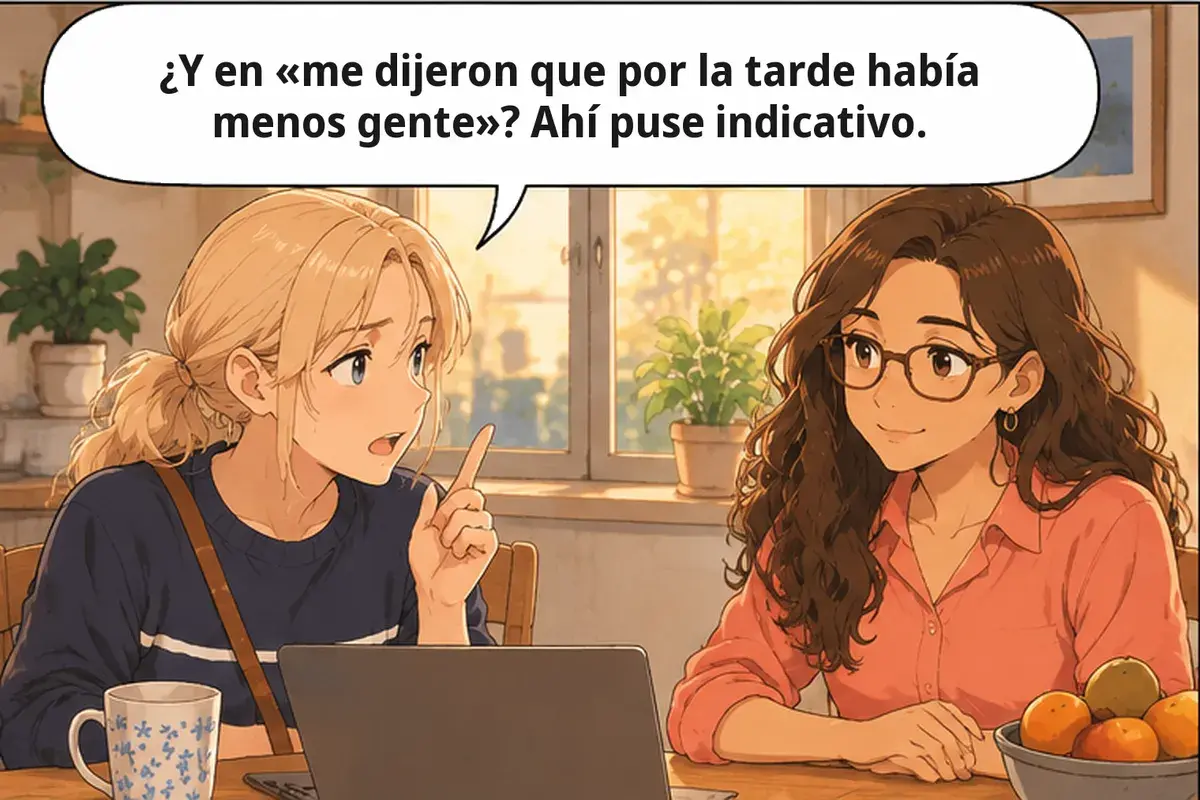
¿Y en «me dijeron que por la tarde había menos gente»? Ahí puse indicativo.
And in "they told me there were fewer people in the afternoon"? There I used the indicative.
- Lucía
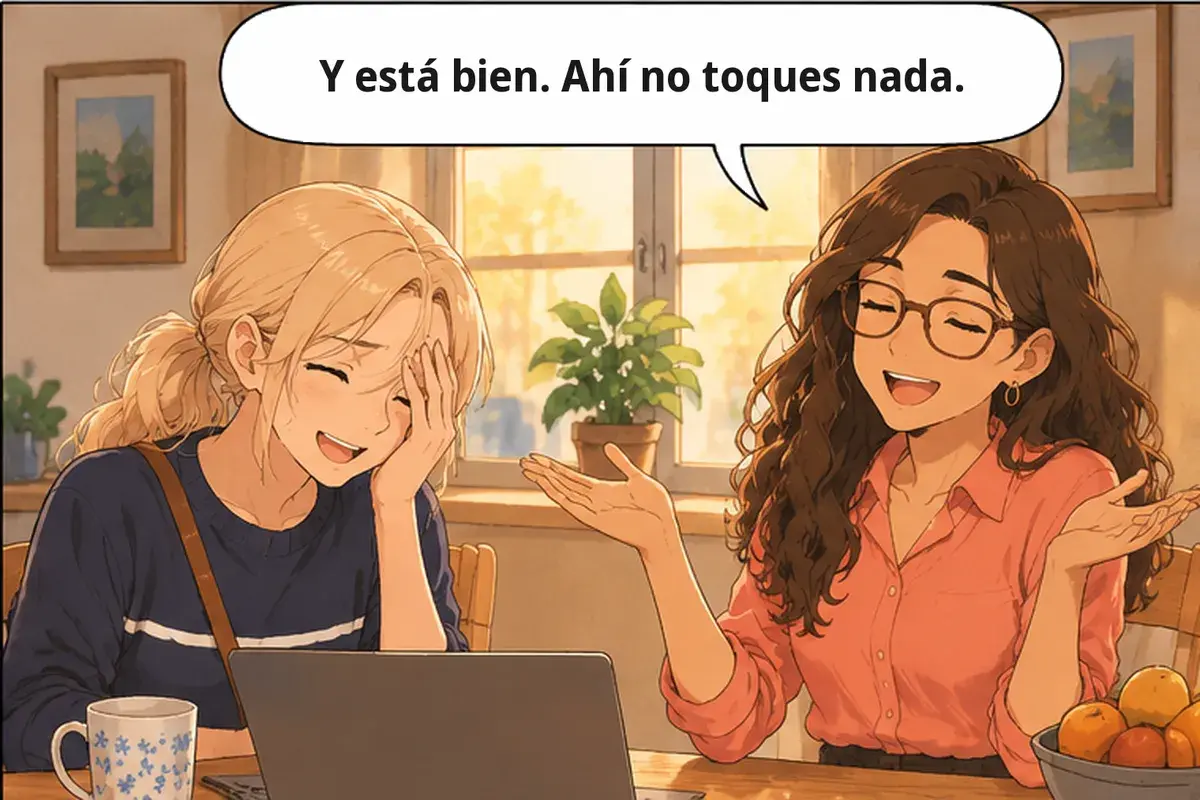
Y está bien. Ahí no toques nada.
And that's right. Don't touch anything there.
- Ana
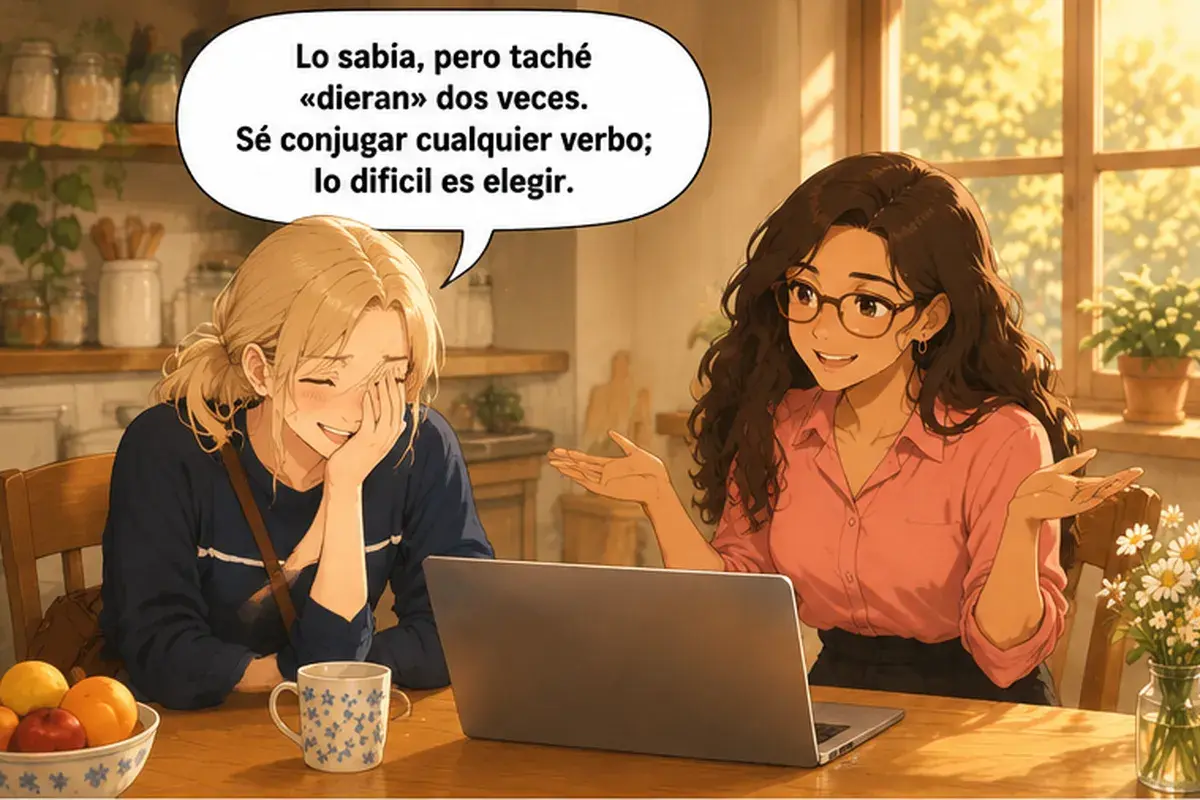
Lo sabía, pero taché «dieran» dos veces. Sé conjugar cualquier verbo; lo difícil es elegir.
I knew it, but I crossed out "dieran" twice. I can conjugate any verb; the hard part is choosing.
- Lucía
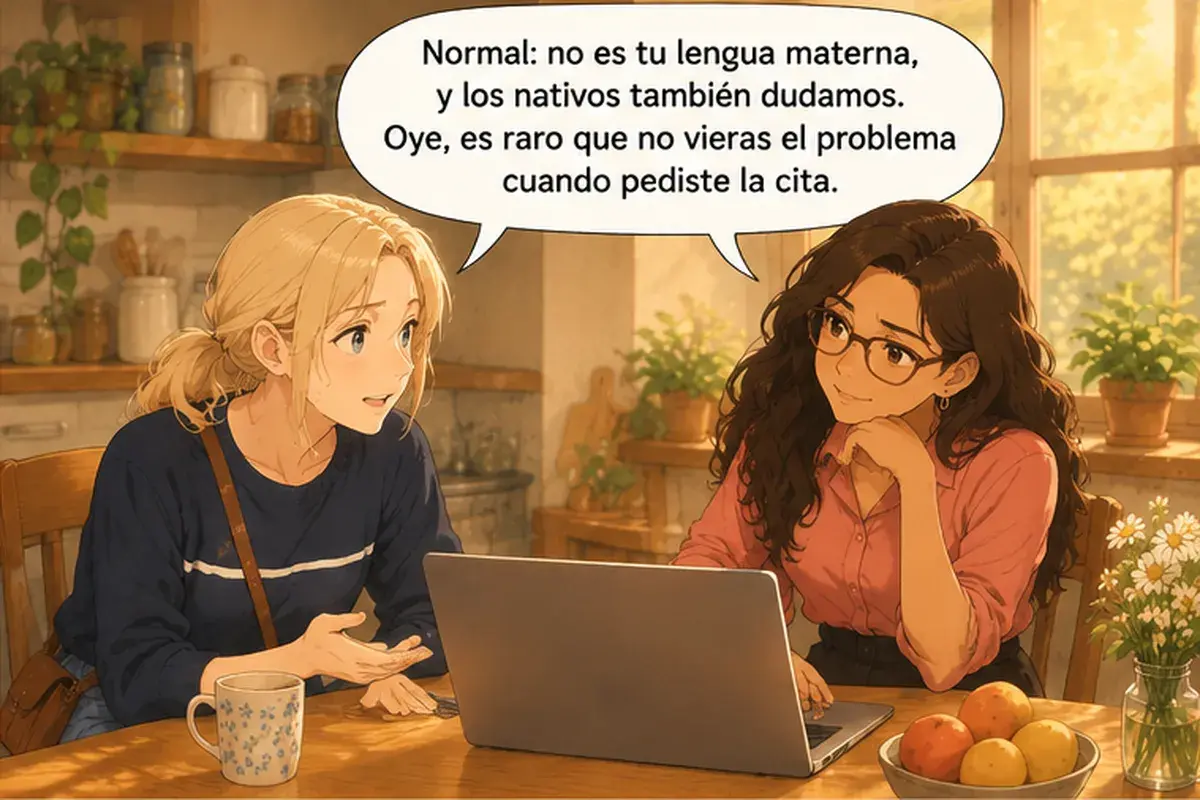
Normal: no es tu lengua materna, y los nativos también dudamos. Oye, es raro que no vieras el problema cuando pediste la cita.
That's normal: it's not your native language, and we native speakers have doubts too. Hey, it's strange that you didn't see the problem when you made the appointment.
- Ana
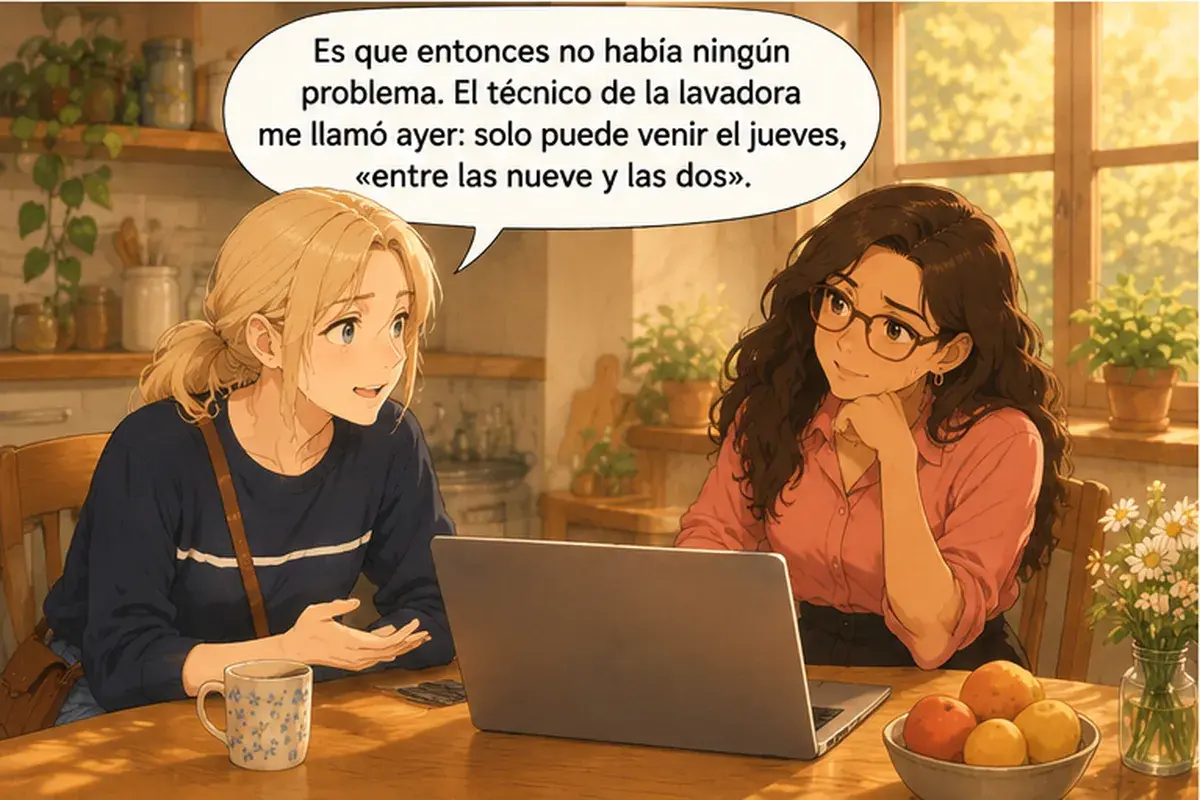
Es que entonces no había ningún problema. El técnico de la lavadora me llamó ayer: solo puede venir el jueves, «entre las nueve y las dos».
The thing is, there wasn't any problem back then. The washing machine repairman called me yesterday: he can only come on Thursday, "between nine and two."
- Lucía
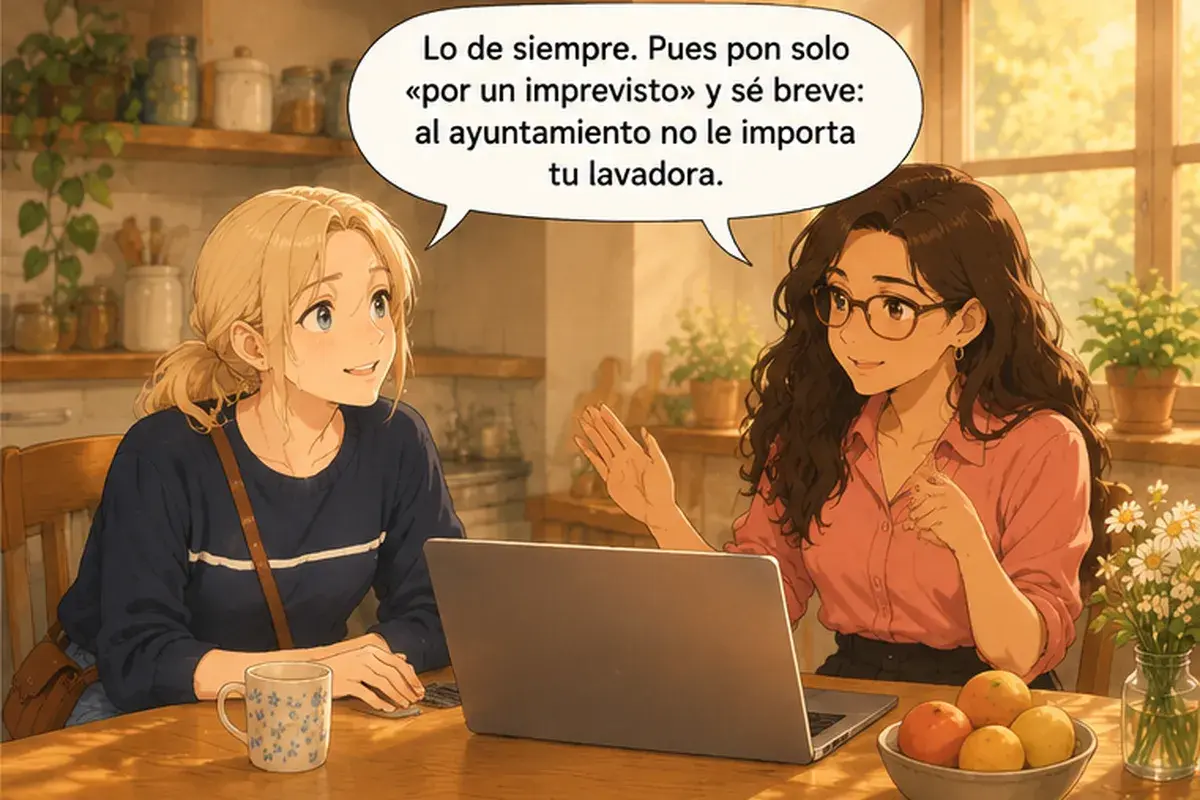
Lo de siempre. Pues pon solo «por un imprevisto» y sé breve: al ayuntamiento no le importa tu lavadora.
Same old story. So just write "due to an unforeseen problem" and be brief: city hall doesn't care about your washing machine.
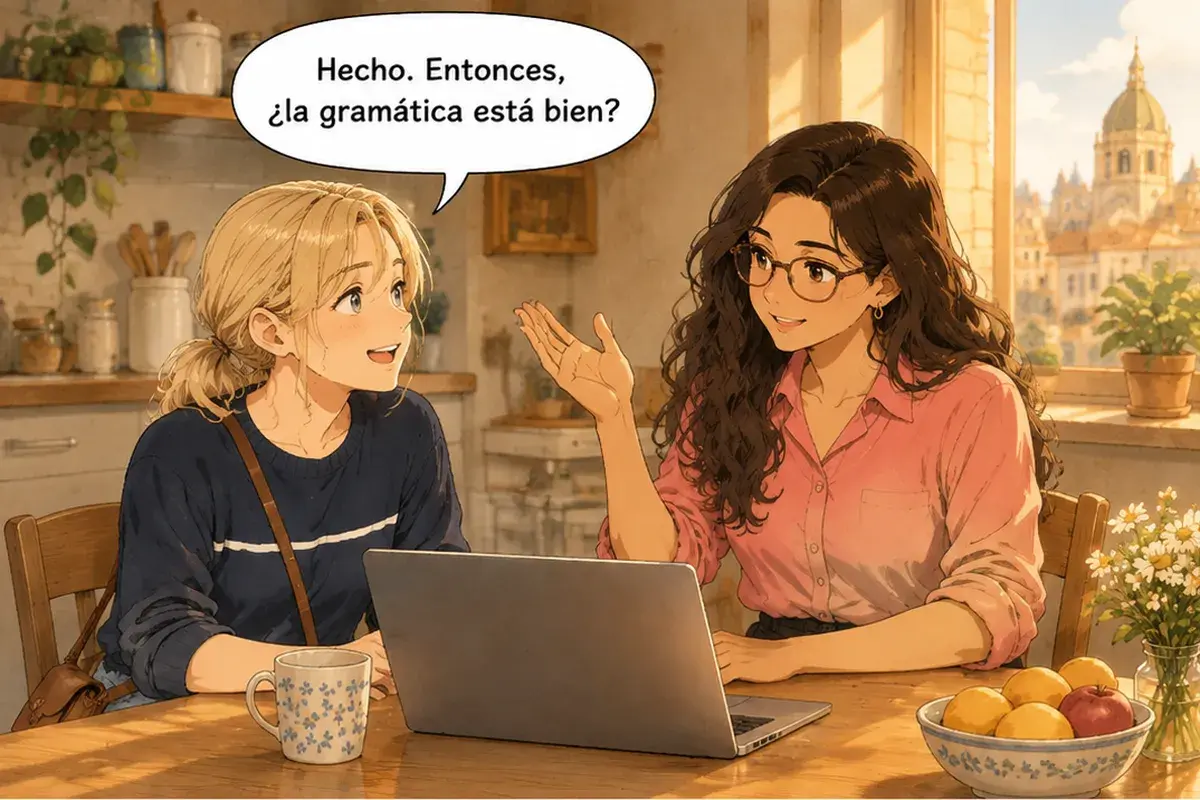
- Ana
Hecho. Entonces, ¿la gramática está bien?
Done. So is the grammar OK?
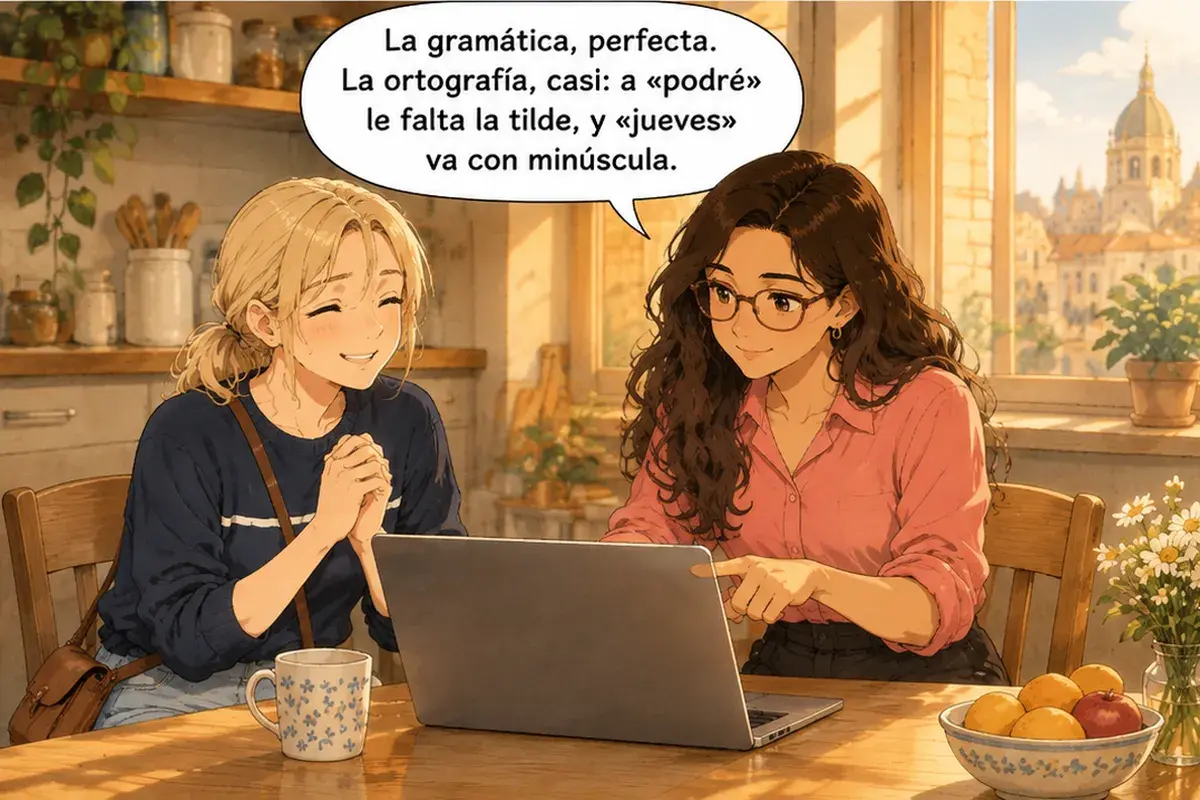
- Lucía
La gramática, perfecta. La ortografía, casi: a «podré» le falta la tilde, y «jueves» va con minúscula.
The grammar is perfect. The spelling, almost: "podré" is missing its accent mark, and "jueves" is written with a lowercase letter.
Grammar for this text
Lucía checks the email, and each time Ana chooses between two forms that both exist.
- reciban or hayan recibido: the main clause is in the present (espero), so look at the action. Ana has already sent the form (formulario), so the action is done: hayan recibido. Espero que reciban is for something that's still on its way.
- avise or avisara: the main clause is in the past (me dijeron), so it's avisara, even though Ana is only letting them know now. After me han dicho (today) it would be avise.
- den or dieran: after the conditional (agradecería, me gustaría) it's always dieran.
- Es raro que no vieras el problema cuando pediste la cita: the main clause is in the present, but the action ended in the past (without the beginning it would be no viste), so it's vieras.
- Me dijeron que por la tarde había menos gente: this isn't a request but information, so the normal form, the indicative (unit 14).
Words and grammar of the unit: Check and correct your own letter.
Learn the words from the texts with flashcards
In the app, you can tap any word in a text to see its translation, forms and examples, and new words stick with flashcards. 15 minutes a day.
Start for freeEverything is open for free. No card needed to sign up.