

Spanish dialogue with translation · B2 · 18 lines
Cuando uno llega, lo difícil no es el papel When you arrive, the hard part isn't the paperwork
Comic · 18 panels
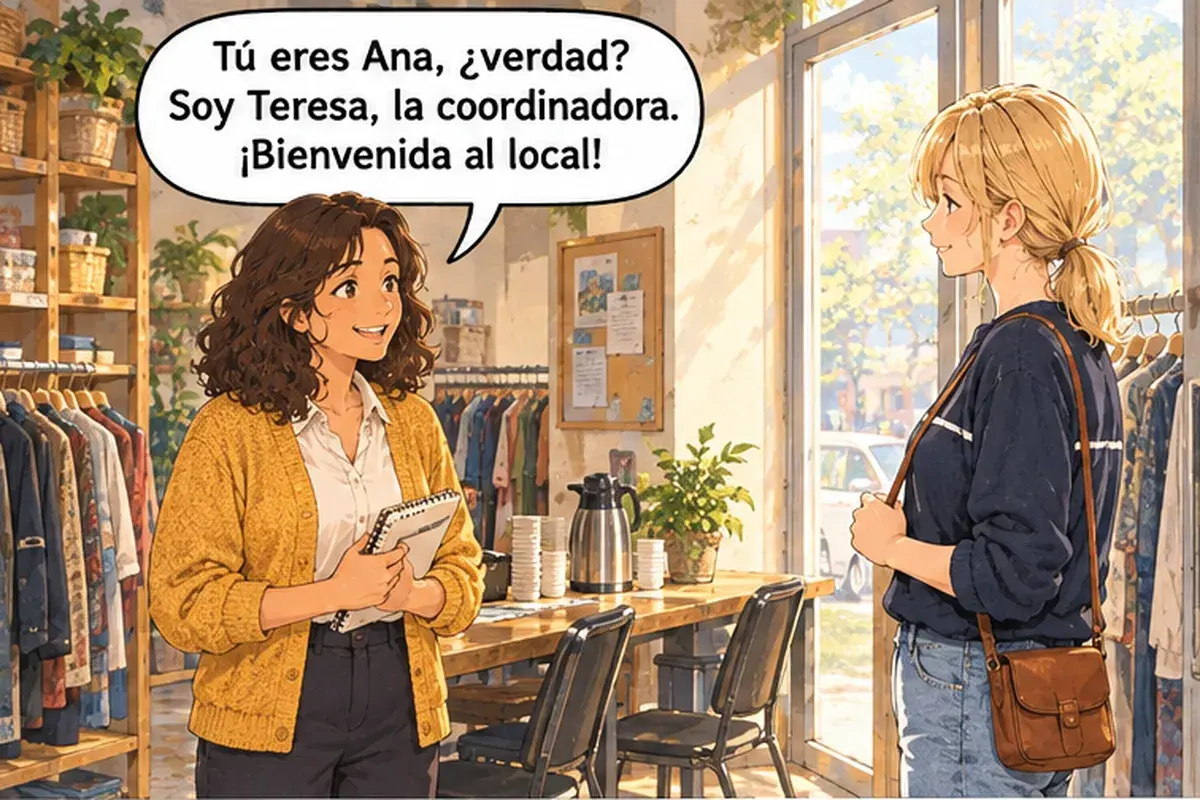
- Teresa
Tú eres Ana, ¿verdad? Soy Teresa, la coordinadora. ¡Bienvenida al local!
You're Ana, right? I'm Teresa, the coordinator. Welcome to our space! (to a woman)
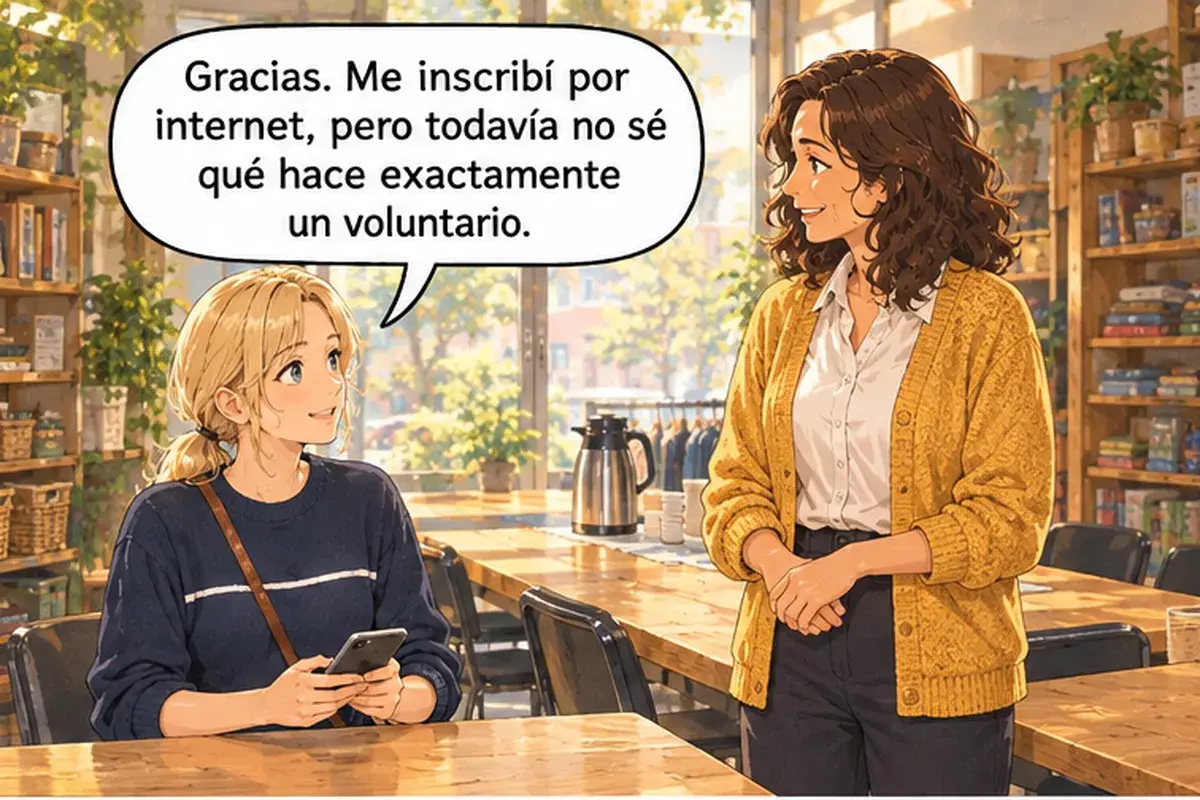
- Ana
Gracias. Me inscribí por internet, pero todavía no sé qué hace exactamente un voluntario.
Thanks. I signed up online, but I still don't know what exactly a volunteer does.
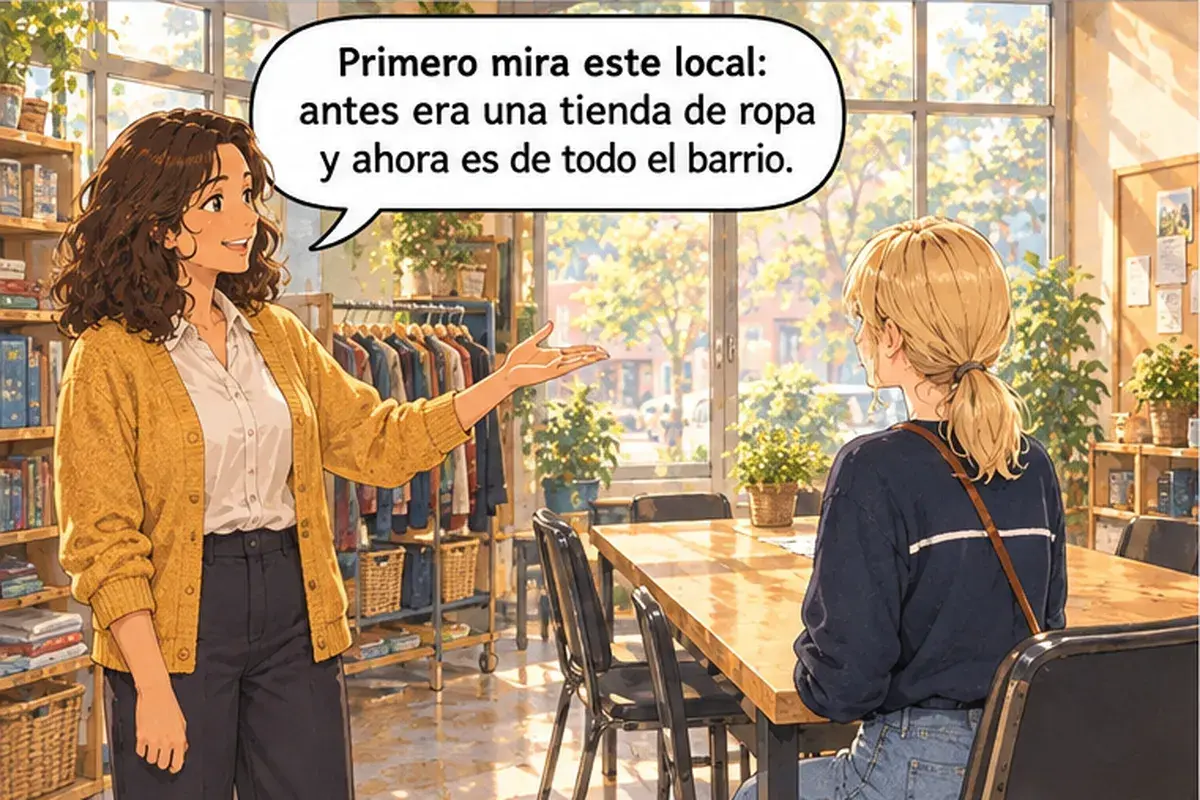
- Teresa
Primero mira este local: antes era una tienda de ropa y ahora es de todo el barrio.
First, take a look at this space: it used to be a clothing store, and now it belongs to the whole neighborhood.

- Ana
¿Es una ONG, como las que salen en la tele?
Is it an NGO, like the ones on TV?
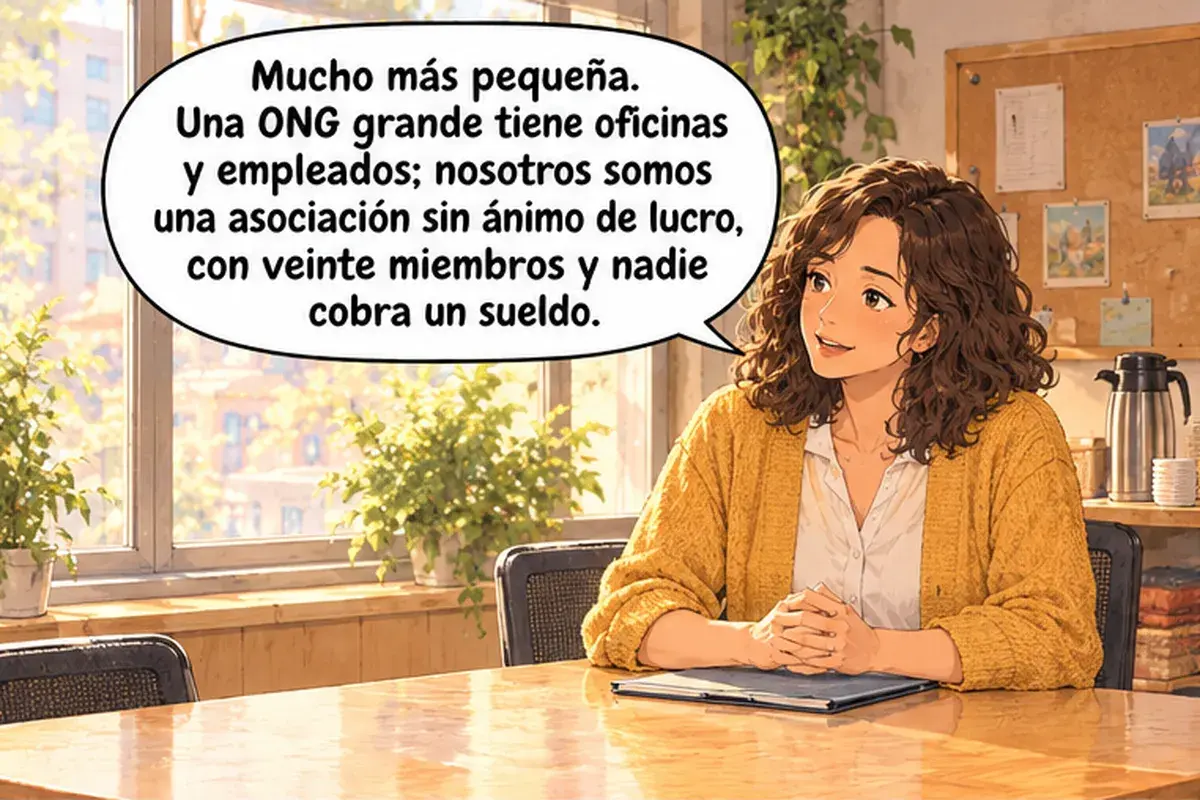
- Teresa
Mucho más pequeña. Una ONG grande tiene oficinas y empleados; nosotros somos una asociación sin ánimo de lucro, con veinte miembros y nadie cobra un sueldo.
Much smaller. A big NGO has offices and employees; we're a nonprofit association with twenty members, and nobody gets a salary.
- Ana
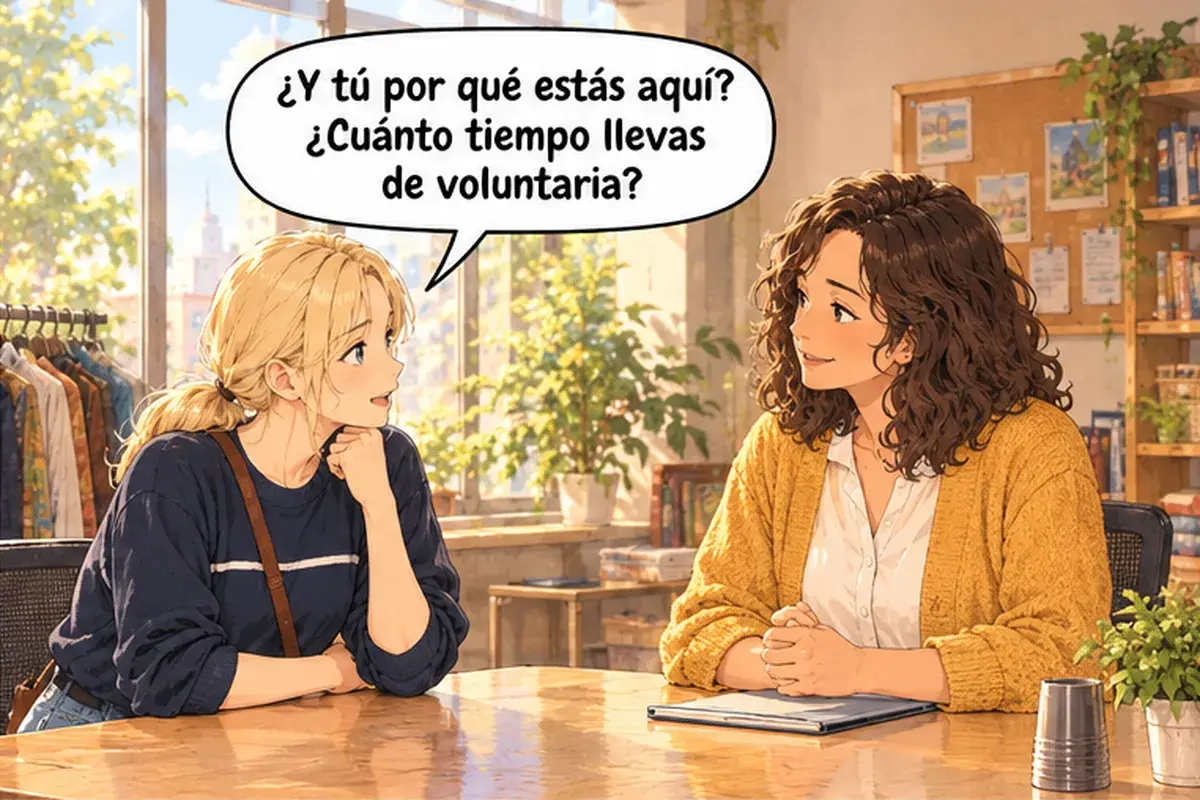
¿Y tú por qué estás aquí? ¿Cuánto tiempo llevas de voluntaria?
And why are you here? How long have you been a volunteer? (to a woman)

- Teresa
Cuatro años. Mis padres emigraron a Alemania cuando yo era niña, así que me pongo en el lugar de los que llegan.
Four years. My parents emigrated to Germany when I was a little girl, so I put myself in the shoes of the people who arrive.
- Ana
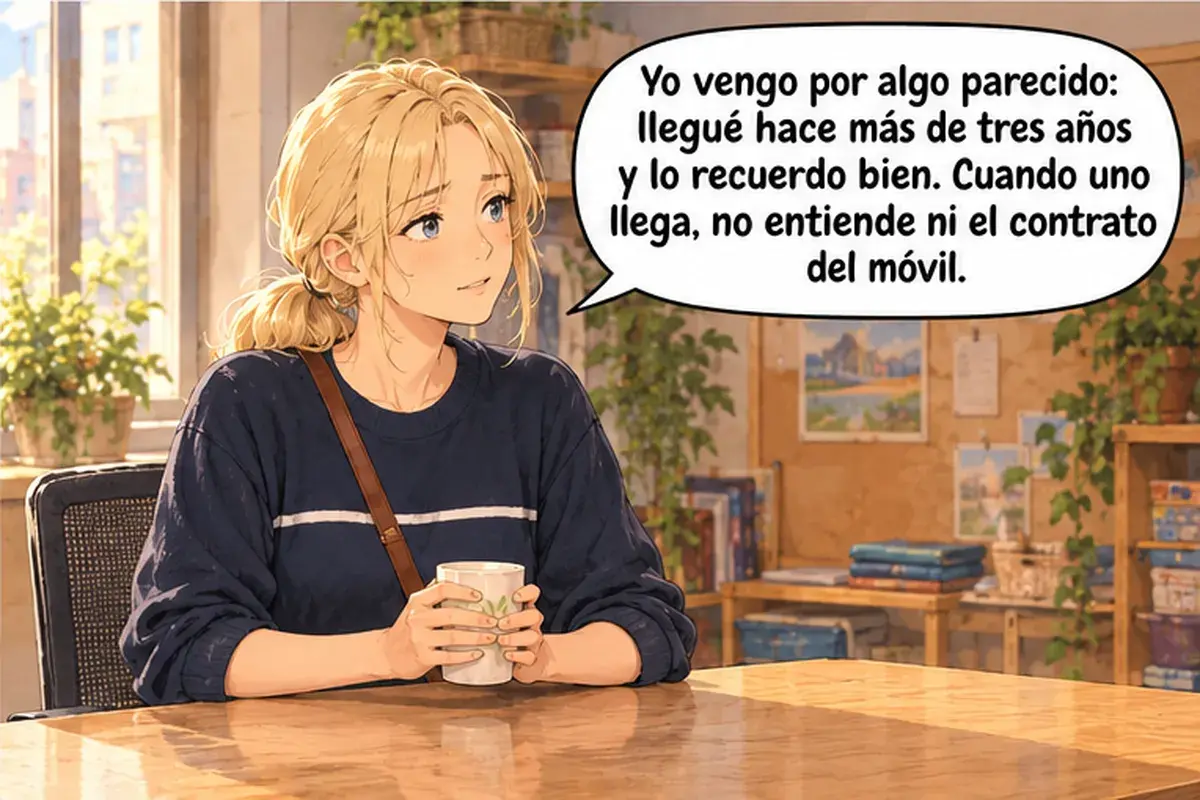
Yo vengo por algo parecido: llegué hace más de tres años y lo recuerdo bien. Cuando uno llega, no entiende ni el contrato del móvil.
I'm here for a similar reason: I arrived more than three years ago and I remember it well. When you arrive, you don't even understand your cell phone contract.

- Teresa
Justo eso. Yo me ocupo de orientar con los papeles; tú, de la acogida: saludas, ofreces un café y escuchas.
Exactly. I take care of guiding people through the paperwork; you take care of the welcome: you say hello, offer a coffee and listen.

- Ana
¿Y qué pasa en un sábado normal? ¿Hay clases?
And what happens on a normal Saturday? Are there classes?
- Teresa
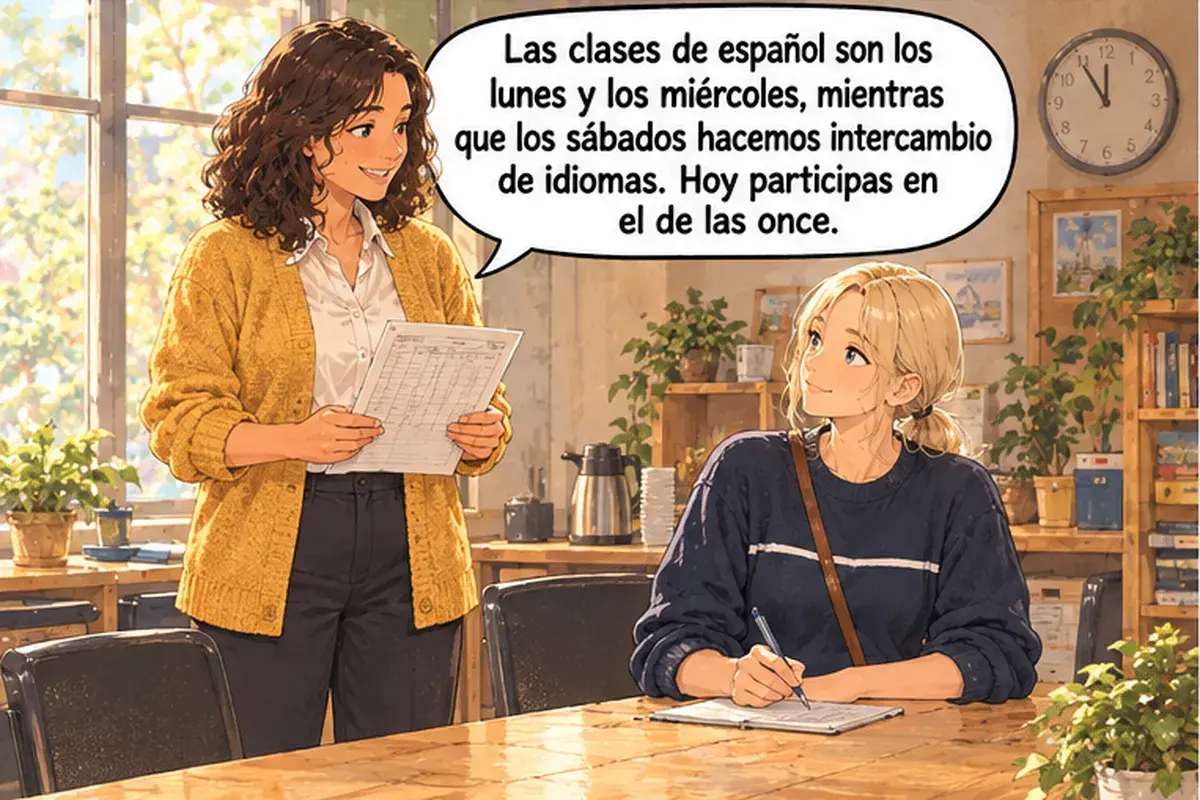
Las clases de español son los lunes y los miércoles, mientras que los sábados hacemos intercambio de idiomas. Hoy participas en el de las once.
The Spanish classes are on Mondays and Wednesdays, whereas on Saturdays we do a language exchange. Today you're taking part in the eleven o'clock one.
- Ana
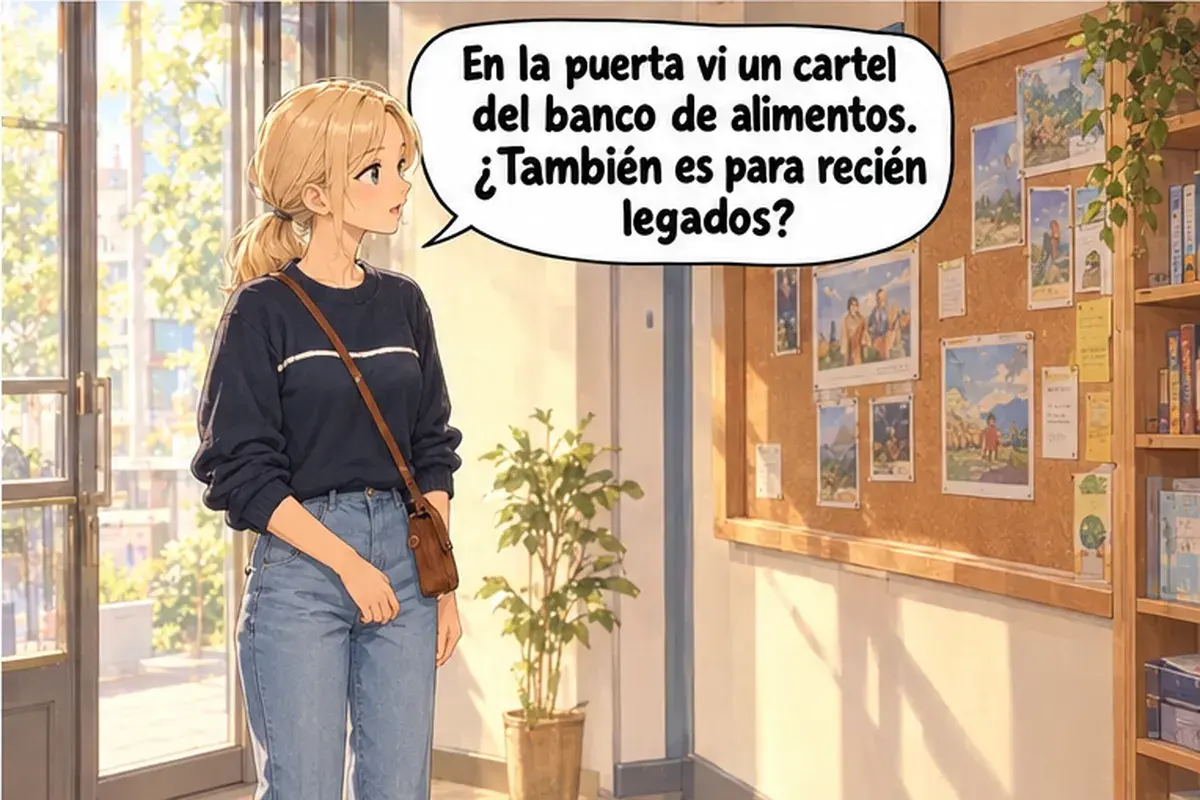
En la puerta vi un cartel del banco de alimentos. ¿También es para recién llegados?
I saw a food bank poster on the door. Is that for newcomers too?
- Teresa
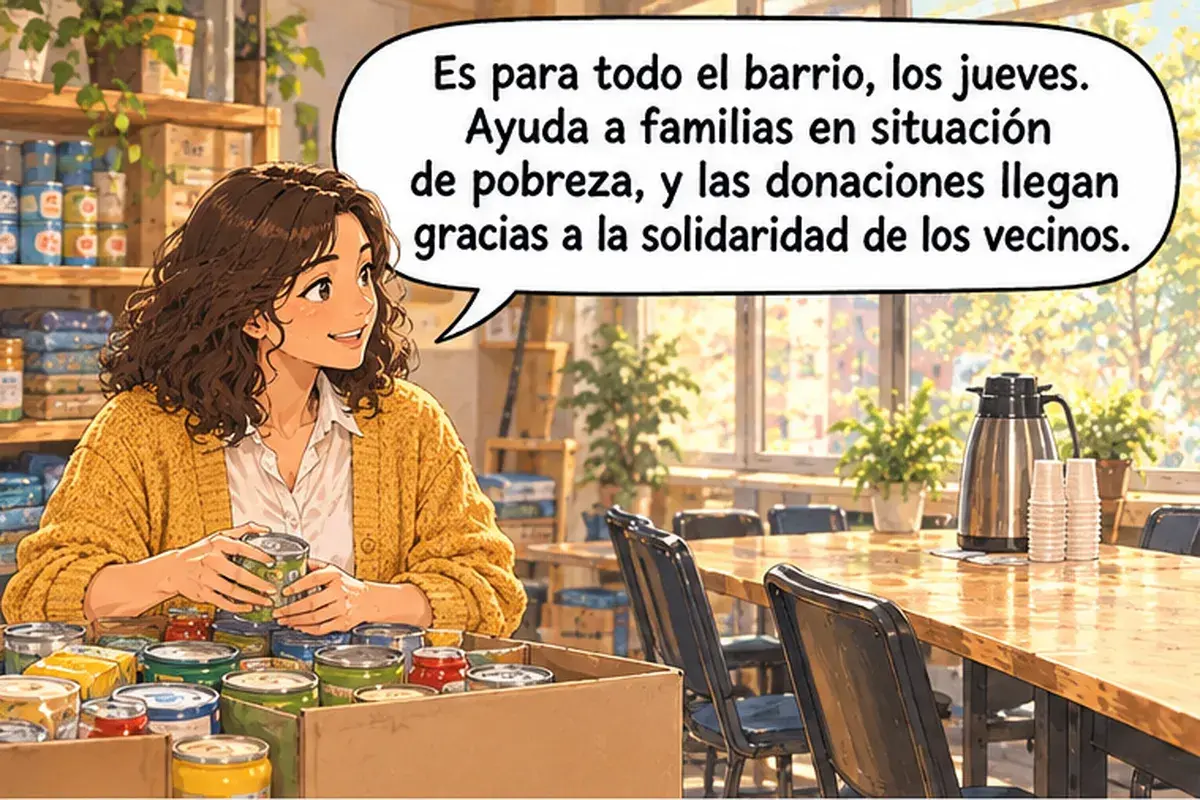
Es para todo el barrio, los jueves. Ayuda a familias en situación de pobreza, y las donaciones llegan gracias a la solidaridad de los vecinos.
It's for the whole neighborhood, on Thursdays. It helps families living in poverty, and the donations come in thanks to the neighbors' solidarity.

- Ana
No lo sabía. ¿Y qué necesita la gente que viene hoy?
I didn't know that. And what do the people coming today need?
- Teresa
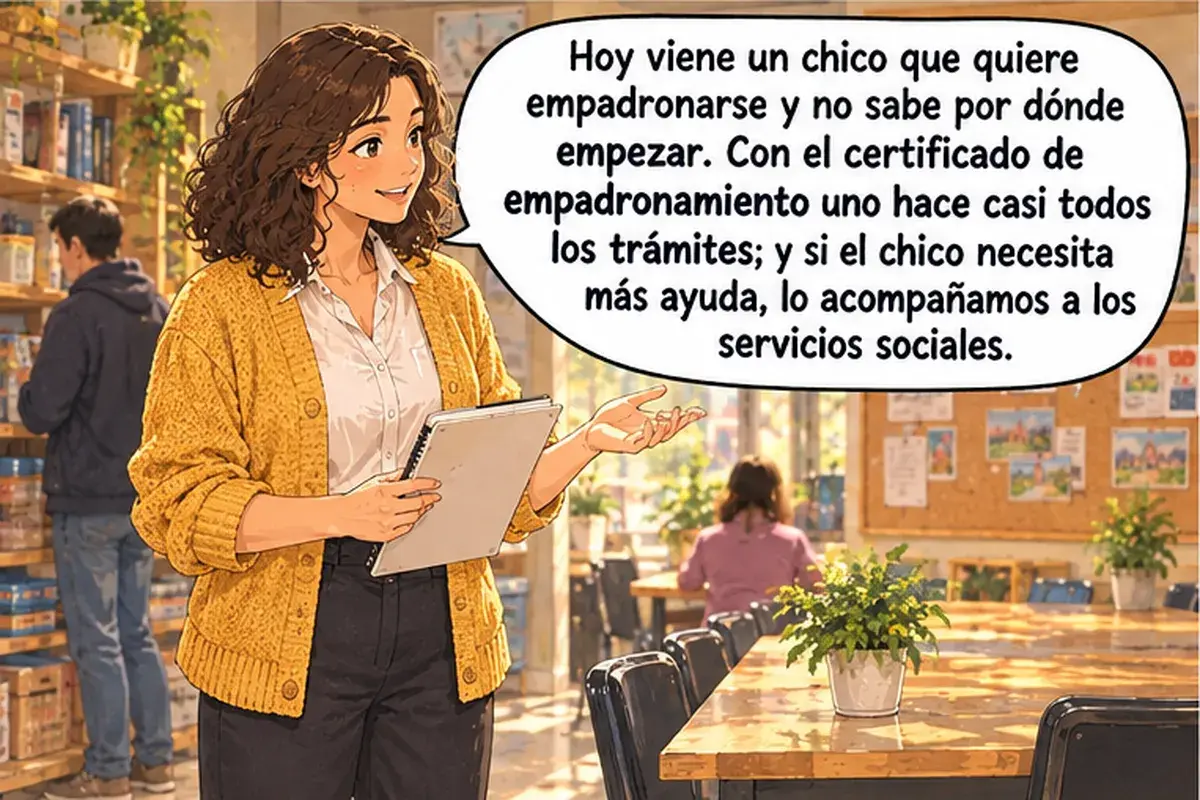
Hoy viene un chico que quiere empadronarse y no sabe por dónde empezar. Con el certificado de empadronamiento uno hace casi todos los trámites; y si el chico necesita más ayuda, lo acompañamos a los servicios sociales.
Today a guy is coming who wants to register his address and doesn't know where to start. With the address registration certificate, you handle almost all your paperwork; and if he needs more help, we go with him to social services.
- Ana
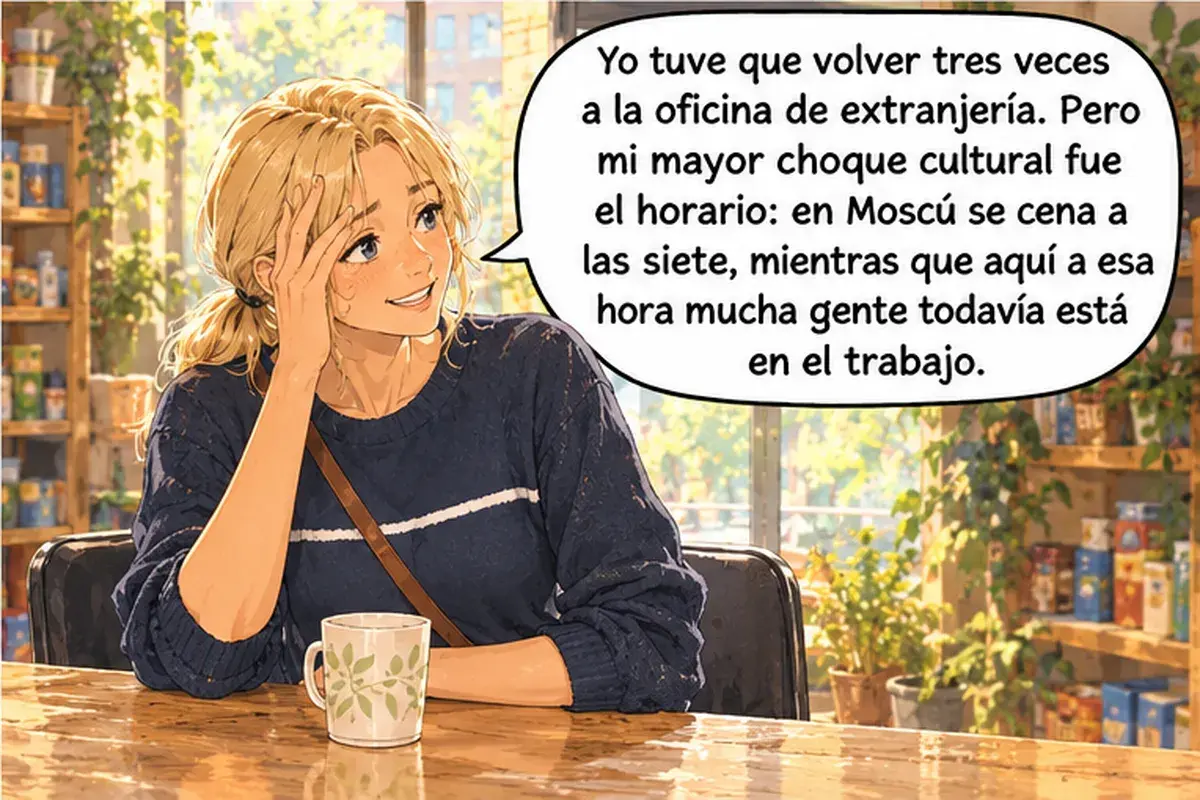
Yo tuve que volver tres veces a la oficina de extranjería. Pero mi mayor choque cultural fue el horario: en mi país se cena a las siete, mientras que aquí a esa hora mucha gente todavía está en el trabajo.
I had to go back to the immigration office three times. But my biggest culture shock was the schedule: in my country people have dinner at seven, whereas here a lot of people are still at work at that time.

- Teresa
Eso es lo que contamos a los recién llegados: cuando uno llega, lo difícil no es el papel, es no saber qué es normal. ¿Te animas a contárselo hoy al chico?
That's what we tell the newcomers: when you arrive, the hard part isn't the paperwork, it's not knowing what's normal. Are you up for telling the guy about it today?

- Ana
Me animo. Pero antes, ¿me enseñas dónde está el café?
I'm up for it. But first, will you show me where the coffee is?
Grammar for this text
General "you". Cuando uno llega, no entiende ni el contrato del móvil — here uno doesn't mean "one person" but "anyone, me included". The verb is in the él form: llega, entiende; the same in uno hace casi todos los trámites. People talk like this about things many of us know firsthand. The full rule is in the unit's grammar.
Two sides. Las clases de español son los lunes y los miércoles, mientras que los sábados hacemos intercambio de idiomas — mientras que ("whereas") goes between the two parts you compare. The comma before it is the usual one.
Me pongo en el lugar de los que llegan — ponerse en el lugar de alguien — "to put yourself in someone's shoes"; los que llegan — "the people who arrive".
¿Cuánto tiempo llevas de voluntaria? — llevar + time: how long you've been doing something, "how long have you been a volunteer?"
Local terms. Sin ánimo de lucro — the official way to say "nonprofit". Empadronarse — to register your address at city hall; the certificado de empadronamiento proves it, and you need it for almost all paperwork. Servicios sociales — the city hall department where people go for help and advice. Banco de alimentos — a food bank: it collects food and gives it out to everyone in the neighborhood, not only to newcomers.
Words and grammar of the unit: Help newcomers settle in.
Learn the words from the texts with flashcards
In the app, you can tap any word in a text to see its translation, forms and examples, and new words stick with flashcards. 15 minutes a day.
Start for freeEverything is open for free. No card needed to sign up.