

Spanish dialogue with translation · A2 · 16 lines
La primera tortilla de Ana Ana's first tortilla
Comic · 16 panels
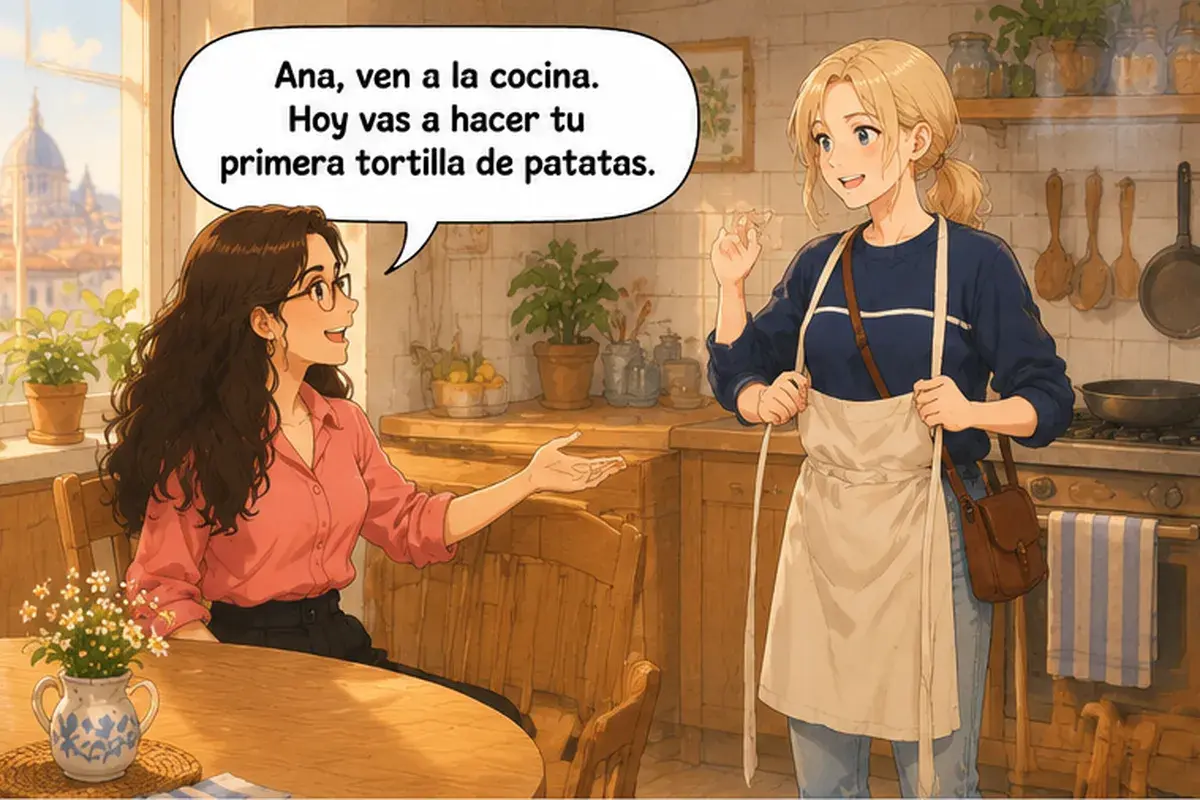
- Lucía
Ana, ven a la cocina. Hoy vas a hacer tu primera tortilla de patatas.
Ana, come to the kitchen. Today you're going to make your first Spanish omelet.
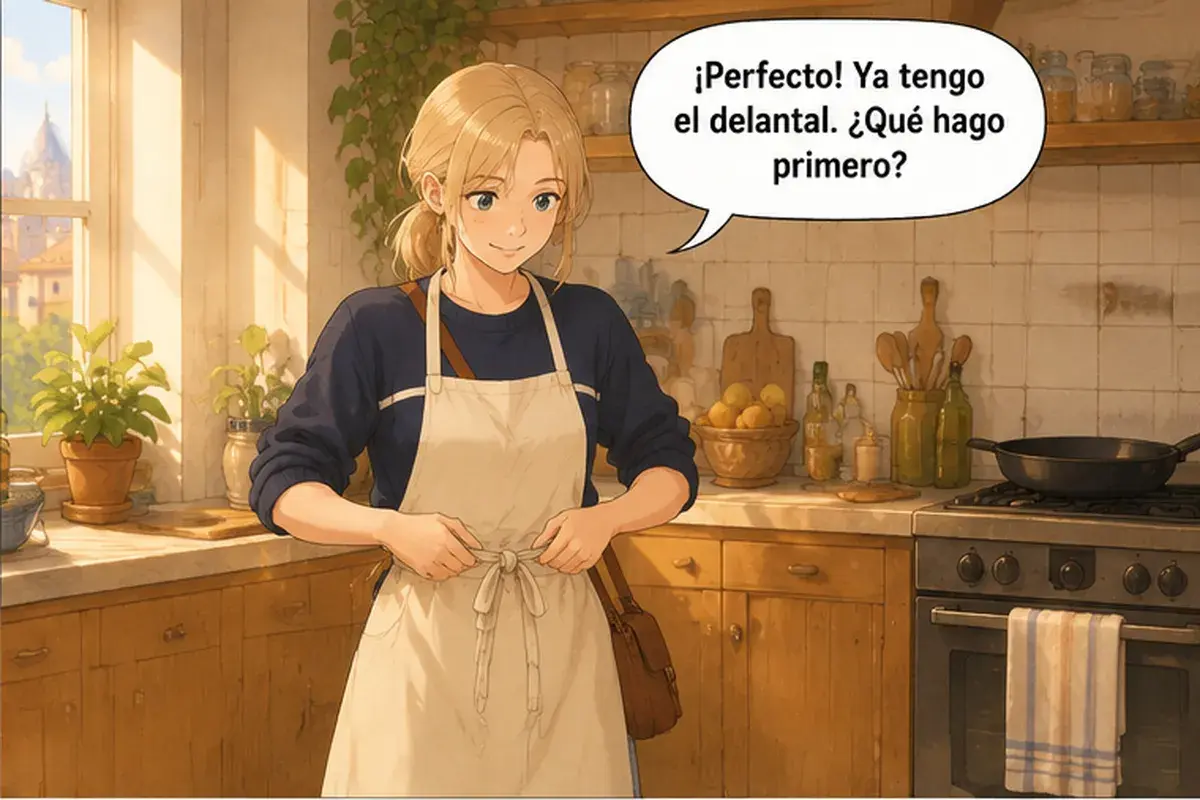
- Ana
¡Perfecto! Ya tengo el delantal. ¿Qué hago primero?
Perfect! I already have the apron. What do I do first?
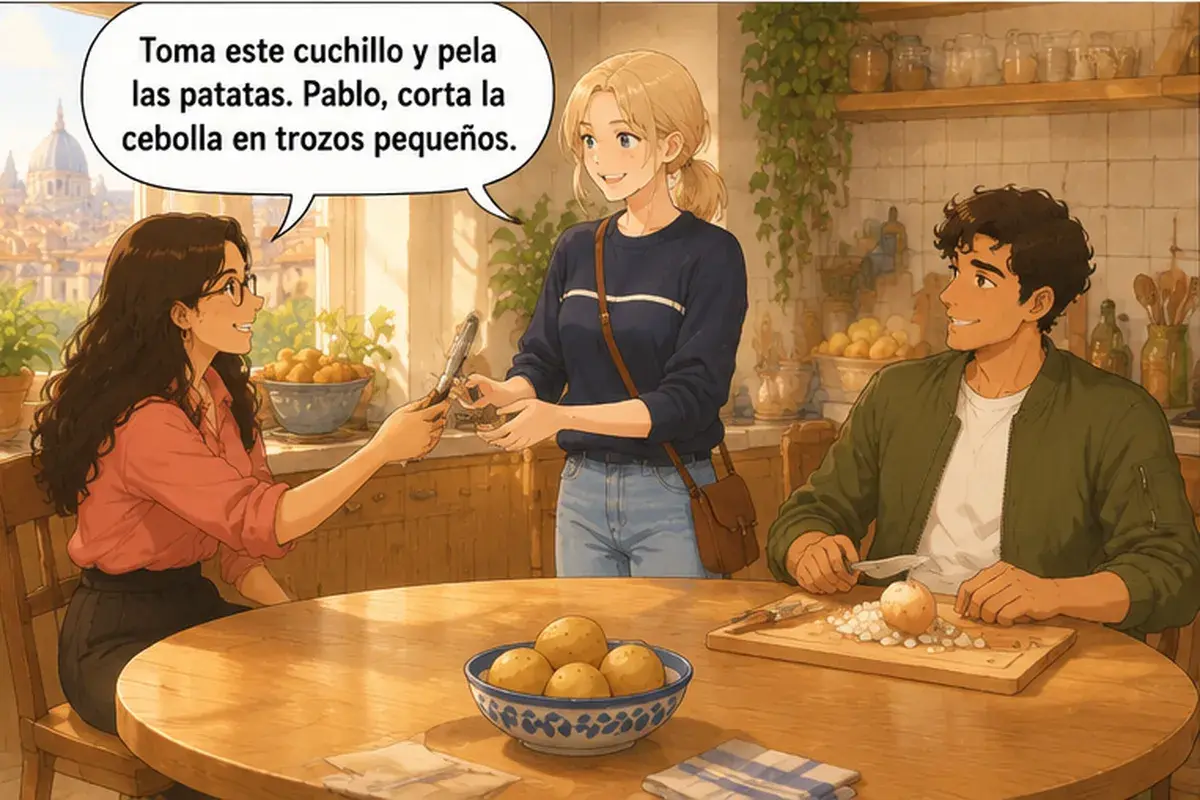
- Lucía
Toma este cuchillo y pela las patatas. Pablo, corta la cebolla en trozos pequeños.
Take this knife and peel the potatoes. Pablo, cut the onion into small pieces.
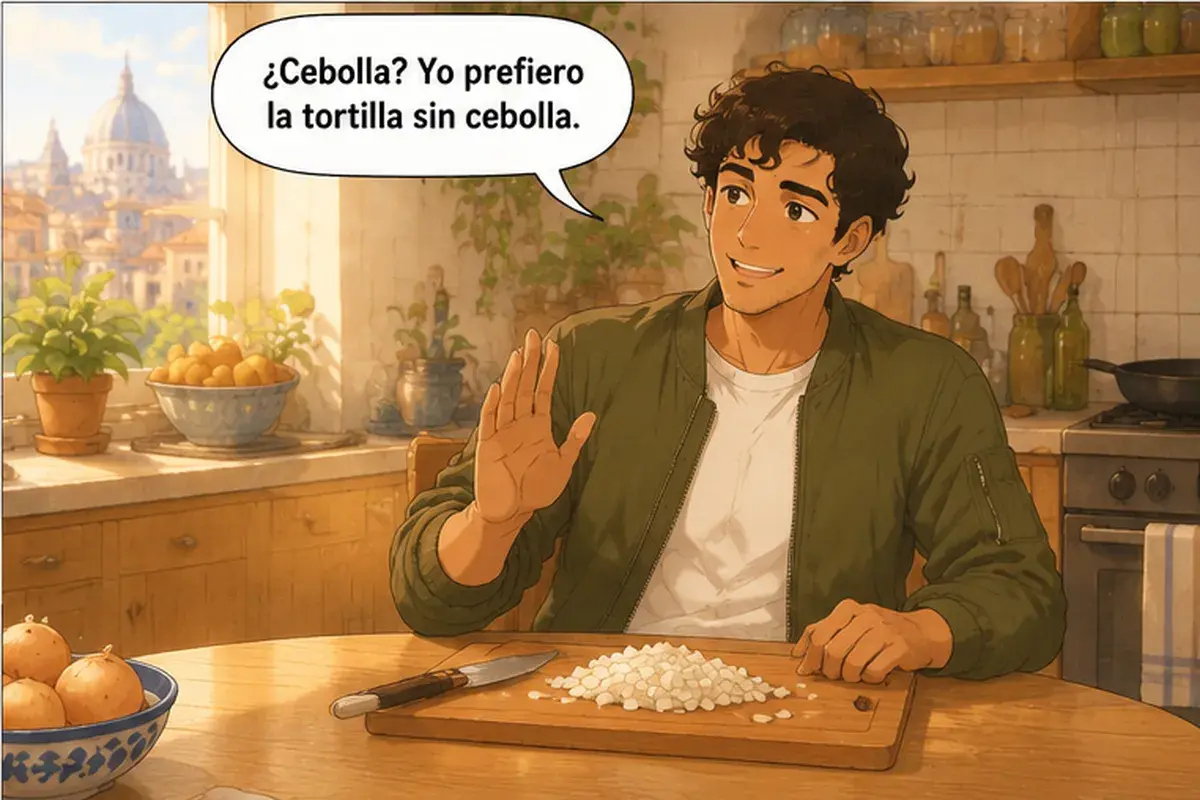
- Pablo
¿Cebolla? Yo prefiero la tortilla sin cebolla.
Onion? I prefer tortilla without onion.
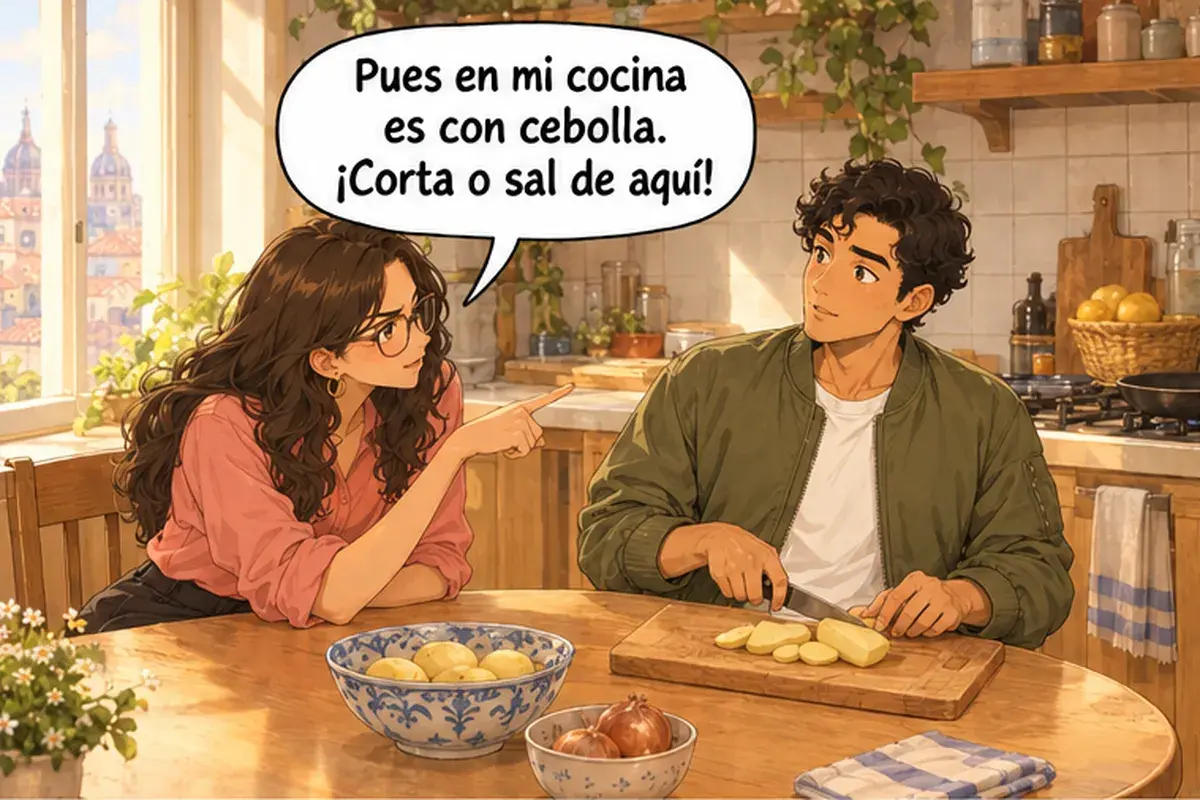
- Lucía
Pues en mi cocina es con cebolla. ¡Corta o sal de aquí!
Well, in my kitchen it's made with onion. Cut or get out of here!
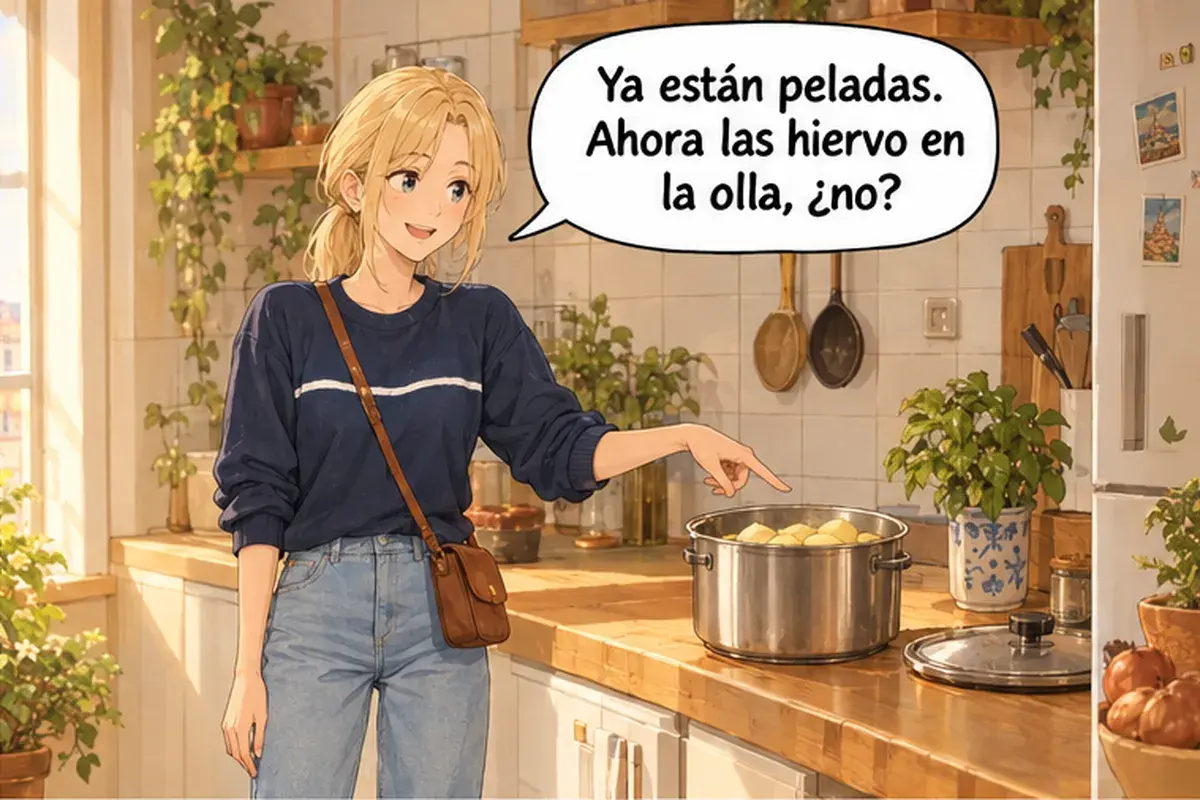
- Ana
Ya están peladas. Ahora las hiervo en la olla, ¿no?
They're already peeled. Now I boil them in the pot, right?
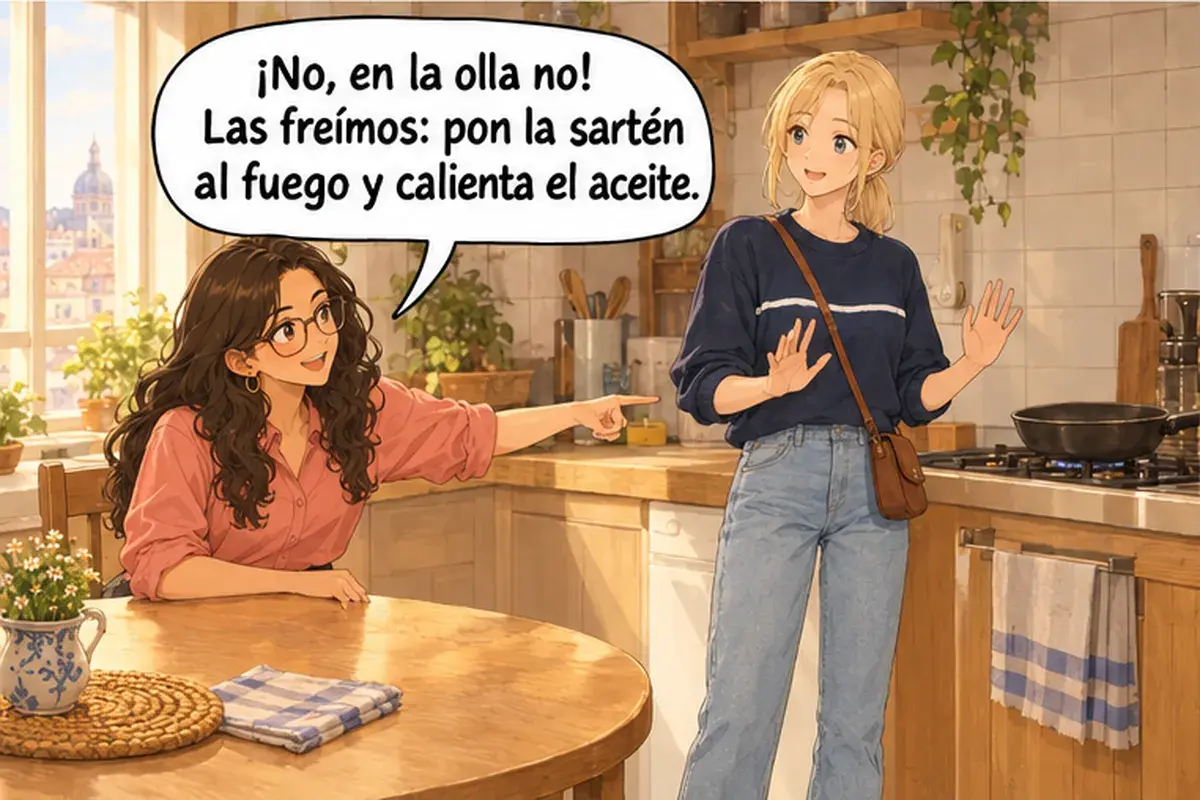
- Lucía
¡No, en la olla no! Las freímos: pon la sartén al fuego y calienta el aceite.
No, not in the pot! We fry them: put the frying pan on the heat and heat the oil.
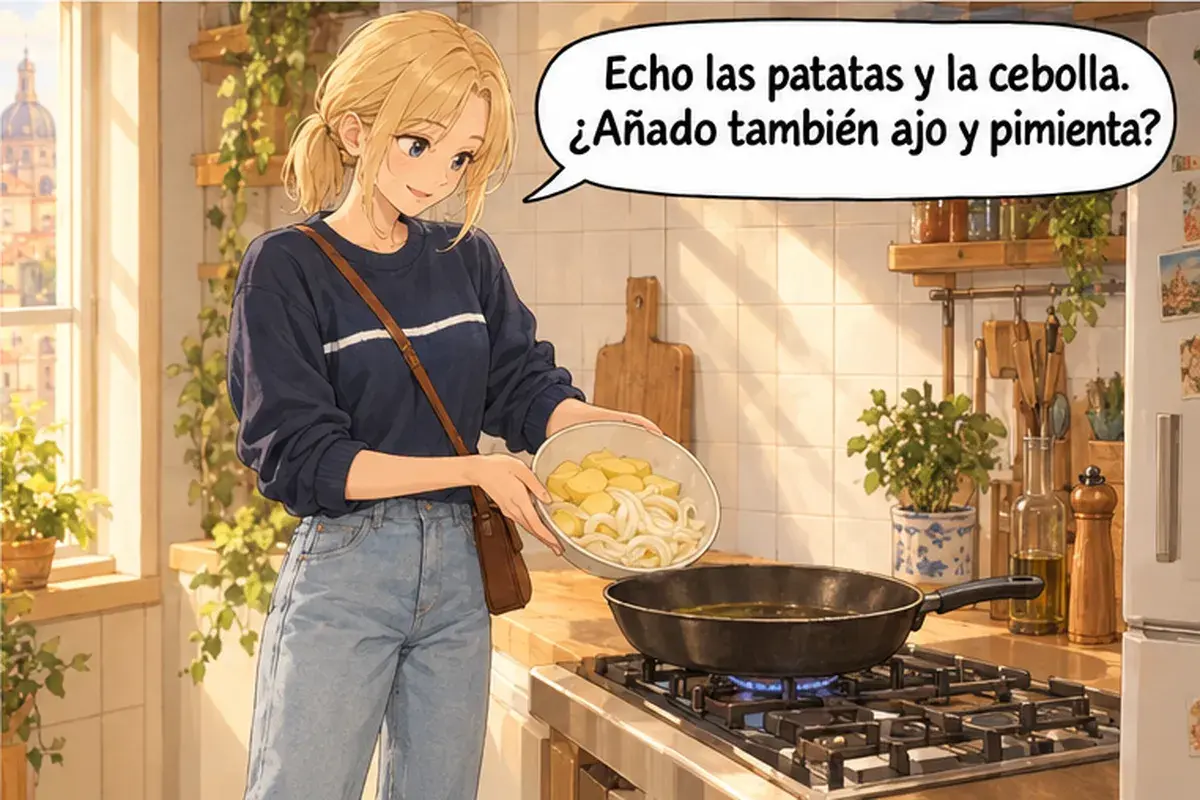
- Ana
Echo las patatas y la cebolla. ¿Añado también ajo y pimienta?
I'm putting in the potatoes and the onion. Should I add garlic and pepper too?
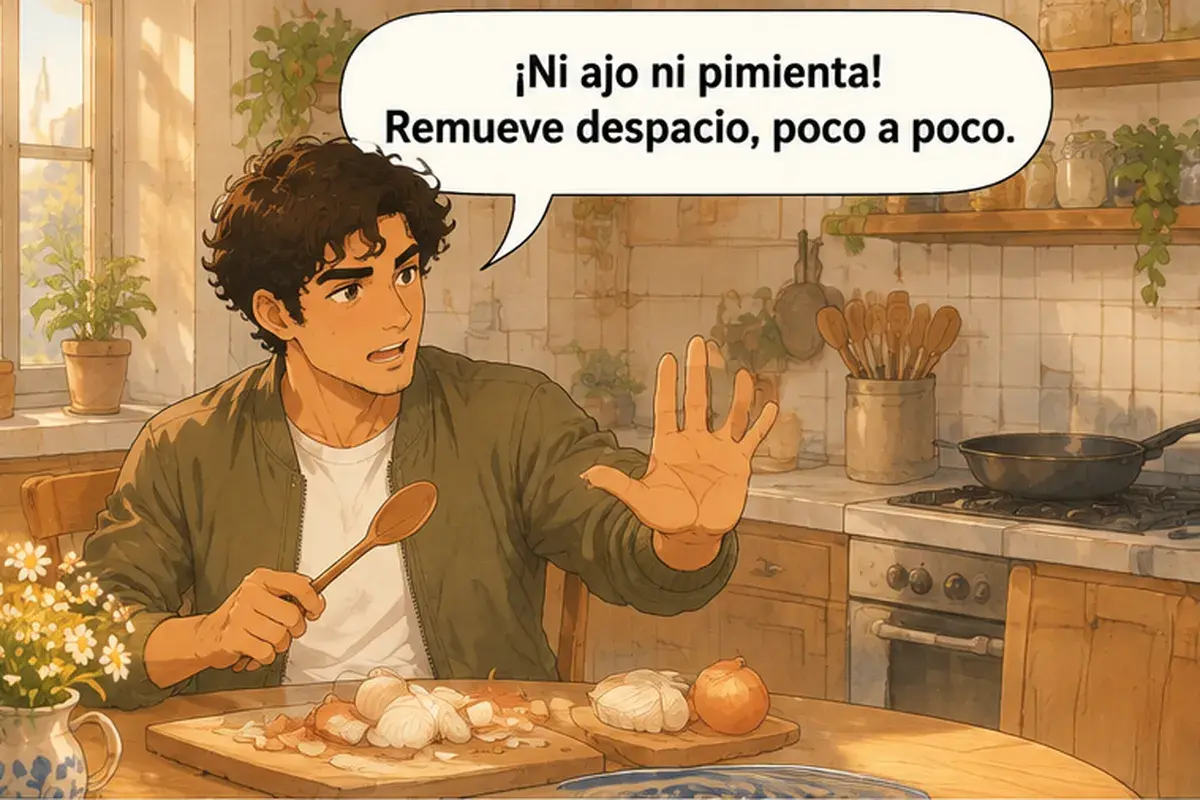
- Pablo
¡Ni ajo ni pimienta! Remueve despacio, poco a poco.
Neither garlic nor pepper! Stir slowly, little by little.
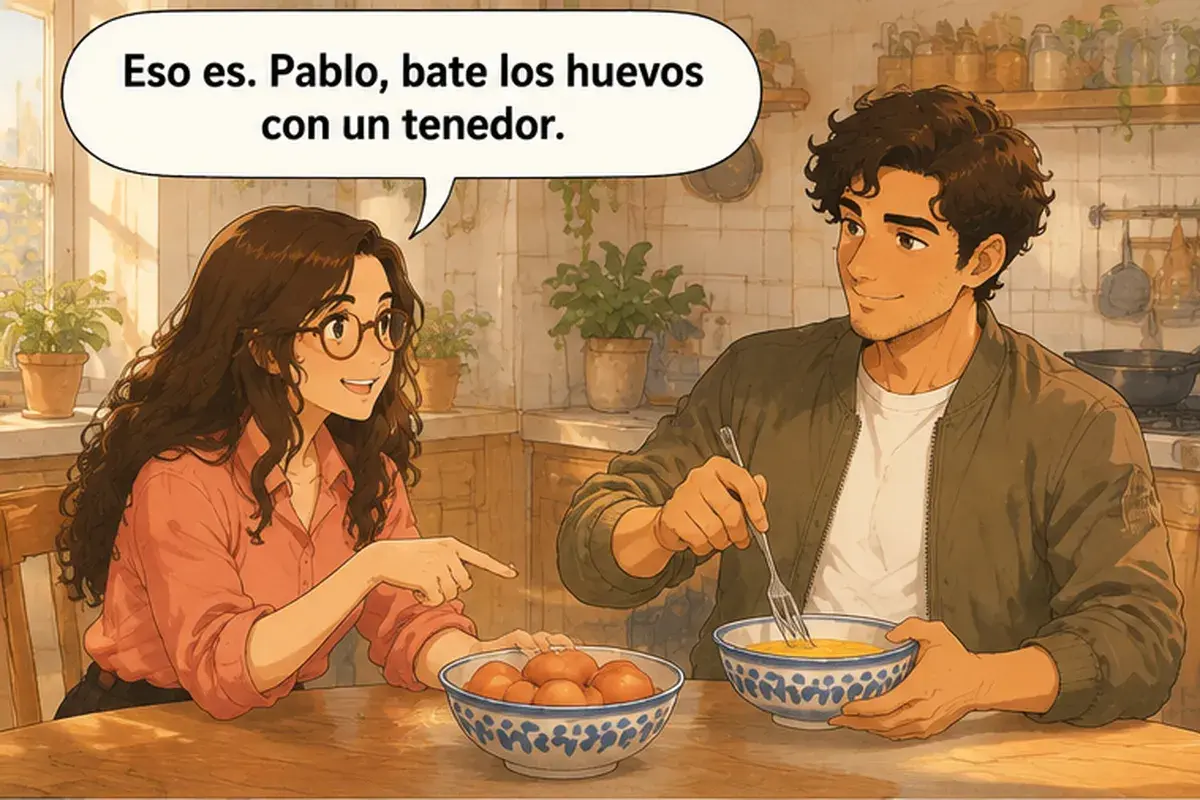
- Lucía
Eso es. Pablo, bate los huevos con un tenedor.
That's it. Pablo, beat the eggs with a fork.
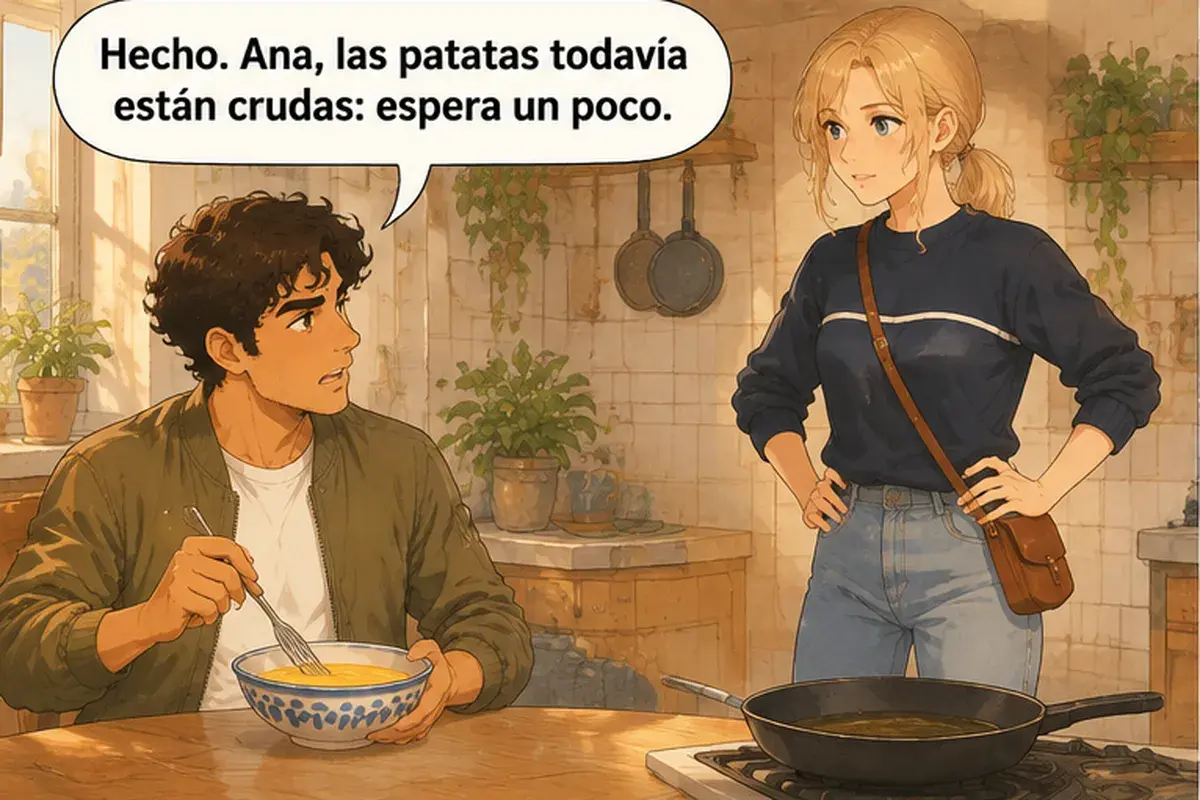
- Pablo
Hecho. Ana, las patatas todavía están crudas: espera un poco.
Done. Ana, the potatoes are still raw: wait a little.
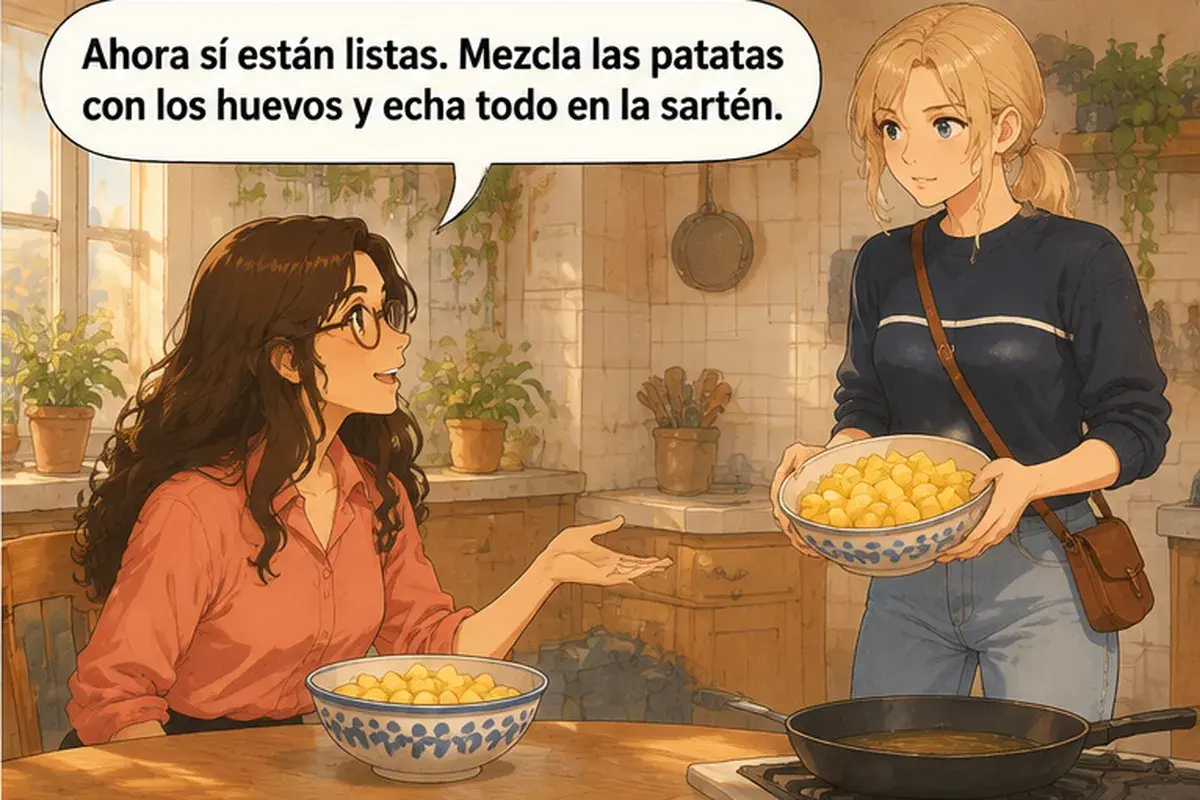
- Lucía
Ahora sí están listas. Mezcla las patatas con los huevos y echa todo en la sartén.
Now they're ready. Mix the potatoes with the eggs and pour everything into the frying pan.
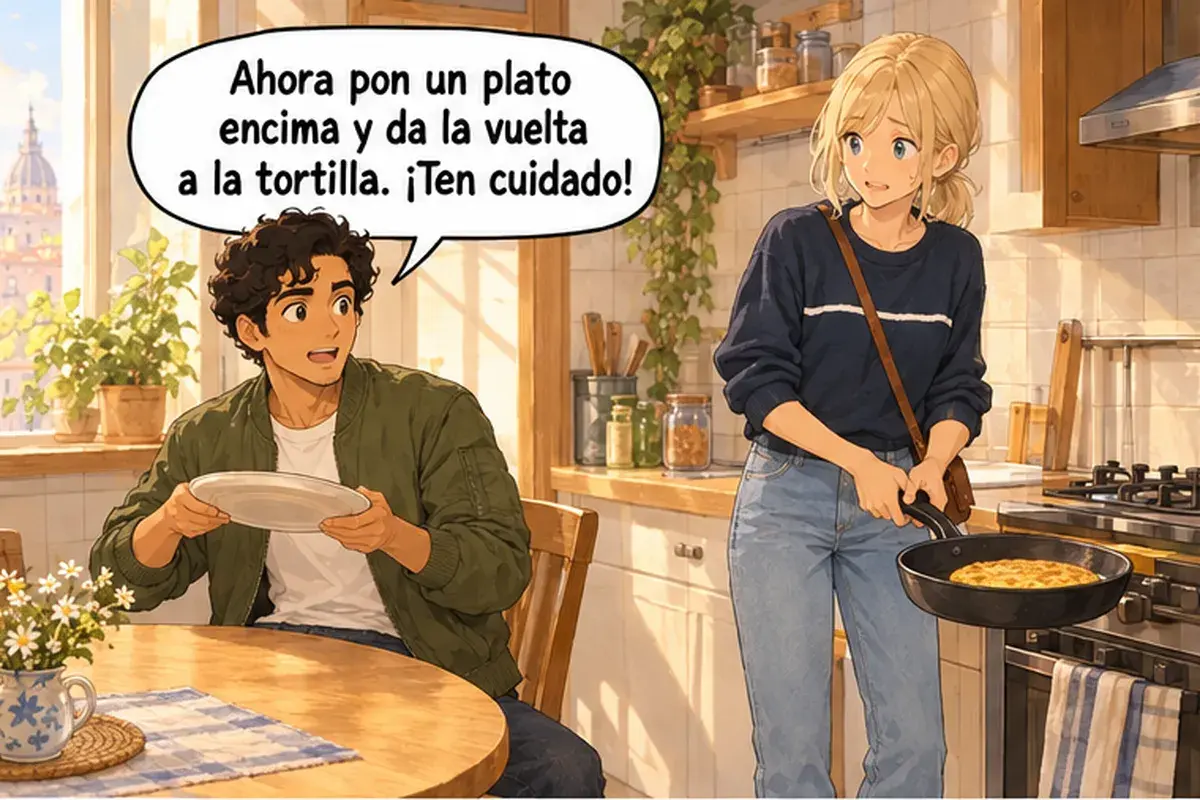
- Pablo
Ahora pon un plato encima y da la vuelta a la tortilla. ¡Ten cuidado!
Now put a plate on top and flip the tortilla. Be careful!
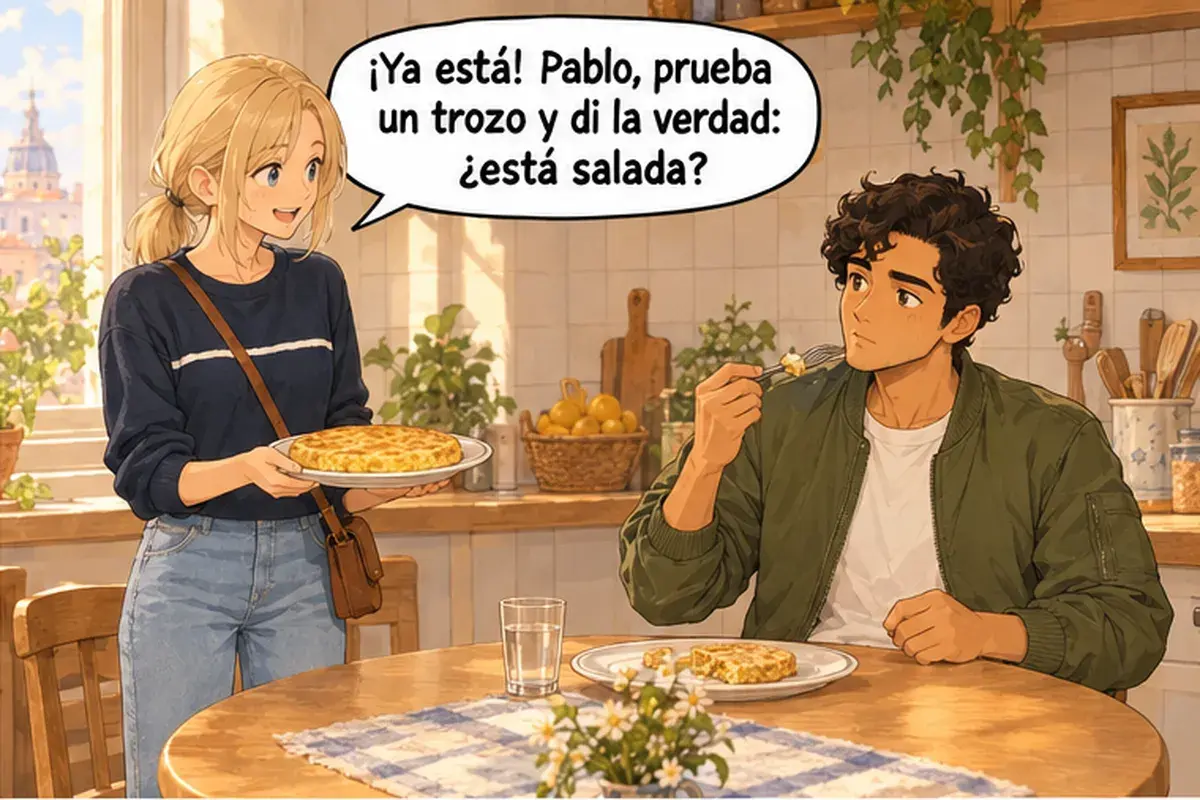
- Ana
¡Ya está! Pablo, prueba un trozo y di la verdad: ¿está salada?
All done! Pablo, try a piece and tell the truth: is it salty?
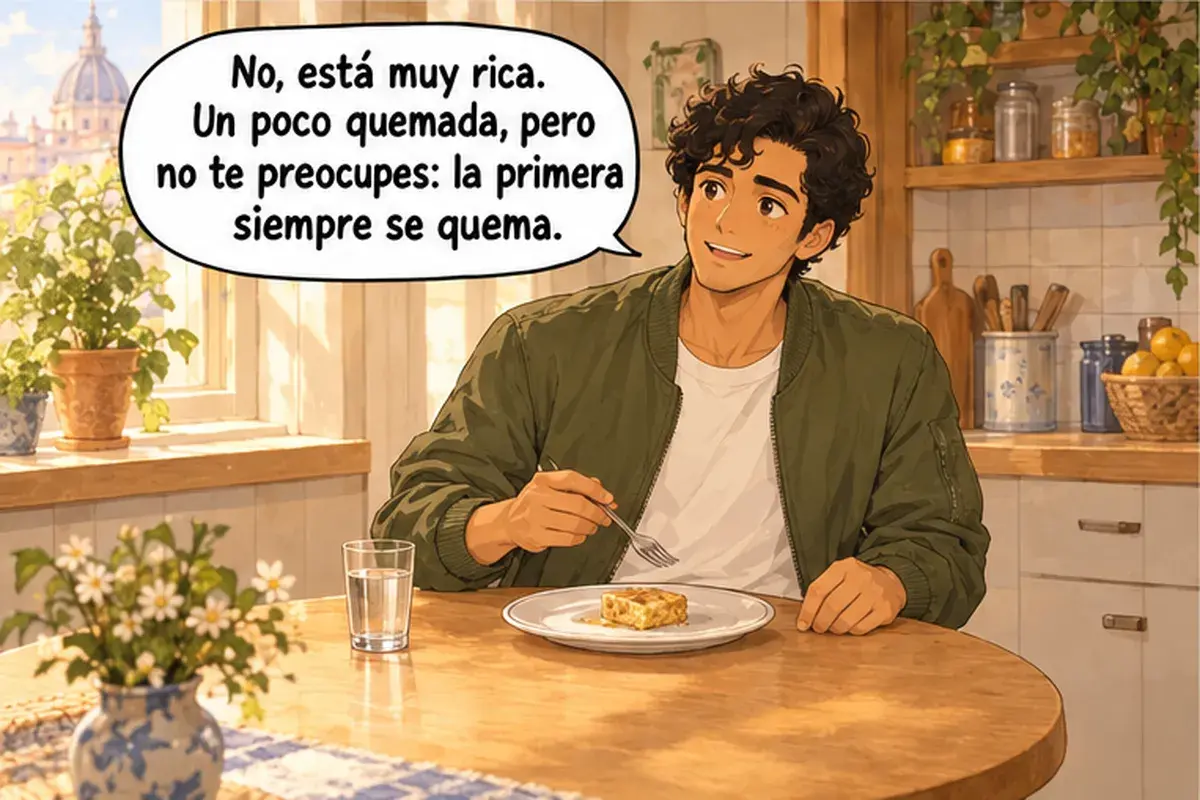
- Pablo
No, está muy rica. Un poco quemada, pero no te preocupes: la primera siempre se quema.
No, it's delicious. A little burned, but don't worry: the first one always burns.
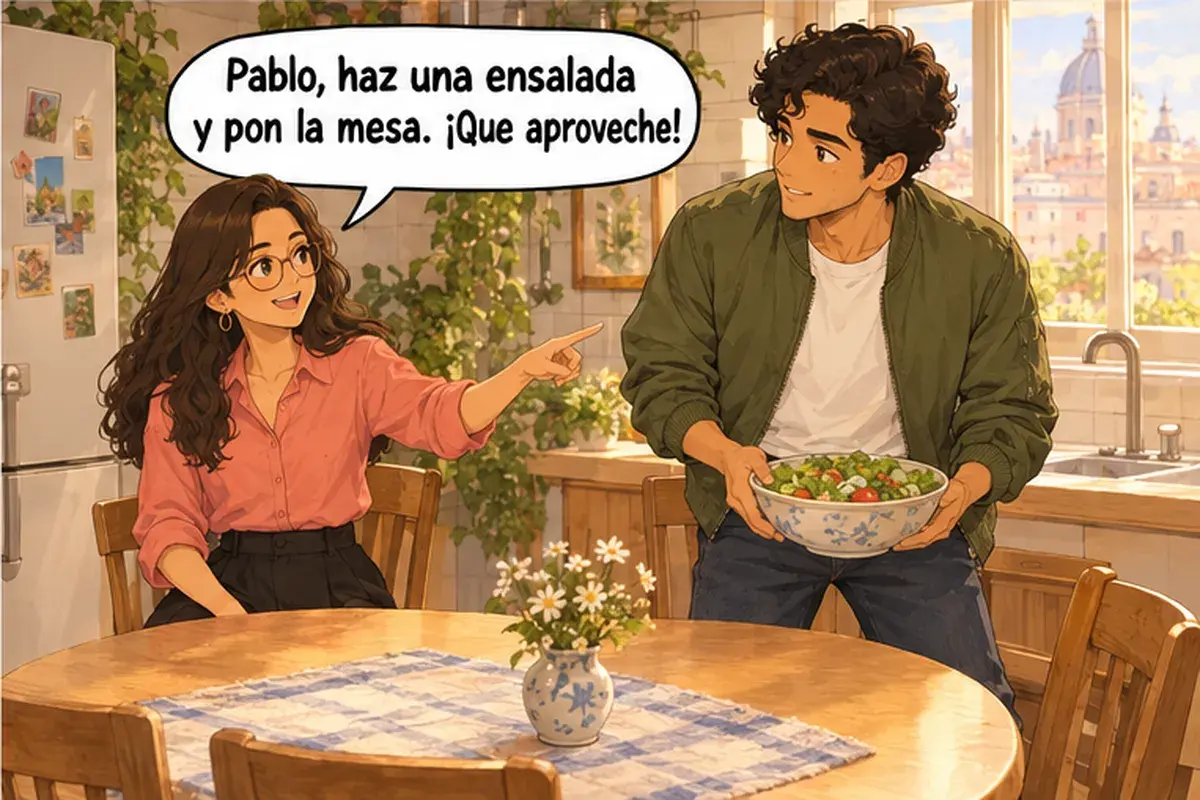
- Lucía
Pablo, haz una ensalada y pon la mesa. ¡Que aproveche!
Pablo, make a salad and set the table. Enjoy your meal!
Grammar for this text
Commands to a friend. Almost every line has a tú command: toma, pela, corta, calienta, remueve, bate, espera, mezcla, echa, prueba. It's the él / ella form of the present tense: él corta → ¡corta! All six short special commands are here too: ven (come here), sal (get out), pon (put), ten cuidado (be careful), di (tell), haz (make).
"Should I…?" is the yo form as a question: ¿Qué hago primero? (What do I do first?), ¿Añado también ajo y pimienta? (Should I add garlic and pepper too?)
Las hiervo, las freímos: las stands for las patatas (unit 5). Ya están peladas, todavía están crudas, sí están listas: estar + a describing word says what the potatoes are like right now (peeled, raw, ready). The ending -as matches las patatas.
Phrases: da la vuelta a la tortilla (flip the tortilla), pon la mesa (set the table). La primera siempre se quema means "the first one always burns": with se, it burns by itself; nobody burns it.
Short replies: Eso es (that's it), Hecho (done), ¡Ya está! (all done!). No te preocupes and que aproveche are set phrases; the rule comes later.
The "with onion or without" argument is real in Spain.
Words and grammar of the unit: Tell a friend how to cook.
Learn the words from the texts with flashcards
In the app, you can tap any word in a text to see its translation, forms and examples, and new words stick with flashcards. 15 minutes a day.
Start for freeEverything is open for free. No card needed to sign up.