

Spanish story with translation · A2 · 16 lines
Si no remueves, el arroz se quema If you don't stir, the rice burns
Comic · 8 panels
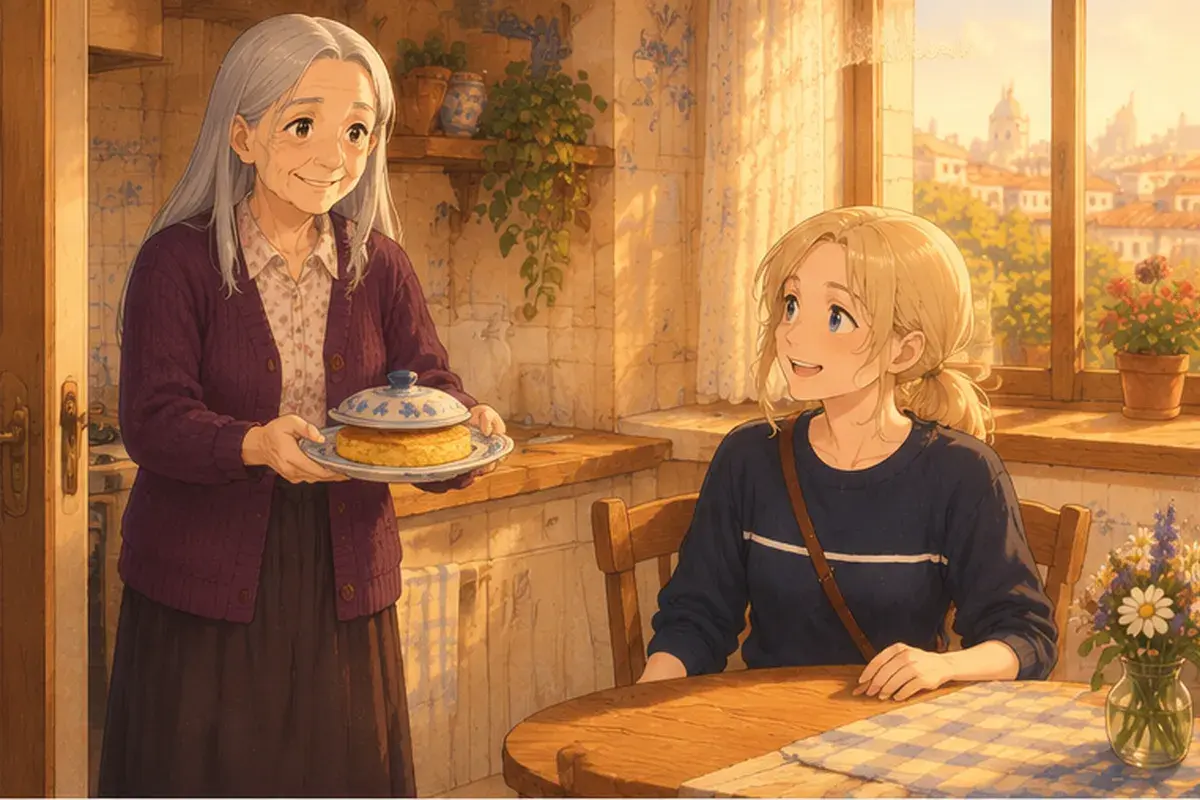
Hola, Ana: soy Carmen, tu vecina del sexto.
Hi, Ana: it's Carmen, your neighbor from the sixth floor.
Gracias por el trozo de tortilla. ¡Está muy rica!
Thanks for the piece of tortilla. It's delicious!

Ahora te doy yo una receta: mi arroz con leche.
Now I'll give you a recipe: my rice pudding.
Es un postre muy fácil. No necesitas horno ni harina: solo una olla grande y una cuchara.
It's a very easy dessert. You don't need an oven or flour: just a big pot and a spoon.
Los ingredientes: un litro de leche, medio vaso de arroz, seis cucharadas de azúcar y un trozo de mantequilla.
The ingredients: a liter of milk, half a glass of rice, six tablespoons of sugar and a piece of butter.
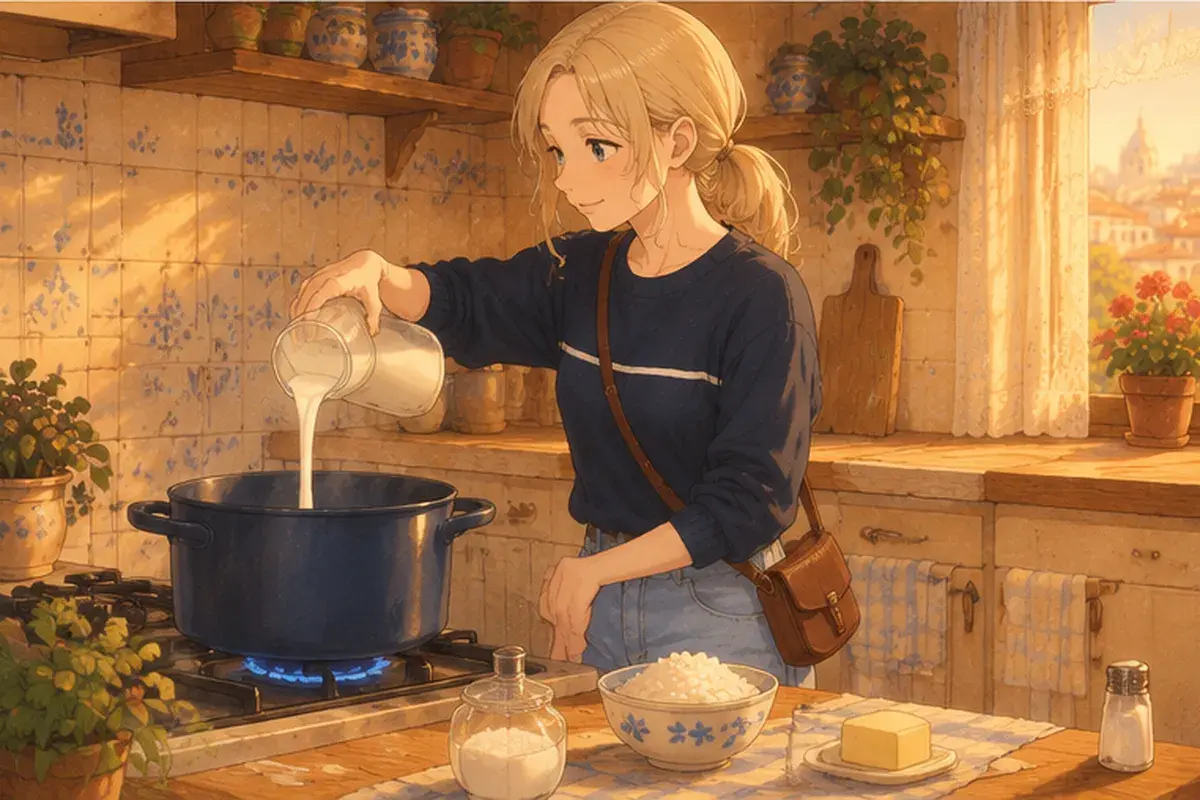
Pon la leche en la olla y enciende el fuego. Espera: la leche tiene que hervir.
Put the milk in the pot and turn on the heat. Wait: the milk has to boil.
Después añade el arroz y una pizca de sal, y baja el fuego.
Then add the rice and a pinch of salt, and turn down the heat.
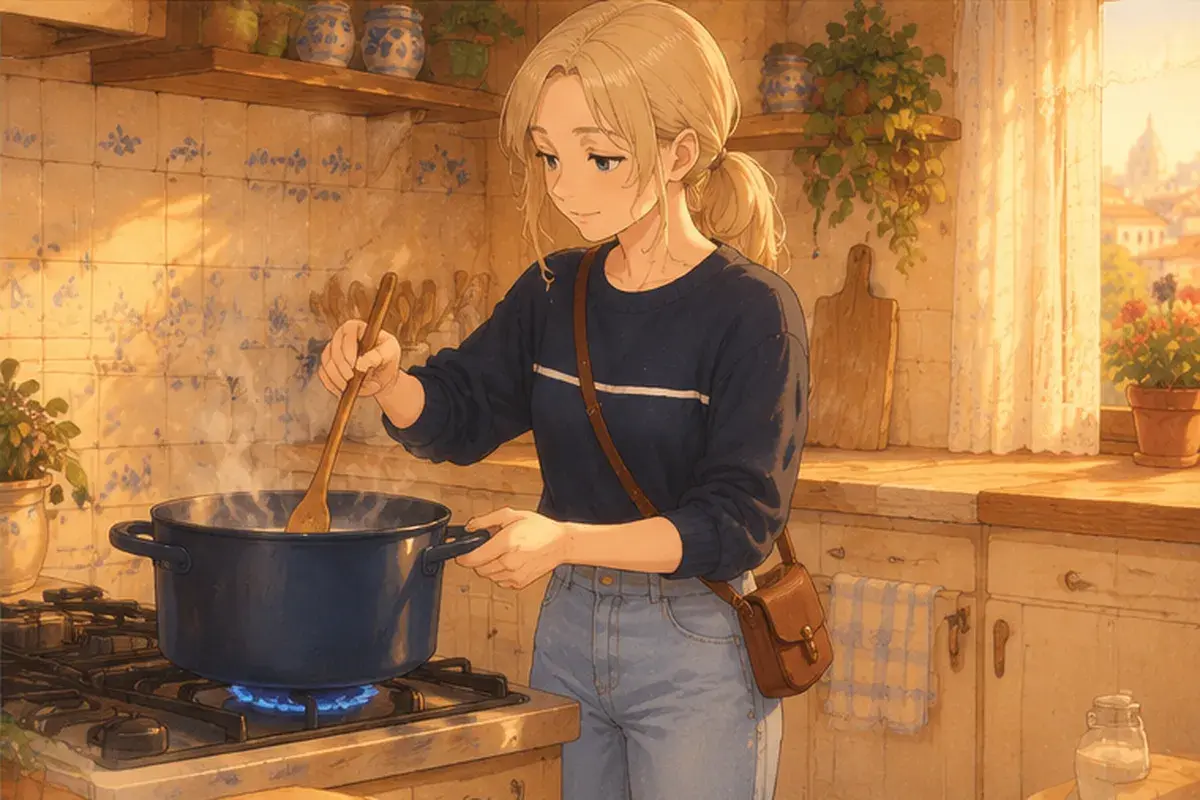
Ahora remueve despacio con la cuchara. Haz todo sin prisa: el arroz necesita cuarenta minutos.
Now stir slowly with the spoon. Do everything without rushing: the rice needs forty minutes.
La olla, sin tapa. Y ten cuidado: si no remueves, el arroz se quema.
No lid on the pot. And be careful: if you don't stir, the rice burns.
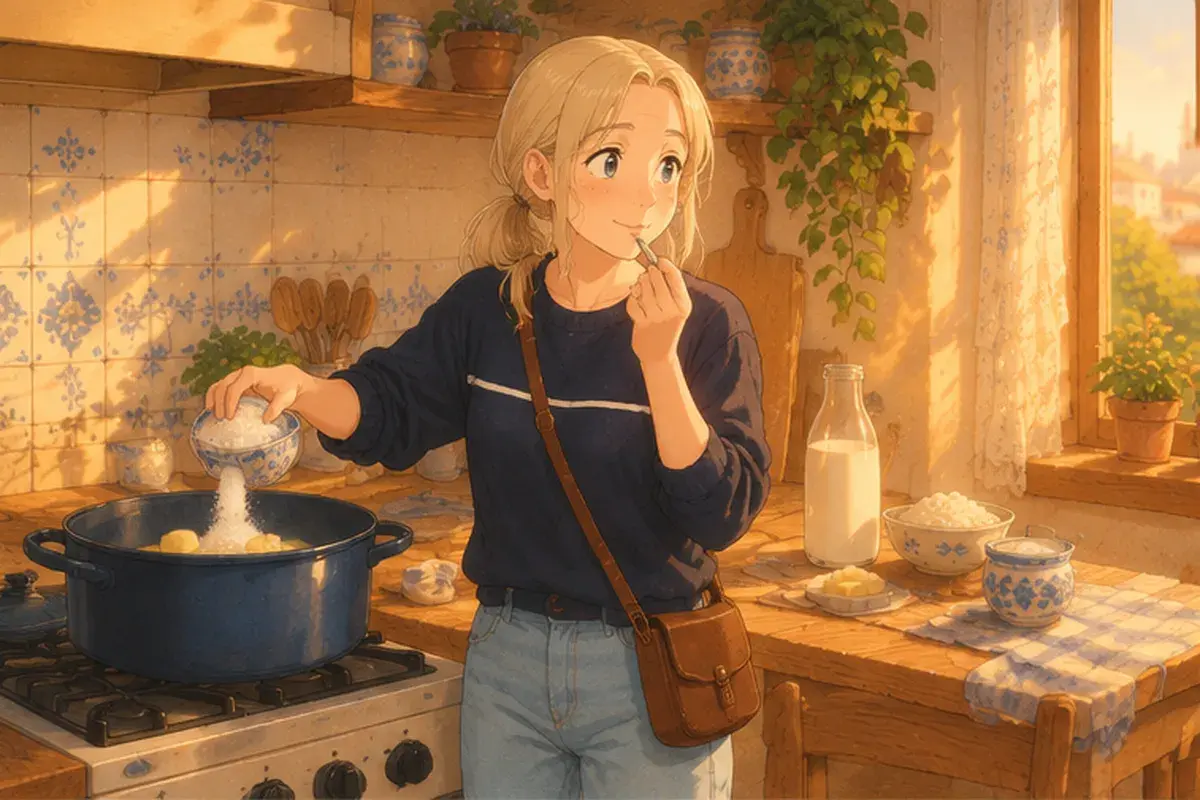
Al final añade el azúcar y la mantequilla y mezcla bien.
At the end, add the sugar and the butter and mix well.
Prueba el arroz: ¿está dulce? ¡Perfecto!
Taste the rice: is it sweet? Perfect!
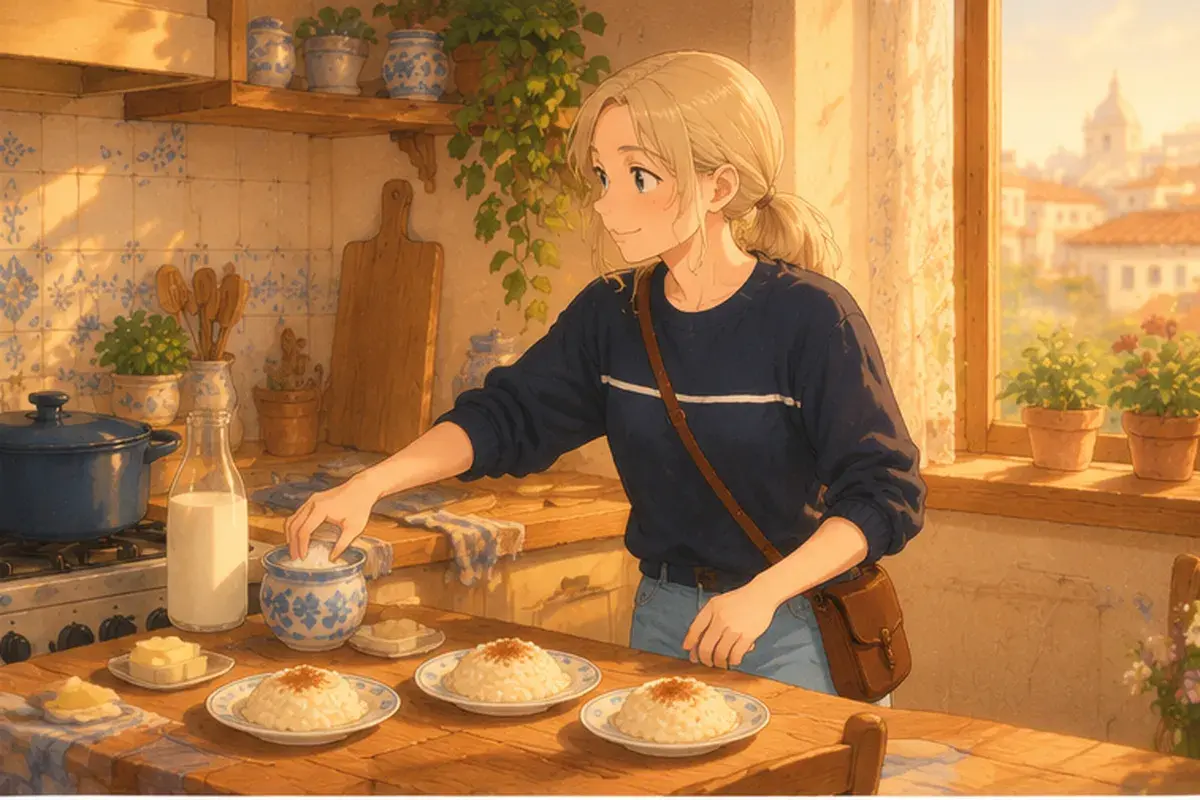
¿No? Echa una cucharada más de azúcar.
No? Put in one more tablespoon of sugar.
Apaga el fuego y pon el arroz en platos pequeños.
Turn off the heat and put the rice into small dishes.
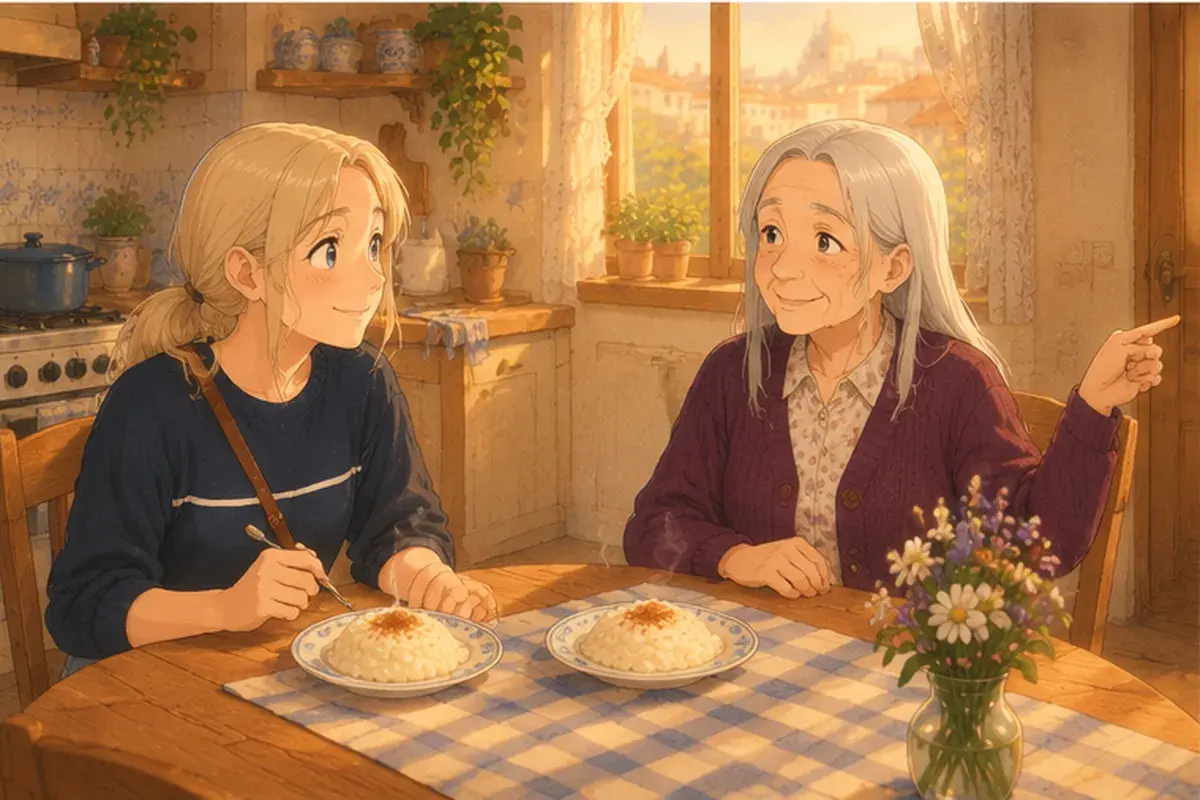
Mi marido lo come caliente. Yo lo prefiero frío, de la nevera.
My husband eats it hot. I prefer it cold, from the fridge.
Si tienes algún problema, llama a mi puerta.
If you have any problems, knock on my door.
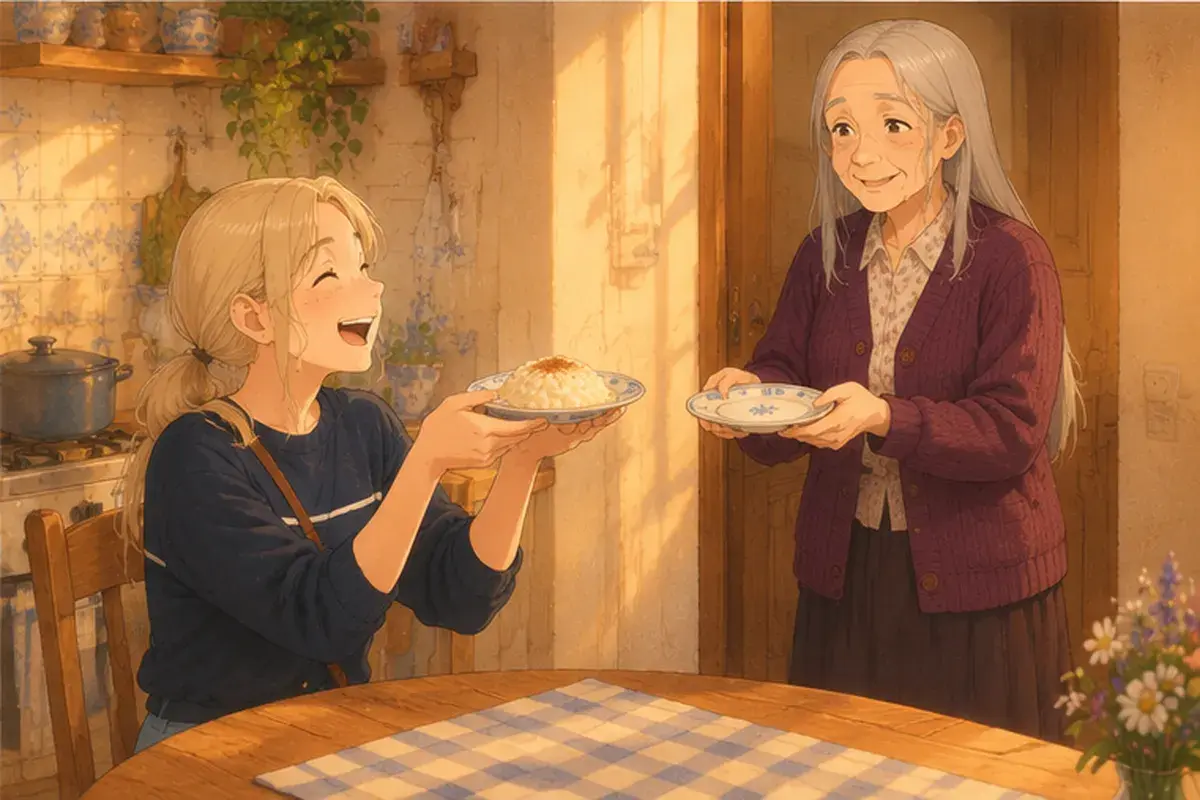
¡Que aproveche! Y trae un plato para mí: quiero probarlo.
Enjoy your meal! And bring a plate for me: I want to try it.
Grammar for this text
A recipe is a list of commands. A note to a friend or a neighbor is written with tú commands: pon, enciende, espera, añade, baja, remueve, haz, mezcla, prueba, echa, apaga, llama, trae. In enciende, remueve, prueba the stem changes the same way as in the present tense. Pon, haz, ten are the short special commands of poner, hacer, tener.
Tiene que hervir: tener que + infinitive, "it has to boil". Si no remueves, el arroz se quema: si + present tense, "if you don't stir, the rice burns".
Lo come, lo prefiero, probarlo: lo stands for el arroz (unit 5); with an infinitive it's attached to the end: probarlo.
Recipe words: baja el fuego (turn down the heat), una cucharada más (one more tablespoon), sin tapa (without a lid), sin prisa (without rushing). In una pizca de sal, sal means "salt", not the command "get out". Llama a mi puerta means "knock on my door": llamar isn't only "to call". Que aproveche is a set phrase; the rule comes later.
Arroz con leche (rice pudding) is a favorite homemade dessert in Spain: rice cooked in milk with sugar.
Words and grammar of the unit: Tell a friend how to cook.
Learn the words from the texts with flashcards
In the app, you can tap any word in a text to see its translation, forms and examples, and new words stick with flashcards. 15 minutes a day.
Start for freeEverything is open for free. No card needed to sign up.