
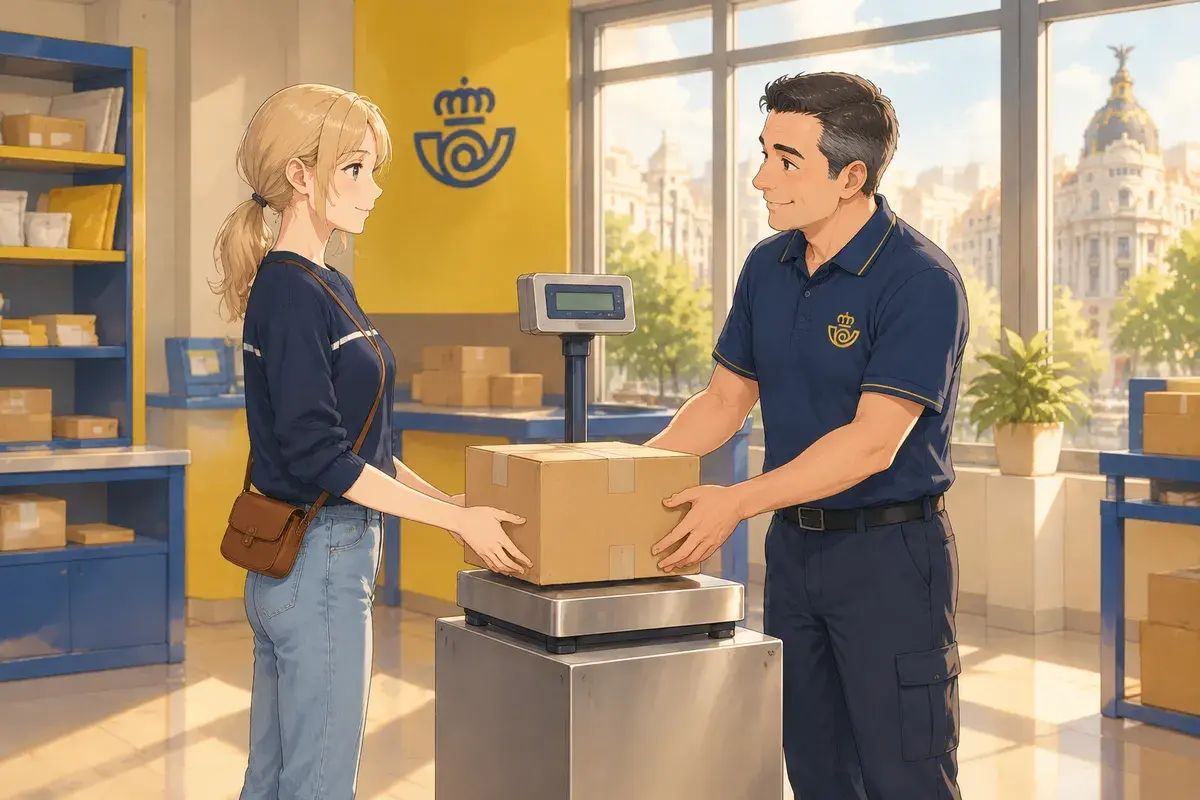
Spanish dialogue with translation · A2 · 16 lines
Quiero enviar un paquete a Madrid I want to send a package to Madrid
Comic · 16 panels
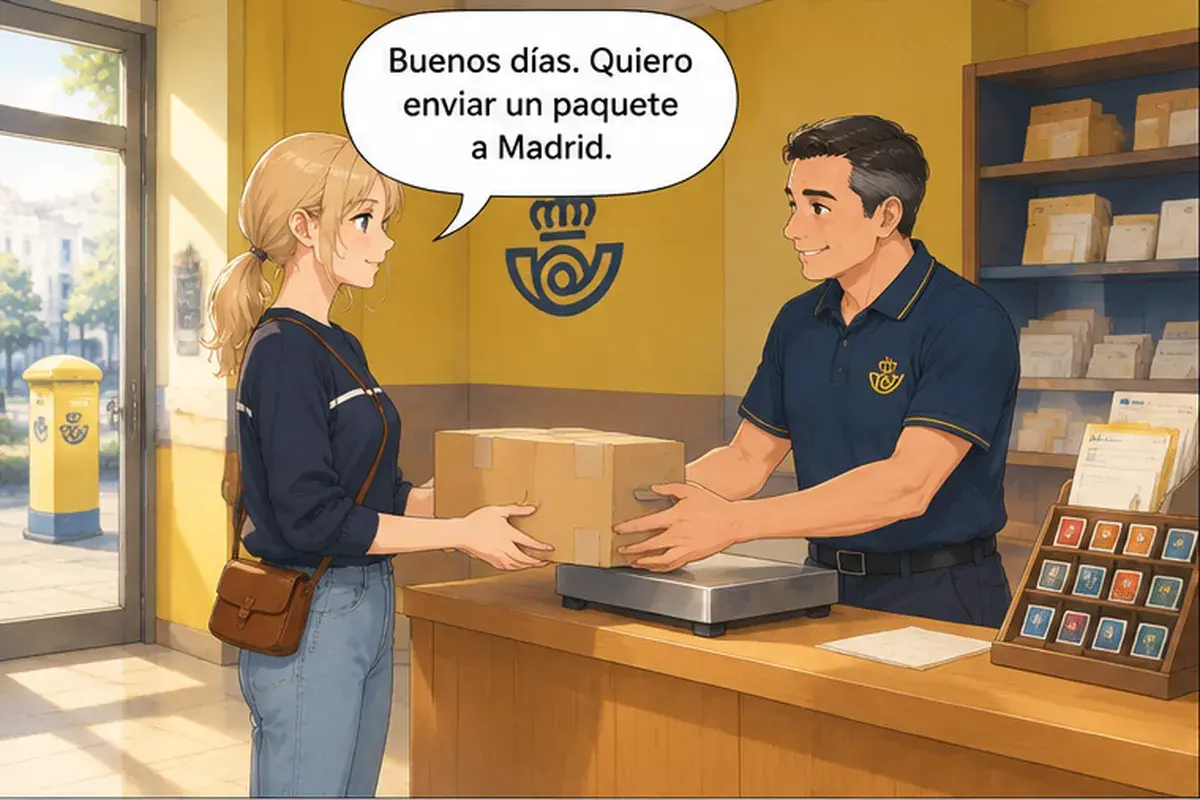
- Ana
Buenos días. Quiero enviar un paquete a Madrid.
Good morning. I want to send a package to Madrid.
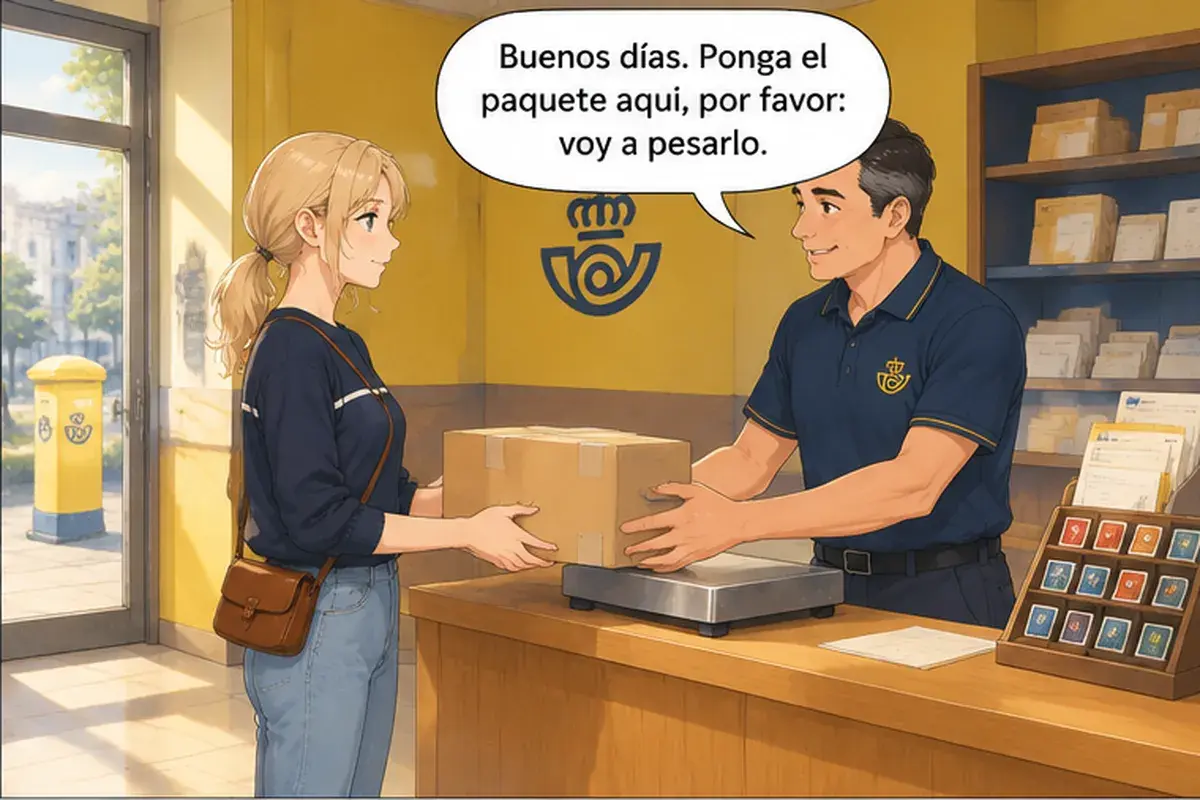
- Empleado
Buenos días. Ponga el paquete aquí, por favor: voy a pesarlo.
Good morning. Put the package here, please: I'm going to weigh it. (formal)
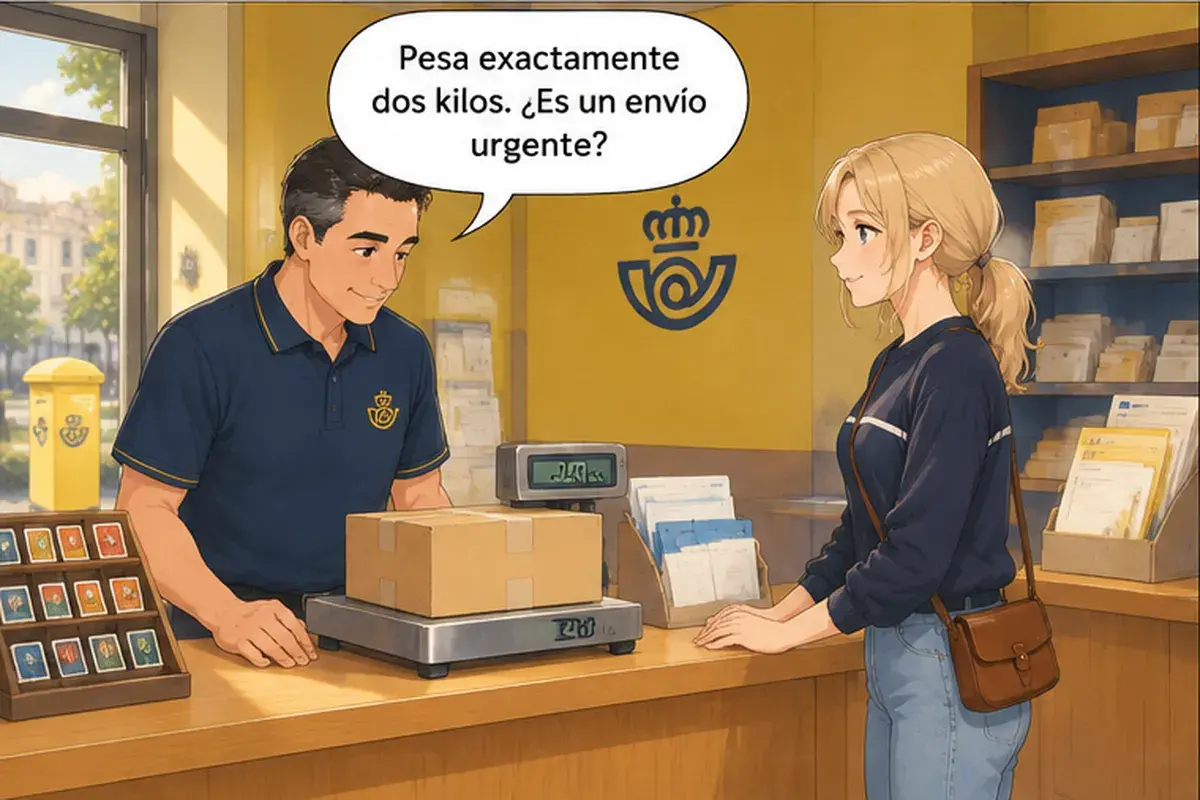
- Empleado
Pesa exactamente dos kilos. ¿Es un envío urgente?
It weighs exactly two kilos. Is it an urgent shipment?
- Ana
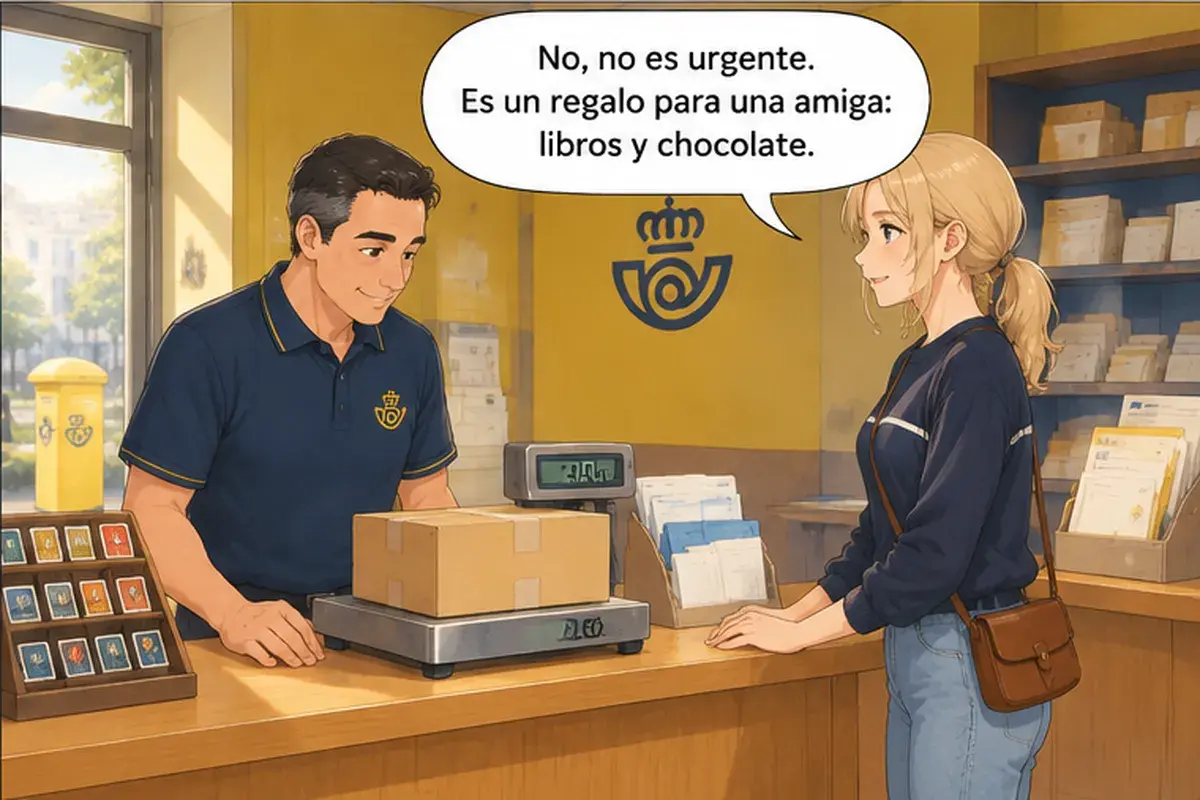
No, no es urgente. Es un regalo para una amiga: libros y chocolate.
No, it's not urgent. It's a gift for a friend: books and chocolate.
- Empleado
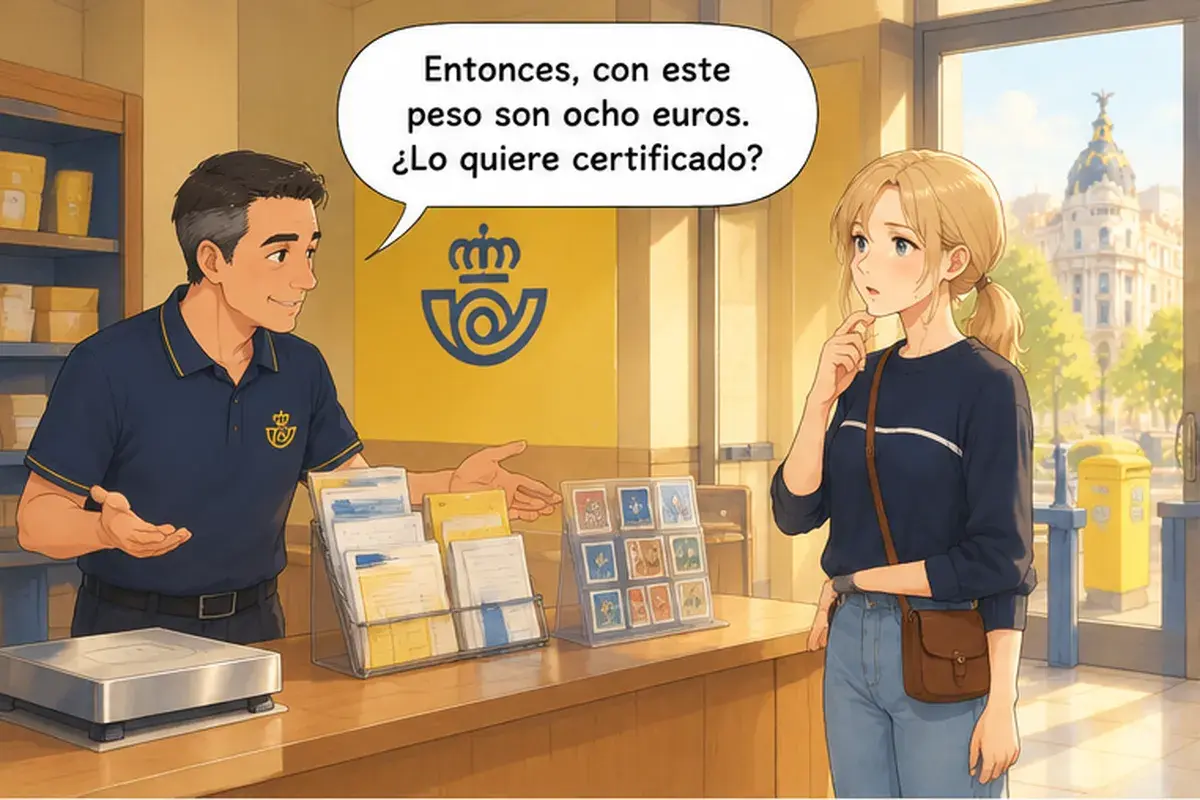
Entonces, con este peso son ocho euros. ¿Lo quiere certificado?
So with this weight, it's eight euros. Do you want it certified? (formal)
- Ana
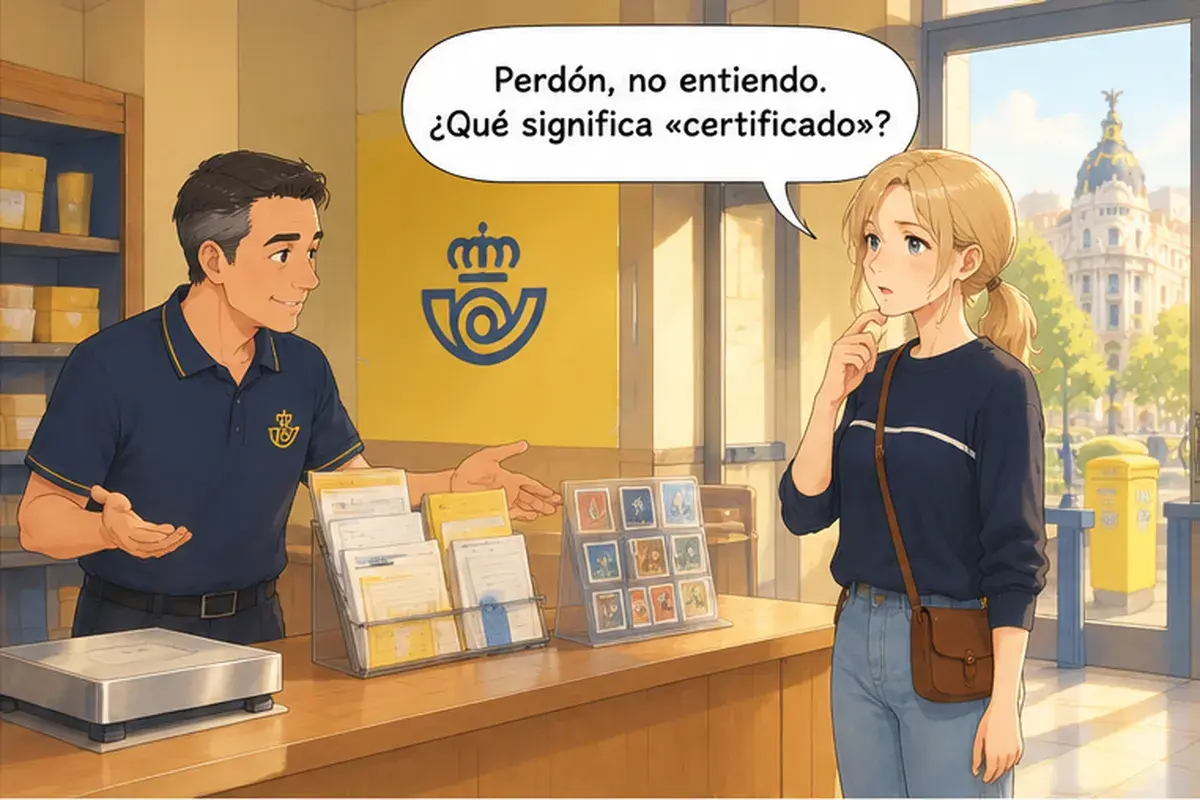
Perdón, no entiendo. ¿Qué significa «certificado»?
Sorry, I don't understand. What does "certificado" mean?
- Empleado
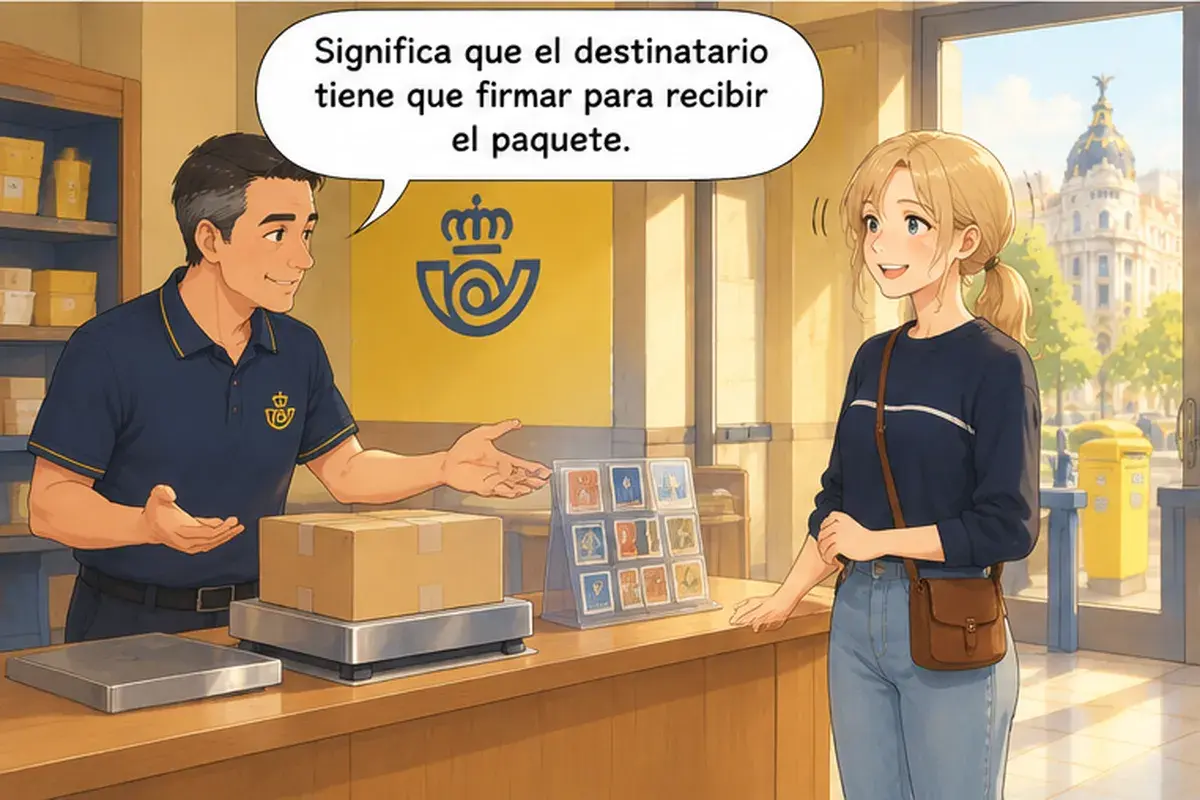
Significa que el destinatario tiene que firmar para recibir el paquete.
It means that the recipient has to sign to receive the package.
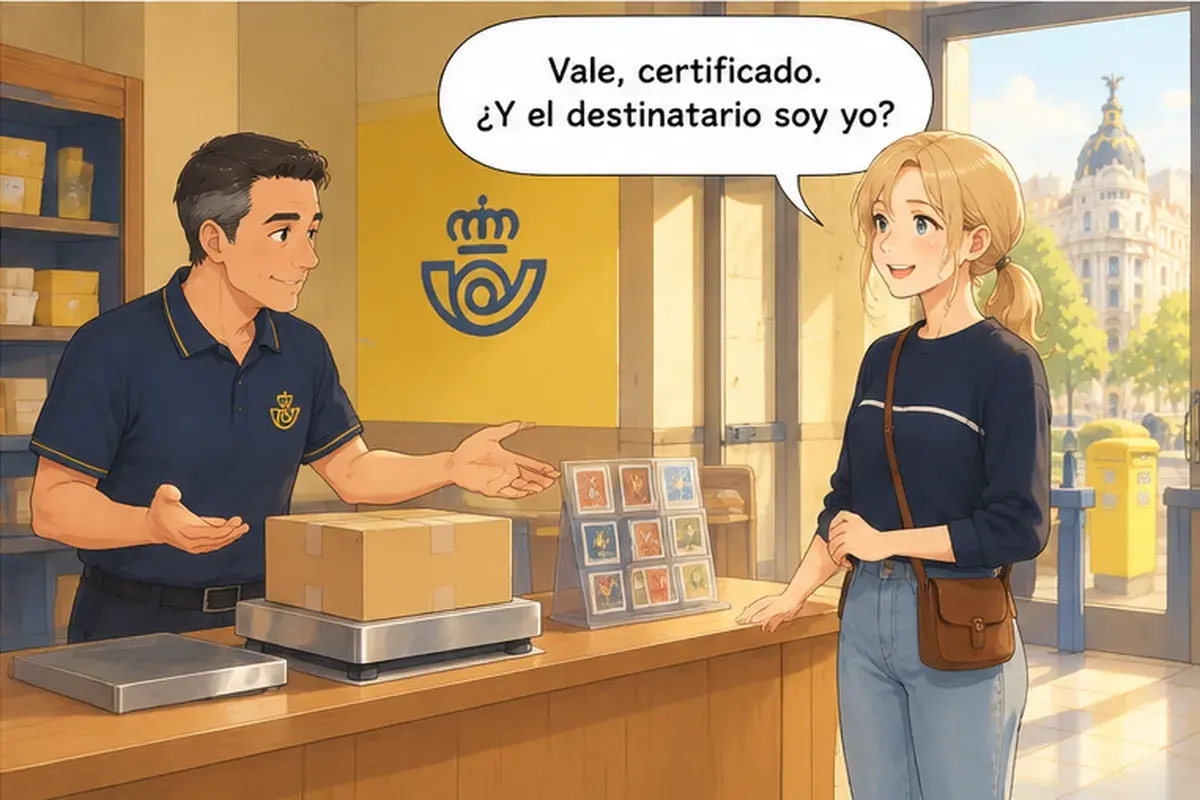
- Ana
Vale, certificado. ¿Y el destinatario soy yo?
OK, certified. And am I the recipient?
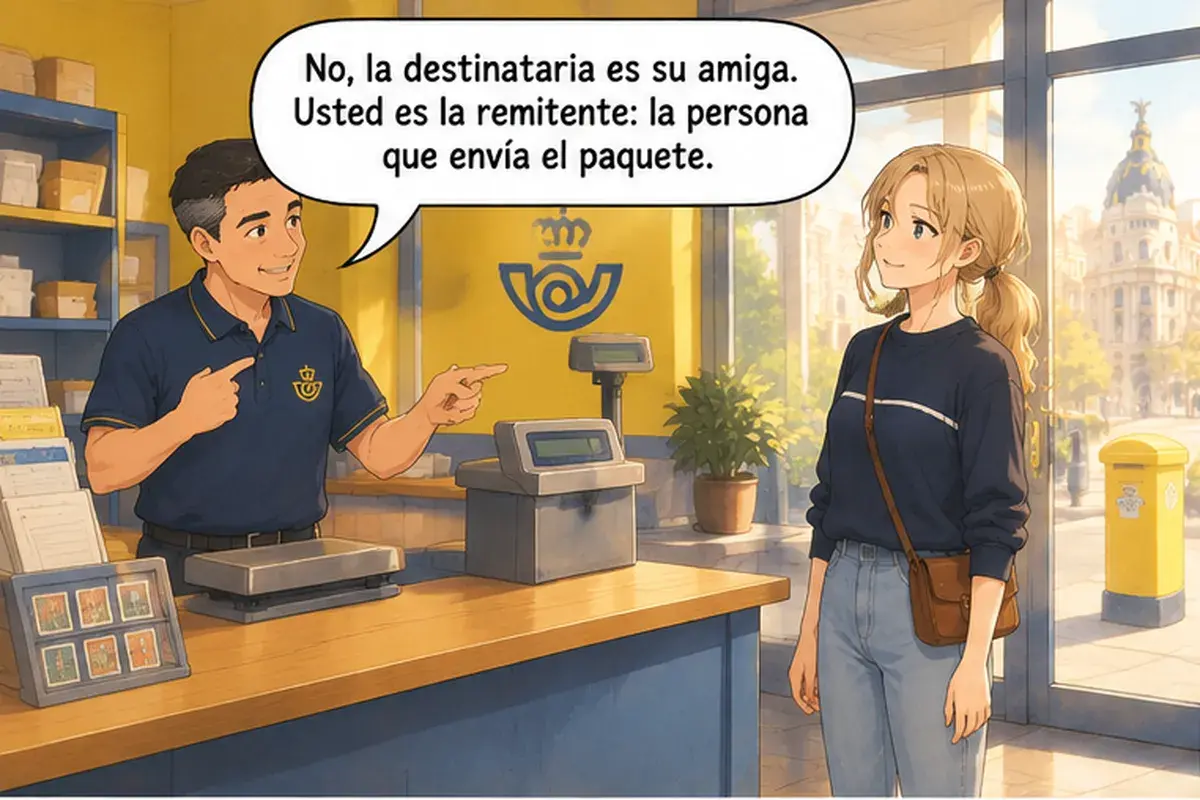
- Empleado
No, la destinataria es su amiga. Usted es la remitente: la persona que envía el paquete.
No, the recipient is your friend. You're the sender: the person who sends the package. (to a woman, formal)
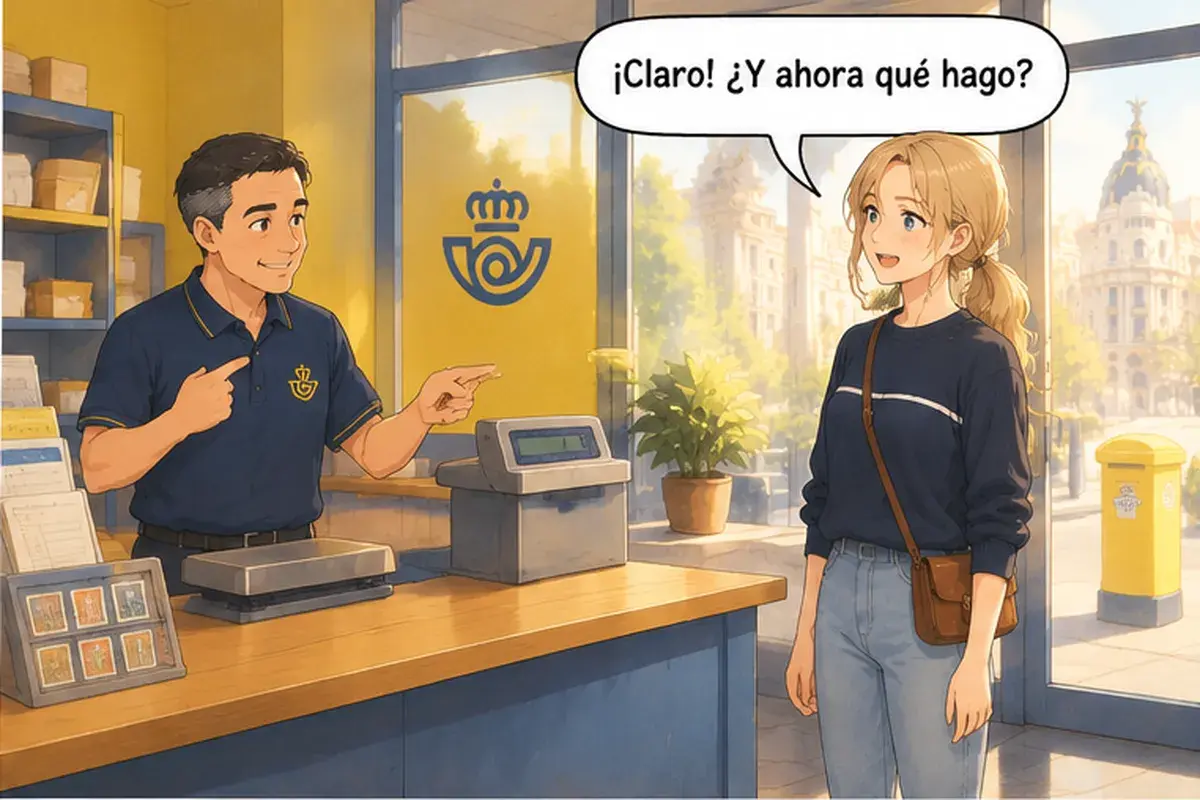
- Ana
¡Claro! ¿Y ahora qué hago?
Of course! And what do I do now?
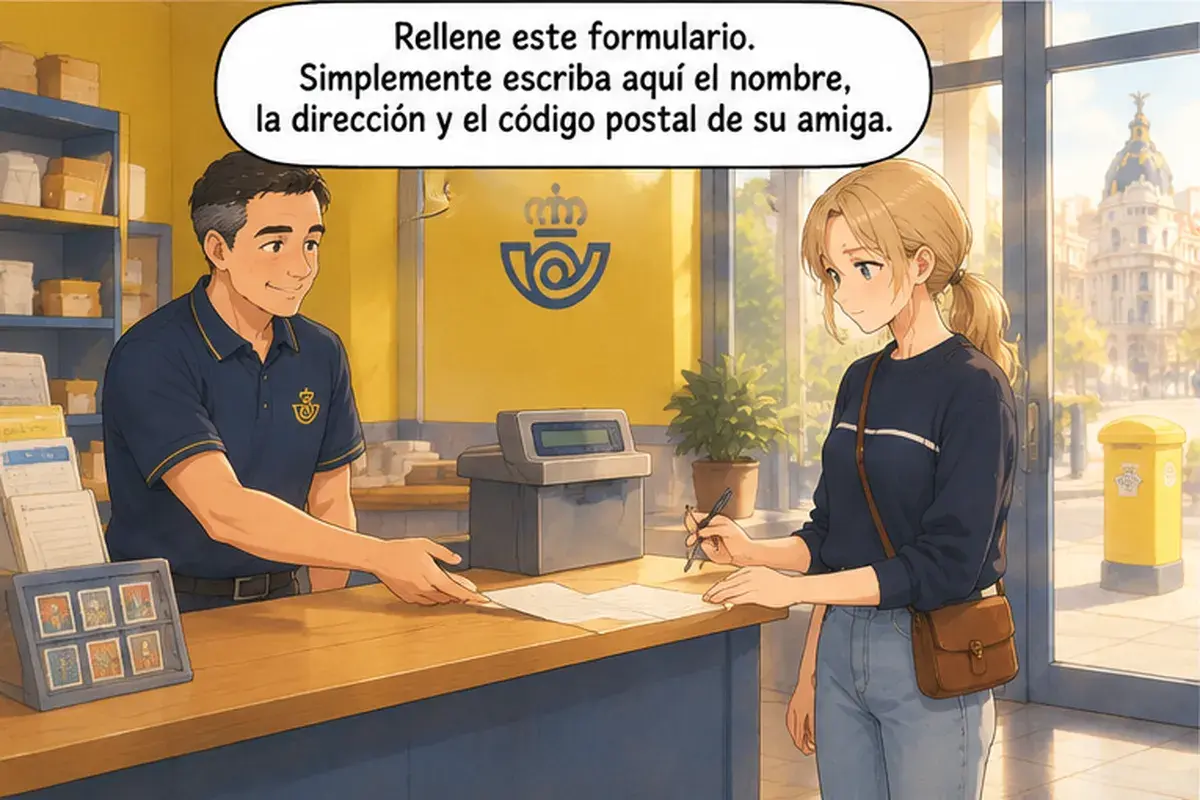
- Empleado
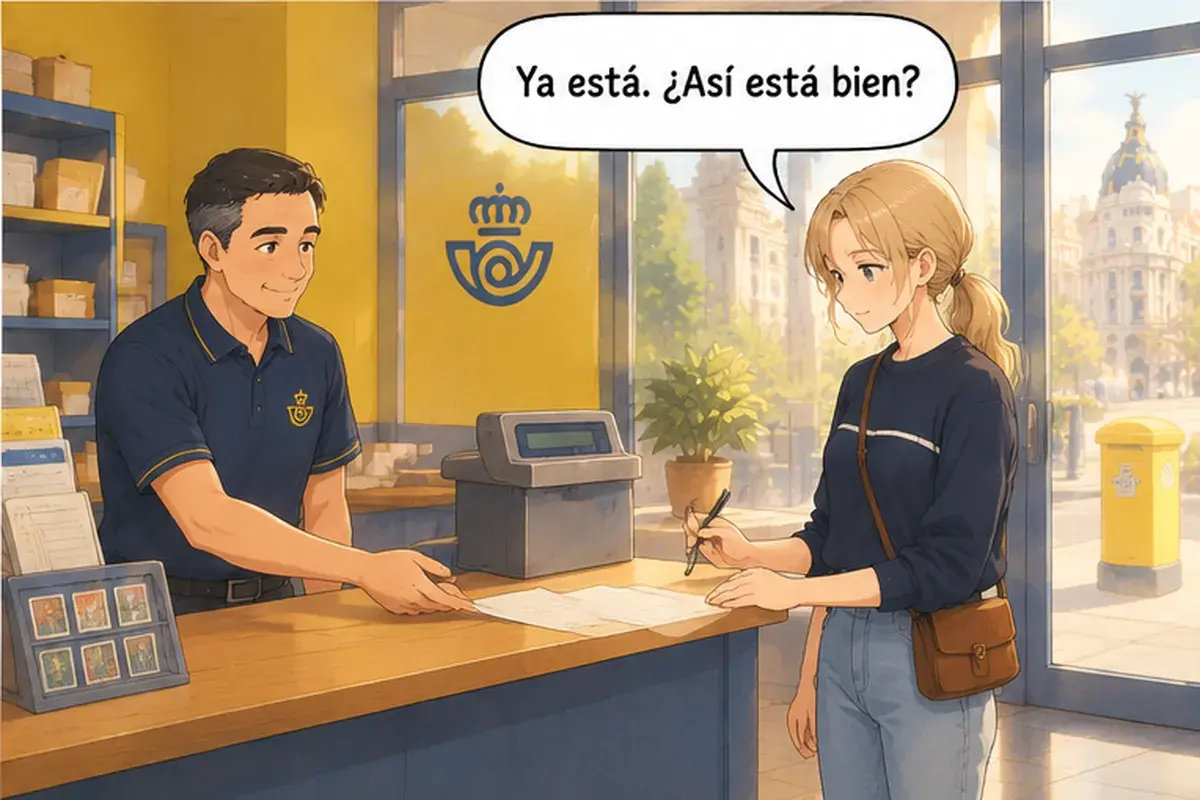
Rellene este formulario. Simplemente escriba aquí el nombre, la dirección y el código postal de su amiga.
Fill out this form. Just write your friend's name, address and zip code here. (formal)
- Ana
Ya está. ¿Así está bien?
Done. Is it OK like this?
- Empleado
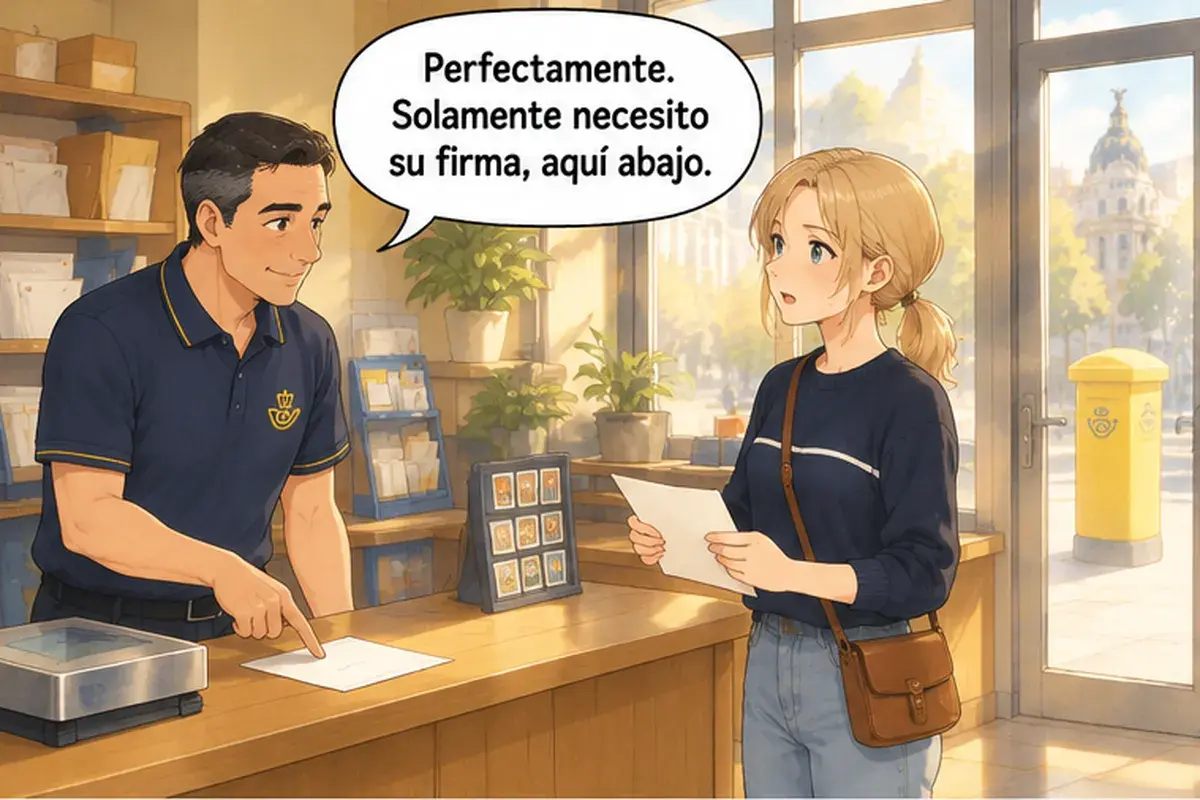
Perfectamente. Solamente necesito su firma, aquí abajo.
Perfectly. I only need your signature, down here. (formal)
- Ana
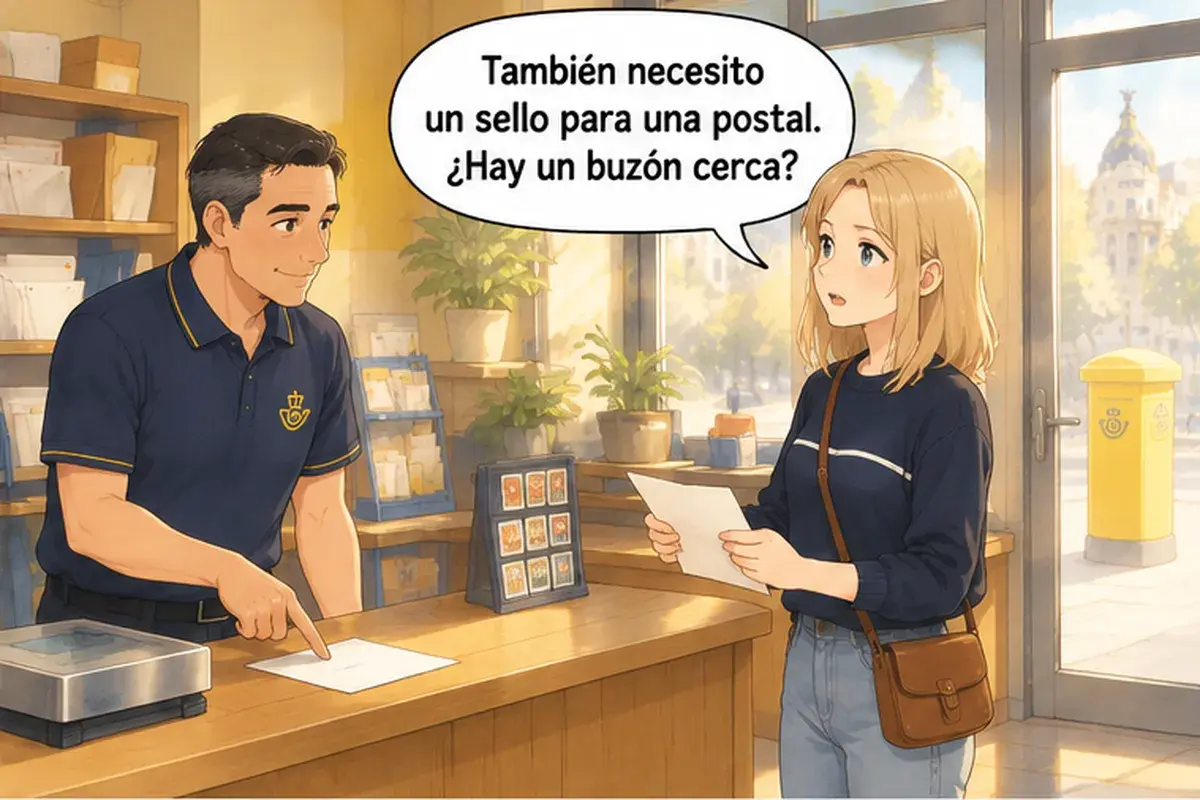
También necesito un sello para una postal. ¿Hay un buzón cerca?
I also need a stamp for a postcard. Is there a mailbox nearby?
- Empleado
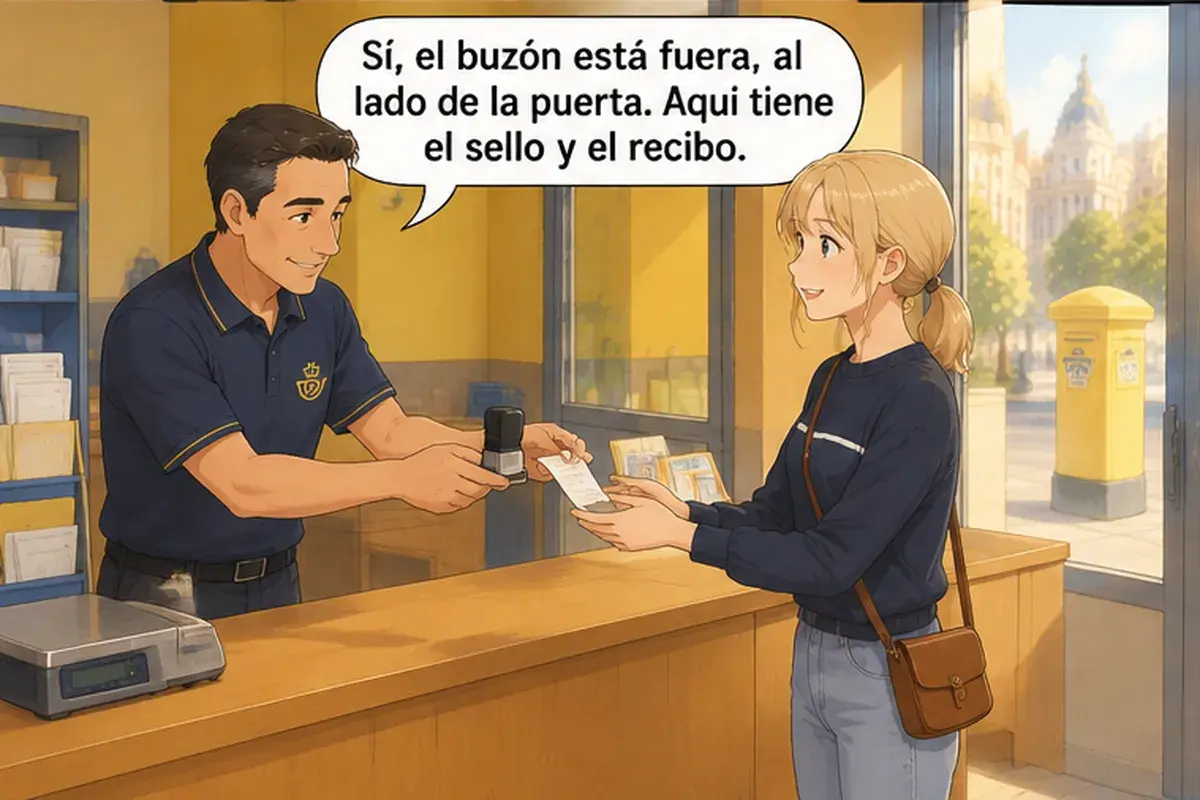
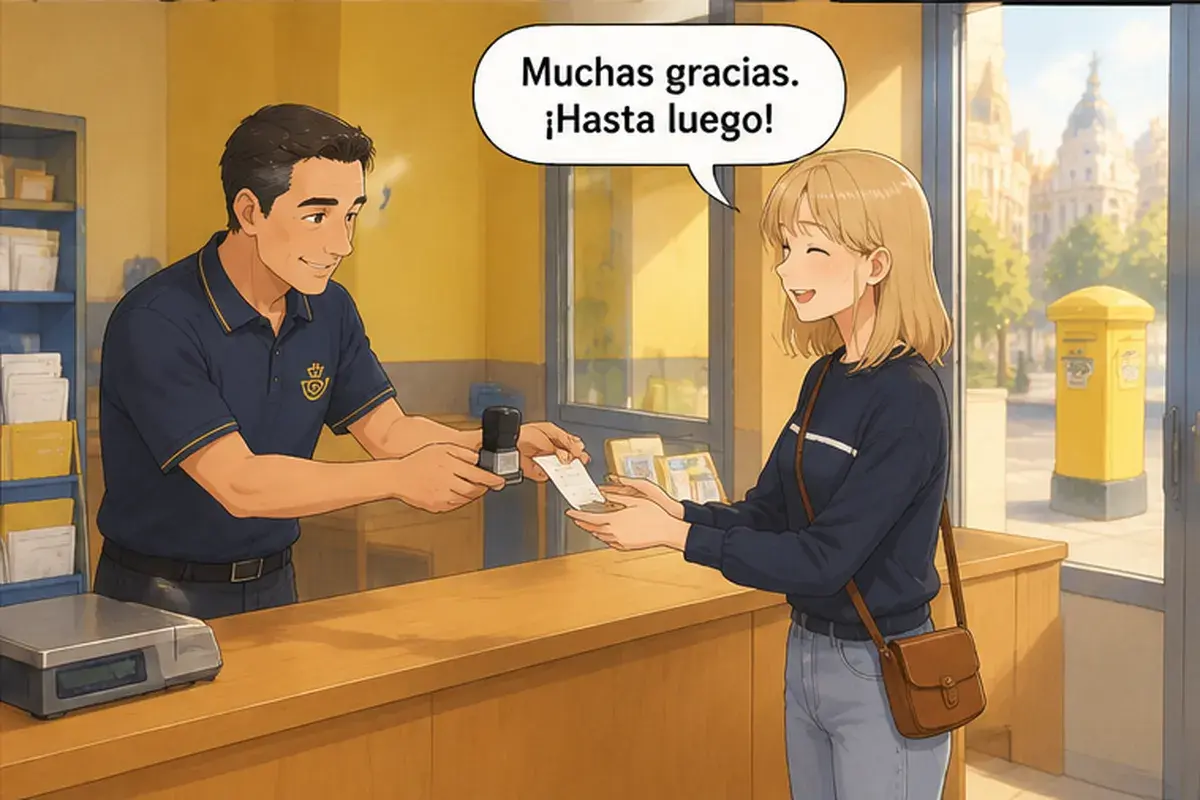
Sí, el buzón está fuera, al lado de la puerta. Aquí tiene el sello y el recibo.
Yes, the mailbox is outside, next to the door. Here you go, the stamp and the receipt. (formal)
- Ana
Muchas gracias. ¡Hasta luego!
Thank you very much. See you later!
Grammar for this text
First un, then el. Ana says Quiero enviar un paquete: the clerk is hearing about the package for the first time. After that it's "the" package: Ponga el paquete aquí. English works the same way with "a" and "the". More from the dialogue: ¿Hay un buzón cerca? — Sí, el buzón está fuera; necesito un sello — aquí tiene el sello.
No article. Libros y chocolate — "books and chocolate": it doesn't matter how many or which ones, so there's no article, just like in English.
La destinataria, la remitente. The package has one recipient and one sender, and it's clear who they are, so it's el / la. Ana's friend and Ana are women, so it's la destinataria and la remitente. When the clerk explains what "certificado" means, he says el destinatario — any recipient, in general.
Formal requests (unit 15): ponga, rellene, escriba. In voy a pesarlo and ¿Lo quiere certificado?, lo stands for el paquete.
-mente adverbs: exactamente (exactly), simplemente (simply, just), solamente (only), perfectamente (perfectly).
Correos is Spain's national post office; people say it without an article: voy a Correos — I'm going to the post office.
Words and grammar of the unit: Run errands at the post office and the bank.
Learn the words from the texts with flashcards
In the app, you can tap any word in a text to see its translation, forms and examples, and new words stick with flashcards. 15 minutes a day.
Start for freeEverything is open for free. No card needed to sign up.