
Spanish story with translation · A2 · 16 lines
Una mañana de recados A morning of errands
Comic · 10 panels
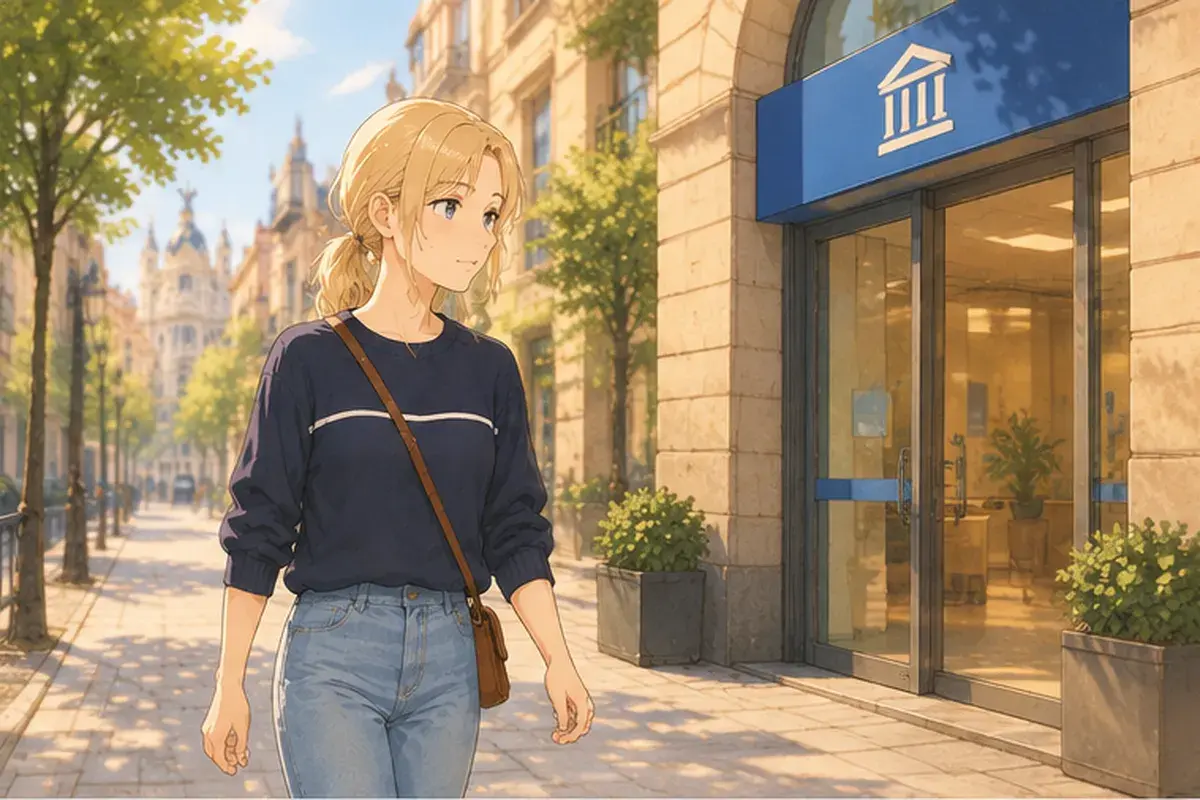
Ayer tuve una mañana de recados: el banco, Correos y una copia de la llave.
Yesterday I had a morning of errands: the bank, the post office and a copy of the key.
Primero fui a la sucursal de mi banco. Quería ingresar mis ahorros del mes: doscientos euros.
First I went to my bank's branch. I wanted to deposit my savings for the month: two hundred euros.
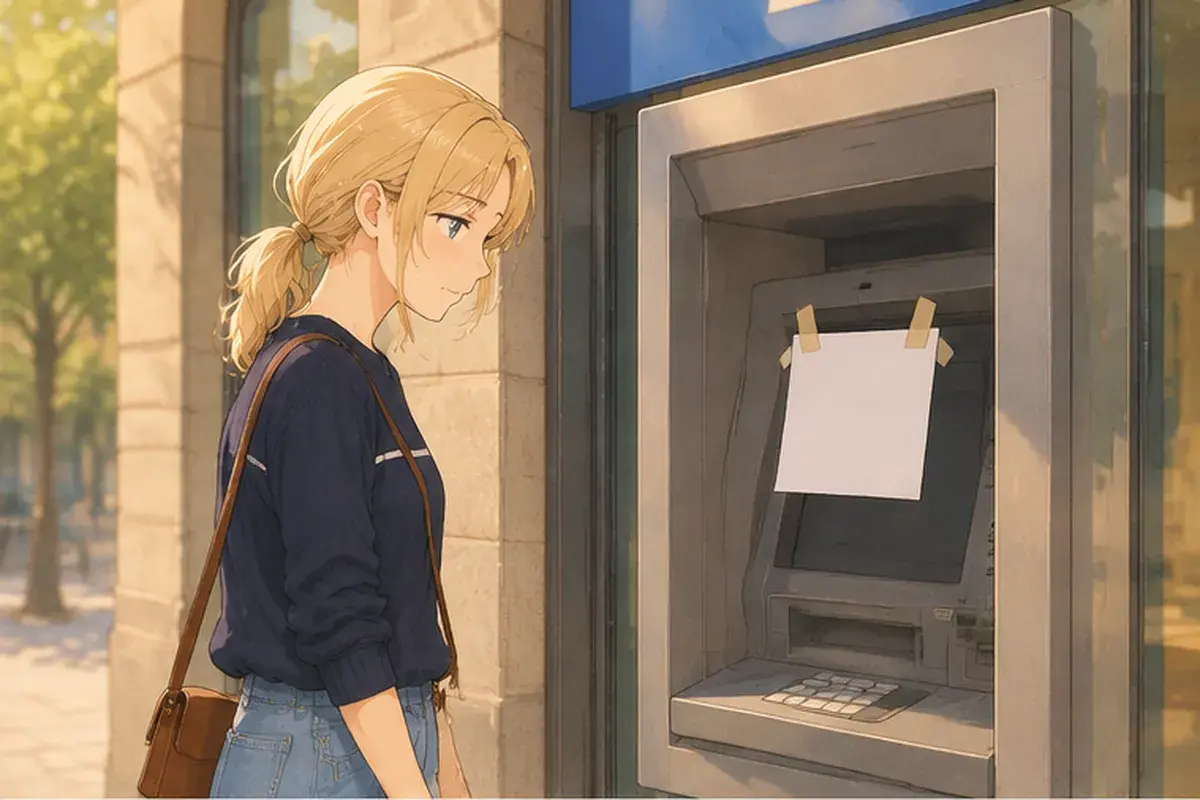
En la puerta hay un cajero, pero ayer el cajero estaba roto.
There's an ATM at the entrance, but yesterday the ATM was broken.
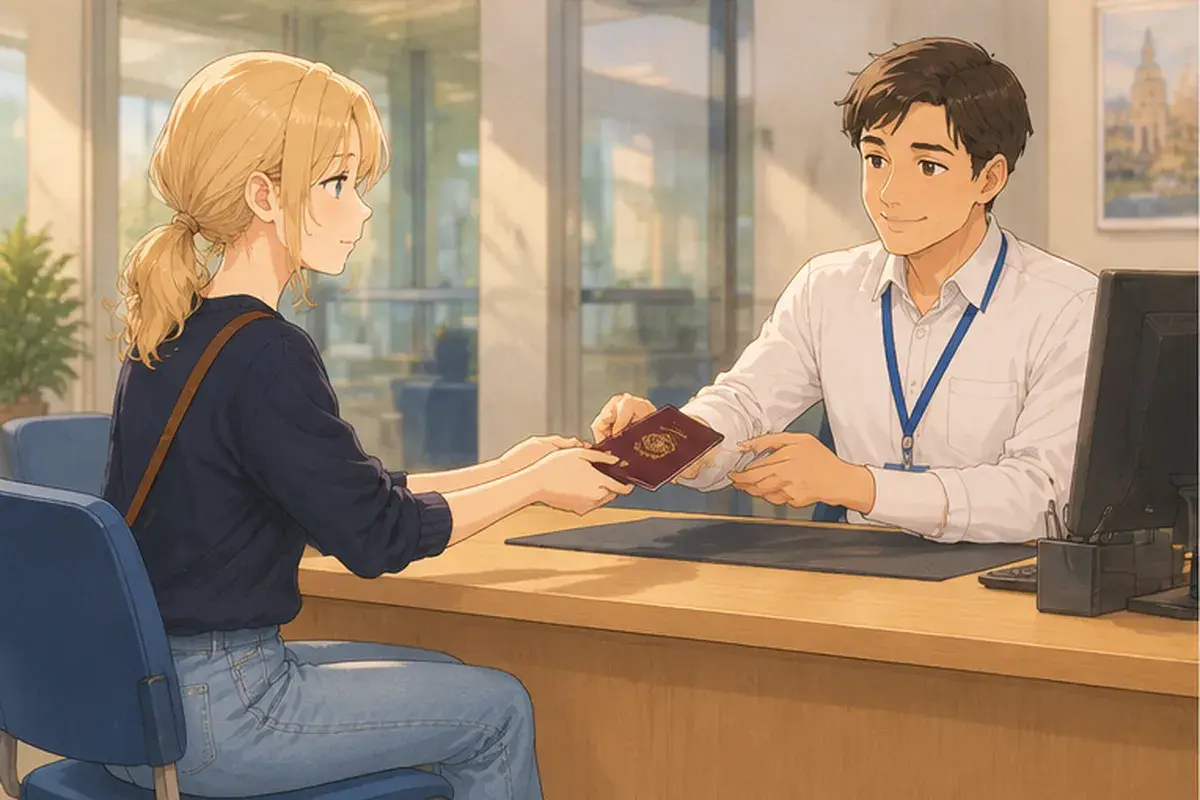
Entré y hablé con un empleado. «¿Tiene usted algún documento?», me preguntó.
I went in and talked to a clerk. "Do you have any kind of document?" he asked me. (formal)
Le di mi pasaporte. El empleado hizo el trámite rápidamente.
I gave him my passport. The clerk took care of the paperwork quickly.
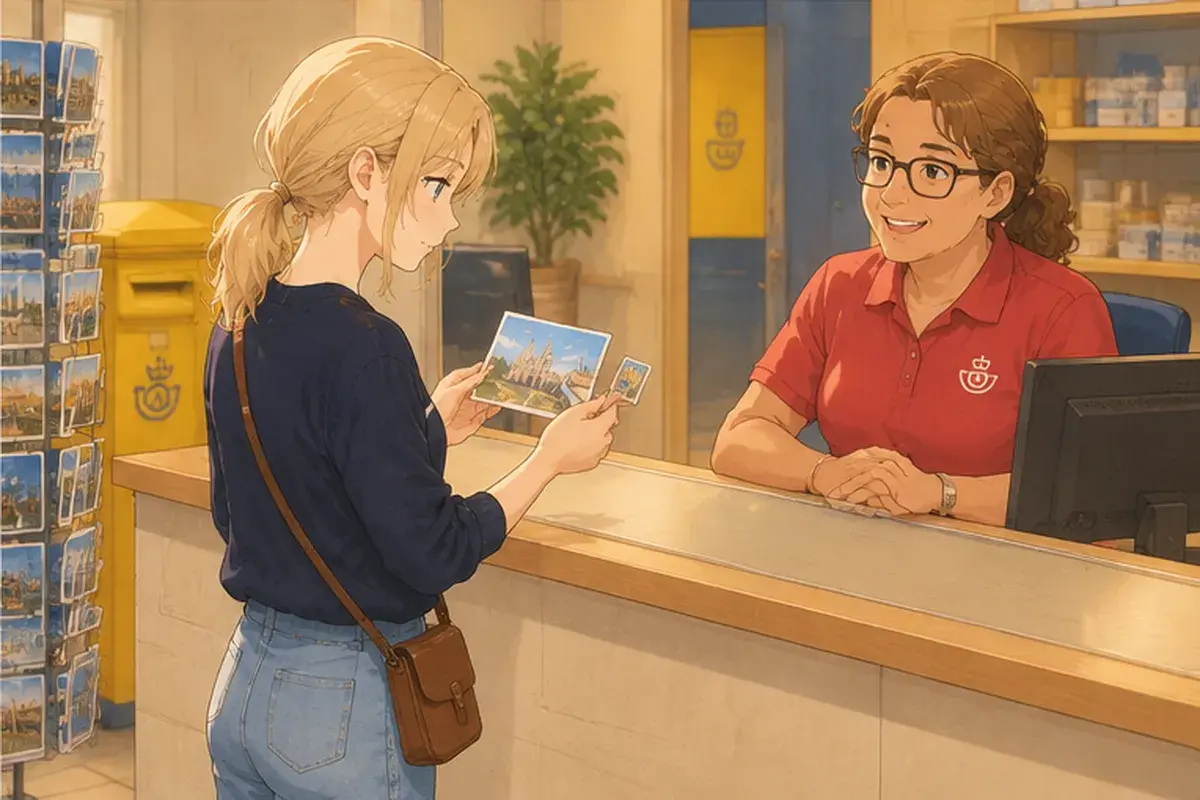
Luego fui a Correos y compré una postal para mi abuela y un sello.
Then I went to the post office and bought a postcard for my grandmother and a stamp.
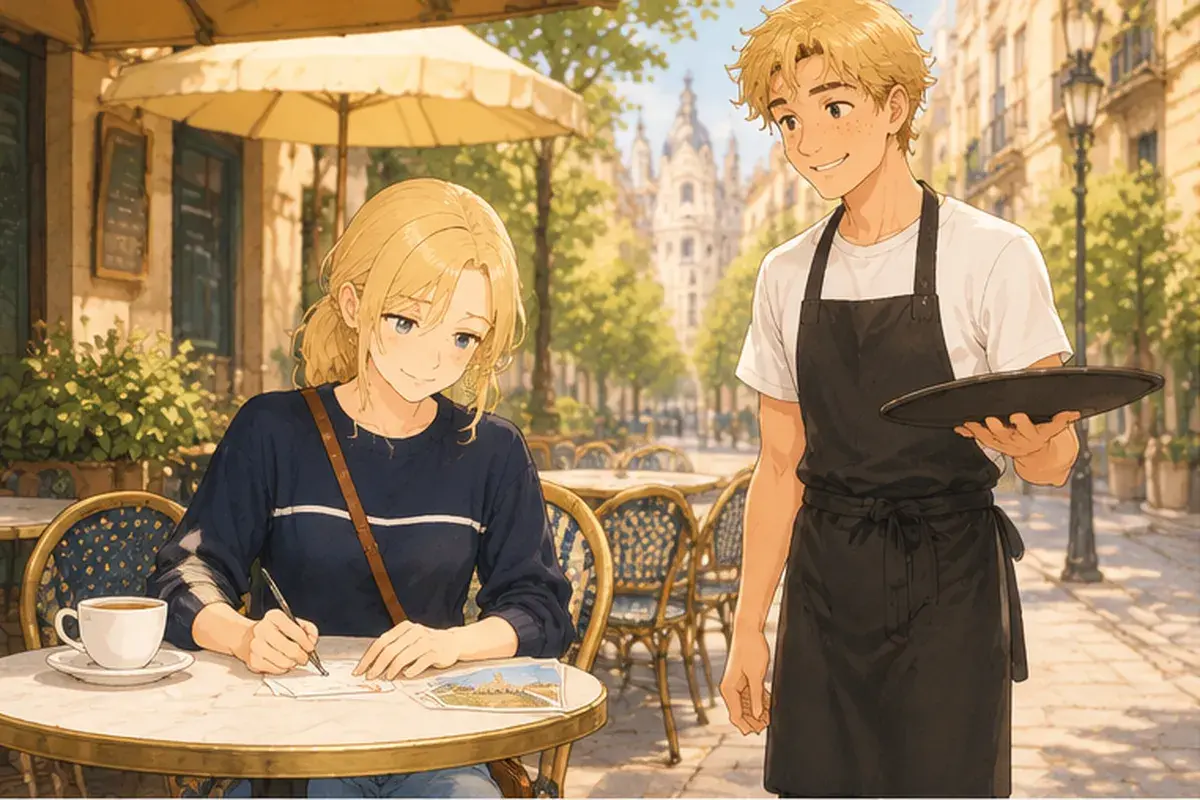
Escribí la postal tranquilamente en un bar, con un café.
I calmly wrote the postcard in a bar, with a coffee.
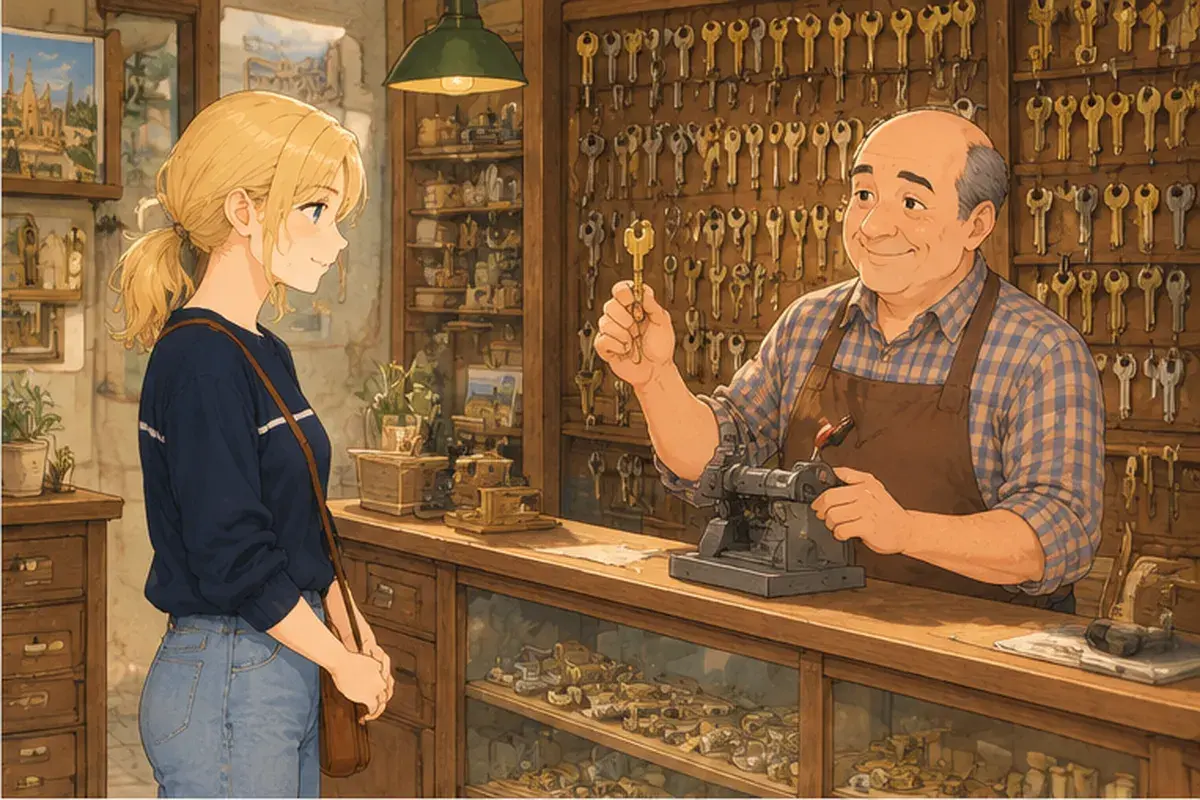
Después entré en una tienda pequeña y un señor me hizo una copia de la llave en cinco minutos.
After that I went into a small store, and a man made me a copy of the key in five minutes.
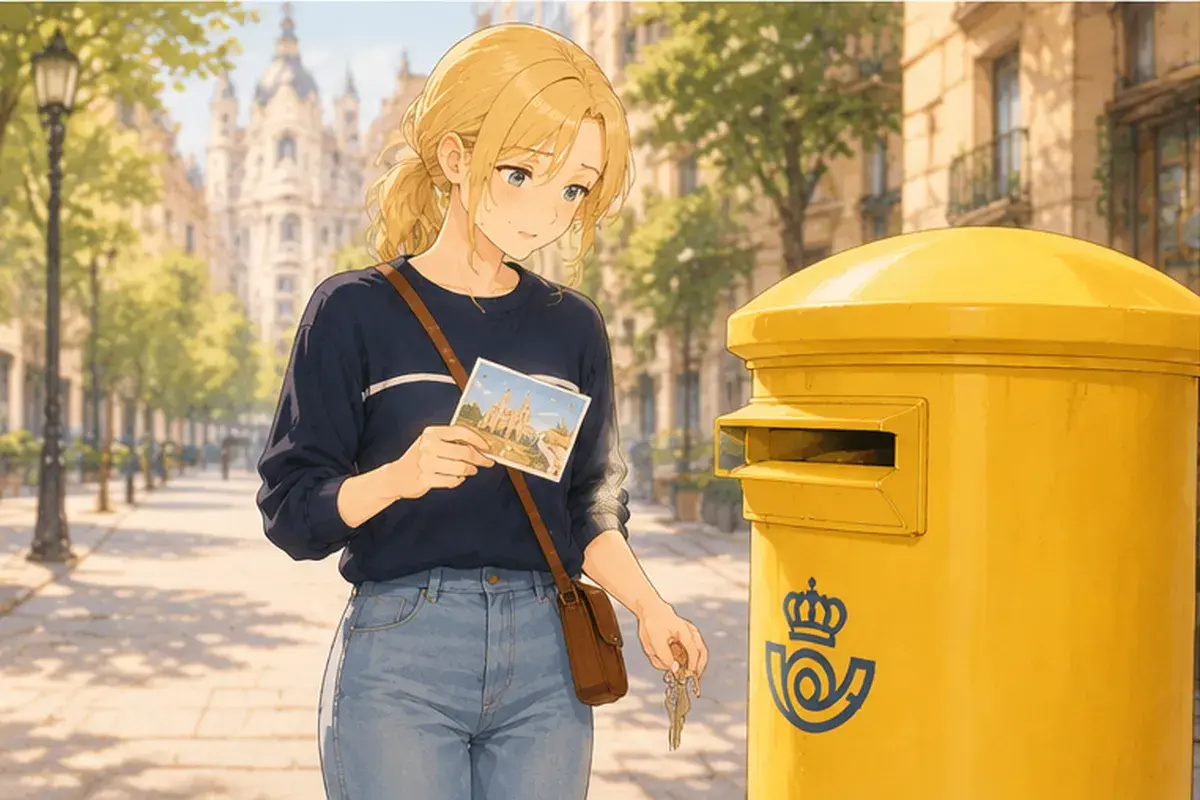
Dejé la copia en el bolso. Salí con la postal en una mano y las llaves en la otra.
I put the copy in my bag. I walked out with the postcard in one hand and the keys in the other.
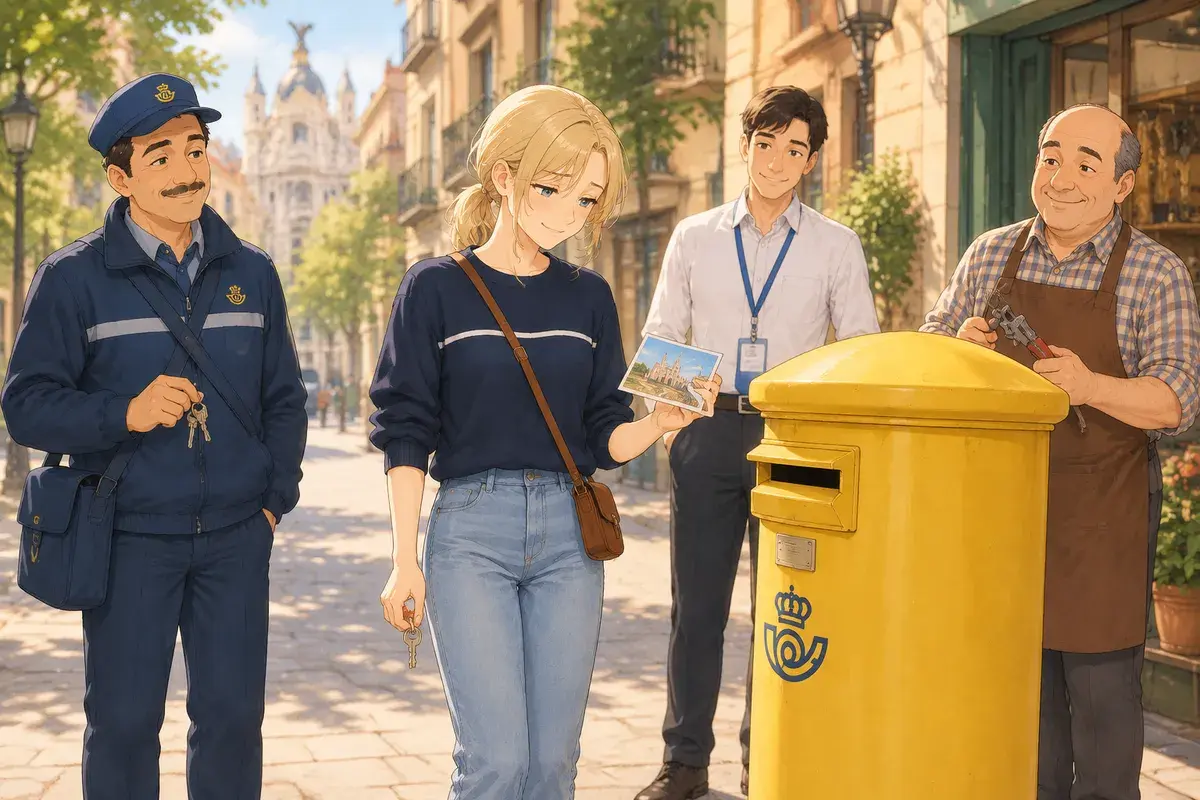
En la calle vi un buzón amarillo. Me acerqué y eché dentro las llaves. ¡Las llaves, no la postal!
On the street I saw a yellow mailbox. I went up to it and dropped the keys inside. The keys, not the postcard!
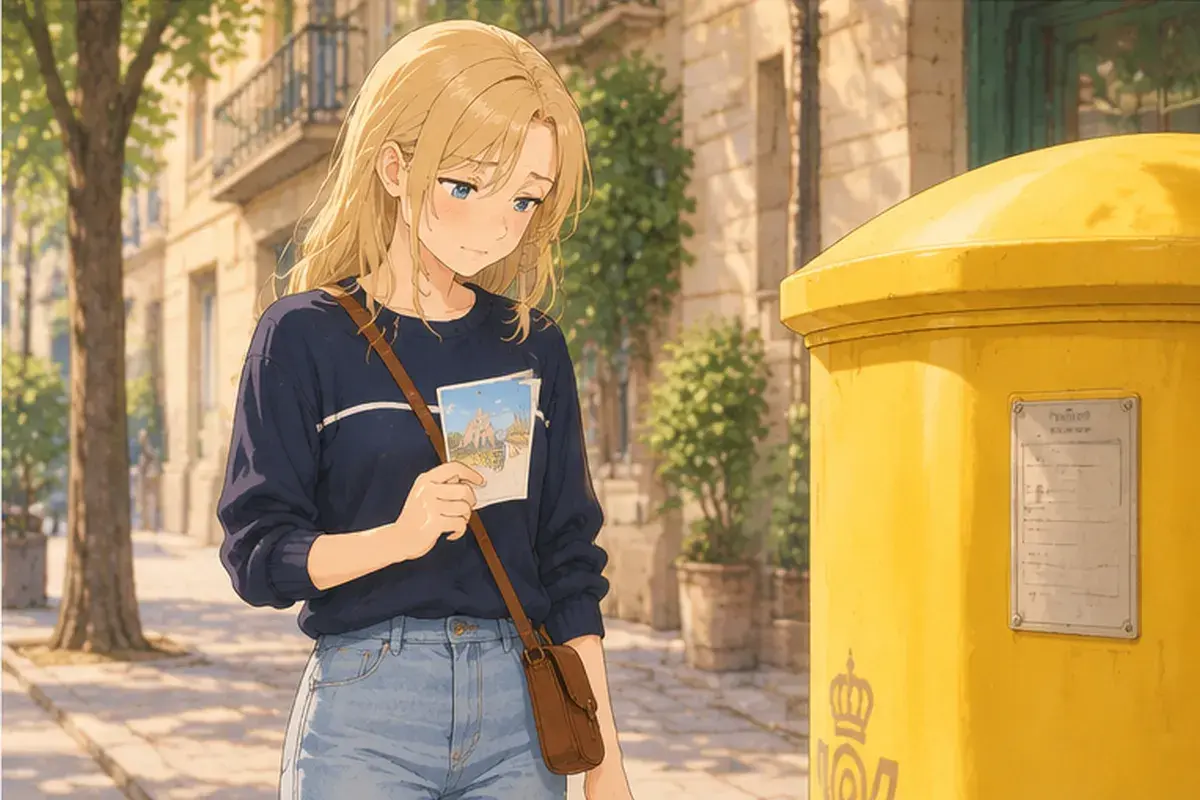
Me quedé delante del buzón con la postal en la mano. ¡Qué vergüenza!
I stood there in front of the mailbox with the postcard in my hand. How embarrassing!
En el buzón vi el horario: el cartero pasa a las cinco.
On the mailbox I saw the schedule: the mail carrier comes by at five.
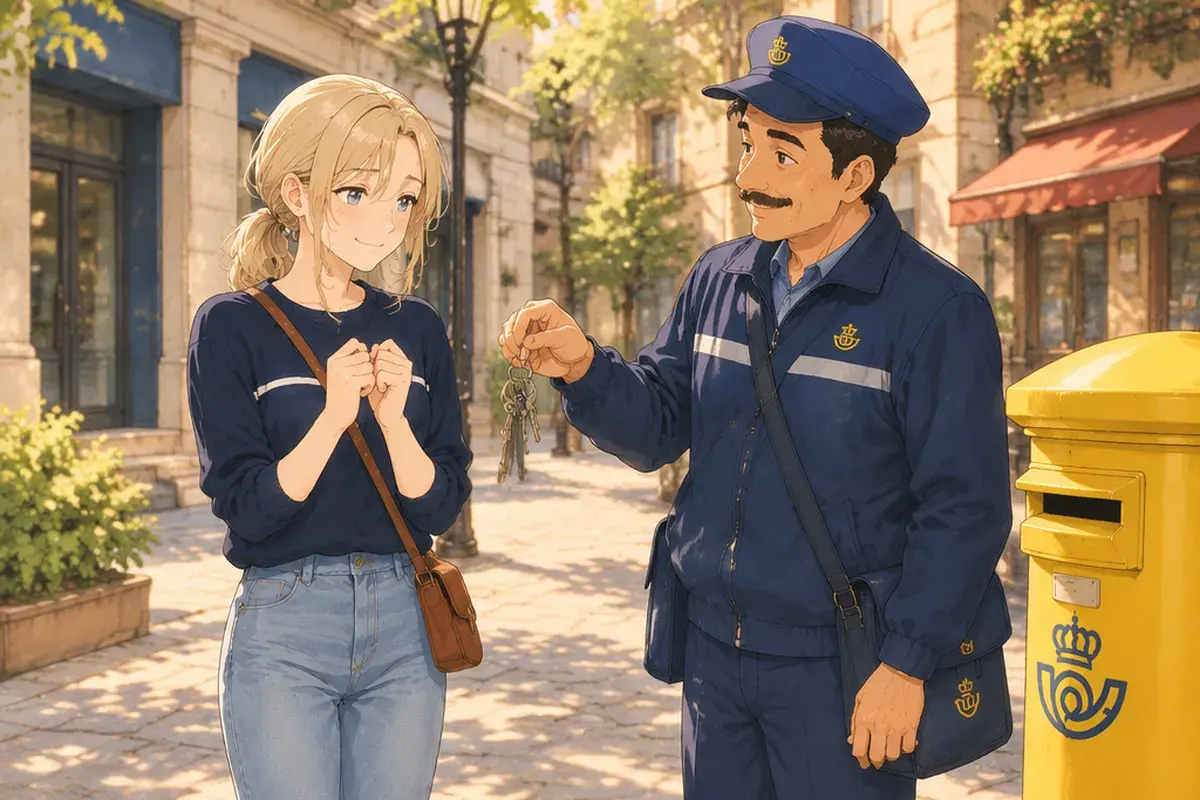
Volví a las cinco. Llegó el cartero y abrió el buzón.
I came back at five. The mail carrier arrived and opened the mailbox.
«¿Estas llaves son suyas?», me preguntó. «Probablemente no es usted la primera».
"Are these keys yours?" he asked me. "You're probably not the first one." (to a woman, formal)
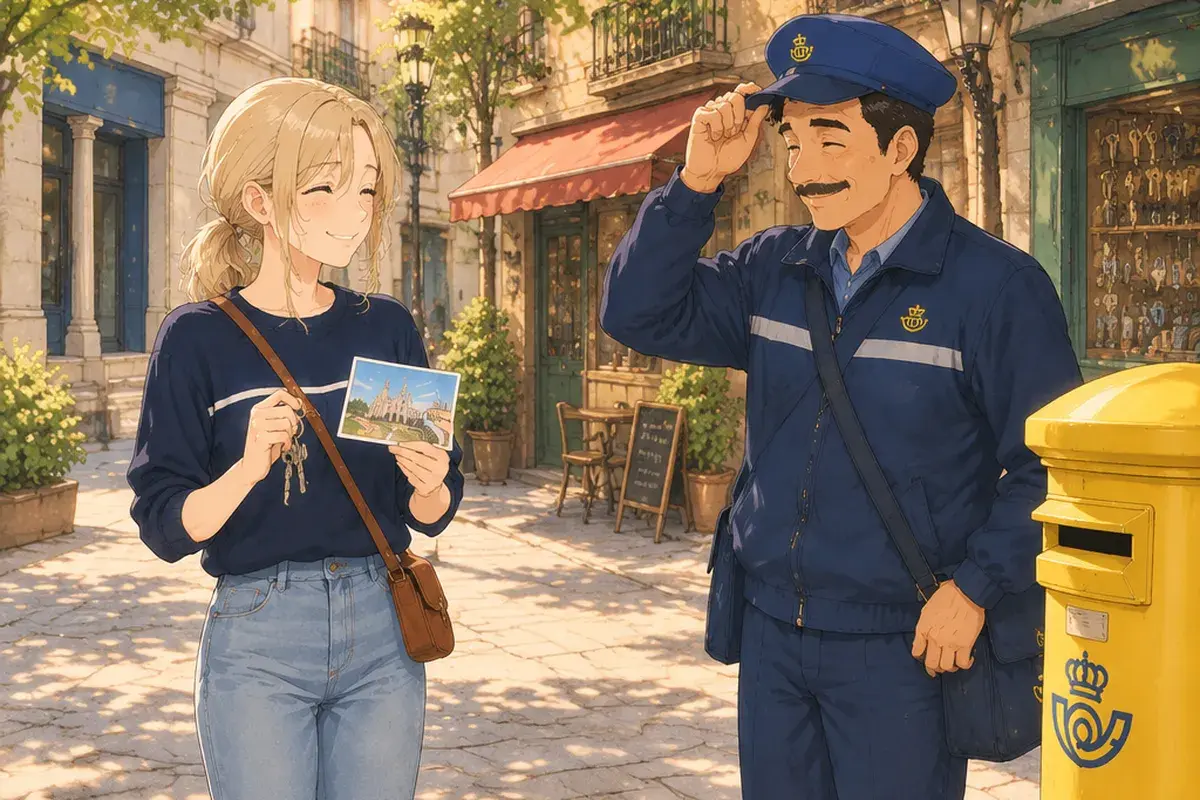
El cartero me dio las llaves y yo le di las gracias.
The mail carrier gave me the keys and I thanked him.
Ahora tengo las llaves y la copia. ¿Y la postal? Todavía está en el bolso.
Now I have the keys and the copy. And the postcard? It's still in my bag.
Grammar for this text
Articles in a story. Everything new comes in with un: un cajero, un empleado, una postal, un señor, un buzón. The second time, it's el: hay un cajero, pero ayer el cajero estaba roto; hablé con un empleado… el empleado hizo el trámite; vi un buzón… delante del buzón.
Some things get el right away because it's clear which one: el banco (my bank), la llave (the key to my apartment), el cartero (the mail carrier who empties this mailbox). For your own things and body parts, Spanish uses el / la where English says "my": en el bolso — in my bag, en la mano — in my hand.
The past. What happened (preterite): tuve, fui, hizo, vi, di, dio (irregular forms from unit 9) and entré, compré, volví, abrió. What things were like at that moment (imperfect): quería, estaba.
-mente adverbs: rápidamente, tranquilamente, probablemente.
Correos mailboxes in Spain are yellow.
Words and grammar of the unit: Run errands at the post office and the bank.
Learn the words from the texts with flashcards
In the app, you can tap any word in a text to see its translation, forms and examples, and new words stick with flashcards. 15 minutes a day.
Start for freeEverything is open for free. No card needed to sign up.