

Spanish dialogue with translation · A2 · 16 lines
¿Has estado en Andalucía? Have you been to Andalucía?
Comic · 16 panels
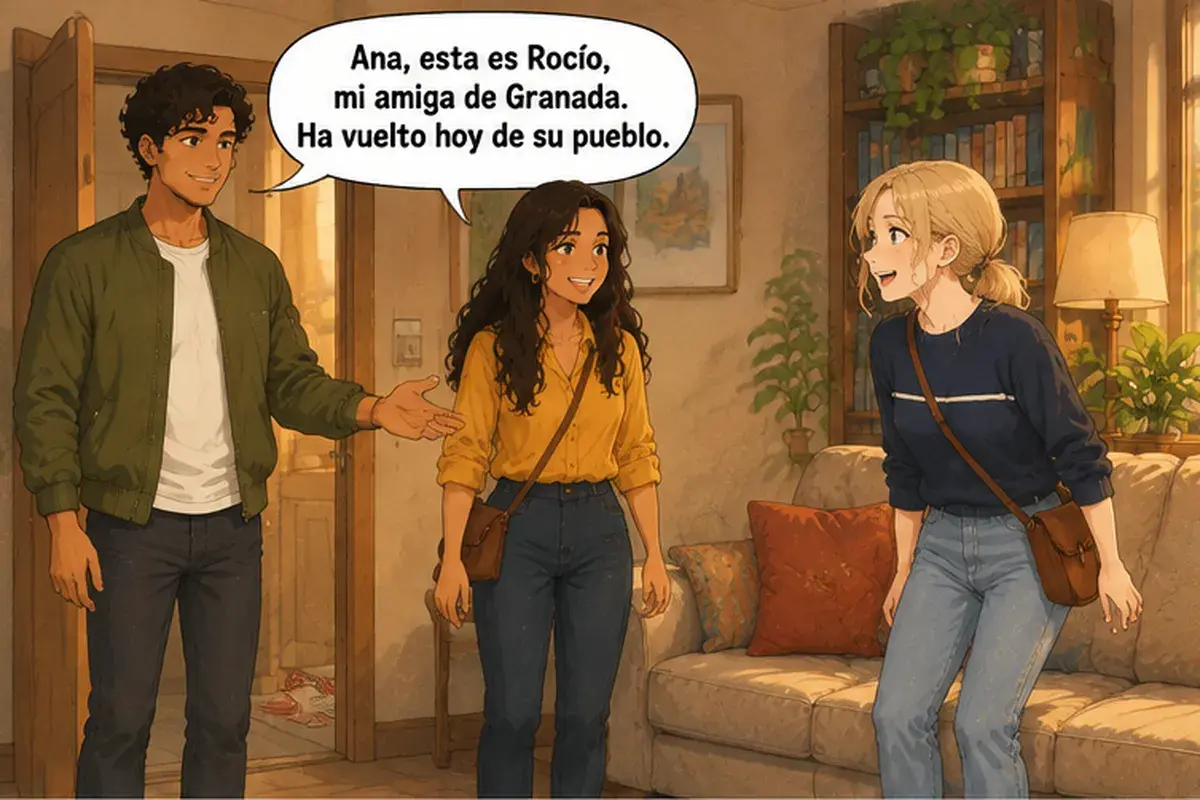
- Pablo
Ana, esta es Rocío, mi amiga de Granada. Ha vuelto hoy de su pueblo.
Ana, this is Rocío, my friend from Granada. She came back from her village today.
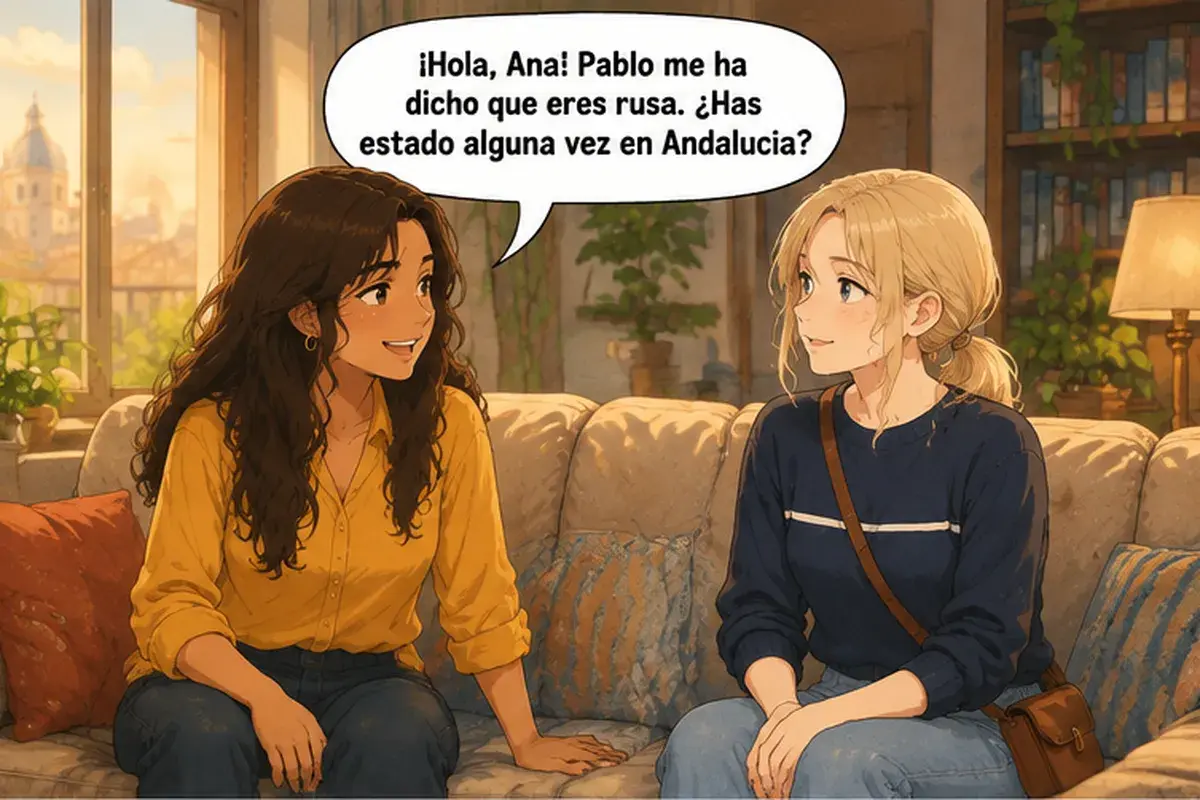
- Rocío
¡Hola, Ana! Pablo me ha dicho que no eres de aquí. ¿Has estado alguna vez en Andalucía?
Hi, Ana! Pablo told me you're not from here. Have you ever been to Andalucía?
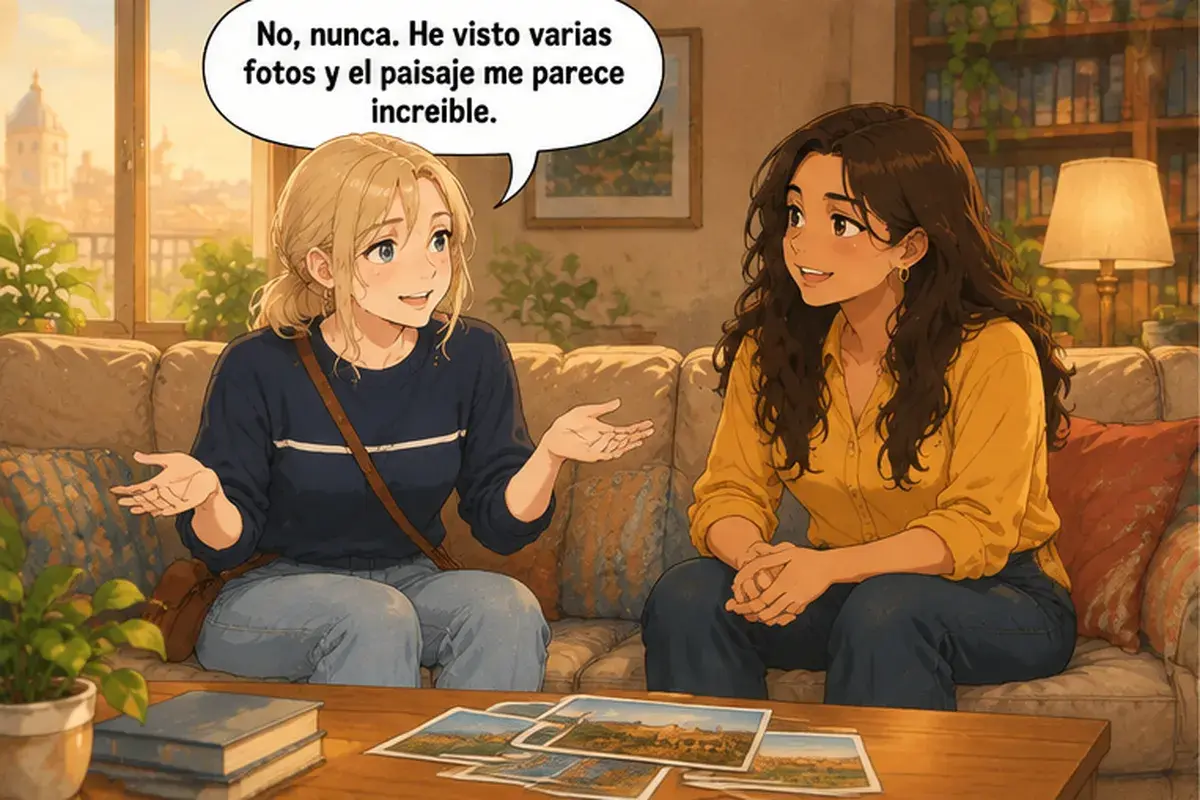
- Ana
No, nunca. He visto varias fotos y el paisaje me parece increíble.
No, never. I've seen several photos, and the scenery looks amazing to me.
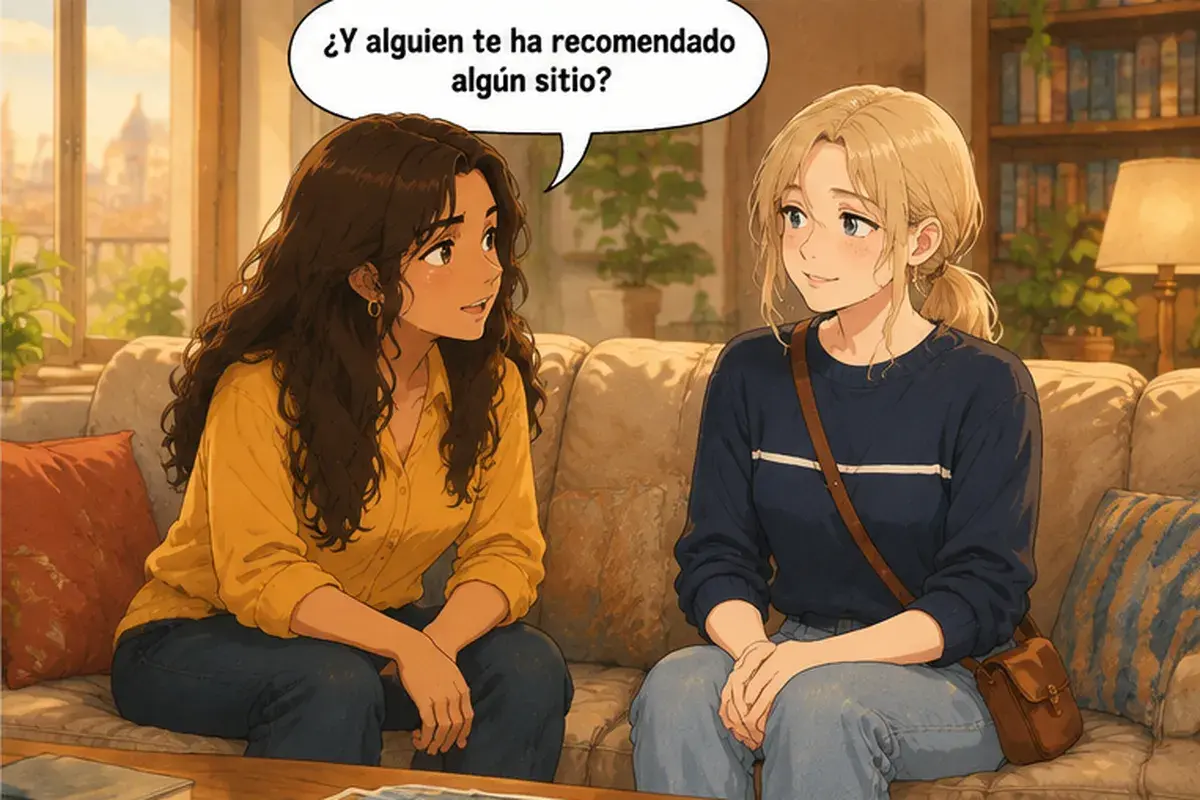
- Rocío
¿Y alguien te ha recomendado algún sitio?
And has anyone recommended any place to you?
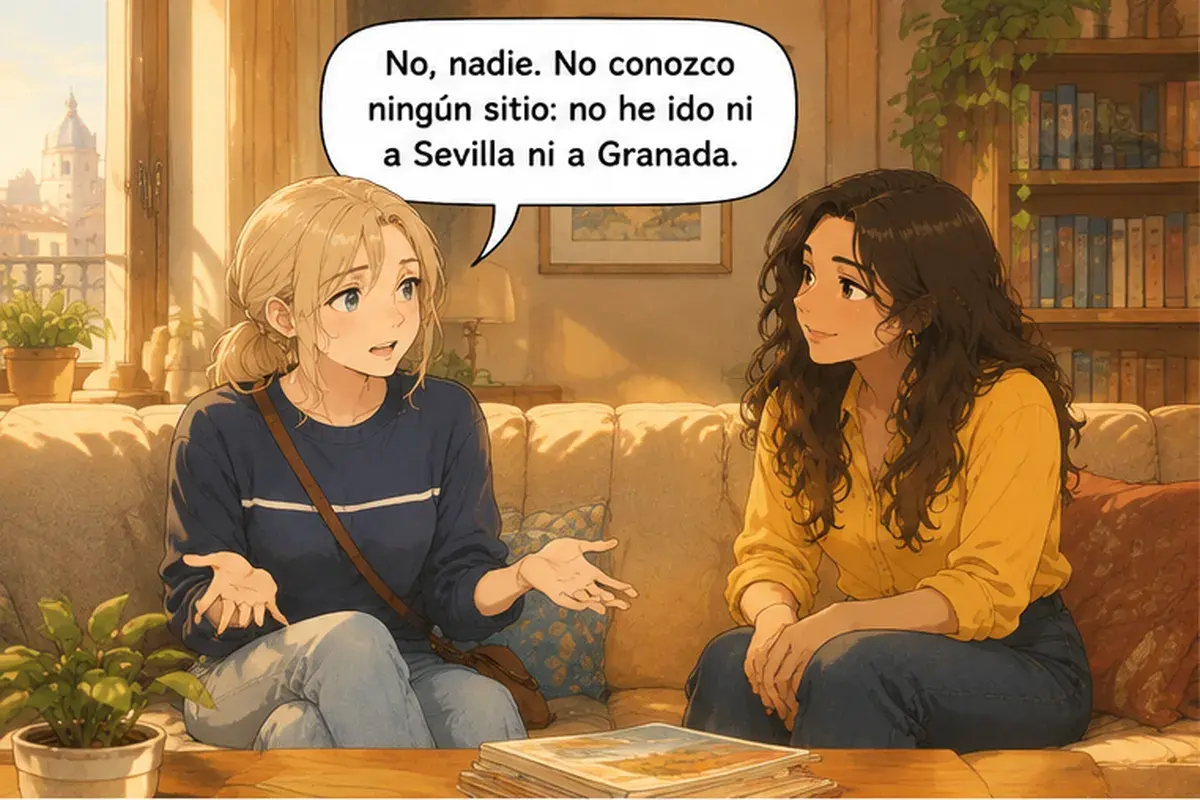
- Ana
No, nadie. No conozco ningún sitio: no he ido ni a Sevilla ni a Granada.
No, no one. I don't know a single place: I haven't been to Seville or to Granada.
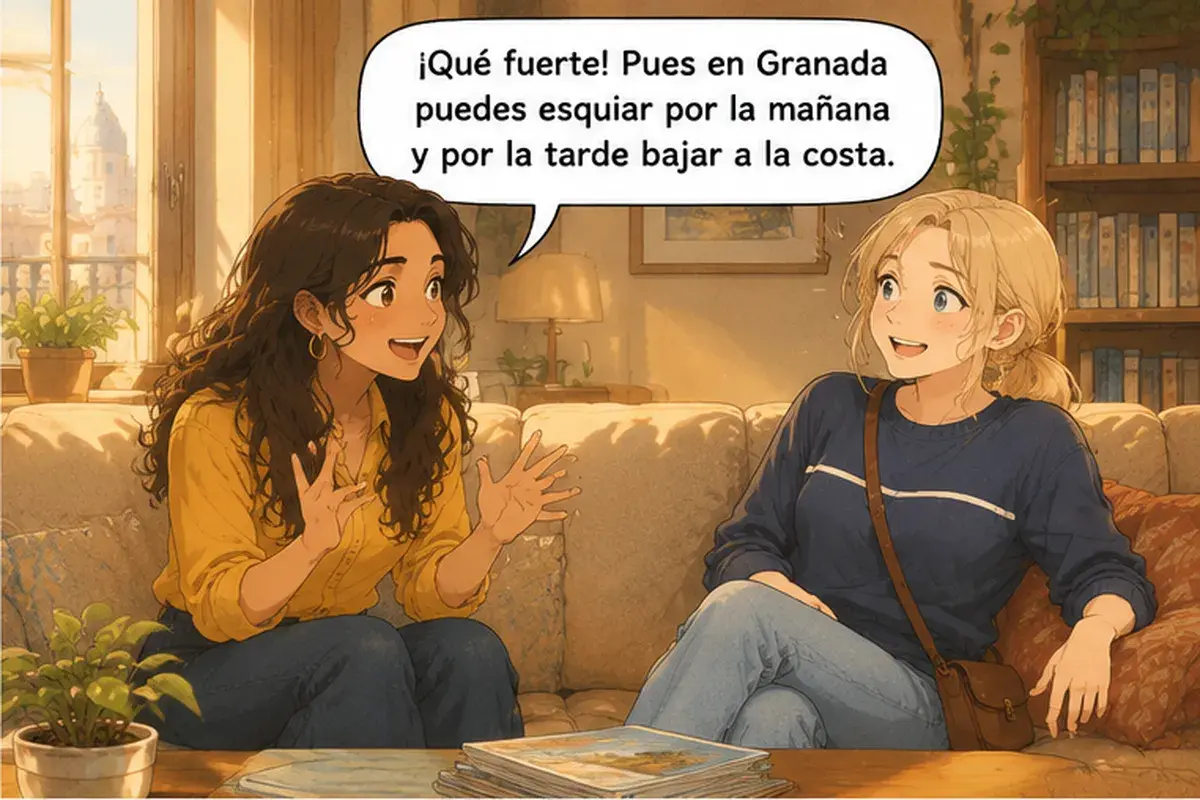
- Rocío
¡Qué fuerte! Pues en Granada puedes esquiar por la mañana y por la tarde bajar a la costa.
No way! Well, in Granada you can ski in the morning and go down to the coast in the afternoon.
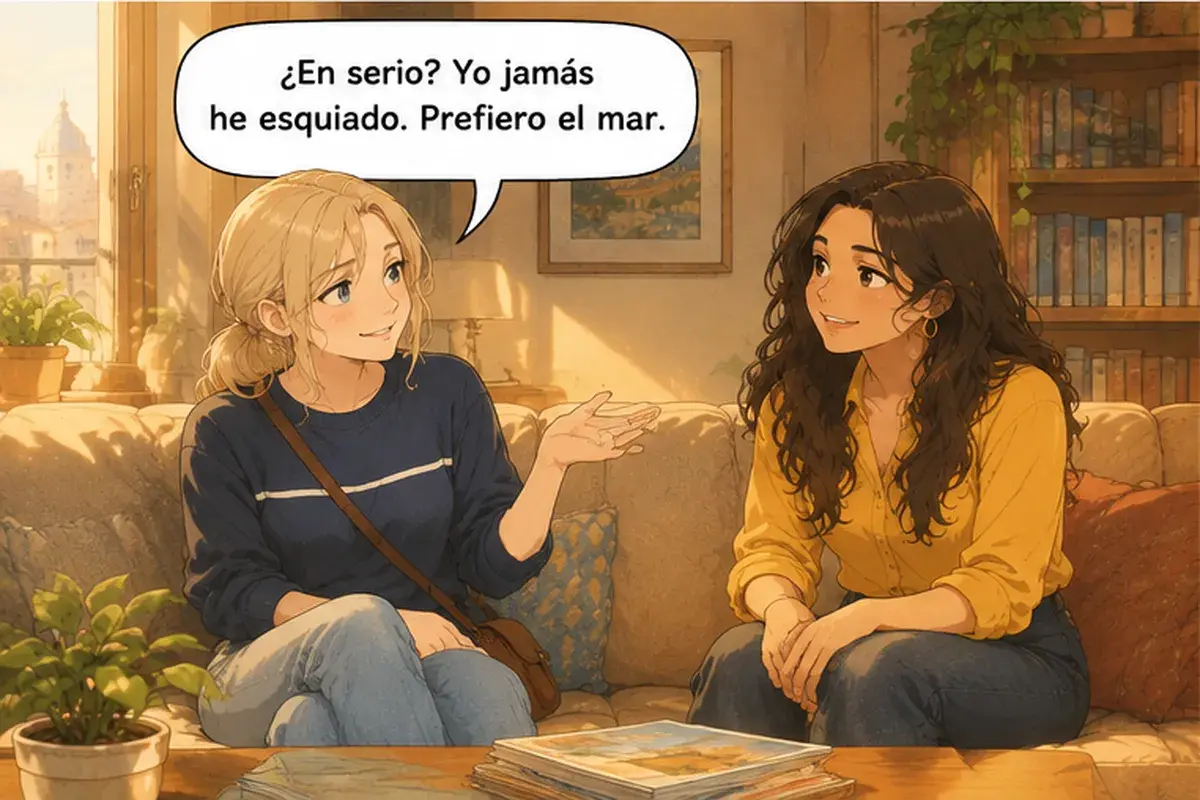
- Ana
¿En serio? Yo jamás he esquiado. Prefiero el mar.
Really? I've never ever skied. I prefer the sea.
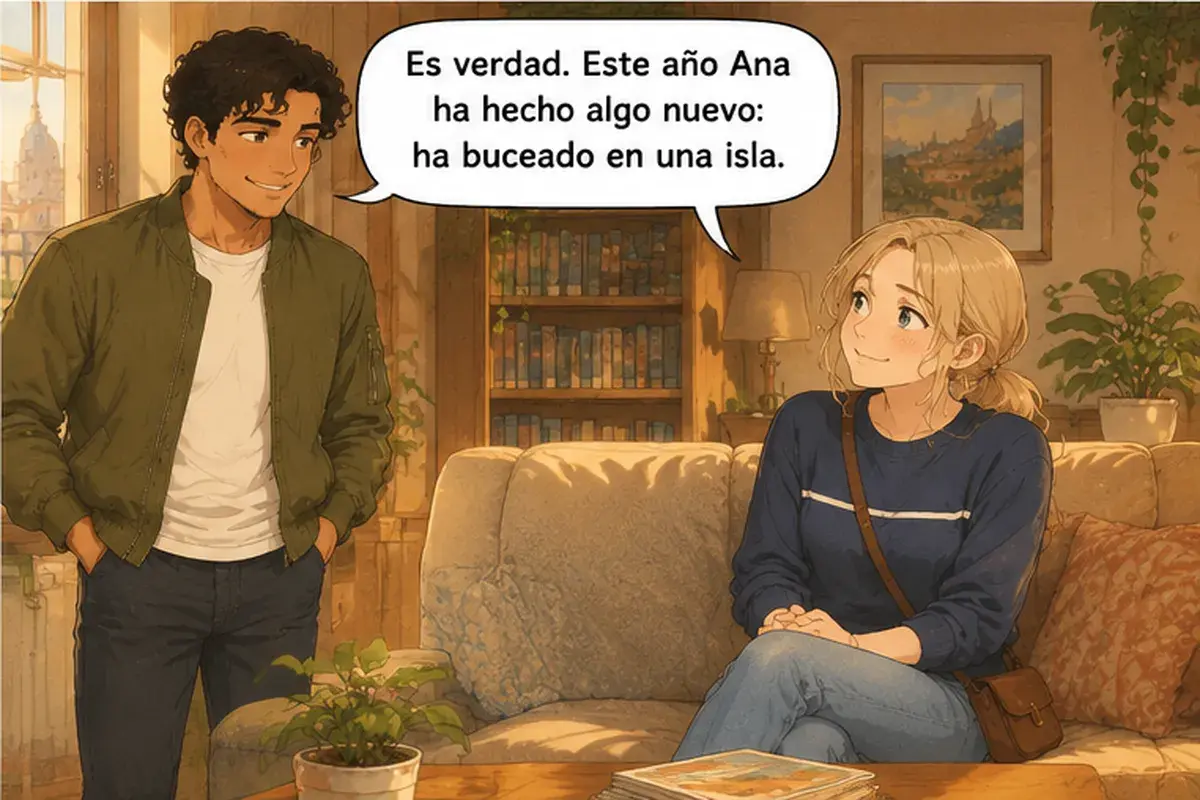
- Pablo
Es verdad. Este año Ana ha hecho algo nuevo: ha buceado en una isla.
It's true. Ana has done something new this year: she went diving on an island.
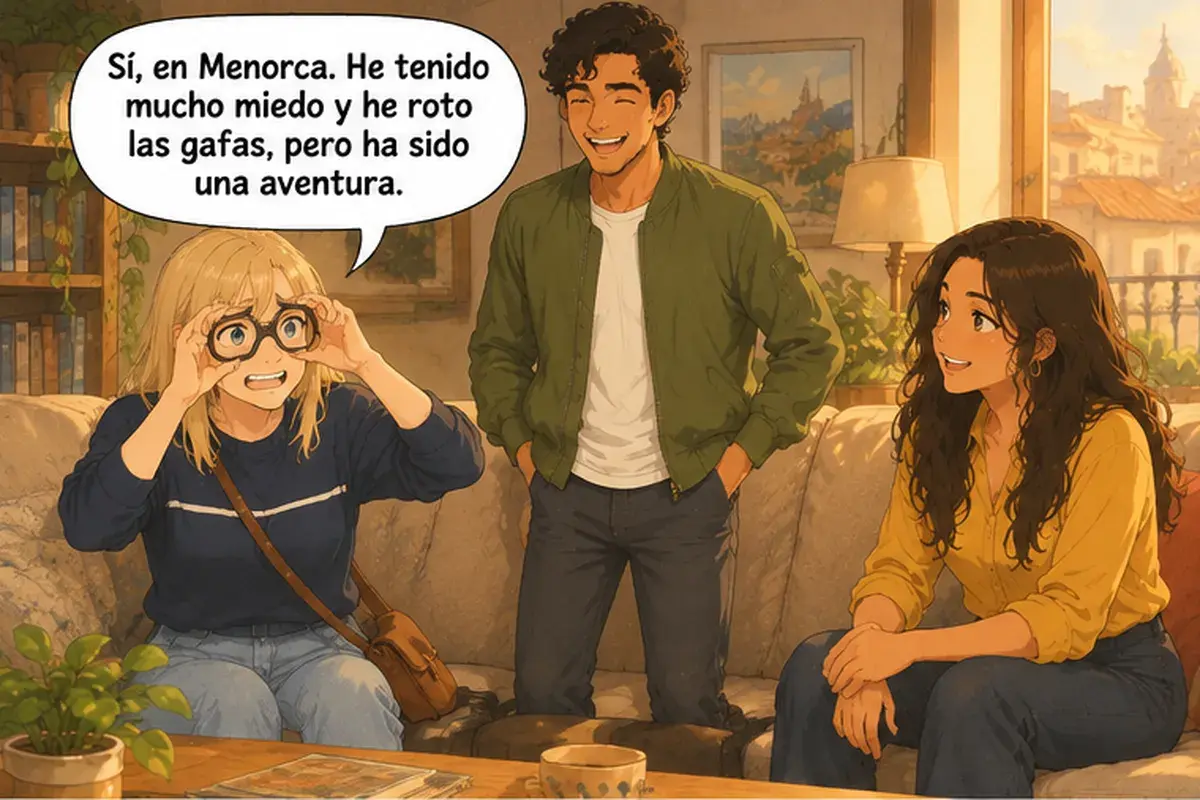
- Ana
Sí, en Menorca. He tenido mucho miedo y he roto las gafas, pero ha sido una aventura.
Yes, in Menorca. I was really scared and I broke my goggles, but it was an adventure.
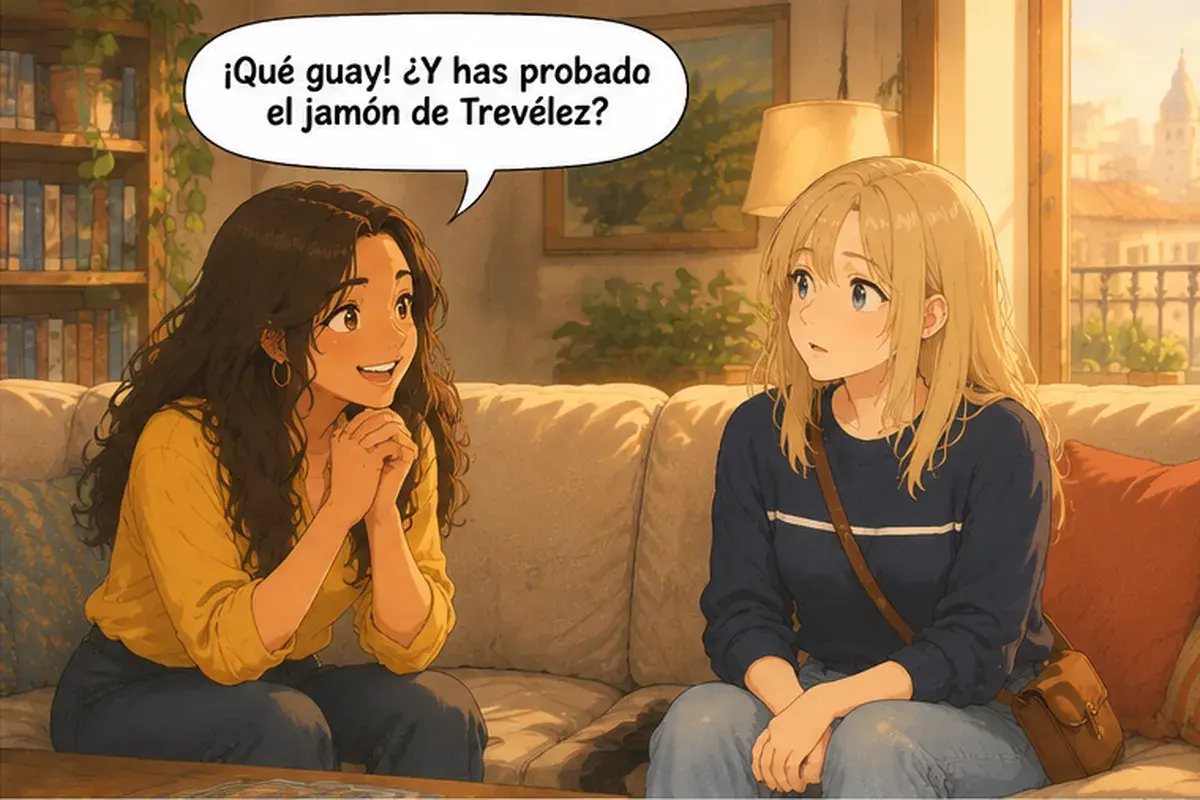
- Rocío
¡Qué guay! ¿Y has probado el jamón de Trevélez?
How cool! And have you tried the cured ham from Trevélez?
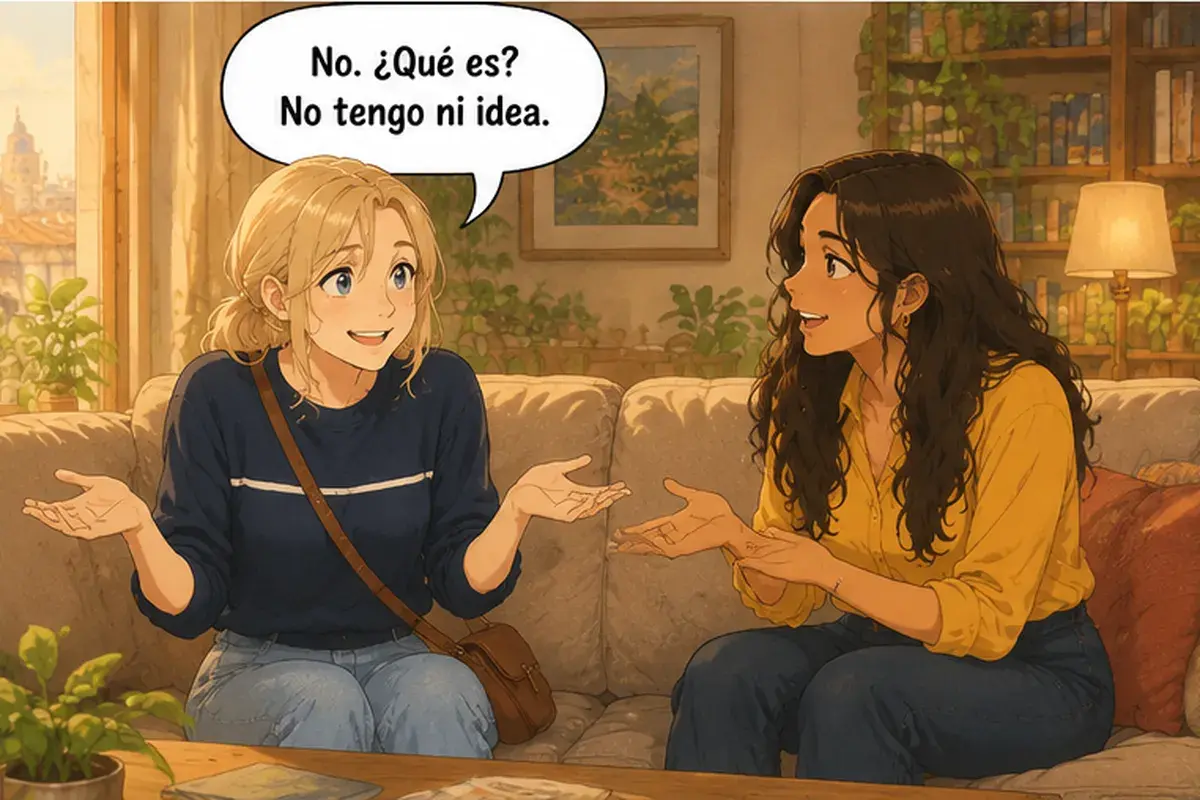
- Ana
No. ¿Qué es? No tengo ni idea.
No. What is it? I have no idea.
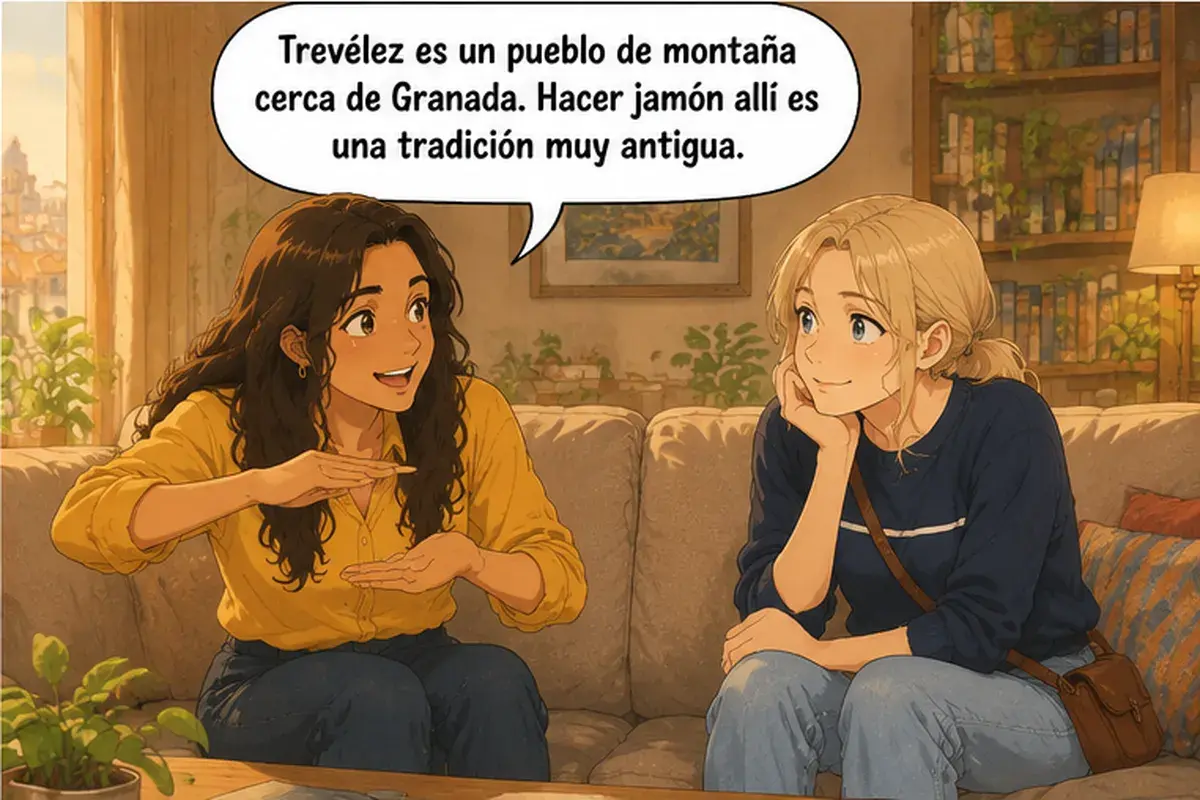
- Rocío
Trevélez es un pueblo de montaña cerca de Granada. Hacer jamón allí es una tradición muy antigua.
Trevélez is a mountain village near Granada. Making ham there is a very old tradition.
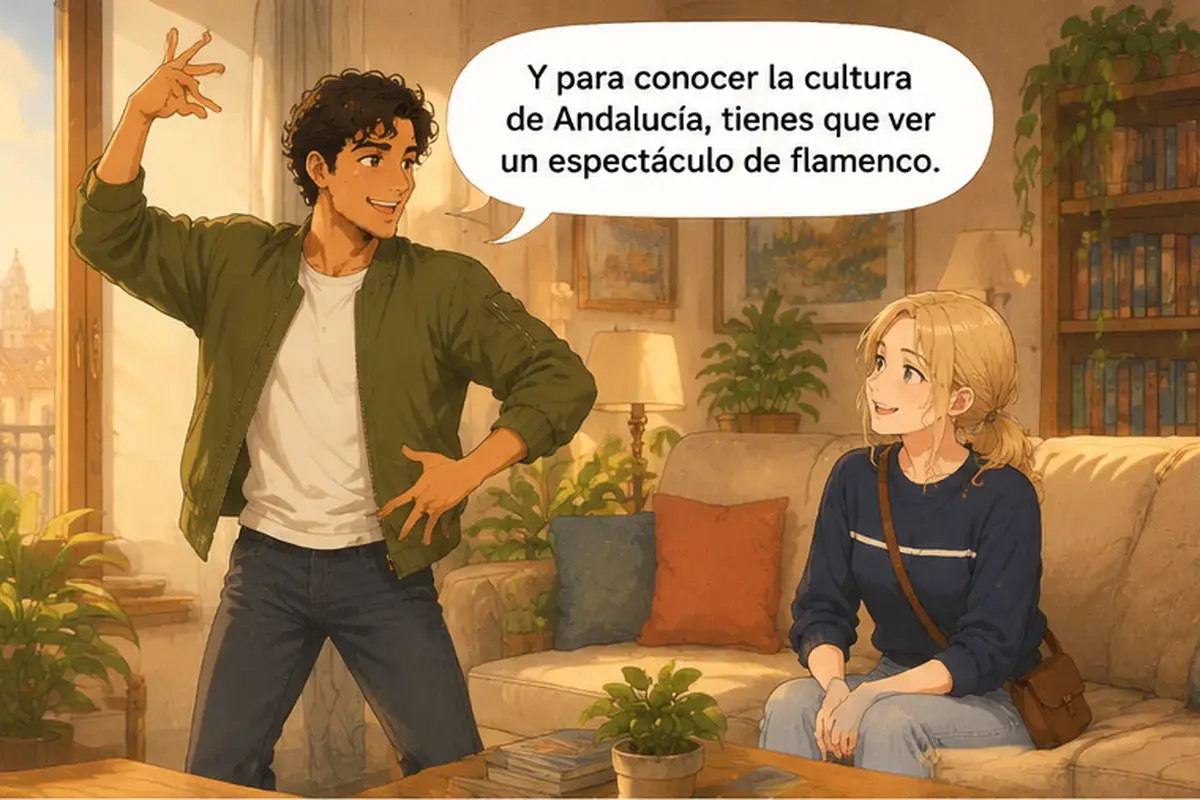
- Pablo
Y para conocer la cultura de Andalucía, tienes que ver un espectáculo de flamenco.
And to get to know the culture of Andalucía, you have to see a flamenco show.
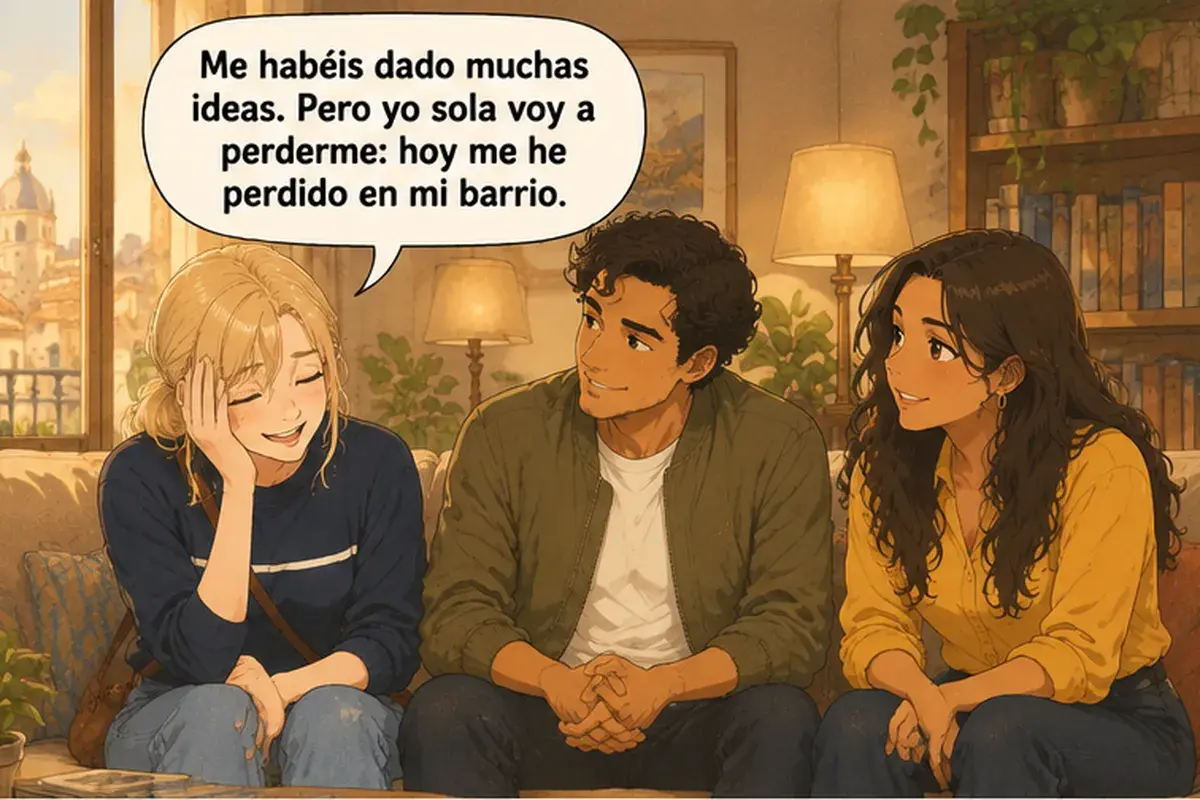
- Ana
Me habéis dado muchas ideas. Pero yo sola voy a perderme: hoy me he perdido en mi barrio.
You've given me lots of ideas. But on my own I'm going to get lost: today I got lost in my neighborhood (to several people, woman speaking).
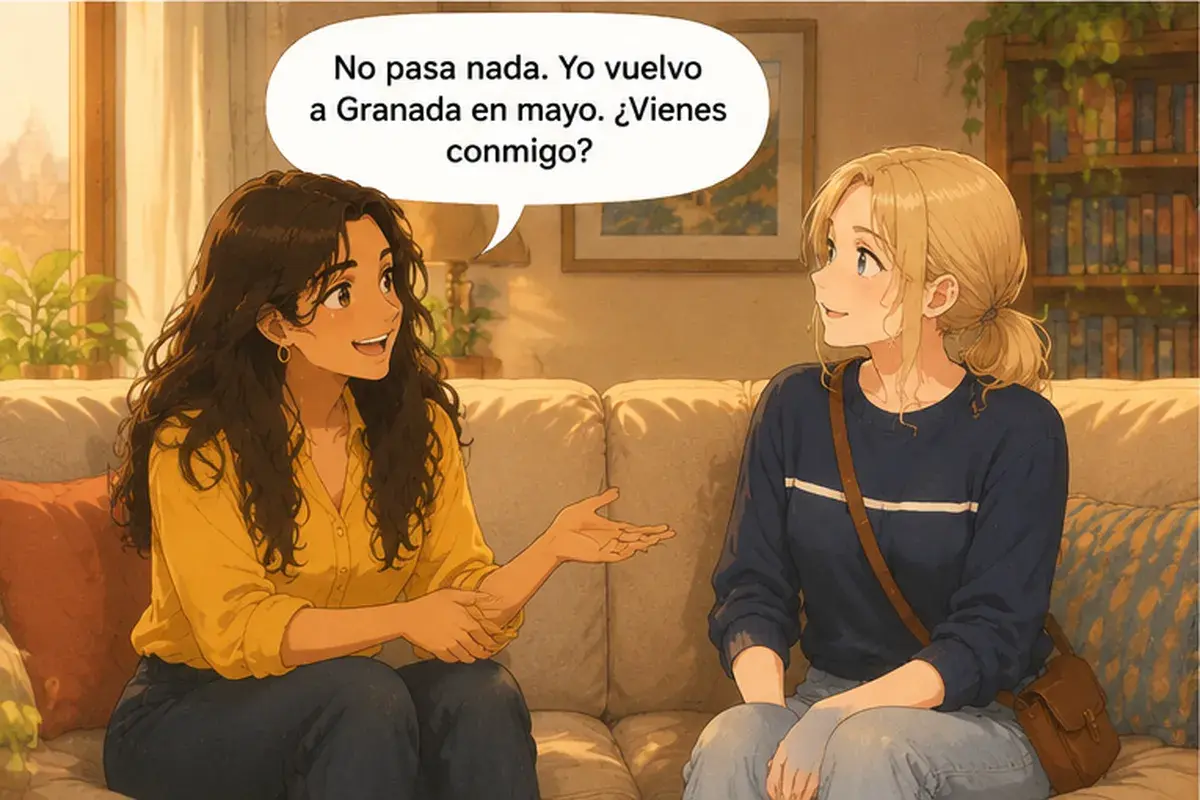
- Rocío
No pasa nada. Yo vuelvo a Granada en mayo. ¿Vienes conmigo?
It's OK. I'm going back to Granada in May. Are you coming with me?
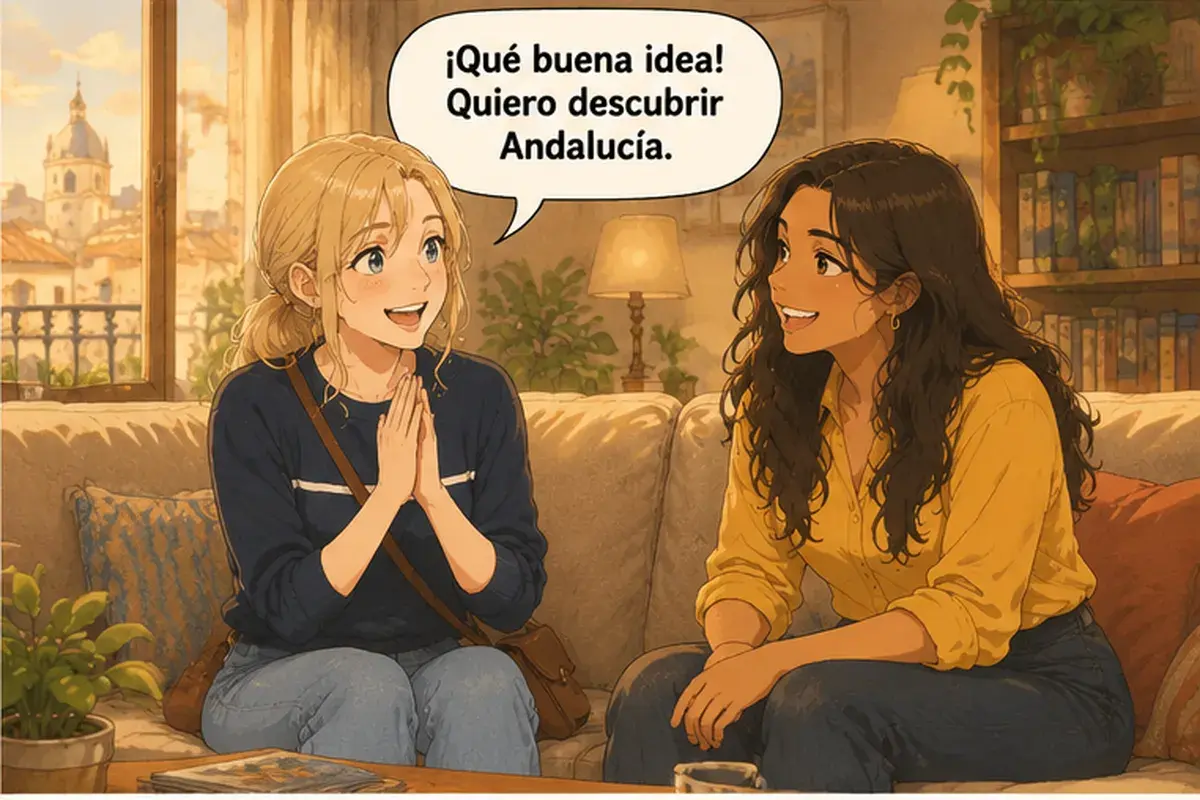
- Ana
¡Qué buena idea! Quiero descubrir Andalucía.
What a good idea! I want to discover Andalucía.
Grammar for this text
Asking about experience. ¿Has estado alguna vez en Andalucía? — "Have you ever been to Andalucía?" The answer "not once" is No, nunca. Stronger: jamás, as in Yo jamás he esquiado — "I've never skied in my life".
Irregular past participles. ha vuelto (from volver), me ha dicho (decir), he visto (ver), ha hecho (hacer), he roto (romper): learn these by heart.
Double negative. No conozco ningún sitio, no he ido ni a Sevilla ni a Granada: ningún and ni... ni come after the verb, so you need no before the verb. algún and ningún are the short forms of alguno and ninguno before a masculine noun.
Perderse — to get lost. Voy a perderme — "I'm going to get lost", me he perdido en mi barrio — "I got lost in my neighborhood". Without me, perder means "to lose"; with me, "to get lost".
Ha sido una aventura — "it was an adventure": sido is the past participle of ser.
Casual Spanish. ¡Qué fuerte! — "no way!", ¡Qué guay! — "how cool!", No tengo ni idea — "I have no idea".
Local touch. From Granada it's easy to get to both the ski slopes of Sierra Nevada and the sea. Trevélez is a mountain village famous for its cured ham (jamón). Flamenco is singing, guitar and dance together; this art comes from Andalucía.
Words and grammar of the unit: Talk about what you've done and seen.
Learn the words from the texts with flashcards
In the app, you can tap any word in a text to see its translation, forms and examples, and new words stick with flashcards. 15 minutes a day.
Start for freeEverything is open for free. No card needed to sign up.