

Spanish dialogue with translation · A2 · 12 lines
El sábado no fui al cine y no llamé On Saturday I didn't go to the movies and I didn't call
Comic · 10 panels
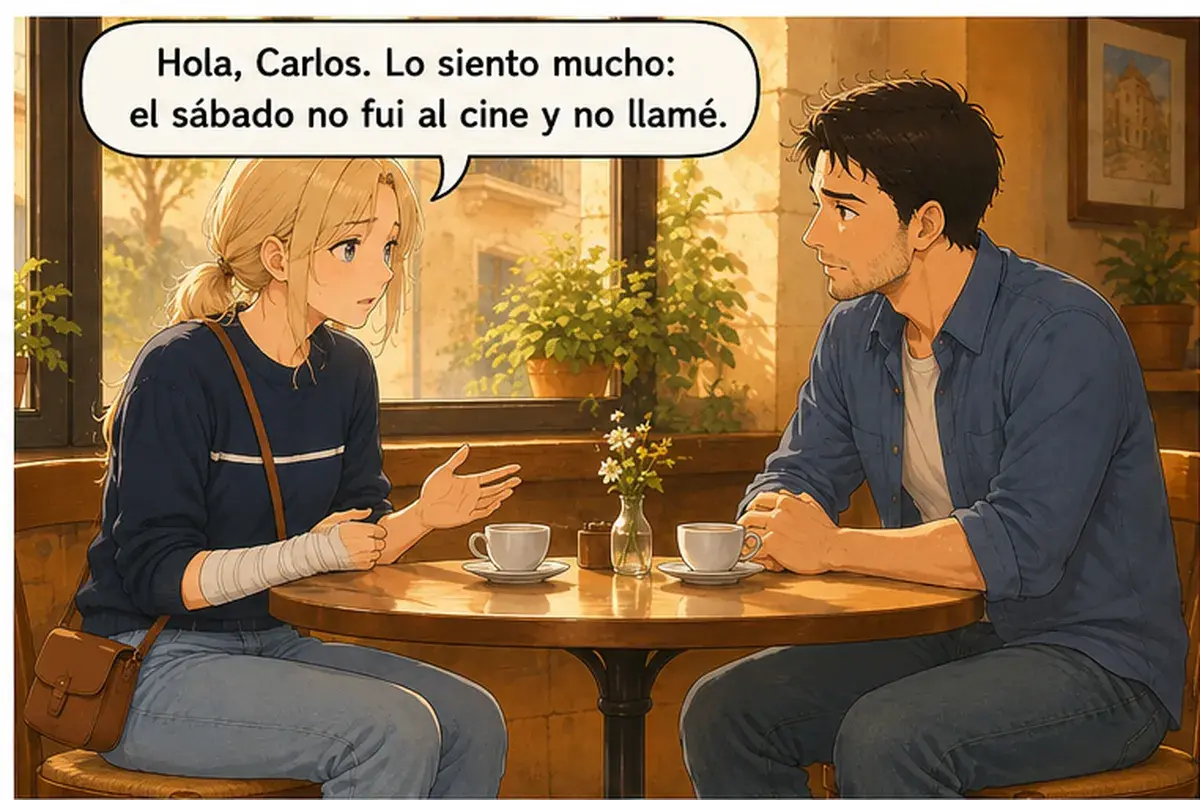
- Ana
Hola, Carlos. Lo siento mucho: el sábado no fui al cine y no llamé.
Hi, Carlos. I'm really sorry: on Saturday I didn't go to the movies and I didn't call.
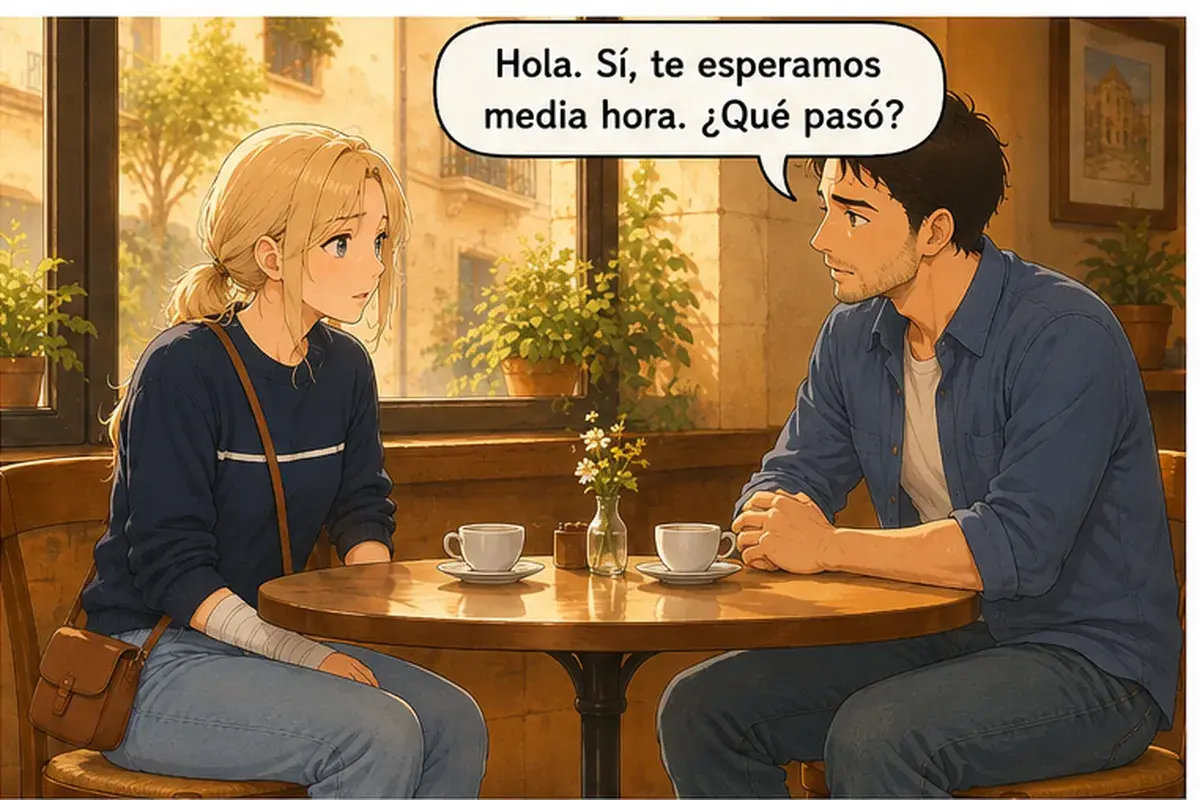
- Carlos
Hola. Sí, te esperamos media hora. ¿Qué pasó?
Hi. Yes, we waited for you for half an hour. What happened?
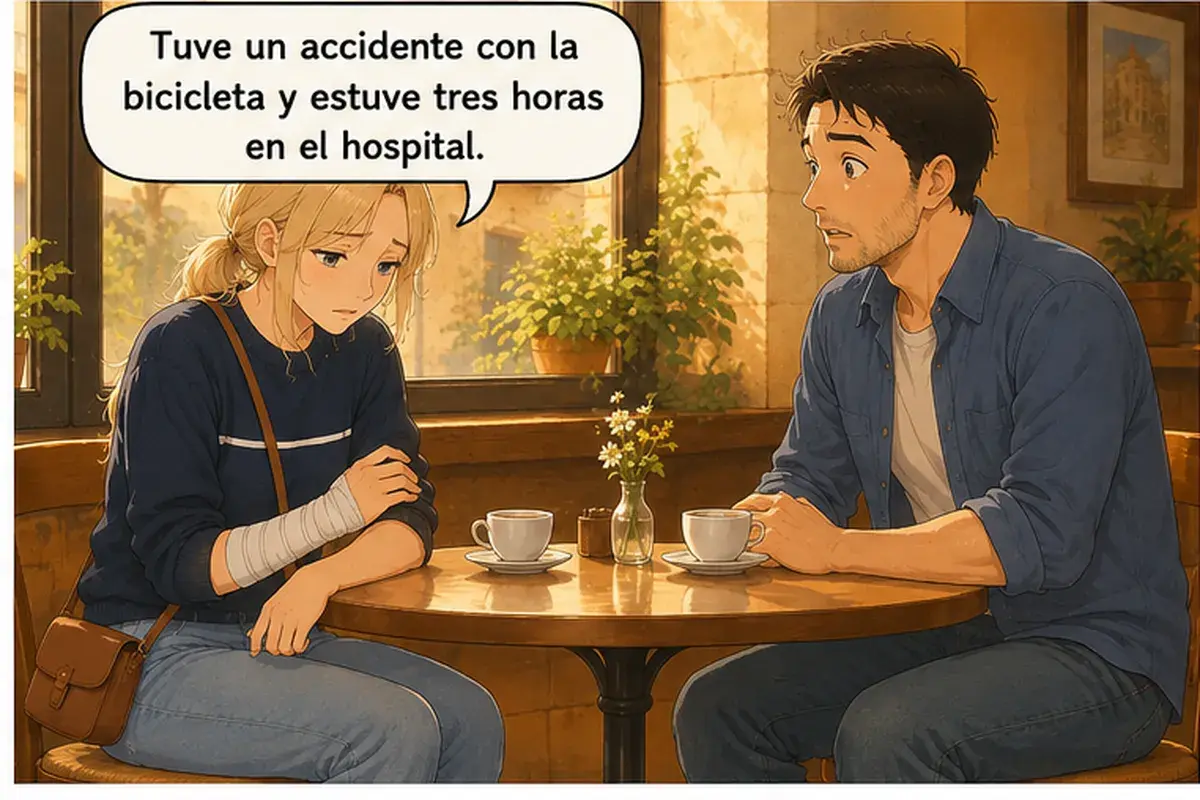
- Ana
Tuve un accidente con la bicicleta y estuve tres horas en el hospital.
I had an accident on my bike and I was at the hospital for three hours.
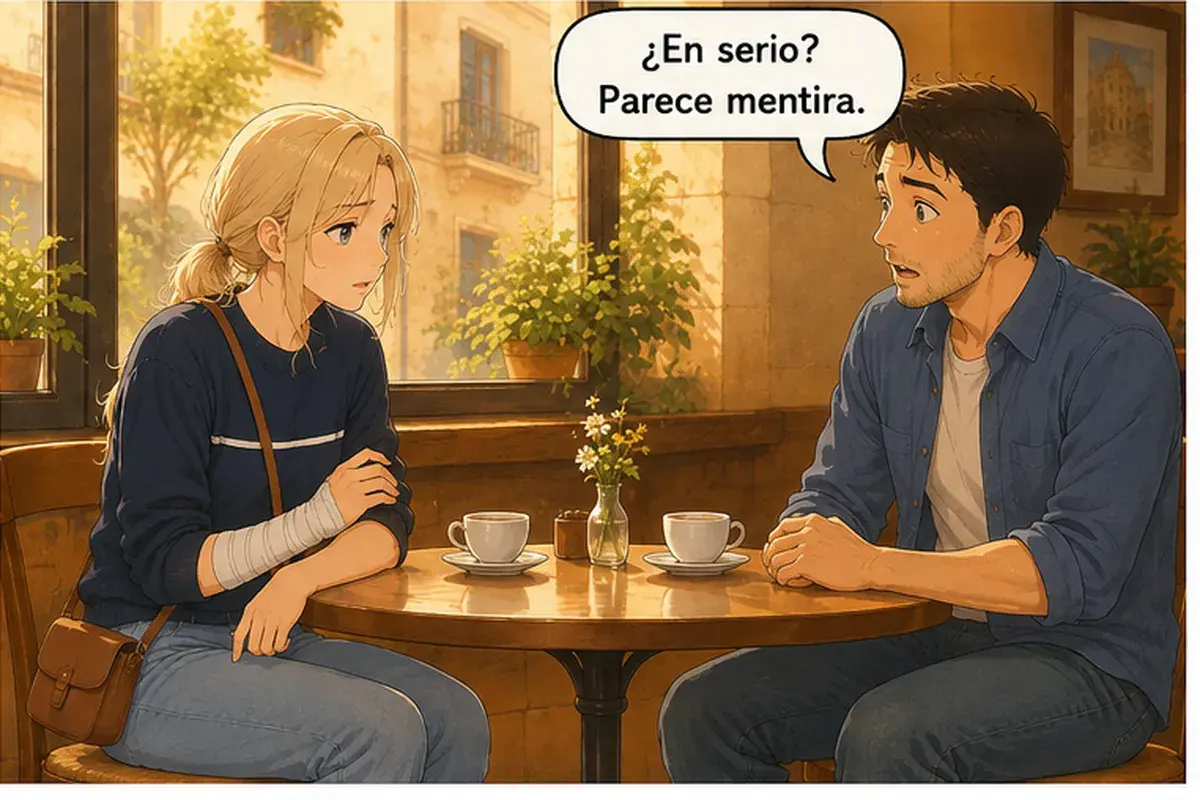
- Carlos
¿En serio? Parece mentira.
Seriously? I can't believe it.
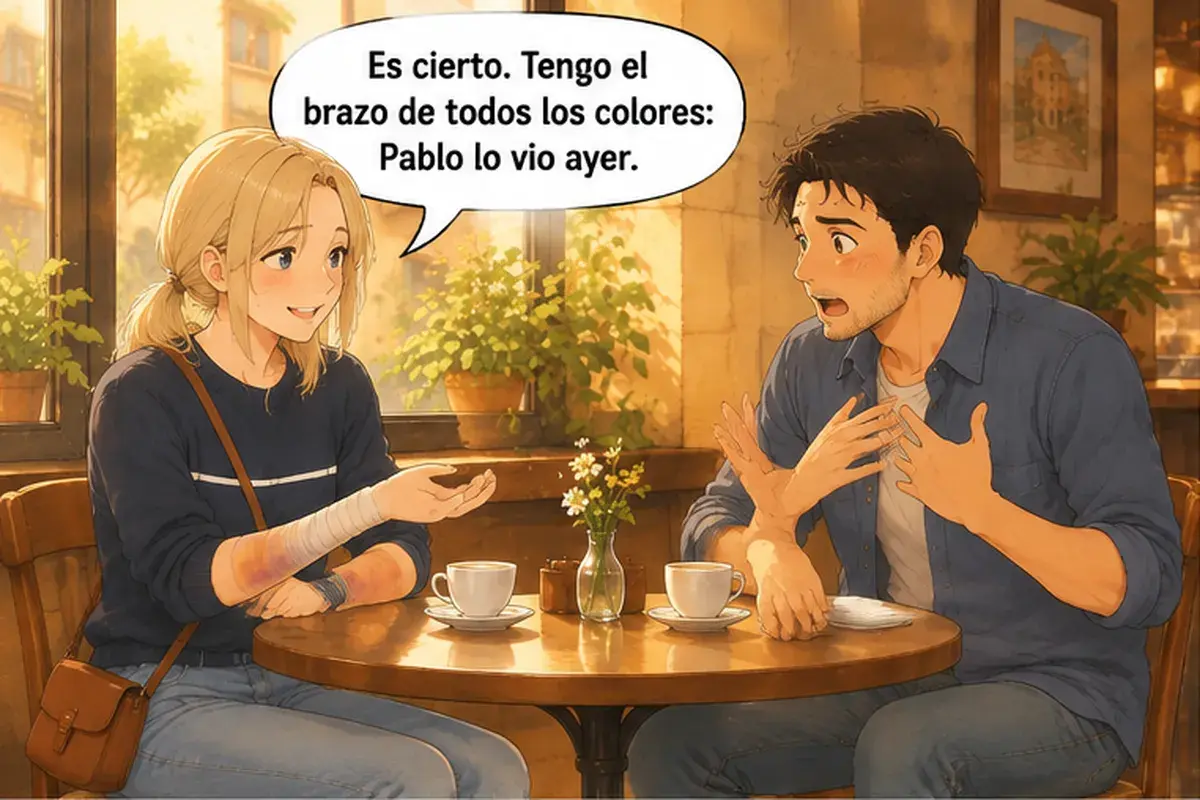
- Ana
Es cierto. Tengo el brazo de todos los colores: Pablo lo vio ayer.
It's true. My arm is all sorts of colors: Pablo saw it yesterday.
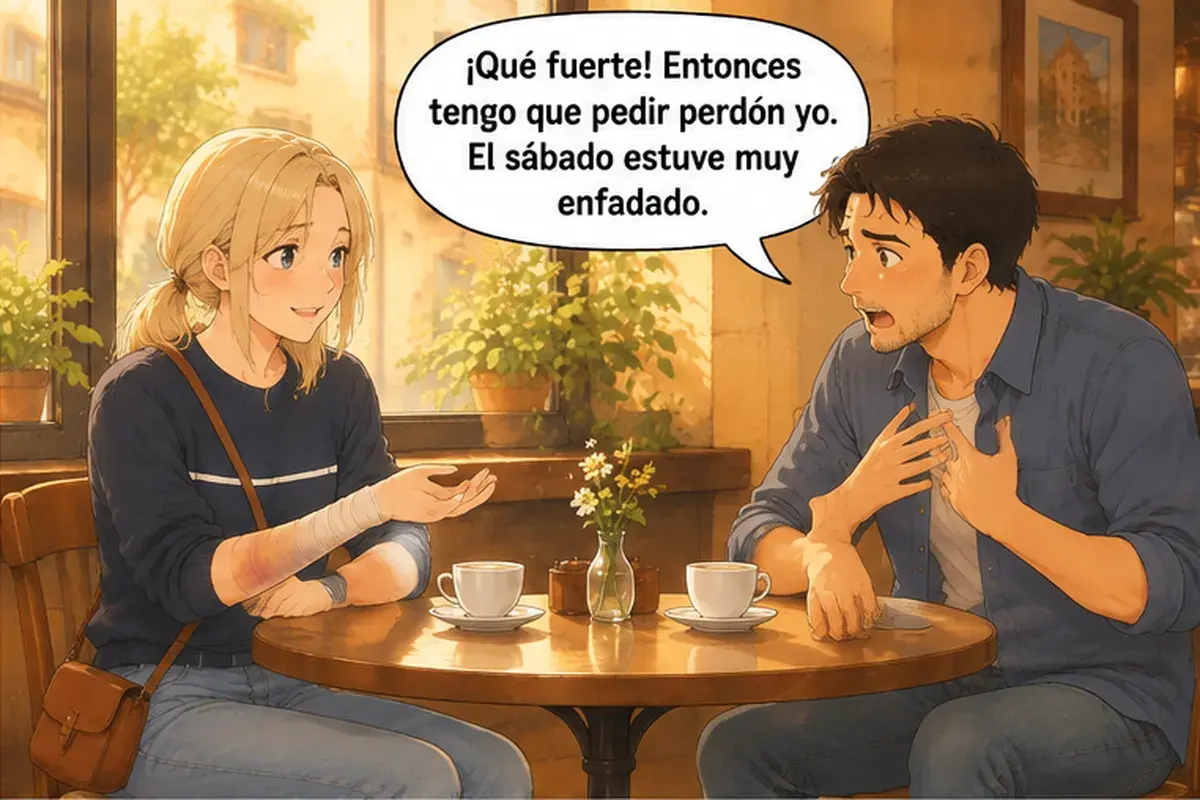
- Carlos
¡Qué fuerte! Entonces tengo que pedir perdón yo. El sábado estuve muy enfadado.
No way! Then I'm the one who has to apologize. On Saturday I was really angry (man speaking).
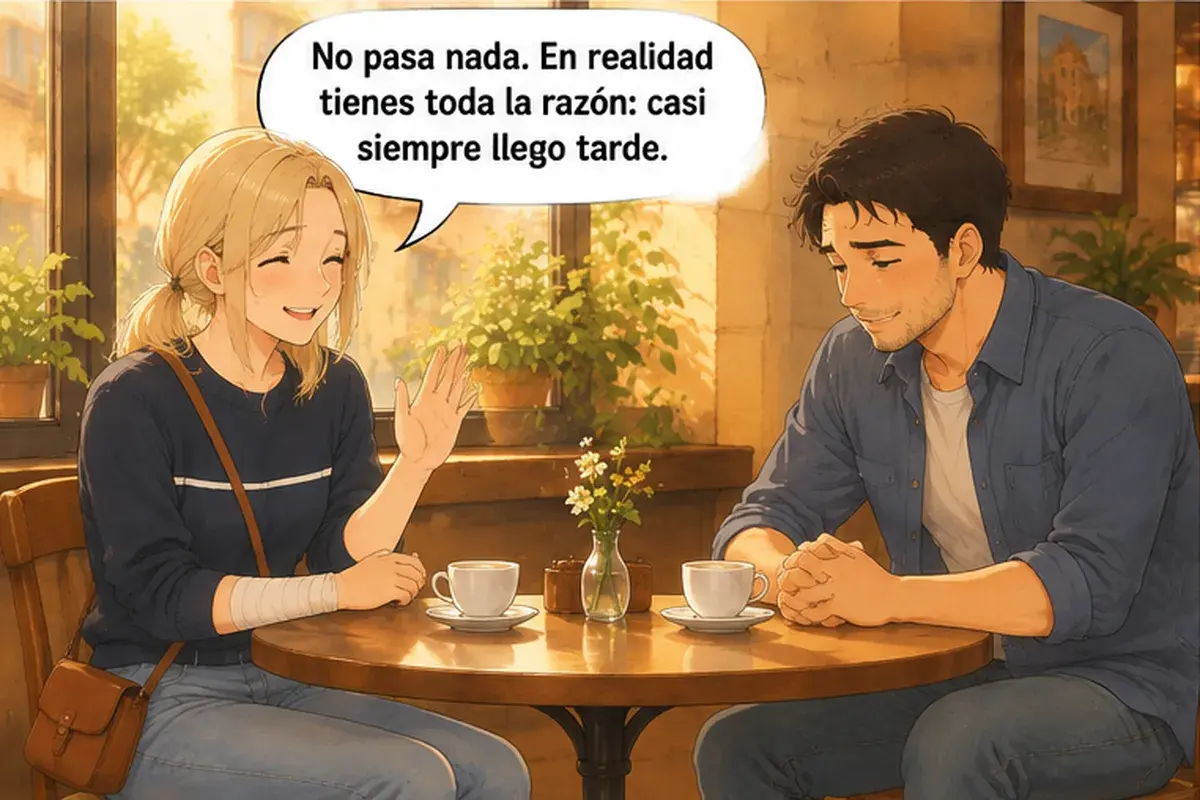
- Ana
No pasa nada. En realidad tienes toda la razón: casi siempre llego tarde.
It's OK. Actually, you're absolutely right: I'm almost always late.
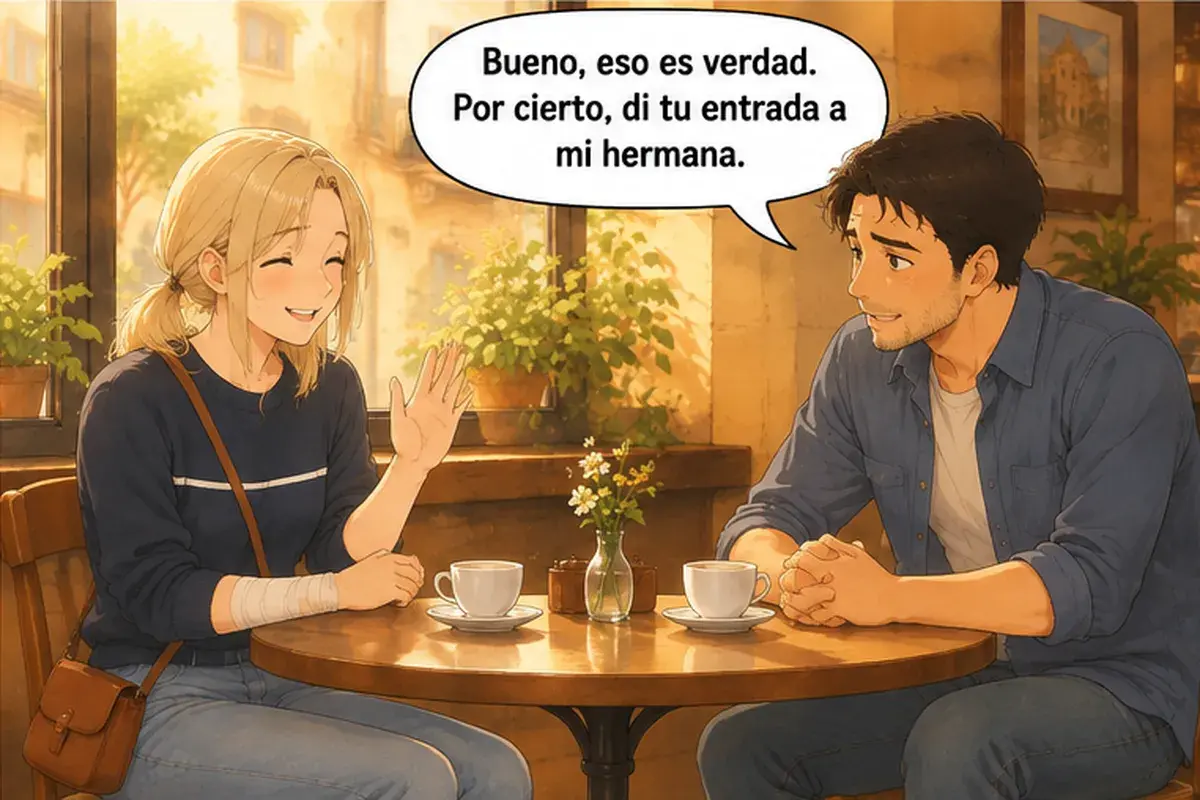
- Carlos
Bueno, eso es verdad. Por cierto, di tu entrada a mi hermana.
Well, that's true. By the way, I gave your ticket to my sister.
- Ana
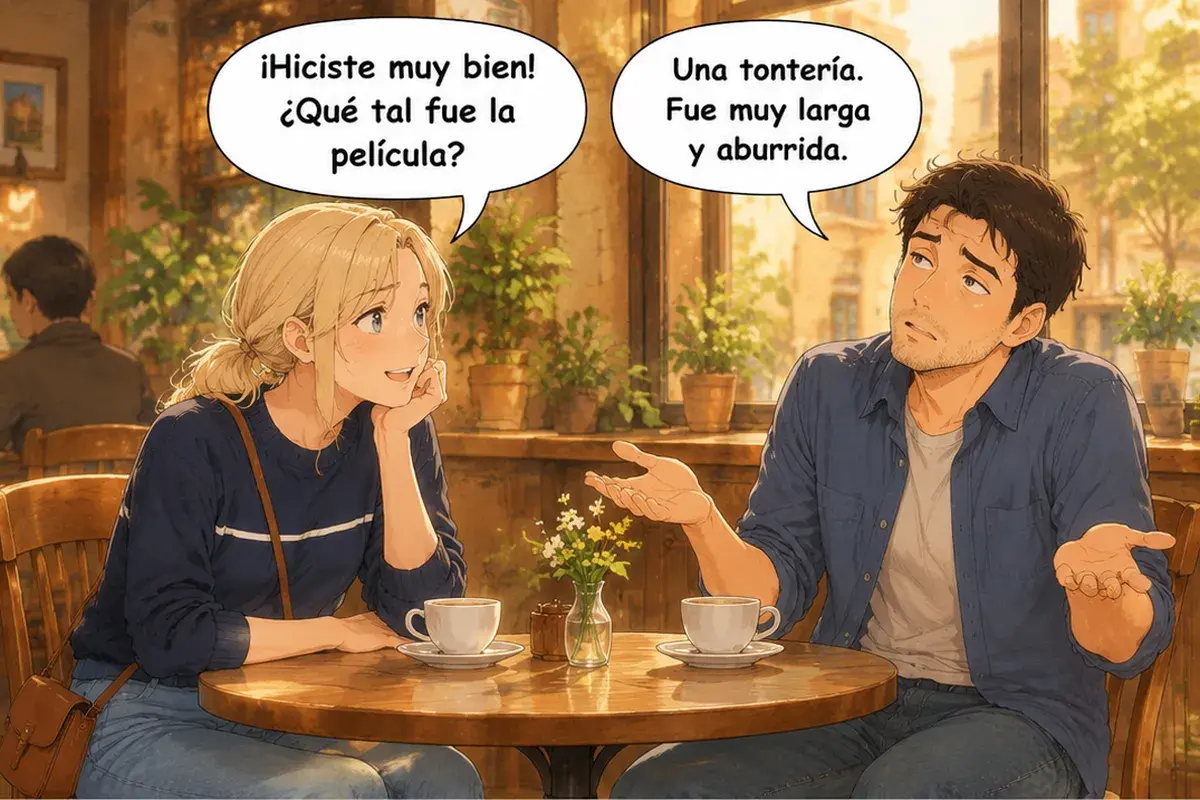
¡Hiciste muy bien! ¿Qué tal fue la película?
You did the right thing! How was the movie?
- Carlos
Una tontería. Fue muy larga y aburrida.
Nonsense. It was very long and boring.
- Ana
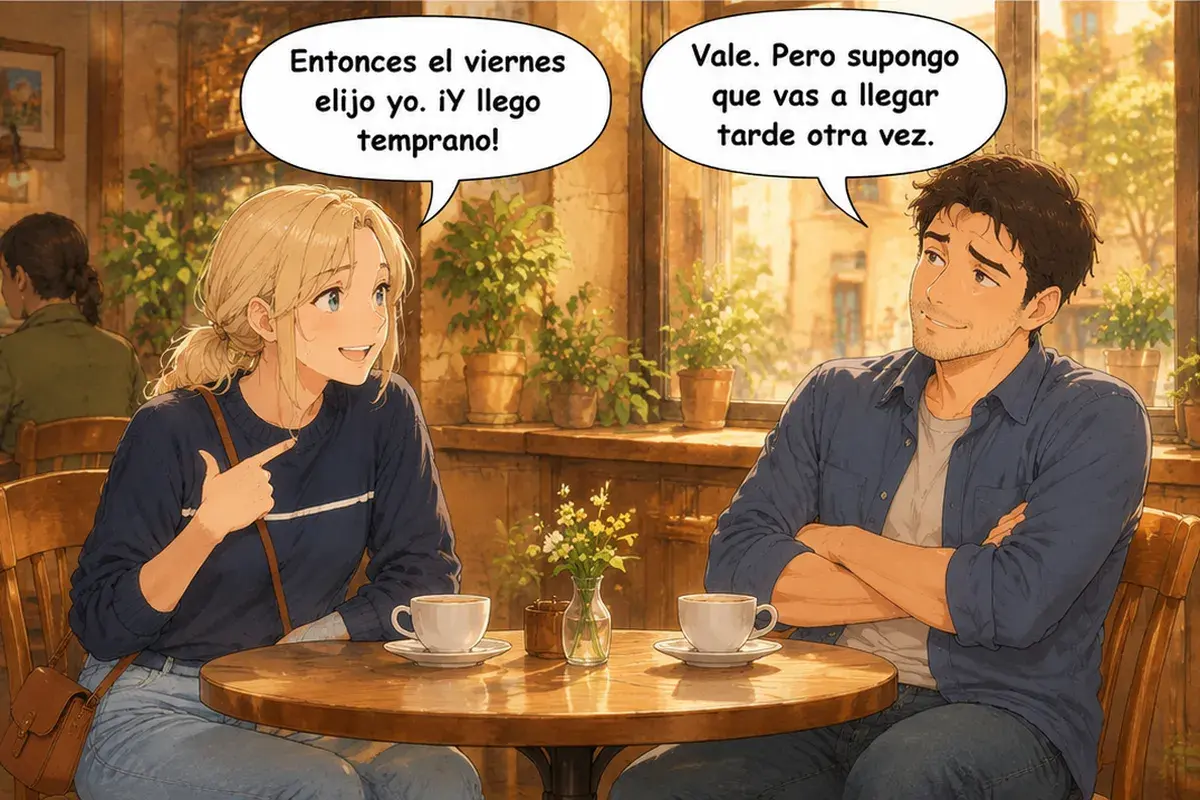
Entonces el viernes elijo yo. ¡Y llego temprano!
Then on Friday I choose. And I'll be there early!
- Carlos
Vale. Pero supongo que vas a llegar tarde otra vez.
OK. But I suppose you're going to be late again.
Grammar for this text
Parece mentira — "I can't believe it", word for word "it seems like a lie". The answer to that is Es cierto — "it's true".
Tienes toda la razón — "you're absolutely right". You know tener razón (A1, unit 15); toda makes it stronger.
Irregular verbs in the preterite:
- no fui al cine — "I didn't go to the movies" (ir);
- tuve un accidente — "I had an accident" (tener);
- estuve tres horas en el hospital, estuve muy enfadado — estar: where someone was, or how they felt, for some time;
- Pablo lo vio — "Pablo saw it" (ver); lo stands for el brazo (unit 5);
- di tu entrada — "I gave away your ticket" (dar);
- hiciste muy bien — "you did the right thing" (hacer);
- fue muy larga — "it was very long" (ser).
El viernes elijo yo — "on Friday I choose". Elijo is the yo form of elegir: the e in the stem changes to i, and before o the g is spelled j to keep the same throaty sound. Yo at the end adds emphasis: me, not you.
Supongo que… — "I suppose...", "I guess..." (supongo is the yo form of suponer: a g is added, like in pongo): a soft way to make a guess. Una tontería — "nonsense": you can say it about something silly someone did or about a bad movie.
Words and grammar of the unit: Apologize and explain what happened.
Learn the words from the texts with flashcards
In the app, you can tap any word in a text to see its translation, forms and examples, and new words stick with flashcards. 15 minutes a day.
Start for freeEverything is open for free. No card needed to sign up.