

Spanish story with translation · A2 · 16 lines
El grifo de la cocina gotea The kitchen faucet is dripping
Comic · 12 panels

Hola, Carmen. Soy Ana, su inquilina.
Hi, Carmen. This is Ana, your tenant. (formal)
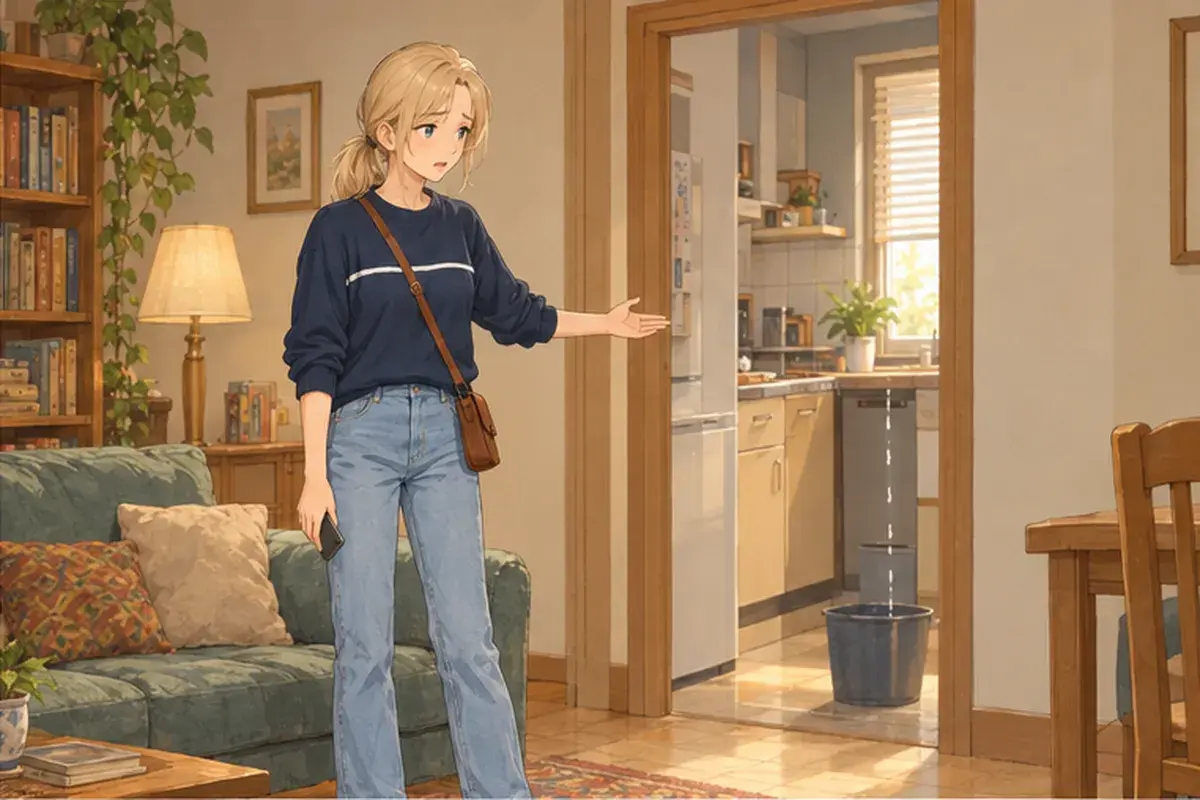
Le escribo porque en el piso hay varios problemas.
I'm writing to you because there are several problems in the apartment. (formal)
El grifo de la cocina gotea desde hace una semana, y la ducha se atasca casi todos los días.
The kitchen faucet has been dripping for a week, and the shower gets clogged almost every day.
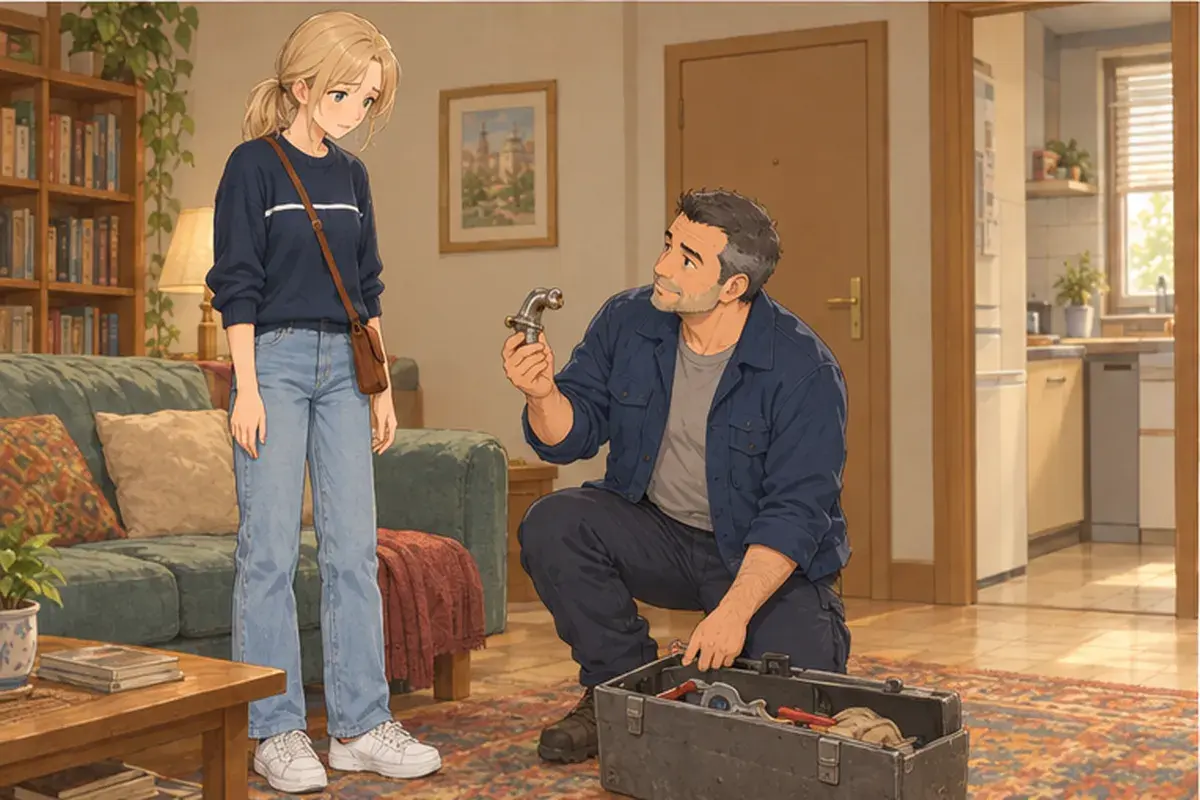
Hoy ha venido el fontanero. Dice que el grifo es muy viejo y que hay que cambiarlo cuanto antes.
The plumber came today. He says the faucet is very old and that it needs to be replaced as soon as possible.
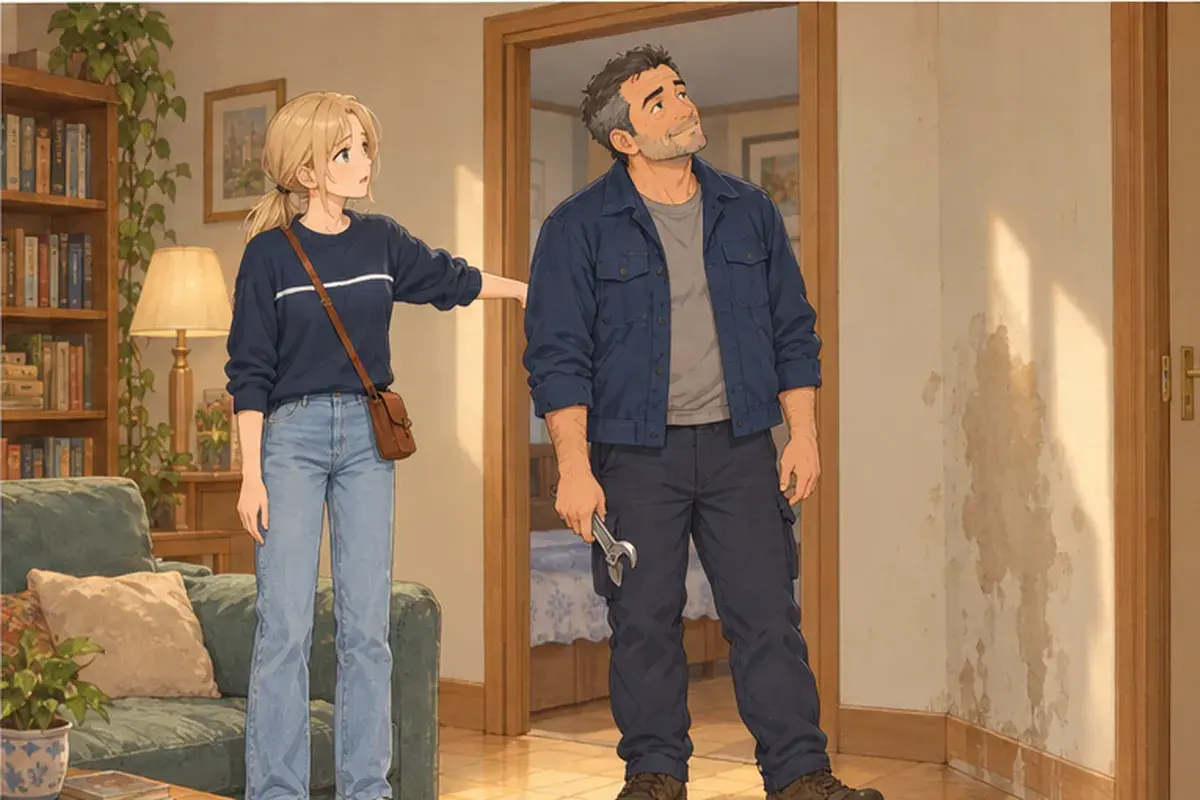
Pero hay algo peor: en mi habitación ha aparecido una gotera y ya hay humedad en la pared.
But there's something worse: a leak has appeared in my room, and there's already dampness on the wall.
El fontanero asegura que el agua viene del piso de arriba.
The plumber insists the water is coming from the apartment upstairs.

Carmen, en el piso de arriba vive usted. ¿Puede mirar su baño, por favor?
Carmen, you live in the apartment upstairs. Can you check your bathroom, please? (formal)

Hay más. La persiana del salón no baja y la cerradura de la puerta funciona mal.
There's more. The living room blind won't go down, and the door lock doesn't work properly.
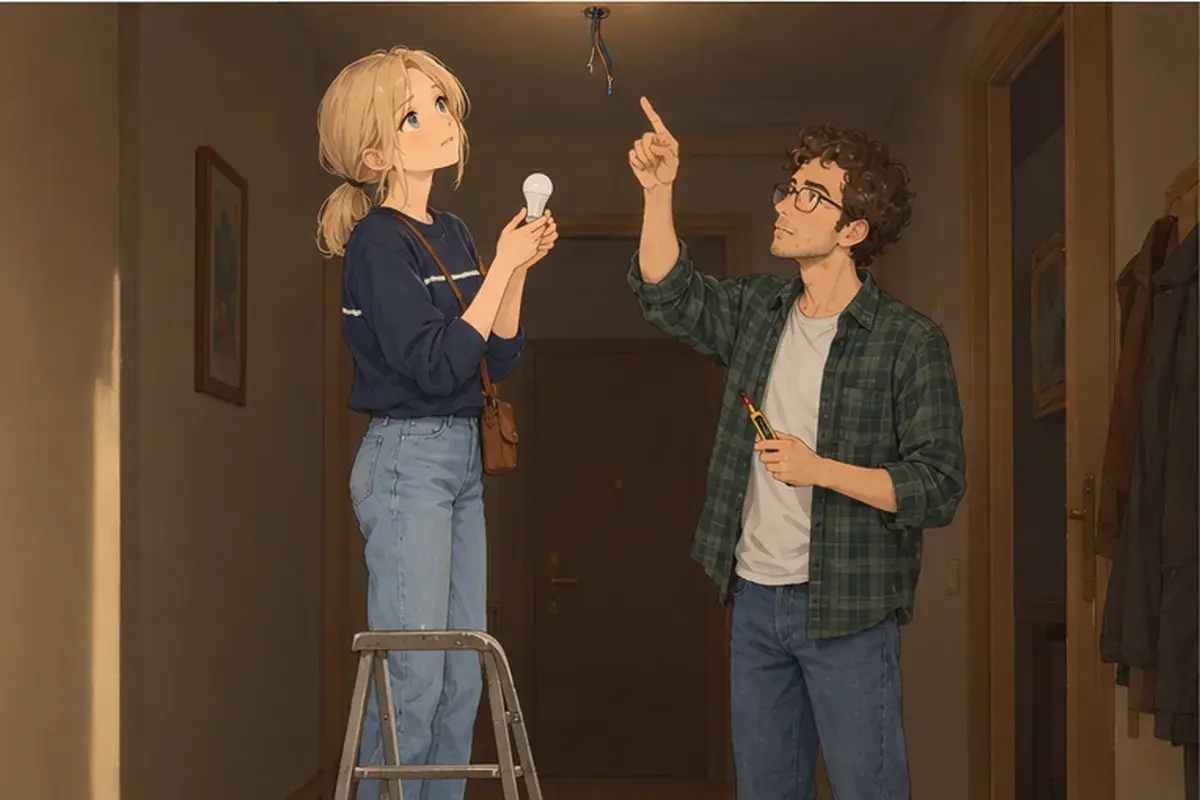
La luz del pasillo tampoco funciona. Ya he cambiado la bombilla dos veces.
The hallway light doesn't work either. I've already changed the bulb twice.
Mi vecino, que es electricista, dice que el problema no es la bombilla: es el cable.
My neighbor, who's an electrician, says the problem isn't the bulb: it's the wire.
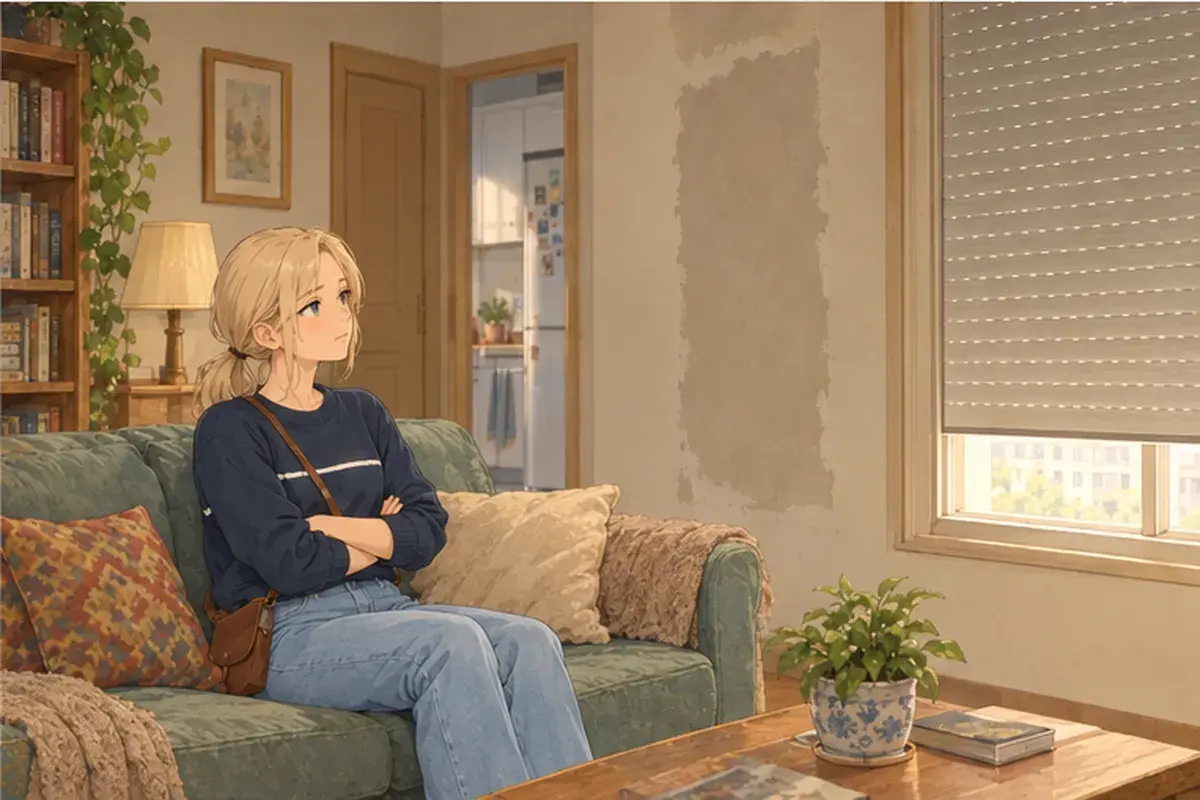
En agosto usted me prometió arreglar la persiana y pintar el salón. Todavía estoy esperando.
In August you promised me you'd fix the blind and paint the living room. I'm still waiting. (formal)

Tengo una idea: si usted compra la pintura, pinto yo.
I have an idea: if you buy the paint, I'll do the painting. (formal)
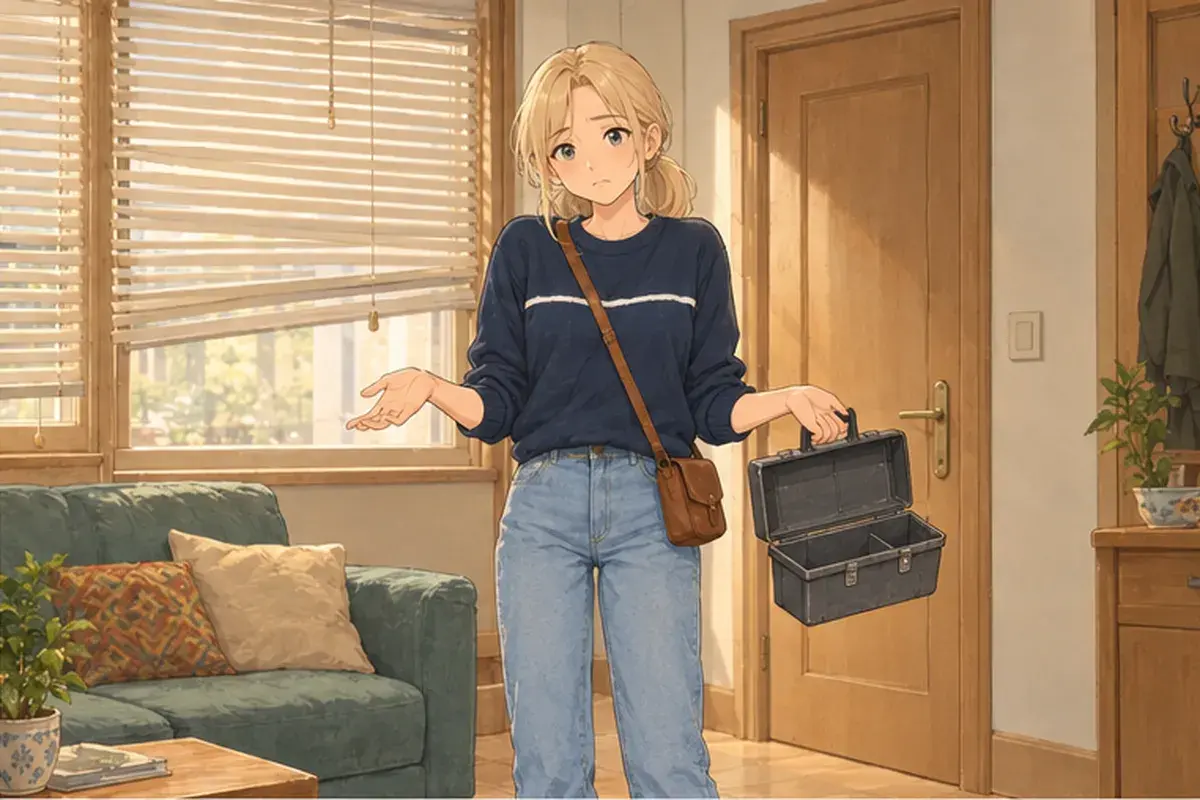
Para la persiana y la cerradura hay que llamar a un técnico: yo no tengo herramientas.
For the blind and the lock, someone needs to call a technician: I don't have any tools.

El fontanero dice que puede volver mañana a las diez, a su casa y a la mía.
The plumber says he can come back tomorrow at ten, to your place and to mine. (formal)
También dice que el arreglo no es caro si lo hacemos ahora.
He also says the repair isn't expensive if we do it now.

¿Le va bien mañana? Espero su respuesta. Un saludo, Ana.
Does tomorrow work for you? I look forward to your reply. Regards, Ana. (formal)
Grammar for this text
Dice que… Ana passes on what the repair people said to her landlady: Dice que el grifo es muy viejo y que hay que cambiarlo — he says the faucet is very old and that it needs to be replaced. Que is repeated before each new idea. Asegura que works the same way — "insists that", "assures someone that".
Cambiarlo = cambiar + lo, "to replace it": the pronoun is attached to the end of the infinitive (unit 5).
Hay que llamar a un técnico — "someone needs to call a technician": it doesn't say who will call, and that's exactly the hint.
Me prometió arreglar… — "you promised me you'd fix…": after prometer you can simply use an infinitive.
Mi vecino, que es electricista — "my neighbor, who's an electrician" (unit 17).
Formal you. Ana writes to her landlady with usted: le escribo, su baño, ¿le va bien? — "does it work for you?" A su casa y a la mía — "to your place and to mine", word for word "to your house and to mine".
Words and grammar of the unit: Explain what's broken.
Learn the words from the texts with flashcards
In the app, you can tap any word in a text to see its translation, forms and examples, and new words stick with flashcards. 15 minutes a day.
Start for freeEverything is open for free. No card needed to sign up.