

Spanish dialogue with translation · A2 · 15 lines
¿Ya has comprado el pan? Have you bought the bread yet?
Comic · 14 panels
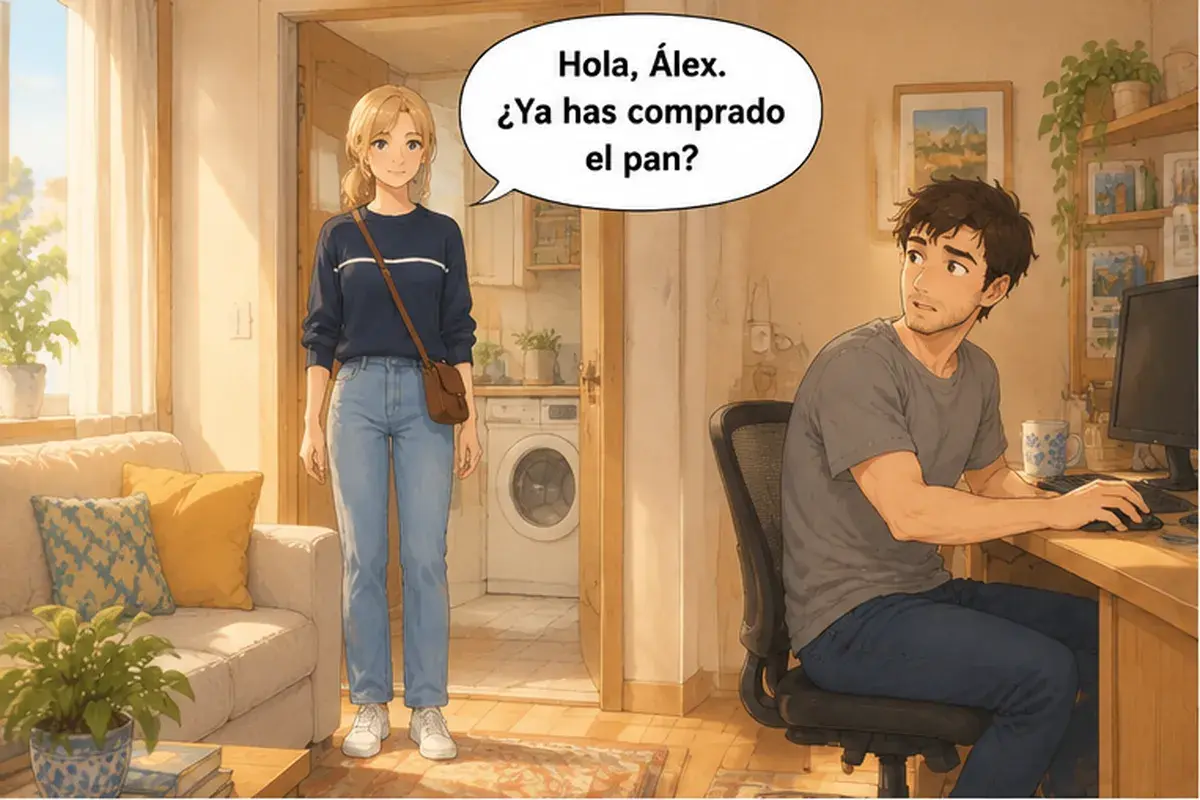
- Ana
Hola, Álex. ¿Ya has comprado el pan?
Hi, Álex. Have you bought the bread yet?
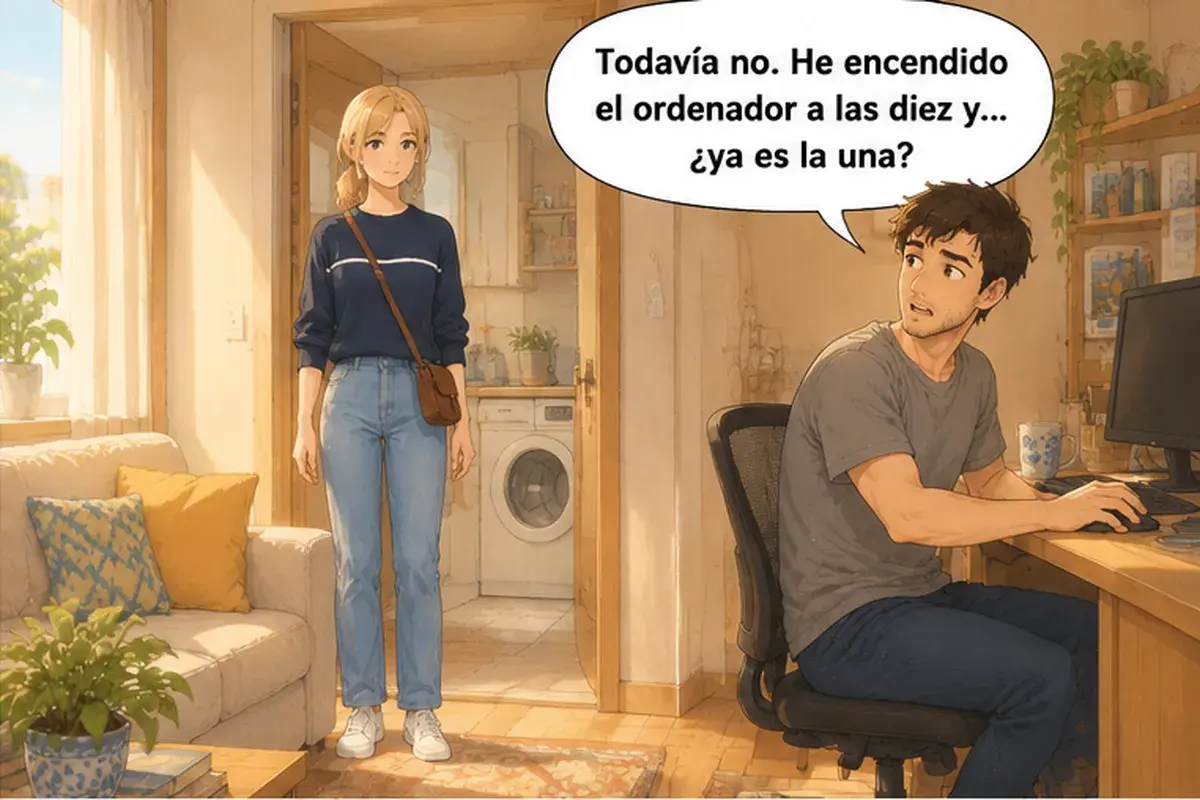
- Álex
Todavía no. He encendido el ordenador a las diez y… ¿ya es la una?
Not yet. I turned on the computer at ten and… is it one o'clock already?
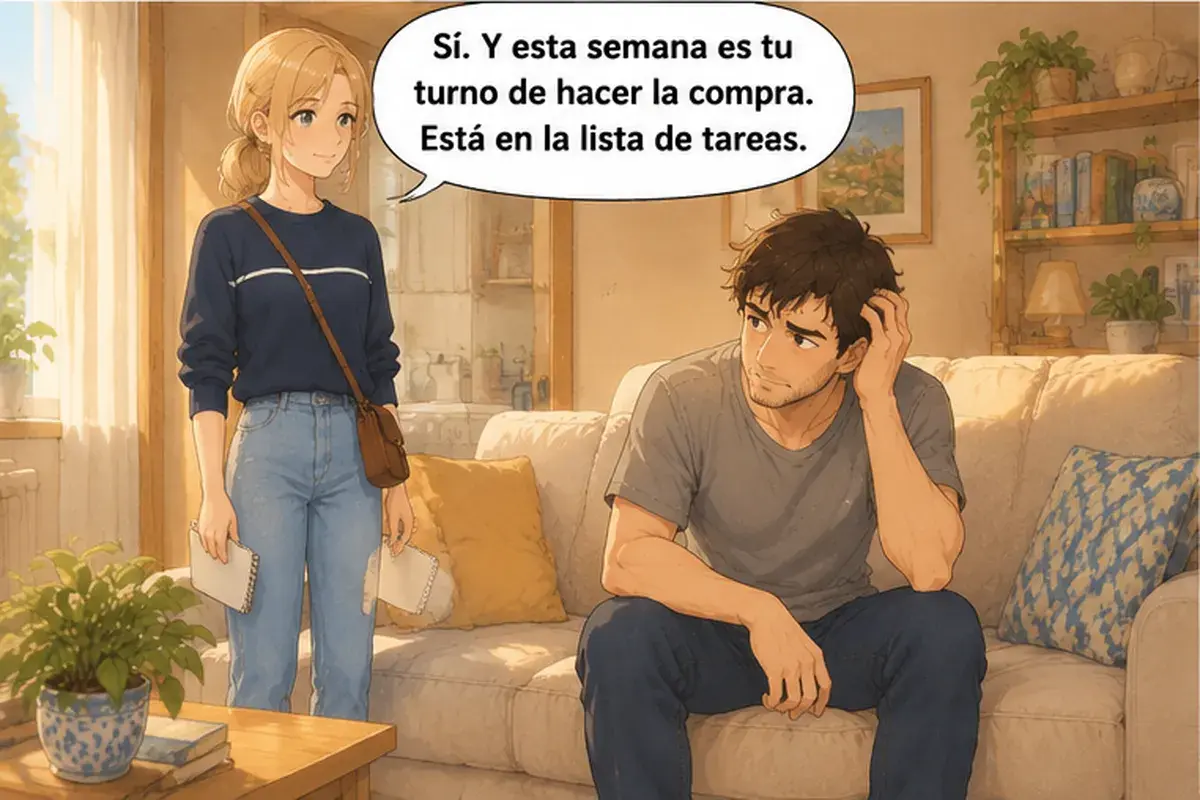
- Ana
Sí. Y esta semana es tu turno de hacer la compra. Está en la lista de tareas.
Yes. And this week it's your turn to do the grocery shopping. It's on the to-do list.
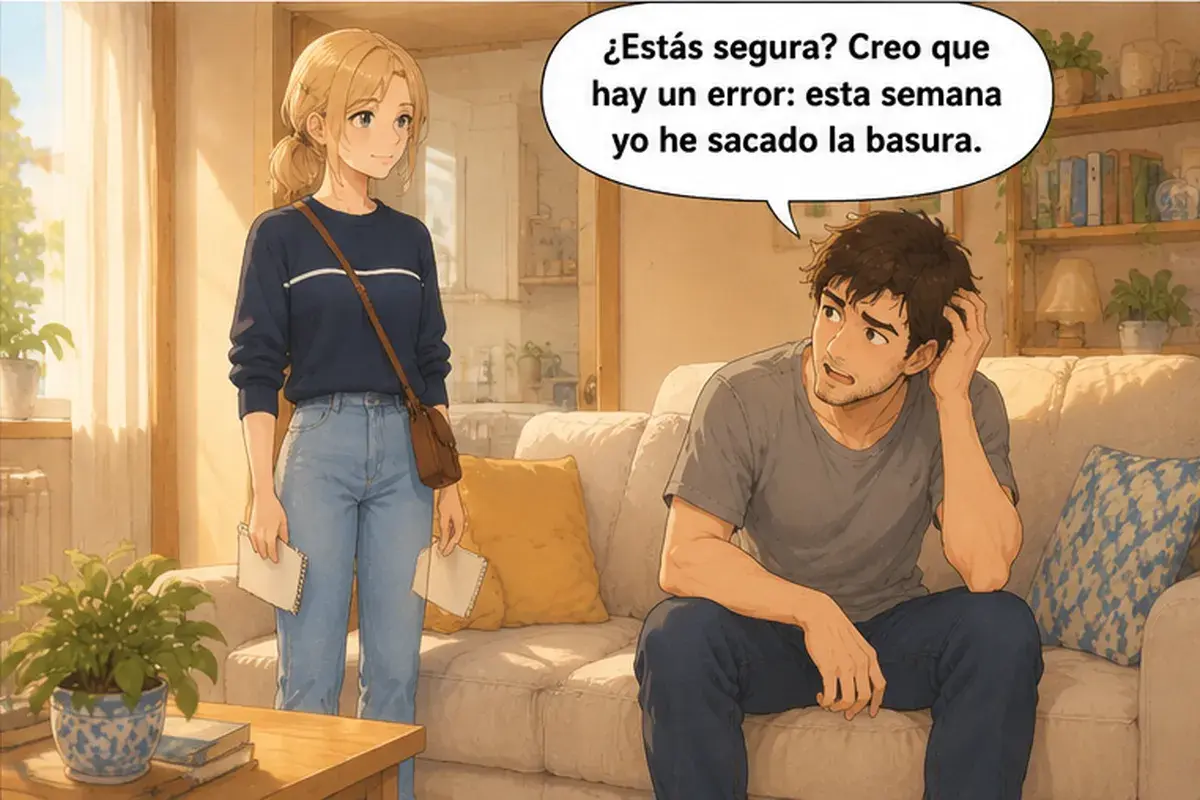
- Álex
¿Estás segura? Creo que hay un error: esta semana yo he sacado la basura.
Are you sure? I think there's a mistake: I've taken out the trash this week (to a woman).
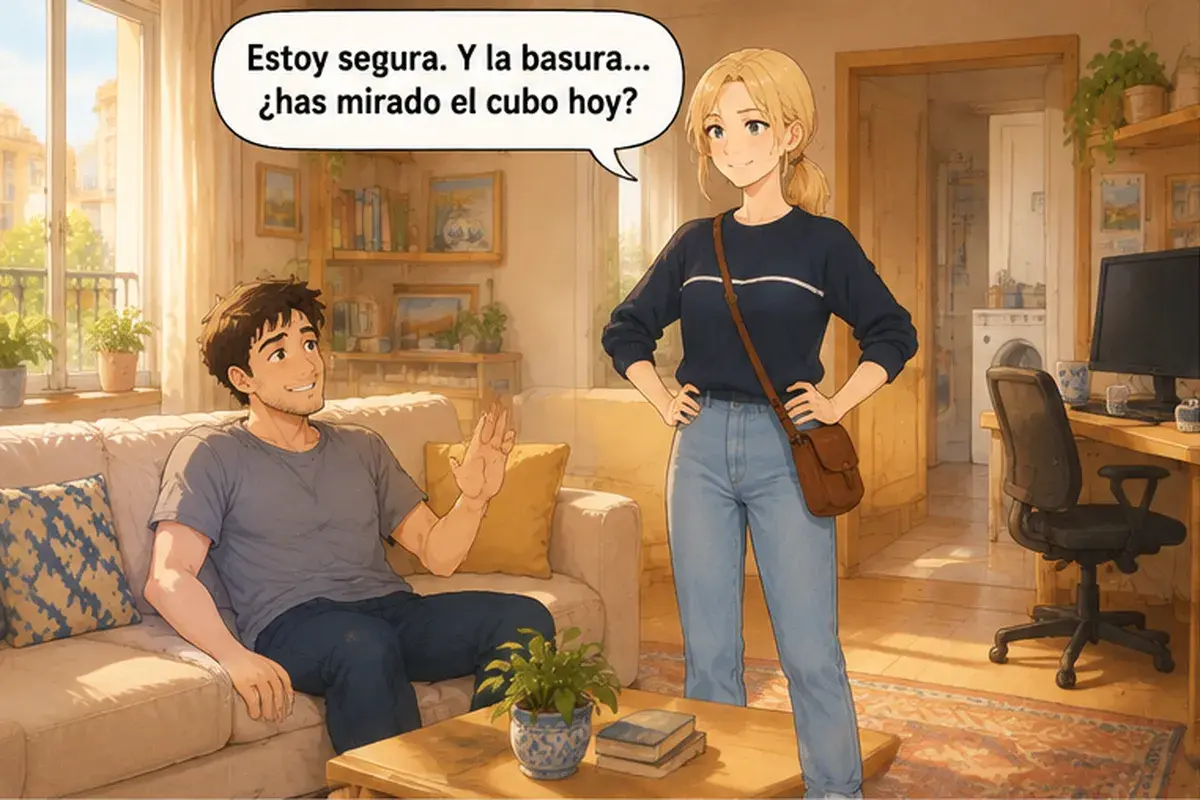
- Ana
Estoy segura. Y la basura… ¿has mirado el cubo hoy?
I'm sure. And the trash… have you looked in the trash can today? (woman speaking)
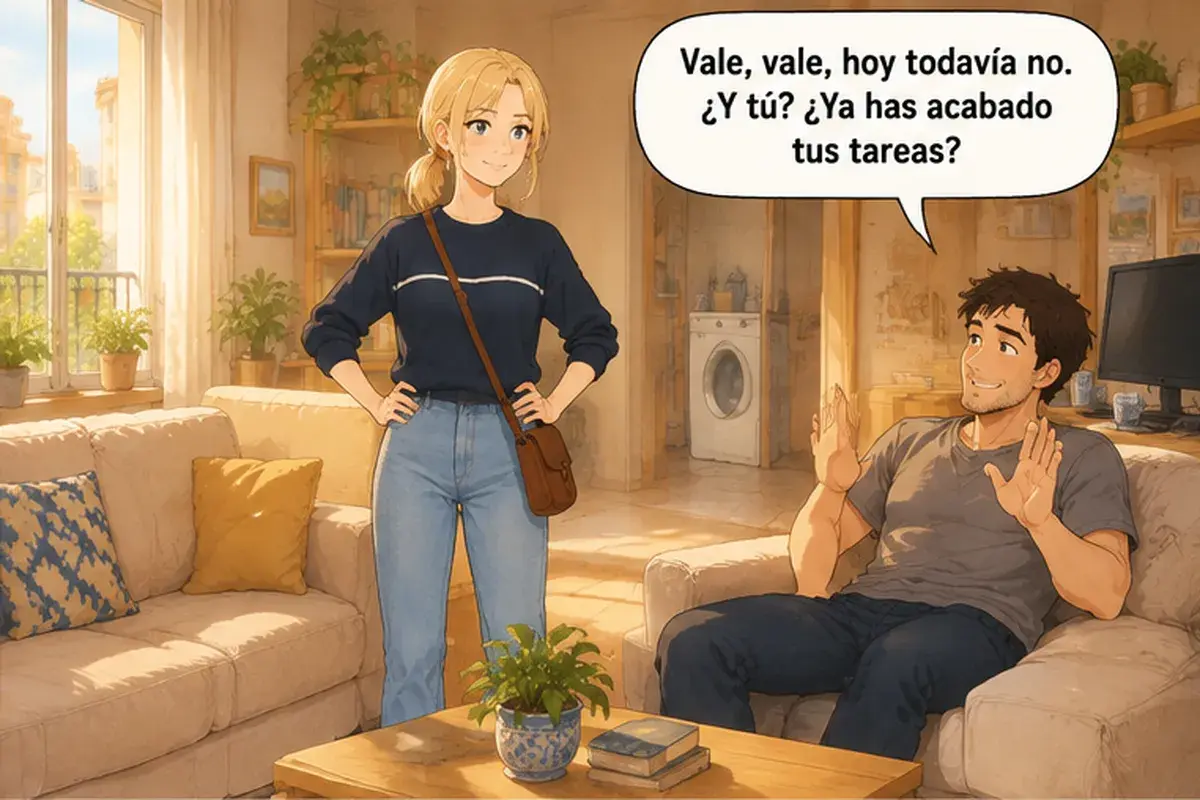
- Álex
Vale, vale, hoy todavía no. ¿Y tú? ¿Ya has acabado tus tareas?
OK, OK, not yet today. What about you? Have you finished your chores yet?
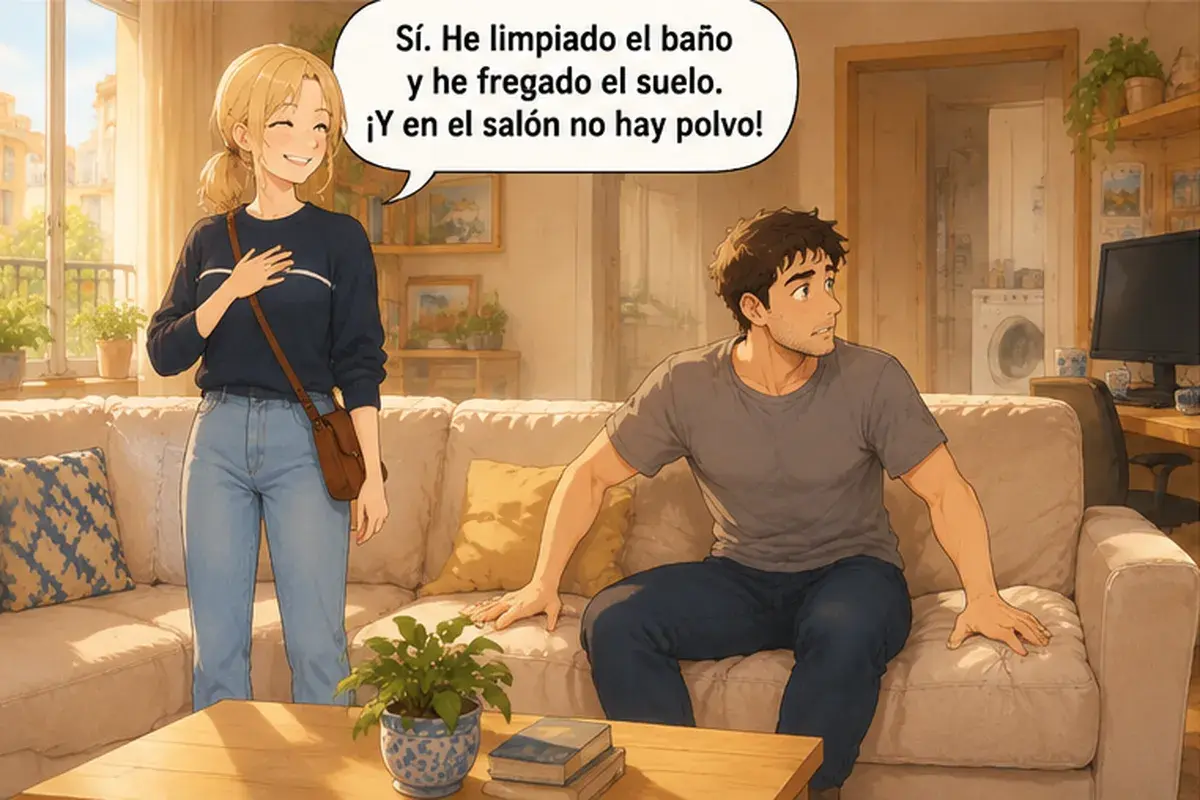
- Ana
Sí. He limpiado el baño y he fregado el suelo. ¡Y en el salón no hay polvo!
Yes. I've cleaned the bathroom and mopped the floor. And there's no dust in the living room!
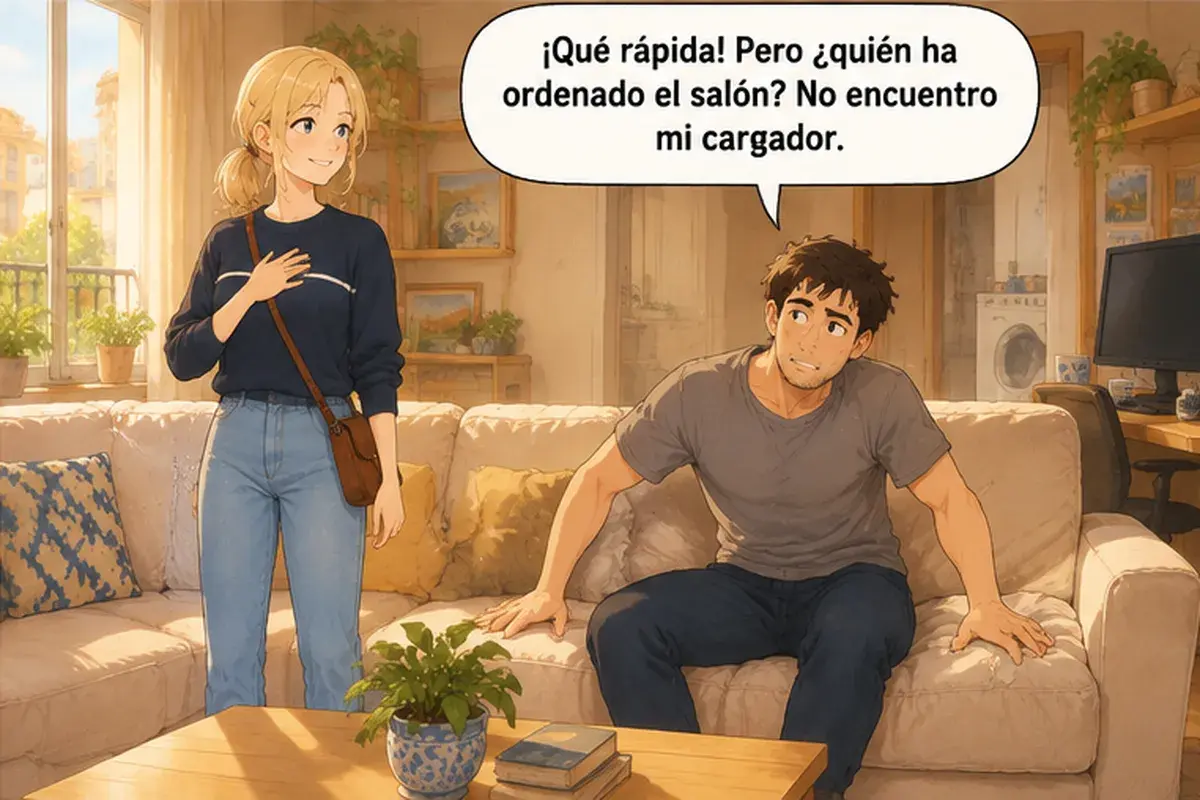
- Álex
¡Qué rápida! Pero ¿quién ha ordenado el salón? No encuentro mi cargador.
You're so quick! But who's tidied up the living room? I can't find my charger. (to a woman)
- Ana
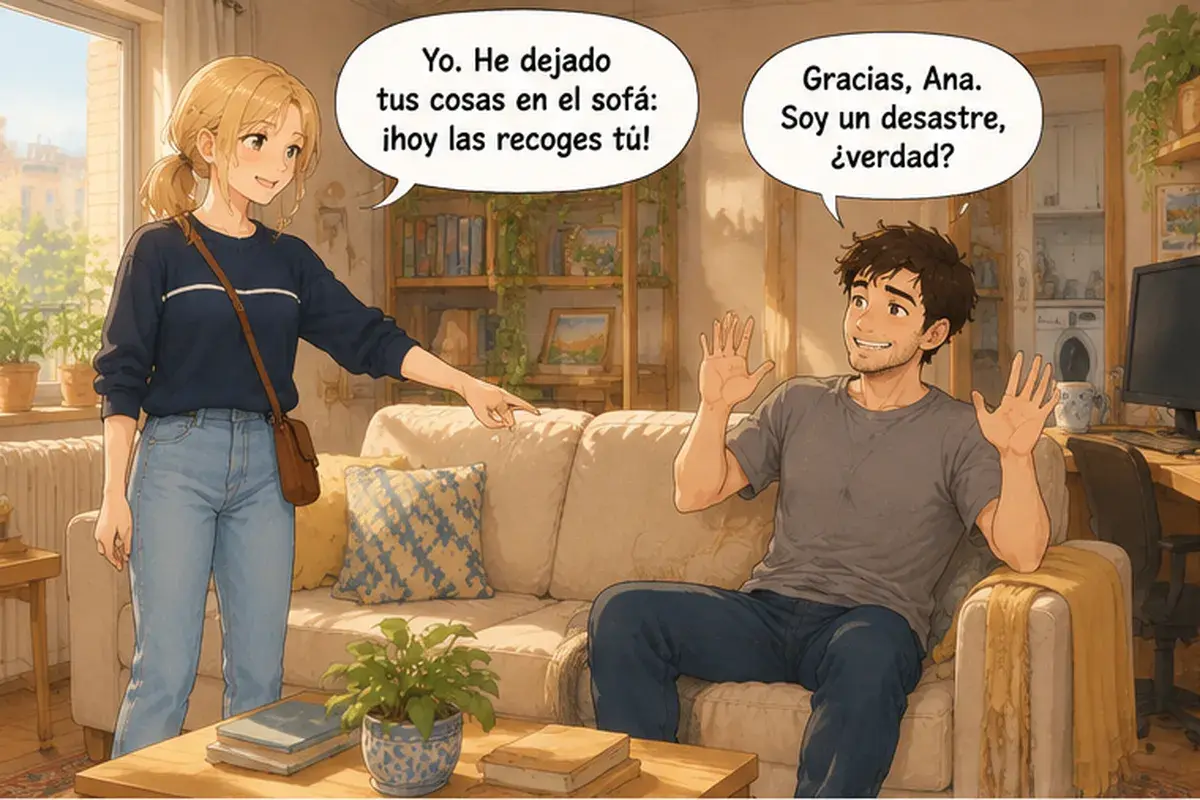
Yo. He dejado tus cosas en el sofá: ¡hoy las recoges tú!
Me. I've left your things on the sofa: today you're putting them away!
- Álex
Gracias, Ana. Soy un desastre, ¿verdad?
Thanks, Ana. I'm a mess, aren't I?
- Ana
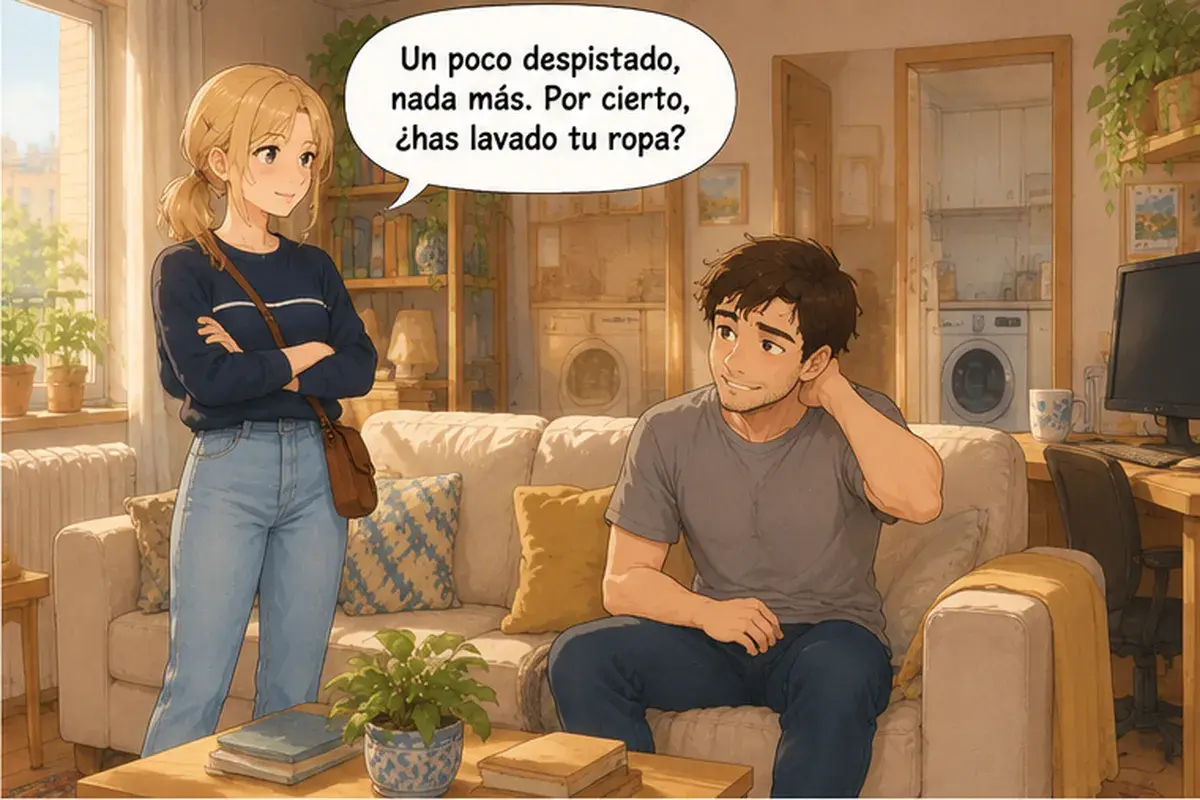
Un poco despistado, nada más. Por cierto, ¿has lavado tu ropa?
A little absent-minded, that's all. By the way, have you washed your clothes? (to a man)
- Álex
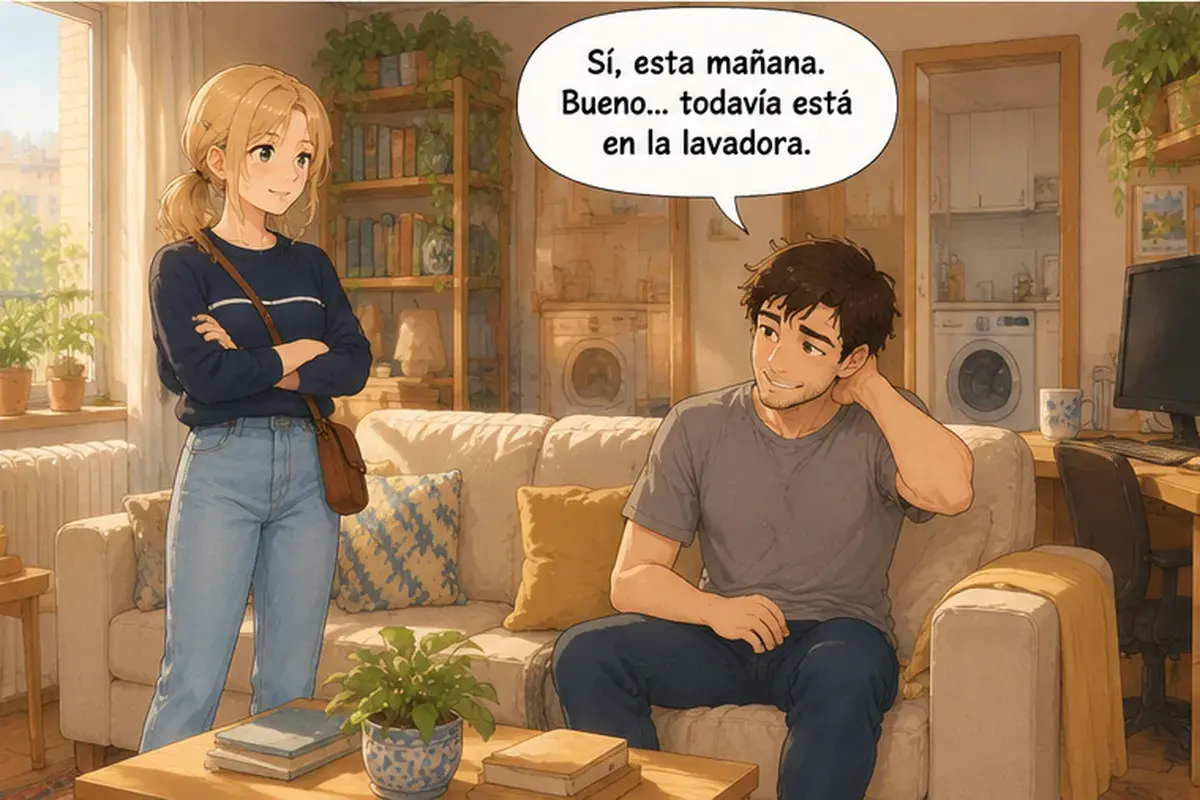
Sí, esta mañana. Bueno… todavía está en la lavadora.
Yes, this morning. Well… they're still in the washing machine.
- Ana
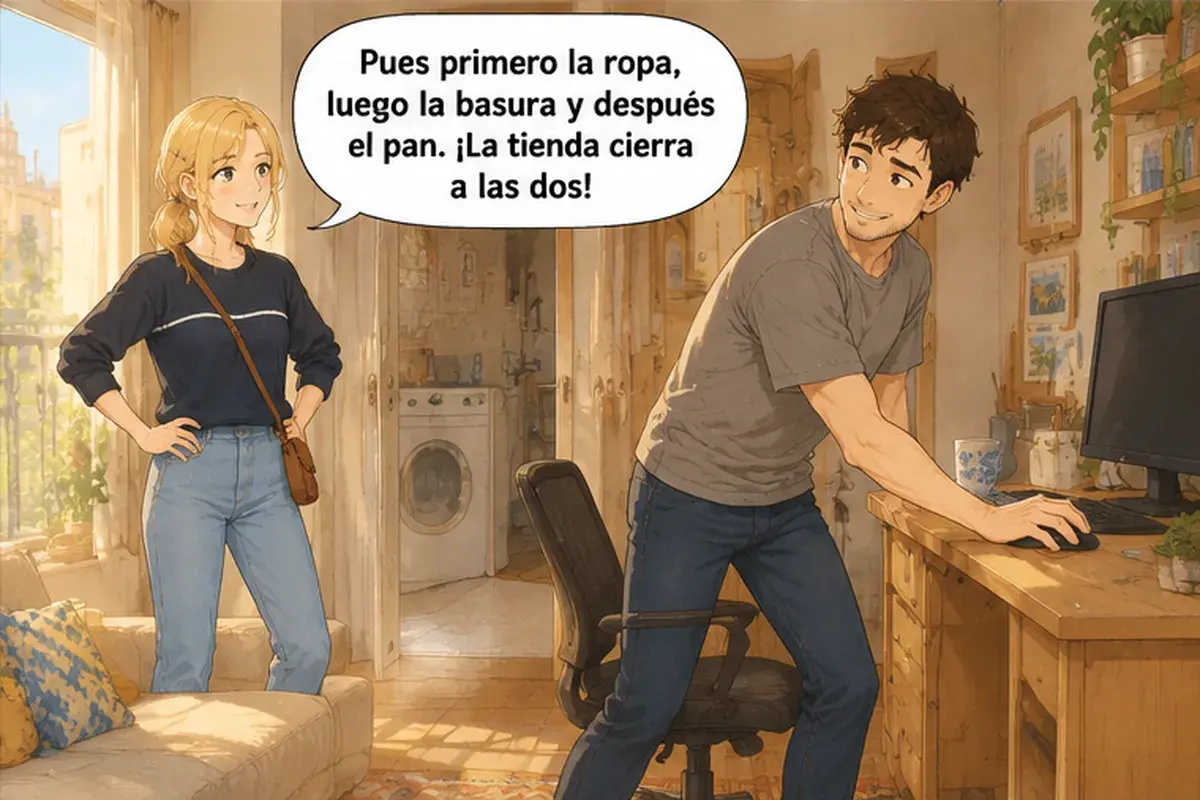
Pues primero la ropa, luego la basura y después el pan. ¡La tienda cierra a las dos!
Then first the clothes, then the trash, and after that the bread. The store closes at two!
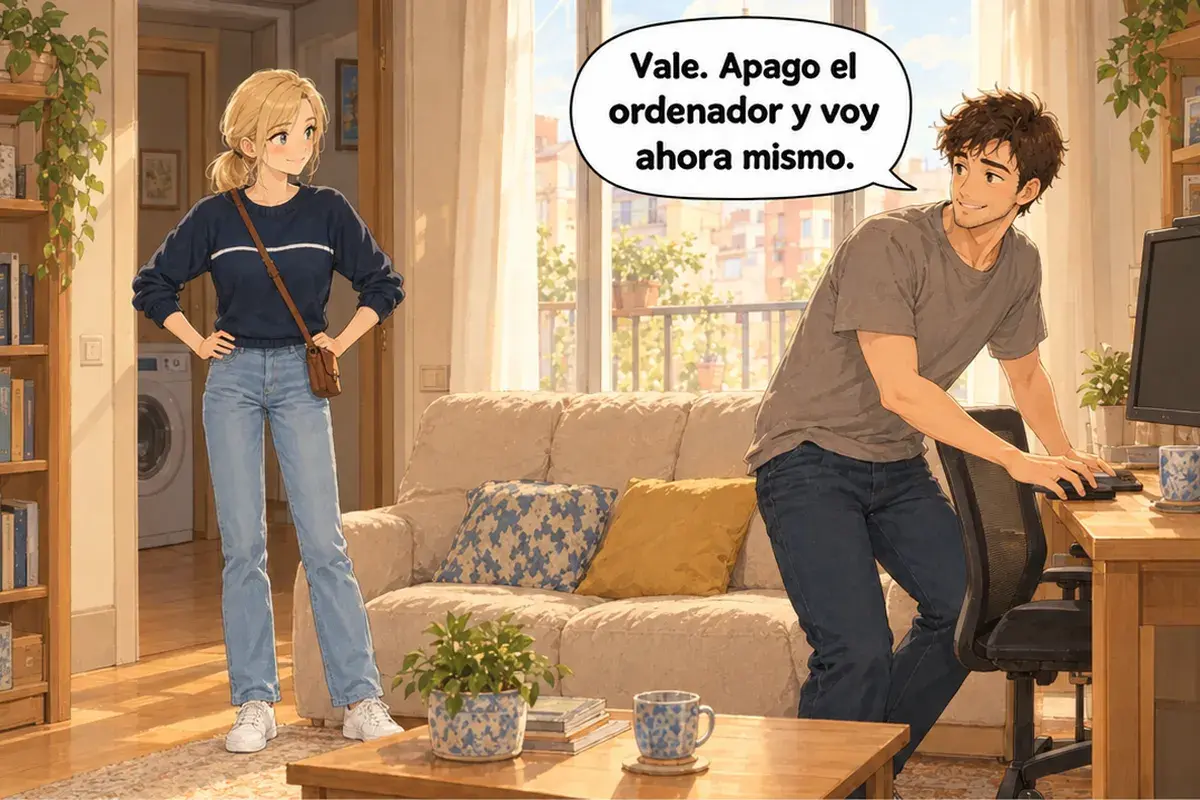
- Álex
Vale. Apago el ordenador y voy ahora mismo.
OK. I'm turning off the computer and going right now.
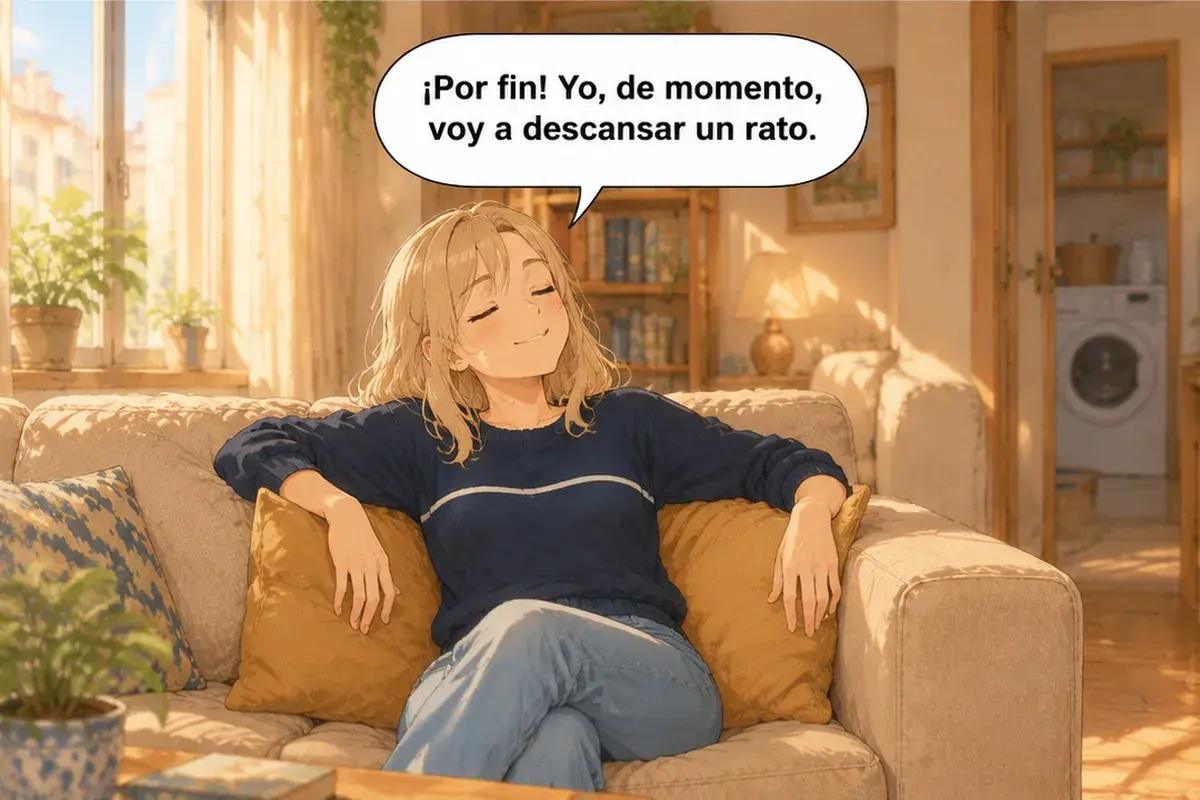
- Ana
¡Por fin! Yo, de momento, voy a descansar un rato.
Finally! As for me, I'm going to rest for a bit for now.
Grammar for this text
The present perfect: haber + past participle. Ana and her roommate Álex check what's already been done today: he limpiado — I've cleaned, has comprado — you've bought, ha ordenado — (someone) has tidied up. The participle doesn't change: Ana and Álex both say -ado, -ido.
Ya and todavía no. ¿Ya has comprado el pan? — "Have you bought the bread yet?" In questions, ya is usually English "yet". The short answer is Todavía no — "Not yet". Both words go before haber: ¿Ya has acabado tus tareas? But todavía está en la lavadora simply means "it's still in the washing machine".
Es tu turno de + infinitive — "it's your turn to (do something)": es tu turno de hacer la compra. Hacer la compra is only for groceries.
The present for "I'll do it right now". Apago el ordenador y voy — "I'm turning off the computer and going": for something you'll do this very minute, Spanish uses the present tense, where English often says "I'll…".
Hoy las recoges tú — "today you're putting them away". Las means "them": the things, tus cosas (more on these words in unit 5). Tú at the end adds emphasis: you, not me.
La tienda cierra a las dos — many stores in Spain close for a break in the middle of the day.
Words and grammar of the unit: Talk about your day.
Learn the words from the texts with flashcards
In the app, you can tap any word in a text to see its translation, forms and examples, and new words stick with flashcards. 15 minutes a day.
Start for freeEverything is open for free. No card needed to sign up.