

Spanish dialogue with translation · B1 · 17 lines
¡Ni te lo imaginas! You have no idea!
Comic · 17 panels
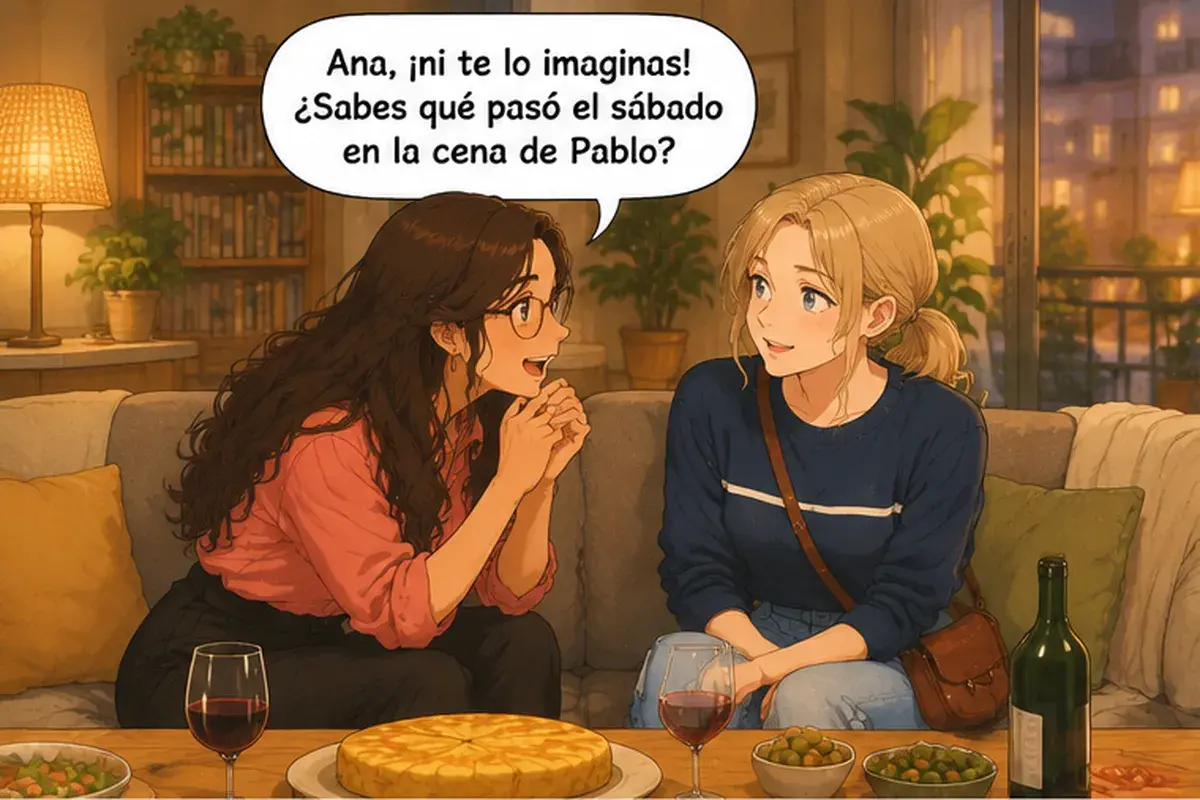
- Lucía
Ana, ¡ni te lo imaginas! ¿Sabes qué pasó el sábado en la cena de Pablo?
Ana, you have no idea! Do you know what happened on Saturday at Pablo's dinner?
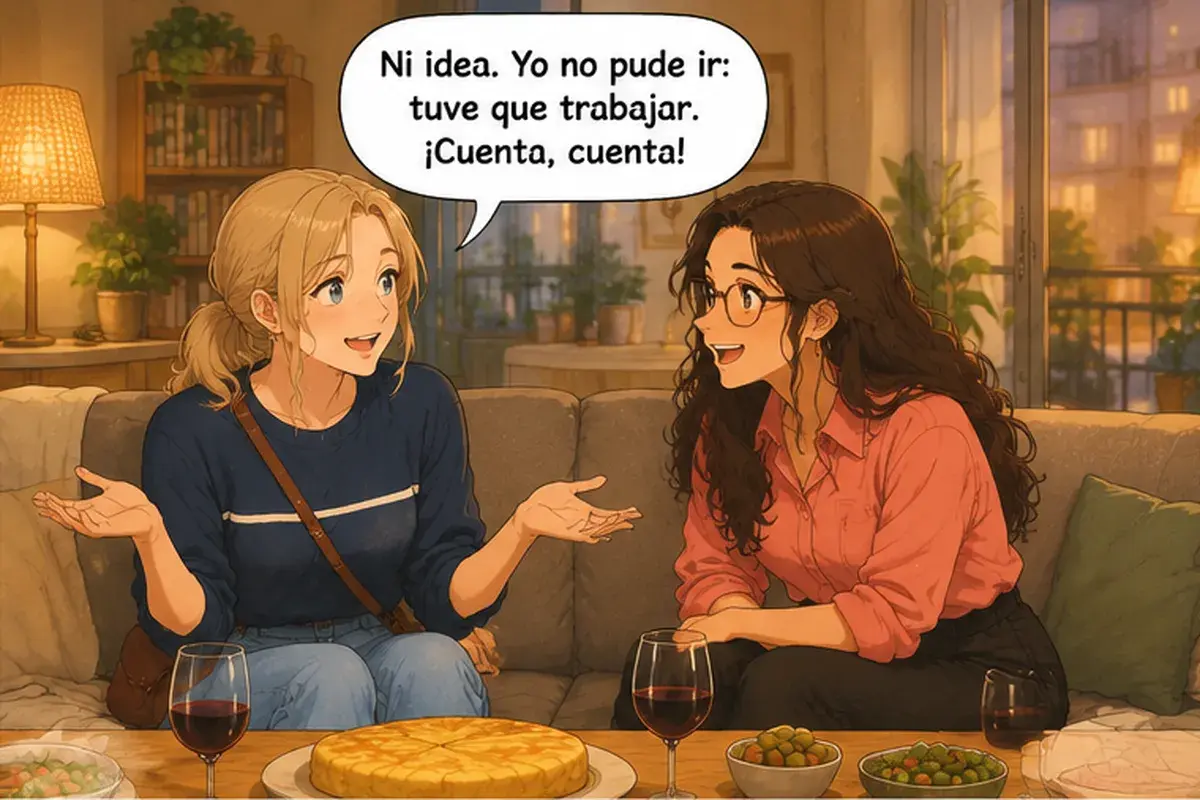
- Ana
Ni idea. Yo no pude ir: tuve que trabajar. ¡Cuenta, cuenta!
No idea. I couldn't go: I had to work. Tell me, tell me!
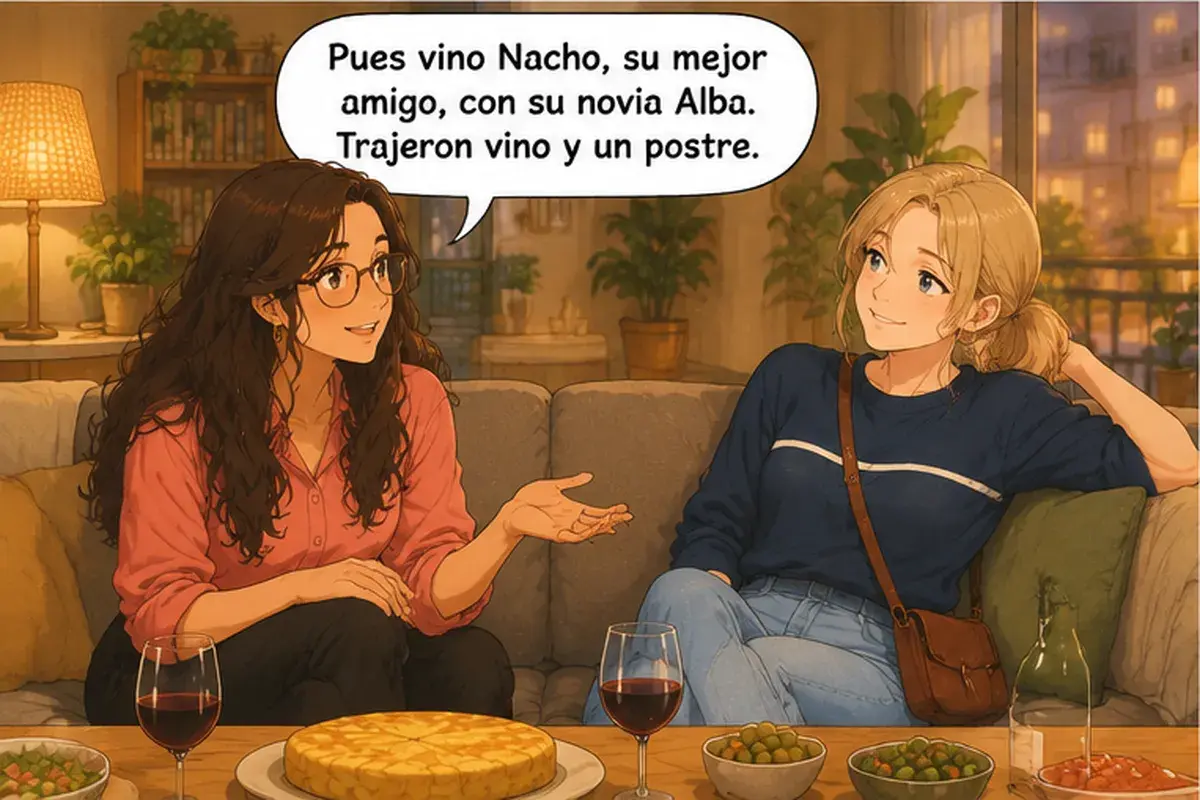
- Lucía
Pues vino Nacho, su mejor amigo, con su novia Alba. Trajeron vino y un postre.
Well, Nacho came, his best friend, with his girlfriend Alba. They brought wine and a dessert.
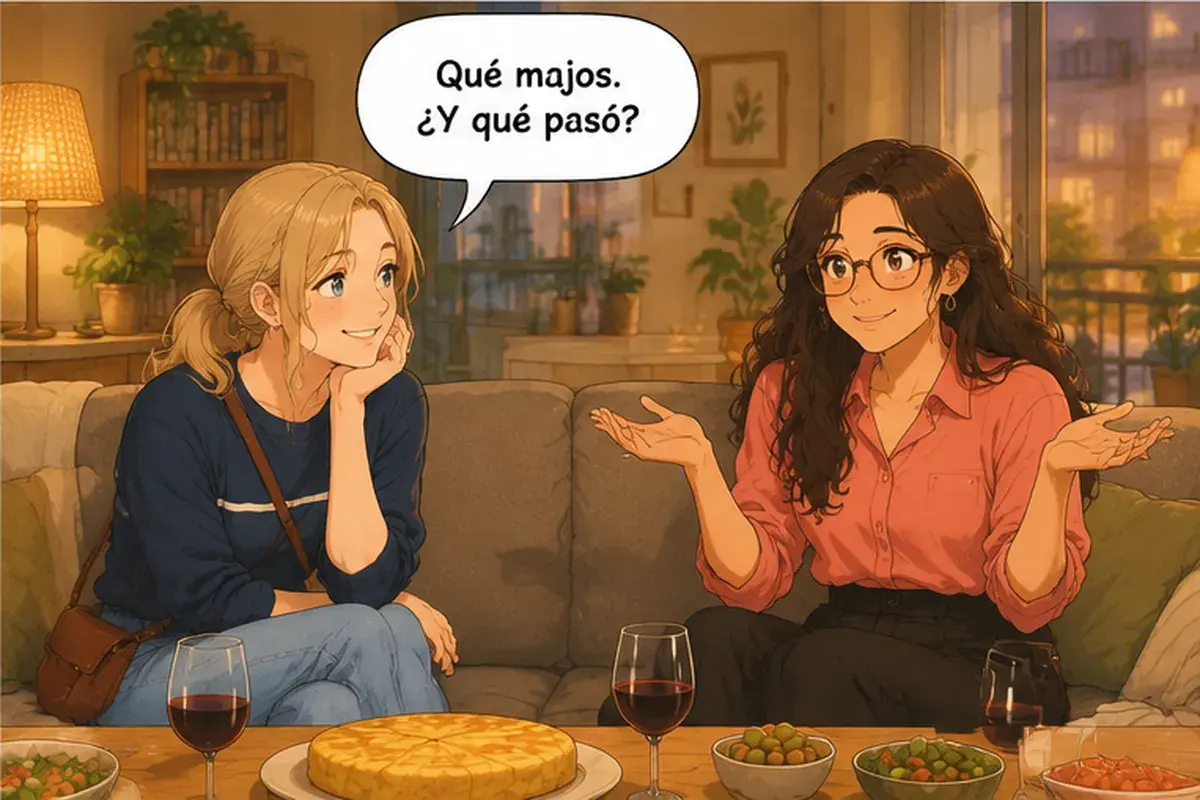
- Ana
Qué majos. ¿Y qué pasó?
How nice of them. And what happened?
- Lucía
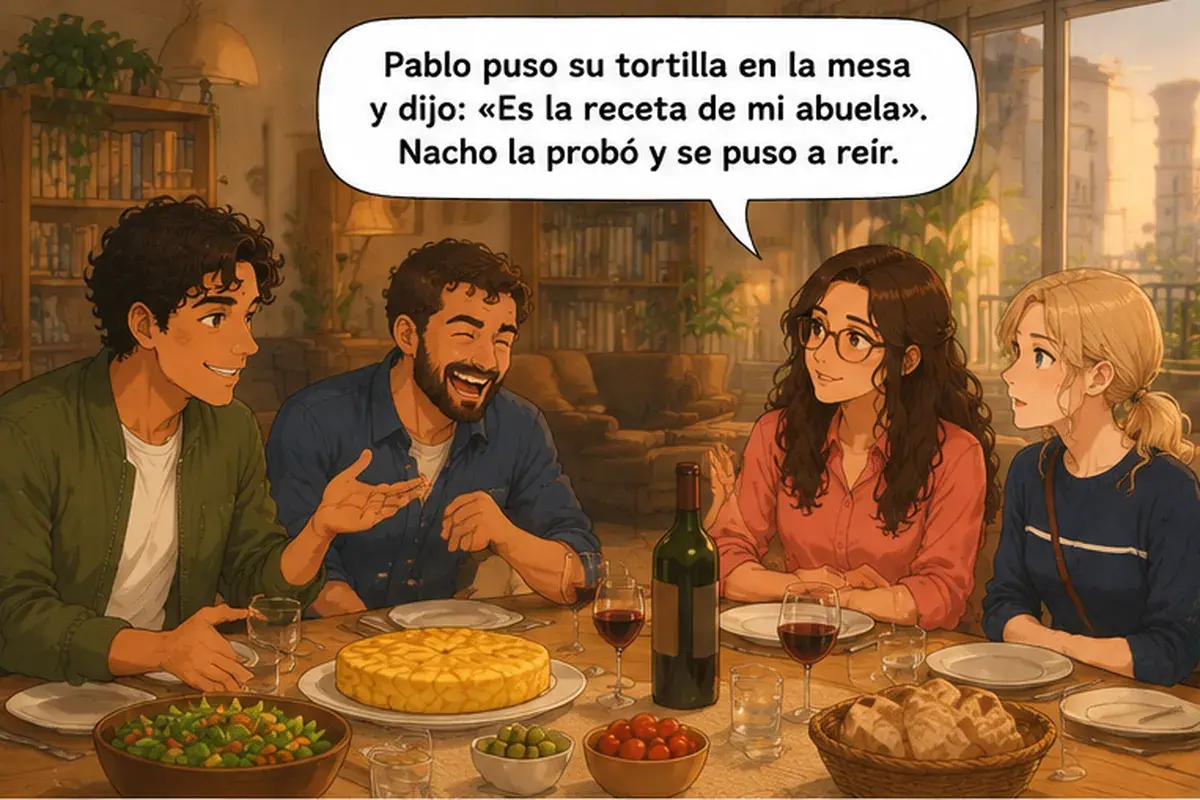
Pablo puso su tortilla en la mesa y dijo: «Es la receta de mi abuela». Nacho la probó y se puso a reír.
Pablo put his tortilla on the table and said, "It's my grandmother's recipe." Nacho tried it and burst out laughing.
- Ana
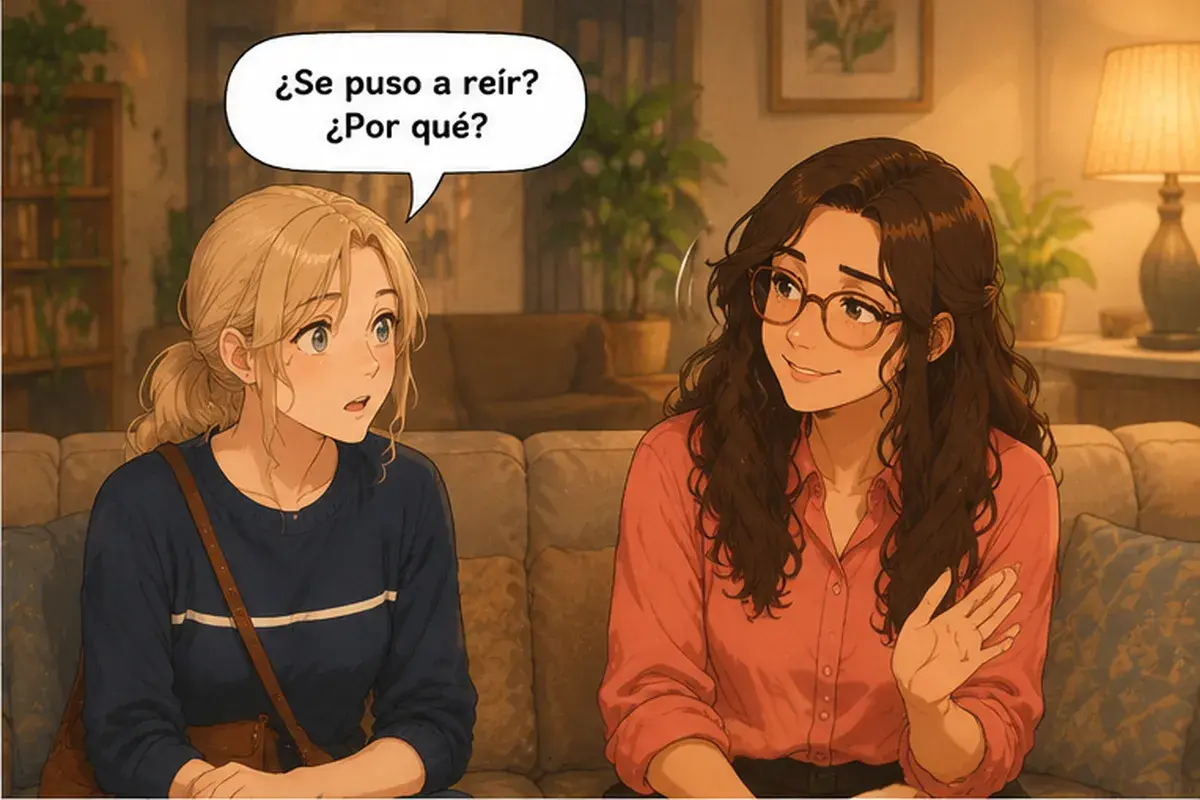
¿Se puso a reír? ¿Por qué?
He burst out laughing? Why?
- Lucía
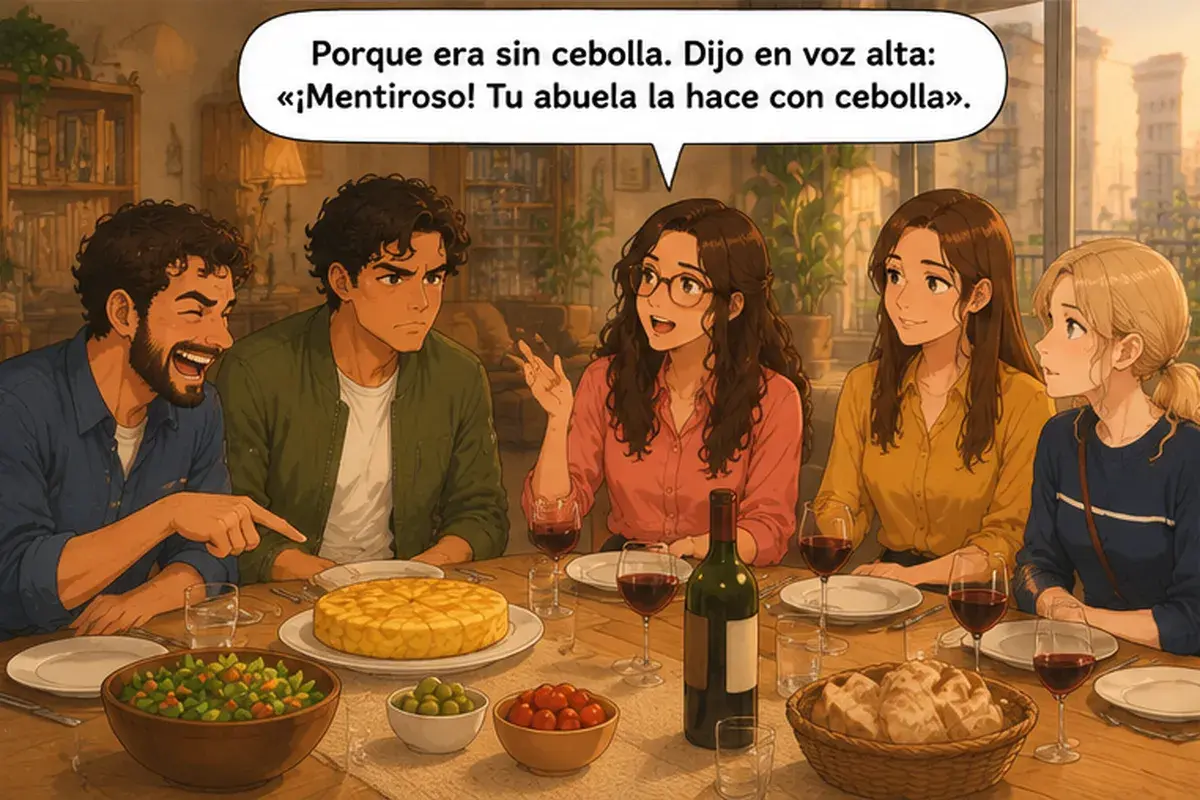
Porque era sin cebolla. Dijo en voz alta: «¡Mentiroso! Tu abuela la hace con cebolla».
Because it was made without onion. He said out loud, "Liar! Your grandmother makes it with onion."
- Ana
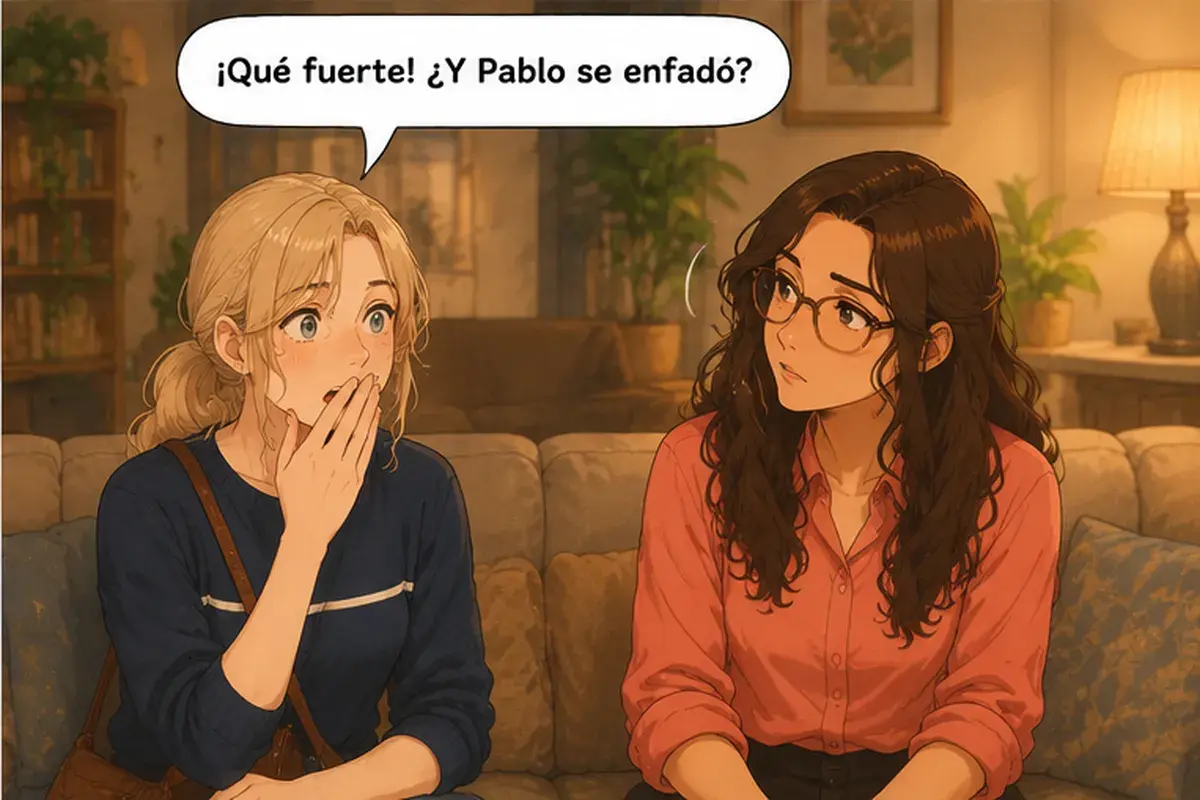
¡Qué fuerte! ¿Y Pablo se enfadó?
No way! And did Pablo get angry?
- Lucía
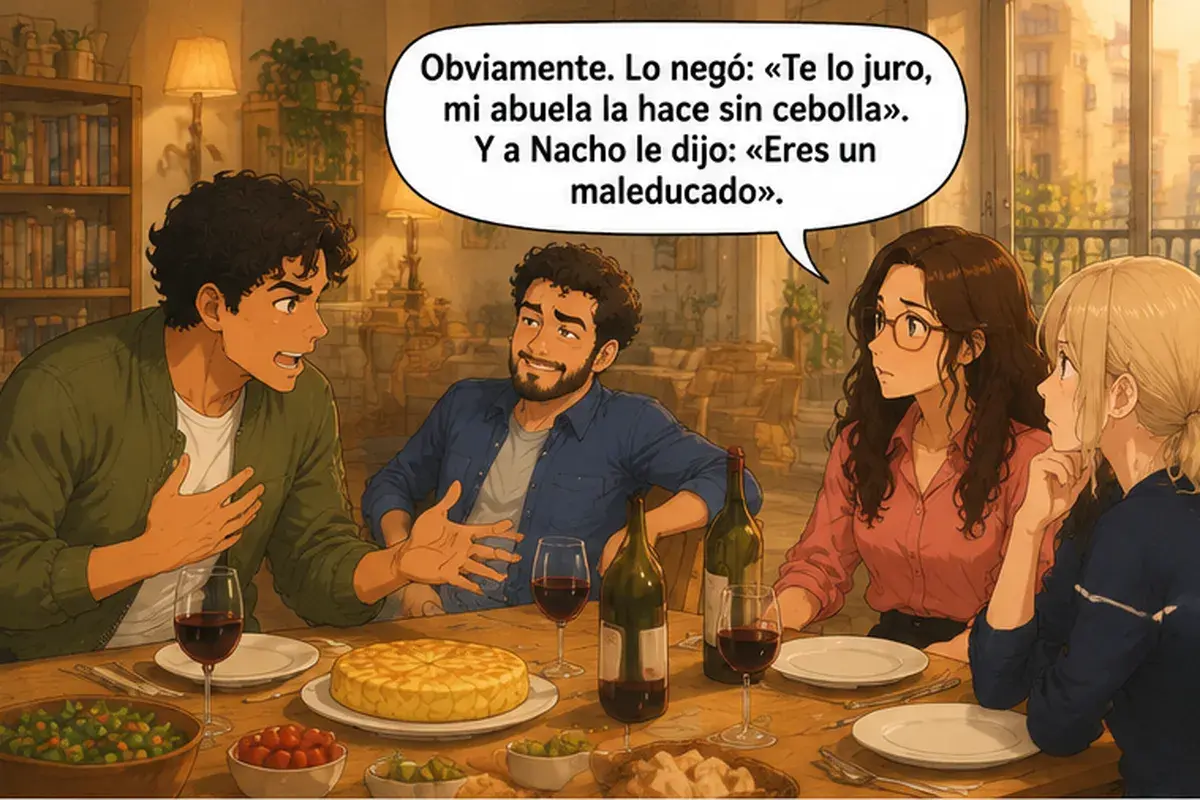
Obviamente. Lo negó: «Te lo juro, mi abuela la hace sin cebolla». Y a Nacho le dijo: «Eres un maleducado».
Obviously. He denied it: "I swear, my grandmother makes it without onion." And he told Nacho, "You're so rude."
- Ana
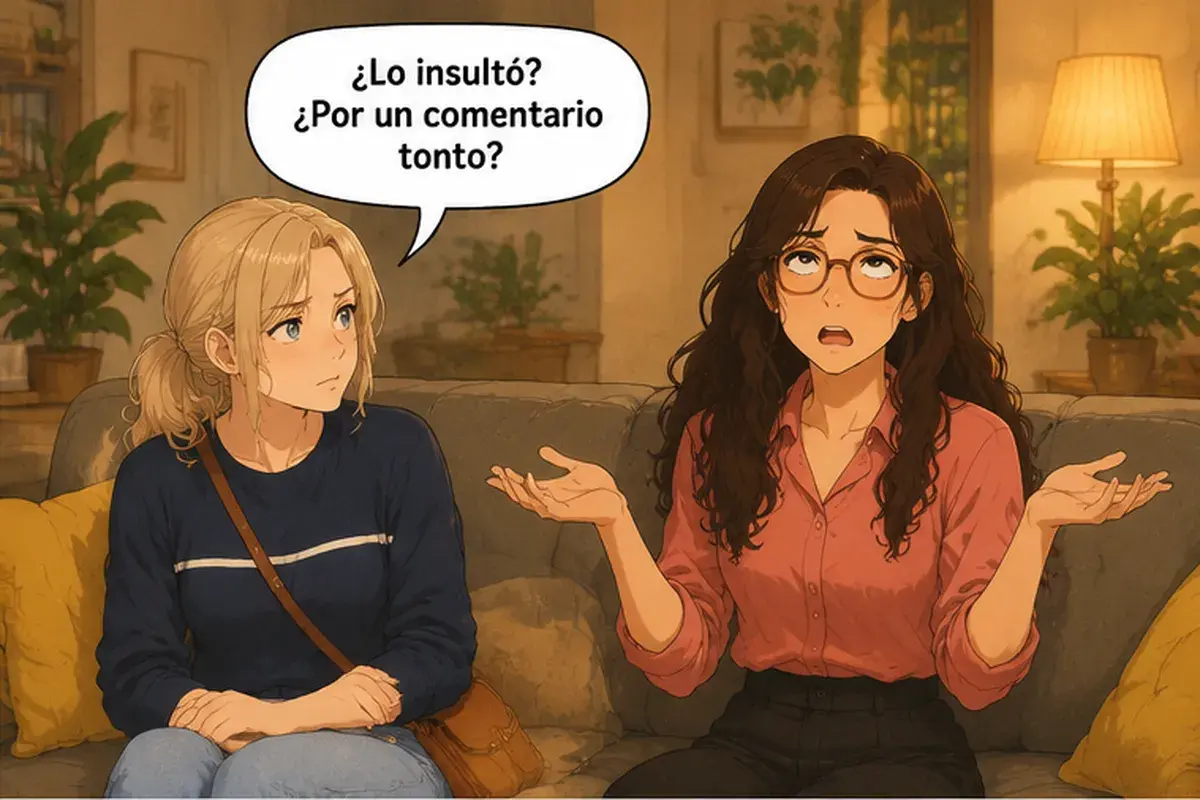
¿Lo insultó? ¿Por un comentario tonto?
He insulted him? Over a silly comment?
- Lucía
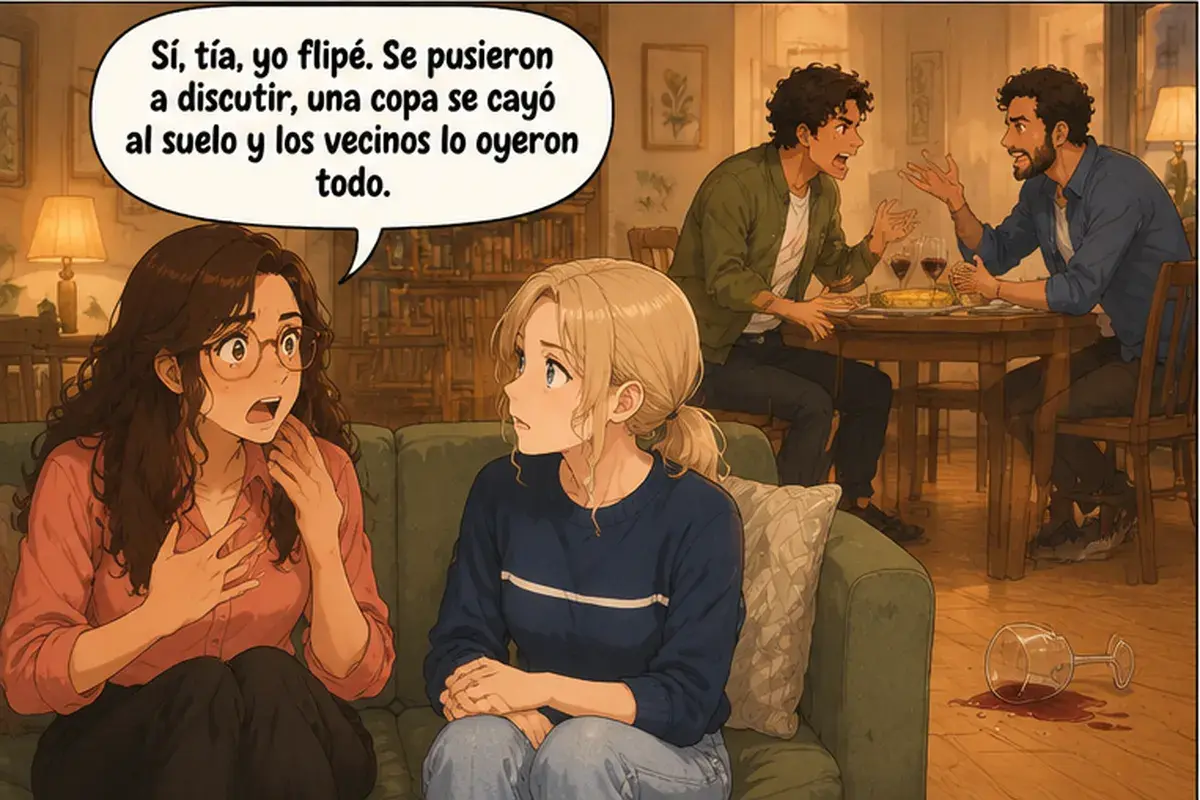
Sí, tía, yo flipé. Se pusieron a discutir, una copa se cayó al suelo y los vecinos lo oyeron todo.
Yes, girl, I was shocked. They started arguing, a glass fell on the floor, and the neighbors heard everything.
- Ana
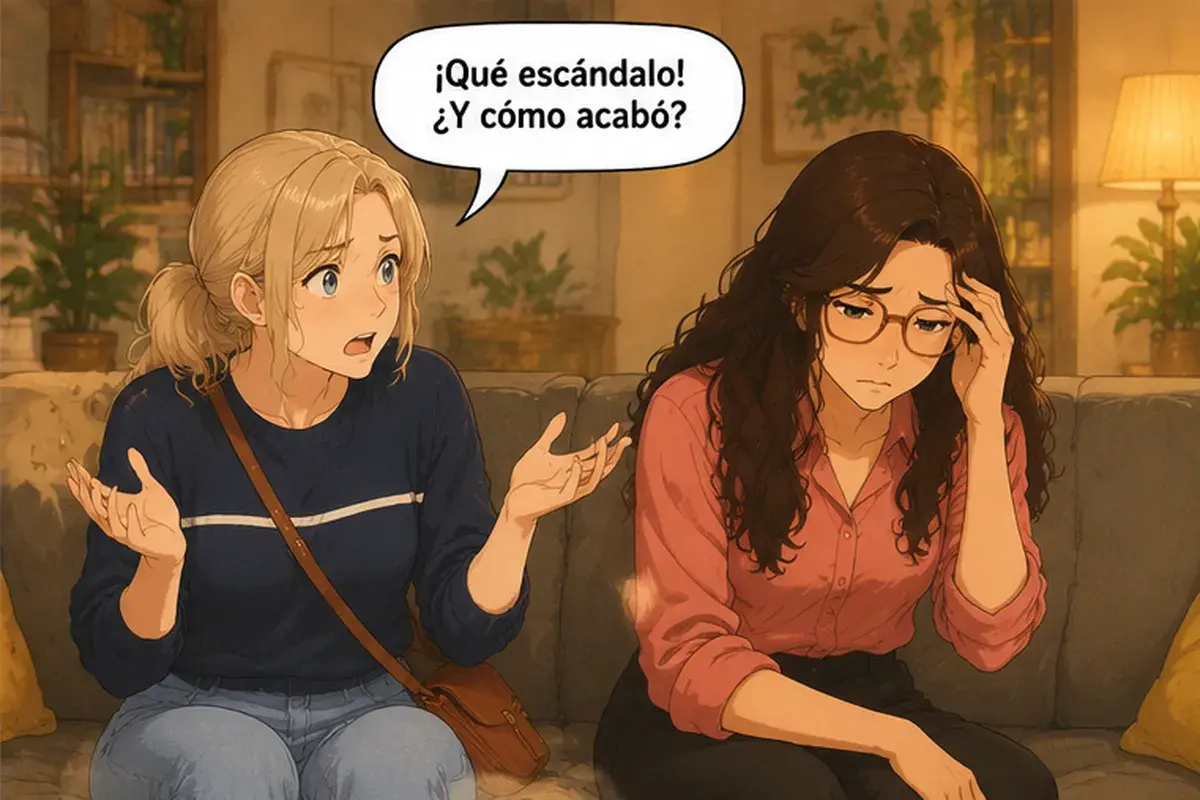
¡Qué escándalo! ¿Y cómo acabó?
What a scandal! And how did it end?
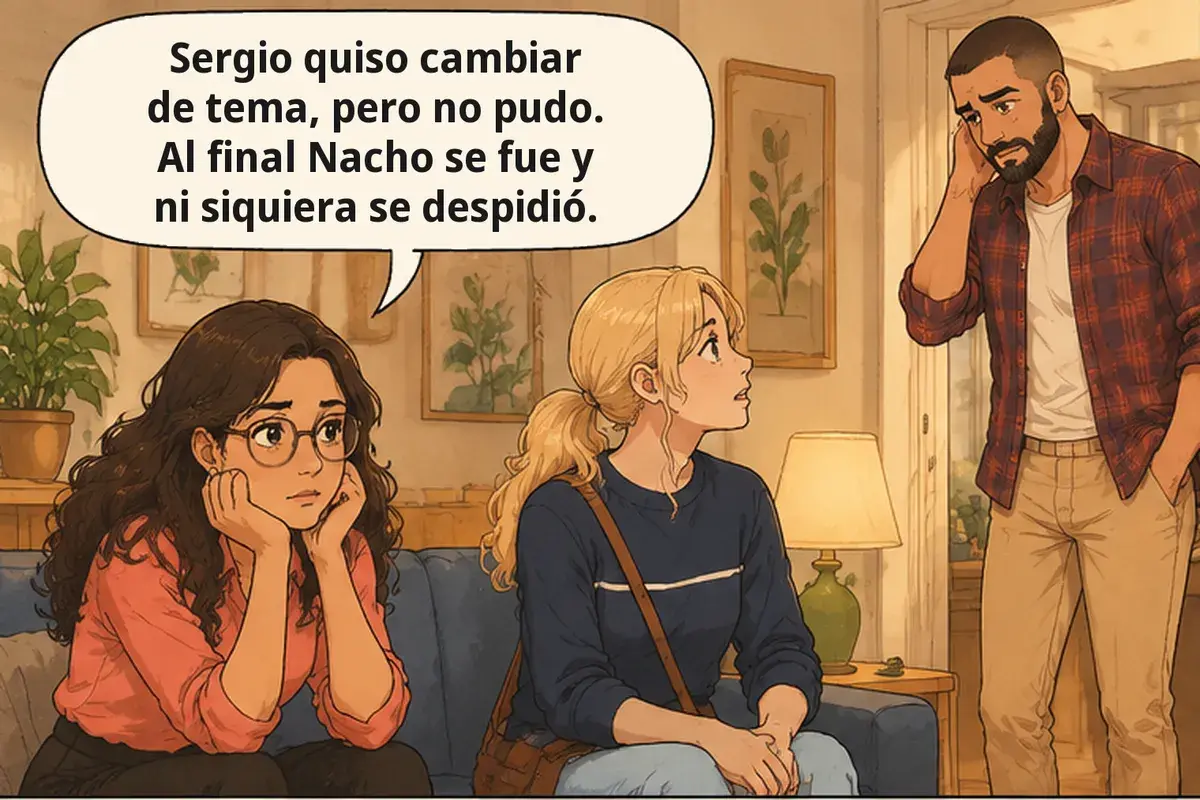
- Lucía
Sergio quiso cambiar de tema, pero no pudo. Al final Nacho se fue y ni siquiera se despidió.
Sergio tried to change the subject, but he couldn't. In the end, Nacho left and didn't even say goodbye.
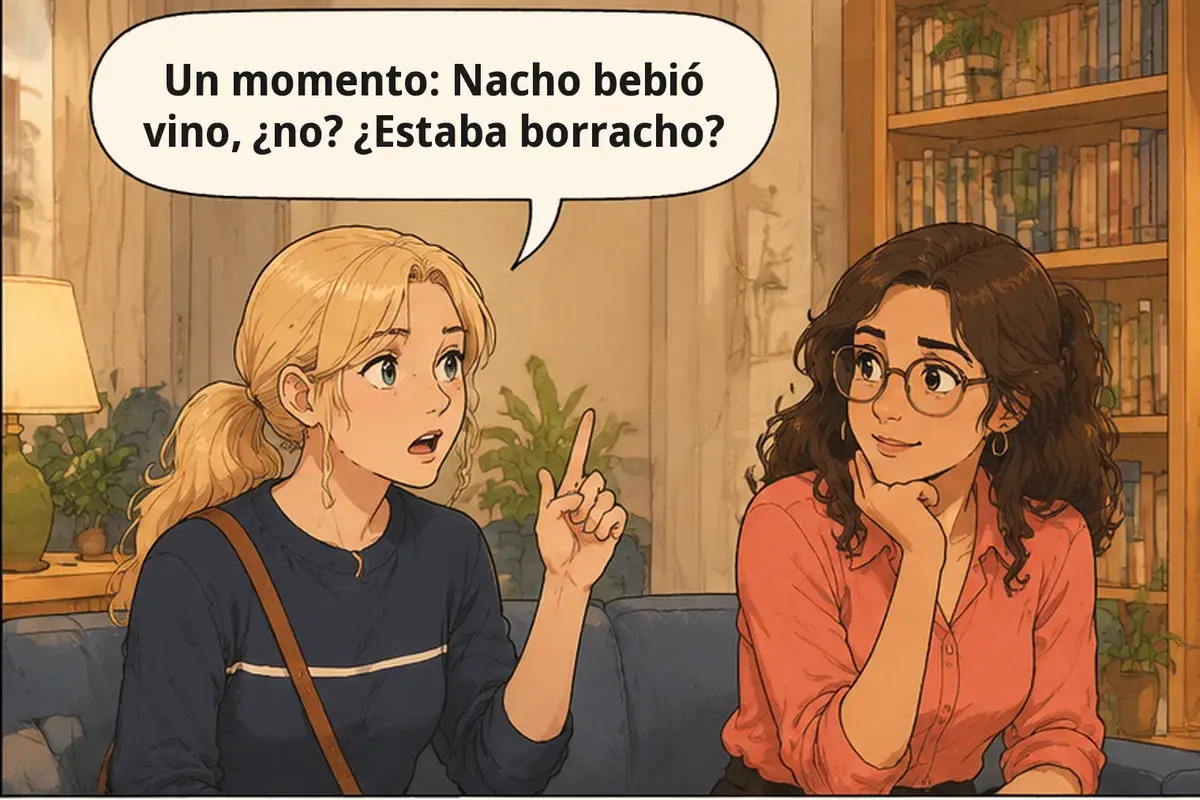
- Ana
Un momento: Nacho bebió vino, ¿no? ¿Estaba borracho?
Hold on: Nacho drank wine, right? Was he drunk?
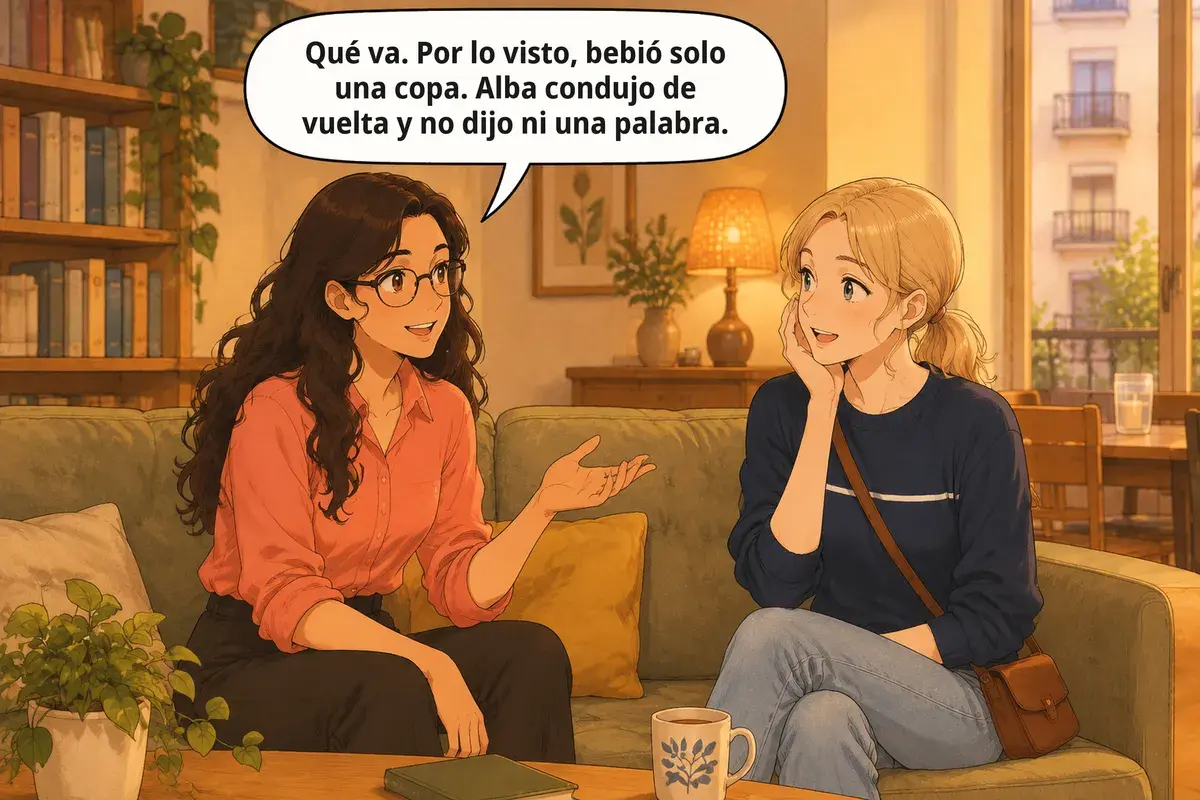
- Lucía
Qué va. Por lo visto, bebió solo una copa. Alba condujo de vuelta y no dijo ni una palabra.
Not at all. Apparently, he only drank one glass. Alba drove back and didn't say a word.
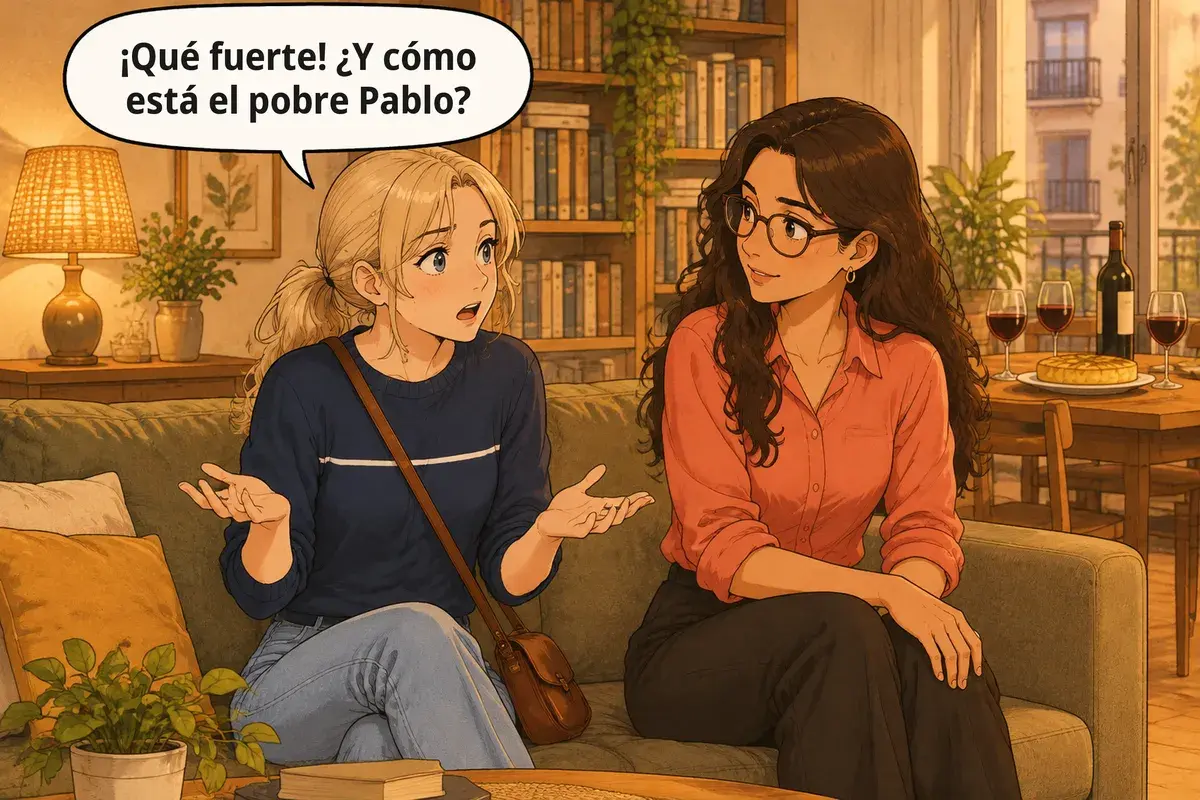
- Ana
¡Qué fuerte! ¿Y cómo está el pobre Pablo?
No way! And how's poor Pablo?
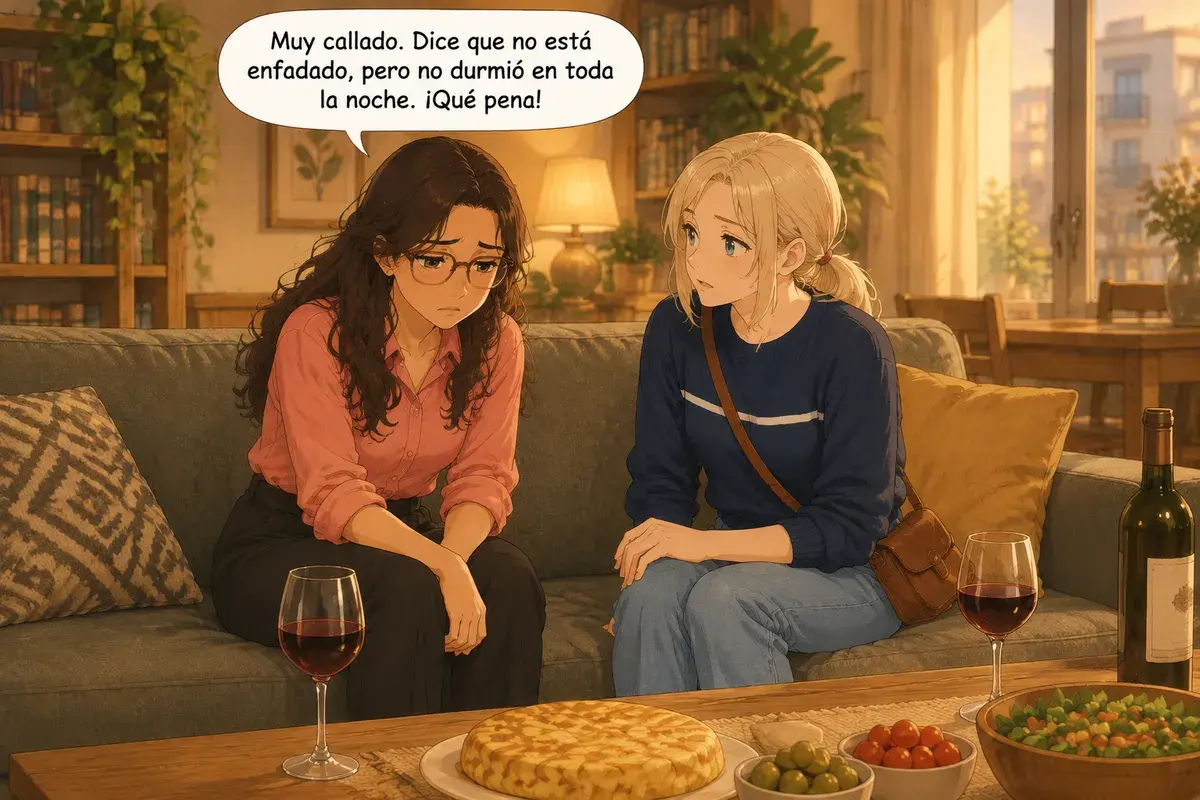
- Lucía
Muy callado. Dice que no está enfadado, pero no durmió en toda la noche. ¡Qué pena!
Very quiet. He says he's not angry, but he didn't sleep all night. What a shame!
Grammar for this text
New preterite forms. No pude ir — "I couldn't go", trajeron — "they brought", puso — "he put", dijo — "he said", quiso… pero no pudo — "he tried… but couldn't", lo oyeron todo — "they heard everything", se despidió — "he said goodbye", no durmió — "he didn't sleep".
Condujo. Alba condujo de vuelta — "Alba drove back". Verbs ending in -ducir are a trap: the regular rule would give ✗ condució, but that form doesn't exist; the right one is condujo. Just memorize these verbs.
Vino and vino. Vino Nacho — "Nacho came", trajeron vino — "they brought wine".
Se puso a reír, se pusieron a discutir — "he burst out laughing", "they started arguing".
Set phrases. Learn ni te lo imaginas and te lo juro as whole phrases: two pronouns together (te lo) come later, in unit 10. Por lo visto — "apparently": the speaker knows it from someone else and isn't sure.
Colloquial words. Flipé — "I was shocked", tía — what you call a female friend, like "girl": only with people you're close to. The tortilla here is a thick Spanish potato omelet, and the argument about it — with or without onion — is a real one in Spain.
Words and grammar of the unit: Tell the story of a fight and making up.
Learn the words from the texts with flashcards
In the app, you can tap any word in a text to see its translation, forms and examples, and new words stick with flashcards. 15 minutes a day.
Start for freeEverything is open for free. No card needed to sign up.