

Spanish dialogue with translation · B1 · 18 lines
Cuando estoy nerviosa, hablo demasiado When I'm nervous, I talk too much
Comic · 18 panels
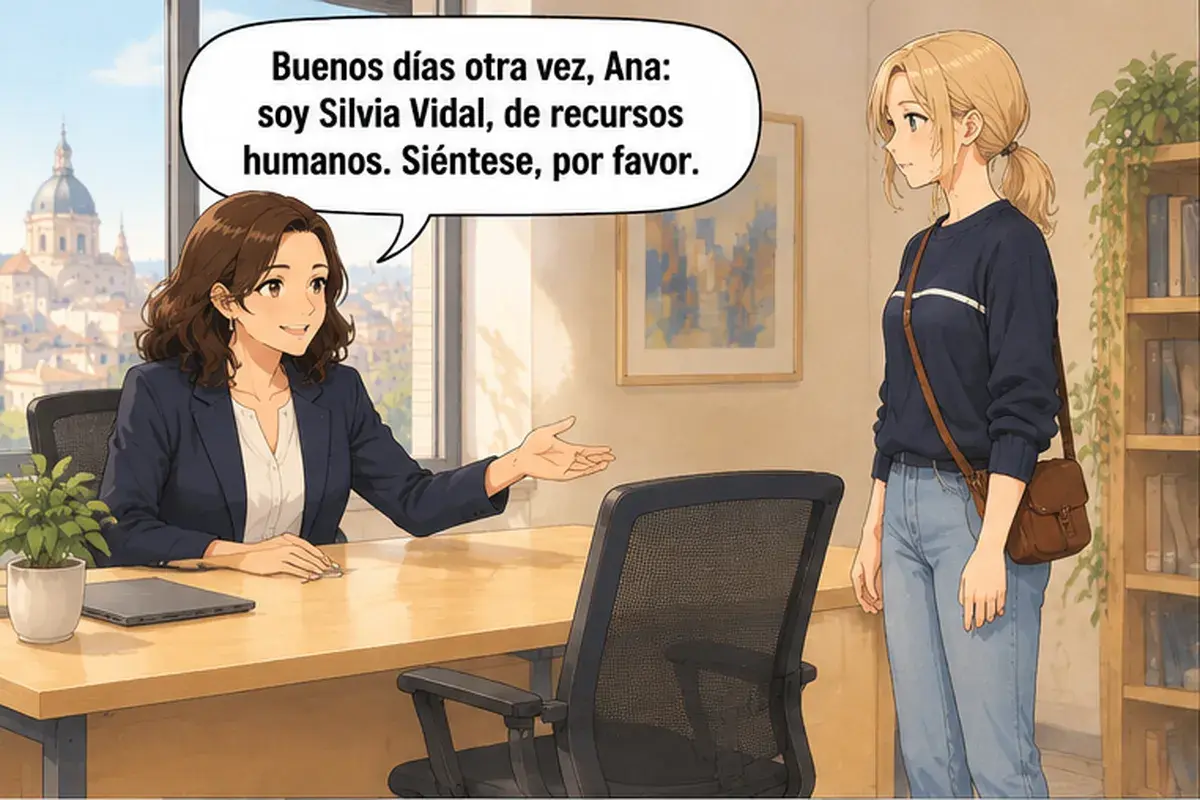
- Entrevistadora
Buenos días otra vez, Ana: soy Silvia Vidal, de recursos humanos. Siéntese, por favor.
Good morning again, Ana. I'm Silvia Vidal, from human resources. Please have a seat (formal).

- Ana
Buenos días. Perdone, antes, en la sala de espera, he hablado demasiado: no sabía quién era usted.
Good morning. Excuse me, earlier, in the waiting room, I talked too much: I didn't know who you were (formal).

- Entrevistadora
No pasa nada: lo que me ha contado me ha gustado. Dígame, ¿por qué le interesa esta vacante?
It's OK: I liked what you told me. Tell me, why are you interested in this opening? (formal)
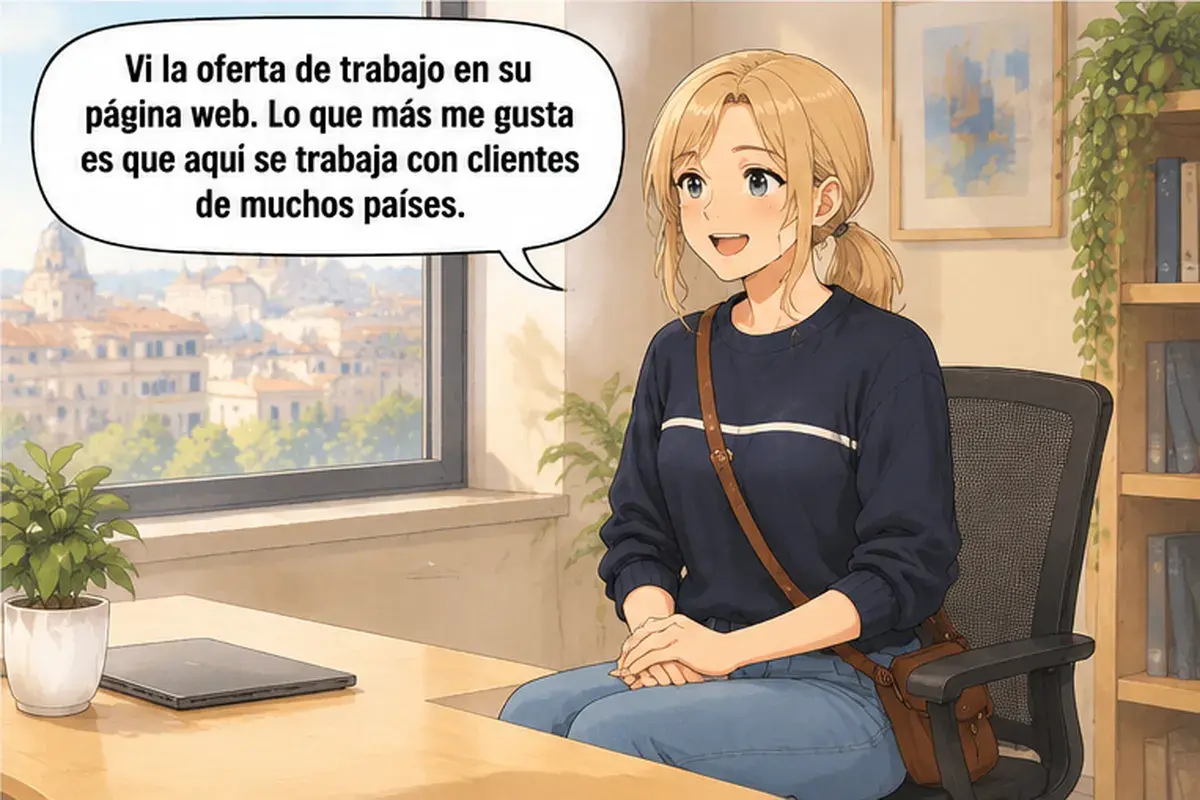
- Ana
Vi la oferta de trabajo en su página web. Lo que más me gusta es que aquí se trabaja con clientes de muchos países.
I saw the job ad on your website. What I like most is that here people work with clients from many countries (formal).

- Entrevistadora
Así es. Hábleme de su formación: ¿dónde hizo sus estudios?
That's right. Tell me about your education: where did you study? (formal)

- Ana
En mi país, donde estudié idiomas y obtuve el título. Ahora trabajo media jornada en una empresa pequeña, donde llevo un año.
In my country, where I studied languages and got my degree. Now I work part-time at a small company, where I've been for a year.

- Entrevistadora
Muy bien. ¿Y cuáles son sus competencias?
Very good. And what are your competencies? (formal)
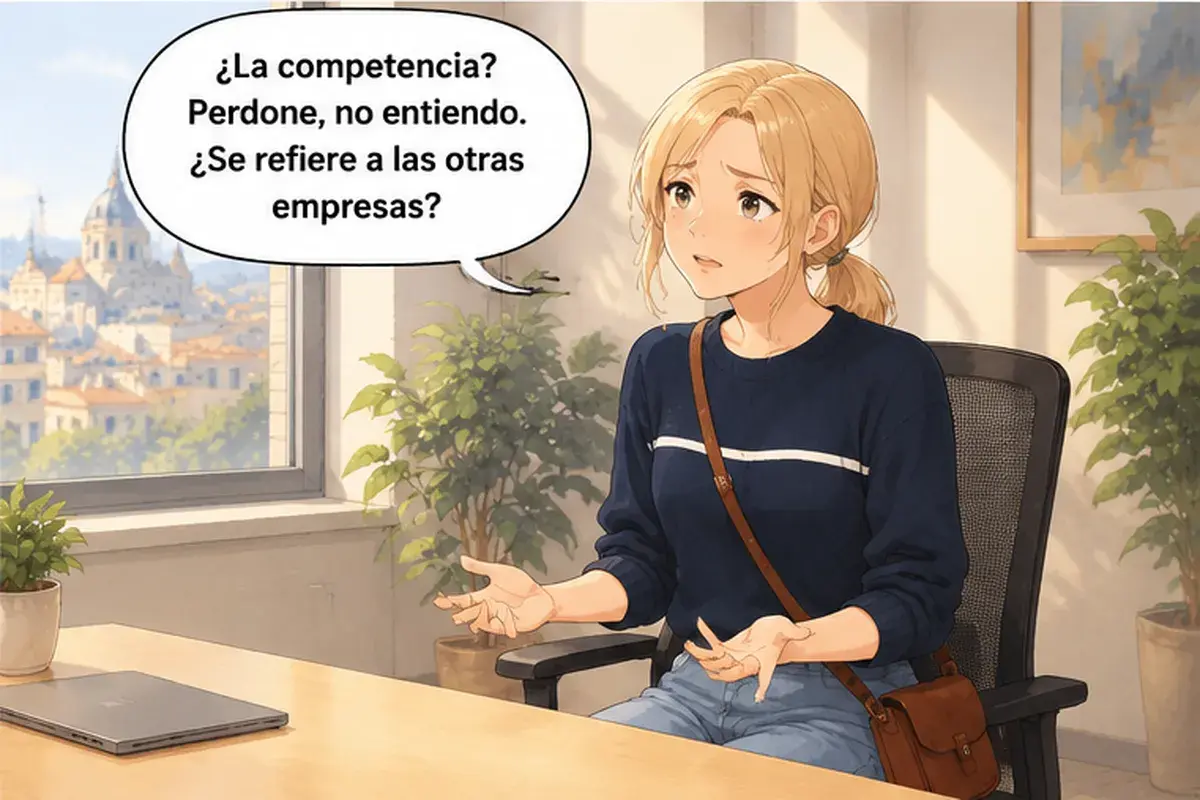
- Ana
¿La competencia? Perdone, no entiendo. ¿Se refiere a las otras empresas?
The competition? Sorry, I don't understand. Do you mean the other companies? (formal)
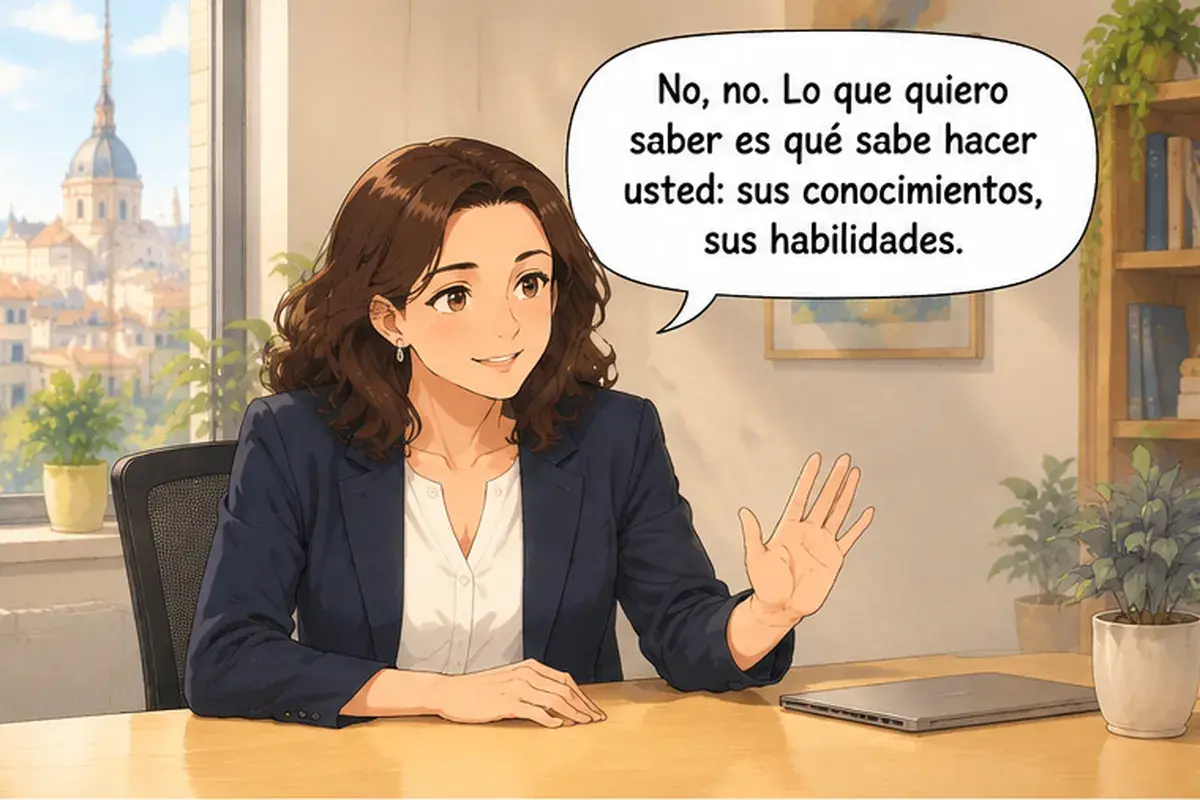
- Entrevistadora
No, no. Lo que quiero saber es qué sabe hacer usted: sus conocimientos, sus habilidades.
No, no. What I want to know is what you can do: your knowledge, your skills (formal).
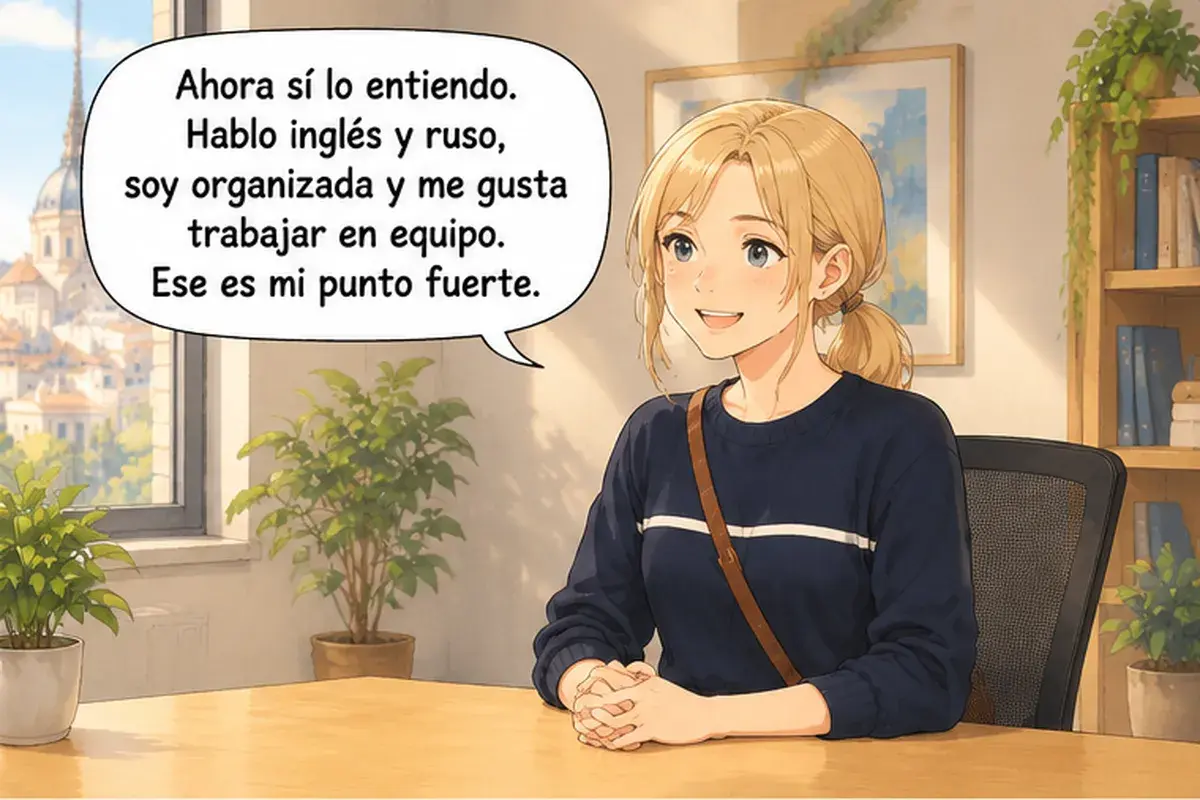
- Ana
Ahora sí lo entiendo. Hablo inglés y español, soy organizada y me gusta trabajar en equipo. Ese es mi punto fuerte.
Now I understand. I speak English and Spanish, I'm organized, and I like working in a team. That's my strong point (woman speaking).

- Entrevistadora
¿Y su punto débil?
And your weak point? (formal)
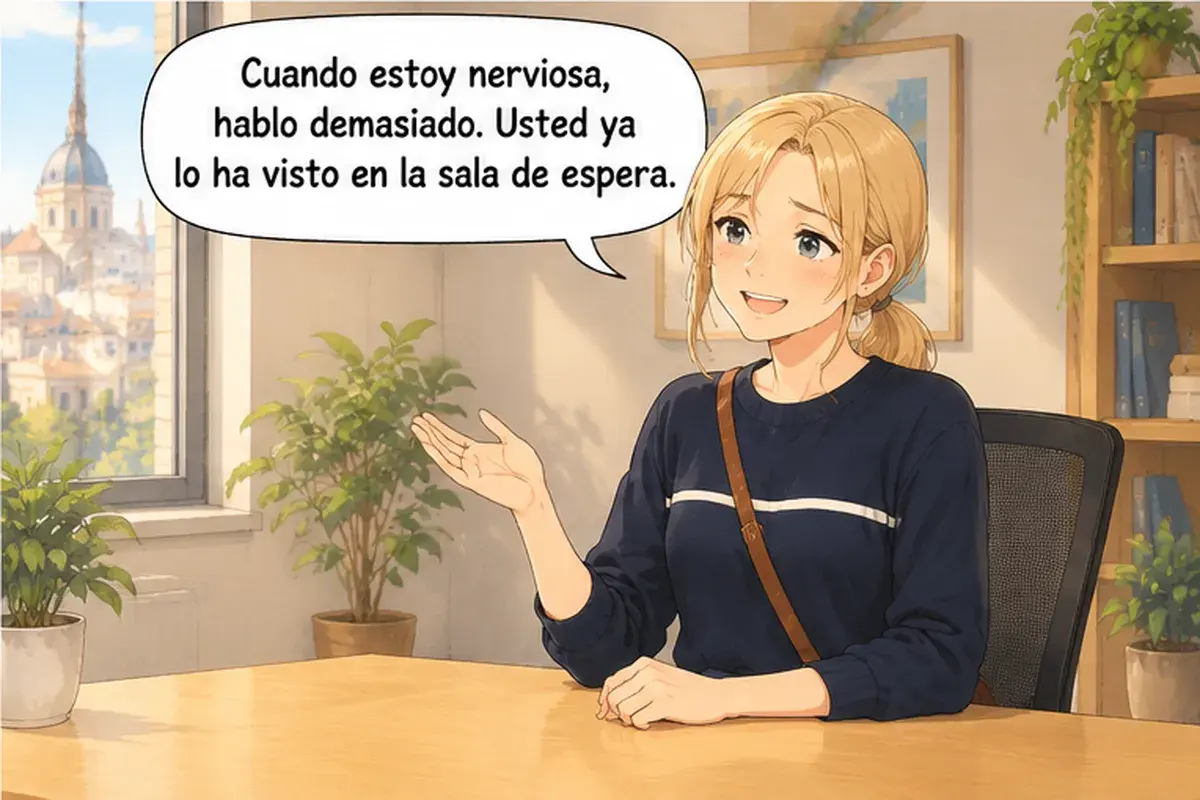
- Ana
Cuando estoy nerviosa, hablo demasiado. Usted ya lo ha visto en la sala de espera.
When I'm nervous, I talk too much. You've already seen it in the waiting room (woman speaking, formal).
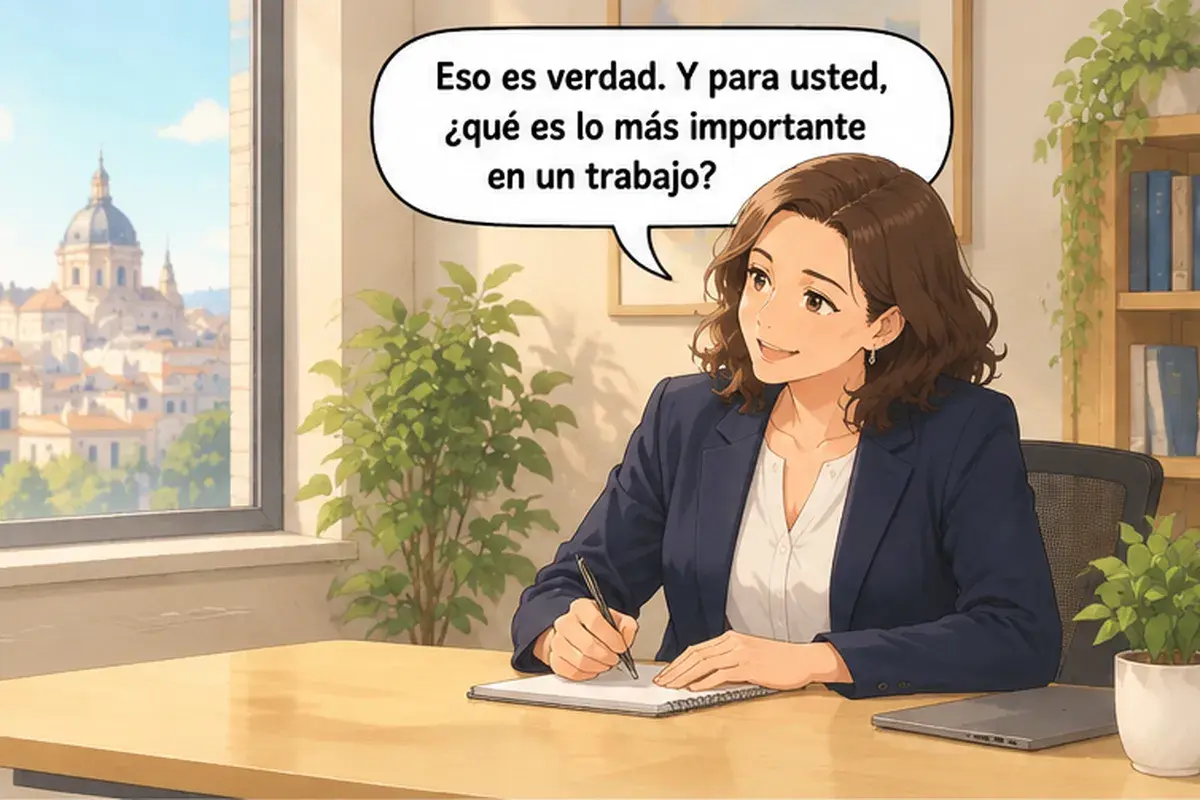
- Entrevistadora
Eso es verdad. Y para usted, ¿qué es lo más importante en un trabajo?
That's true. And for you, what's the most important thing in a job? (formal)
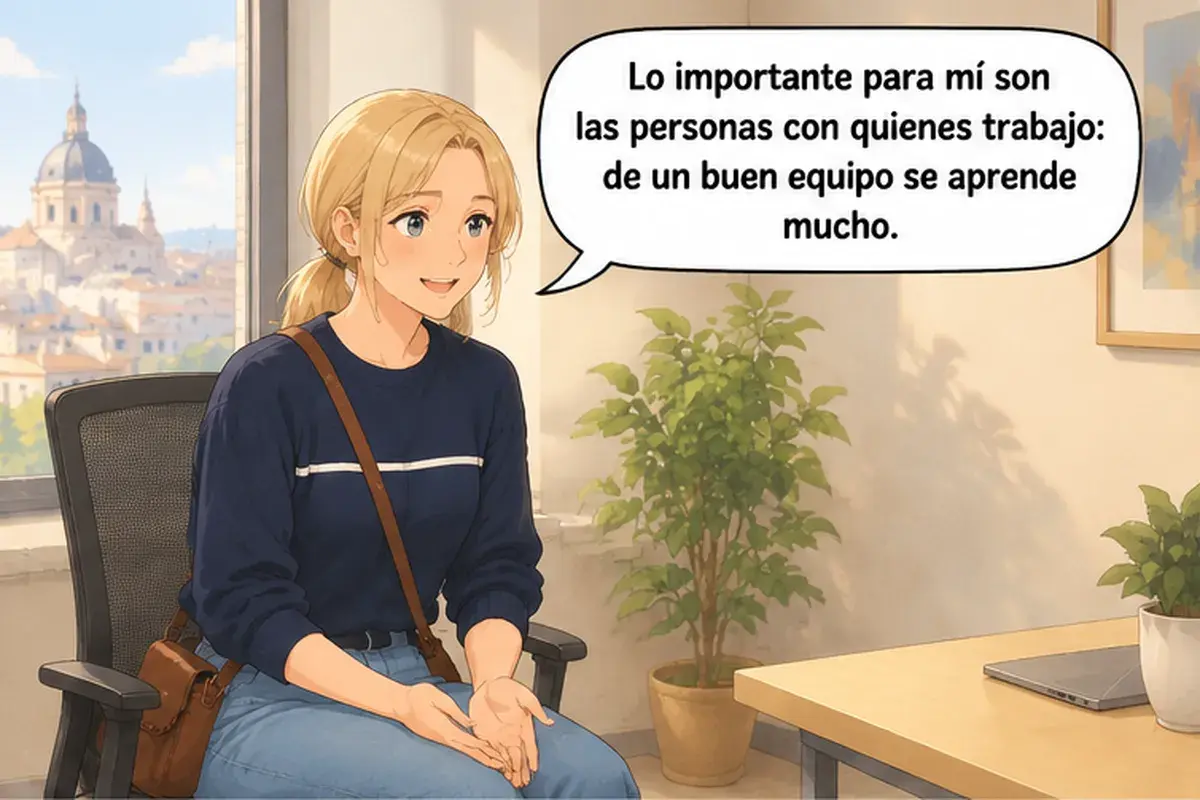
- Ana
Lo importante para mí son las personas con quienes trabajo: de un buen equipo se aprende mucho.
The important thing for me is the people I work with: you learn a lot from a good team.

- Entrevistadora
En cuanto al horario, es jornada completa, pero flexible: hay dos días de teletrabajo a la semana. ¿Cuándo podría incorporarse?
As for the schedule, it's full-time, but flexible: there are two days of remote work a week. When could you start? (formal)
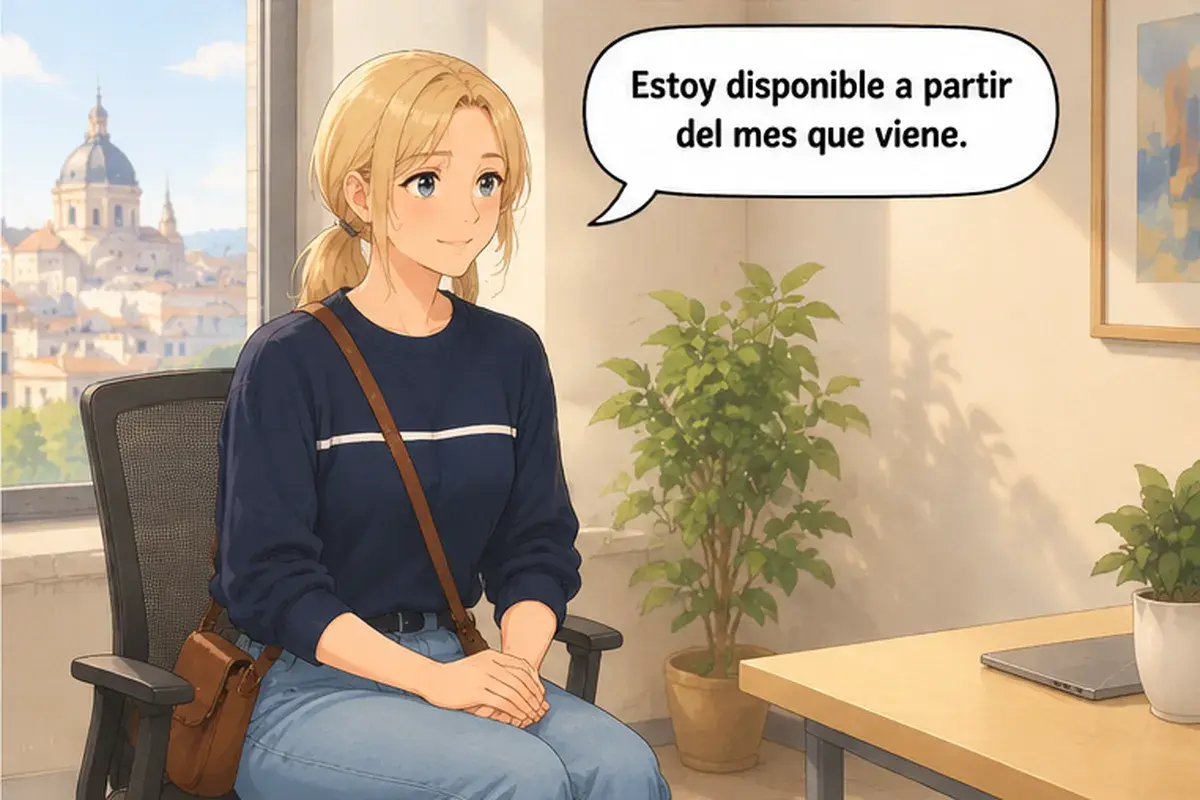
- Ana
Estoy disponible a partir del mes que viene.
I'm available starting next month.

- Entrevistadora
Perfecto. Hay más candidatos, así que la llamaremos la semana que viene. Ha sido un placer.
Perfect. There are more candidates, so we'll call you next week. It's been a pleasure (to a woman, formal).
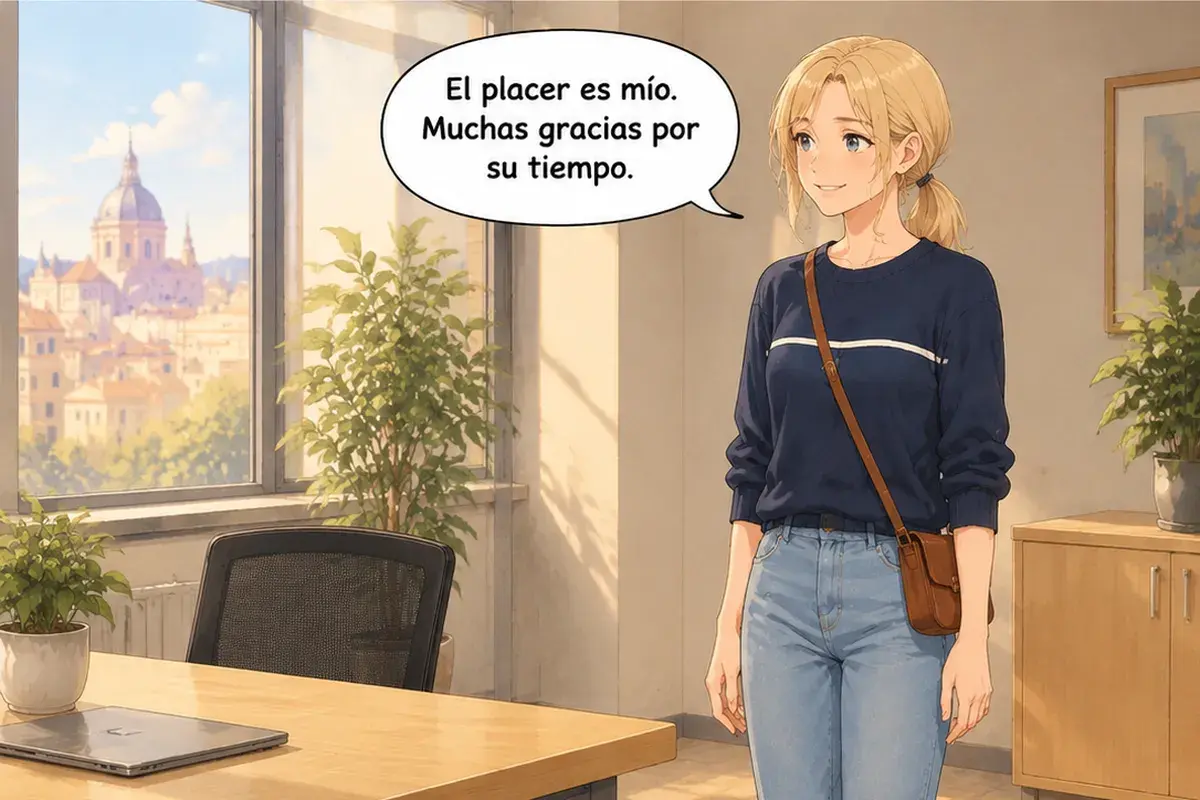
- Ana
El placer es mío. Muchas gracias por su tiempo.
The pleasure is mine. Thank you very much for your time (formal).
Grammar for this text
Lo que means "what, the thing that": lo que me ha contado — what you've told me; lo que quiero saber es… — what I want to know is….
Donde without an accent links a sentence to a place: en mi país, donde estudié idiomas; una empresa pequeña, donde llevo un año — a small company, where I've been for a year (llevar + time, unit 1). In a question it has an accent: ¿dónde hizo sus estudios?
Con quienes — "with whom": las personas con quienes trabajo — the people I work with. There are several people, so it's quienes.
Lo importante — the important thing; lo más importante — the most important thing.
Competencia means both "competition" (la competencia — the other companies) and "skill, competence" (sus competencias — what a person can do). Ana heard the first meaning.
Obtuve el título — I got my degree: obtuve is from obtener (to get, to obtain). The verb is built on tener, so its forms are the same: tuve → obtuve.
At a job interview people use usted: siéntese, dígame and hábleme are usted commands with the pronoun attached at the end (unit 12). La llamaremos — we'll call you: here la means "you" (a woman you call usted).
Words and grammar of the unit: Talk about yourself at a job interview.
Learn the words from the texts with flashcards
In the app, you can tap any word in a text to see its translation, forms and examples, and new words stick with flashcards. 15 minutes a day.
Start for freeEverything is open for free. No card needed to sign up.