

Spanish dialogue with translation · B1 · 18 lines
La una de la madrugada One in the morning
Comic · 18 panels
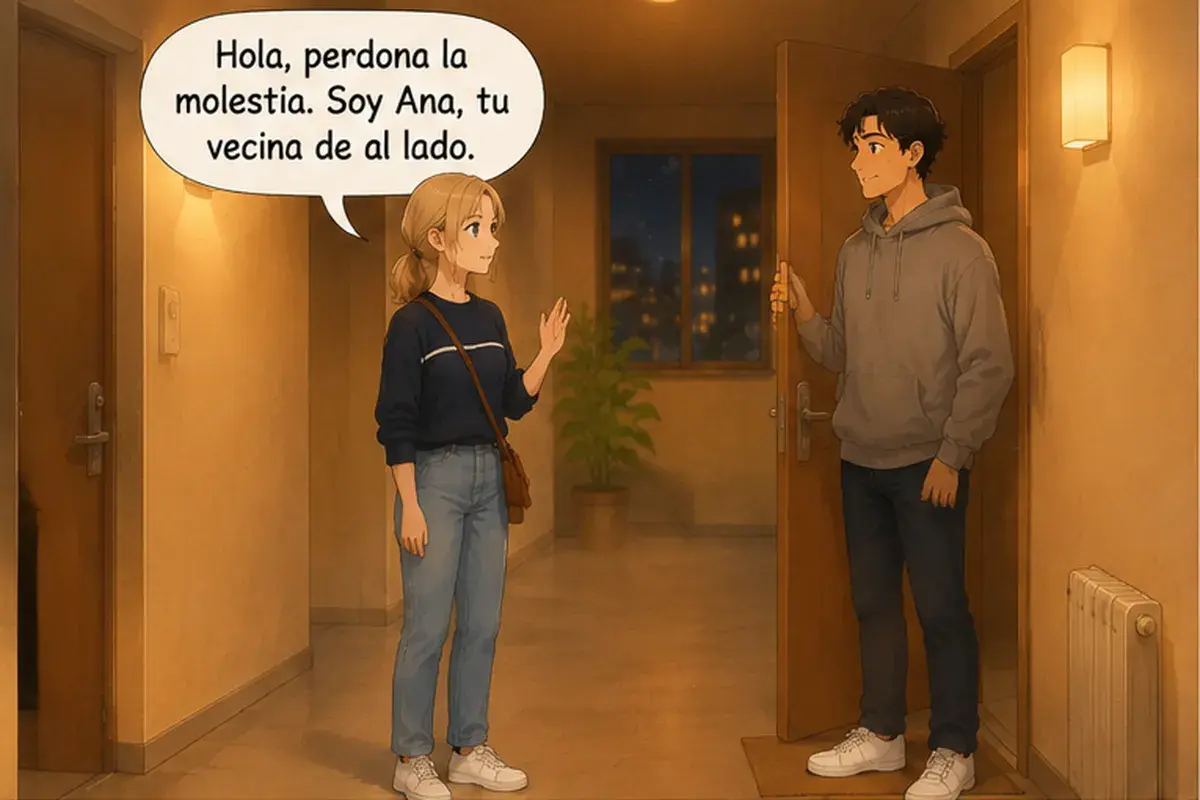
- Ana
Hola, perdona la molestia. Soy Ana, tu vecina de al lado.
Hi, sorry to bother you. I'm Ana, your next-door neighbor.
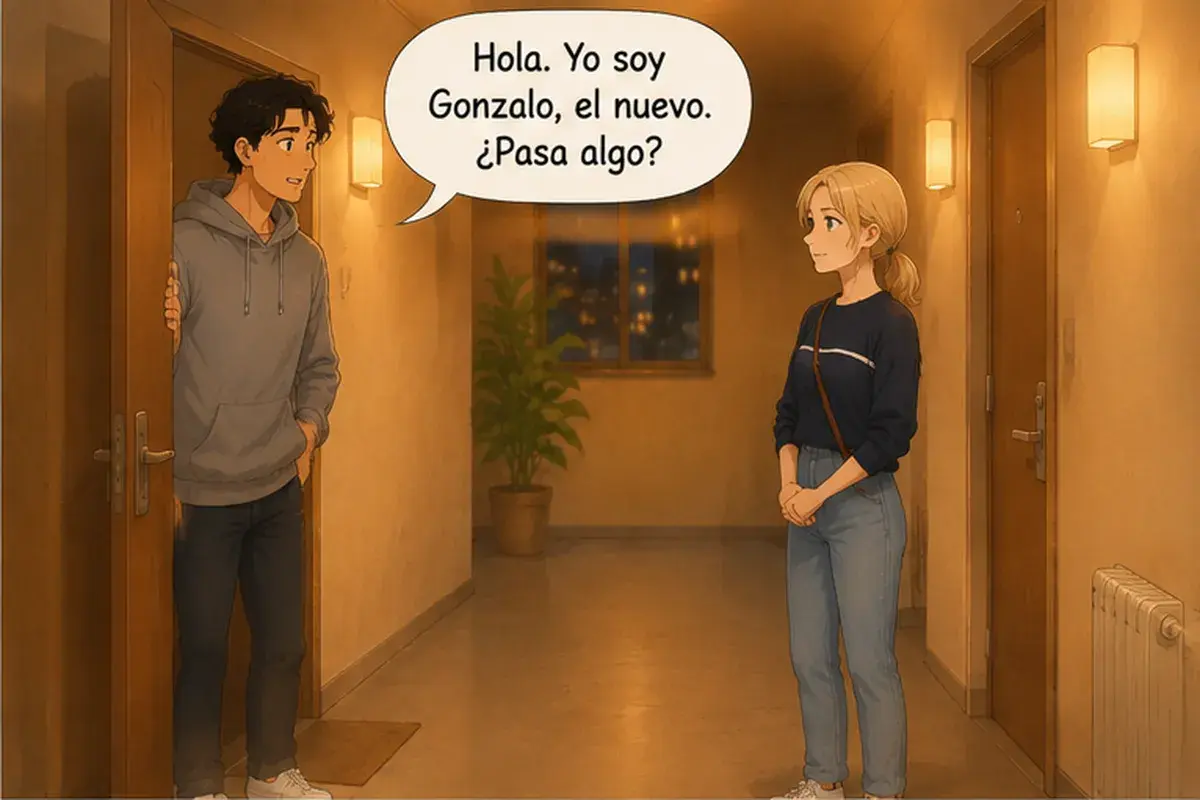
- Gonzalo
Hola. Yo soy Gonzalo, el nuevo. ¿Pasa algo?
Hi. I'm Gonzalo, the new guy. Is something wrong?
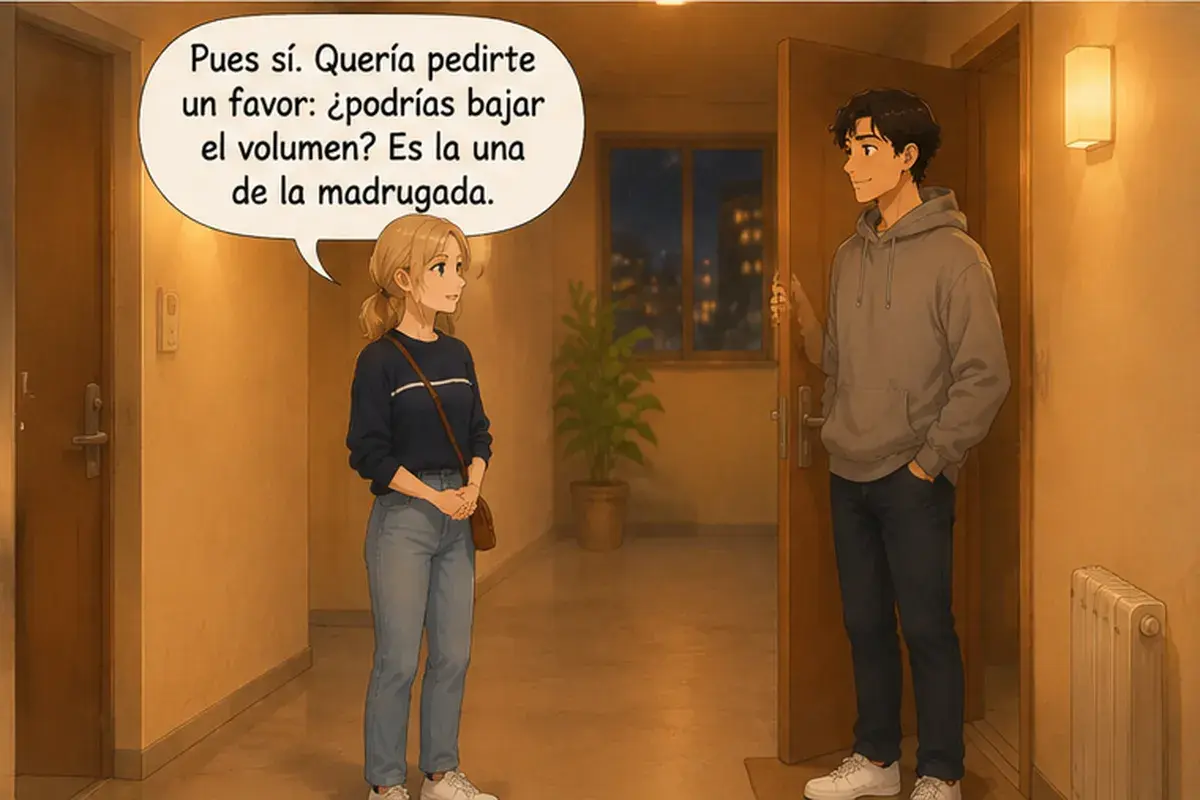
- Ana
Pues sí. Quería pedirte un favor: ¿podrías bajar el volumen? Es la una de la madrugada.
Well, yes. I wanted to ask you a favor: could you turn the volume down? It's one in the morning.
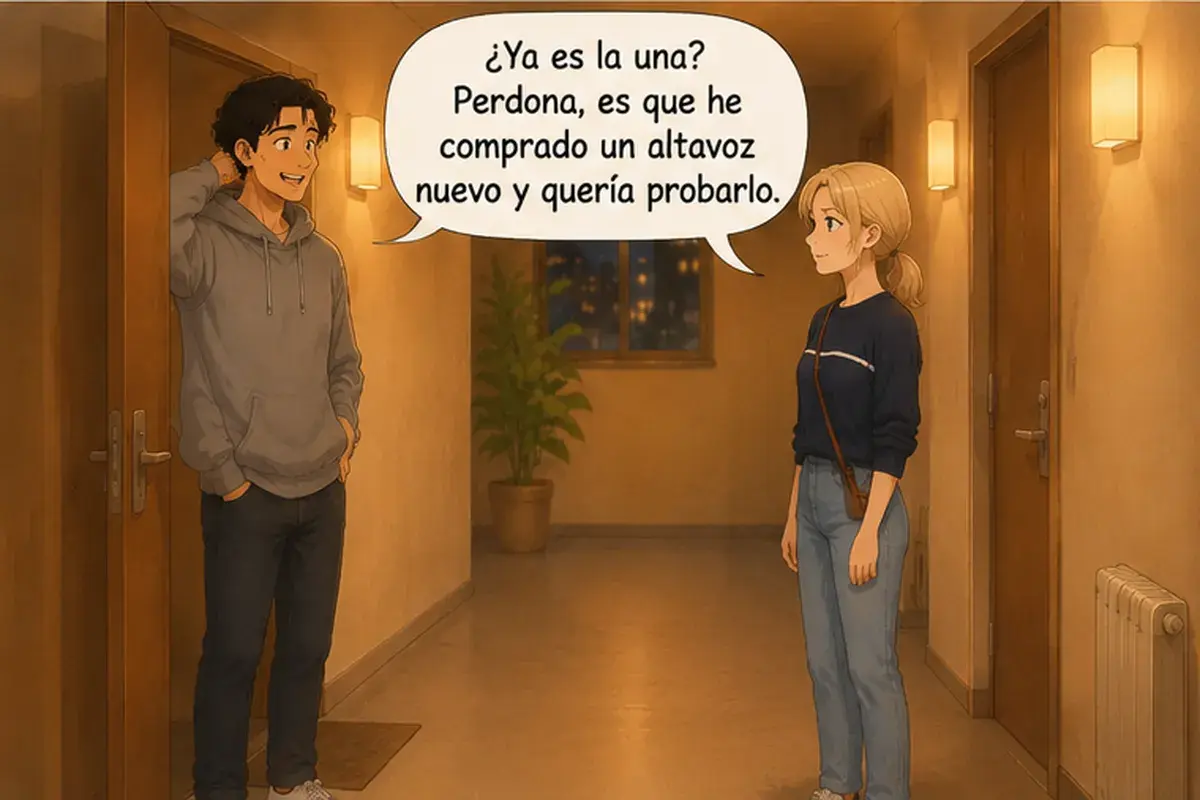
- Gonzalo
¿Ya es la una? Perdona, es que he comprado un altavoz nuevo y quería probarlo.
It's one already? Sorry, it's just that I bought a new speaker and I wanted to try it out.
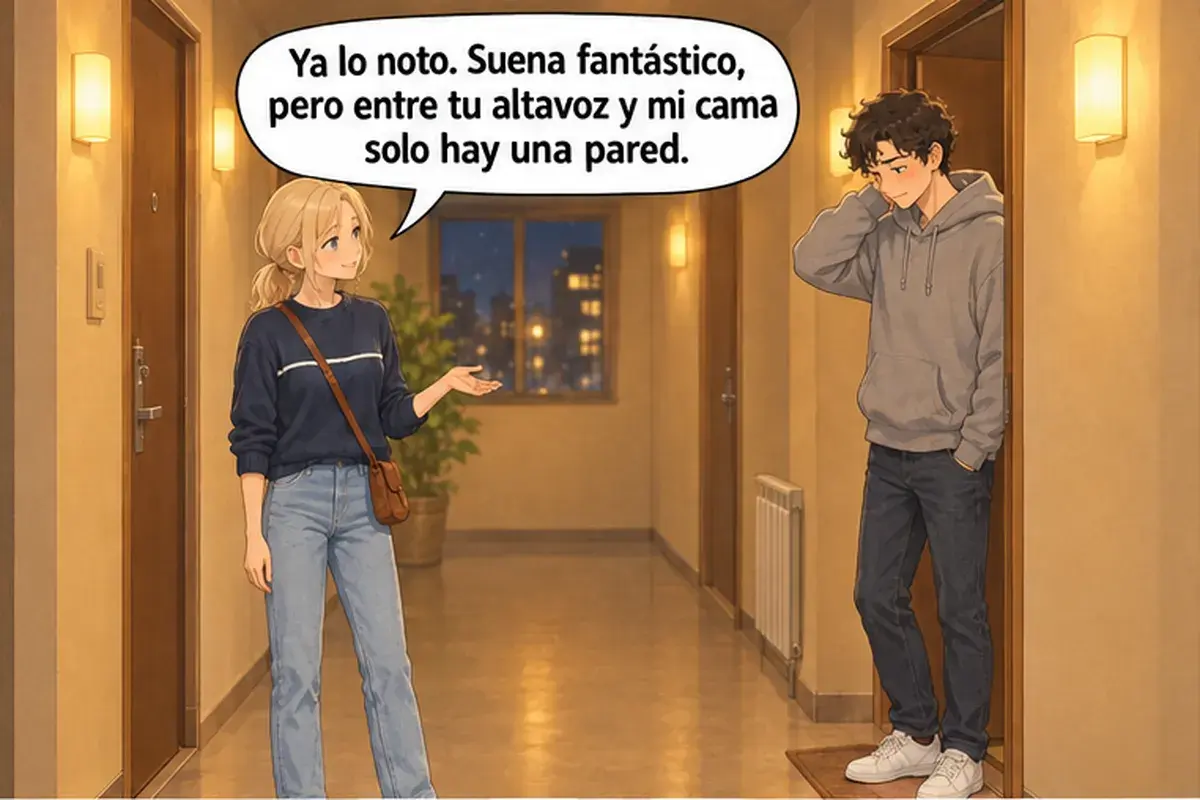
- Ana
Ya lo noto. Suena fantástico, pero entre tu altavoz y mi cama solo hay una pared.
I can tell. It sounds fantastic, but there's only one wall between your speaker and my bed.
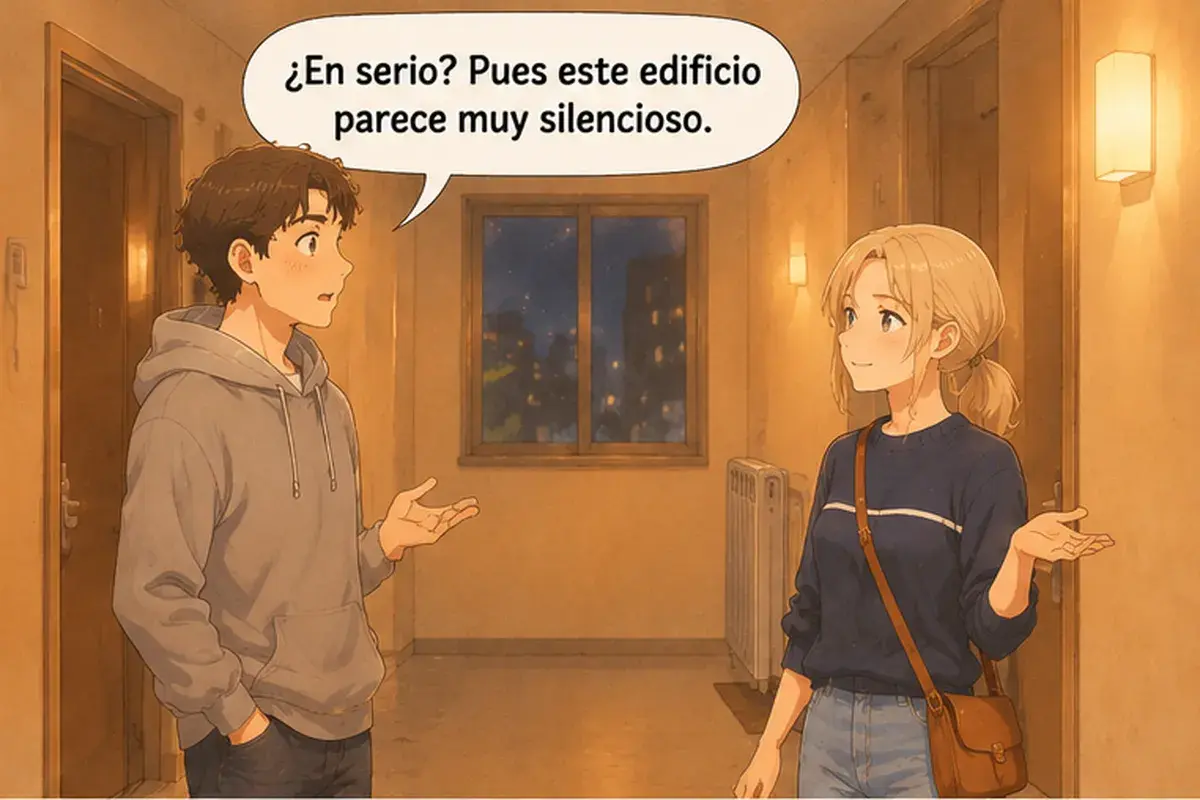
- Gonzalo
¿En serio? Pues este edificio parece muy silencioso.
Really? Well, this building seems very quiet.
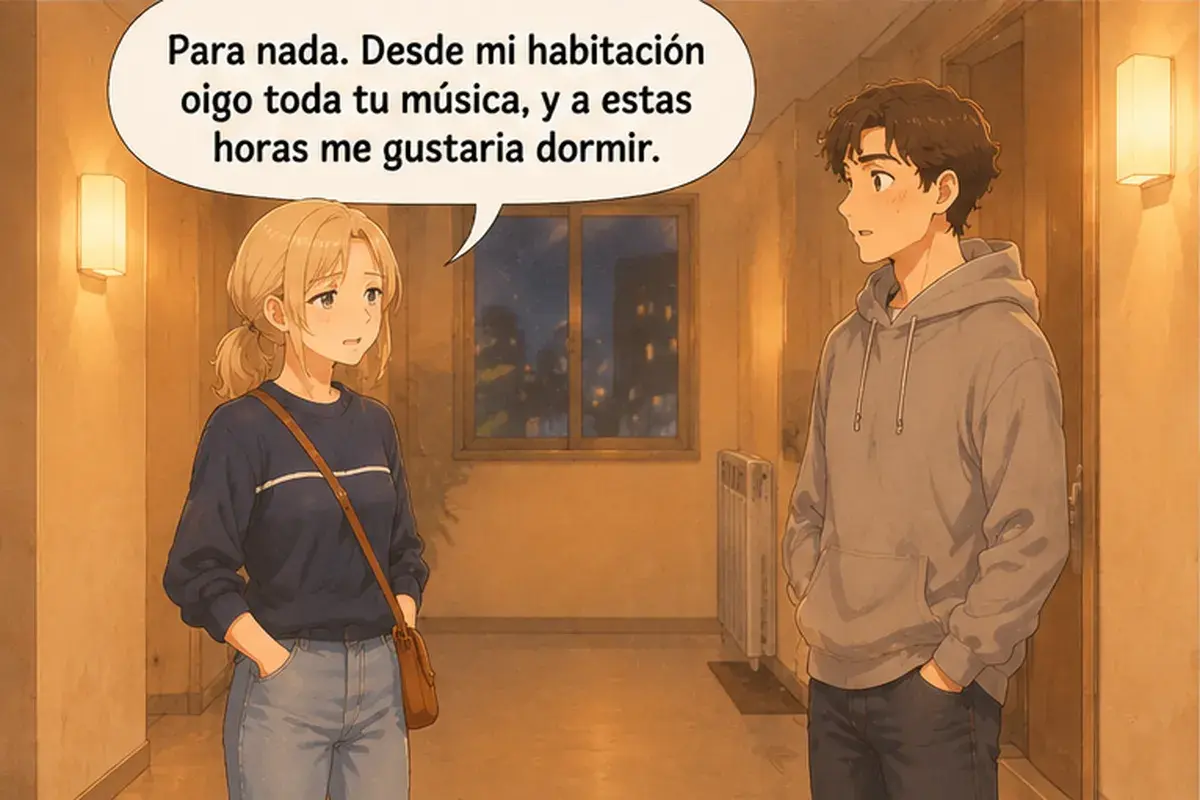
- Ana
Para nada. Desde mi habitación oigo toda tu música, y a estas horas me gustaría dormir.
Not at all. I can hear all your music from my room, and at this hour I'd like to sleep.
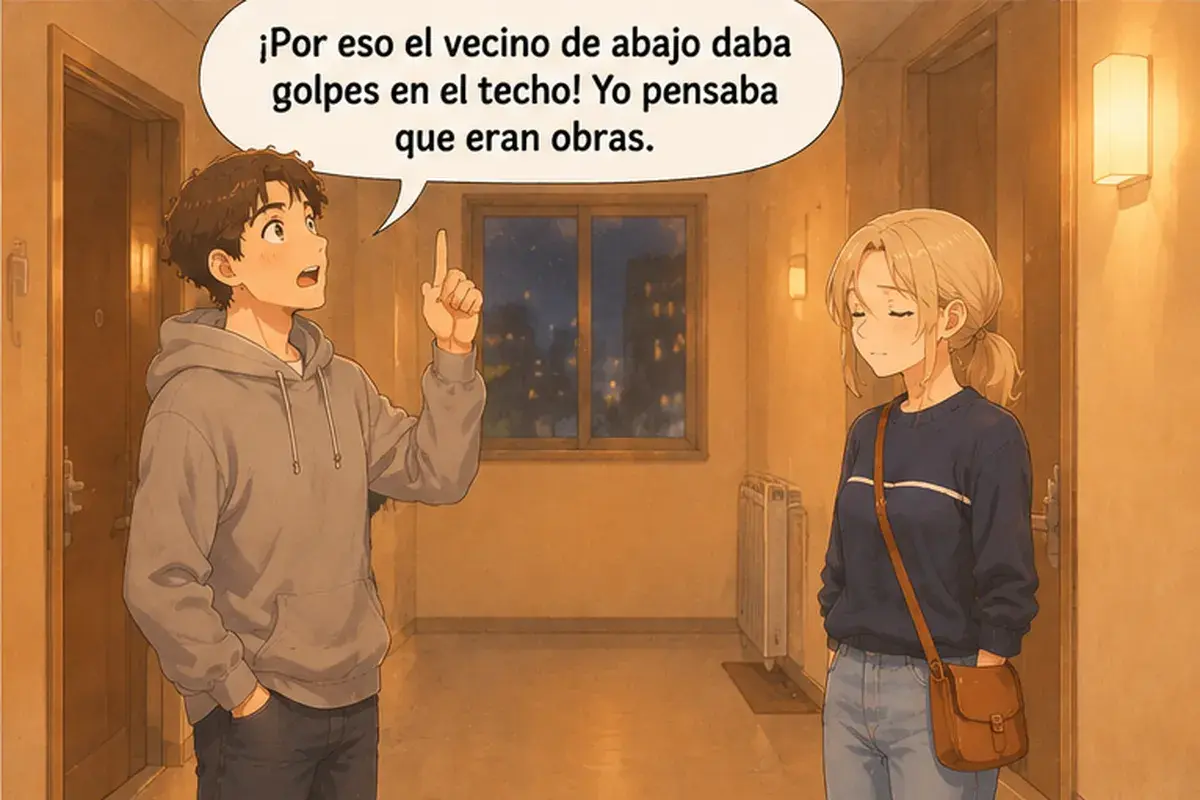
- Gonzalo
¡Por eso el vecino de abajo daba golpes en el techo! Yo pensaba que eran obras.
So that's why the neighbor downstairs was banging on the ceiling! I thought it was construction work.
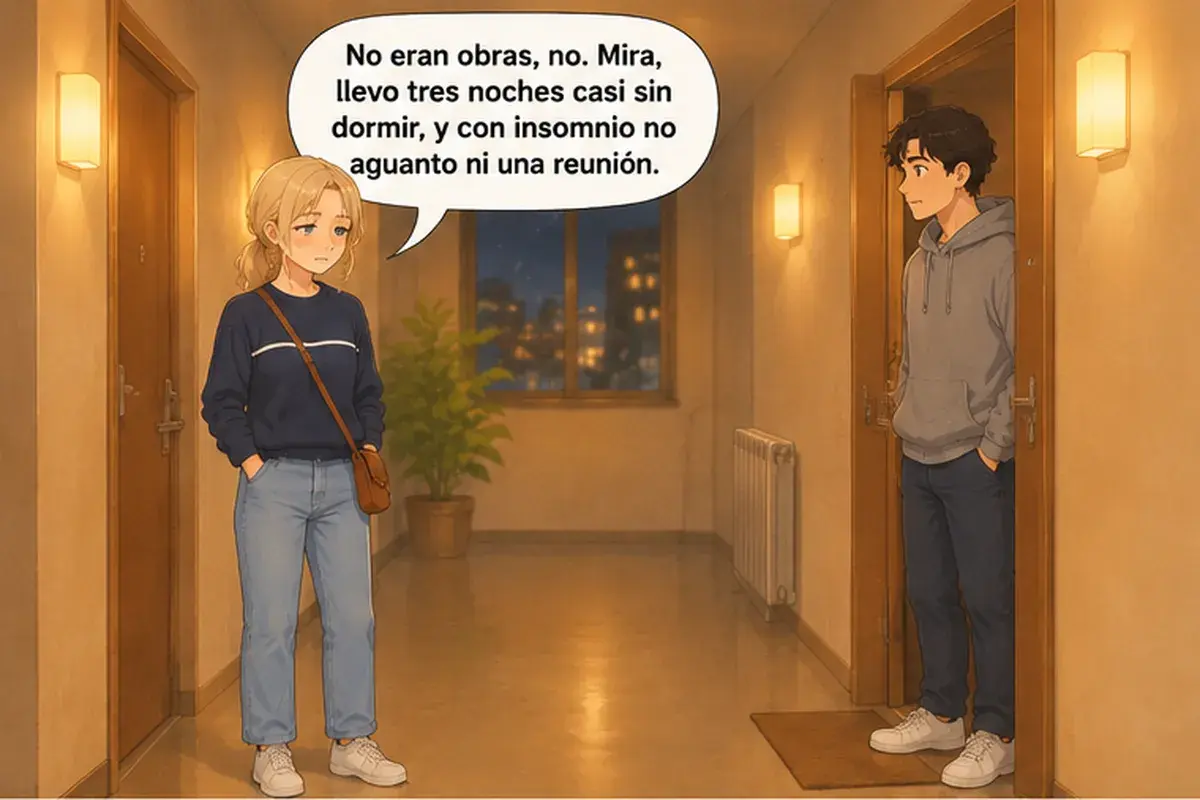
- Ana
No eran obras, no. Mira, llevo tres noches casi sin dormir, y con insomnio no aguanto ni una reunión.
No, it wasn't construction work. Look, I've had almost no sleep for three nights, and with insomnia I can't get through a single meeting.
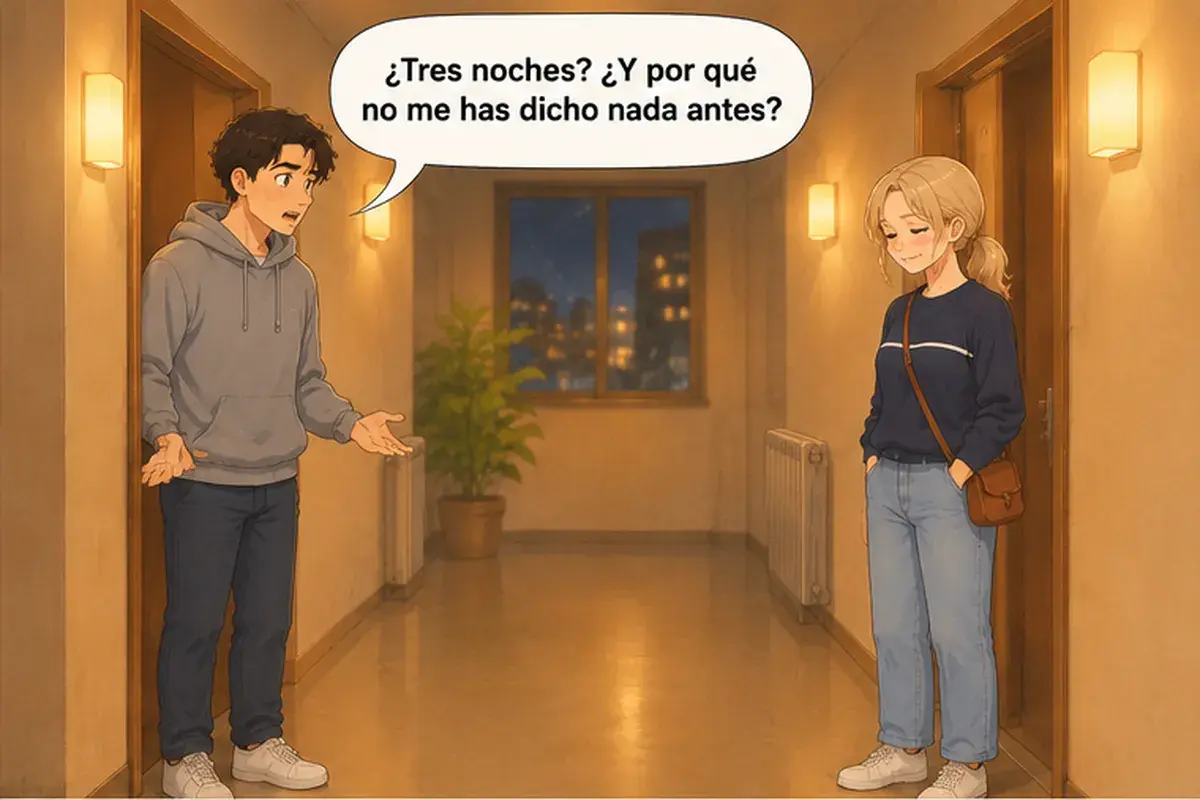
- Gonzalo
¿Tres noches? ¿Y por qué no me has dicho nada antes?
Three nights? And why didn't you tell me anything before?
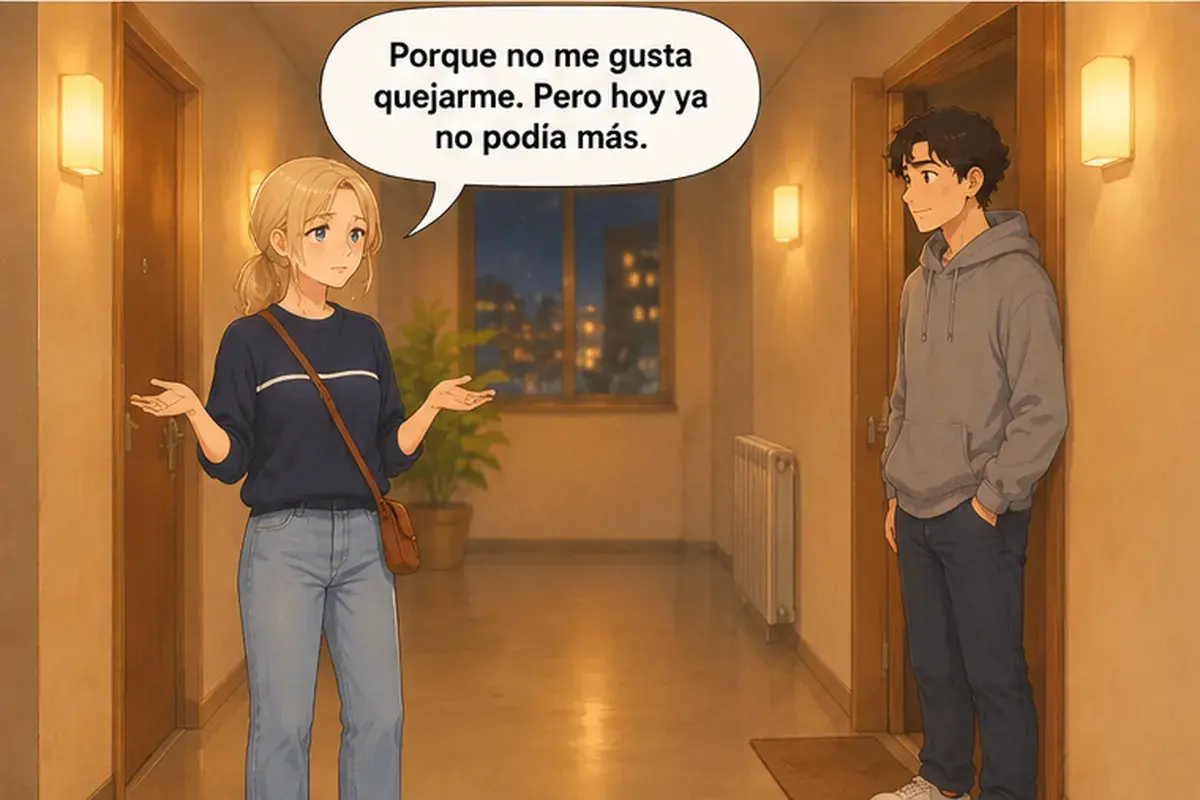
- Ana
Porque no me gusta quejarme. Pero hoy ya no podía más.
Because I don't like to complain. But today I just couldn't take it anymore.
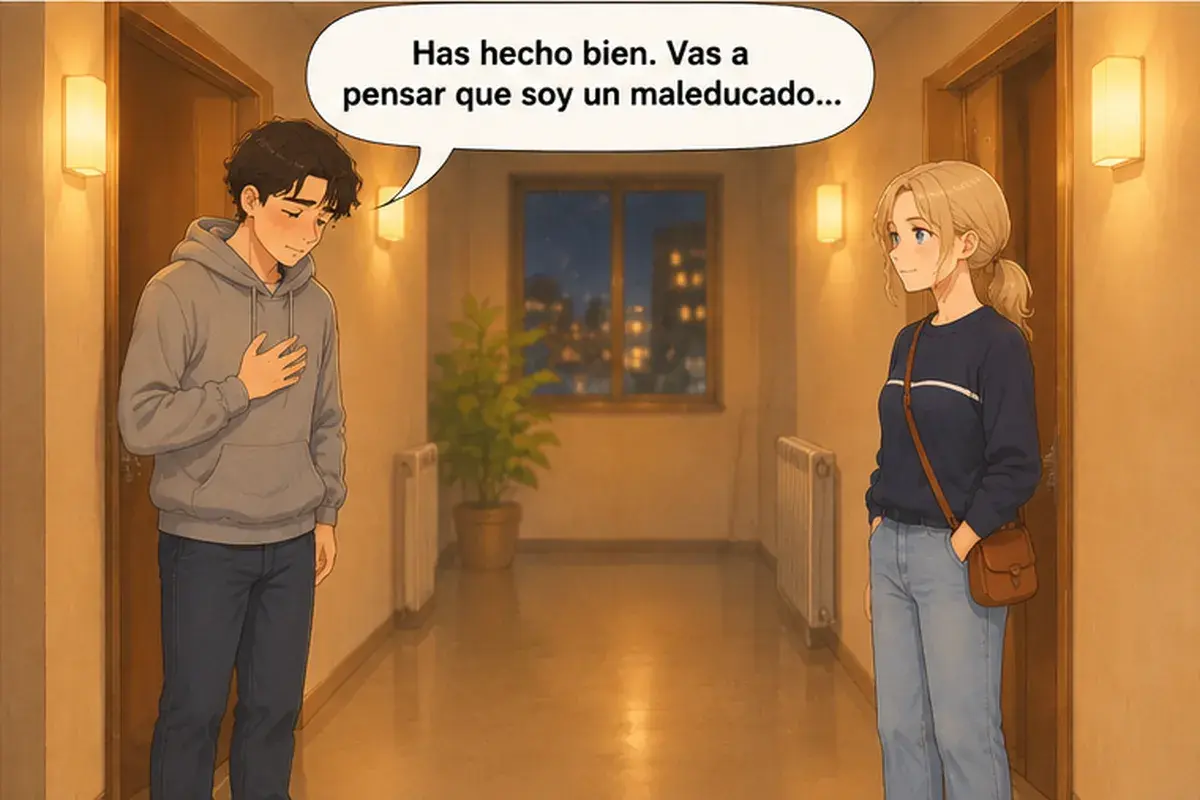
- Gonzalo
Has hecho bien. Vas a pensar que soy un maleducado…
You did the right thing. You're going to think I'm a rude guy…
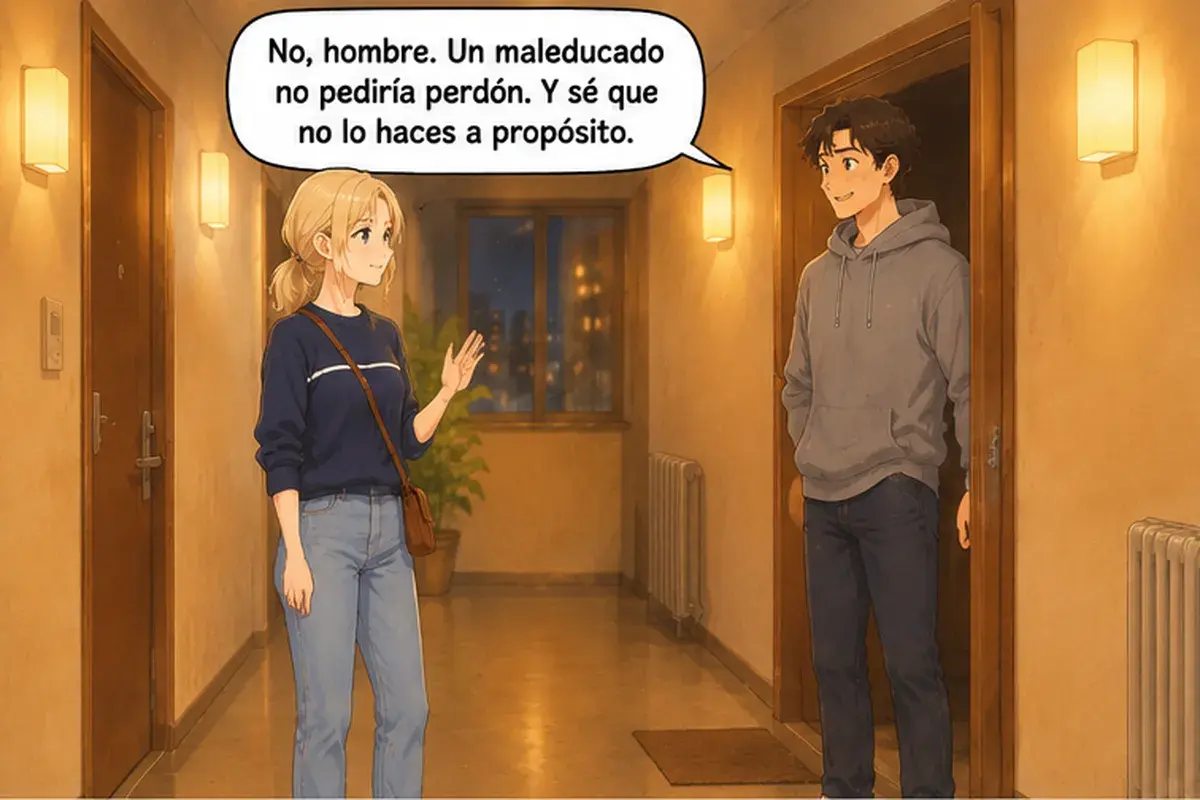
- Ana
No, hombre. Un maleducado no pediría perdón. Y sé que no lo haces a propósito.
Oh no, of course not. A rude person wouldn't apologize. And I know you don't do it on purpose.
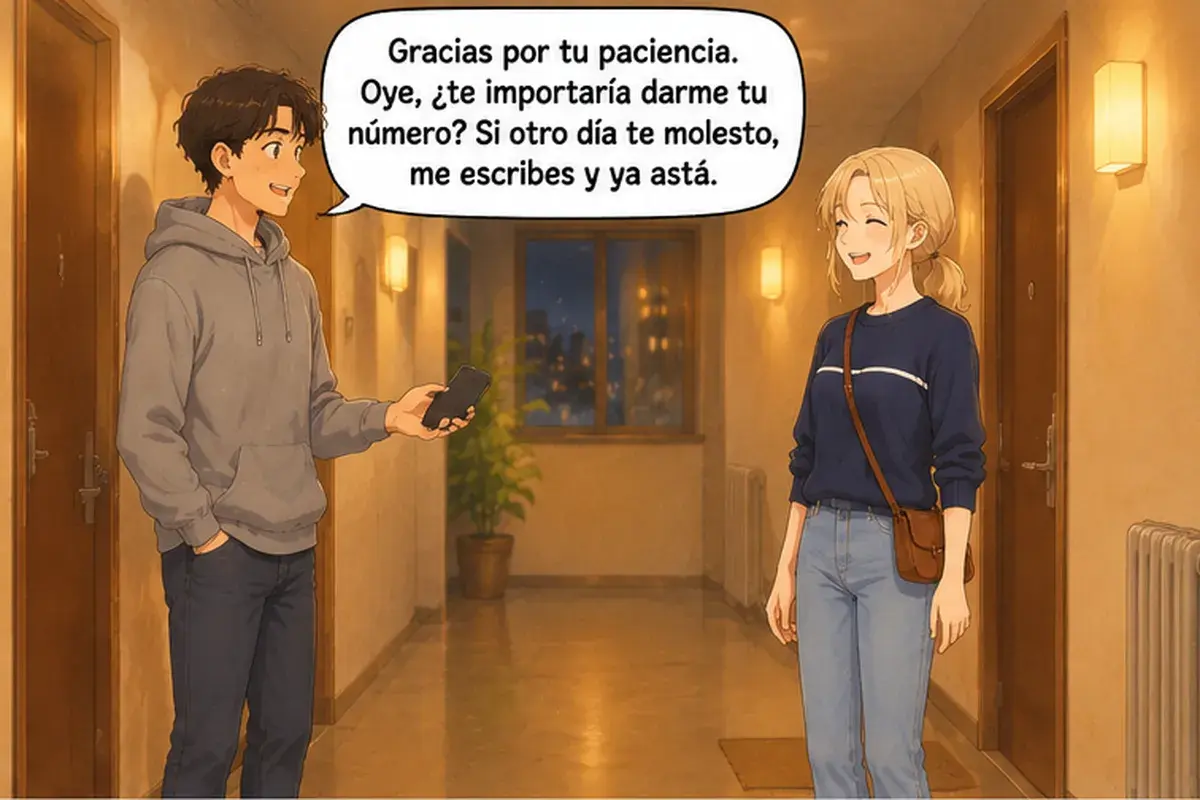
- Gonzalo
Gracias por tu paciencia. Oye, ¿te importaría darme tu número? Si otro día te molesto, me escribes y ya está.
Thanks for your patience. Hey, would you mind giving me your number? If I bother you some other day, you just text me and that's it.
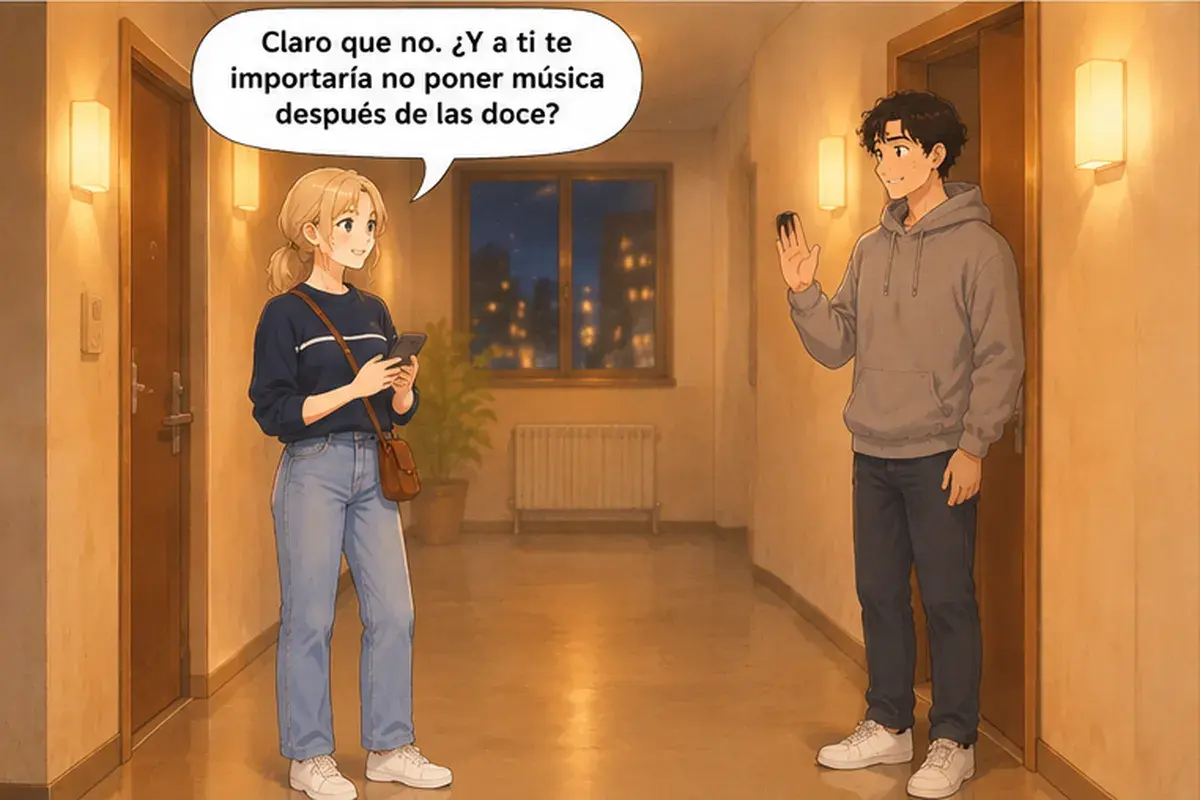
- Ana
Claro que no. ¿Y a ti te importaría no poner música después de las doce?
Of course not. And would you mind not playing music after twelve?
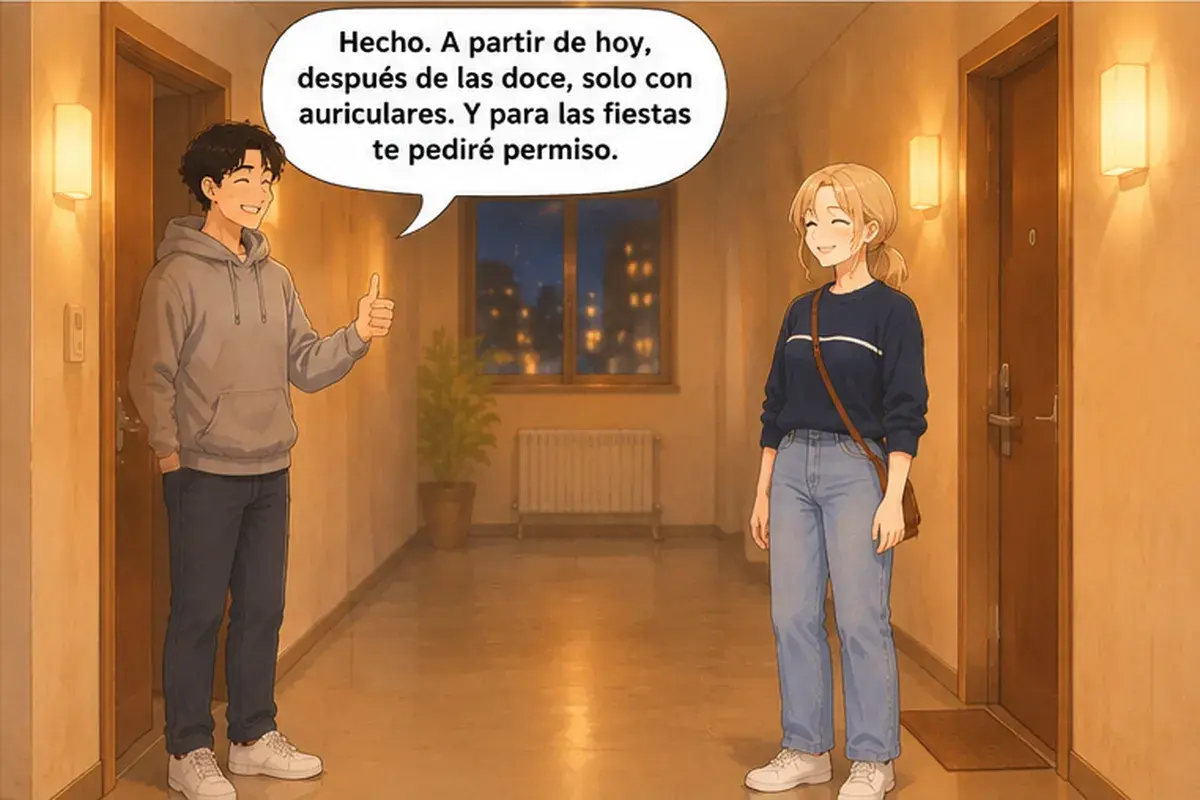
- Gonzalo
Hecho. A partir de hoy, después de las doce, solo con auriculares. Y para las fiestas te pediré permiso.
Deal. From today on, after twelve, only with headphones. And for parties I'll ask your permission.

- Ana
Muchas gracias. Eres muy majo. Sería genial tener siempre vecinos así.
Thank you so much. You're really nice. It would be great to always have neighbors like that (to a man).
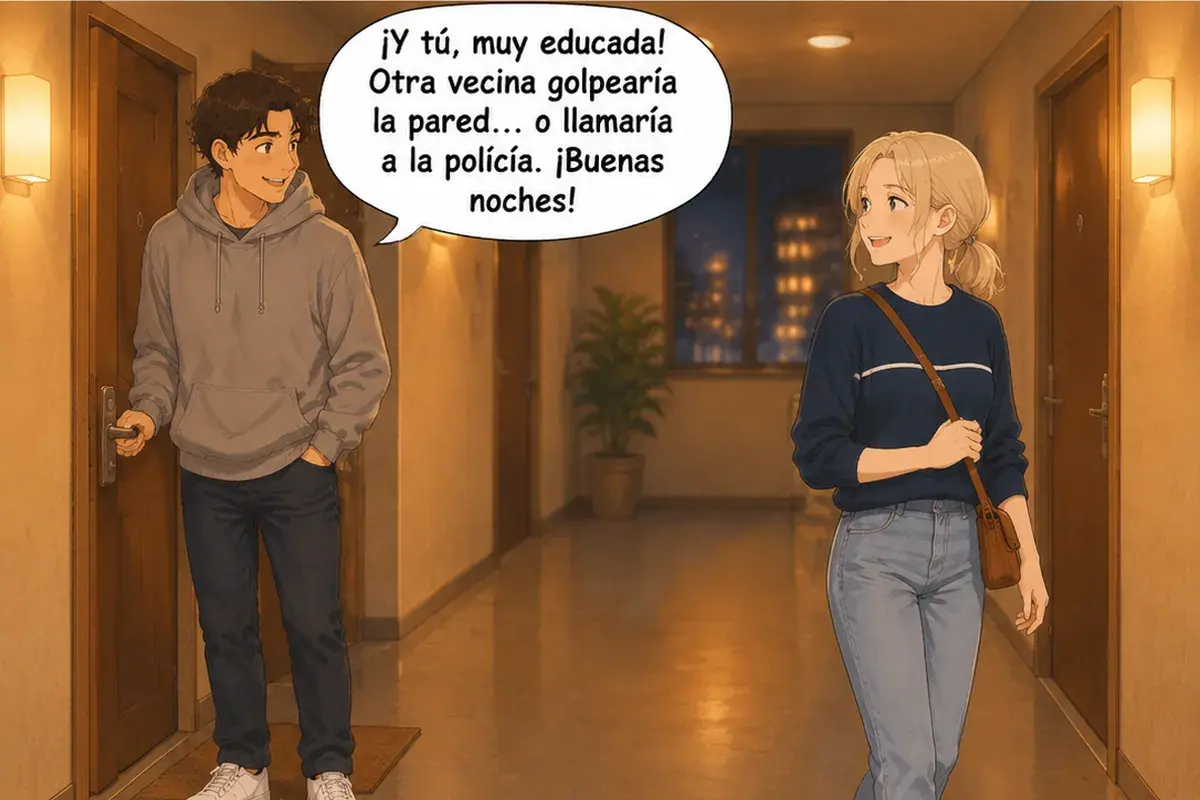
- Gonzalo
¡Y tú, muy educada! Otra vecina golpearía la pared… o llamaría a la policía. ¡Buenas noches!
And you're very polite! Another neighbor would bang on the wall… or call the police. Good night! (to a woman)
Grammar for this text
Polite requests. ¿Podrías bajar el volumen? — "Could you turn the volume down?", ¿Te importaría darme tu número? — "Would you mind giving me your number?". Both are followed by an infinitive (English uses -ing after "would you mind"). To ¿te importaría…? Ana answers Claro que no — "of course not": here "no" means "sure, go ahead", just like in English.
Quería. Quería pedirte un favor — "I wanted to ask you a favor": a past form, but the request is about now. When Gonzalo says quería probarlo, it's a normal past: "I wanted to try it out".
"Would" without a request. Un maleducado no pediría perdón — "a rude person wouldn't apologize". Otra vecina golpearía la pared — "another neighbor would bang on the wall". Sería genial — "it would be great".
Everyday speech. Es que… — "it's just that…", the usual way to start an excuse. Hecho — "deal" (literally "done"). Y ya está — "and that's it". Hoy ya no podía más — "today I just couldn't take it anymore" (literally "I couldn't anymore"). No, hombre — "oh no, of course not": hombre here doesn't mean "man". Daba golpes en el techo — the neighbor downstairs was banging on his ceiling, which is Gonzalo's floor.
Words and grammar of the unit: Ask your neighbors to keep it down.
Learn the words from the texts with flashcards
In the app, you can tap any word in a text to see its translation, forms and examples, and new words stick with flashcards. 15 minutes a day.
Start for freeEverything is open for free. No card needed to sign up.