

Spanish dialogue with translation · B1 · 14 lines
¿Y tú qué harías? And what would you do?
Comic · 14 panels
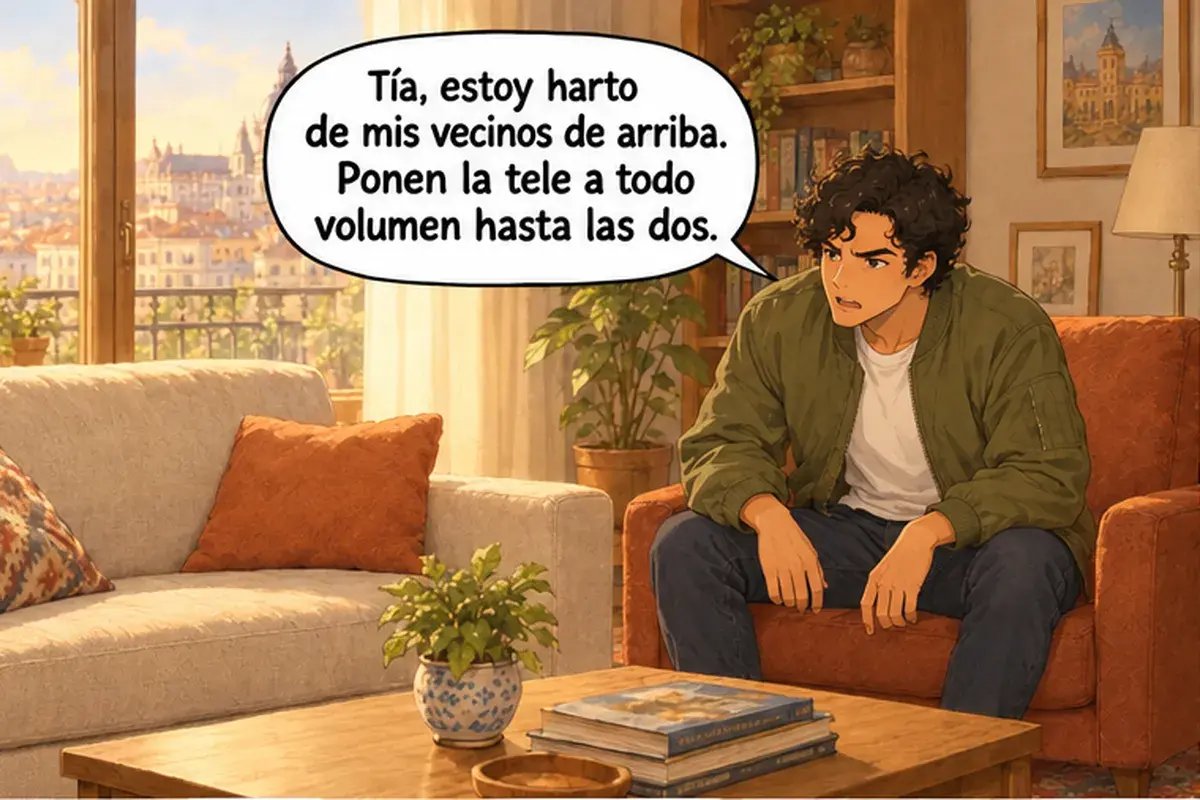
- Pablo
Tía, estoy harto de mis vecinos de arriba. Ponen la tele a todo volumen hasta las dos.
Dude, I'm sick of my upstairs neighbors. They play the TV at full volume until two (man speaking, to a woman).
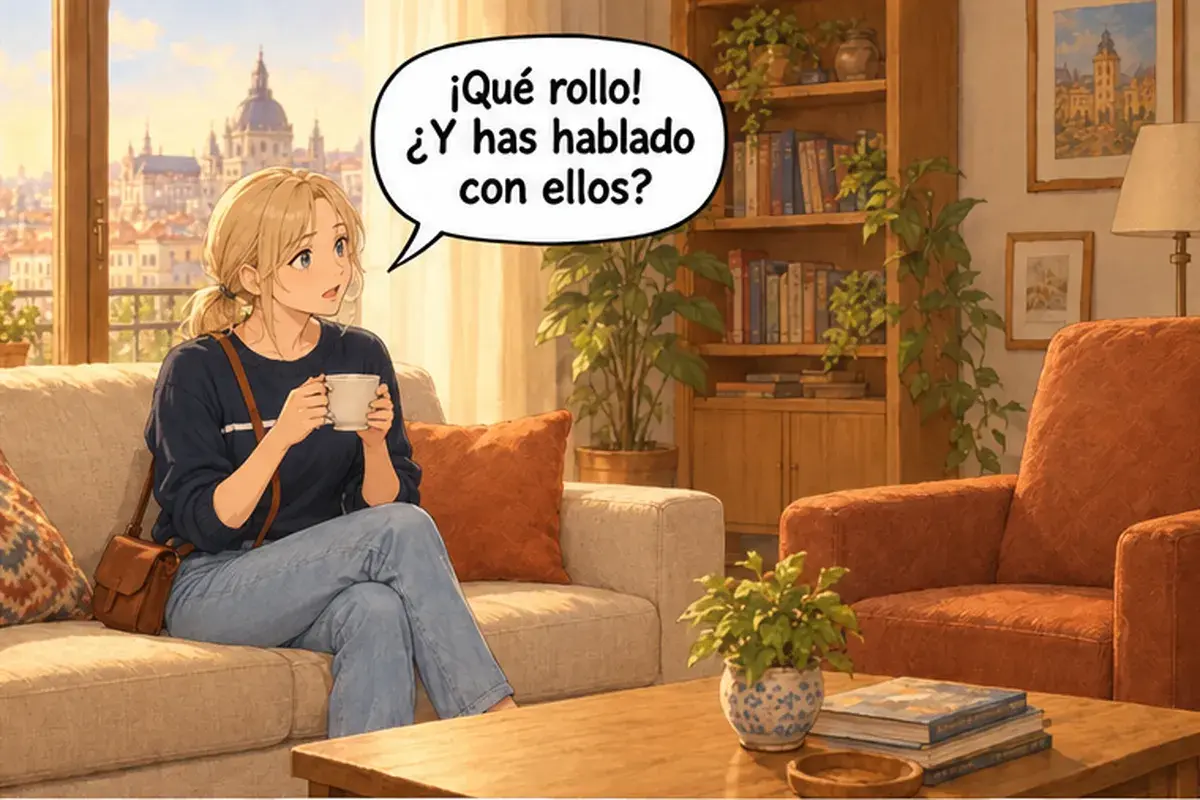
- Ana
¡Qué rollo! ¿Y has hablado con ellos?
What a pain! And have you talked to them?
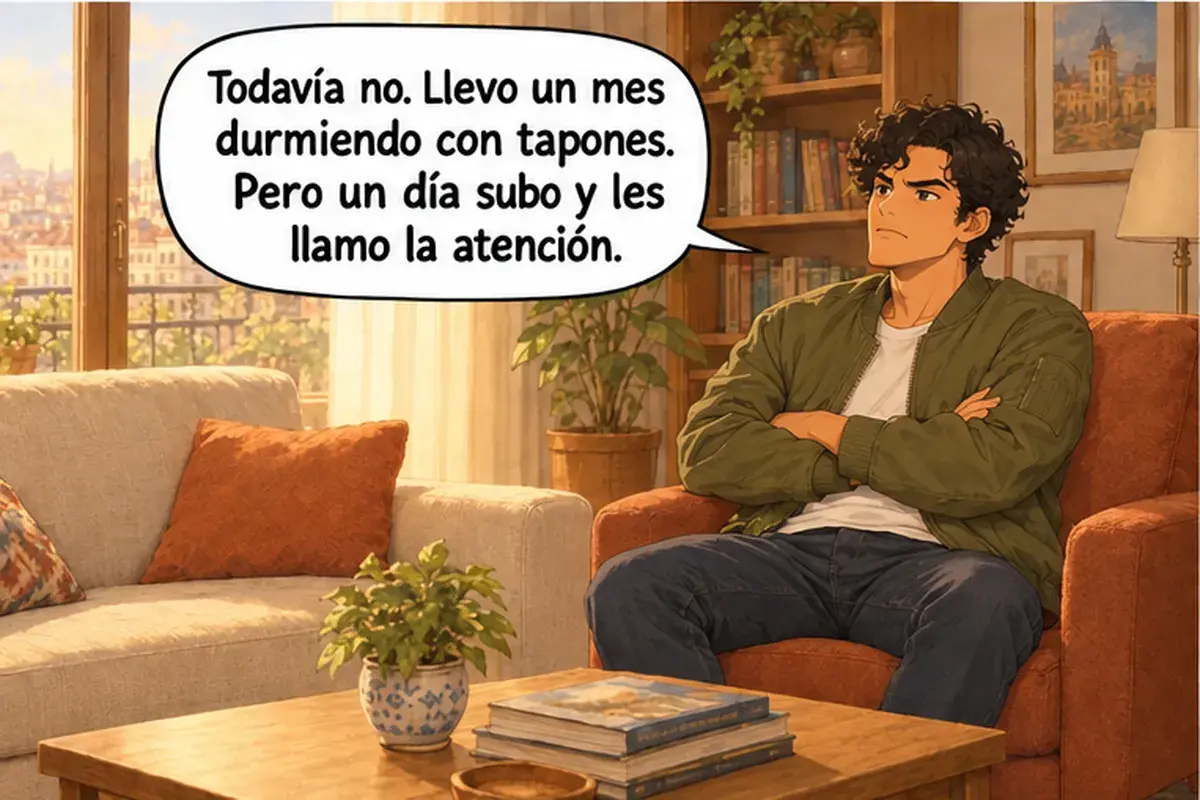
- Pablo
Todavía no. Llevo un mes durmiendo con tapones. Pero un día subo y les llamo la atención.
Not yet. I've been sleeping with earplugs for a month. But one day I'm going up there and telling them off.

- Ana
¿Y qué les dirías?
And what would you say to them?
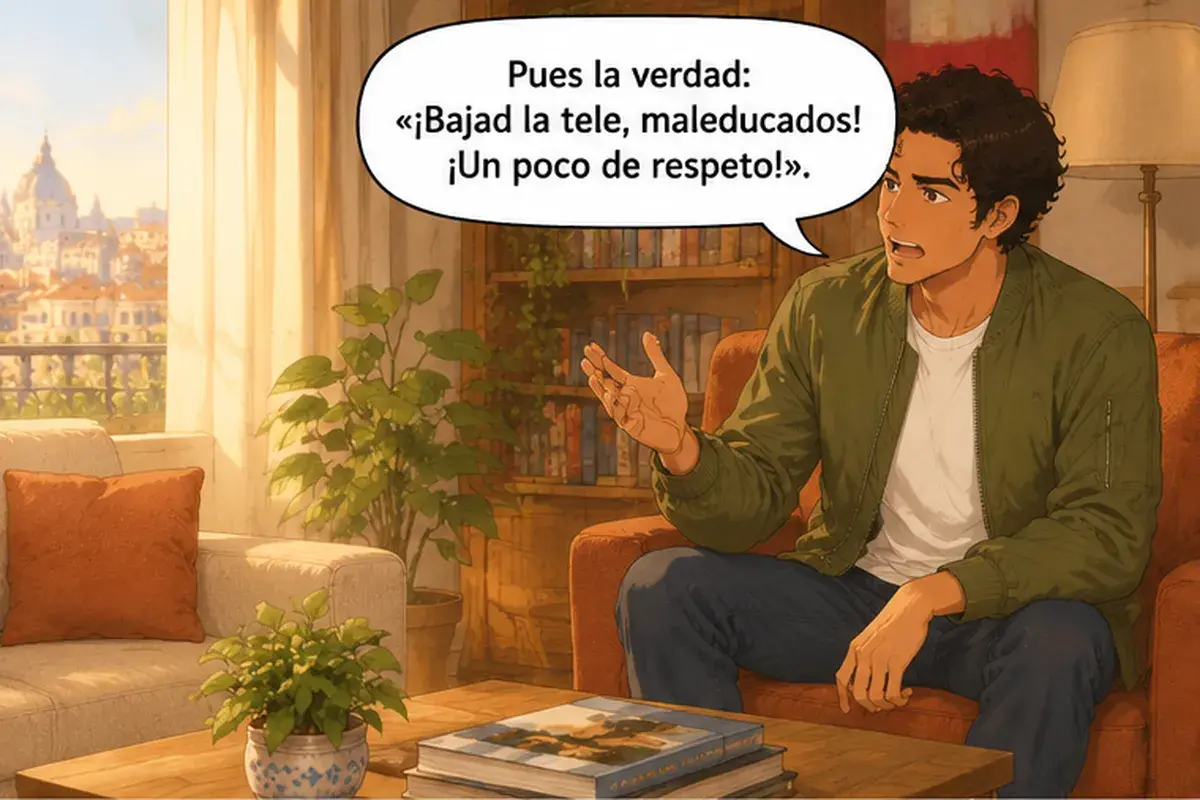
- Pablo
Pues la verdad: «¡Bajad la tele, maleducados! ¡Un poco de respeto!».
Well, the truth: "Turn the TV down, you rude people! Have some respect!" (to several people)

- Ana
Bueno… Yo evitaría la palabra «maleducados». Así solo conseguirás una pelea.
Well… I'd avoid the word "rude." That way you'll only start a fight.

- Pablo
¿Y tú qué harías?
And what would you do?

- Ana
Son mayores, ¿no? Pues yo les hablaría de usted: «Perdonen la molestia, ¿les importaría bajar un poco la tele?».
They're older, right? Then I'd talk to them formally: "Sorry to bother you, would you mind turning the TV down a little?" (to several people, formal)

- Pablo
¡Qué fuerte! Una extranjera me enseña a ser educado en español.
Wow! A foreign woman is teaching me how to be polite in Spanish (man speaking).
- Ana
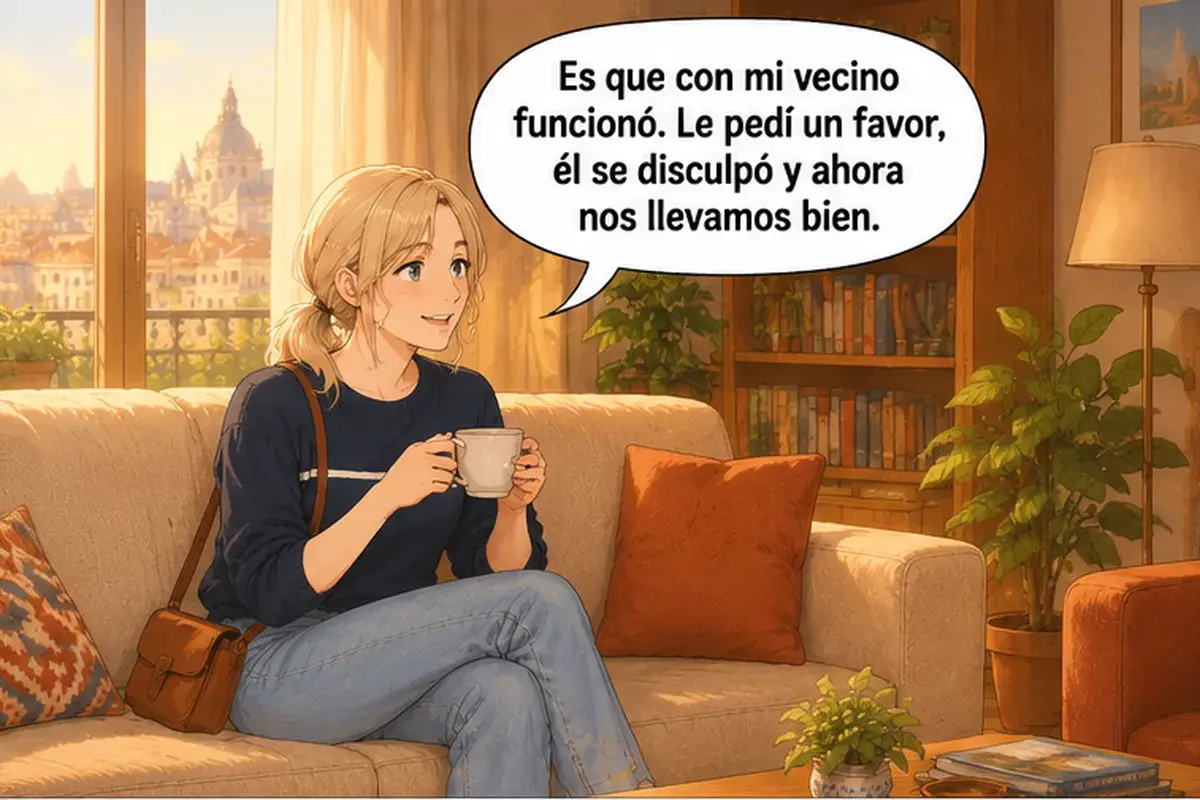
Es que con mi vecino funcionó. Le pedí un favor, él se disculpó y ahora nos llevamos bien.
The thing is, it worked with my neighbor. I asked him a favor, he apologized, and now we get along well.

- Pablo
Ya, pero tu vecino es majo. Los míos me tienen harto: llevan años así.
Right, but your neighbor is nice. Mine are driving me crazy: they've been like this for years (man speaking).

- Ana
A lo mejor no oyen bien y no lo hacen a propósito. ¿Has pensado en eso?
Maybe they don't hear well and they're not doing it on purpose. Have you thought about that?

- Pablo
Puede ser… Vale, lo intento. Oye, ¿me harías un favor? ¿Subirías conmigo?
Maybe… OK, I'll try. Hey, would you do me a favor? Would you come up with me?

- Ana
¡De eso nada! Pero te escribo la frase en el móvil. Y lleva una tarta: con tarta todo es más fácil.
No way! But I'll write the sentence for you on the phone. And take a cake: with cake, everything's easier.
Grammar for this text
"What would you…?" The friends imagine themselves in the situation: ¿Qué les dirías? — "what would you say to them?", ¿Y tú qué harías? — "and what would you do?", yo evitaría — "I'd avoid", yo les hablaría de usted — "I'd talk to them formally, with usted", ¿subirías conmigo? — "would you come up with me?". Dirías and harías are irregular: the stem is the same as in the future (diré, haré).
Vosotros and ustedes. Pablo wants to shout ¡Bajad la tele! — a command for vosotros, several people you call tú. Ana picks ustedes because the neighbors are older: perdonen — "excuse me", ¿les importaría…? — "would you mind…?".
Everyday speech. Me tienen harto — "they're driving me crazy". A todo volumen — "at full volume". ¡De eso nada! — "no way!". Un día subo y les llamo la atención — "one day I'm going up there and telling them off": Spanish often uses the present for a firm plan. Puede ser — "maybe". Así solo conseguirás una pelea — future tense: "that way you'll only start a fight". Tía, qué rollo, qué fuerte — only with friends.
Words and grammar of the unit: Ask your neighbors to keep it down.
Learn the words from the texts with flashcards
In the app, you can tap any word in a text to see its translation, forms and examples, and new words stick with flashcards. 15 minutes a day.
Start for freeEverything is open for free. No card needed to sign up.