

Spanish dialogue with translation · B1 · 14 lines
¿Deshacer o rehacer? Undo or redo?
Comic · 14 panels
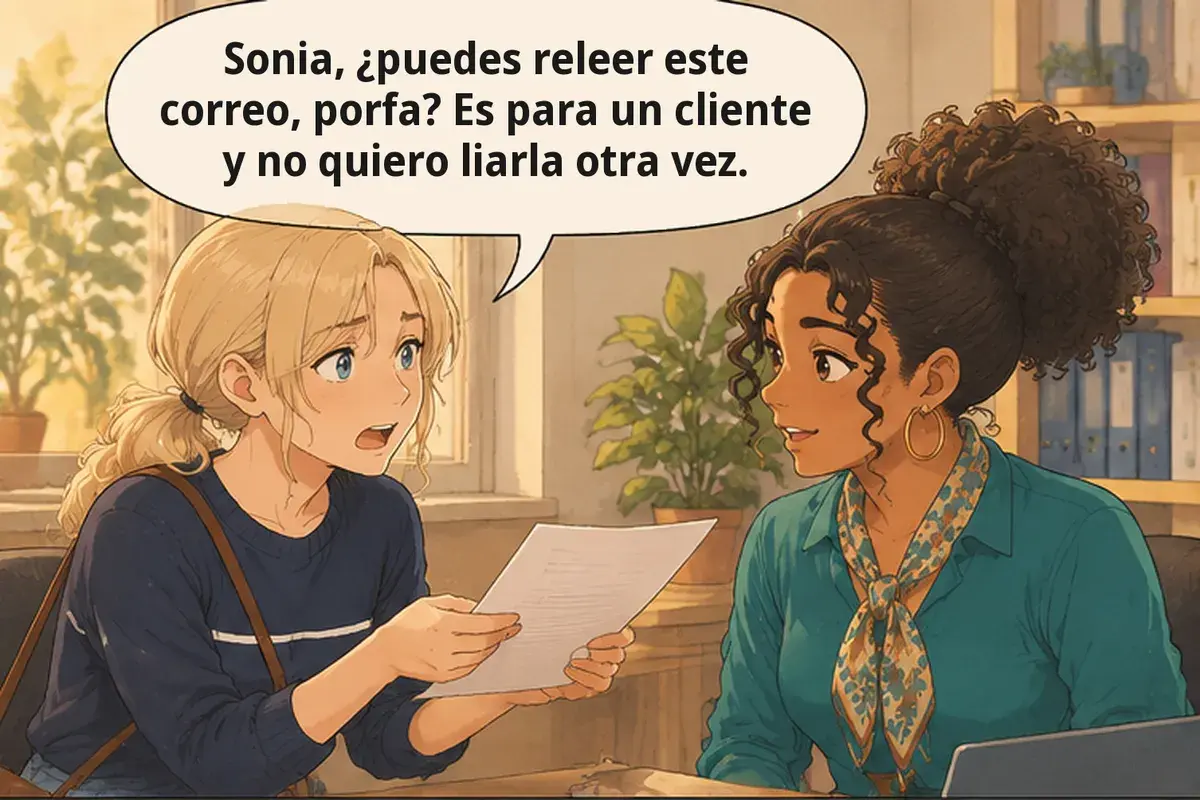
- Ana
Sonia, ¿puedes releer este correo, porfa? Es para un cliente y no quiero liarla otra vez.
Sonia, can you reread this email, please? It's for a client and I don't want to mess up again.
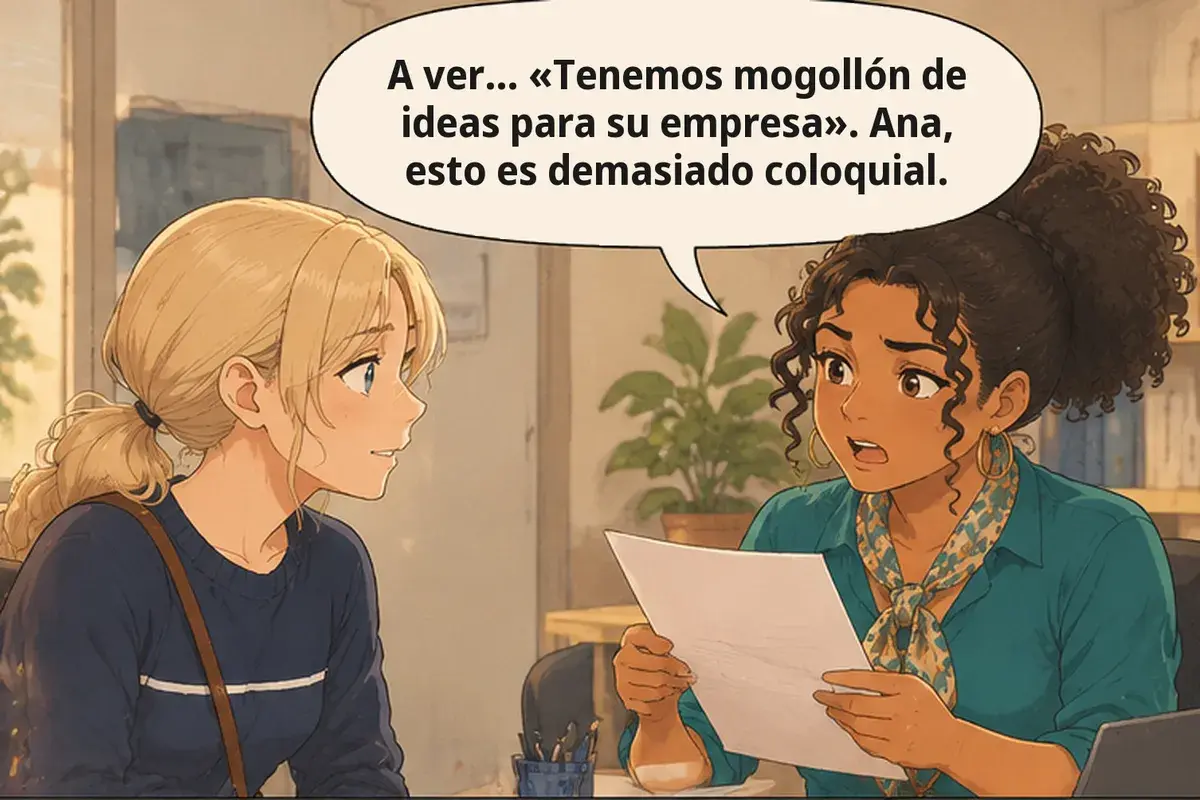
- Sonia
A ver… «Tenemos mogollón de ideas para su empresa». Ana, esto es demasiado coloquial.
Let's see… "We've got a ton of ideas for your company." Ana, this is too colloquial.
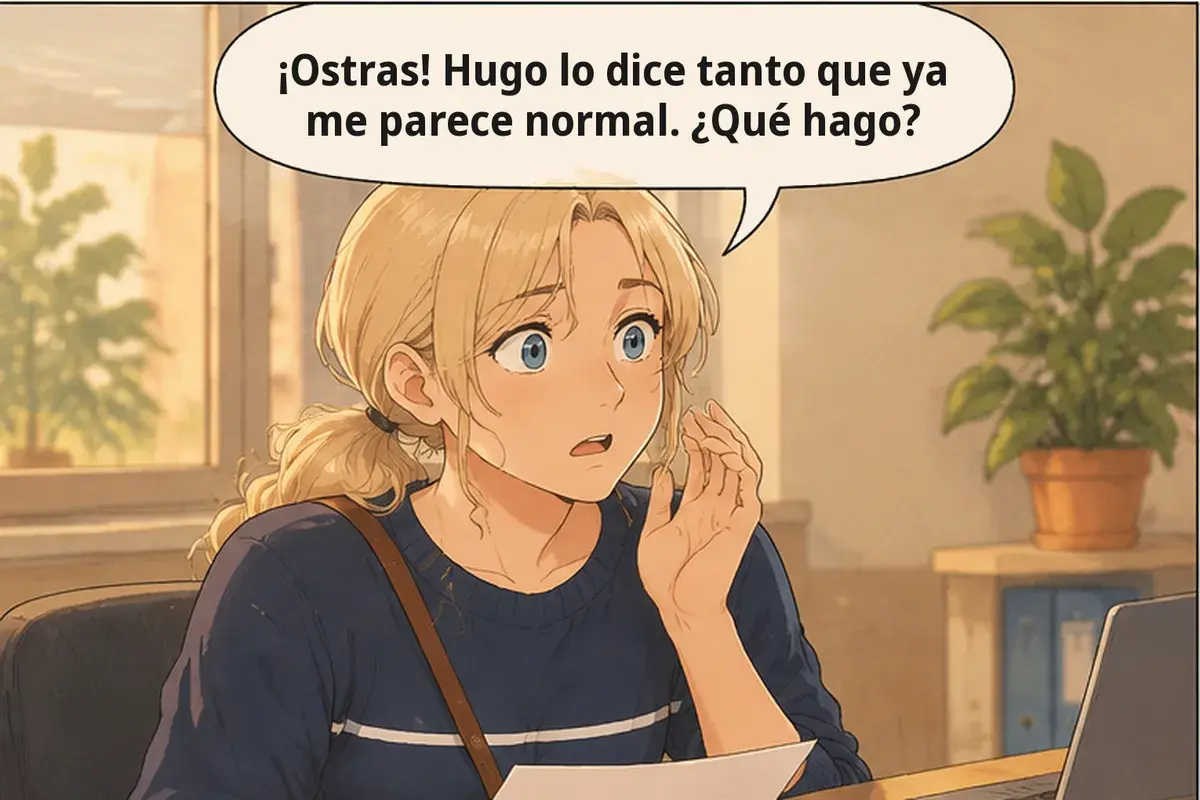
- Ana
¡Ostras! Hugo lo dice tanto que ya me parece normal. ¿Qué hago?
Geez! Hugo says it so much that it already seems normal to me. What should I do?
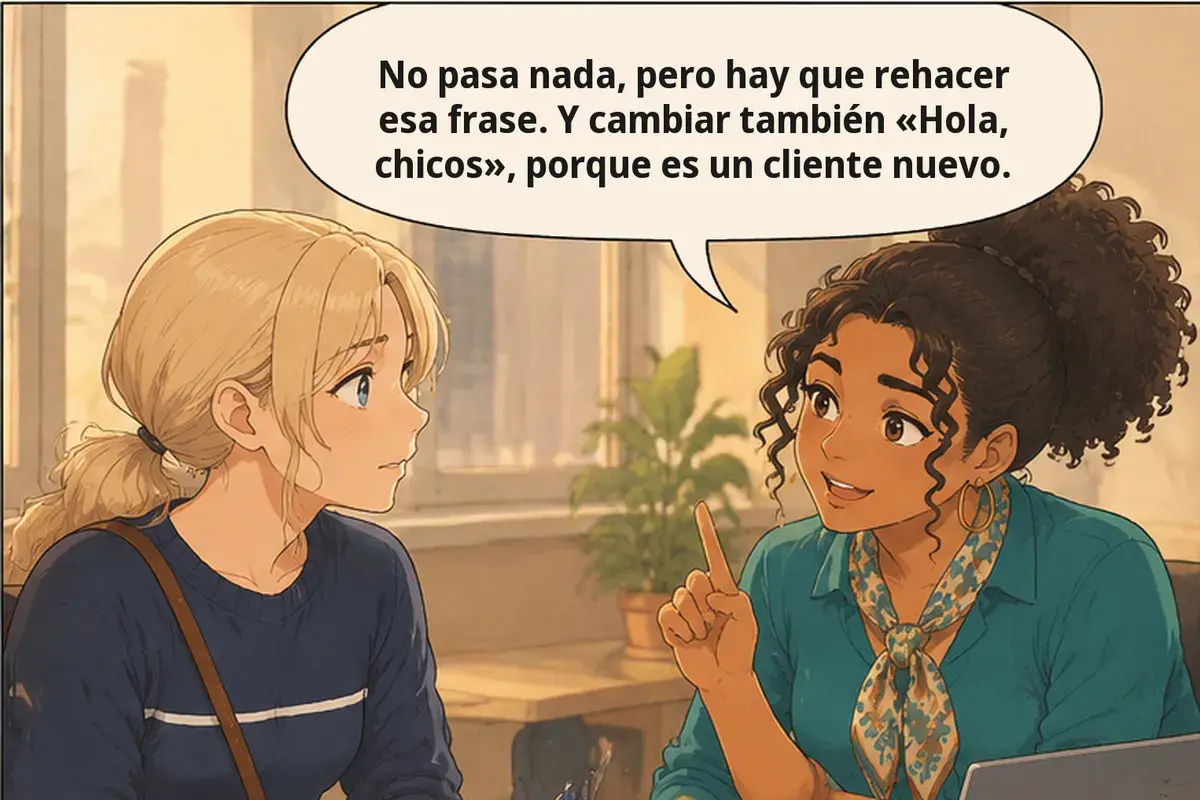
- Sonia
No pasa nada, pero hay que rehacer esa frase. Y cambiar también «Hola, chicos», porque es un cliente nuevo.
It's OK, but that sentence needs to be redone. And "Hi, guys" needs to be changed too, because it's a new client.
- Ana
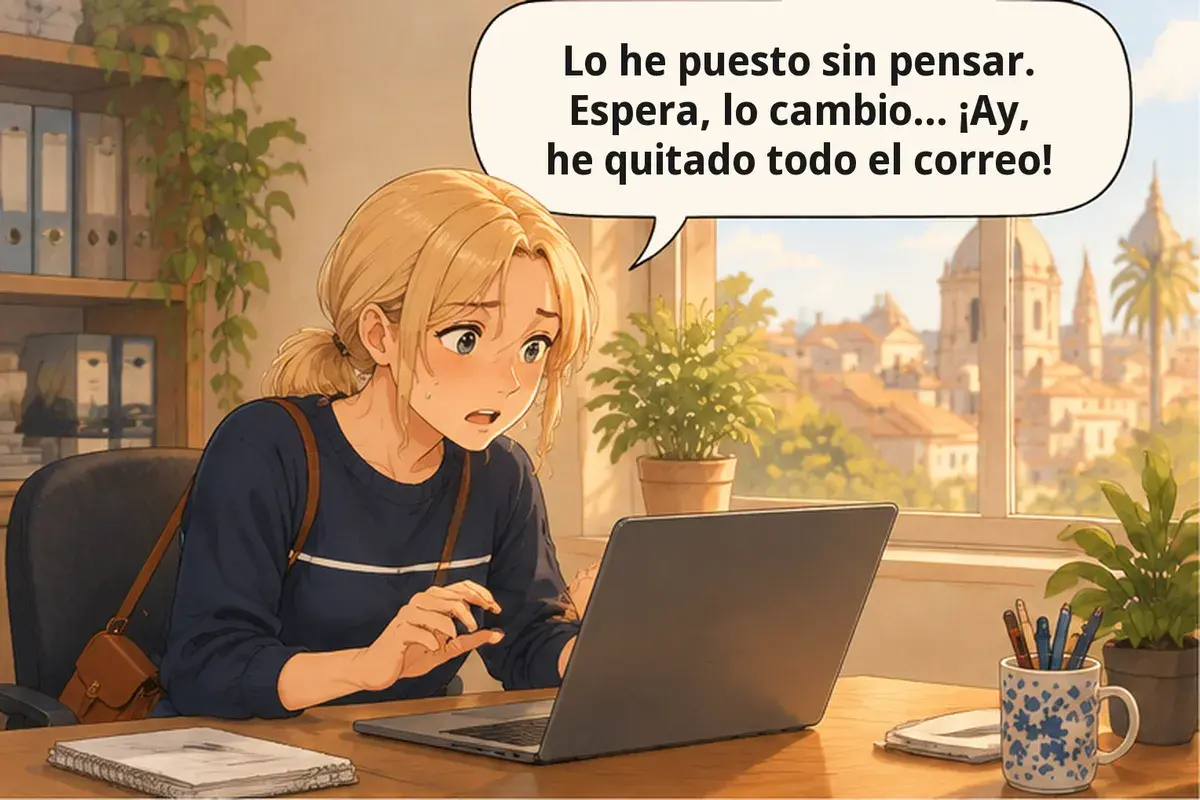
Lo he puesto sin pensar. Espera, lo cambio… ¡Ay, he quitado todo el correo!
I wrote it without thinking. Wait, I'll change it… Oh no, I've deleted the whole email!
- Sonia
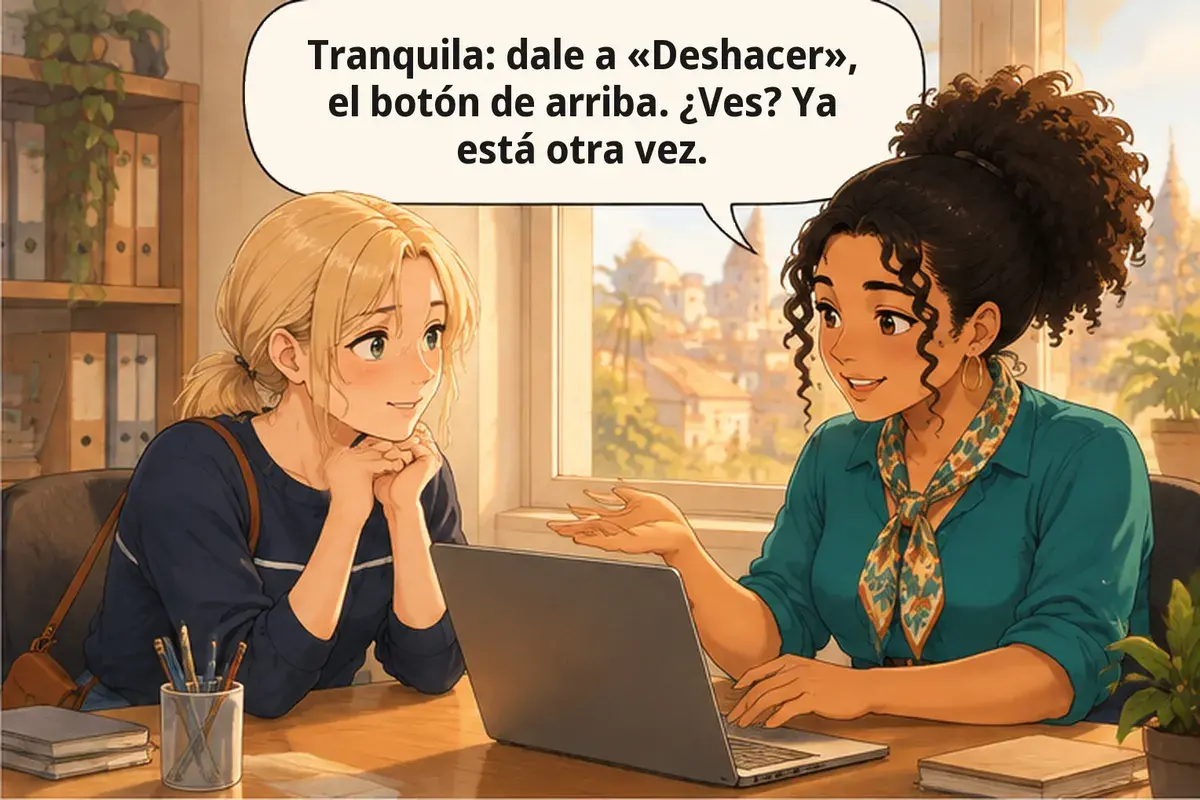
Tranquila: dale a «Deshacer», el botón de arriba. ¿Ves? Ya está otra vez.
Relax: click "Undo", the button at the top. See? It's back again (to a woman).
- Ana
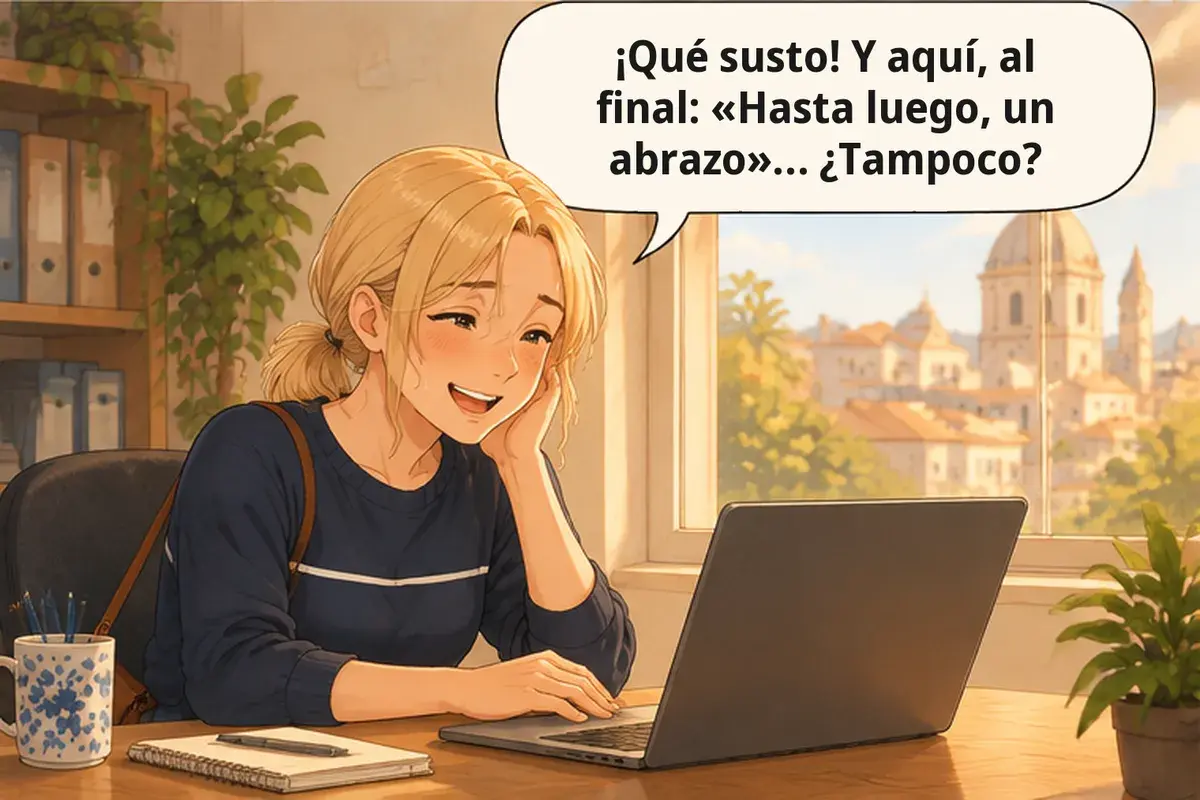
¡Qué susto! Y aquí, al final: «Hasta luego, un abrazo»… ¿Tampoco?
What a scare! And here, at the end: "See you later, hugs"… Not that either?
- Sonia
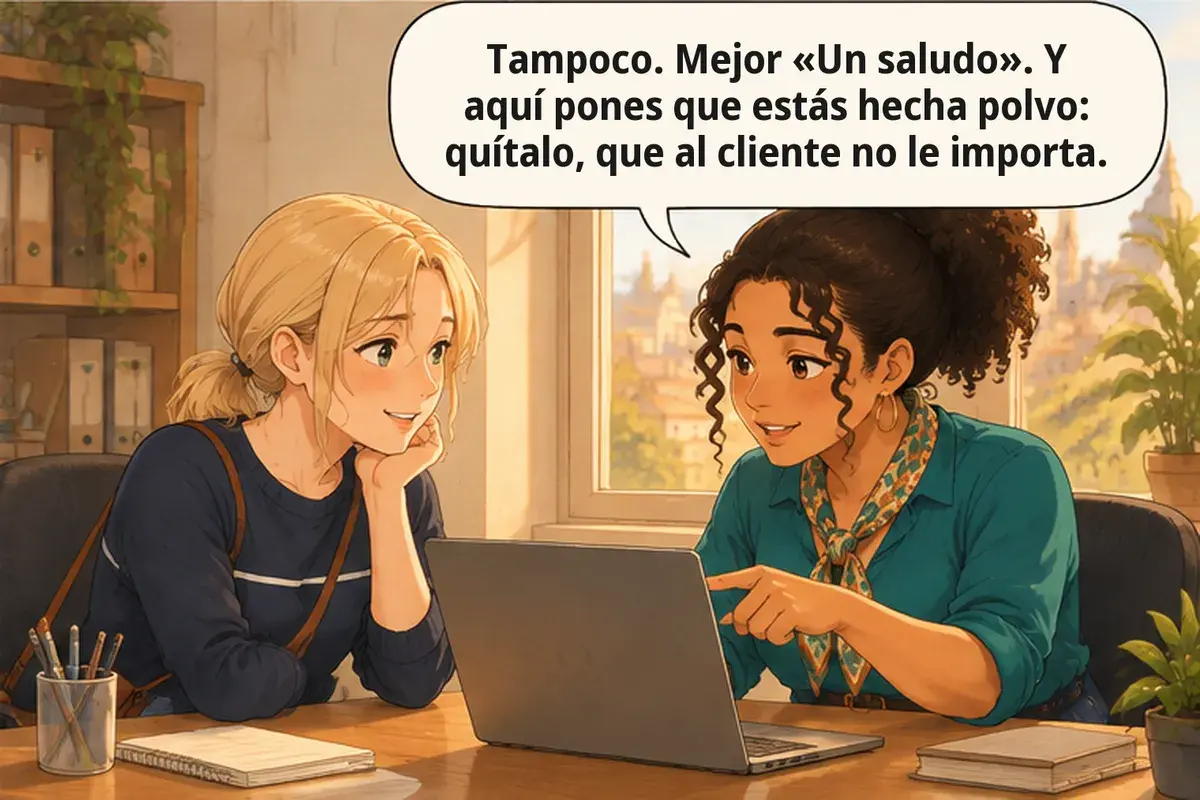
Tampoco. Mejor «Un saludo». Y aquí pones que estás hecha polvo: quítalo, que al cliente no le importa.
Not that either. "Regards" is better. And here you write that you're wiped out: take it out, because the client doesn't care (to a woman).
- Ana
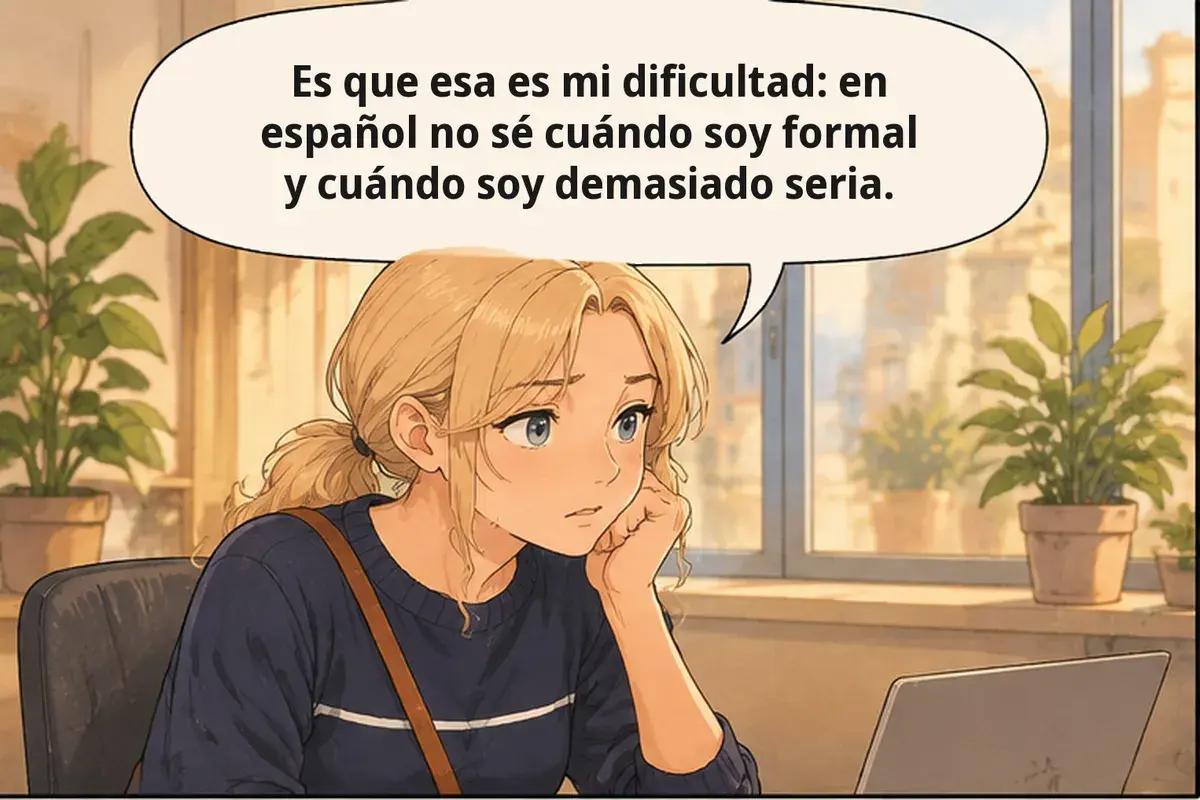
Es que esa es mi dificultad: en español no sé cuándo soy formal y cuándo soy demasiado seria.
The thing is, that's my difficulty: in Spanish I don't know when I'm being formal and when I'm being too serious (woman speaking).
- Sonia
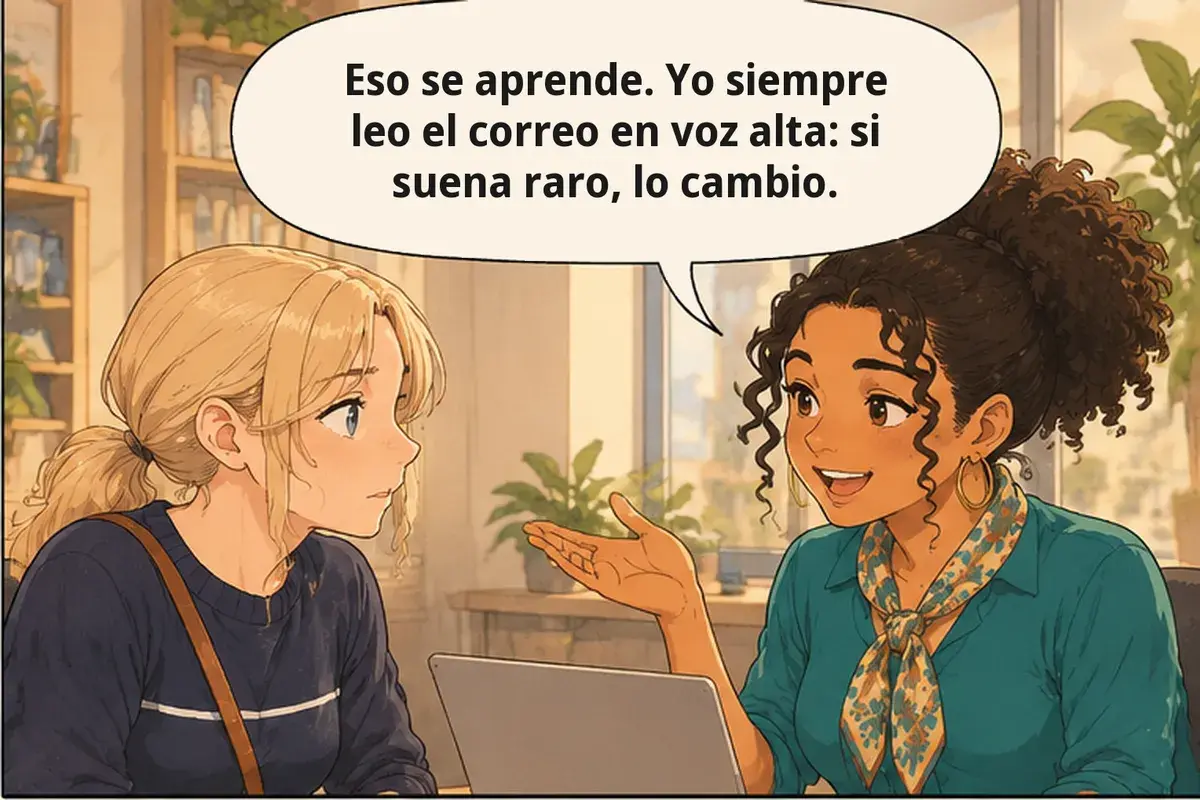
Eso se aprende. Yo siempre leo el correo en voz alta: si suena raro, lo cambio.
You learn that. I always read the email out loud: if it sounds weird, I change it.
- Ana
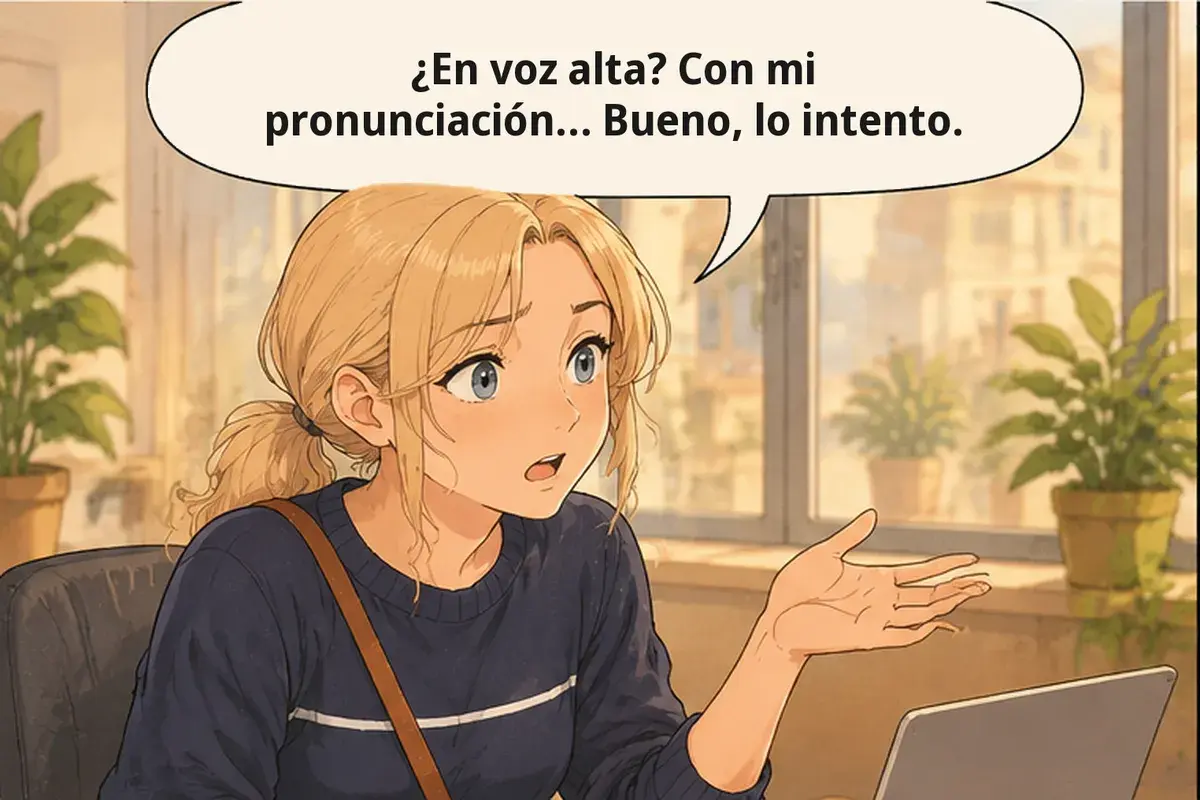
¿En voz alta? Con mi pronunciación… Bueno, lo intento.
Out loud? With my pronunciation… OK, I'll try.
- Sonia
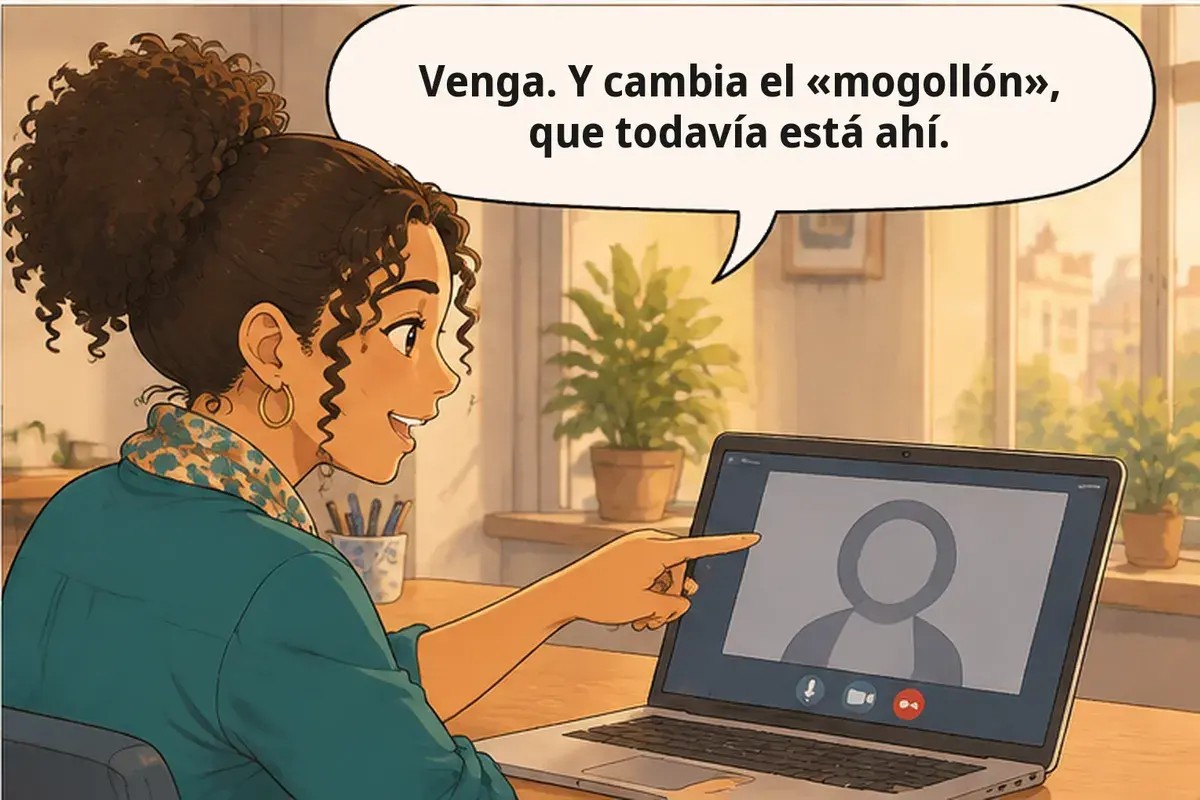
Venga. Y cambia el «mogollón», que todavía está ahí.
Come on. And change the "mogollón", because it's still there.
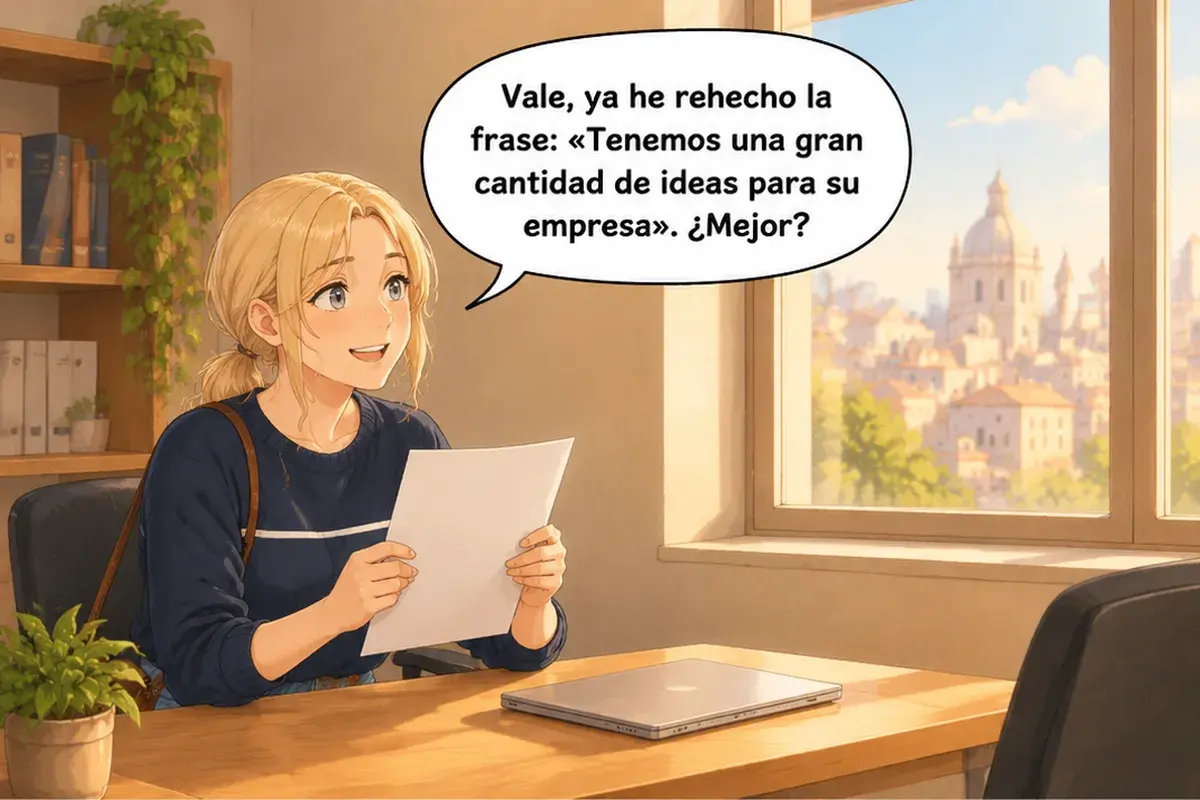
- Ana
Vale, ya he rehecho la frase: «Tenemos una gran cantidad de ideas para su empresa». ¿Mejor?
OK, I've redone the sentence: "We have a large number of ideas for your company." Better?
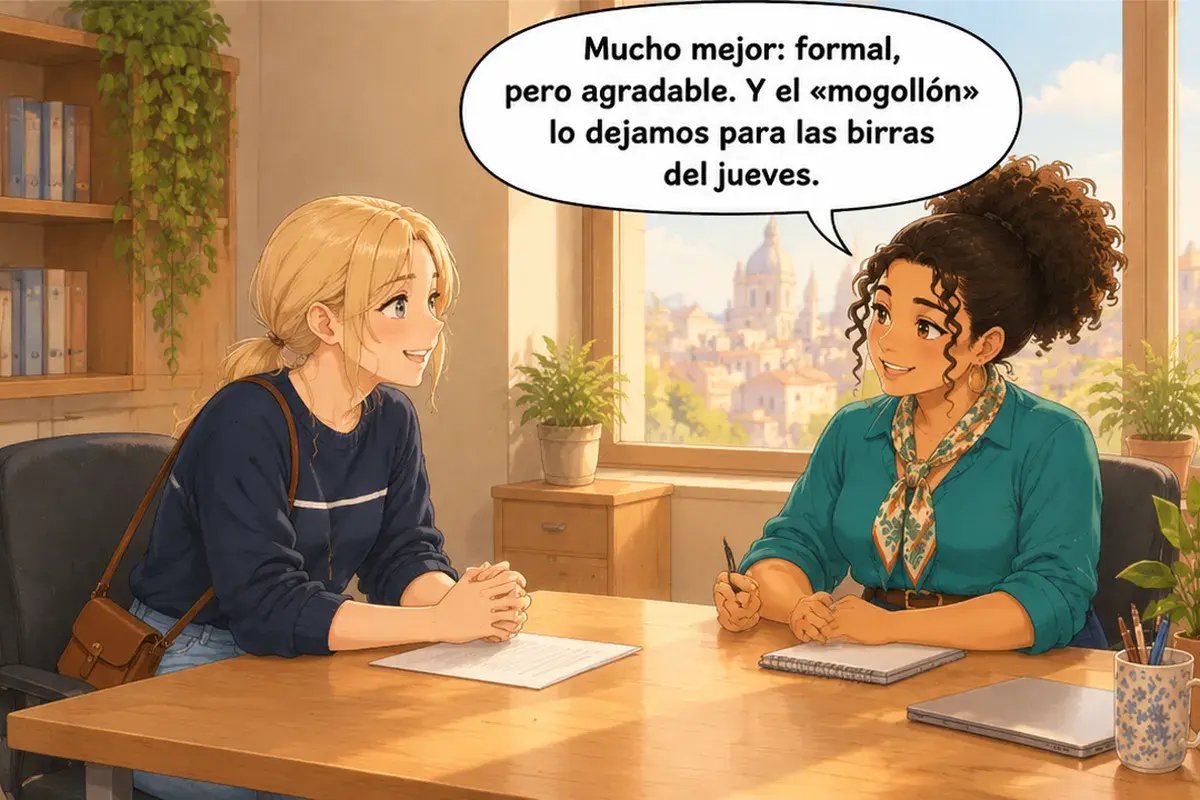
- Sonia
Mucho mejor: formal, pero agradable. Y el «mogollón» lo dejamos para las birras del jueves.
Much better: formal, but pleasant. And we'll save the "mogollón" for Thursday's beers.
Grammar for this text
Releer, rehacer, deshacer. The prefix re- means "again": ¿puedes releer este correo…? — "can you reread this email…?", hay que rehacer esa frase — "that sentence needs to be redone". Des- means "back, the opposite": the Deshacer button in apps is "Undo". There's more in the unit grammar.
He rehecho. Ya he rehecho la frase — the past participle is like the one of hacer (hecho): rehacer is built on it.
Dale a… Dale a "Deshacer" — "click Undo": the tú command of dar with le. This is how people talk about buttons.
Que meaning "because". …quítalo, que al cliente no le importa and …el "mogollón", que todavía está ahí: in conversation, que often explains why you're asking for something.
Ending an email. Un saludo is the usual way to end a business email; un abrazo is for friends.
Colloquial words. ¡Ostras! — "geez!"; liarla — "to mess up"; estás hecha polvo — "you're totally wiped out"; porfa — short for por favor. You don't write like this to a client.
Words and grammar of the unit: Understand street Spanish.
Learn the words from the texts with flashcards
In the app, you can tap any word in a text to see its translation, forms and examples, and new words stick with flashcards. 15 minutes a day.
Start for freeEverything is open for free. No card needed to sign up.