
Spanish story with translation · B2 · 18 lines
¿El libro o la película? The book or the movie?
Comic · 10 panels
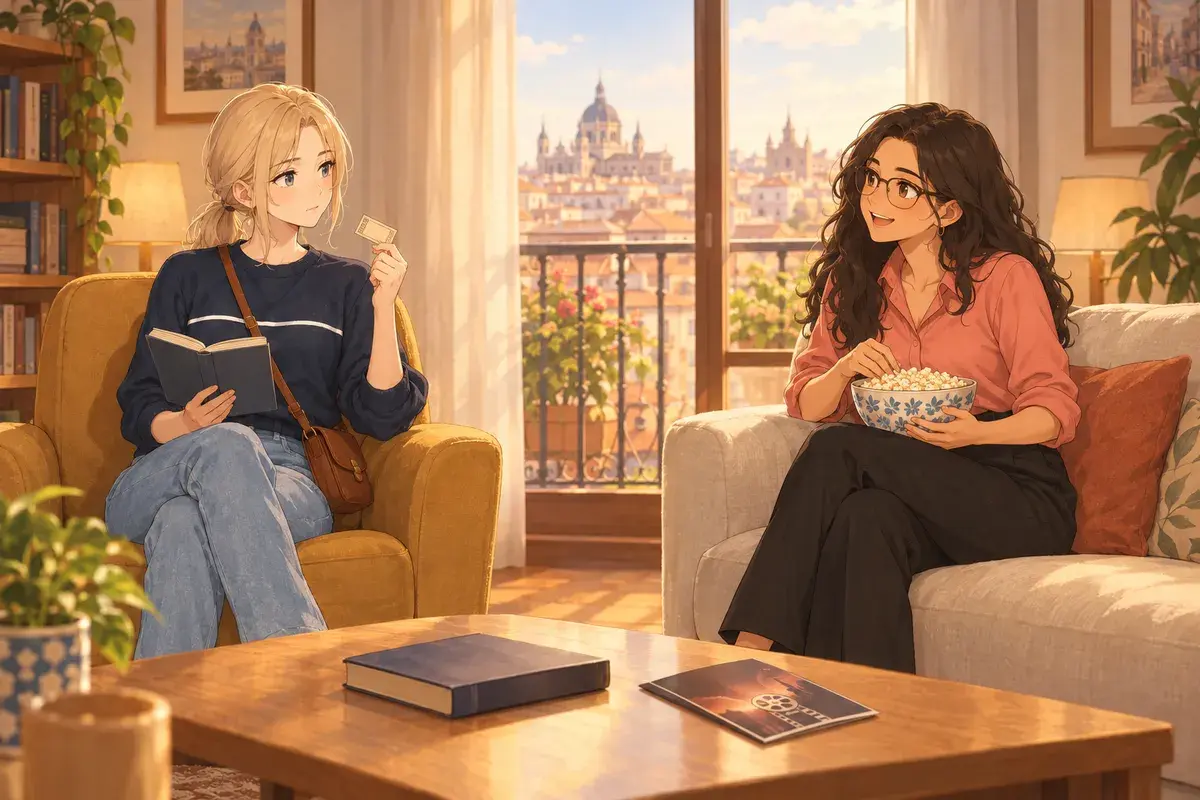
Esta semana he terminado la novela «La casa sin puertas» y justo después he visto su adaptación al cine.
This week I finished the novel "La casa sin puertas" and right after that I saw the movie adaptation.
La autora, Aurora Sanchis, es una escritora de Valencia poco conocida; la película, en cambio, fue la noticia cultural del año pasado: ganó un premio en un festival.
The author, Aurora Sanchis, is a little-known writer from Valencia; the movie, on the other hand, was the cultural news story of last year: it won a prize at a festival.
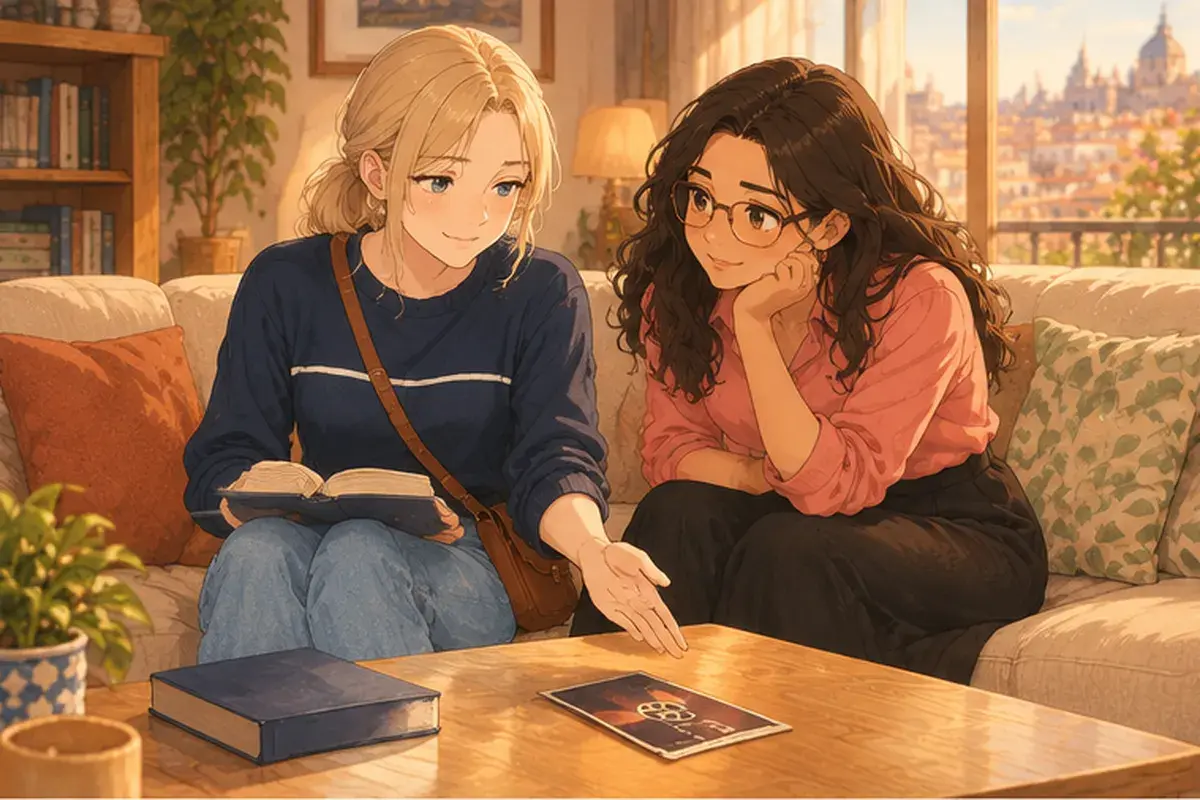
Dicen que el libro siempre es mejor. No es que no esté de acuerdo, sino que la respuesta me parece más compleja.
People say the book is always better. It's not that I don't agree, it's that the answer seems more complex to me.
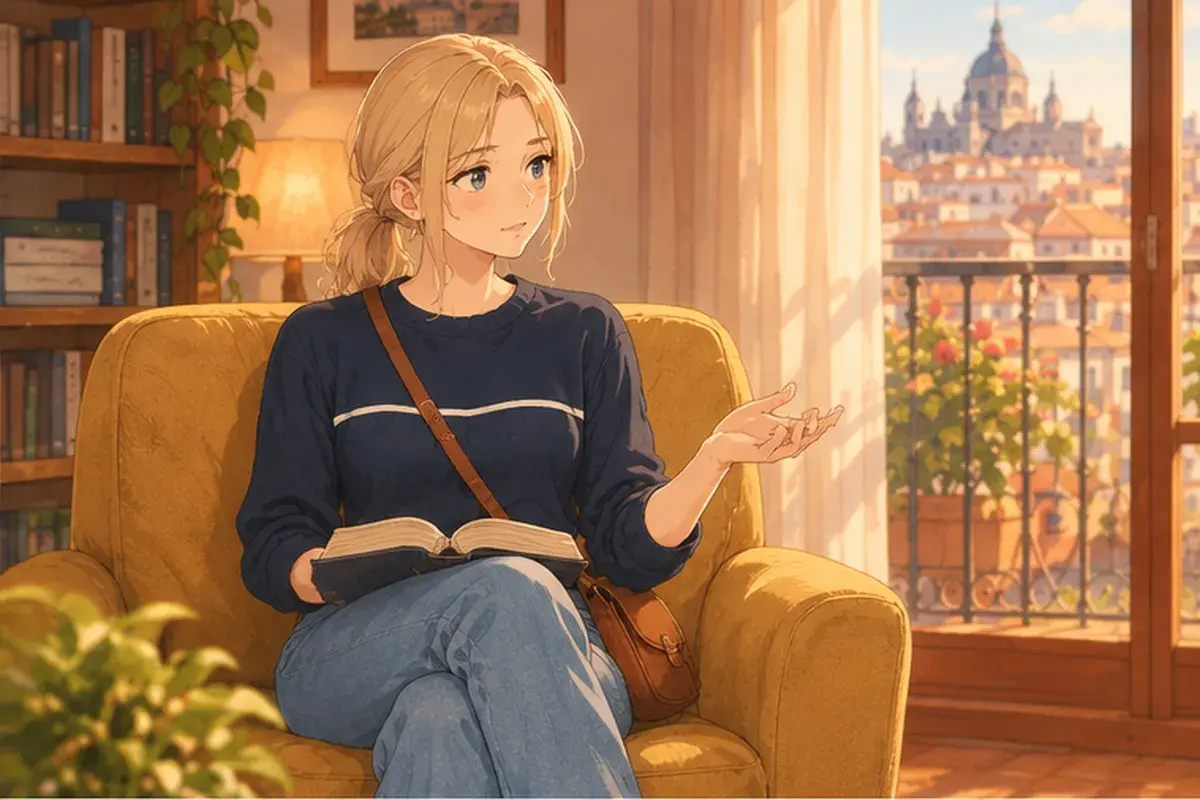
En primer lugar, la novela tiene una narradora: la abuela, que cuenta la historia de la familia y reflexiona sobre cada decisión.
First of all, the novel has a narrator: the grandmother, who tells the family's story and reflects on every decision.
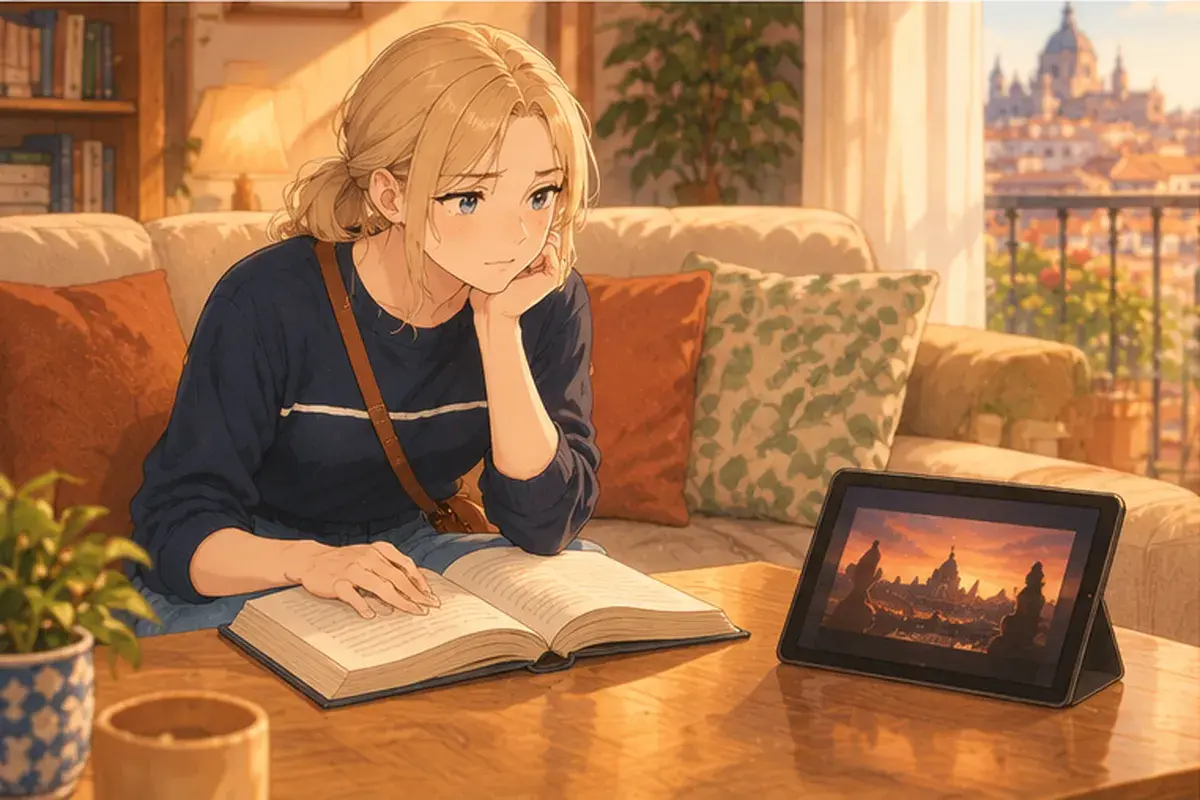
En la versión de cine esa voz casi desaparece: vemos lo que pasa, pero no lo que ella piensa.
In the movie version that voice almost disappears: we see what happens, but not what she thinks.
Por un lado, es lógico: el cine es otro arte y no puede repetir la literatura palabra por palabra.
On the one hand, it makes sense: film is a different art and can't repeat literature word for word.
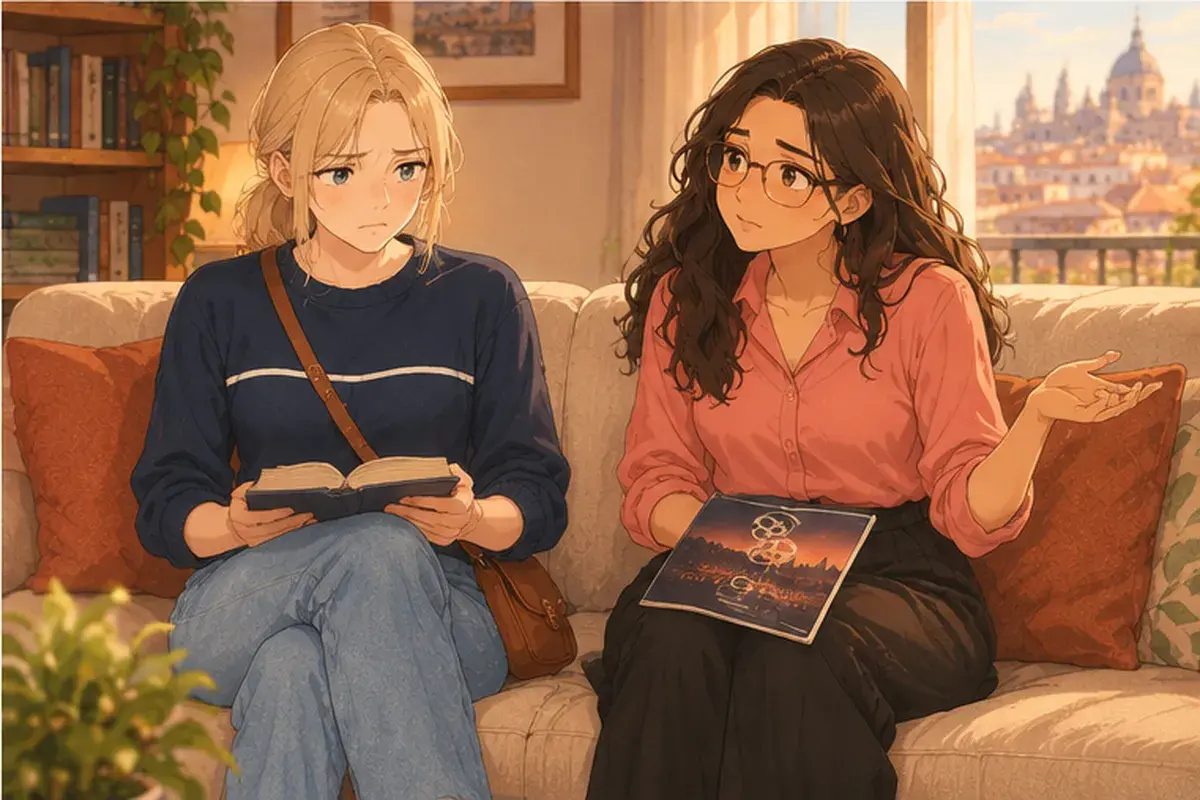
Por otro, sin la narradora los personajes dejan mucho que desear: resultan superficiales, y en el libro no lo son.
On the other, without the narrator the characters leave a lot to be desired: they come across as superficial, and in the book they aren't.
De hecho, la hija, que en la novela es un personaje complejo, en la pantalla solo grita y llora, y algunas de sus decisiones no tienen ni pies ni cabeza.
In fact, the daughter, who is a complex character in the novel, only shouts and cries on screen, and some of her decisions make no sense at all.
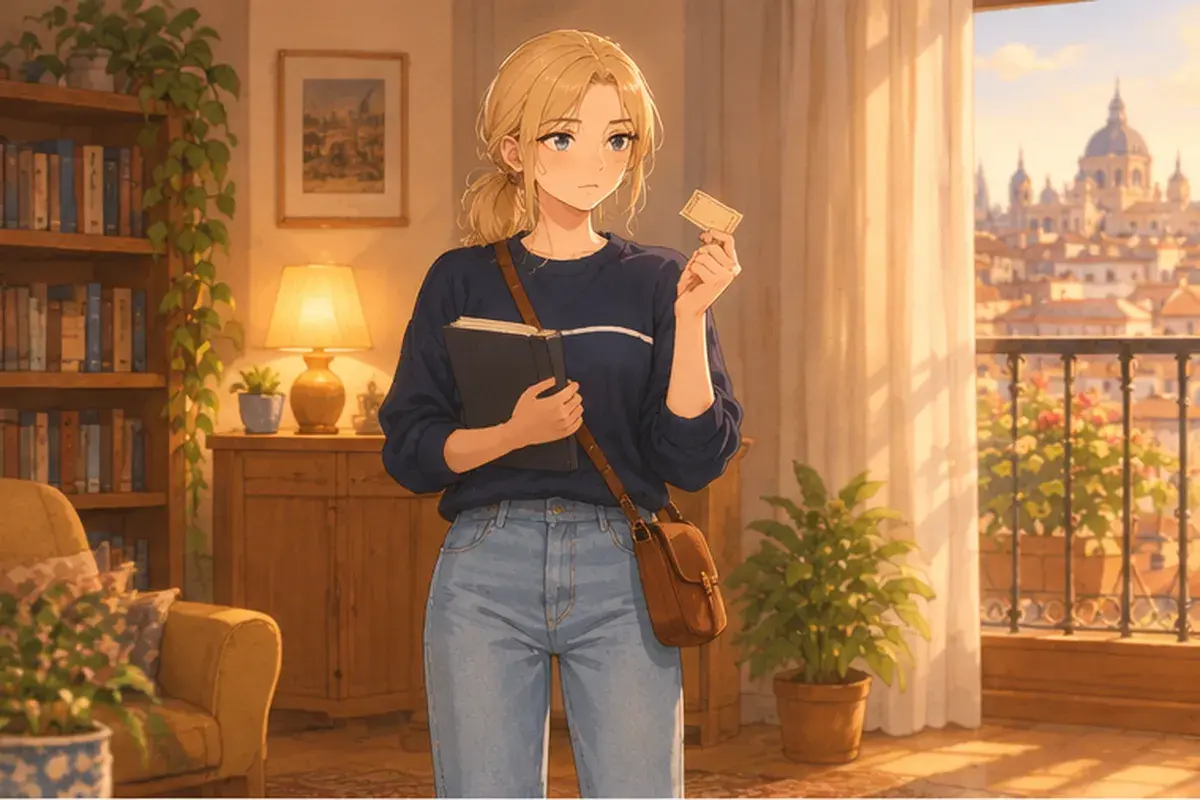
Es más, el director ha cambiado el final: el del libro es triste, y el de la película, feliz.
What's more, the director has changed the ending: the book's is sad, and the movie's is happy.
No lo critico porque sea distinto, sino porque el final nuevo no refleja lo que la autora quería contar.
I'm not criticizing it because it's different, but because the new ending doesn't reflect what the author wanted to say.
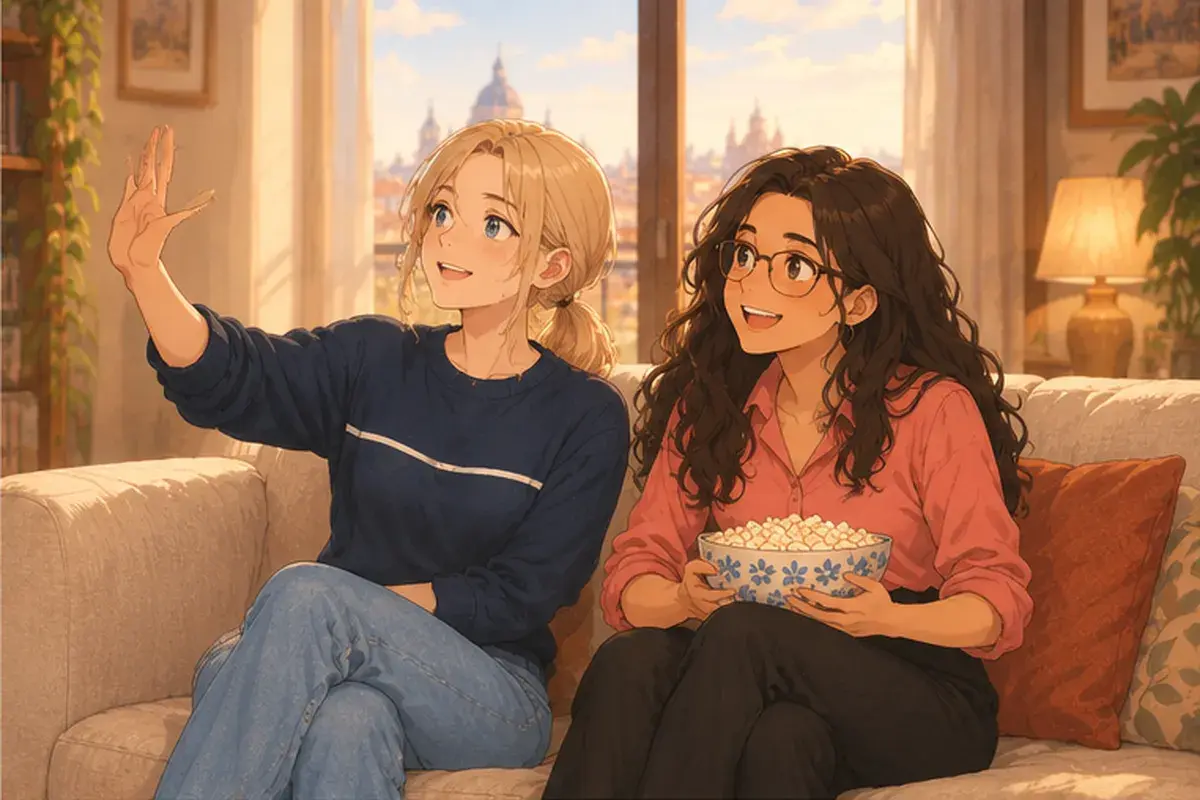
Hay que reconocer que la película tiene cosas que el libro no puede dar: la luz del campo, la música, los silencios.
You have to admit that the movie has things the book can't give: the light of the countryside, the music, the silences.
Además, se nota la influencia del cine español de los años ochenta, que a mí me encanta.
Also, you can feel the influence of Spanish cinema from the eighties, which I love.
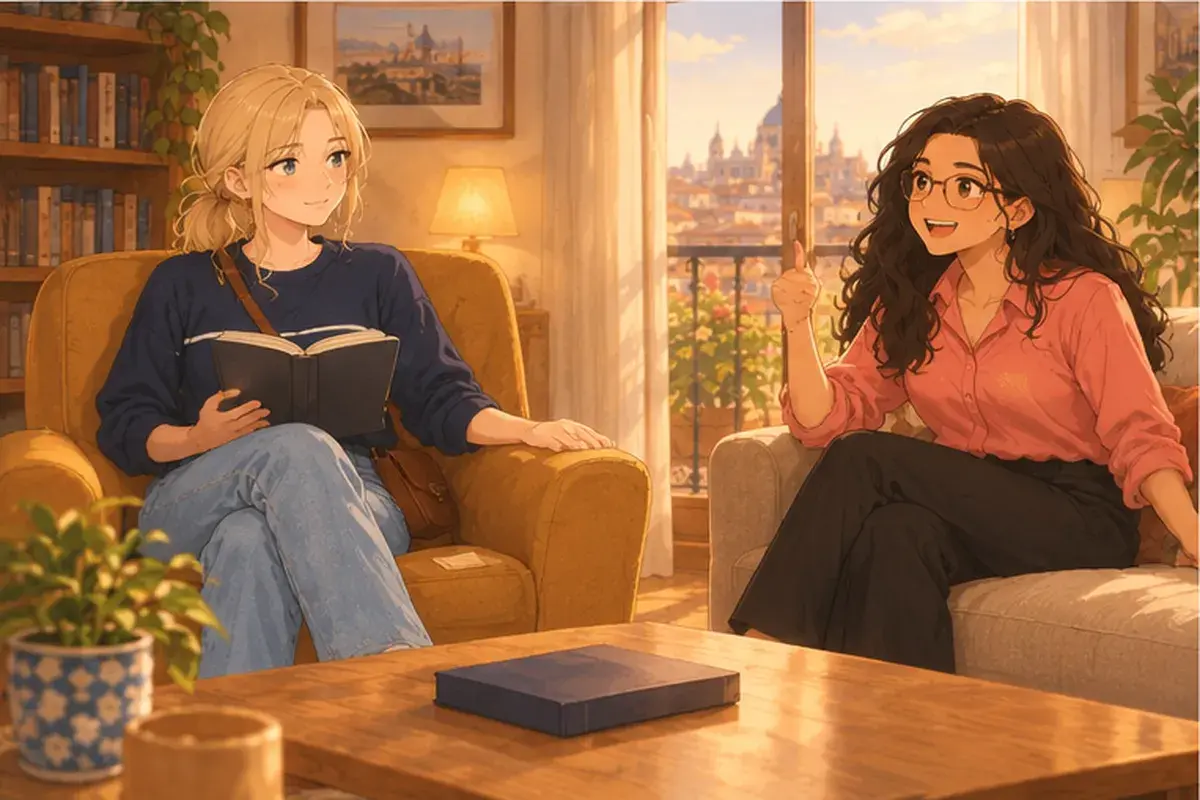
La lectura me llevó dos semanas y la película, dos horas: es normal que en dos horas no se pueda contar todo.
Reading it took me two weeks, and the movie two hours: it's only natural that you can't tell everything in two hours.
Sé que una reseña siempre es subjetiva: frente a mi opinión, a mi amiga Lucía, que no ha leído el libro, la película le encantó.
I know a review is always subjective: in contrast to my opinion, my friend Lucía, who hasn't read the book, loved the movie.
He leído que un canal de televisión prepara una serie sobre la misma novela; a lo mejor esa versión tiene tiempo para todo.
I've read that a TV channel is preparing a series based on the same novel; maybe that version will have time for everything.
En definitiva, no es que la película sea mala, sino que cuenta otra historia con el mismo título.
All in all, it's not that the movie is bad, it's that it tells a different story with the same title.
En resumen: si solo tenéis dos horas, id al cine; si tenéis dos semanas, leed el libro.
In short: if you only have two hours, go to the movies; if you have two weeks, read the book (to several people).
Y si podéis, haced las dos cosas, pero en ese orden: primero la novela.
And if you can, do both, but in that order: the novel first (to several people).
Grammar for this text
Ana is writing the review. In writing, the connectors come one after another: en primer lugar, por un lado… por otro, de hecho, es más, en definitiva (all in all), en resumen. After them, the verb is in the normal form.
No es que no esté de acuerdo, sino que la respuesta me parece…; no es que la película sea mala, sino que cuenta… — "it's not that…, it's that…": the subjunctive after no es que, the normal form after sino que.
No lo critico porque sea distinto, sino porque… no refleja — Ana does criticize it, just not for that reason: the rejected reason is in the subjunctive, the real one is in the normal form.
El del libro, el de la película — "the book's, the movie's" (unit 22): the word final isn't repeated. No lo son — "they aren't": lo stands for superficiales; English just says "they aren't", but Spanish needs lo. Id, leed, haced — vosotros commands (A2, unit 15).
Colloquial. Dejar mucho que desear — "to leave a lot to be desired"; no tener ni pies ni cabeza — "to make no sense at all". Frente a mi opinión — "in contrast to my opinion".
Words and grammar of the unit: Make your case in a debate.
Learn the words from the texts with flashcards
In the app, you can tap any word in a text to see its translation, forms and examples, and new words stick with flashcards. 15 minutes a day.
Start for freeEverything is open for free. No card needed to sign up.