

Spanish dialogue with translation · B2 · 18 lines
La primera mascletà de mi madre My mother's first mascletà
Comic · 18 panels
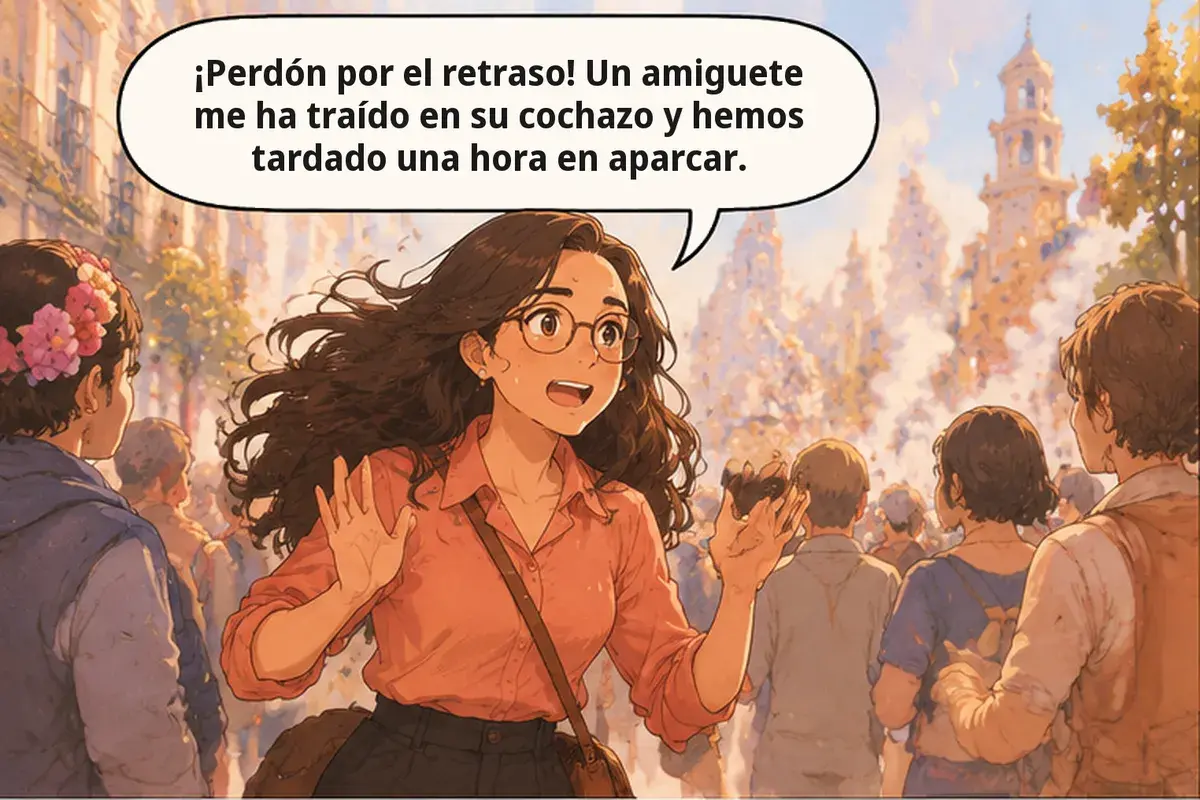
- Lucía
¡Perdón por el retraso! Un amiguete me ha traído en su cochazo y hemos tardado una hora en aparcar.
Sorry I'm late! A buddy gave me a ride in his amazing car, and it took us an hour to park.
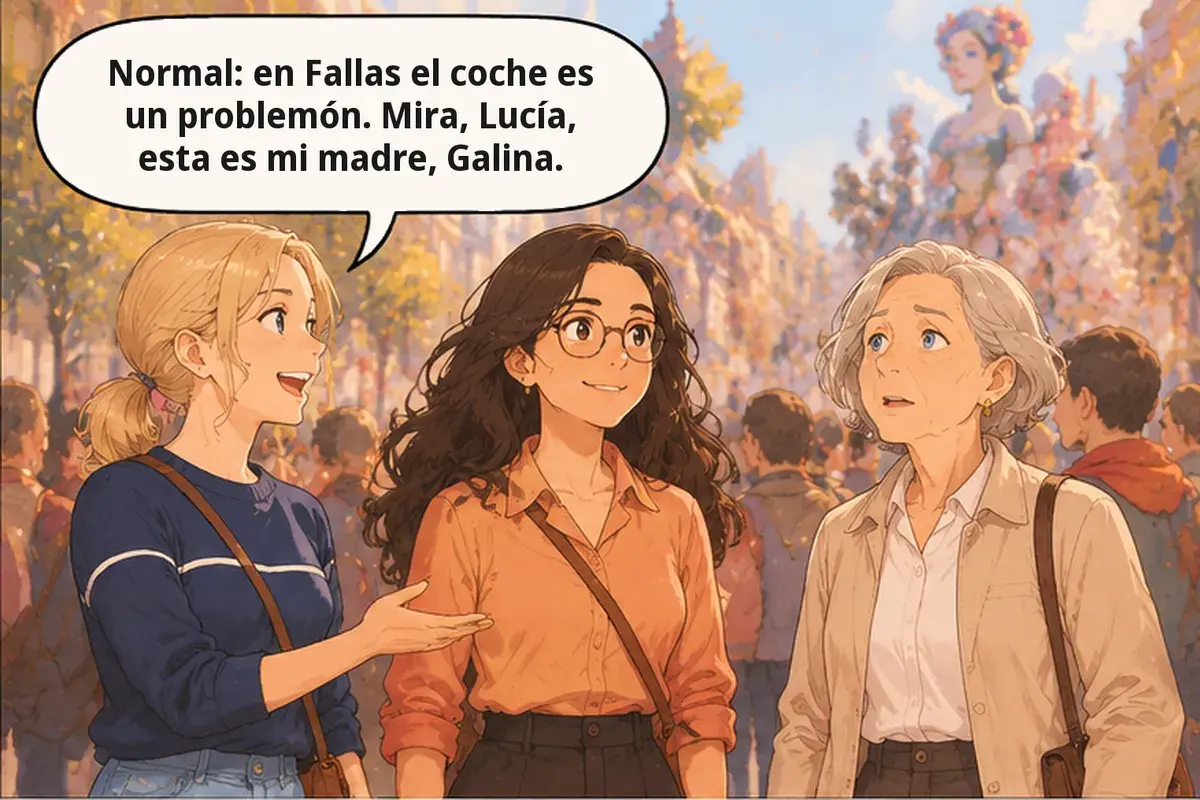
- Ana
Normal: en Fallas el coche es un problemón. Mira, Lucía, esta es mi madre, Galina.
No wonder: during Fallas, a car is a huge problem. Look, Lucía, this is my mother, Galina.
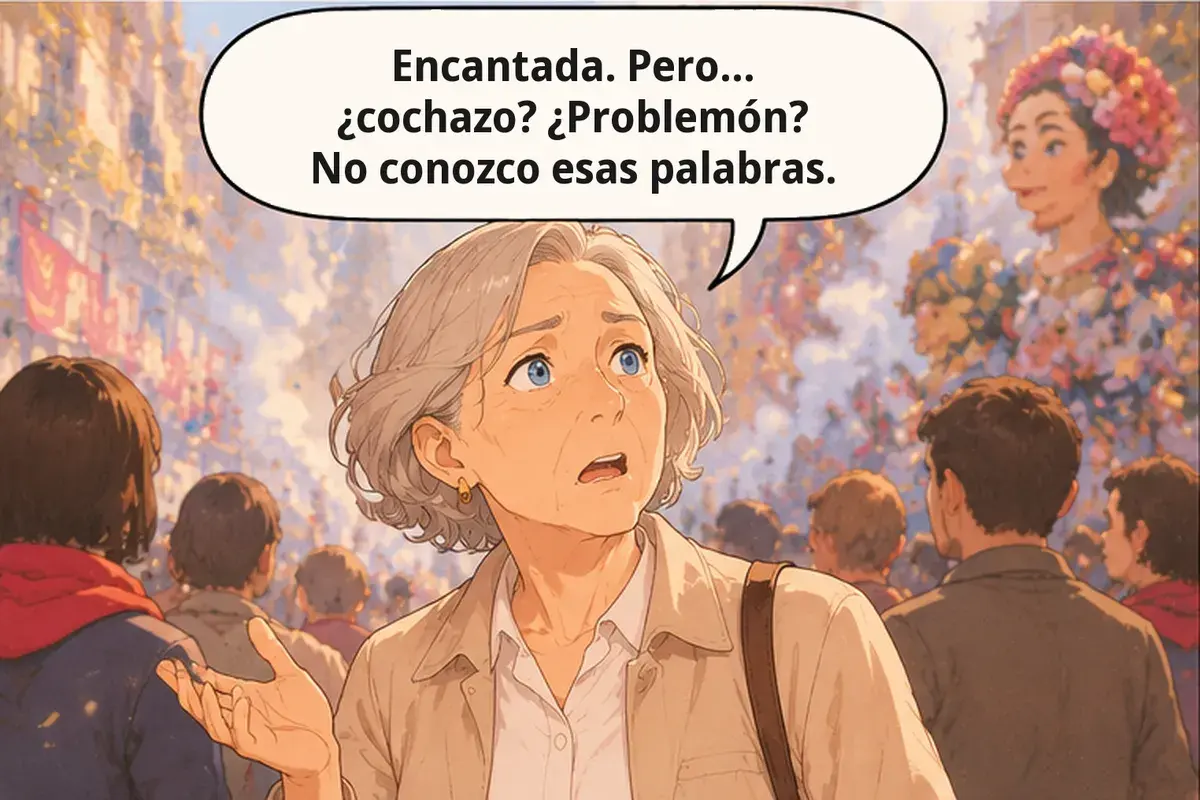
- Galina
Encantada. Pero... ¿cochazo? ¿Problemón? No conozco esas palabras.
Nice to meet you (woman speaking). But... cochazo? Problemón? I don't know those words.
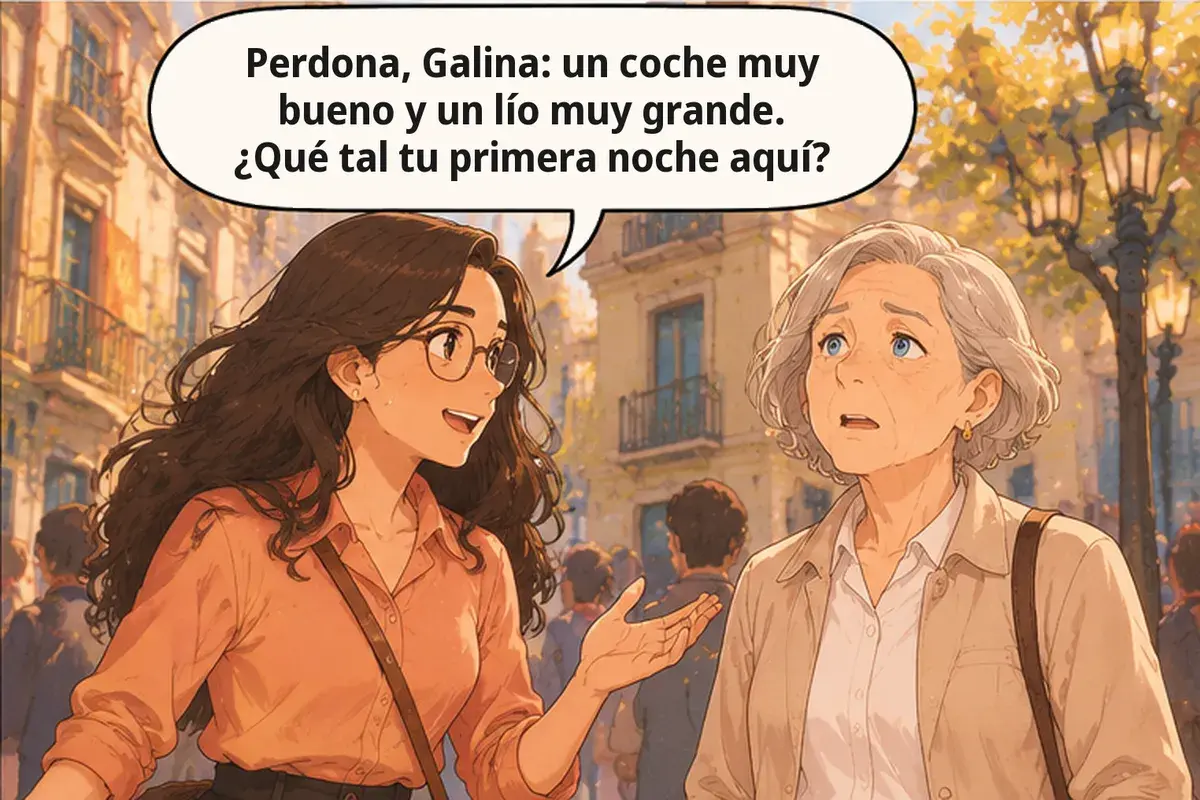
- Lucía
Perdona, Galina: un coche muy bueno y un lío muy grande. ¿Qué tal tu primera noche aquí?
Sorry, Galina: a really good car and a really big mess. How was your first night here?
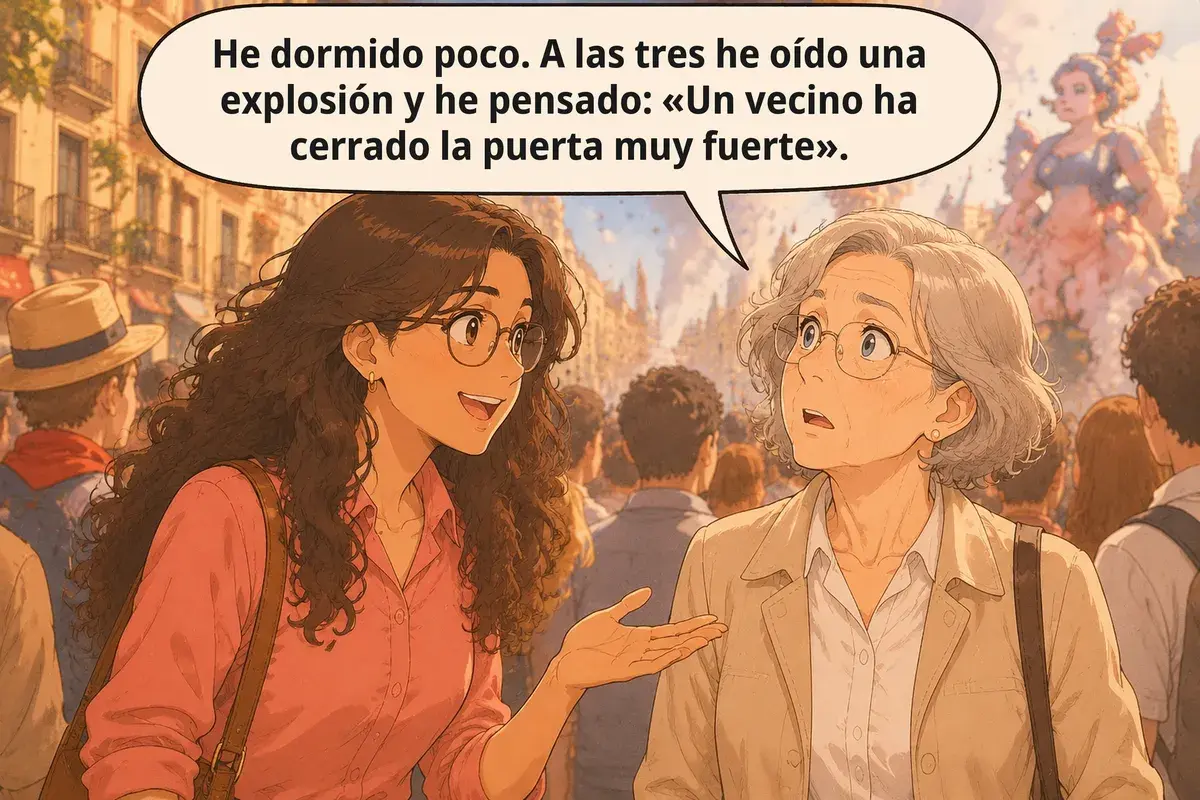
- Galina
He dormido poco. A las tres he oído una explosión y he pensado: «Un vecino ha cerrado la puerta muy fuerte».
I didn't sleep much. At three I heard an explosion and thought, "A neighbor shut the door really hard."
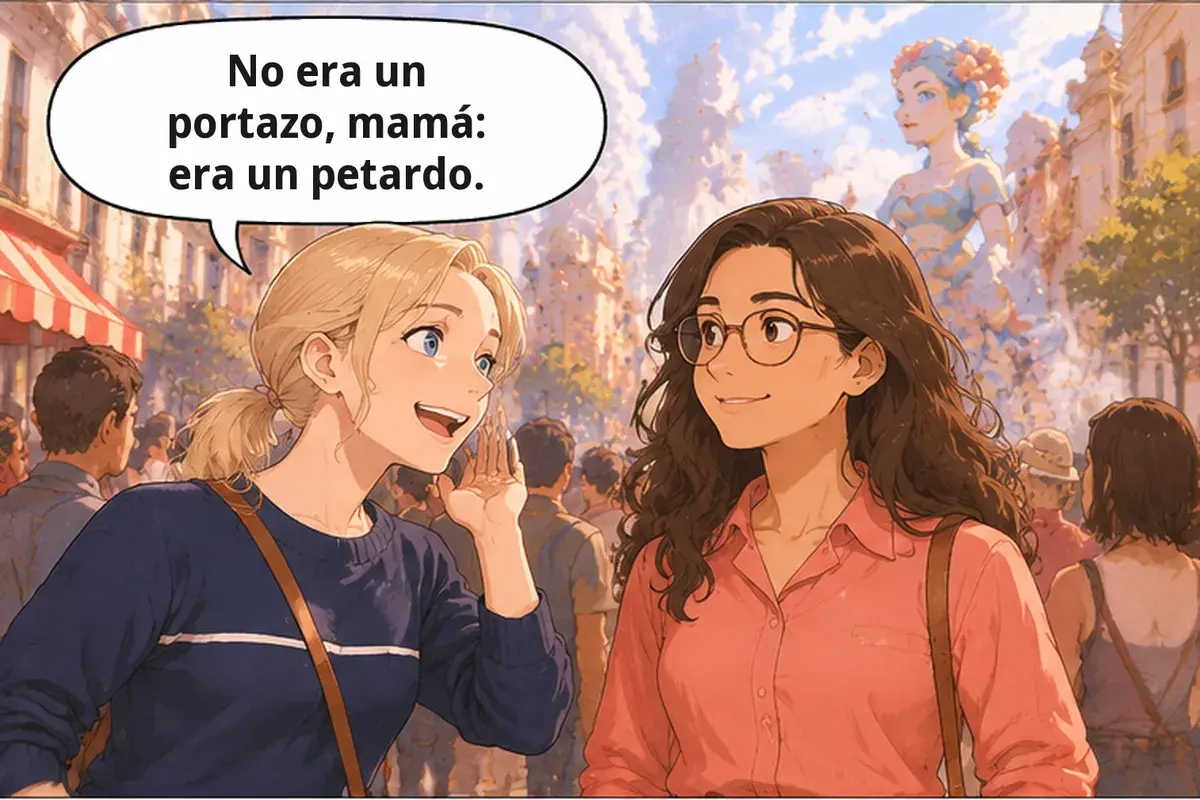
- Ana
No era un portazo, mamá: era un petardo.
It wasn't a door slamming, Mom: it was a firecracker.
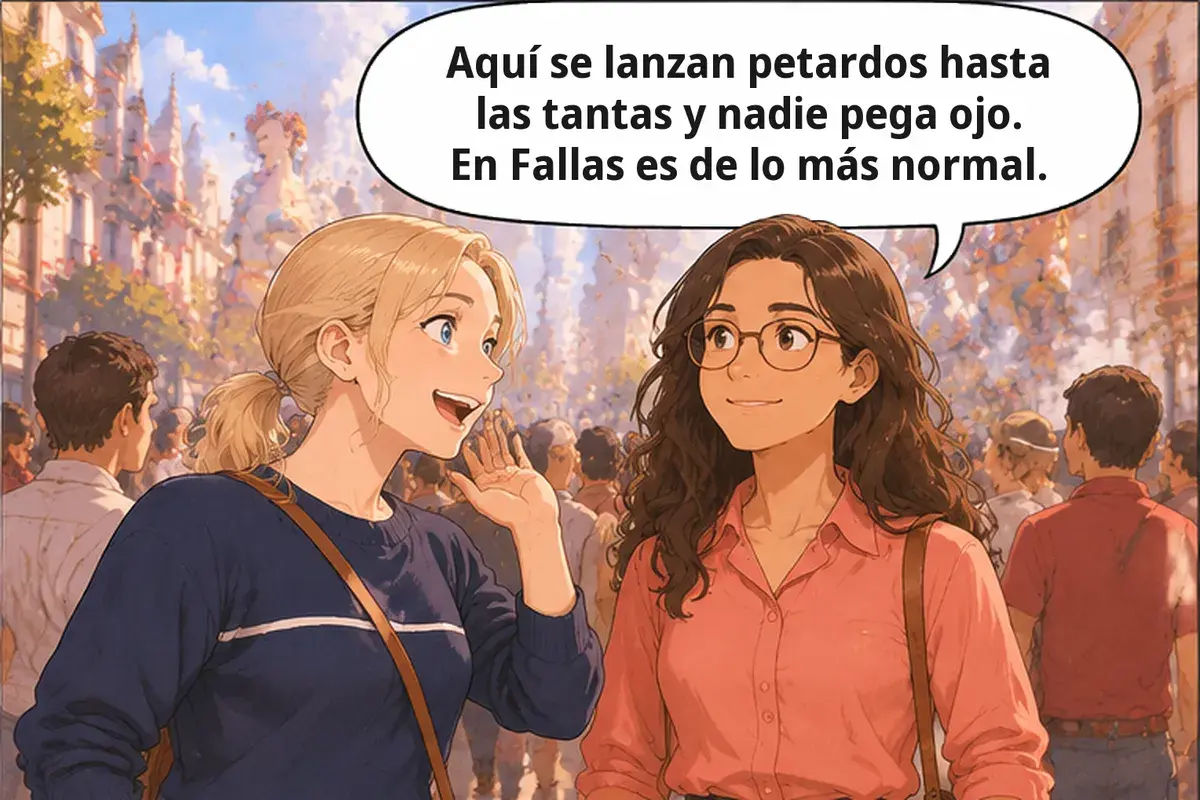
- Lucía
Aquí se lanzan petardos hasta las tantas y nadie pega ojo. En Fallas es de lo más normal.
Here people set off firecrackers until all hours and nobody sleeps a wink. During Fallas it's totally normal.
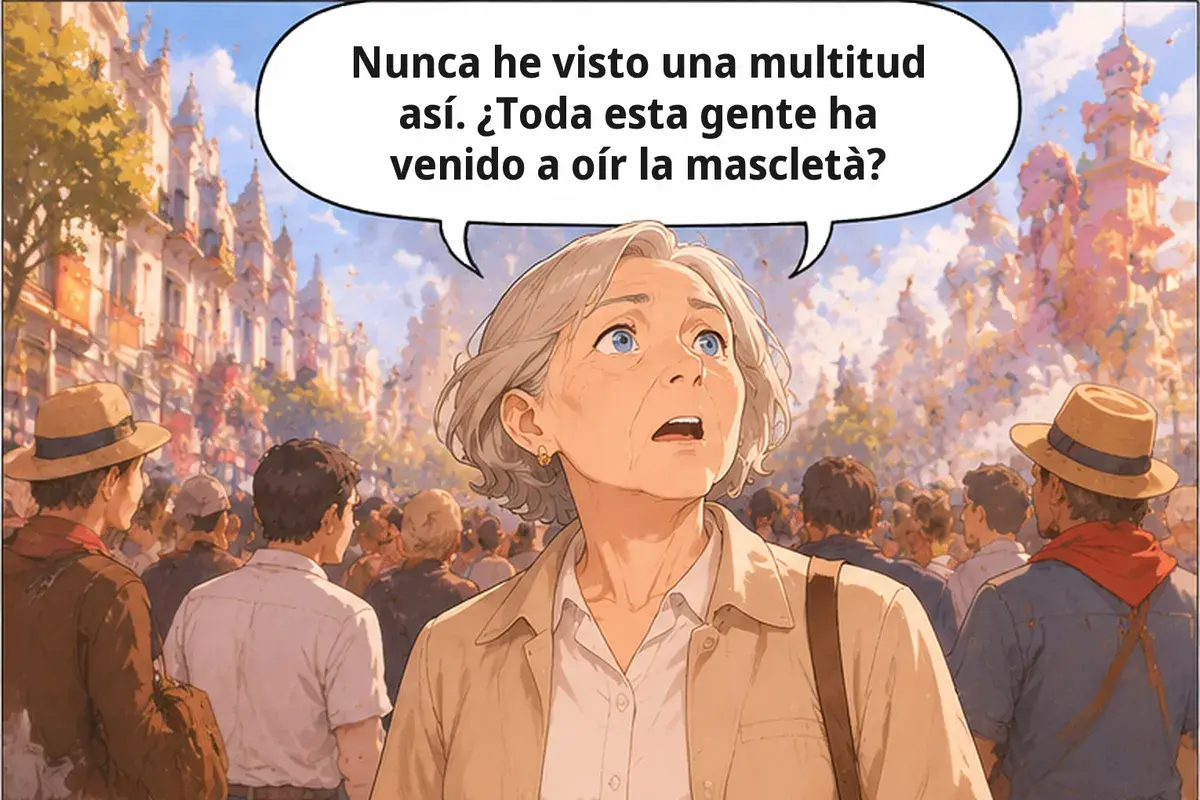
- Galina
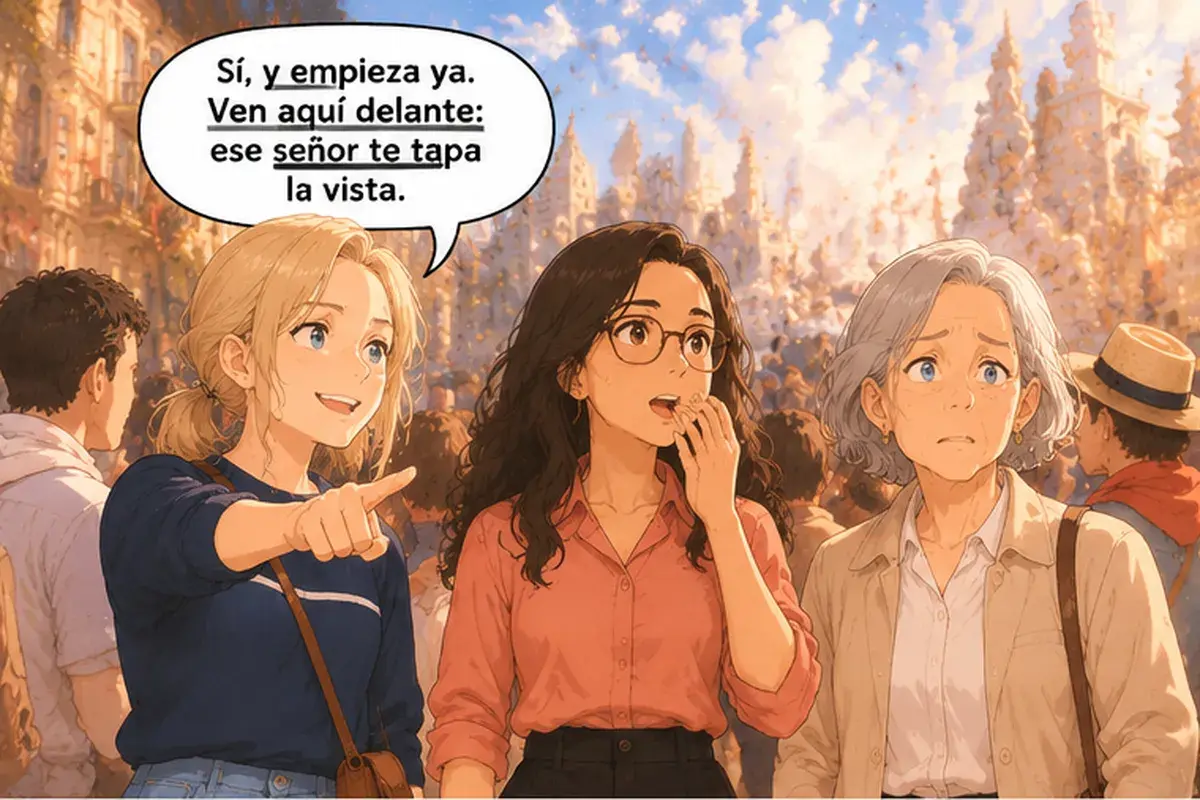
Nunca he visto una multitud así. ¿Toda esta gente ha venido a oír la mascletà?
I've never seen a crowd like this. Have all these people come to hear the mascletà?
- Ana
Sí, y empieza ya. Ven aquí delante: ese señor te tapa la vista.
Yes, and it's starting now. Come up front here: that man is blocking your view.
- Lucía
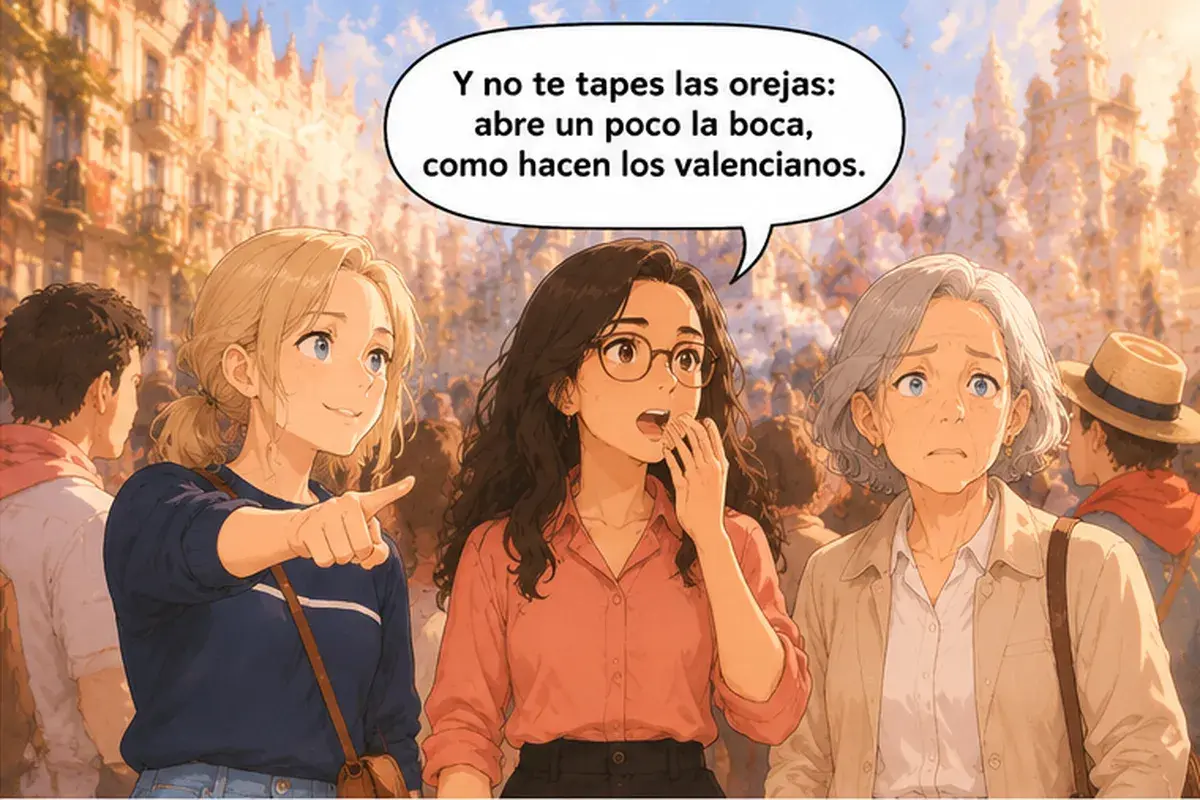
Y no te tapes las orejas: abre un poco la boca, como hacen los valencianos.
And don't cover your ears: open your mouth a little, like people from Valencia do.
- Galina
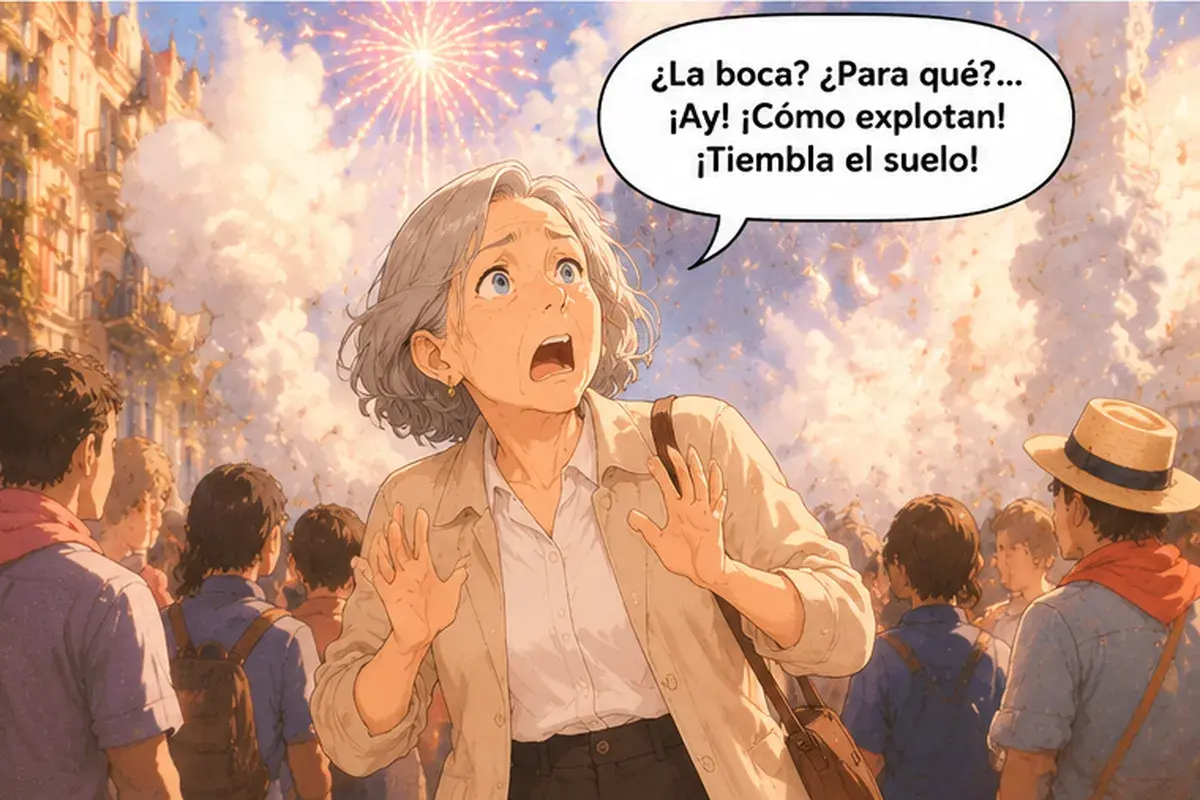
¿La boca? ¿Para qué?... ¡Ay! ¡Cómo explotan! ¡Tiembla el suelo!
My mouth? What for?... Oh! Look how they explode! The ground is shaking!
- Ana
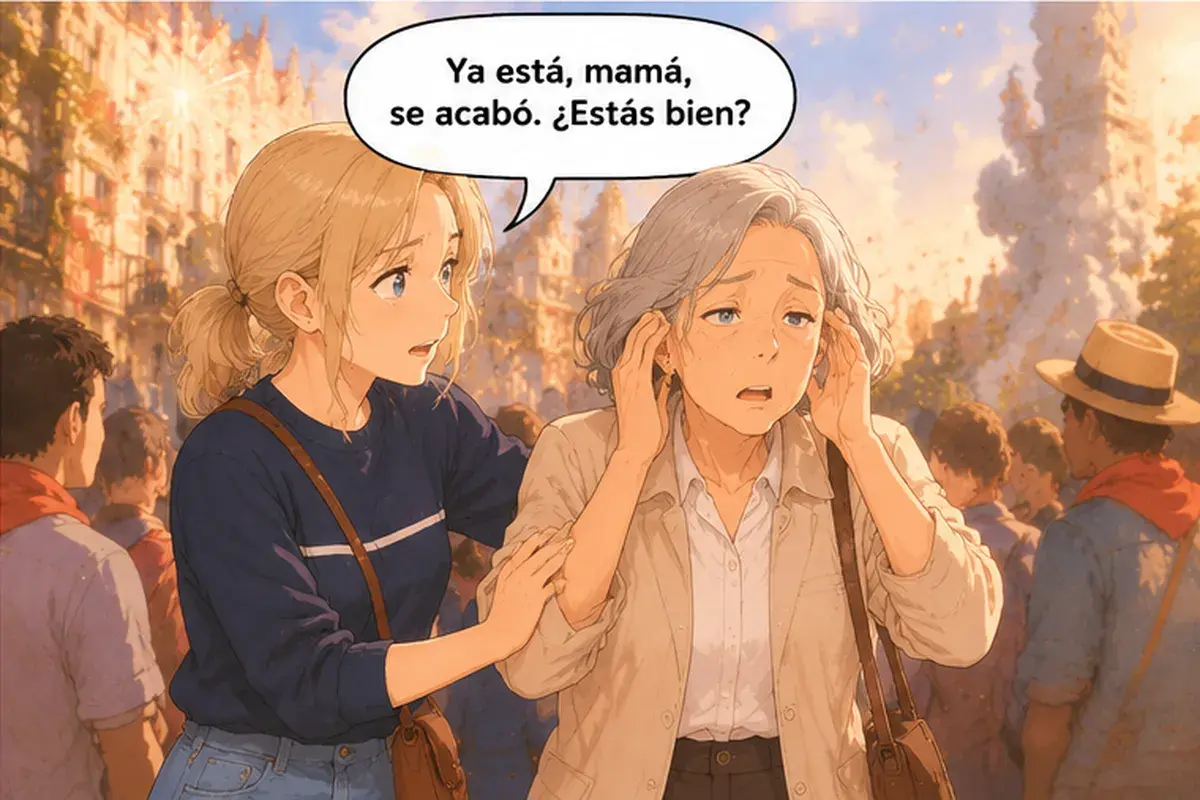
Ya está, mamá, se acabó. ¿Estás bien?
That's it, Mom, it's over. Are you OK?
- Galina
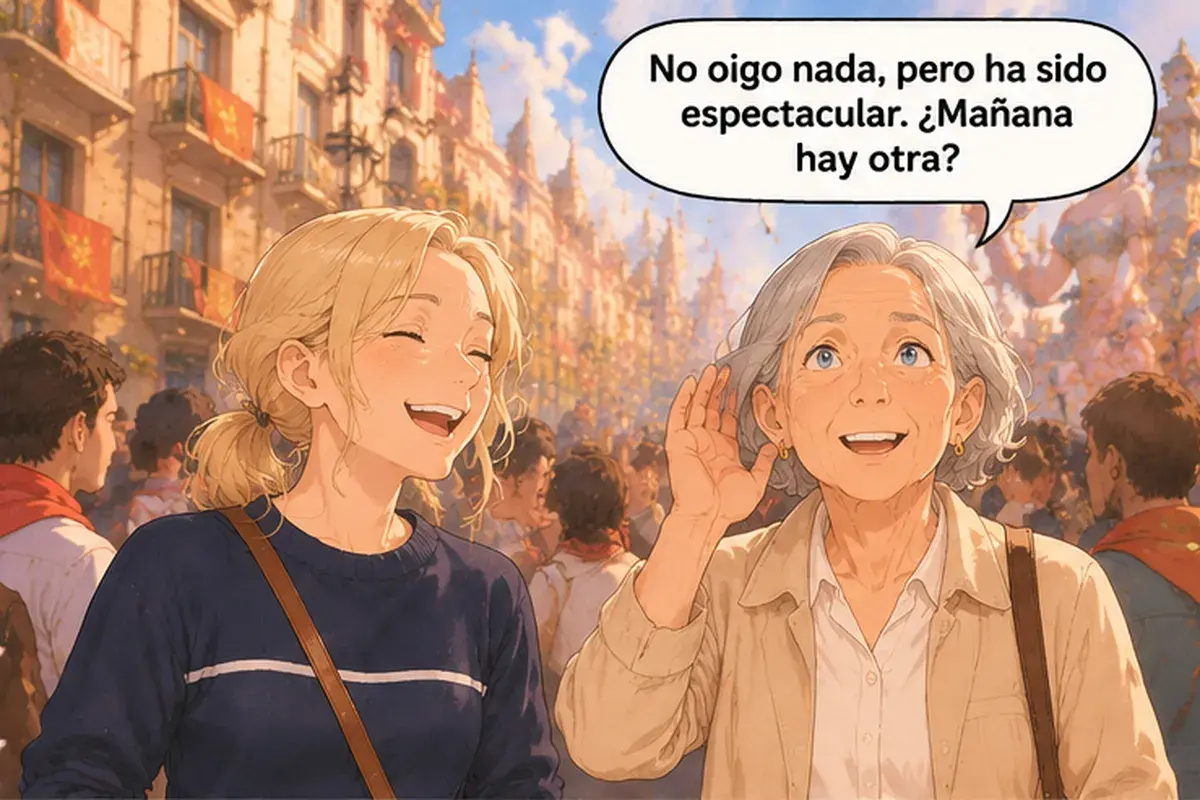
No oigo nada, pero ha sido espectacular. ¿Mañana hay otra?
I can't hear a thing, but it was spectacular. Is there another one tomorrow?

- Ana
¡Todos los días a las dos, hasta el diecinueve! Te veo la mar de contenta.
Every day at two, until the nineteenth! You look really happy (to a woman).
- Lucía
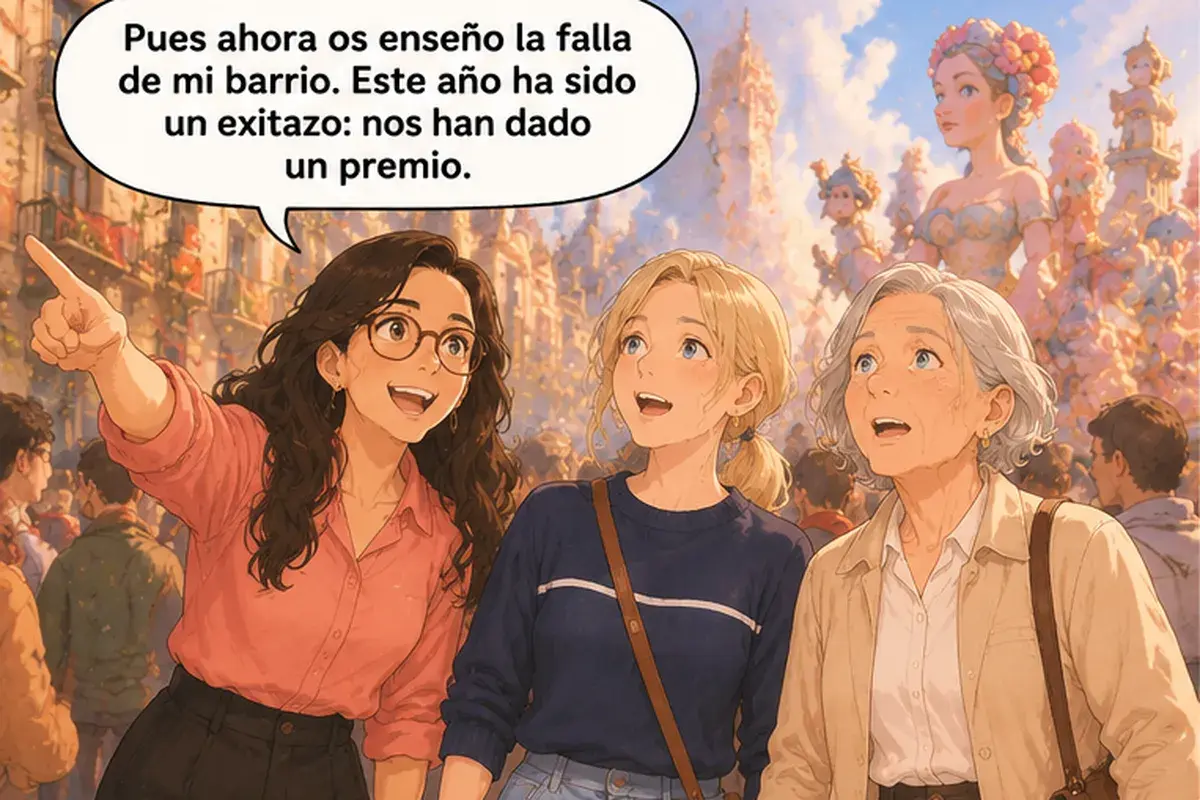
Pues ahora os enseño la falla de mi barrio. Este año ha sido un exitazo: nos han dado un premio.
Well, now I'll show you the falla in my neighborhood. This year it's been a huge hit: they gave us a prize. (to several people)
- Galina
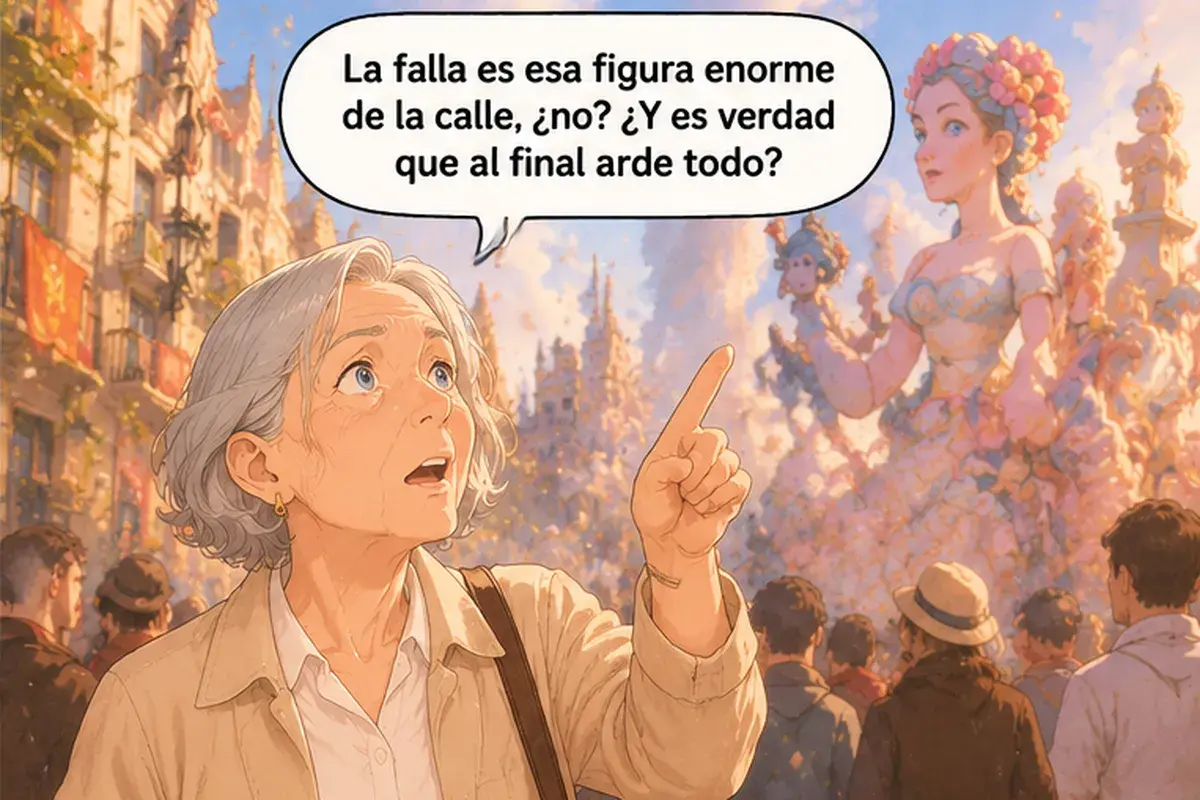
La falla es esa figura enorme de la calle, ¿no? ¿Y es verdad que al final arde todo?
The falla is that huge figure in the street, right? And is it true that in the end everything burns?
- Ana
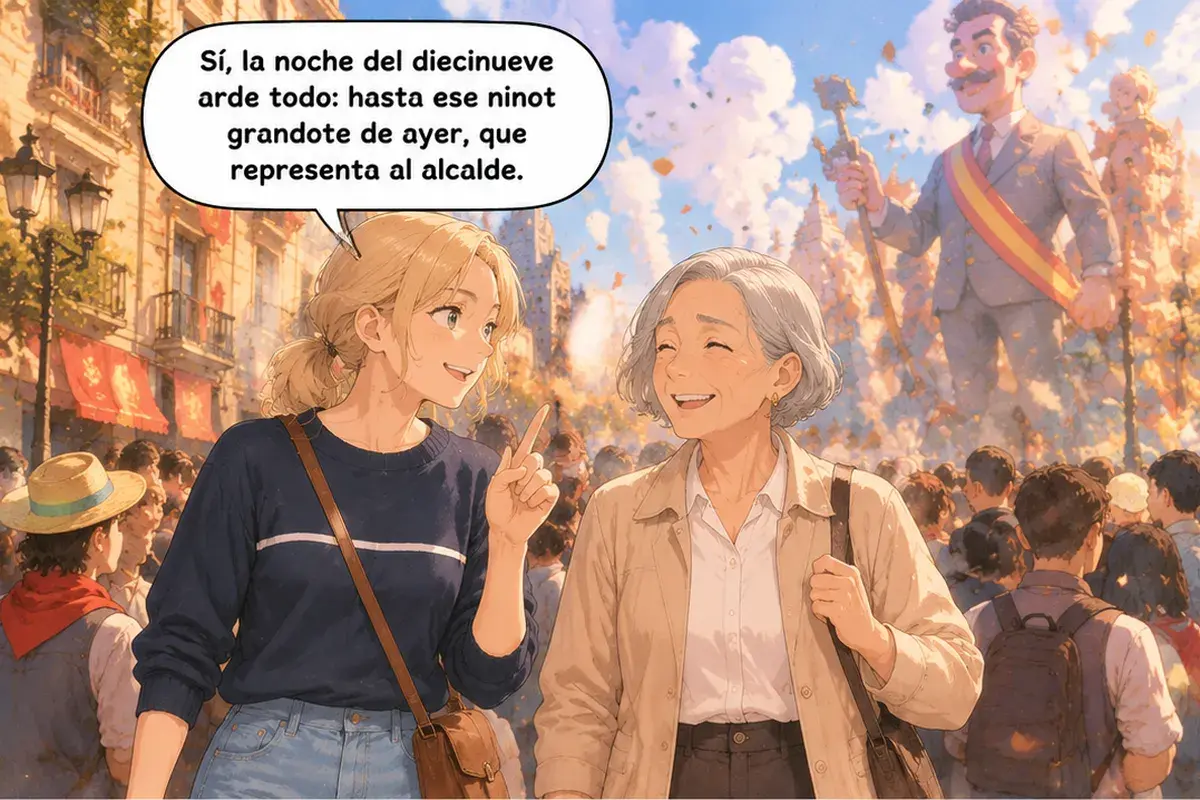
Sí, la noche del diecinueve arde todo: hasta ese ninot grandote de ayer, que representa al alcalde.
Yes, on the night of the nineteenth everything burns: even that huge ninot from yesterday that represents the mayor.
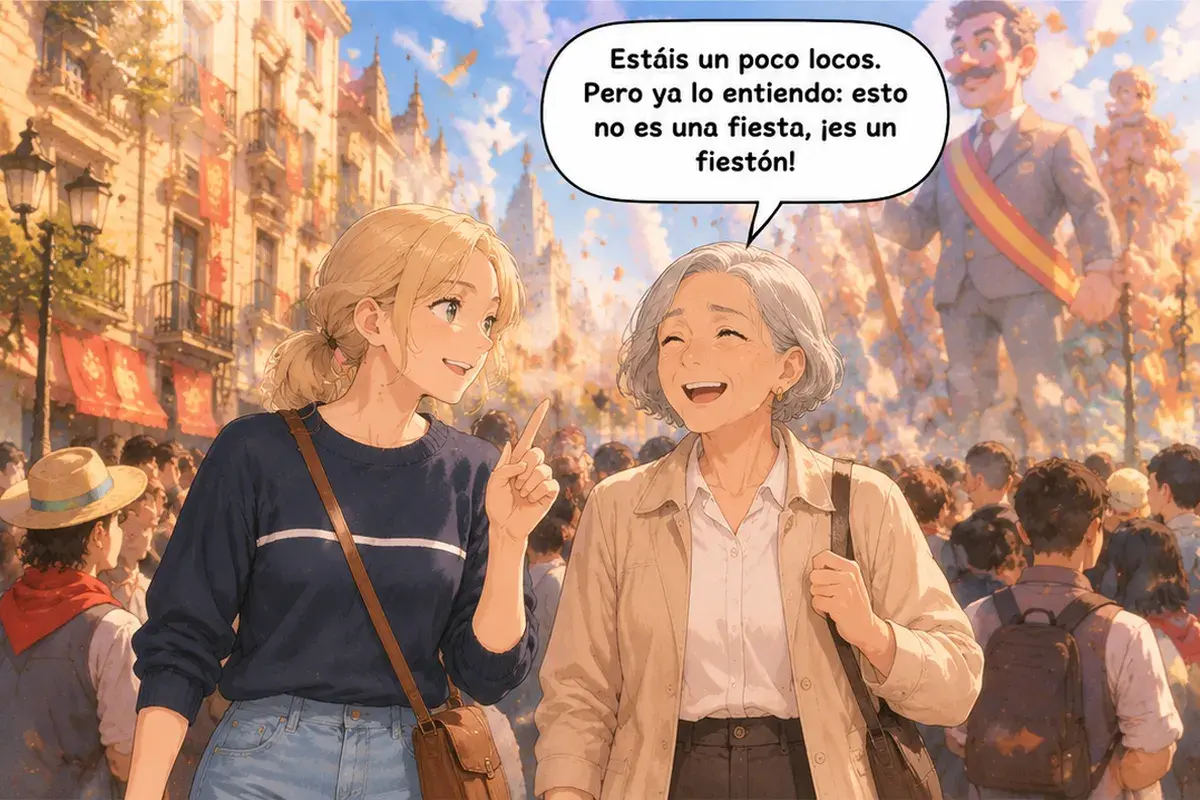
- Galina
Estáis un poco locos. Pero ya lo entiendo: esto no es una fiesta, ¡es un fiestón!
You're a little crazy (to several people). But now I get it: this isn't a party, it's a huge party!
Grammar for this text
Words with suffixes. Galina hears words she doesn't know, but they're built from words she does: cochazo = coche + -azo (an amazing car), problemón = problema + -ón (a huge problem). amiguete (a buddy), grandote (huge) and exitazo (a huge hit) work the same way. But portazo isn't "a great door" — it's a door slam: dar un portazo — to slam the door. At the end, Galina builds a word herself on the same pattern: una fiesta → un fiestón (the gender becomes masculine).
Intensifiers. la mar de contenta — really happy; de lo más normal — totally normal.
Set phrases. no pegar ojo — to not sleep a wink. There's no no in the text because the negative is already in nadie: nadie pega ojo — nobody sleeps a wink. hasta las tantas — until all hours.
No te tapes las orejas is a negative command with a pronoun (B1, unit 16): "don't cover your ears".
Words and grammar of the unit: Talk about the Fallas festival.
Learn the words from the texts with flashcards
In the app, you can tap any word in a text to see its translation, forms and examples, and new words stick with flashcards. 15 minutes a day.
Start for freeEverything is open for free. No card needed to sign up.