

Spanish story with translation · B2 · 18 lines
El vecino que nadie había visto The neighbor no one had seen
Comic · 9 panels

En mi edificio hay un misterio: el vecino del primero. Llevo más de dos años aquí y nunca lo he visto.
There's a mystery in my building: the neighbor on the first floor. I've been here for more than two years and I've never seen him.
En el buzón solo pone «Ferrer». No hay otro rastro de él: ni una luz, ni una voz, ni una bolsa de basura.
The mailbox just says "Ferrer." There's no other trace of him: not a light, not a voice, not a garbage bag.

Solo, algunas mañanas, unas huellas mojadas en la escalera. «Deben de ser suyas», dice Dani, «pero vete a saber».
Only some mornings, a few wet footprints on the stairs. "They must be his," Dani says, "but who knows."
Cada vecino tiene su idea. «Será un jubilado solitario», dice Carmen. «Tendrá noventa años y no saldrá nunca de casa».
Every neighbor has their own idea. "He's probably a lonely retiree," Carmen says. "He's probably ninety and never leaves the house."
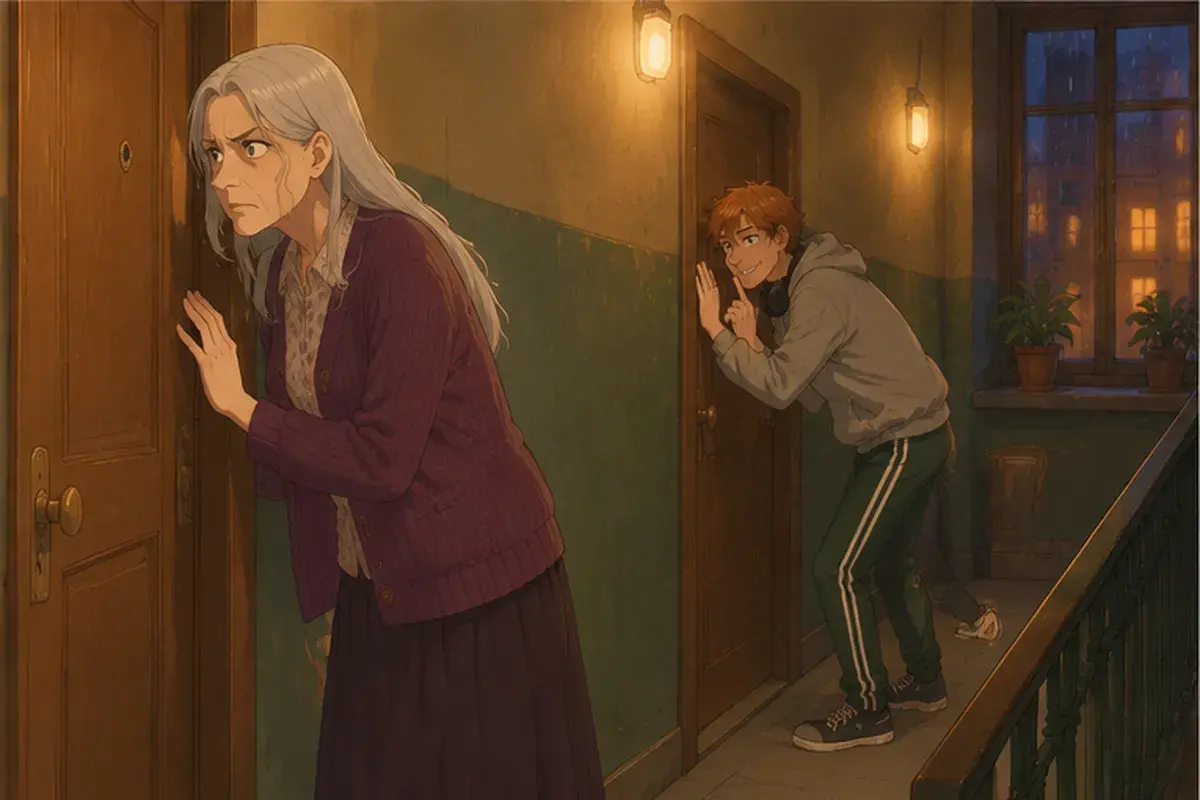
La vecina del segundo, que observa la escalera por la mirilla y vigila a todo el mundo, desconfía: «Un hombre tan discreto esconderá algo».
The neighbor on the second floor, who watches the stairs through her peephole and keeps an eye on everyone, is suspicious: "A man that discreet is probably hiding something."
Dani va más lejos: «Lo buscará la policía. O será alguien peligroso». Una tarde bajó a escondidas para espiarlo y pegó la oreja a su puerta.
Dani goes further: "The police are probably looking for him. Or maybe he's someone dangerous." One afternoon he snuck downstairs to spy on him and pressed his ear against his door.

Volvió con una noticia peculiar: «Ahí dentro cantan pájaros. Y algo corre por el pasillo. ¡Tendrá ratas!».
He came back with some odd news: "There are birds singing in there. And something's running down the hallway. He probably has rats!"
Una noche de diciembre volví muy tarde. Subía de puntillas, para no despertar a nadie, cuando oí un cerrojo en el primero.
One night in December I came home very late. I was tiptoeing up the stairs so I wouldn't wake anyone when I heard a bolt on the first floor.
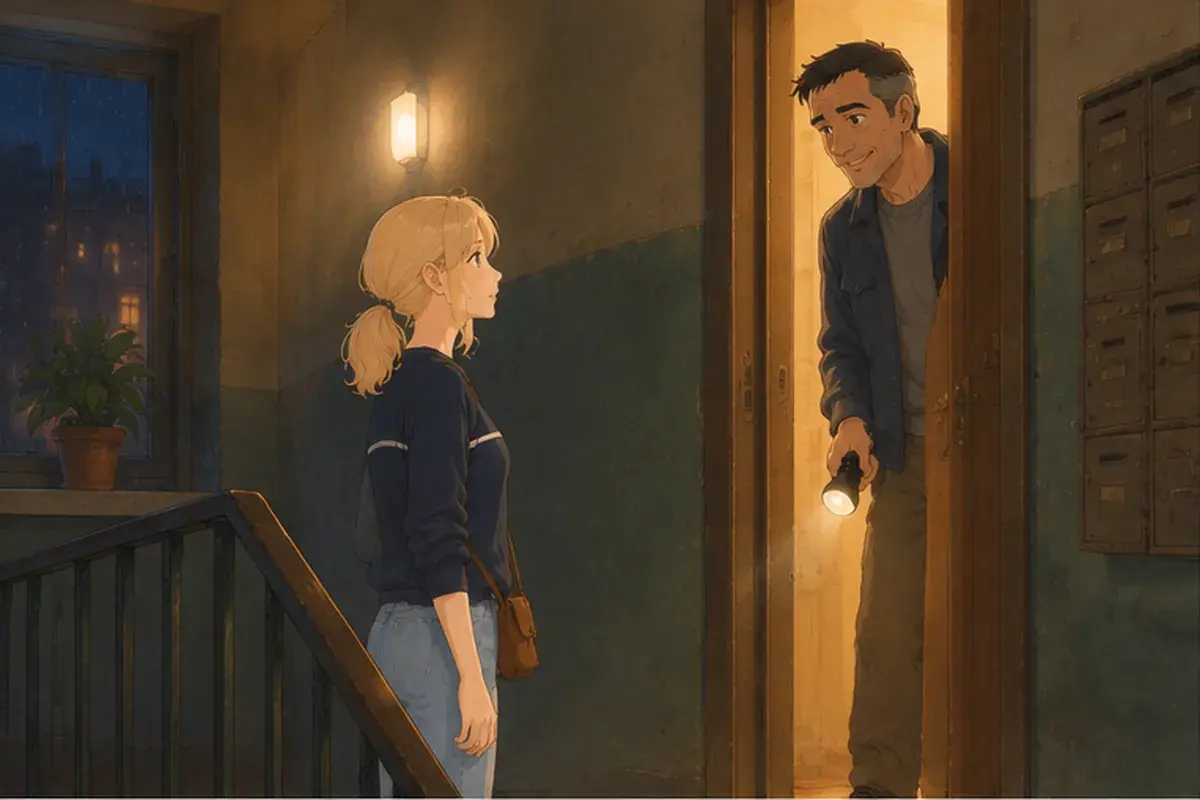
La puerta se abrió despacio y un hombre se asomó al rellano. Yo me quedé quieta, casi sin respirar.
The door opened slowly and a man looked out onto the landing. I froze, barely breathing (woman speaking).
No era un anciano ni tenía pinta de peligroso. Era un hombre de mediana edad, con alguna cana y una linterna en la mano; aparentaba unos cincuenta años.
He wasn't an old man, and he didn't look dangerous. He was a middle-aged man with a few gray hairs and a flashlight in his hand; he looked about fifty.
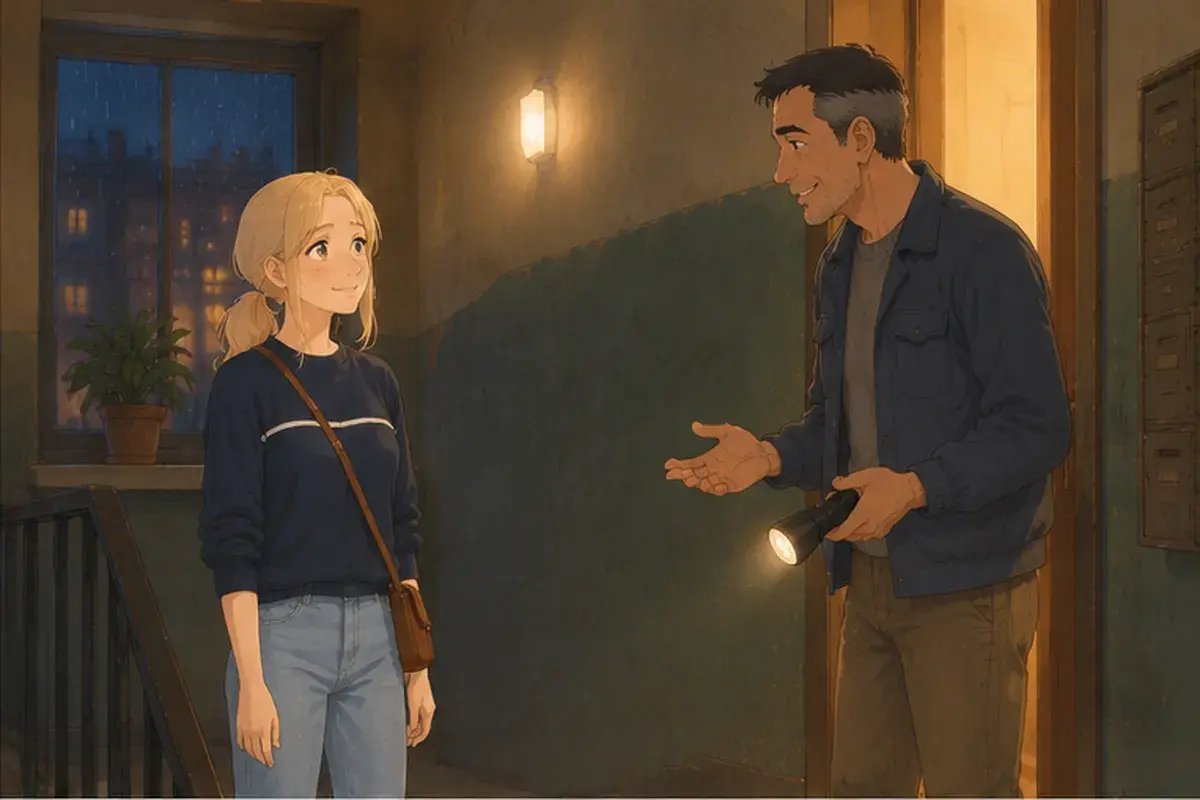
—Buenas noches —me dijo con una sonrisa—. Usted será la chica extranjera del quinto, ¿no?
"Good evening," he said to me with a smile. "You must be the foreign girl from the fifth floor, right?" (formal)
Se llama Ramón y trabaja de noche: vigila el cementerio. Sale cuando todos duermen y vuelve cuando todos se han ido al trabajo.
His name is Ramón and he works nights: he guards the cemetery. He leaves when everyone's asleep and comes back when everyone has left for work.
—Por eso nadie me ve —me explicó—. Y de día duermo con las persianas bajadas.
"That's why nobody sees me," he explained. "And during the day I sleep with the blinds down."
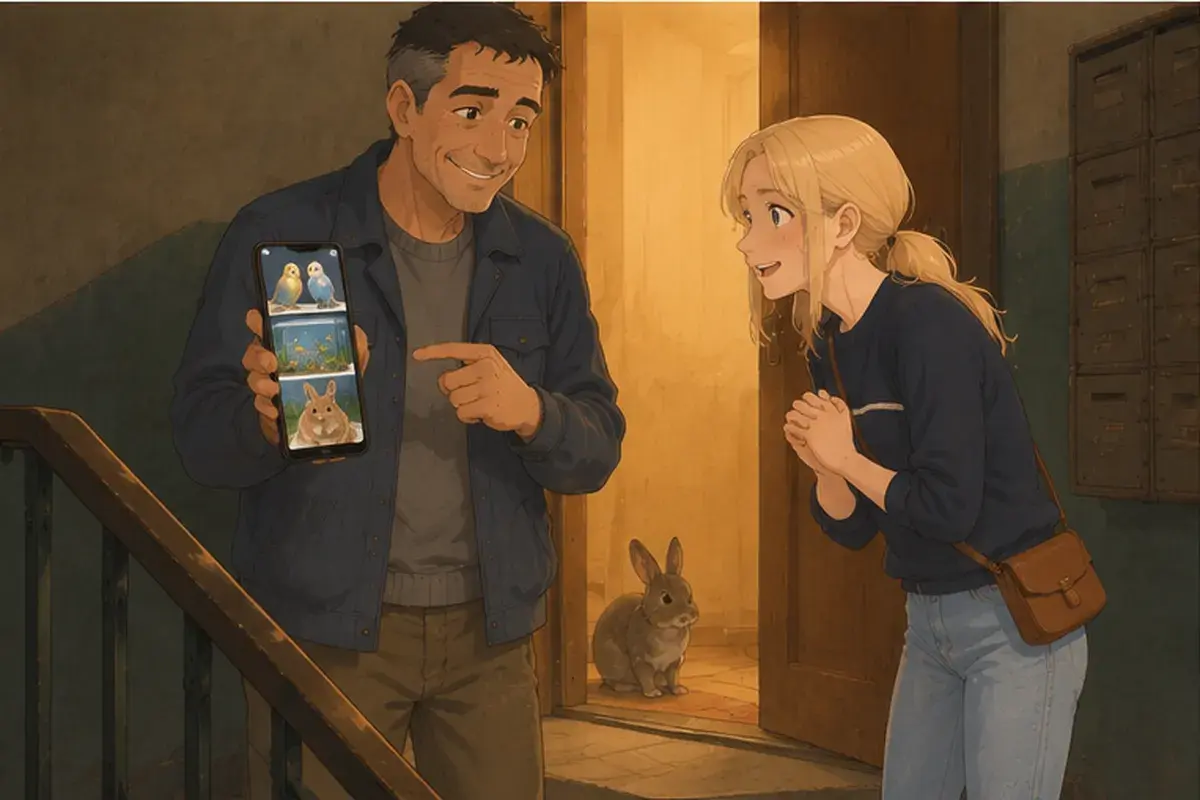
¿Y los ruidos? Ramón me mostró unas fotos: tiene dos pájaros, tres peces y un conejo, Paco, que corre por el pasillo cuando se queda solo. Ni una rata.
And the noises? Ramón showed me some photos: he has two birds, three fish and a rabbit, Paco, who runs down the hallway when he's left alone. Not a single rat.
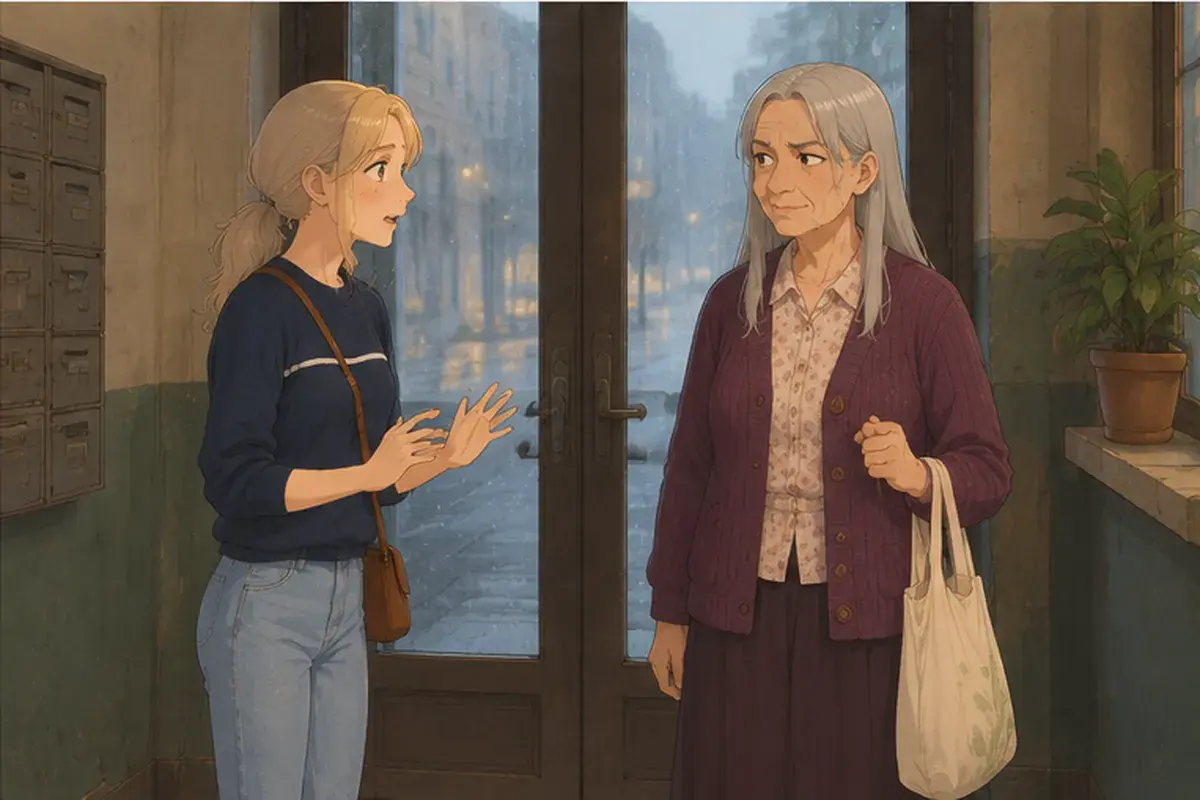
Por la mañana se lo conté a todos. Carmen no me creyó: «¿En el cementerio? Tú me estás tomando el pelo».
In the morning I told everyone. Carmen didn't believe me: "At the cemetery? You're pulling my leg."
Ahora, cuando veo huellas mojadas en la escalera, ya sé de quién son: Ramón ha vuelto de trabajar.
Now, when I see wet footprints on the stairs, I know whose they are: Ramón has come back from work.
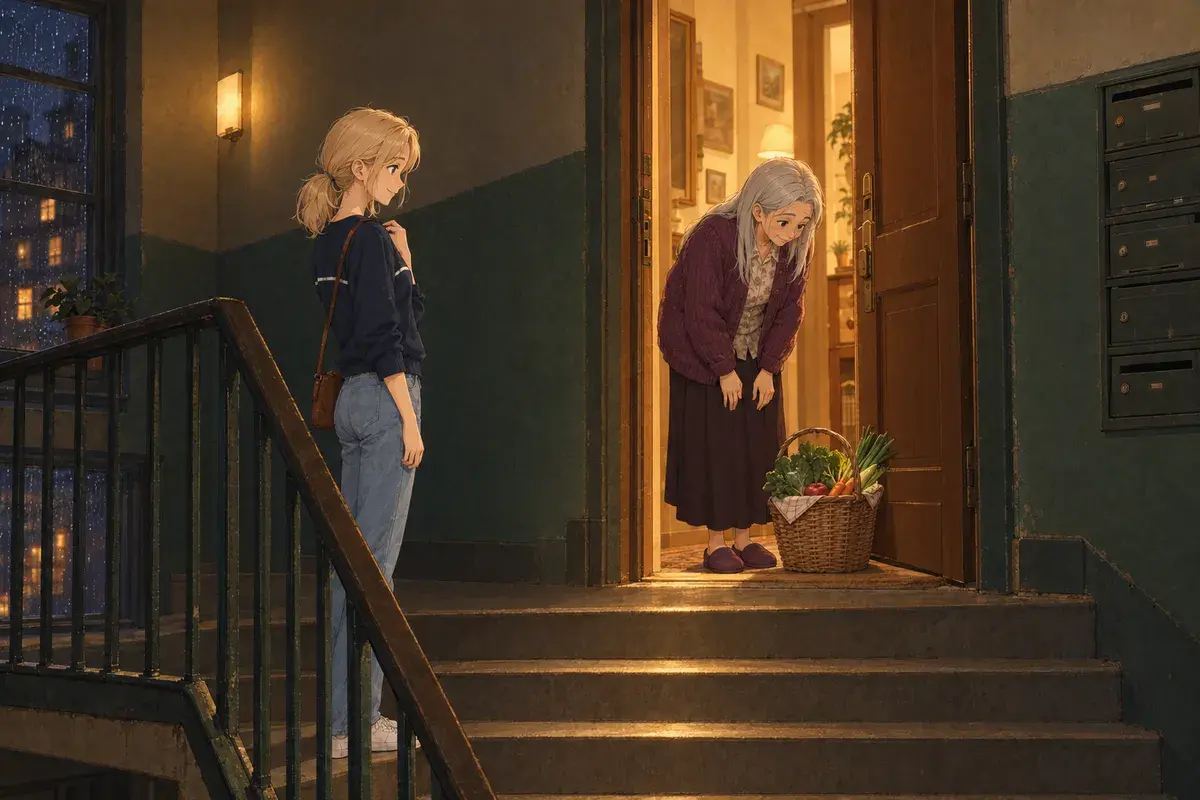
Y me da un poco de pena: dentro de poco me voy de este edificio, justo ahora que conozco a todos mis vecinos.
And it makes me a little sad: I'm moving out of this building soon, just when I've gotten to know all my neighbors.
La vecina del segundo ya tiene otro misterio: «¿Quién será la persona que deja verdura en la puerta del primero?». Yo no digo nada.
The neighbor on the second floor already has another mystery: "Who could be the person leaving vegetables at the door on the first floor?" I don't say a word.
Grammar for this text
The neighbors are guessing, and they all use the future tense: Será un jubilado solitario (he's probably a lonely retiree), Tendrá noventa años (he's probably ninety), no saldrá nunca de casa (he probably never leaves the house), esconderá algo (he's probably hiding something), lo buscará la policía (the police are probably looking for him), tendrá ratas (he probably has rats). None of these is about the future: they're all about what the neighbor is like now.
Usted será la chica extranjera del quinto (you must be the foreign girl from the fifth floor): this is a polite way to check a guess.
Deber de: Deben de ser suyas (they must be his) — about the footprints.
Story tenses. What's always true is in the present tense: hay un misterio, trabaja de noche. What happened that night is in the past: subía… cuando oí (I was going up… when I heard) (A2, unit 16).
Words. El primero, el quinto — floors (the word piso is dropped). Spanish counting starts above the street level: el primero is one floor above the ground floor. Me estás tomando el pelo — you're pulling my leg.
Words and grammar of the unit: Guess who it might be.
Learn the words from the texts with flashcards
In the app, you can tap any word in a text to see its translation, forms and examples, and new words stick with flashcards. 15 minutes a day.
Start for freeEverything is open for free. No card needed to sign up.