

Spanish dialogue with translation · B2 · 17 lines
Tu barrio sale en el periódico Your neighborhood is in the paper
Comic · 17 panels
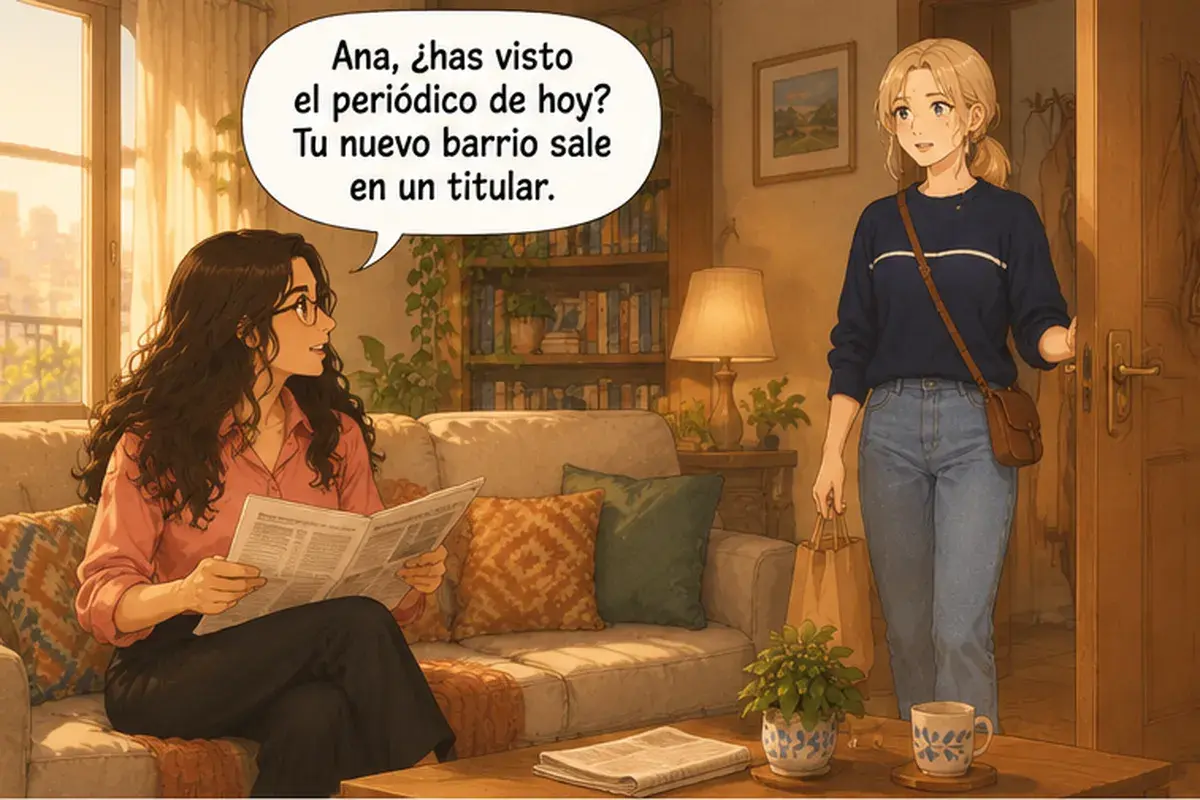
- Lucía
Ana, ¿has visto el periódico de hoy? Tu nuevo barrio sale en un titular.
Ana, have you seen today's paper? Your new neighborhood is in a headline.
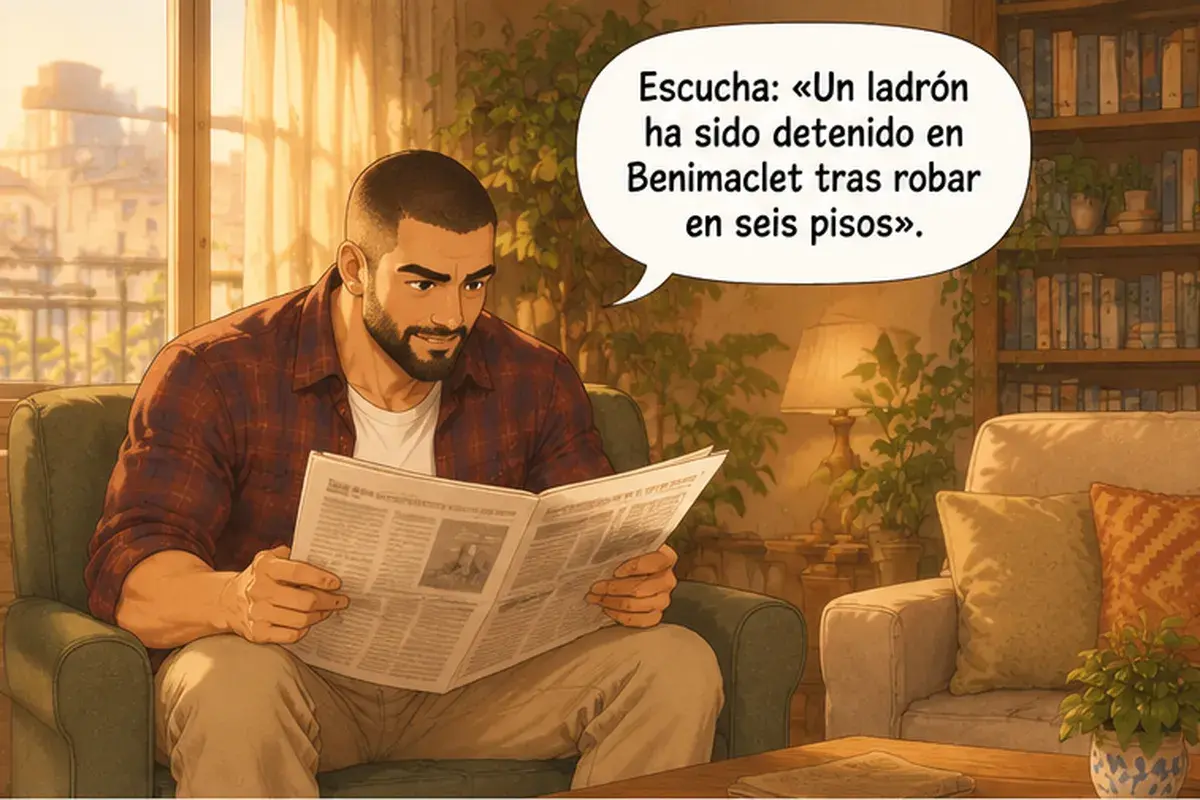
- Sergio
Escucha: «Un ladrón ha sido detenido en Benimaclet tras robar en seis pisos».
Listen: "A thief has been arrested in Benimaclet after robbing six apartments."
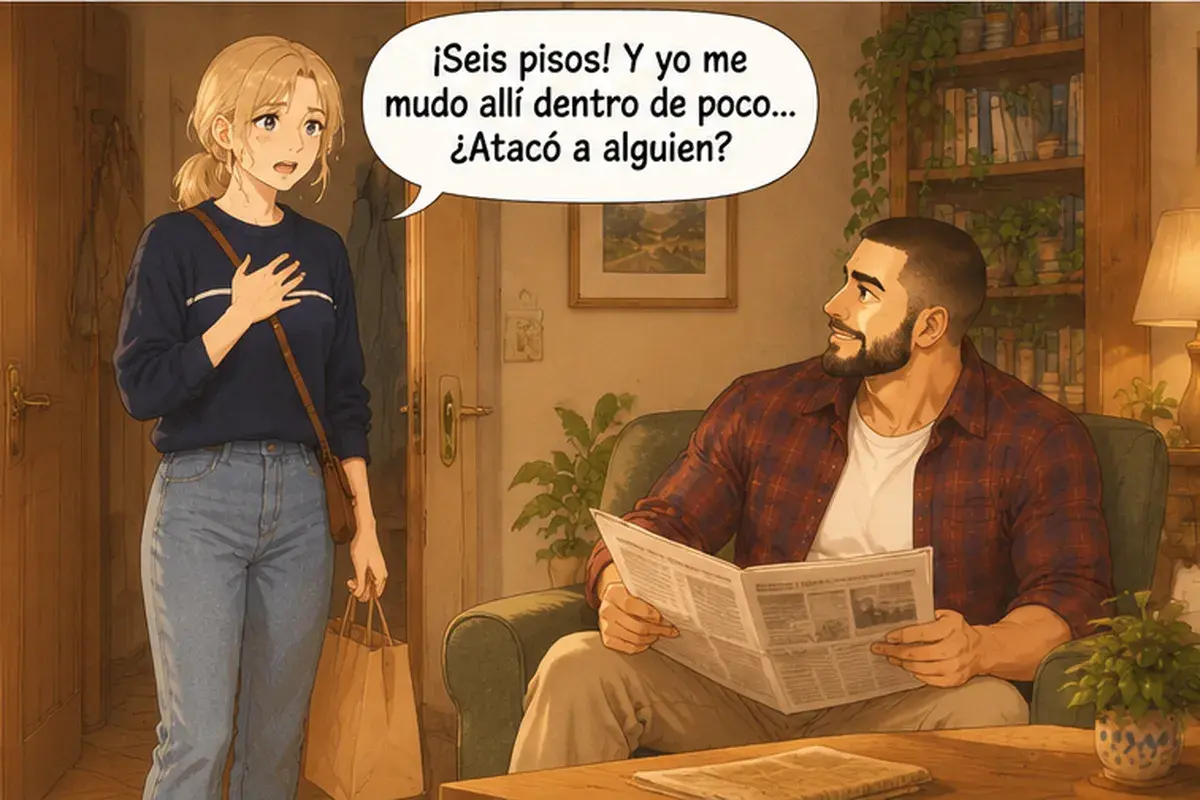
- Ana
¡Seis pisos! Y yo me mudo allí dentro de poco... ¿Atacó a alguien?
Six apartments! And I'm moving there soon... Did he attack anyone?
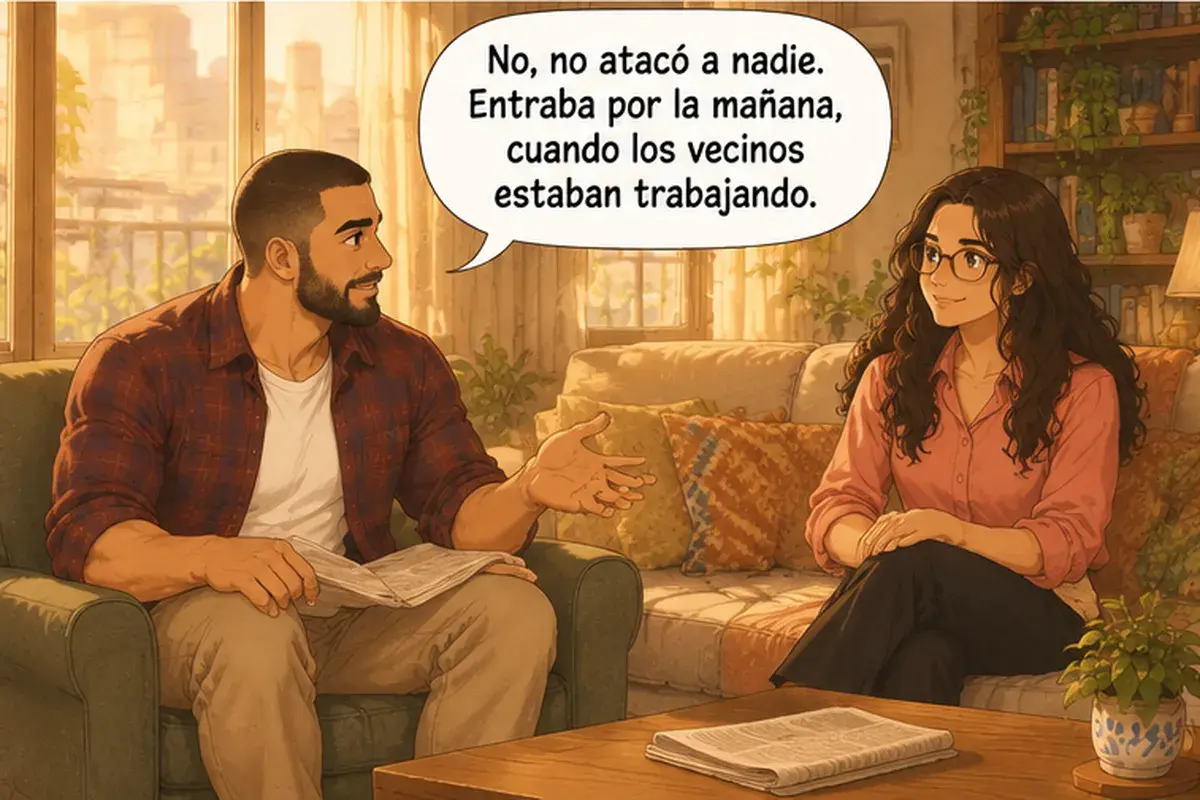
- Sergio
No, no atacó a nadie. Entraba por la mañana, cuando los vecinos estaban trabajando.
No, he didn't attack anyone. He'd get inside in the morning, when the residents were working.
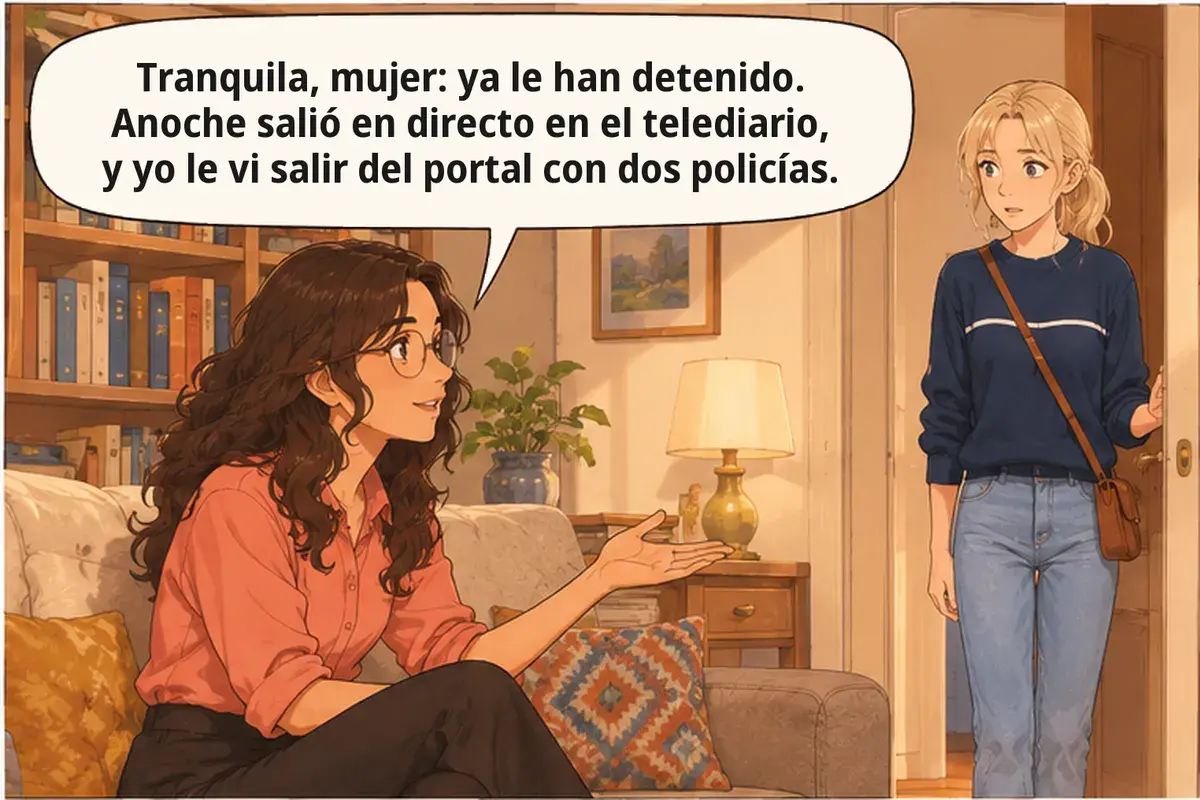
- Lucía
Tranquila, mujer: ya le han detenido. Anoche salió en directo en el telediario, y yo le vi salir del portal con dos policías.
Relax, they've already arrested him. Last night he was on the TV news live, and I saw him come out of the building with two police officers (to a woman).
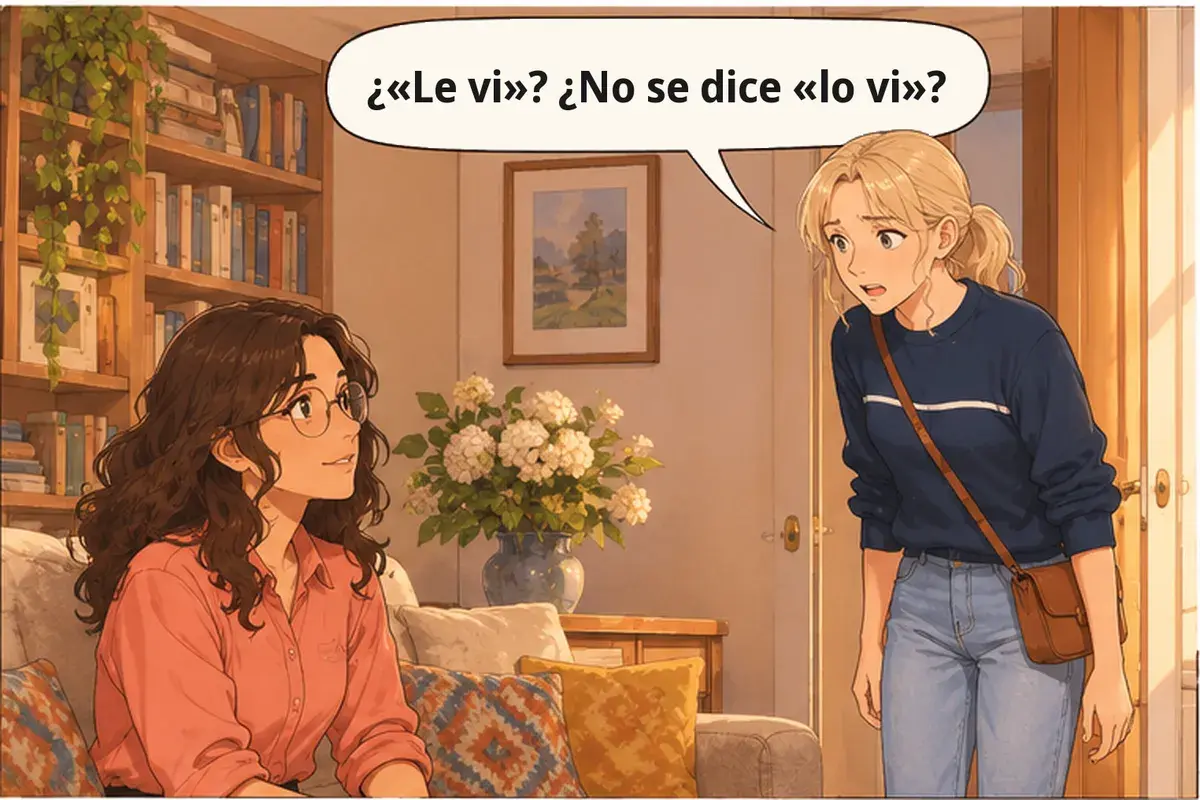
- Ana
¿«Le vi»? ¿No se dice «lo vi»?
"Le vi"? Isn't it "lo vi"?
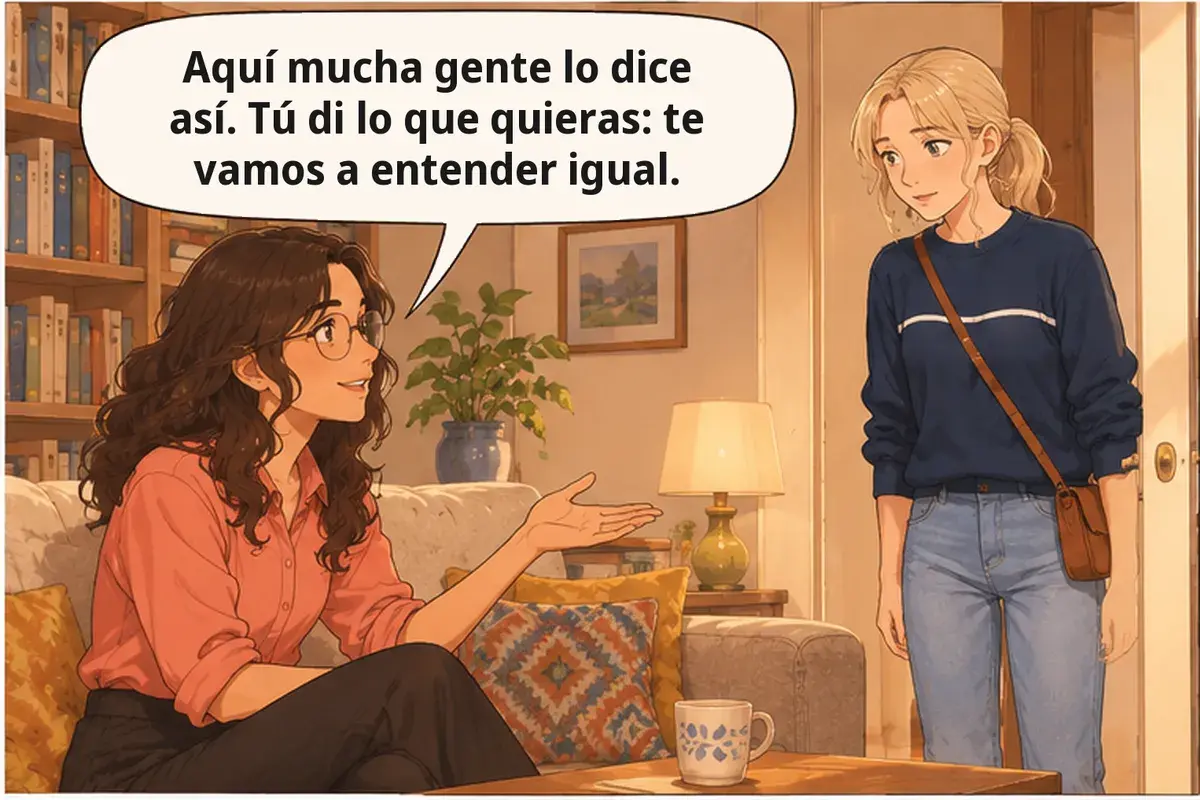
- Lucía
Aquí mucha gente lo dice así. Tú di lo que quieras: te vamos a entender igual.
A lot of people here say it like that. You say whatever you want: we're going to understand you anyway.
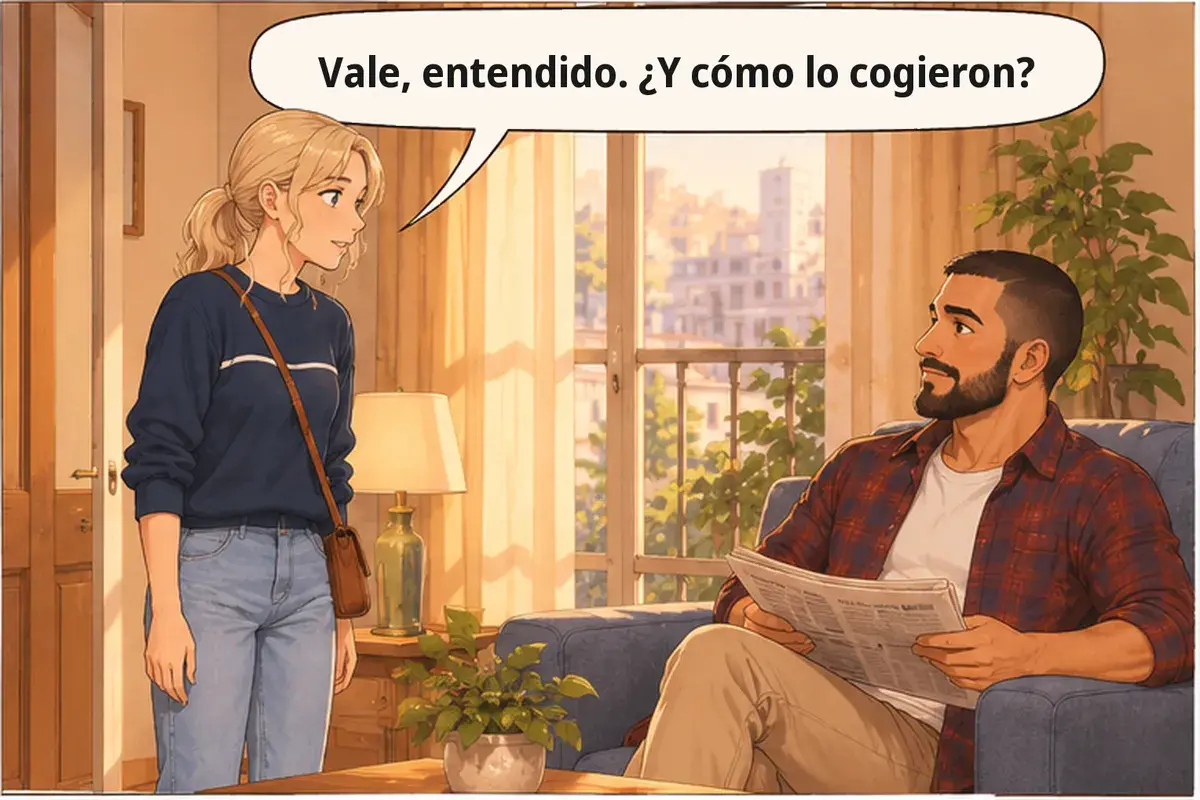
- Ana
Vale, entendido. ¿Y cómo lo cogieron?
OK, got it. And how did they catch him?
- Sergio
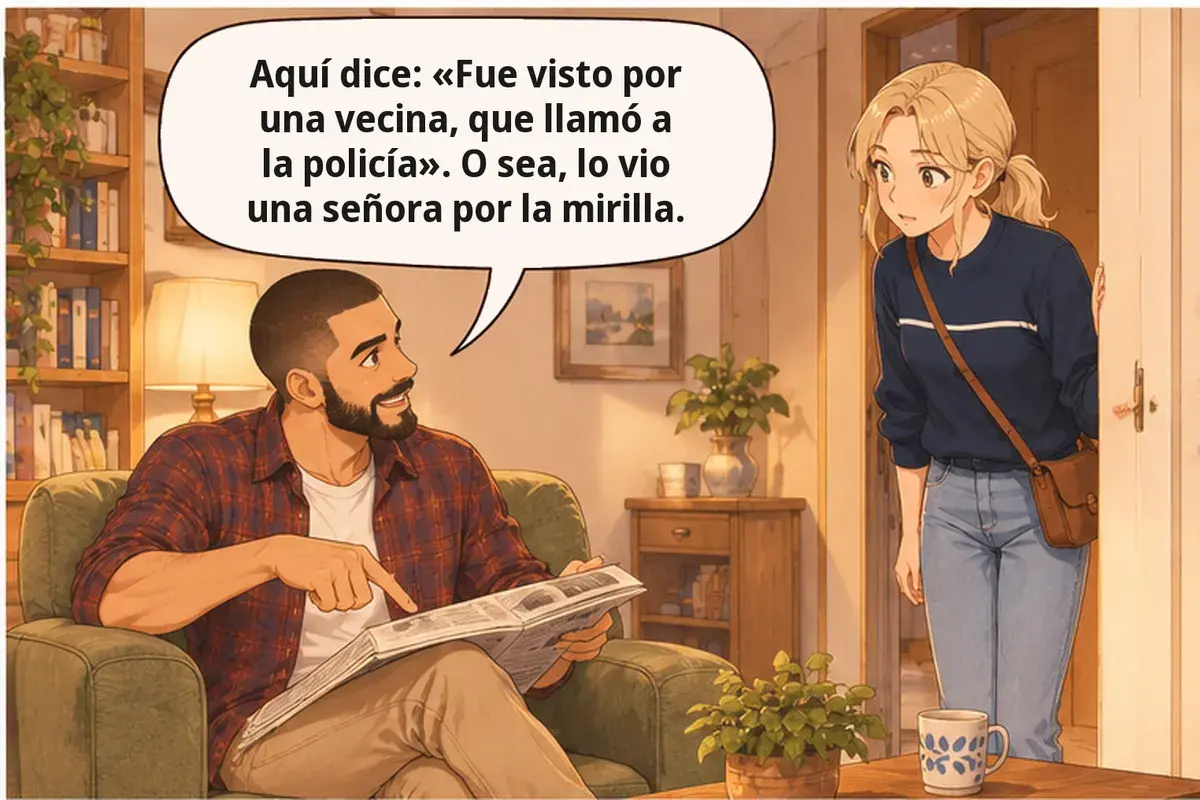
Aquí dice: «Fue visto por una vecina, que llamó a la policía». O sea, lo vio una señora por la mirilla.
It says here: "He was seen by a neighbor, who called the police." I mean, a lady saw him through the peephole.
- Ana
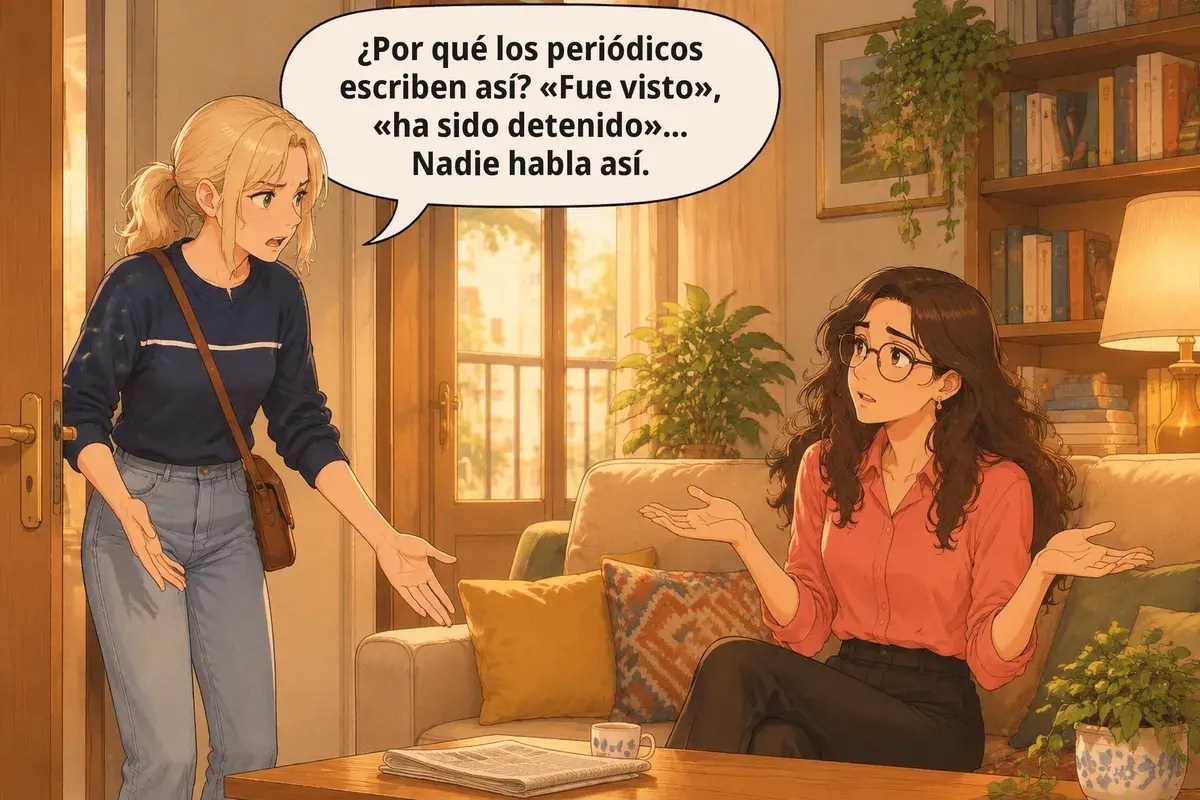
¿Por qué los periódicos escriben así? «Fue visto», «ha sido detenido»... Nadie habla así.
Why do newspapers write like that? "Was seen," "has been arrested"... Nobody talks like that.
- Sergio
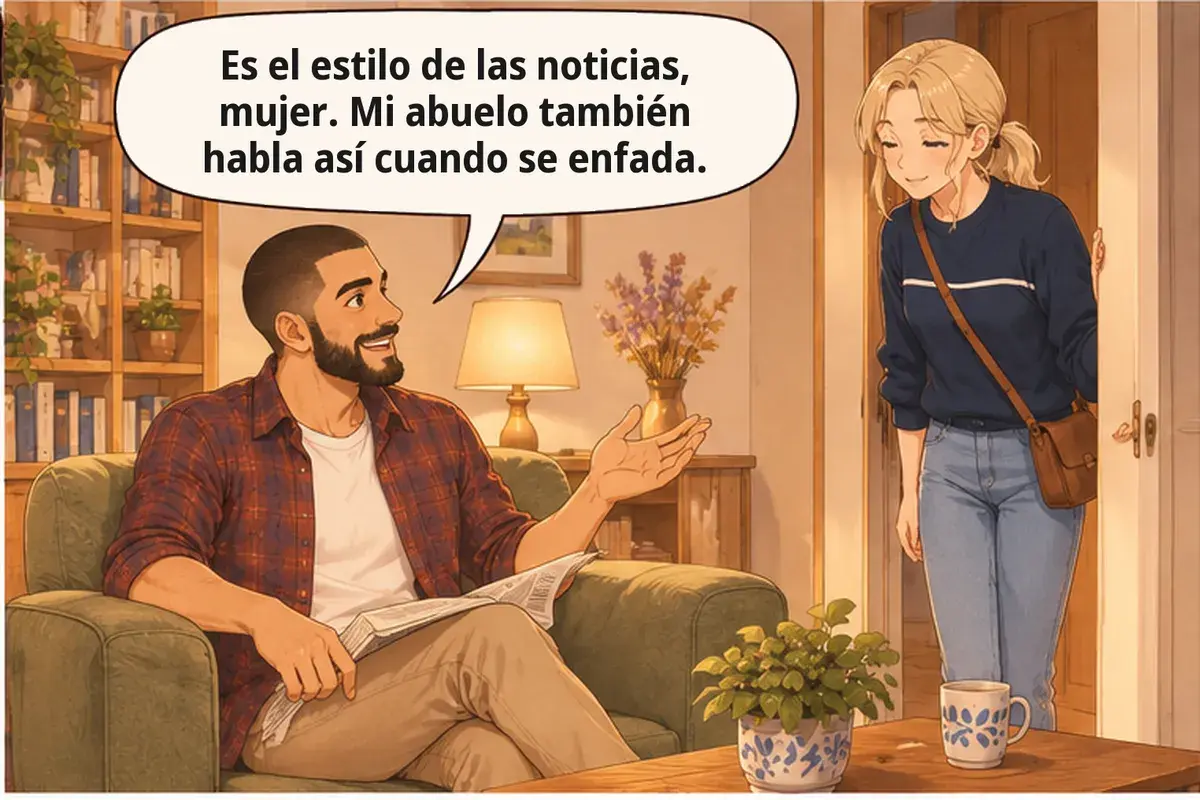
Es el estilo de las noticias, mujer. Mi abuelo también habla así cuando se enfada.
It's the style of the news. My grandpa talks like that too when he gets angry.
- Ana
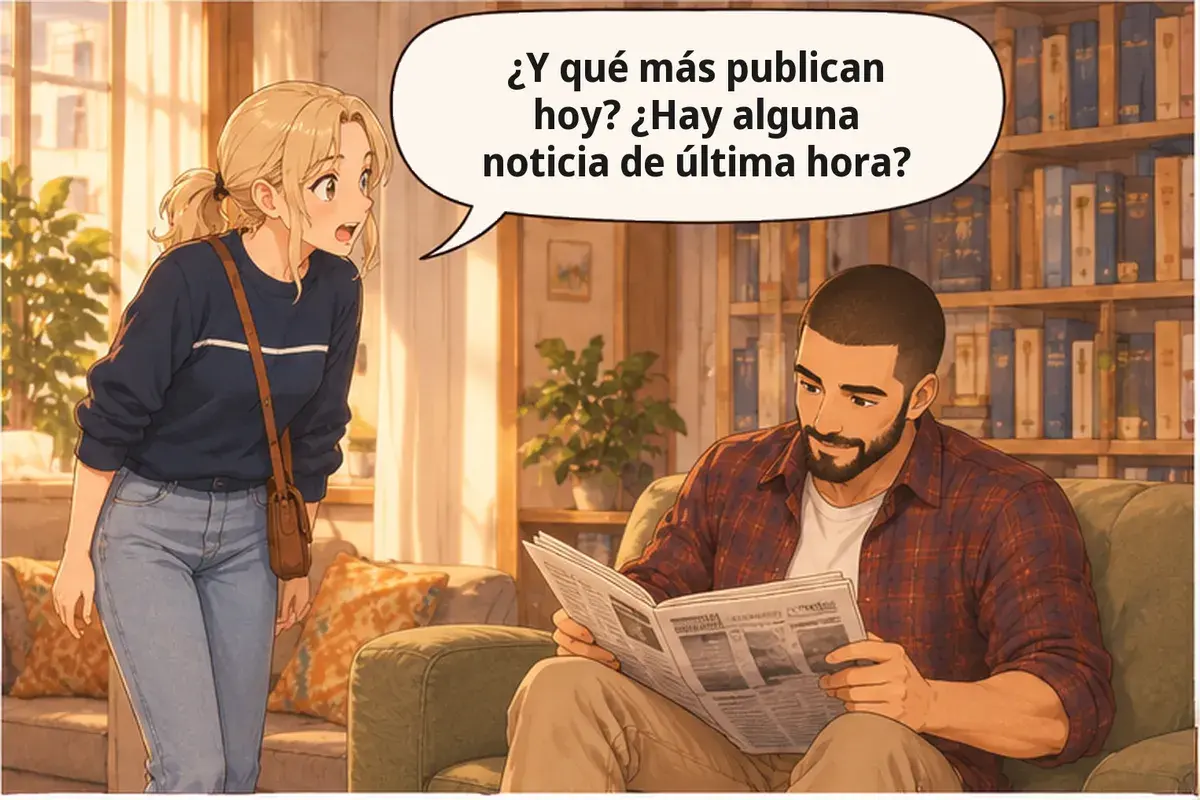
¿Y qué más publican hoy? ¿Hay alguna noticia de última hora?
And what else are they publishing today? Is there any breaking news?
- Sergio
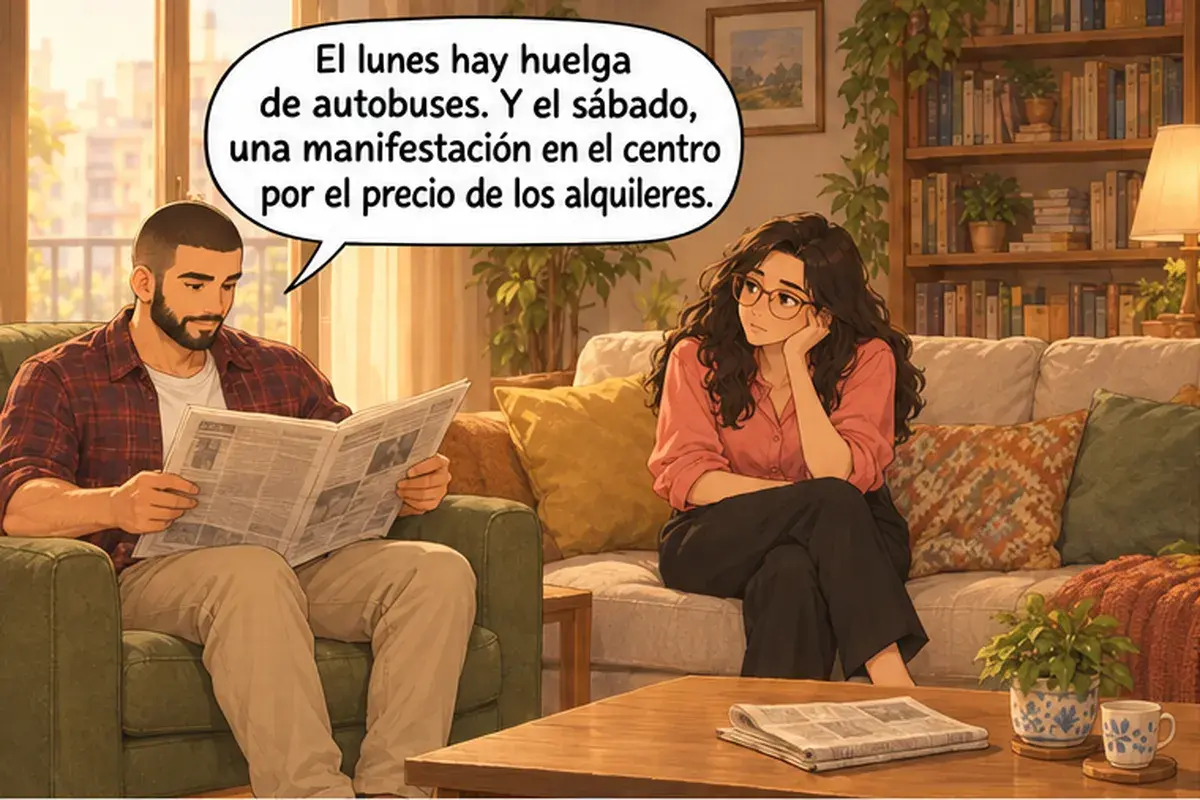
El lunes hay huelga de autobuses. Y el sábado, una manifestación en el centro por el precio de los alquileres.
On Monday there's a bus strike. And on Saturday, a protest downtown about the price of rent.
- Lucía
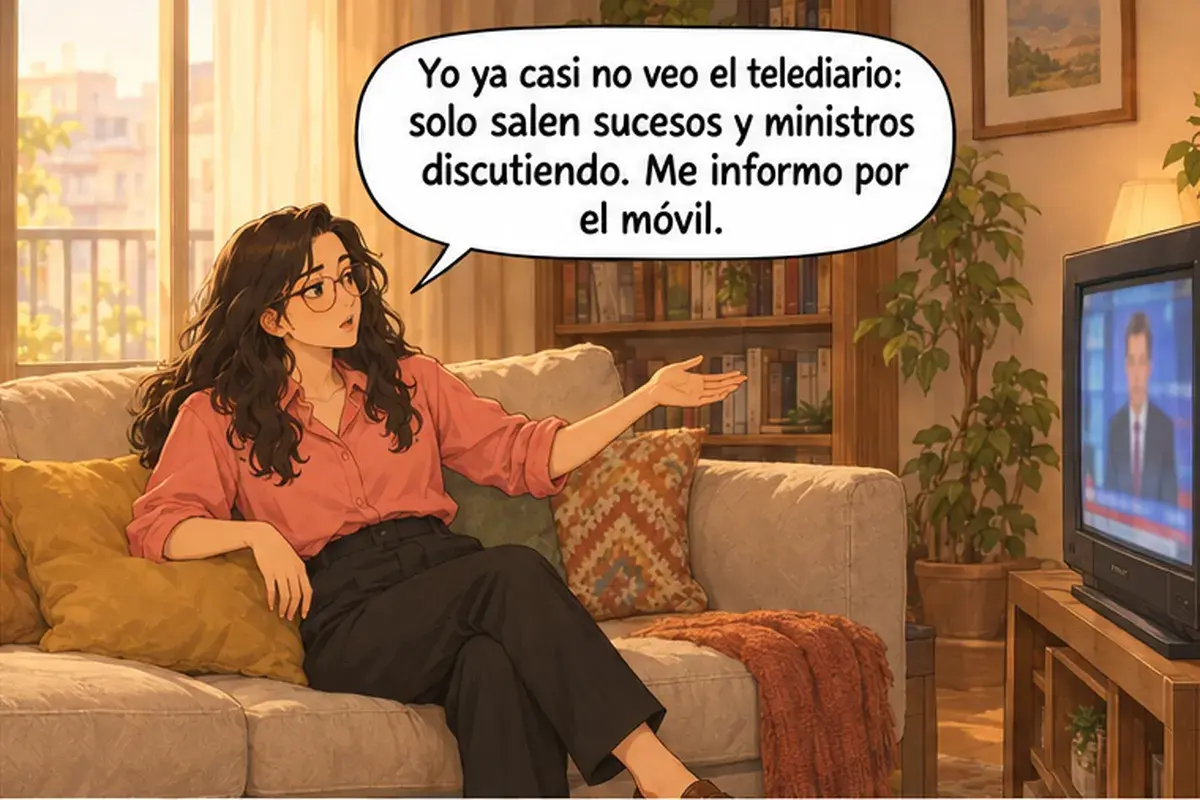
Yo ya casi no veo el telediario: solo salen sucesos y ministros discutiendo. Me informo por el móvil.
I hardly watch the TV news anymore: they only show incidents and ministers arguing. I get my news on my phone.
- Ana
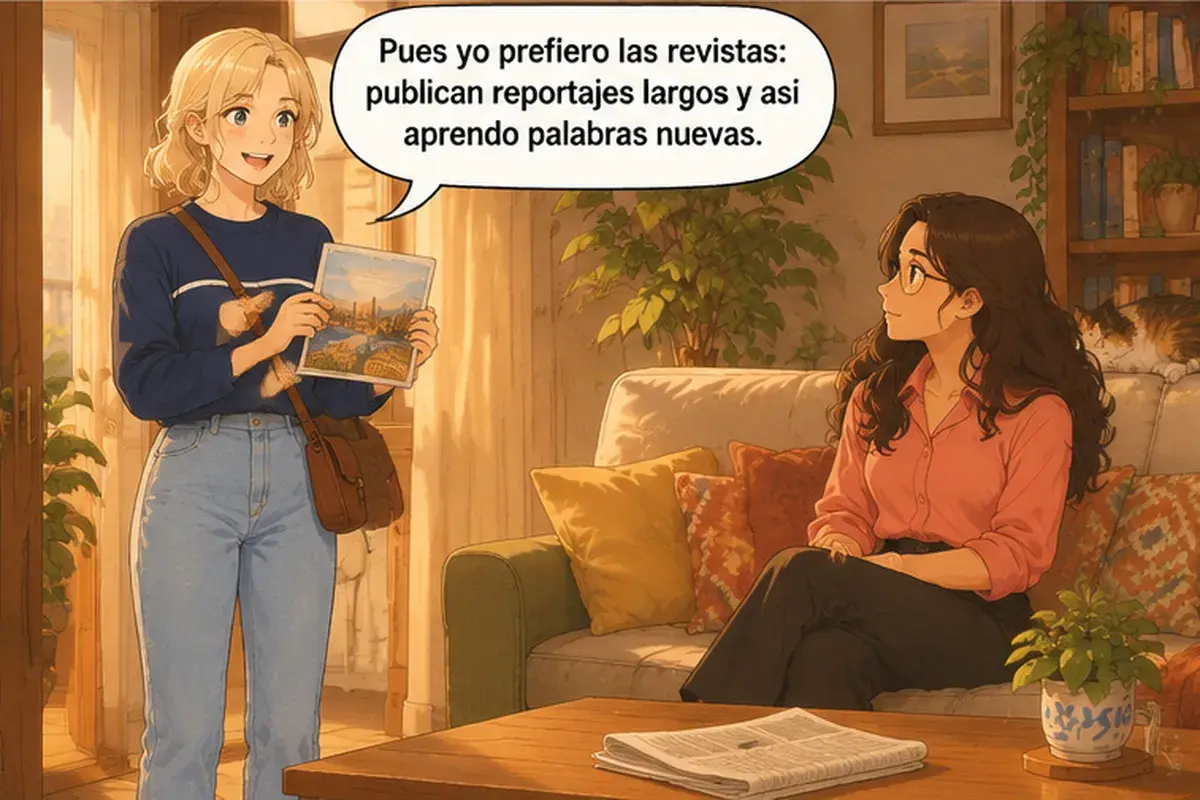
Pues yo prefiero las revistas: publican reportajes largos y así aprendo palabras nuevas.
Well, I prefer magazines: they publish long features, and that way I learn new words.
- Sergio
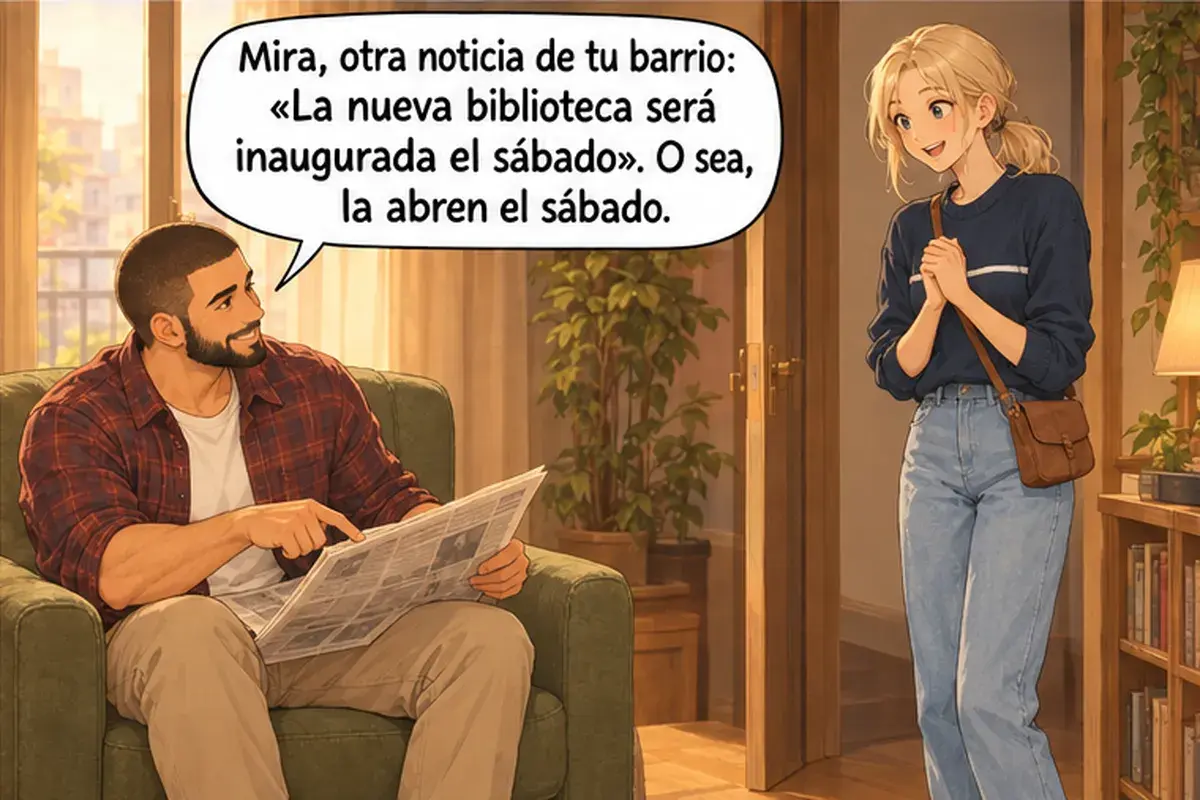
Mira, otra noticia de tu barrio: «La nueva biblioteca será inaugurada el sábado». O sea, la abren el sábado.
Look, another story about your neighborhood: "The new library will be officially opened on Saturday." I mean, they're opening it on Saturday.
- Ana
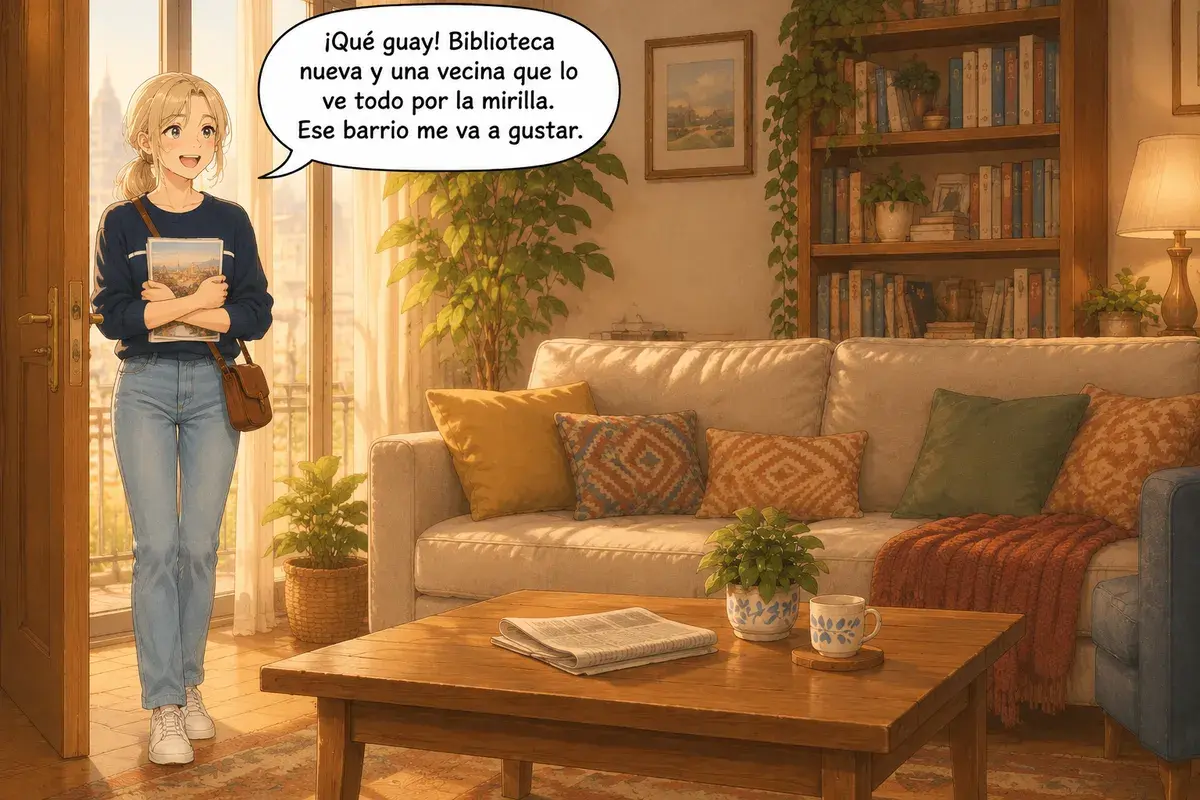
¡Qué guay! Biblioteca nueva y una vecina que lo ve todo por la mirilla. Ese barrio me va a gustar.
How cool! A new library and a neighbor who sees everything through the peephole. I'm going to like that neighborhood.
Grammar for this text
Newspaper language and everyday language. Sergio reads the headlines: ha sido detenido — "has been arrested," fue visto por una vecina — "was seen by a neighbor," será inaugurada — "will be officially opened." This is the passive voice: ser + past participle, and who did it comes after por. And right away Sergio retells the same thing the normal way: lo vio una señora, la abren el sábado. That's how people really talk: lo vio una vecina, lo han detenido. Do the same: when you read, recognize it; when you speak, retell it.
Le vi — "I saw him." Lucía uses le for the thief: le han detenido, le vi salir. In Spain people very often say this about one man. Sergio and Ana say lo (lo vio, lo cogieron), and that's correct too. For a woman, only la.
Tras robar — "after robbing": tras + verb, the newspaper word for después de.
Colloquial. O sea — "I mean, in other words." Salir en el periódico, salir en el telediario — "to be in the paper, to be on the news." Mujer in tranquila, mujer and es el estilo de las noticias, mujer doesn't mean "woman" here: it's a friendly "come on" said to a woman, and English usually leaves it out.
Words and grammar of the unit: Read local news.
Learn the words from the texts with flashcards
In the app, you can tap any word in a text to see its translation, forms and examples, and new words stick with flashcards. 15 minutes a day.
Start for freeEverything is open for free. No card needed to sign up.