

Spanish dialogue with translation · B2 · 18 lines
Todo patas arriba Everything upside down
Comic · 18 panels
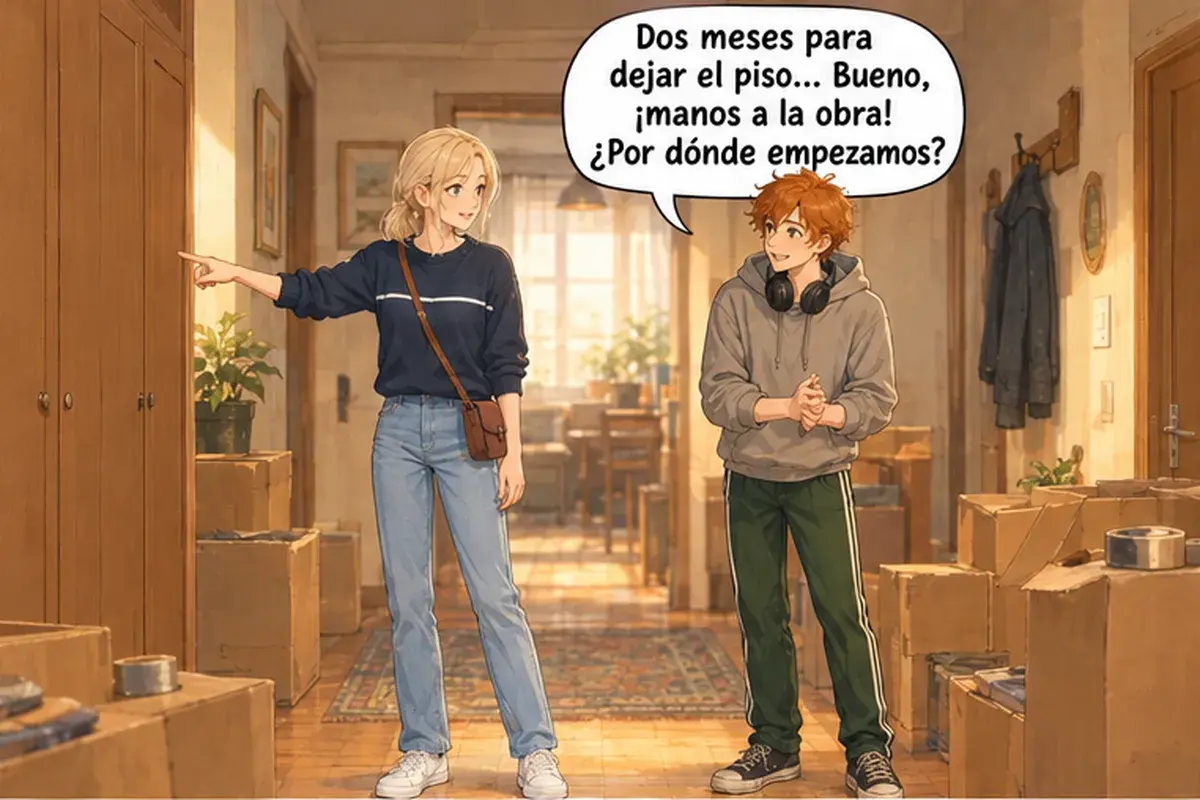
- Dani
Dos meses para dejar el piso... Bueno, ¡manos a la obra! ¿Por dónde empezamos?
Two months to move out of the apartment... Well, let's get to work! Where do we start?
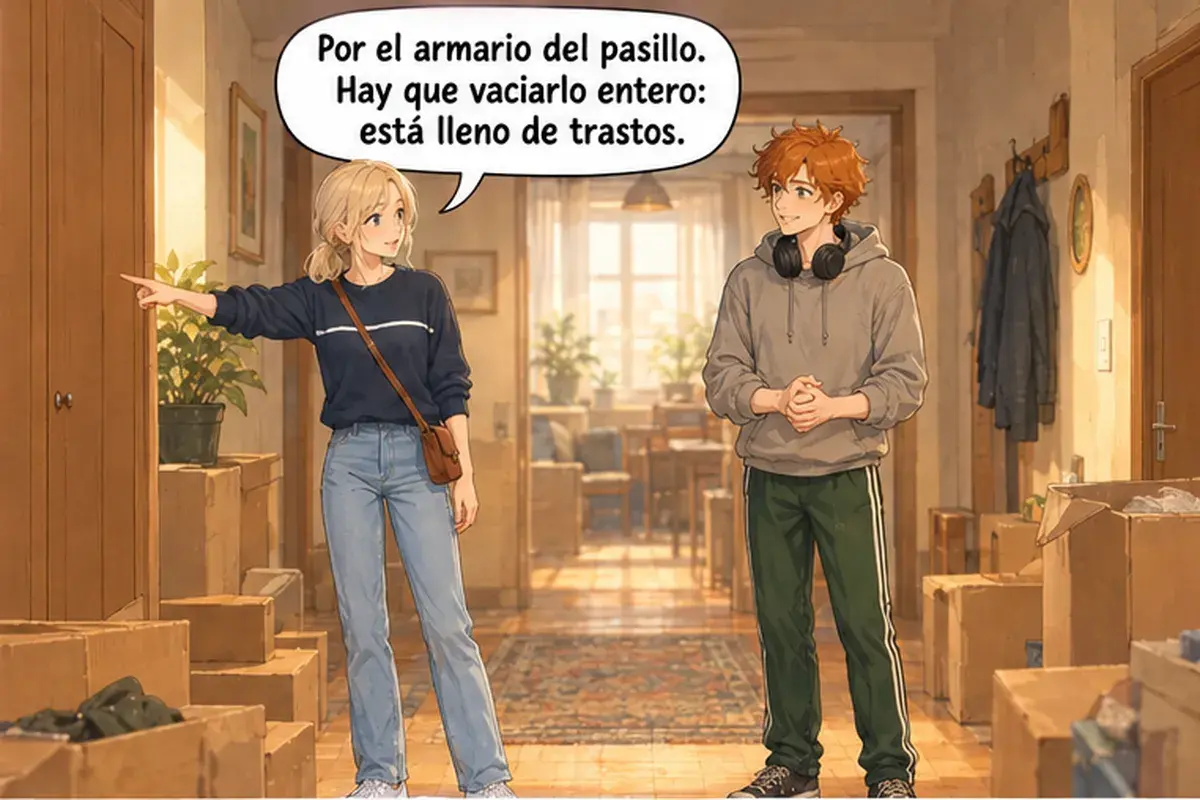
- Ana
Por el armario del pasillo. Hay que vaciarlo entero: está lleno de trastos.
With the hall closet. We need to empty it completely: it's full of junk.
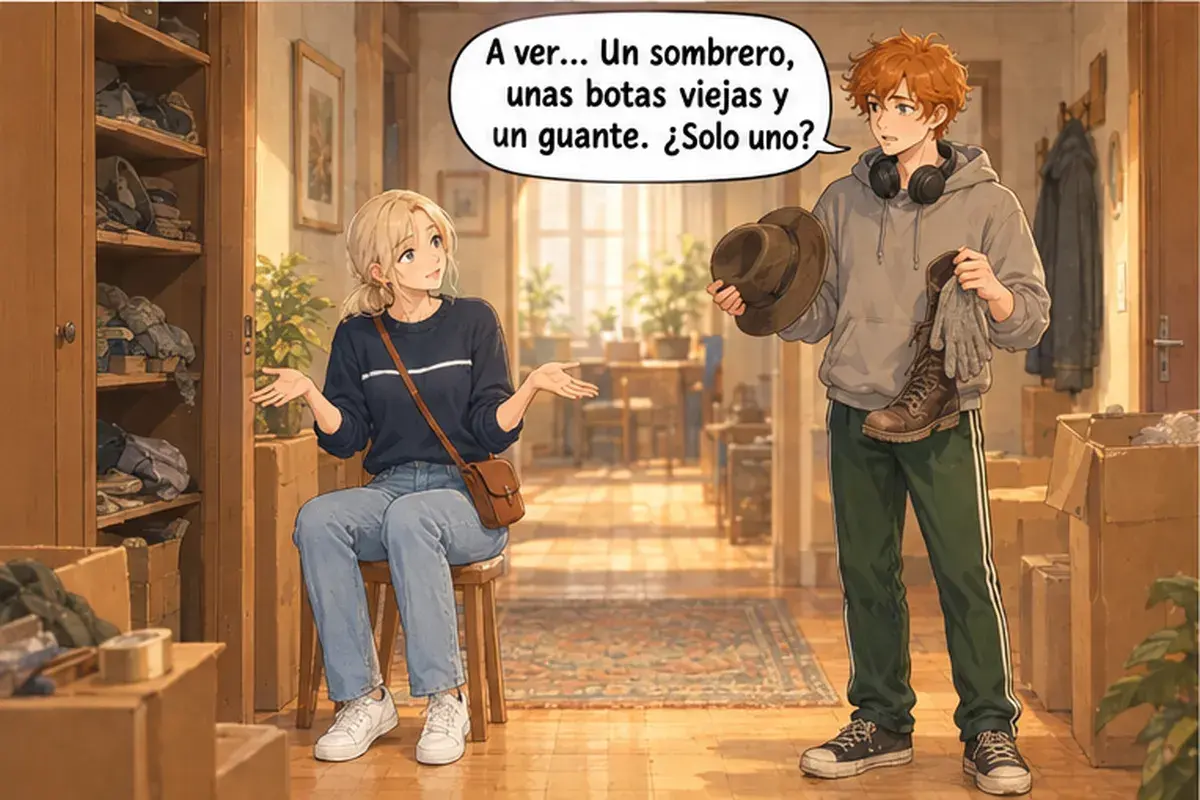
- Dani
A ver... Un sombrero, unas botas viejas y un guante. ¿Solo uno?
Let's see... A hat, some old boots and a glove. Just one?
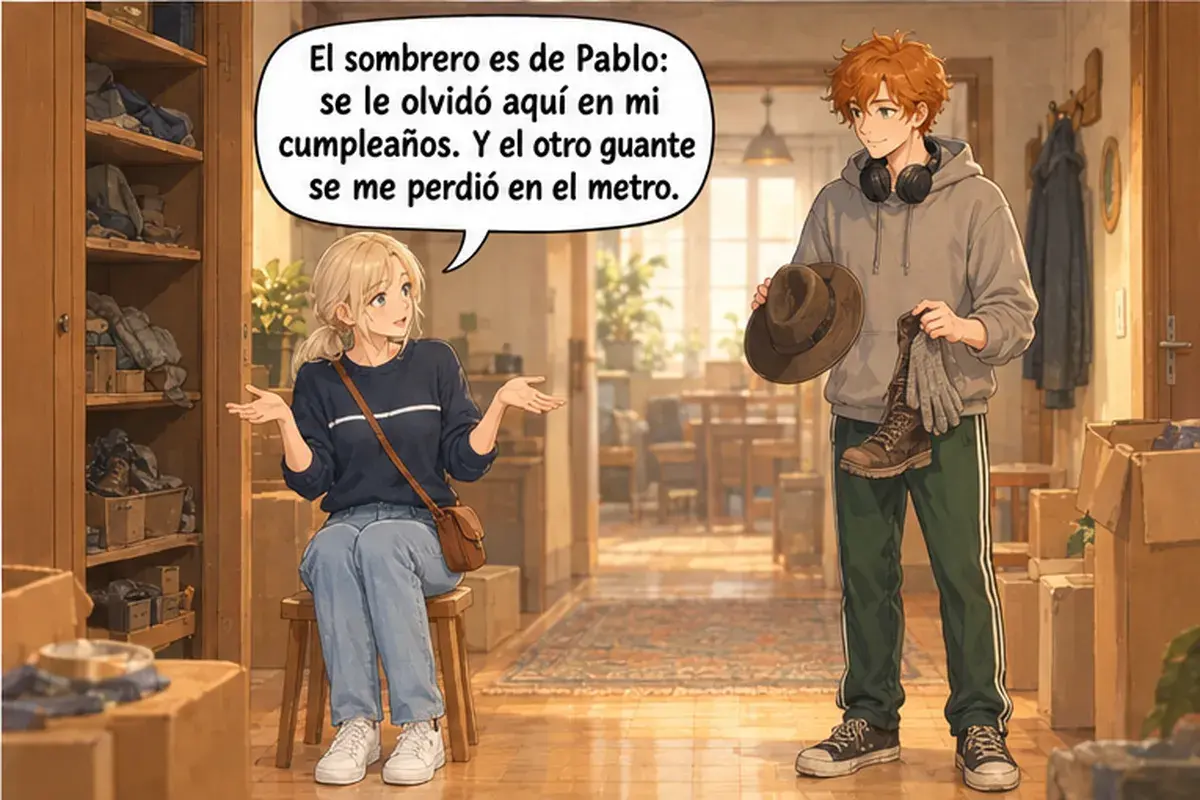
- Ana
El sombrero es de Pablo: se le olvidó aquí en mi cumpleaños. Y el otro guante se me perdió en el metro.
The hat is Pablo's: he forgot it here on my birthday. And I lost the other glove on the metro.
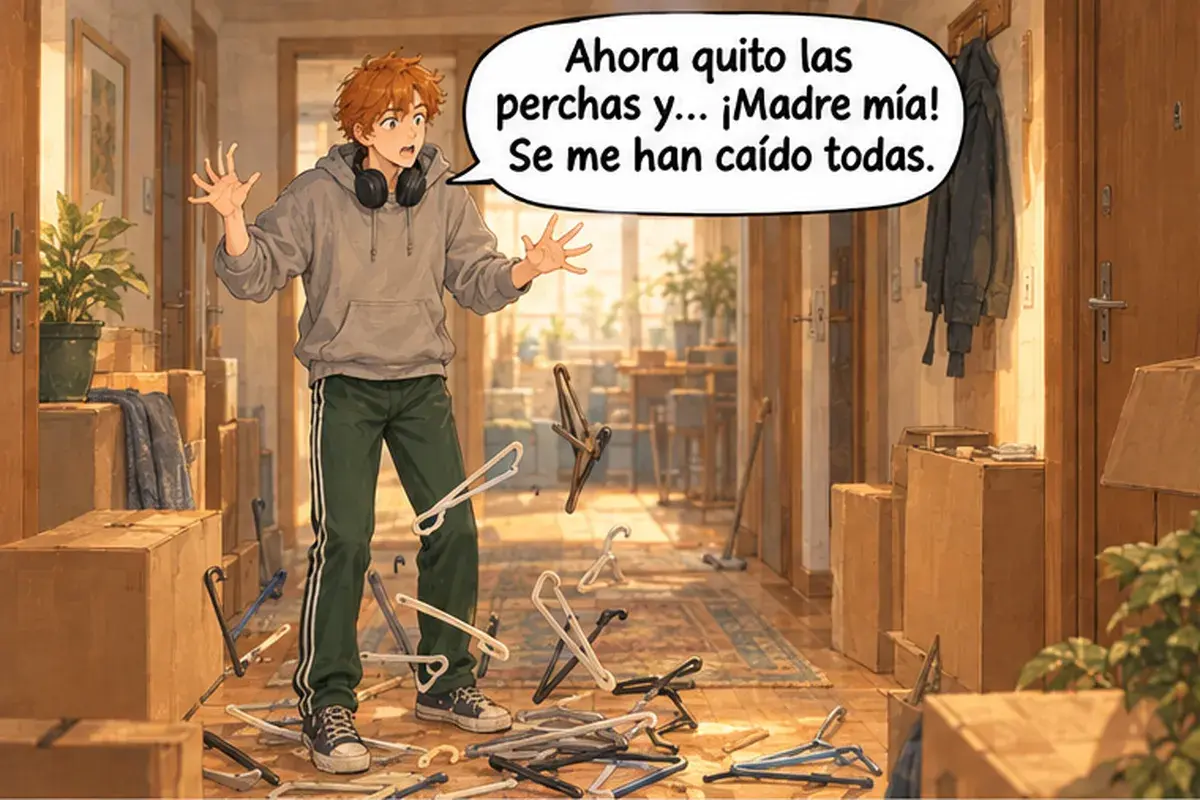
- Dani
Ahora quito las perchas y... ¡Madre mía! Se me han caído todas.
Now I'll take down the hangers and... Oh my gosh! I've dropped them all.
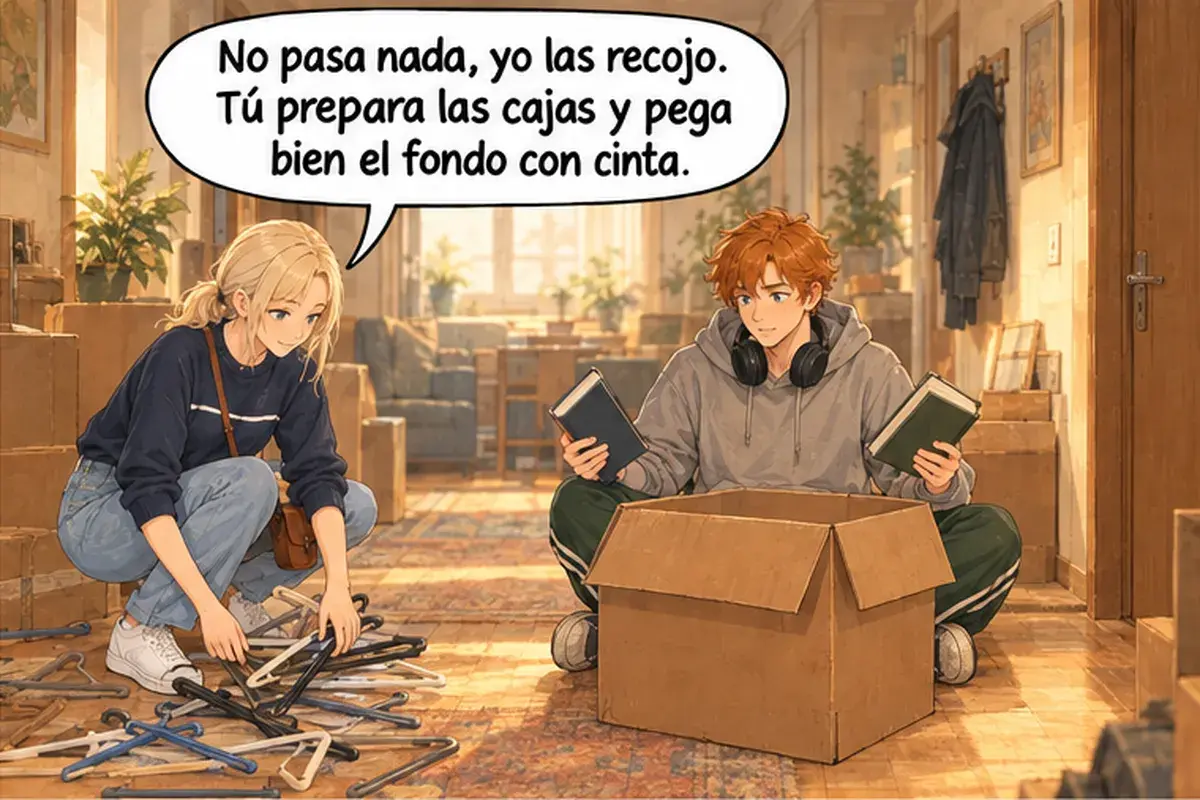
- Ana
No pasa nada, yo las recojo. Tú prepara las cajas y pega bien el fondo con cinta.
It's OK, I'll pick them up. You get the boxes ready and tape the bottoms well.
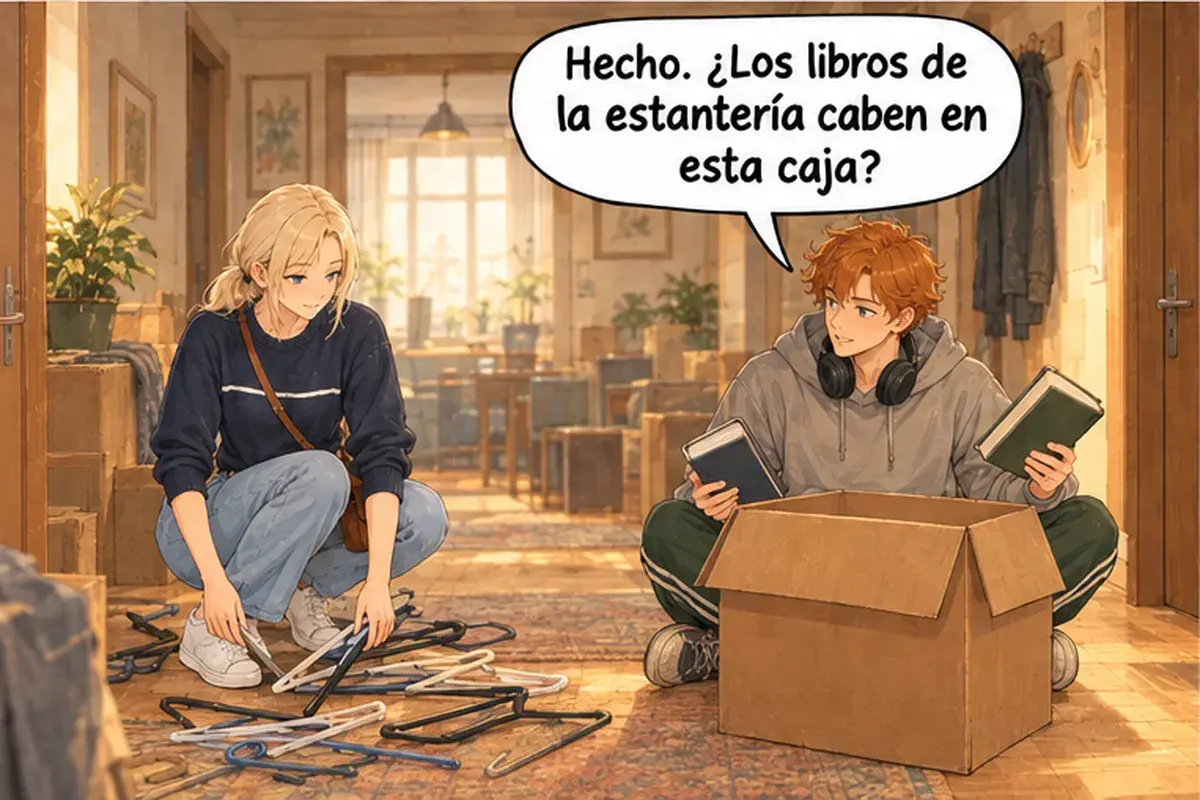
- Dani
Hecho. ¿Los libros de la estantería caben en esta caja?
Done. Do the books from the bookcase fit in this box?
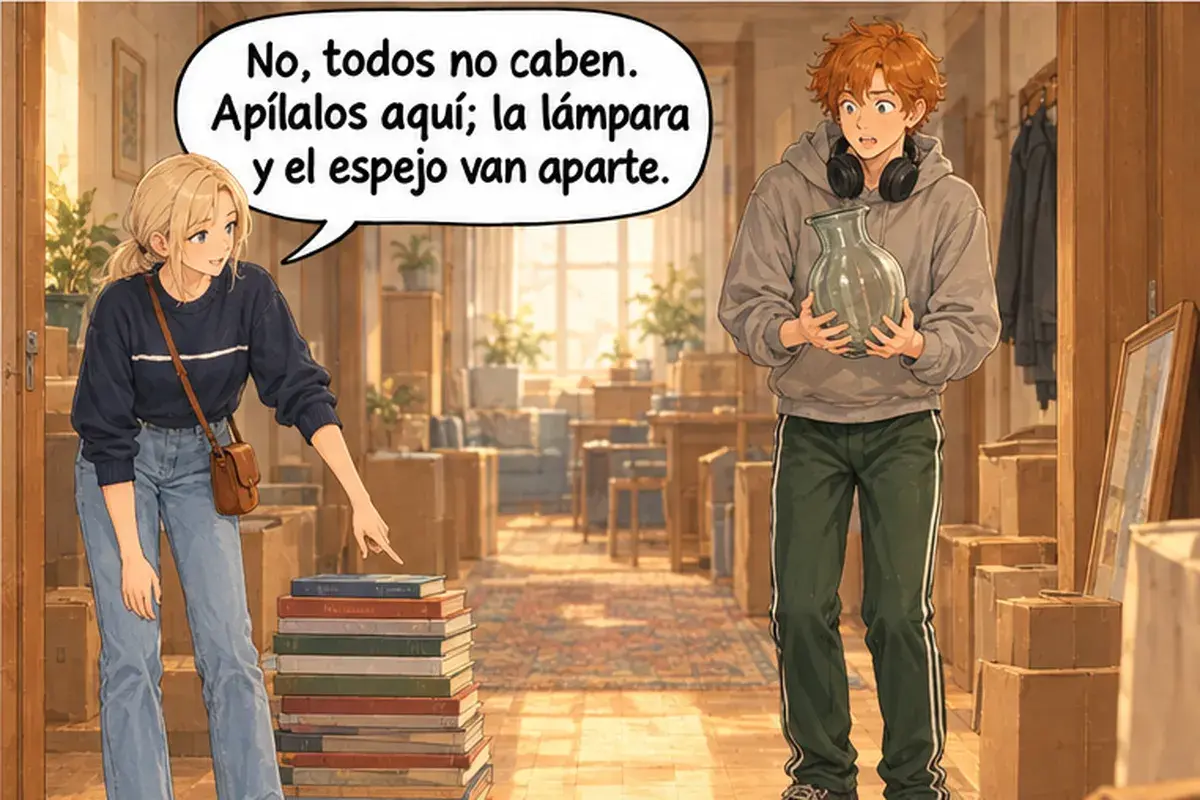
- Ana
No, todos no caben. Apílalos aquí; la lámpara y el espejo van aparte.
No, they don't all fit. Stack them here; the lamp and the mirror go separately.
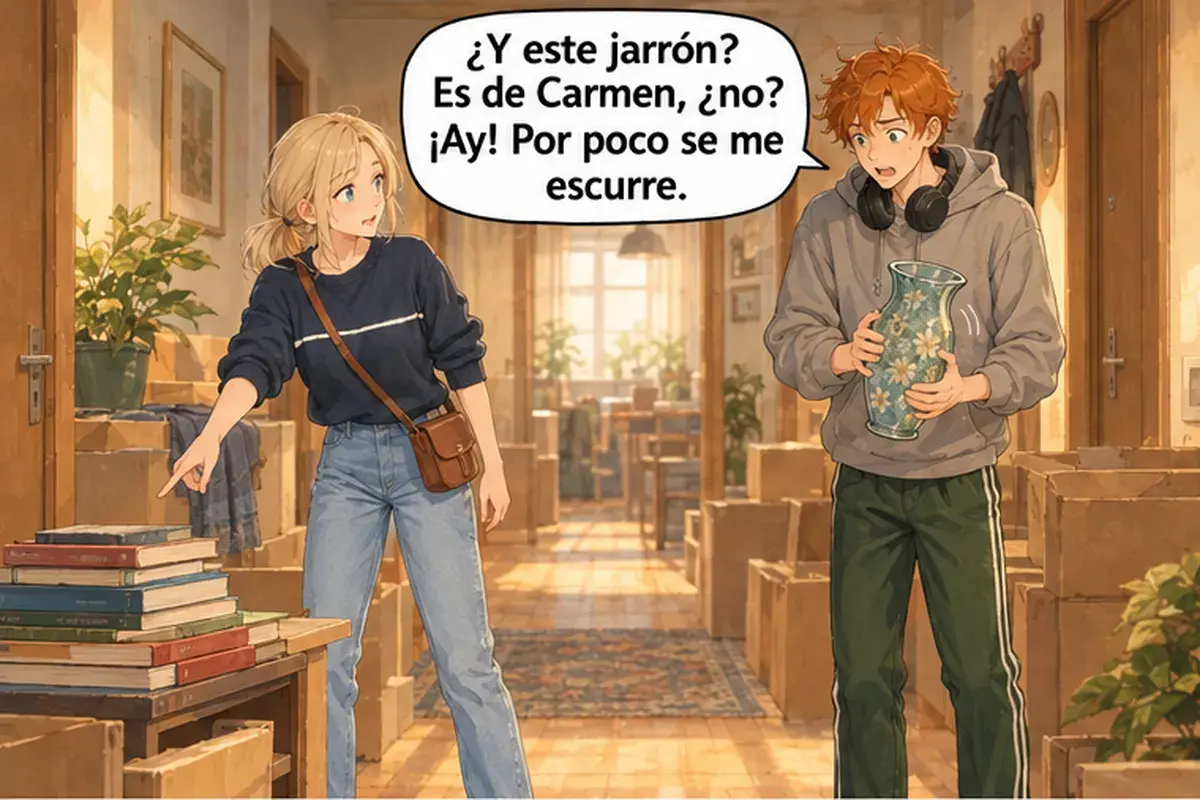
- Dani
¿Y este jarrón? Es de Carmen, ¿no? ¡Ay! Por poco se me escurre.
And this vase? It's Carmen's, isn't it? Oops! It almost slipped out of my hands.
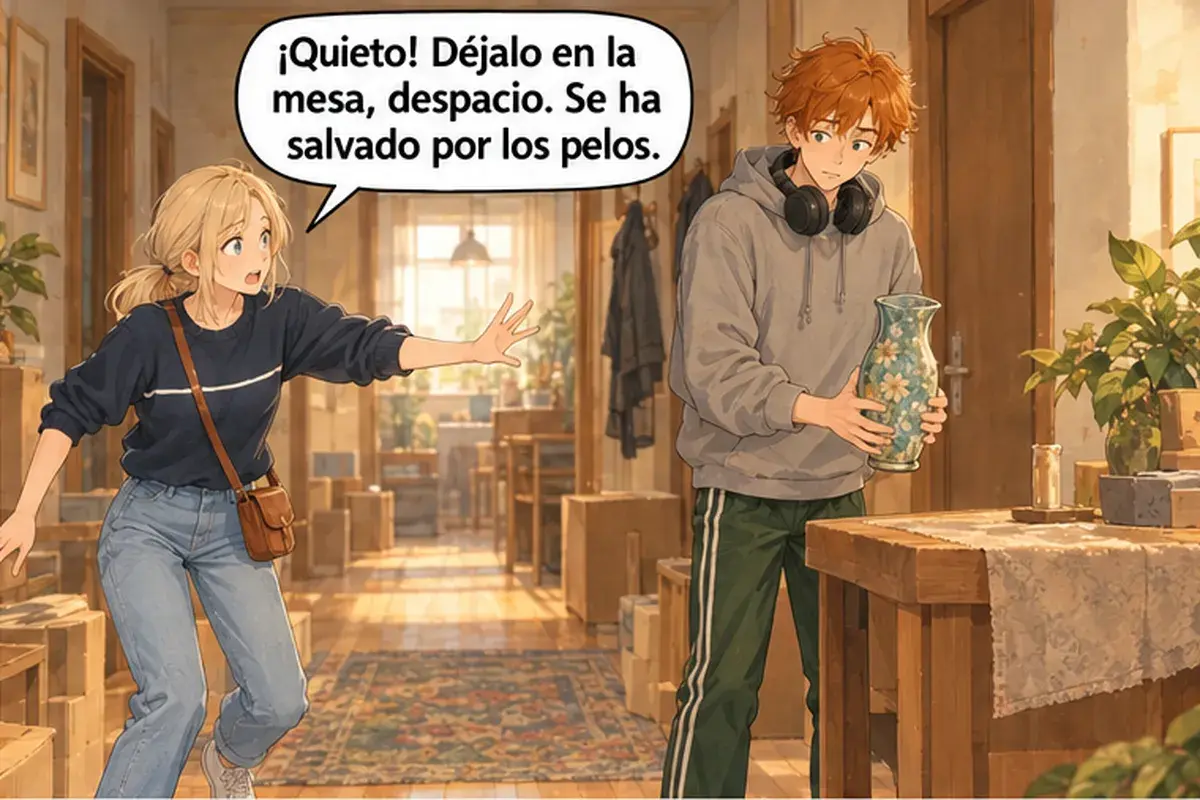
- Ana
¡Quieto! Déjalo en la mesa, despacio. Se ha salvado por los pelos.
Freeze! Put it on the table, slowly. It survived by a hair (to a man).
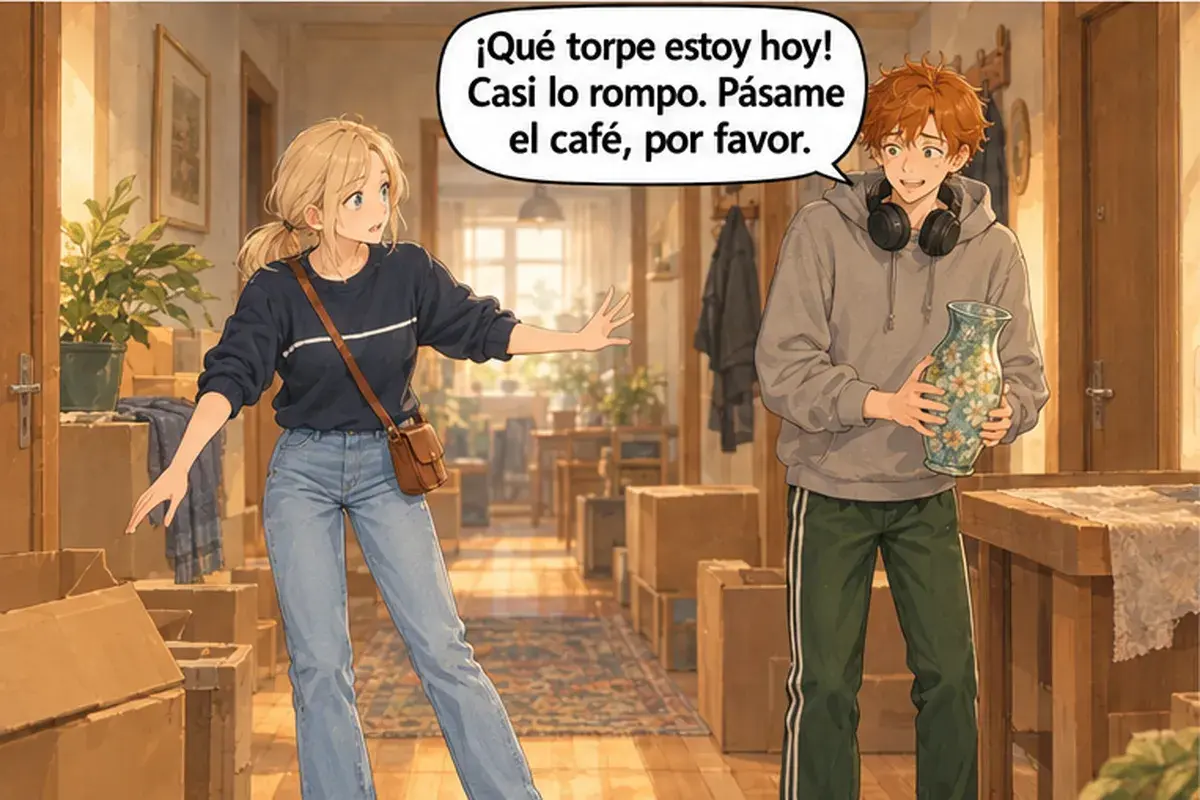
- Dani
¡Qué torpe estoy hoy! Casi lo rompo. Pásame el café, por favor.
I'm so clumsy today! I almost broke it. Pass me the coffee, please.
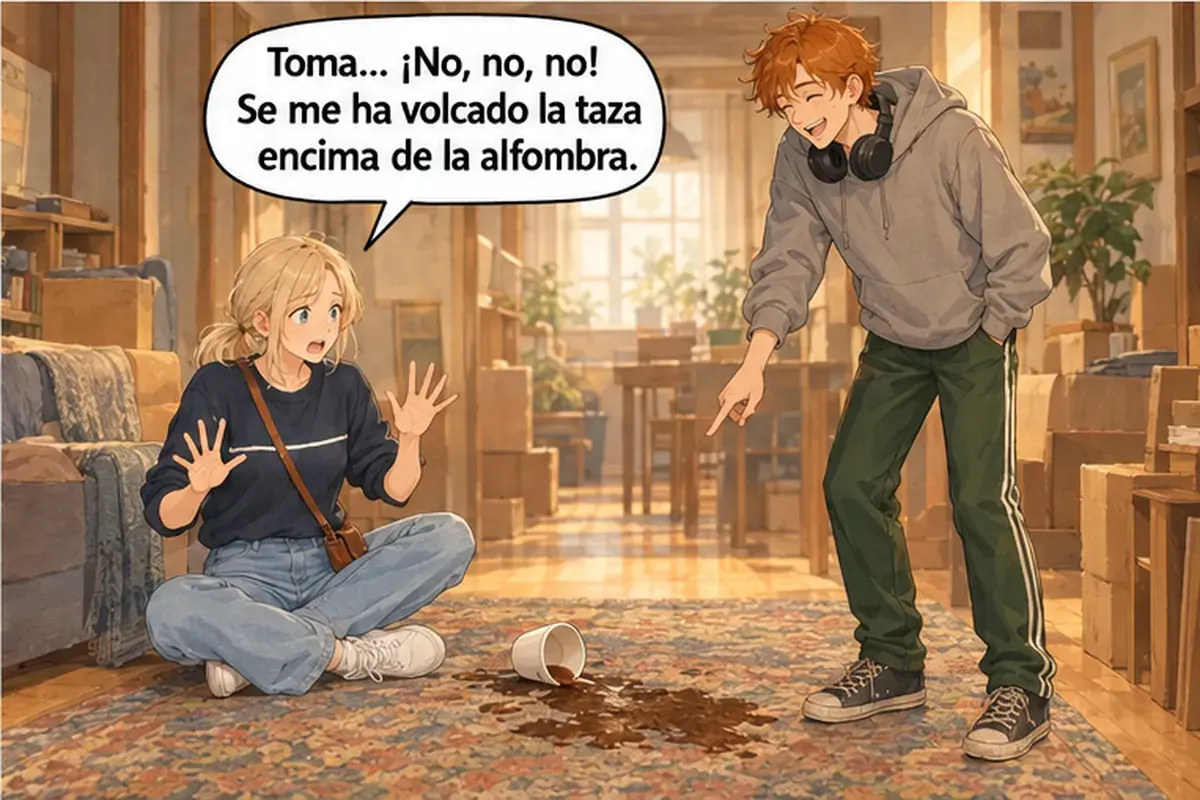
- Ana
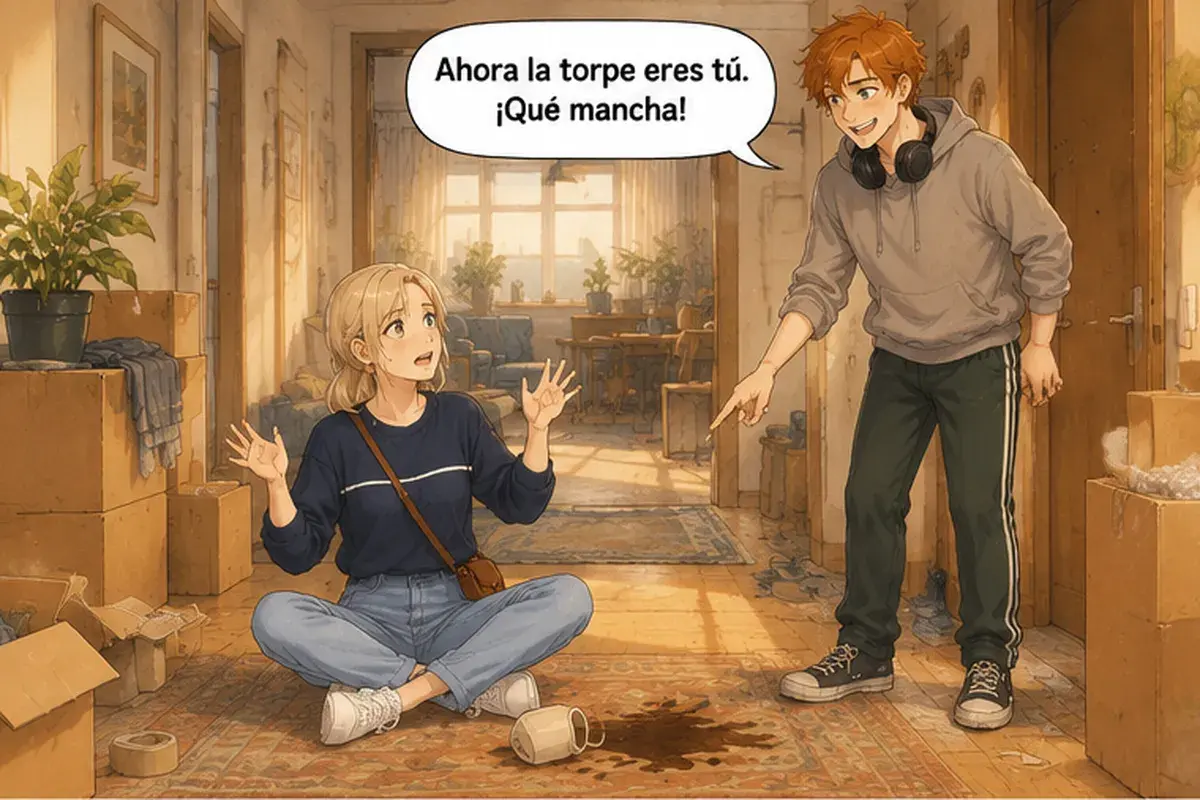
Toma... ¡No, no, no! Se me ha volcado la taza encima de la alfombra.
Here... No, no, no! I've knocked the cup over onto the rug.
- Dani
Ahora la torpe eres tú. ¡Qué mancha!
Now you're the clumsy one. What a stain! (to a woman)
- Ana
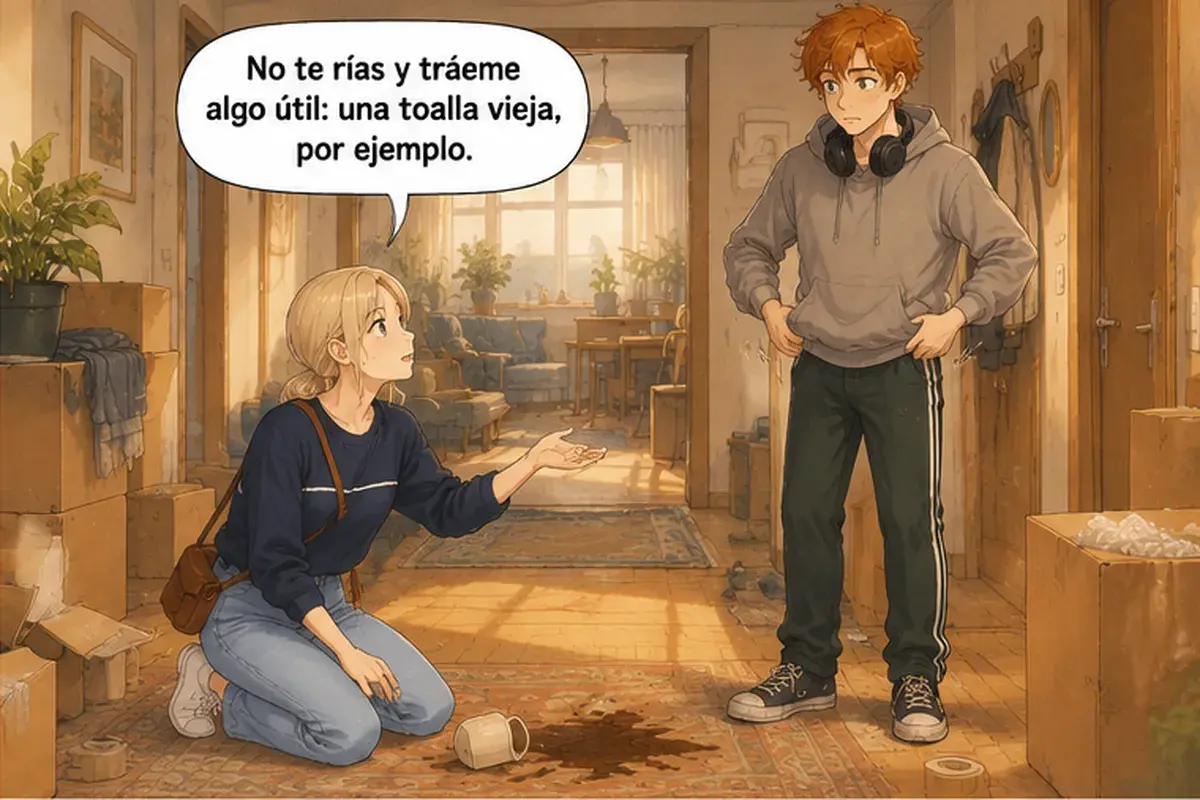
No te rías y tráeme algo útil: una toalla vieja, por ejemplo.
Don't laugh, just bring me something useful: an old towel, for example.
- Dani
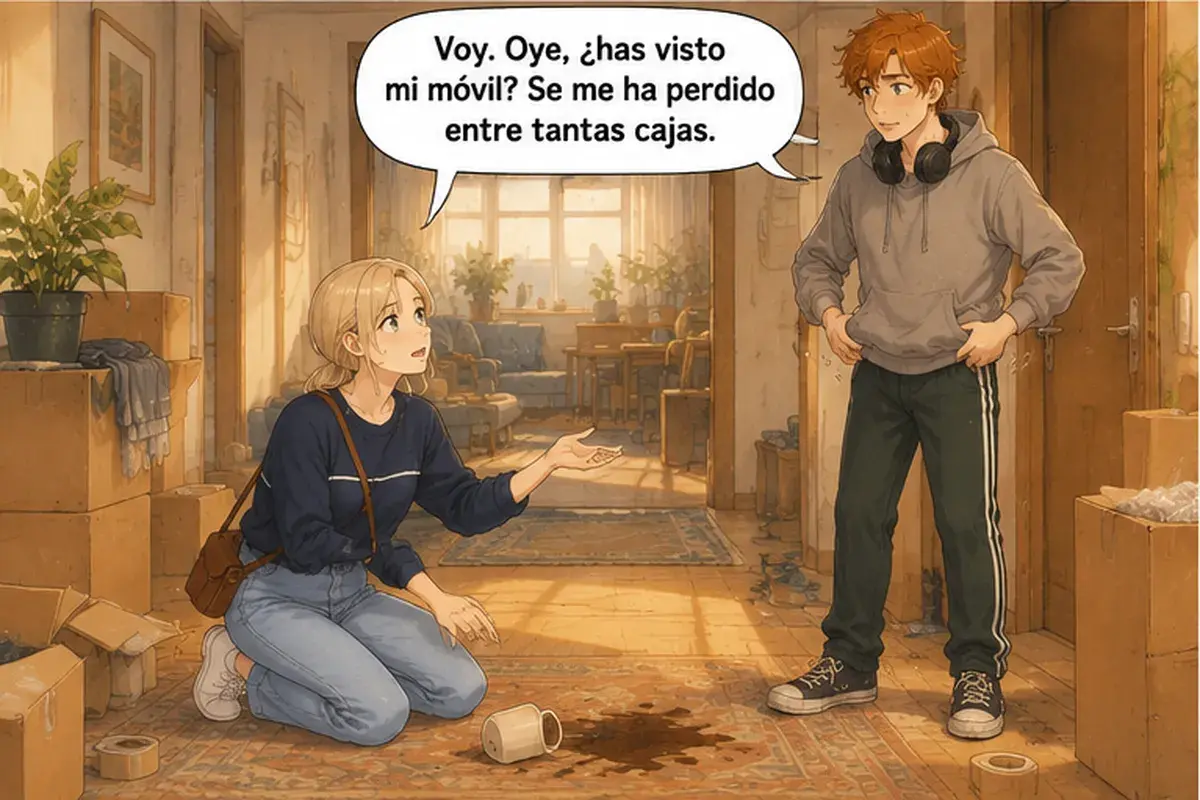
Voy. Oye, ¿has visto mi móvil? Se me ha perdido entre tantas cajas.
Coming. Hey, have you seen my phone? I've lost it among all these boxes.
- Ana
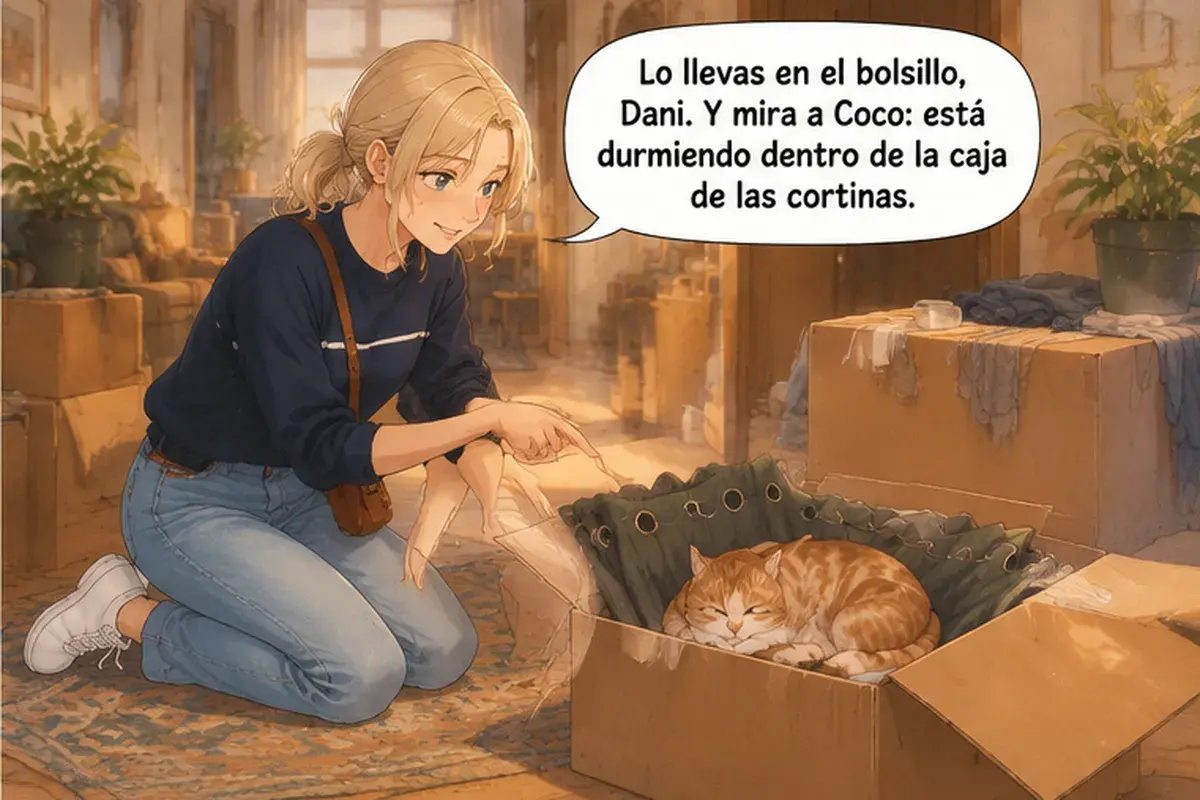
Lo llevas en el bolsillo, Dani. Y mira a Coco: está durmiendo dentro de la caja de las cortinas.
You've got it in your pocket, Dani. And look at Coco: he's sleeping in the box with the curtains.
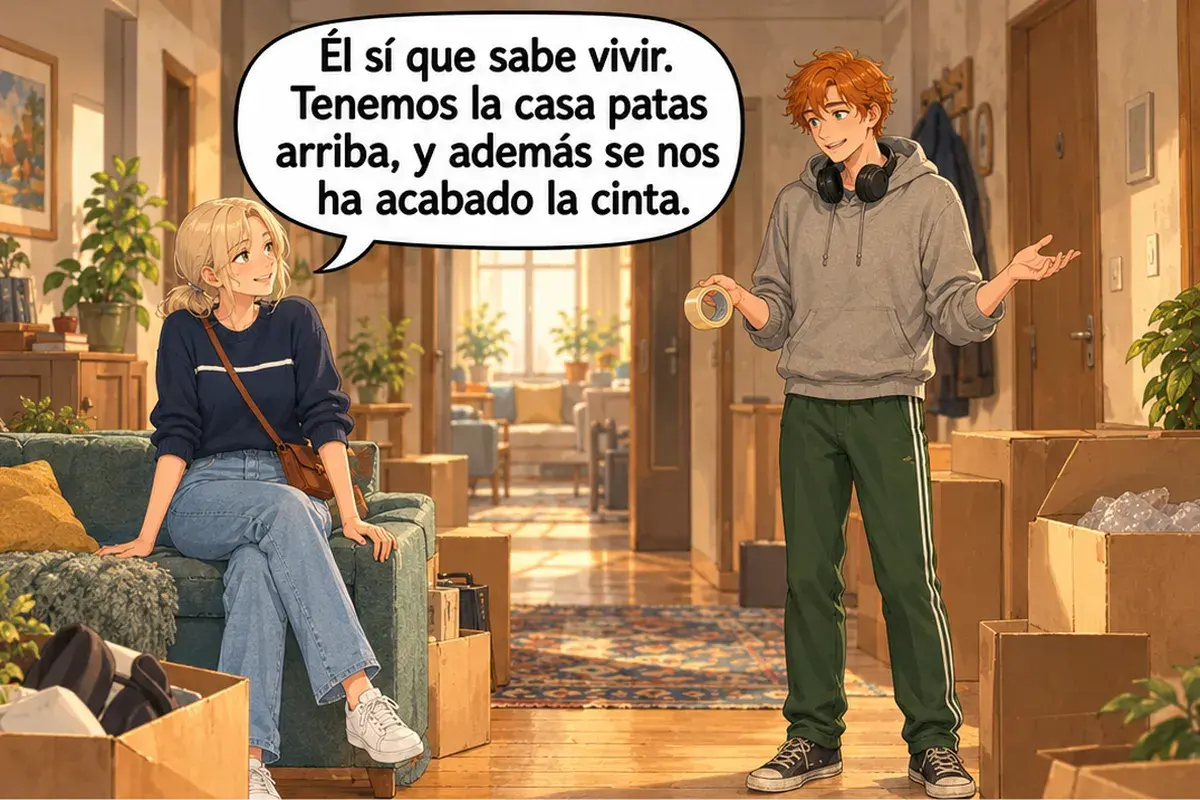
- Dani
Él sí que sabe vivir. Tenemos la casa patas arriba, y además se nos ha acabado la cinta.
He really knows how to live. Our house is upside down, and on top of that we've run out of tape.
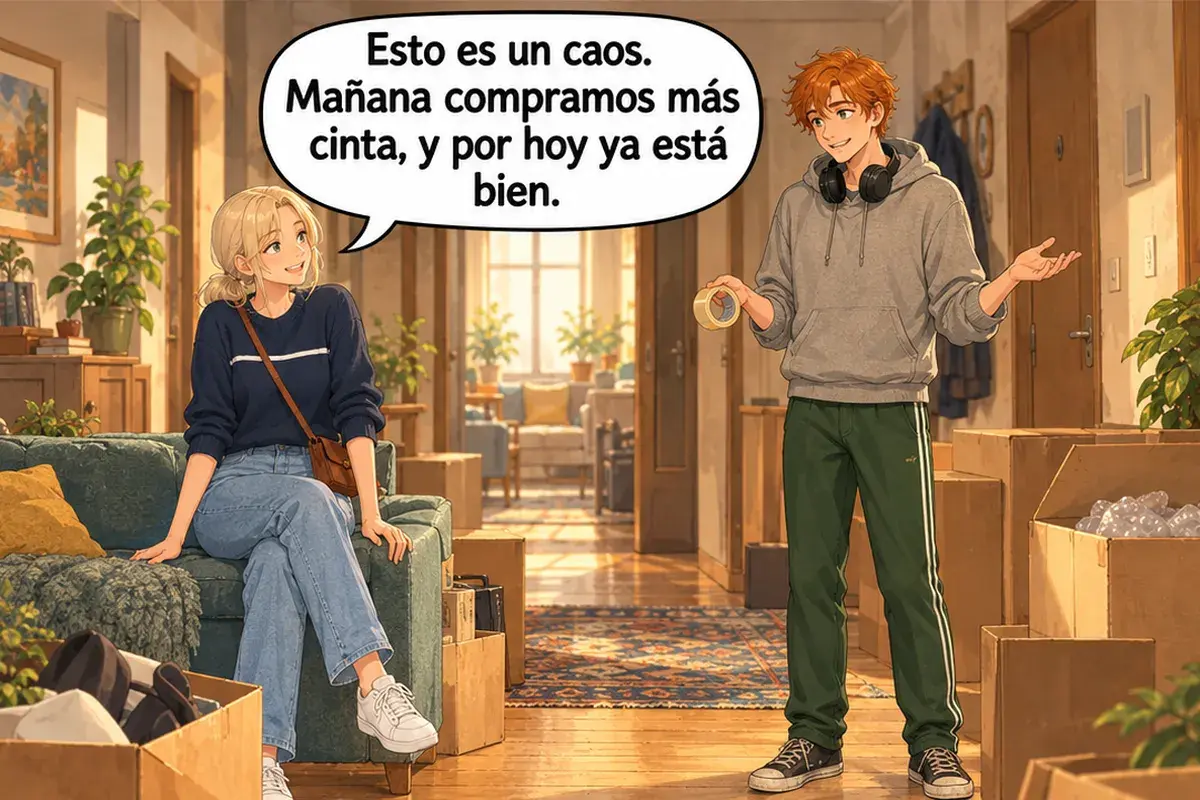
- Ana
Esto es un caos. Mañana compramos más cinta, y por hoy ya está bien.
This is chaos. We'll buy more tape tomorrow, and that's enough for today.
Grammar for this text
Things that just happened. In this conversation everything happens right now, so the accidents use se me ha…: se me han caído todas (I've dropped them all), se me ha volcado la taza (I've knocked the cup over), se nos ha acabado la cinta (we've run out of tape).
Things from before. For something that happened a while ago, the preterite: se le olvidó aquí (he forgot it here), se me perdió en el metro (I lost it on the metro).
Por poco and casi. Por poco se me escurre, casi lo rompo (it almost slipped out of my hands, I almost broke it): after por poco and casi the verb is in the present tense, even though the danger is already over.
¡Qué torpe estoy hoy! uses estar: clumsy today, not clumsy in general.
Él sí que sabe vivir. Sí que gives extra weight to the word before it: "now there's someone who knows how to live".
Words and grammar of the unit: Talk about little accidents at home.
Learn the words from the texts with flashcards
In the app, you can tap any word in a text to see its translation, forms and examples, and new words stick with flashcards. 15 minutes a day.
Start for freeEverything is open for free. No card needed to sign up.