
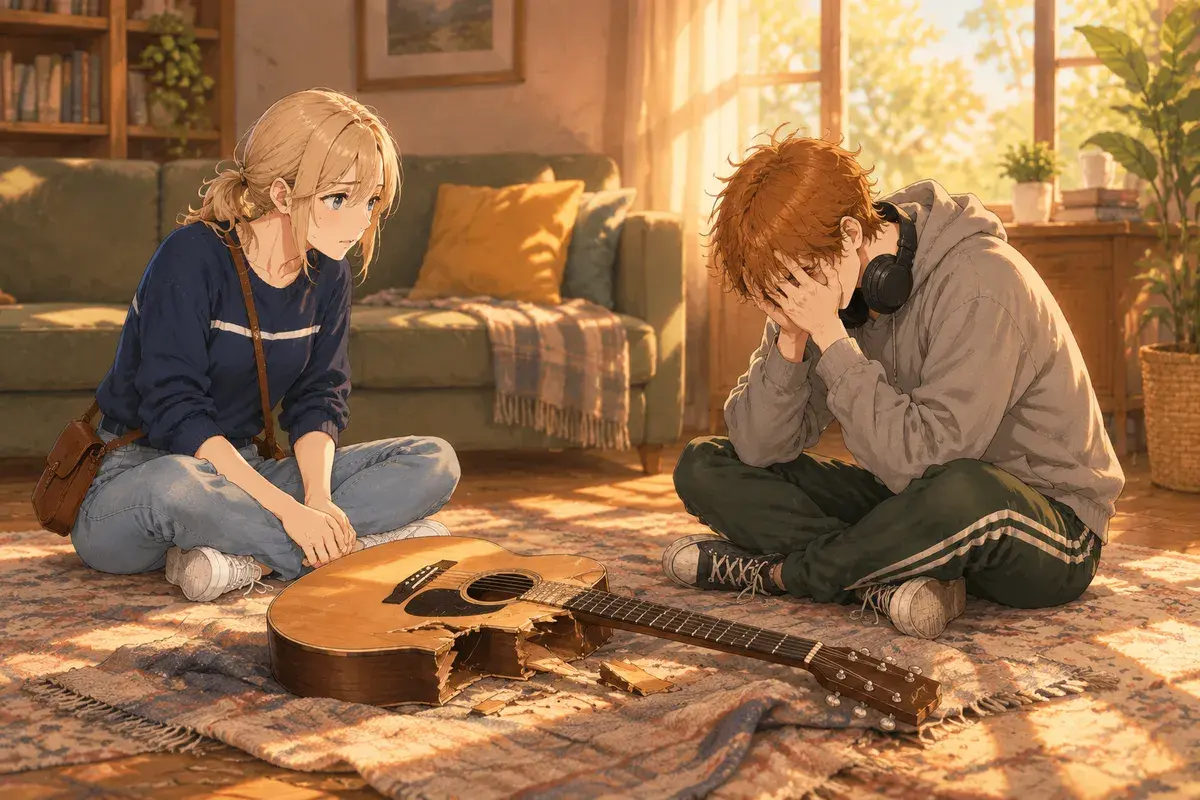
Spanish story with translation · B1 · 18 lines
No estoy malo, estoy hecho polvo I'm not sick, I'm wiped out
Comic · 11 panels

Llevo más de un año viviendo con Dani y creía que lo conocía bien.
I've been living with Dani for over a year, and I thought I knew him well.
En general, es el compañero de piso perfecto: extrovertido, hablador y siempre de buen humor.
In general, he's the perfect roommate: extroverted, talkative and always in a good mood.

Tiene sus manías, claro: es bastante vago y sus platos pueden estar tres días sin fregar.
He has his quirks, of course: he's pretty lazy, and his dishes can sit unwashed for three days.
Pero es bueno y generoso, y su tortilla siempre está muy buena.
But he's kind and generous, and his tortilla is always really good.
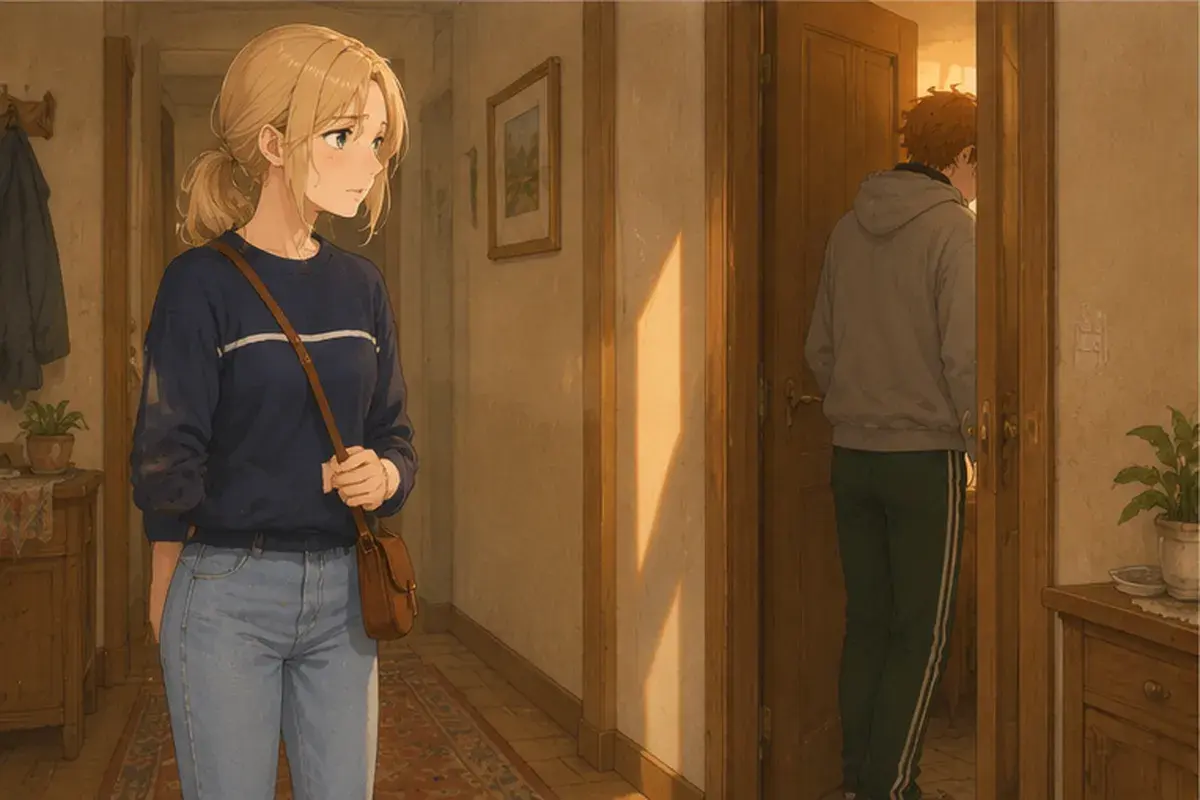
Por eso me preocupé la semana pasada, cuando su estado de ánimo cambió de golpe.
That's why I got worried last week, when his mood changed all of a sudden.
Llegaba a casa callado y se iba directamente a su habitación. Su puerta estaba siempre cerrada.
He would come home quiet and go straight to his room. His door was always closed.

Ni siquiera tocaba la guitarra. Yo pensaba: «¿Está deprimido? ¿O está enfadado conmigo?»
He didn't even play the guitar. I thought: "Is he depressed? Or is he mad at me?"
Pensé en mi comportamiento: ¿le caía mal?, ¿había dejado la cocina sucia?, ¿había hecho ruido por la noche?
I thought about my behavior: did he not like me? Had I left the kitchen dirty? Had I made noise at night?
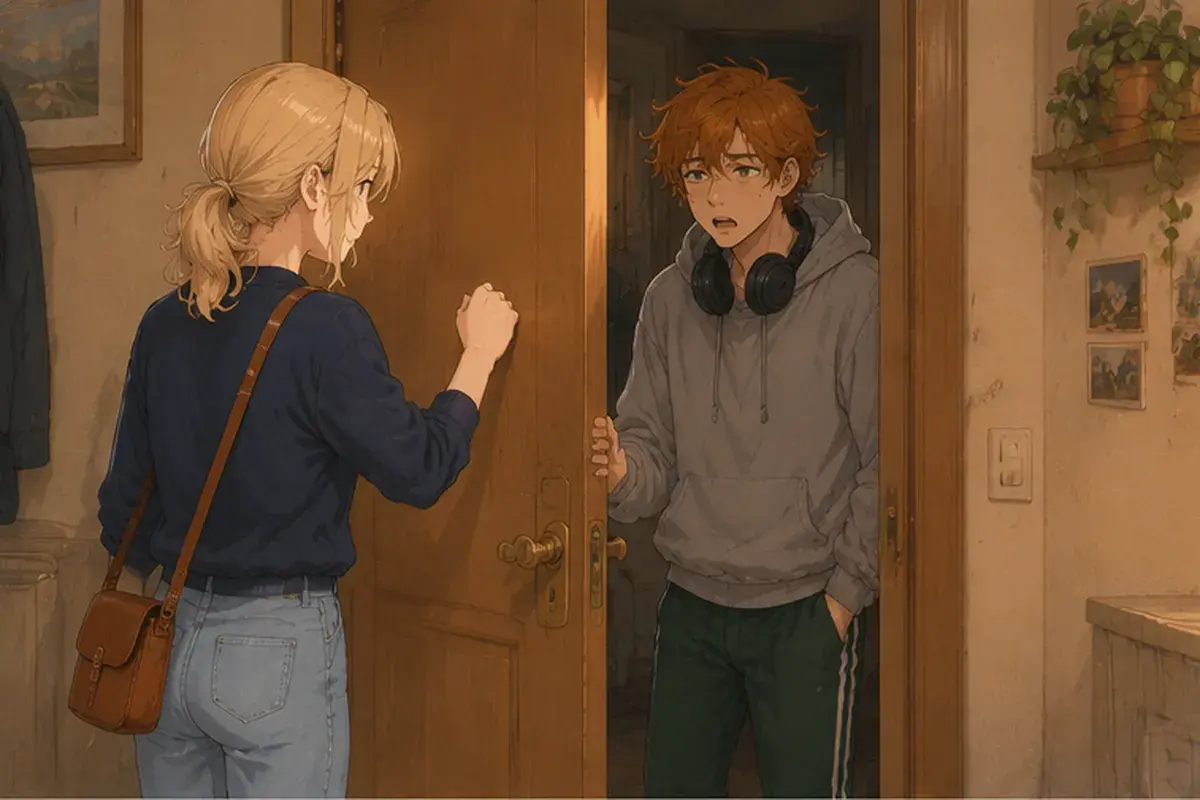
El jueves no pude más y llamé a la puerta de su habitación: «Dani, ¿estás malo? ¿Te he hecho algo?»
On Thursday I couldn't take it anymore and knocked on his bedroom door: "Dani, are you sick? Have I done something to you?"

Abrió con una cara terrible. «No estoy malo, estoy hecho polvo. Se me ha roto la guitarra y el sábado tengo un concierto.»
He opened it looking terrible. "I'm not sick, I'm crushed. My guitar broke, and I have a concert on Saturday."

La guitarra estaba encima de la cama, rota. Dani estaba muy ilusionado con ese concierto: iba a tocar con unos amigos en un bar del centro.
The guitar was on the bed, broken. Dani was really excited about that concert: he was going to play with some friends at a bar downtown.
«¿Y por qué no me lo dijiste?» «Porque soy un cabezota y quería resolverlo solo. Pero el taller de siempre está cerrado por vacaciones.»
"So why didn't you tell me?" "Because I'm stubborn and I wanted to sort it out on my own. But my usual repair shop is closed for vacation."
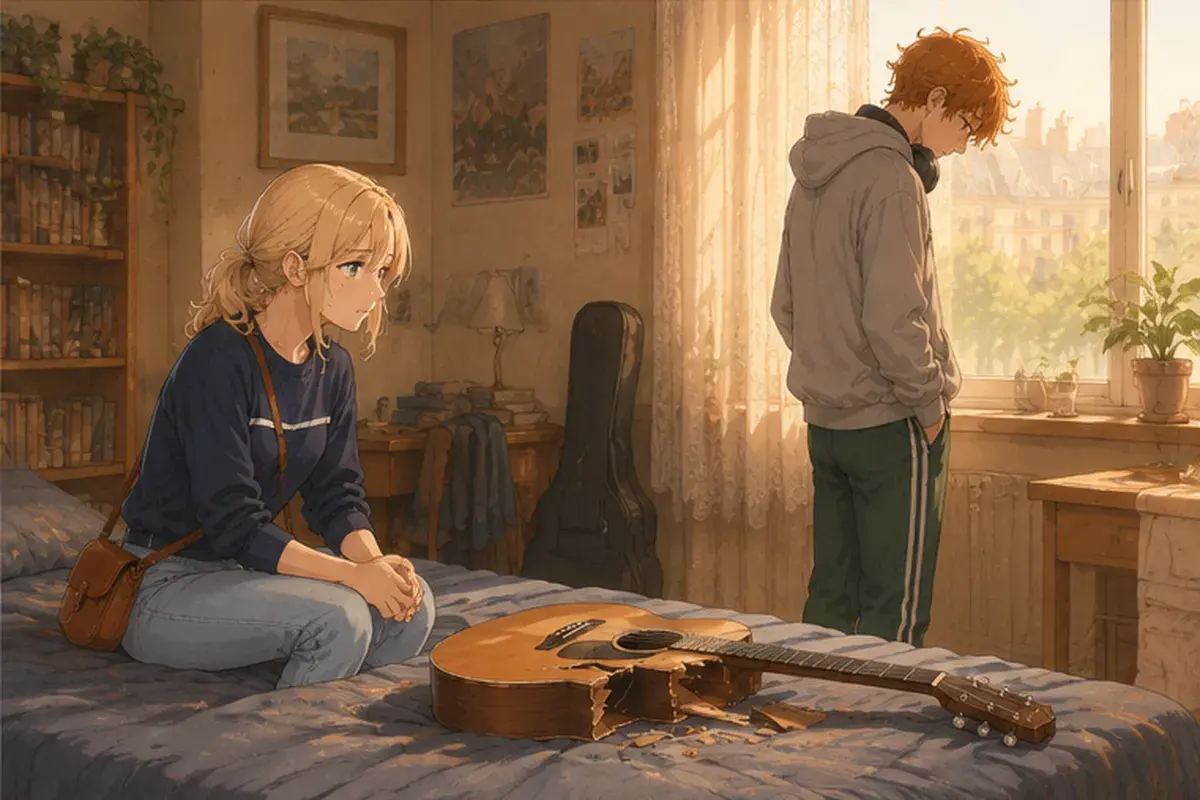
Aunque Dani es optimista, ese día estaba muy pesimista: decía que ya no había solución.
Even though Dani is an optimist, that day he was very pessimistic: he said there was no solution anymore.
Entonces me acordé de un taller pequeño cerca del mercado, donde arreglan guitarras.
Then I remembered a small repair shop near the market where they fix guitars.

Fuimos el viernes. Estaba abierto, y el señor nos dijo que la guitarra iba a estar lista el sábado por la mañana.
We went on Friday. It was open, and the man told us the guitar was going to be ready on Saturday morning.

El sábado Dani tocó mejor que nunca y yo aplaudí hasta el final.
On Saturday, Dani played better than ever, and I clapped until the very end.

Ahora vuelve a estar animado, hace bromas con su humor de siempre… y sus platos siguen sin fregar.
Now he's in good spirits again, he makes jokes with his usual humor… and his dishes are still unwashed.
Yo he aprendido algo: Dani parece muy relajado, pero es bastante sensible. Y me cae genial tal como es.
I've learned something: Dani seems very laid-back, but he's pretty sensitive. And I really like him just the way he is.
Grammar for this text
The story keeps putting side by side what he's like in general (ser) and how he is right now (estar):
- Aunque Dani es optimista, ese día estaba muy pesimista — he's an optimist by nature, but that day he was very pessimistic;
- es bueno — he's kind; su tortilla siempre está muy buena — his tortilla is always delicious;
- ¿estás malo? — are you sick? La guitarra iba a estar lista — the guitar was going to be ready.
Estar + past participle is a result: su puerta estaba siempre cerrada, el taller de siempre está cerrado por vacaciones, estaba abierto. The participle agrees: la guitarra… rota.
Se me ha roto la guitarra — "my guitar broke" (by itself, it's not my fault). Here it's a set phrase; the rule comes later. This se is not the one in se lo.
Sin fregar — "unwashed": sin + infinitive. Tal como es — "just the way he is". ¿Había dejado…? — "had I left…?", the past perfect from unit 9. ¿Le caía mal? — "did he not like me?": caer mal works like gustar.
Words and grammar of the unit: Describe personality and mood.
Learn the words from the texts with flashcards
In the app, you can tap any word in a text to see its translation, forms and examples, and new words stick with flashcards. 15 minutes a day.
Start for freeEverything is open for free. No card needed to sign up.